Deep-Sky Astrophotography
Images • Gear • Tips & Techniques
Comprehensive project reports with annotated images, finder charts, gear setups, capture specs, and step-by-step processing
- Annotated images
- Finder charts
- Complete capture specs
- Step-by-step processing
- No paywall
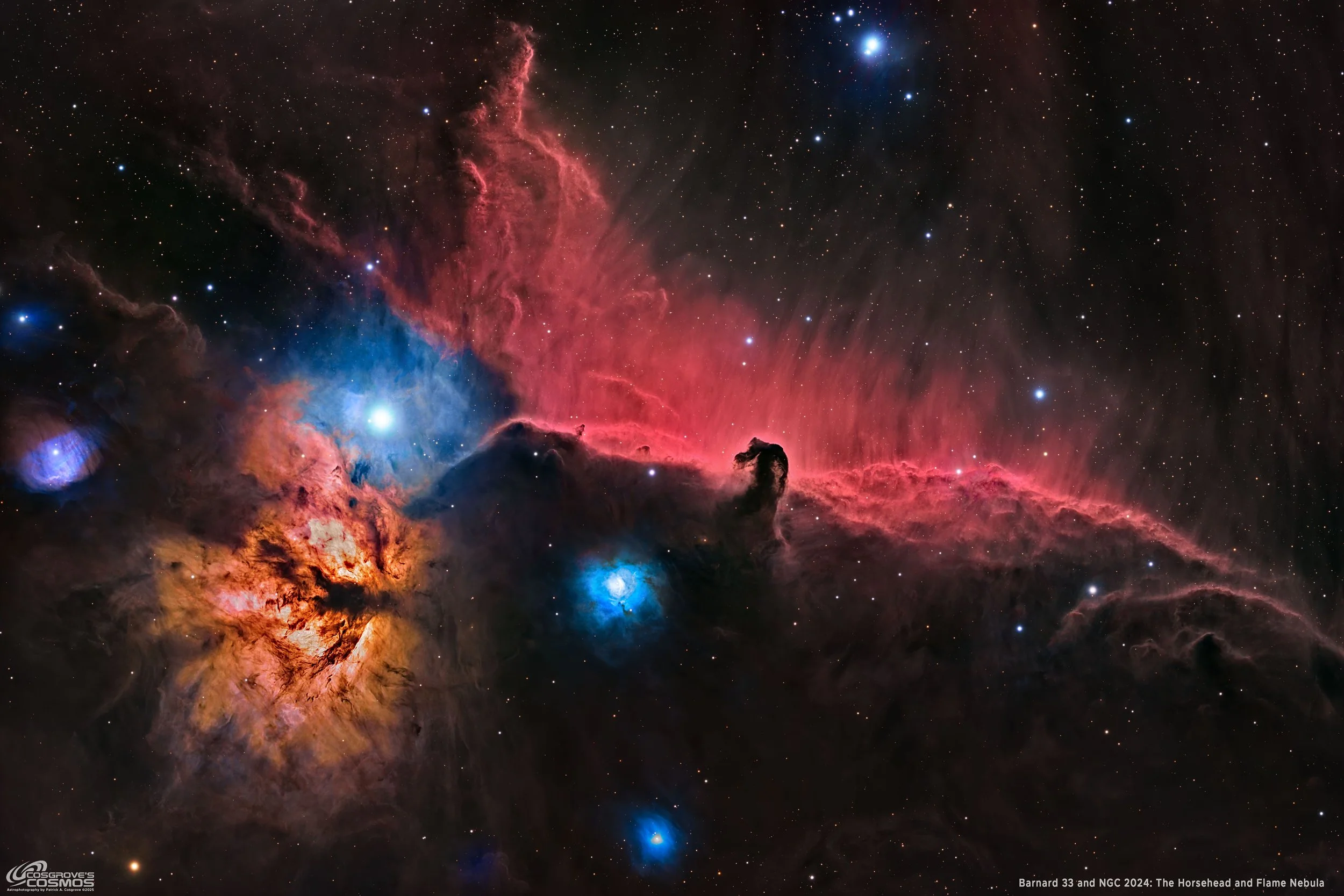
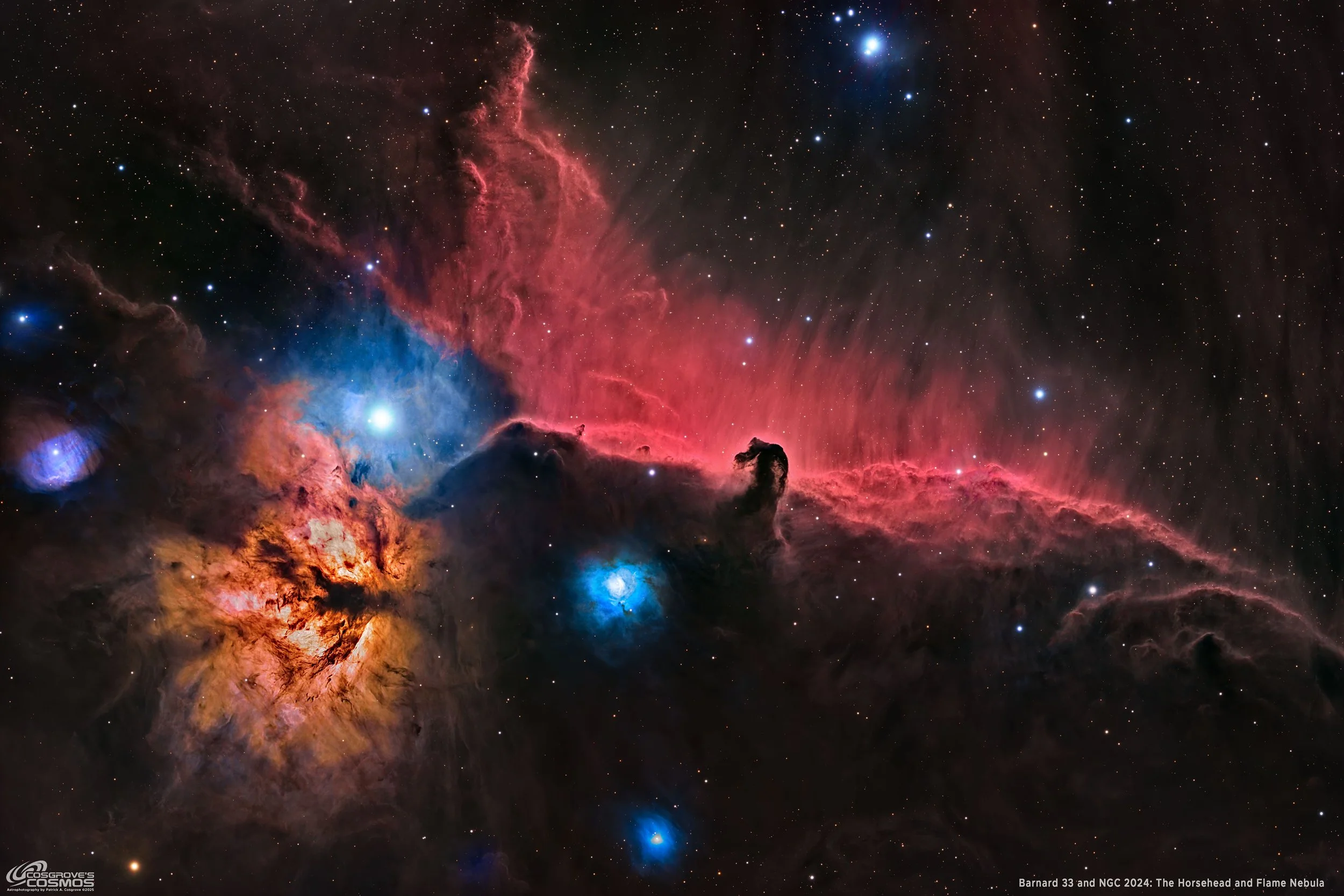
Barnard 33 & NGC 2024 - The Horsehead and Flame Nebula - 6 hours in HaLRGB (click for view)
NGC 7380 – The Wizard Nebula - 25 Hours of SHOrgb! (click to view)
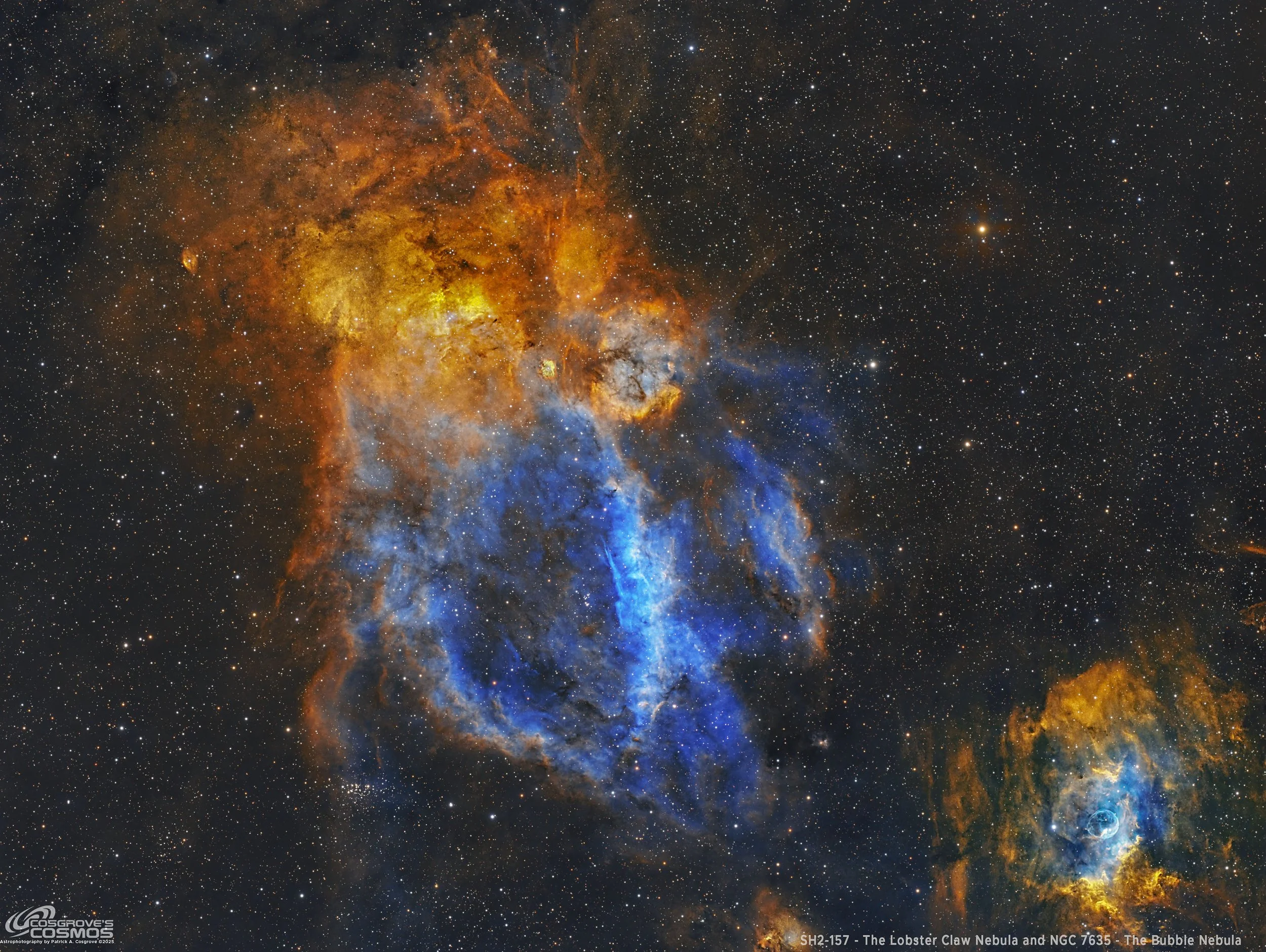
SH2-157 – The Lobster Claw Nebula - 34.5 Hours of SHOrgb! (click to view)
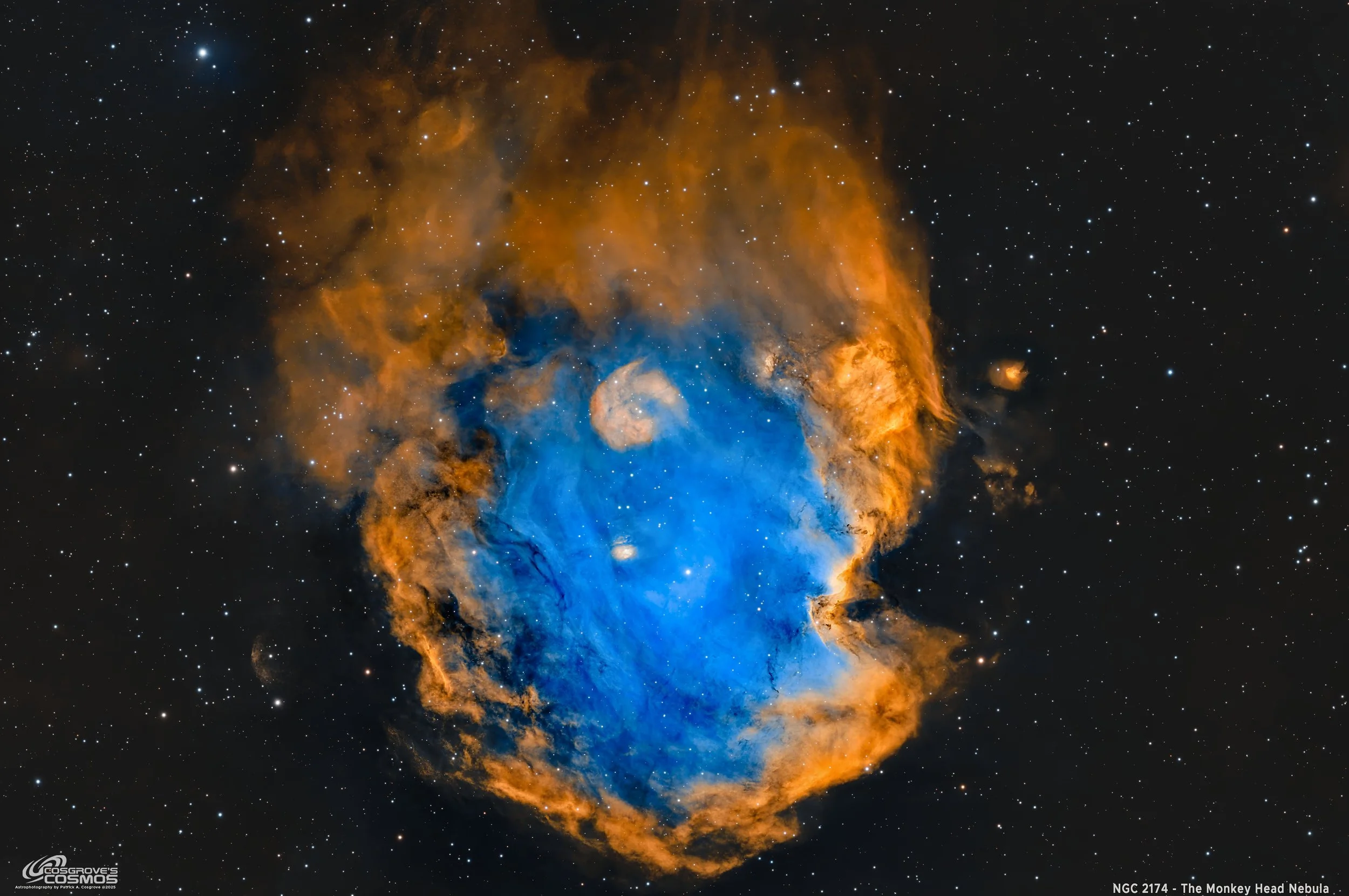
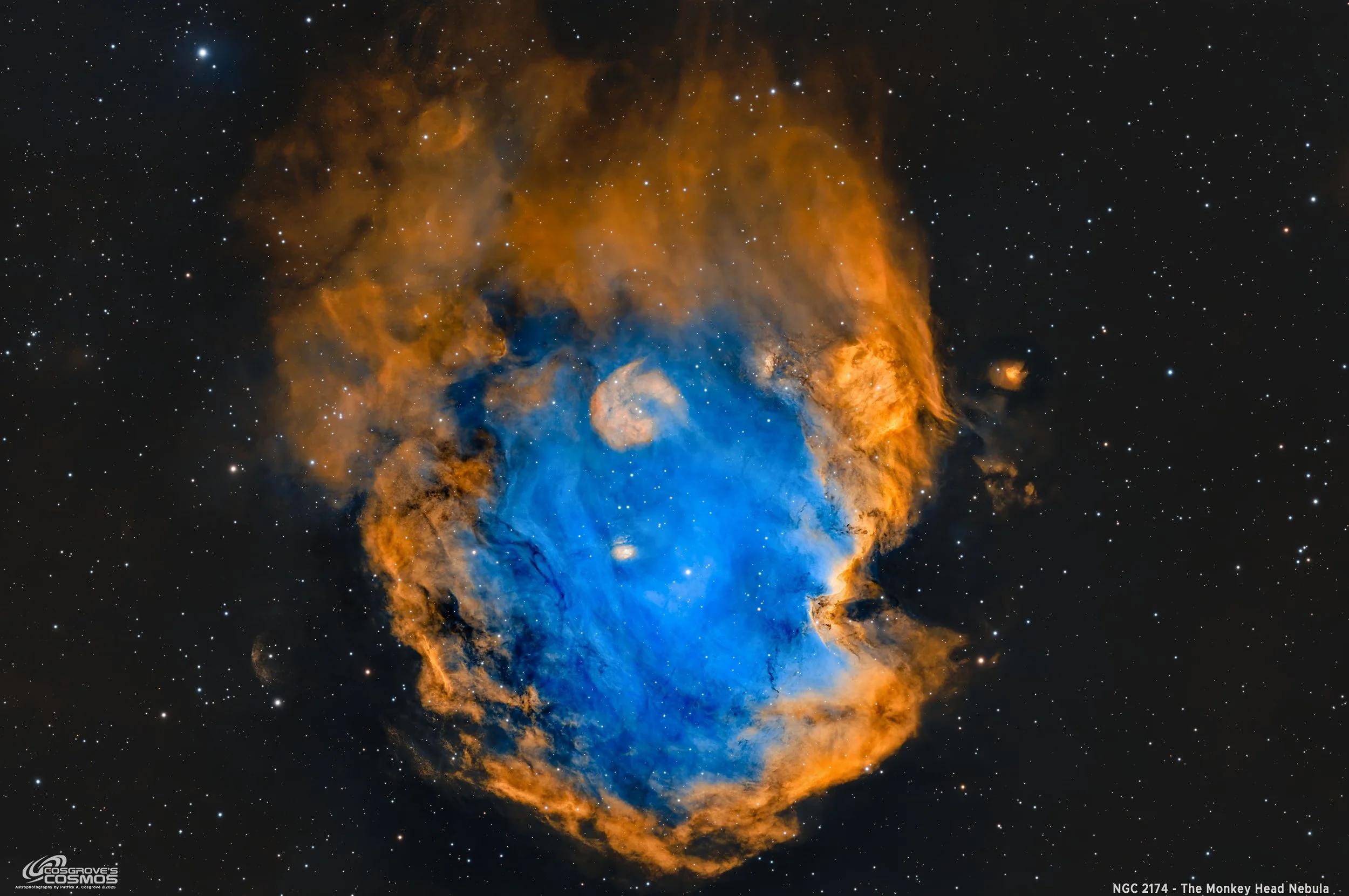
NGC 2174 - The Monkey Head Nebula - 5.1 hours SHO (click to view)
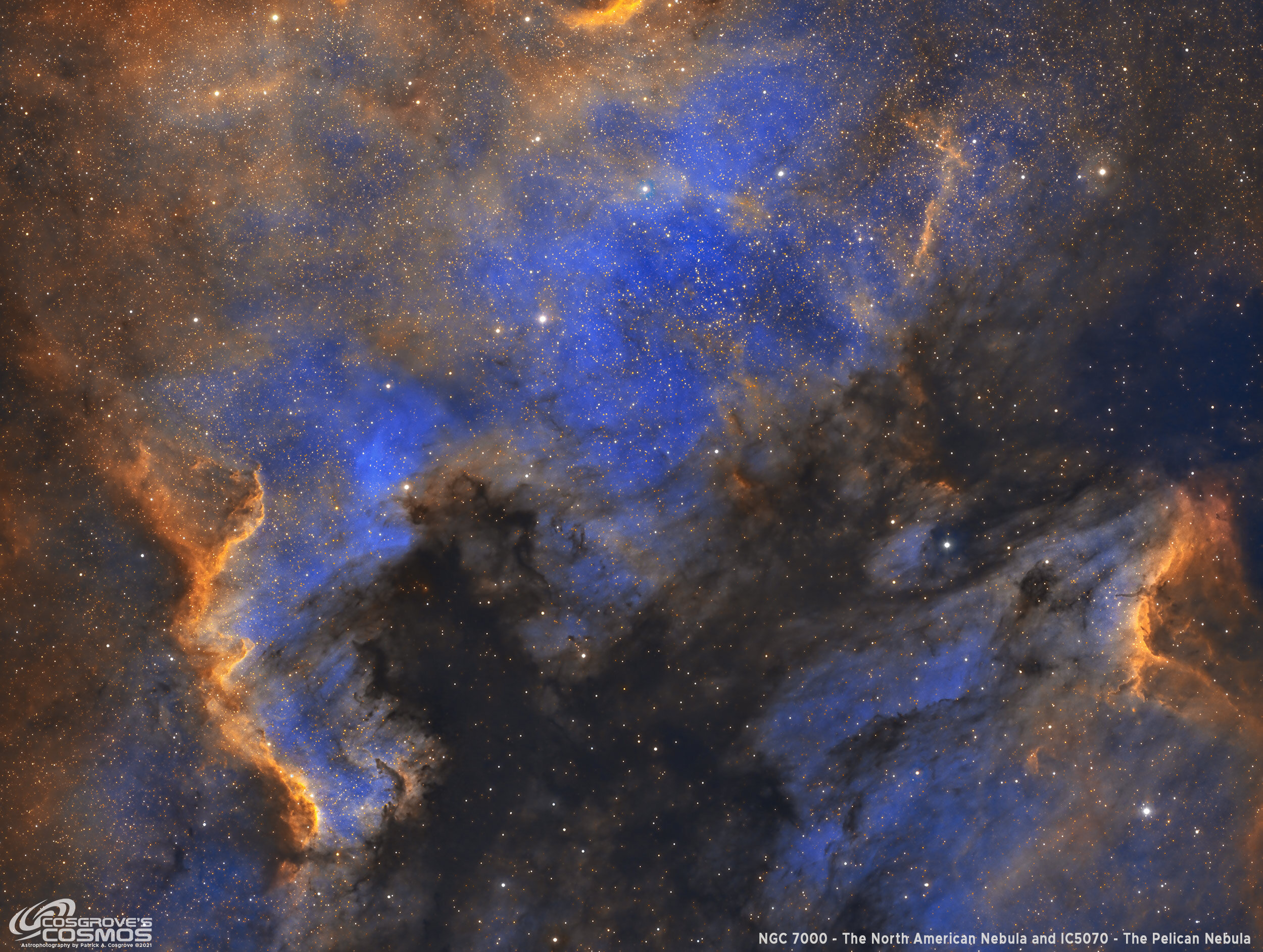
NGC 7000 - North American Nebula - with IC5070 - Pelican Nebula in 9.33 hours SHO (click to view)
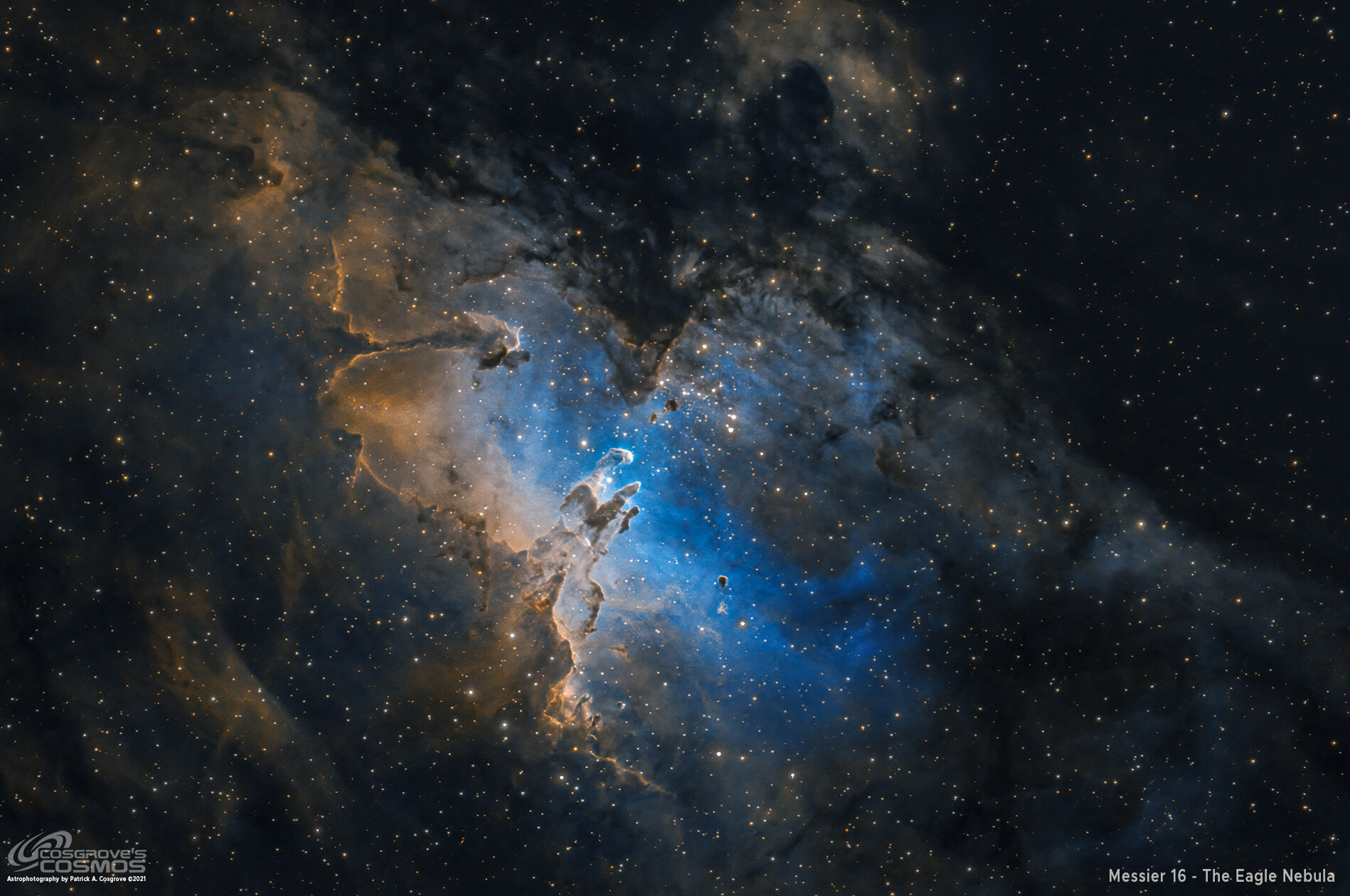
Messier 16 - The Eagle Nebula / Pillars of Creation in SHO (click to view)
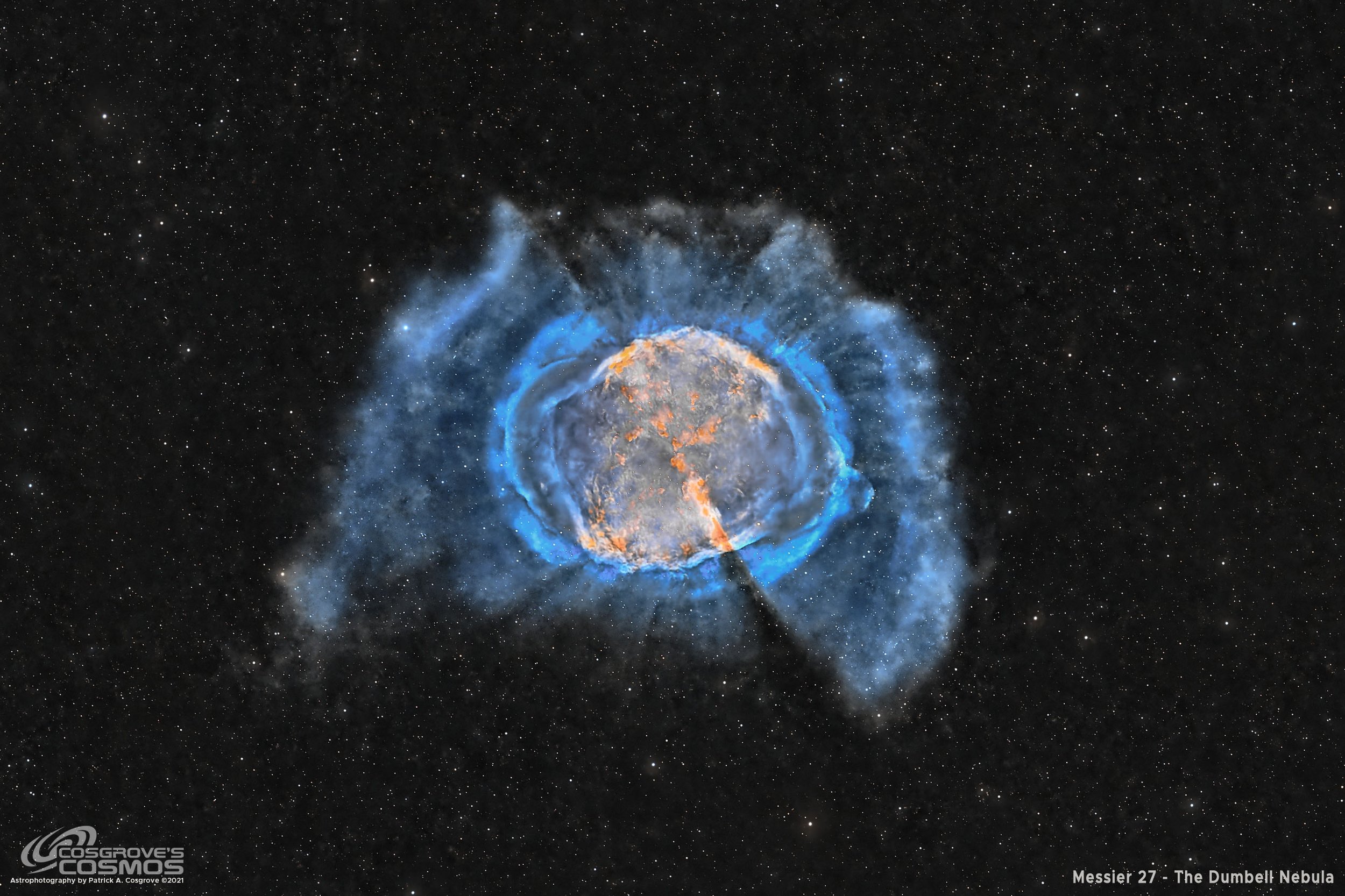
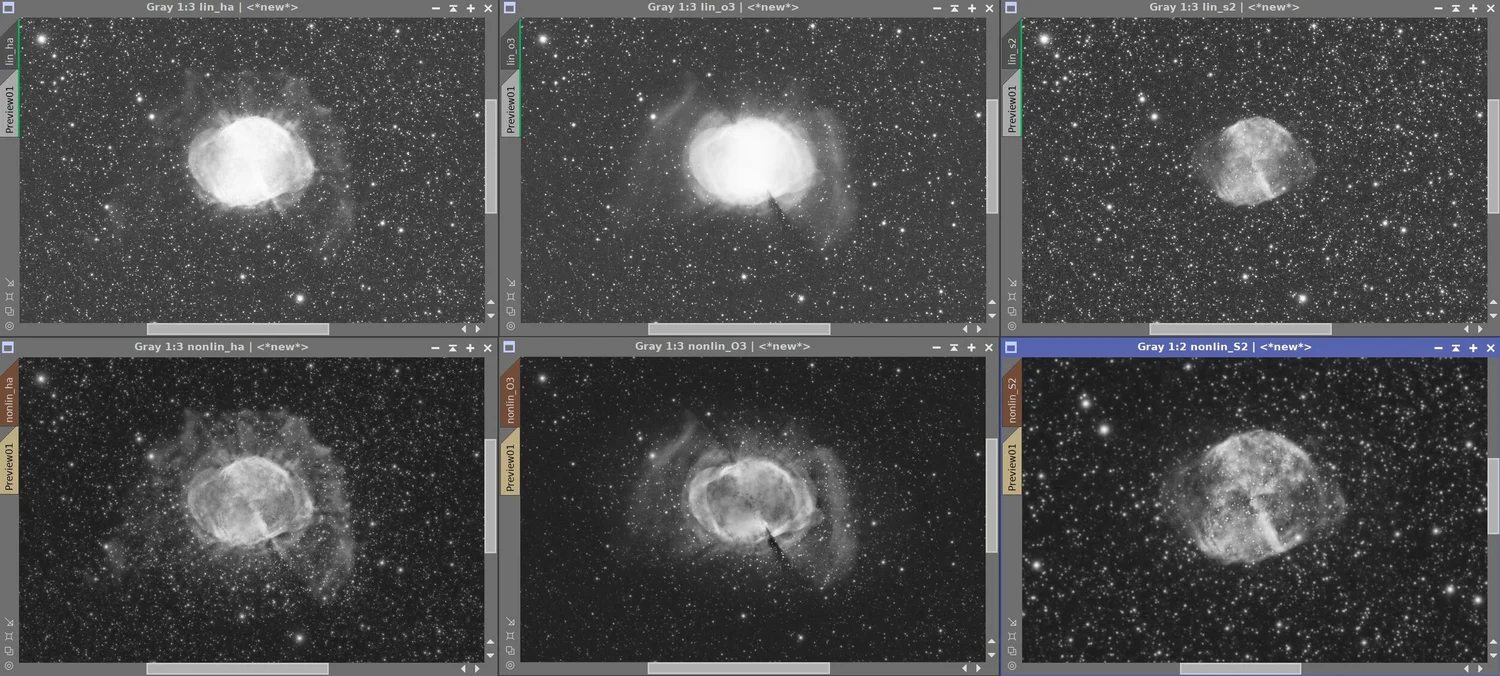
Messier 27 - The Dumbbell Nebula Data in SHO 10.25 hours (click to view)
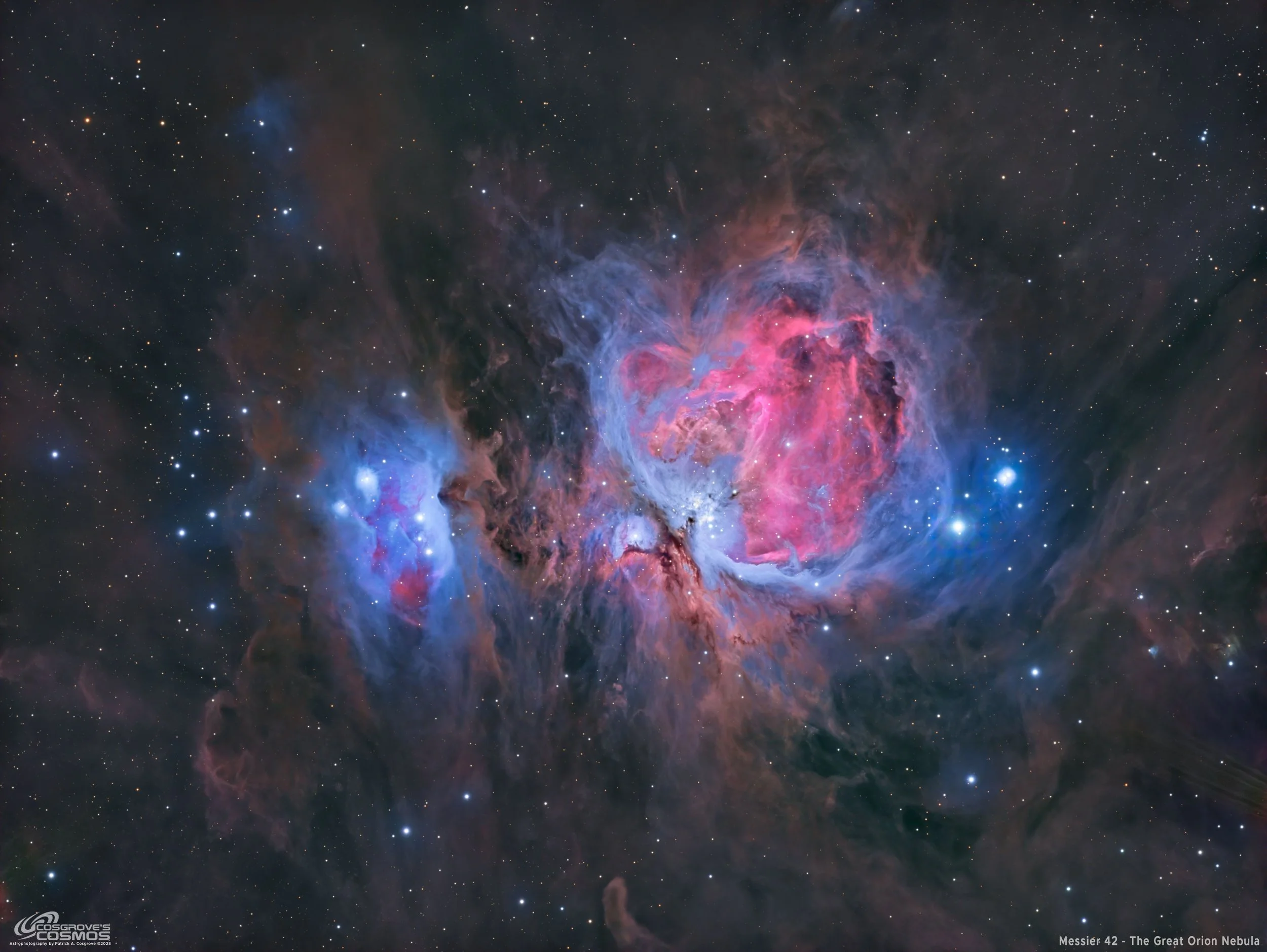
AMessier 42/43 – The Great Orion Nebula - 6.35 hours in HaLRGB (click to view)
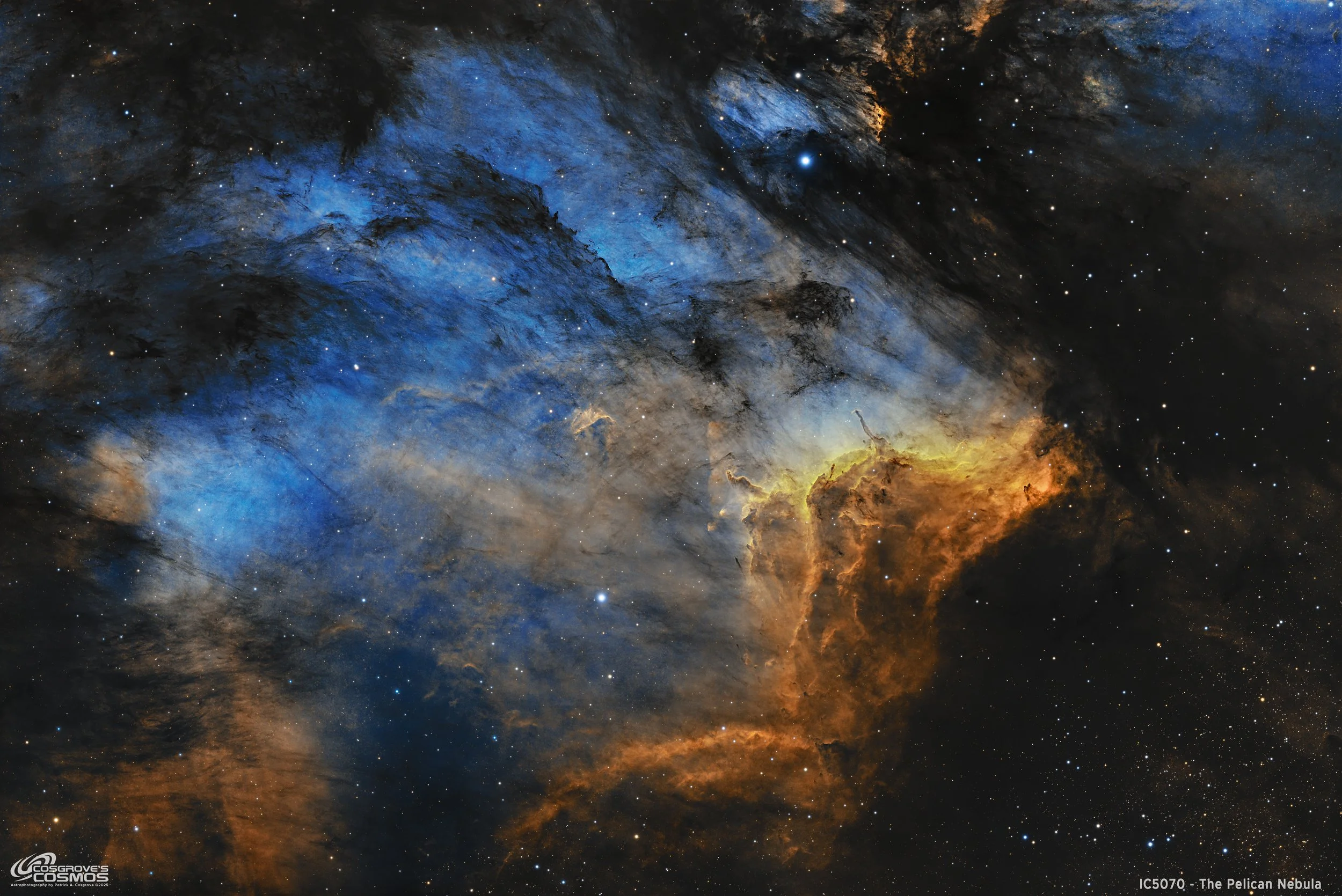
IIC 5070 - The Pelican Nebula! 18.75 hours of SHO (click to view)
IC 5068 - The Forsaken Nebula and the “Black Waterfall”- 11.9 hours SHOrgb (click to view)
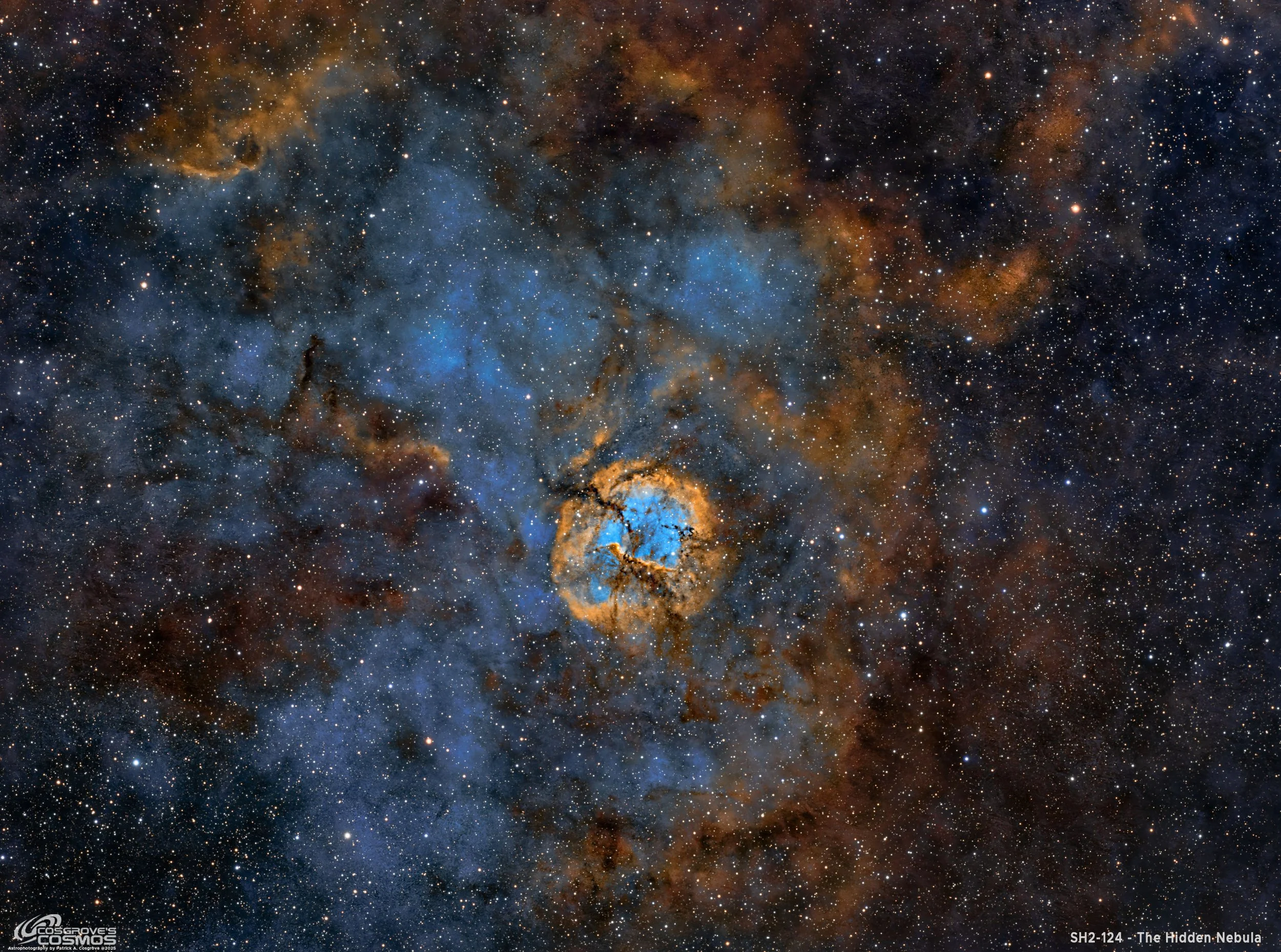
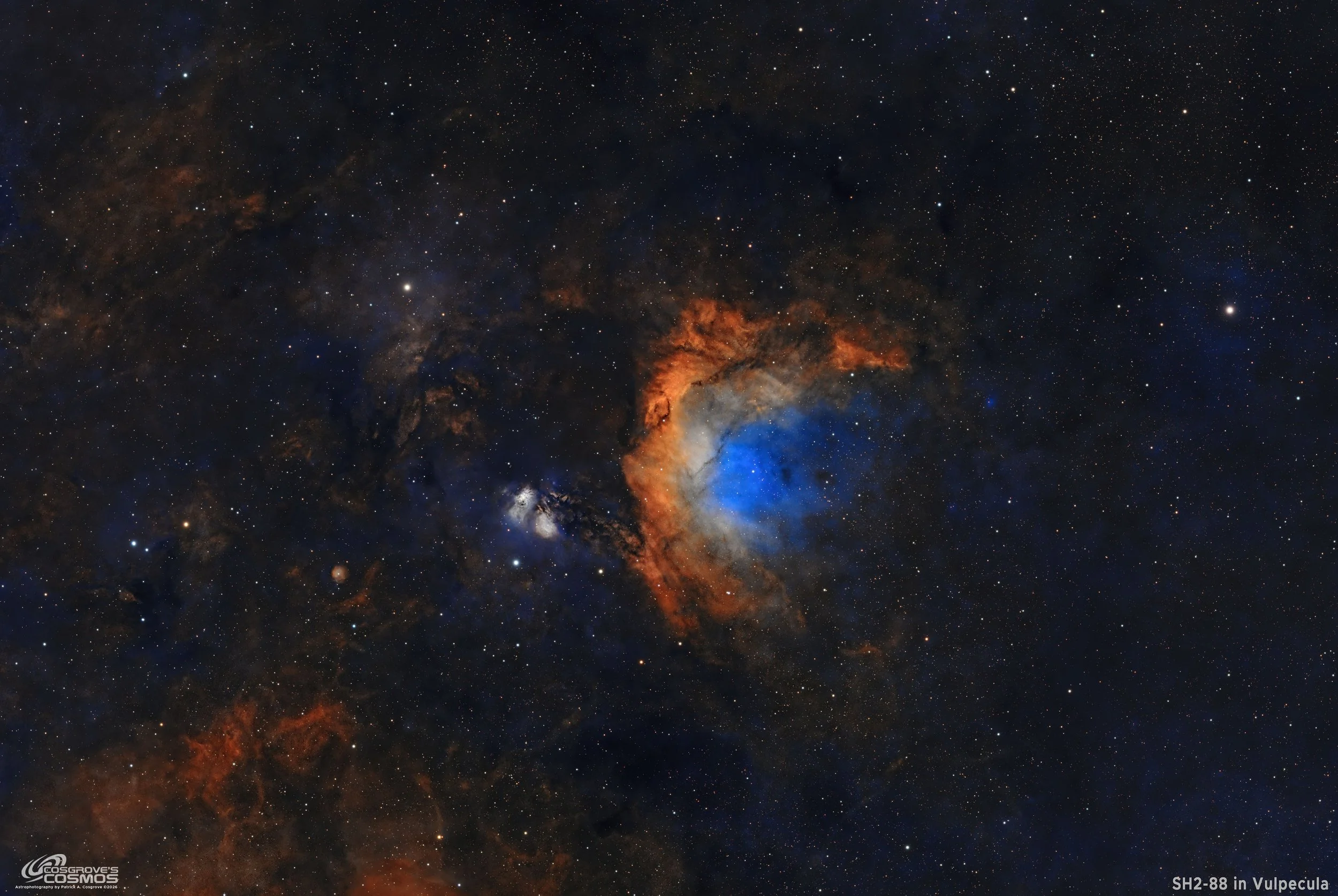
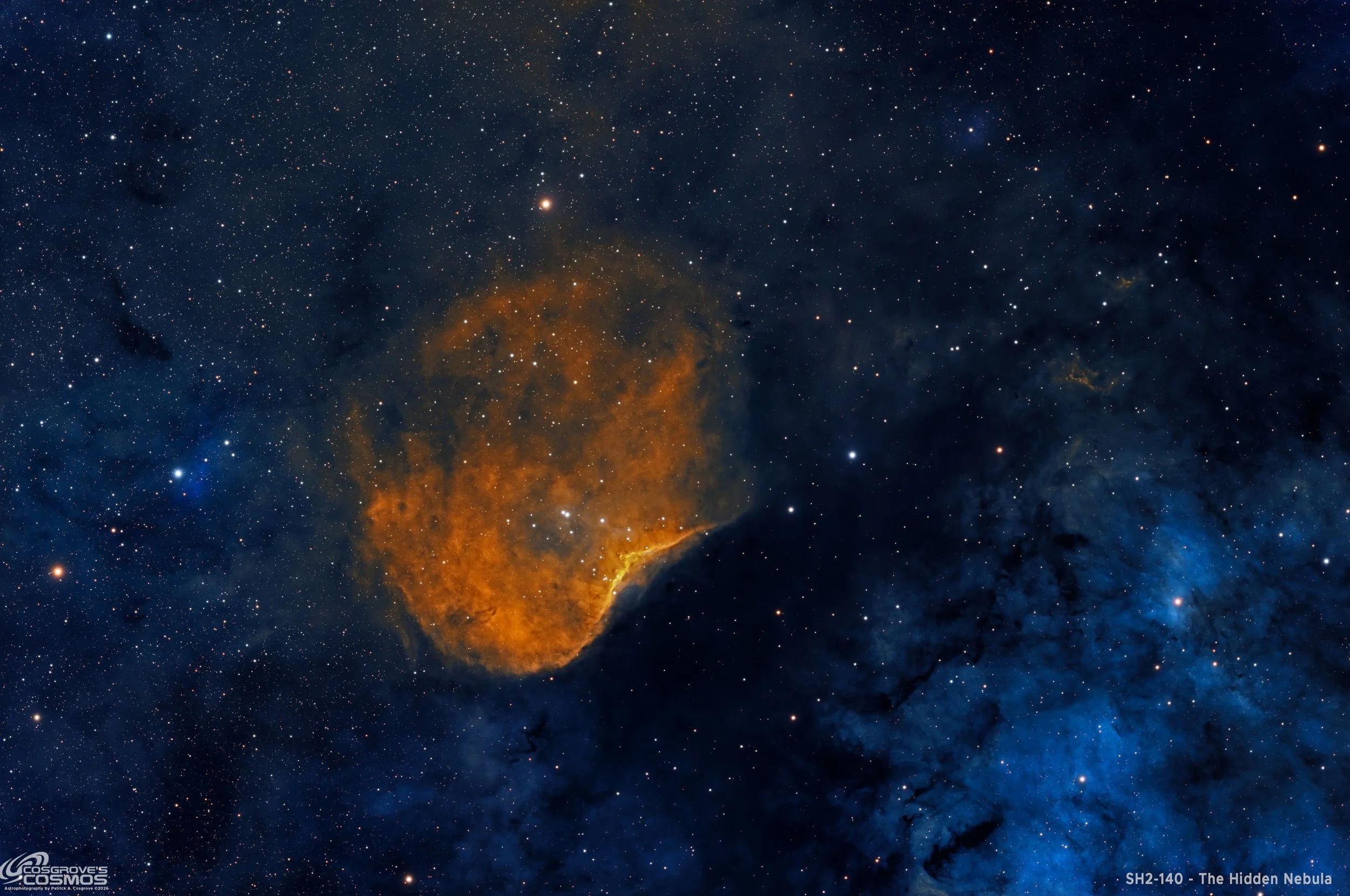
SH2-124 - The Hidden Nebula ~14.2 hours in SHOrgb (click to view)
NGC 7331 and the Deer Lick Group with Supernova SN2025rbs (click to view)
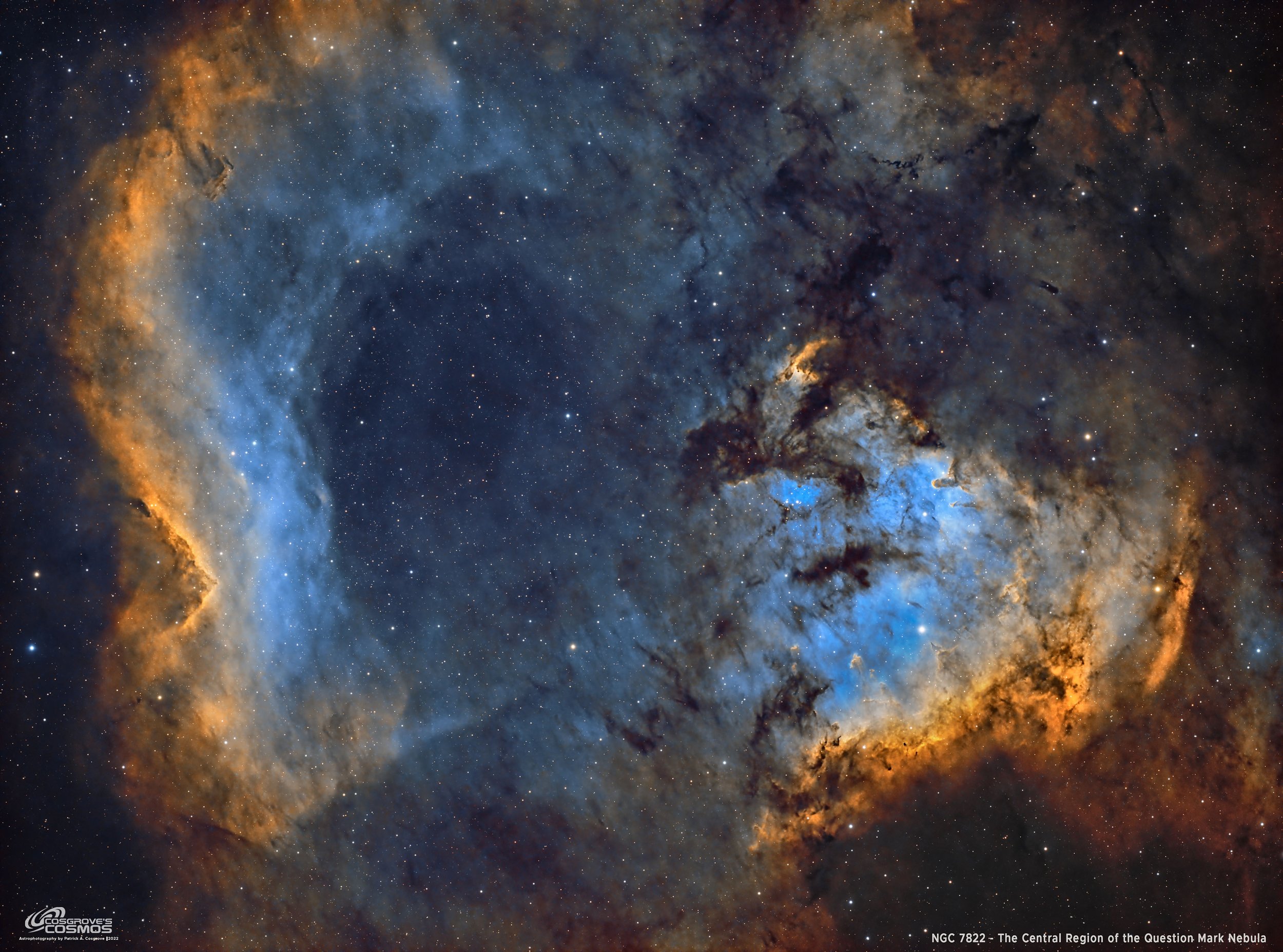
NGC 7822 - The Central Portion of the Question Mark Nebula ~14 hours in SHOrgb (click to view)
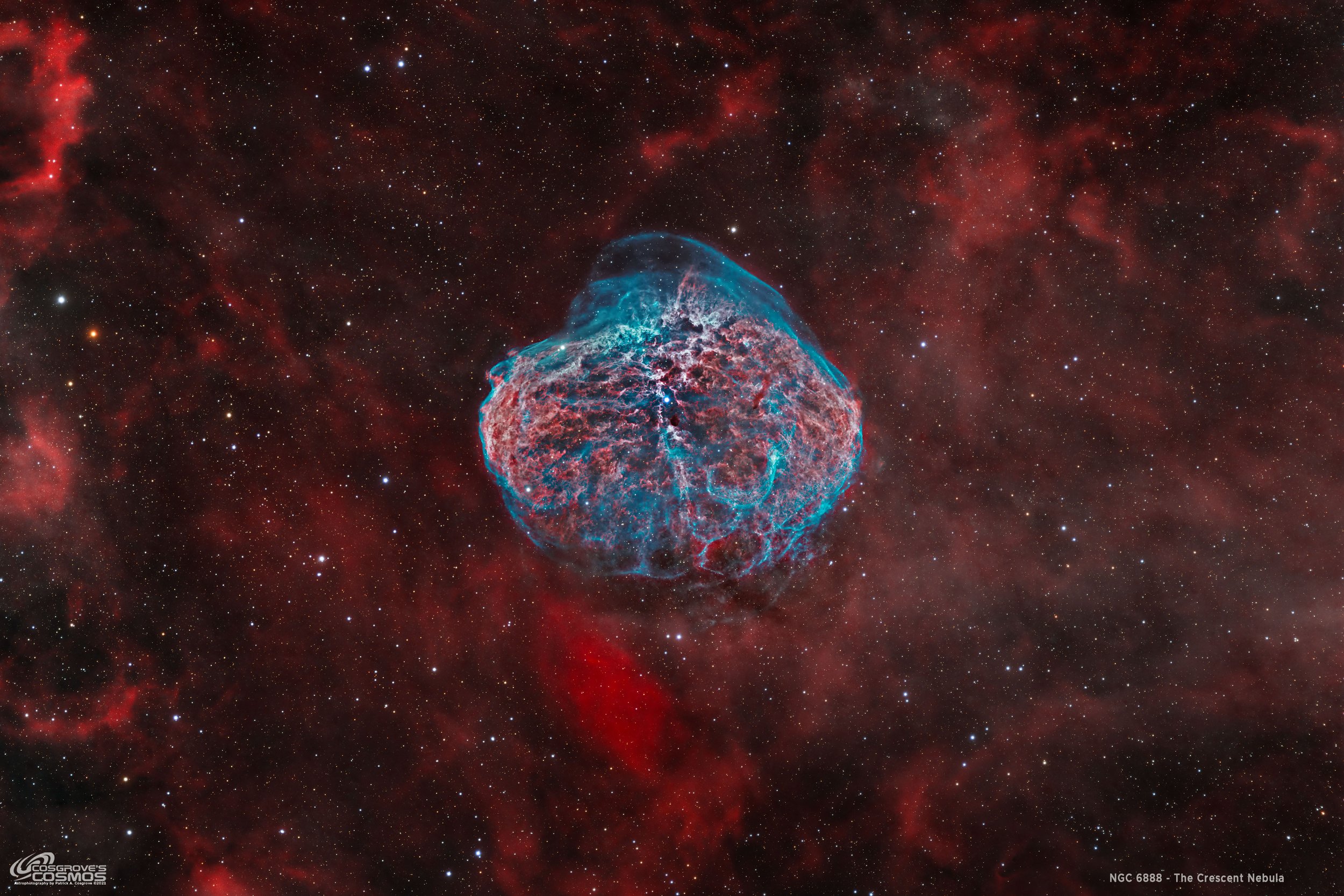
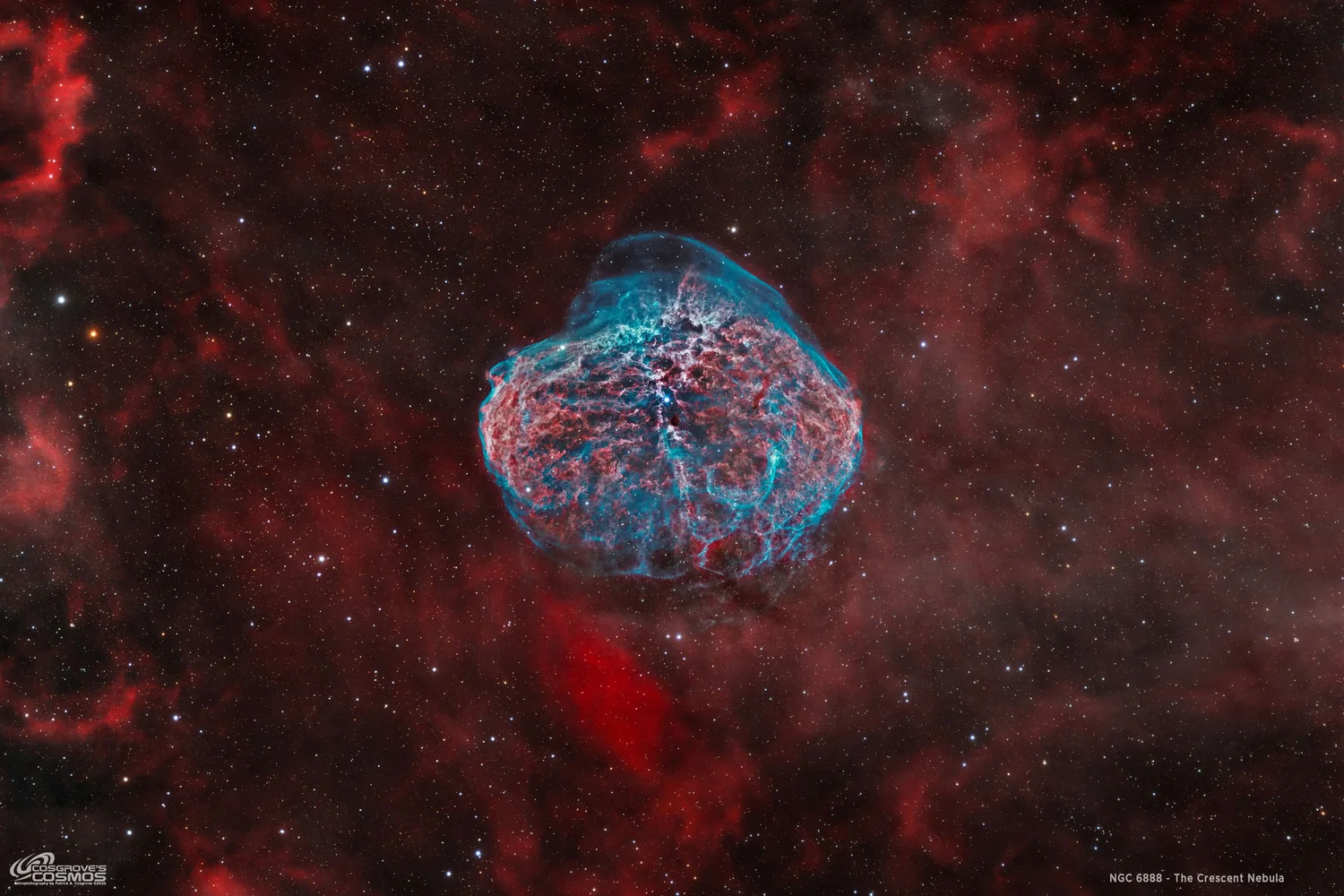
NGC 6888 - The Crescent Nebula ~11 hours in HOOrgb (click to view)
Whispering Skies Observatory - Drone View (click to view)
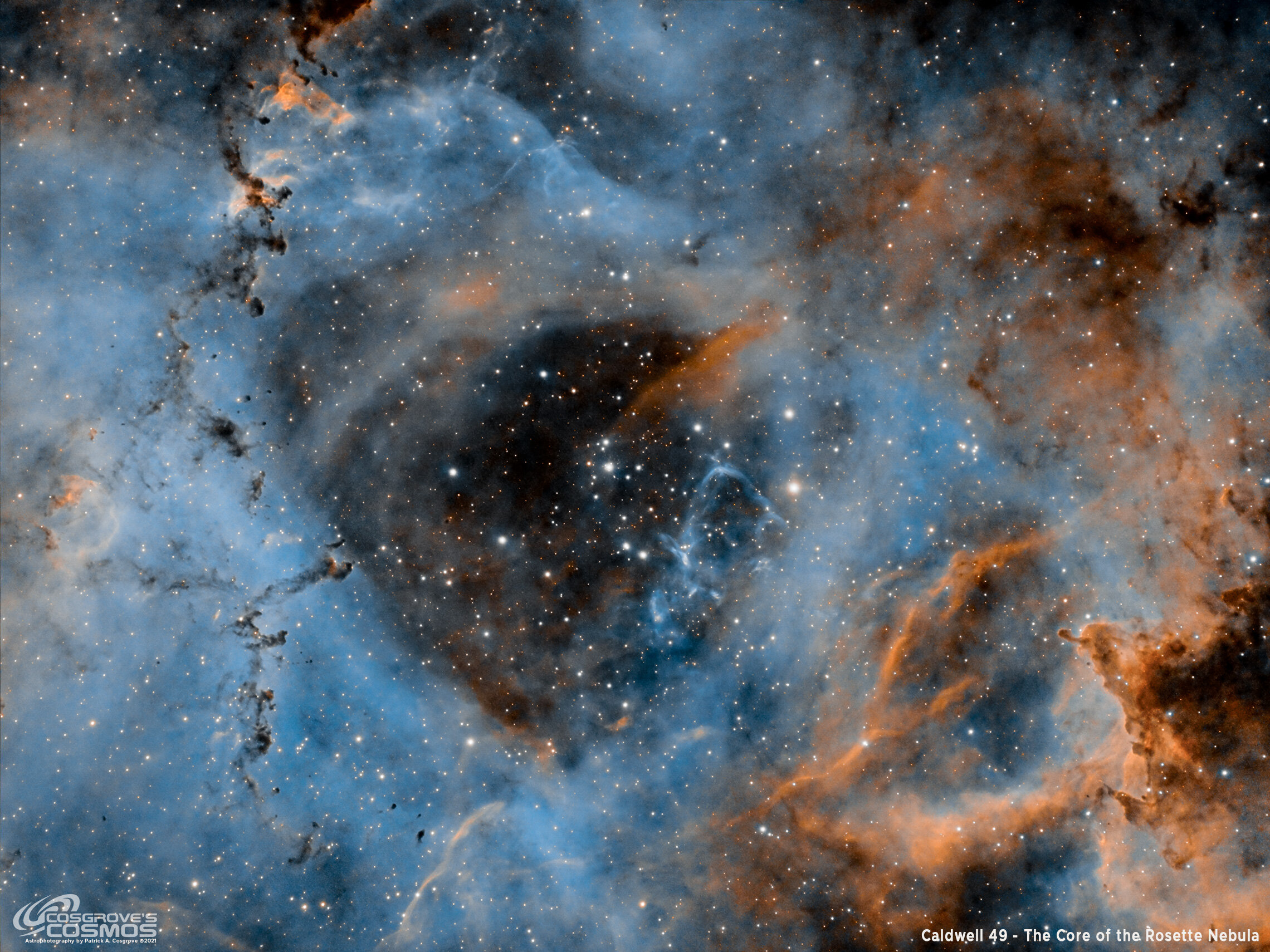
C49: The Rosette Nebula in SHO (click to view)
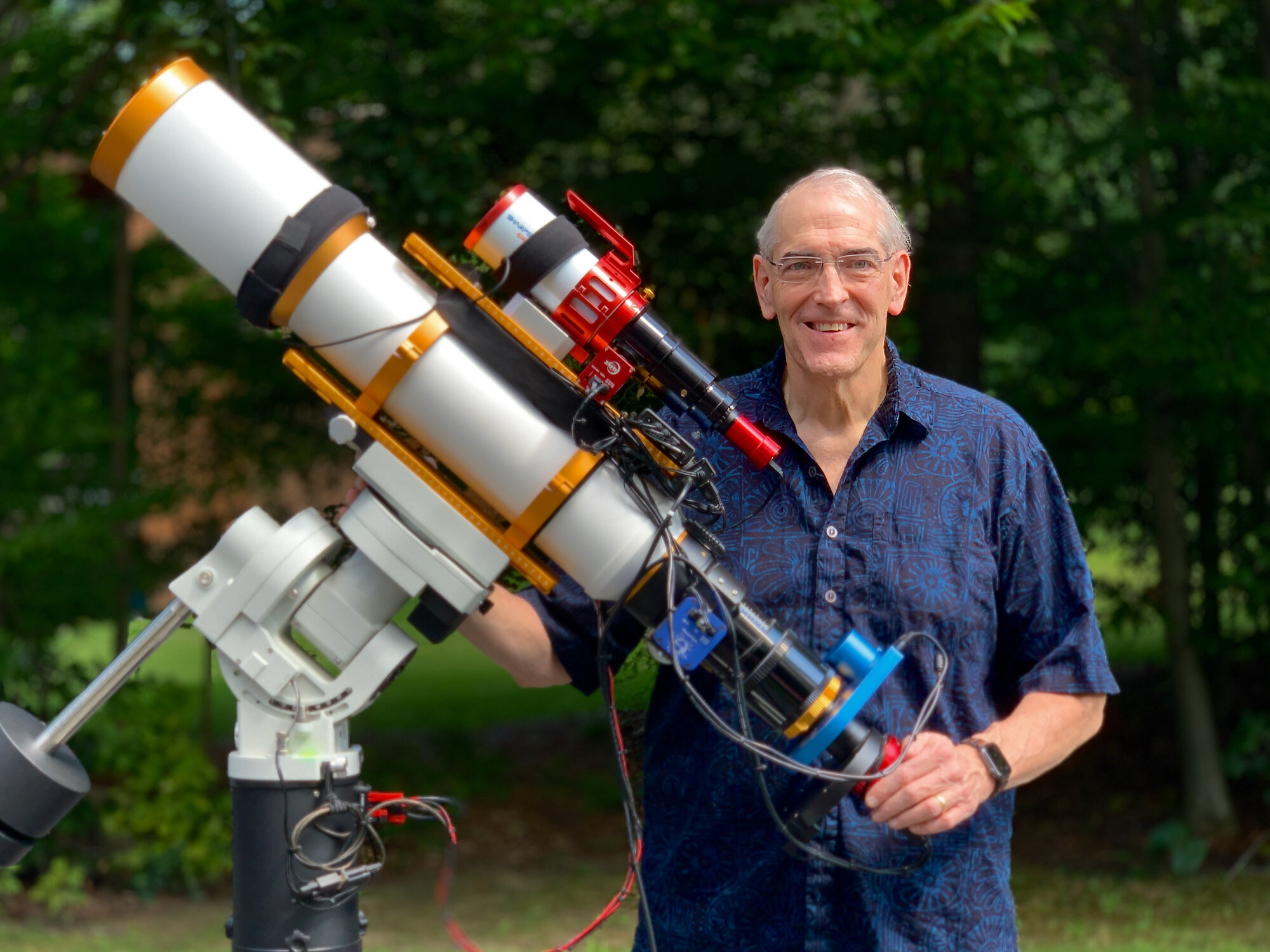
Me - Standing next to my William Optics 132mm FLT Platform (click to view)
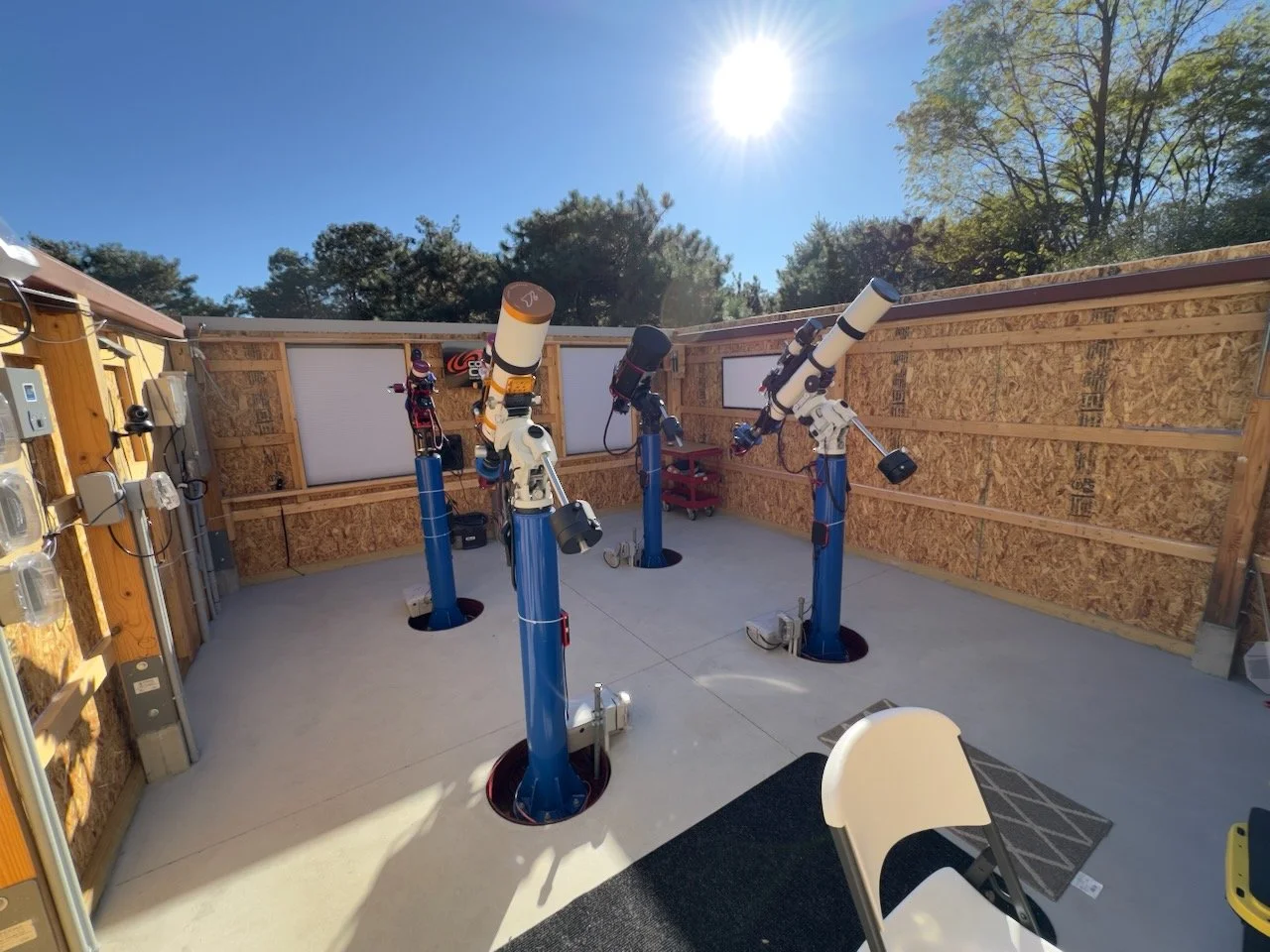
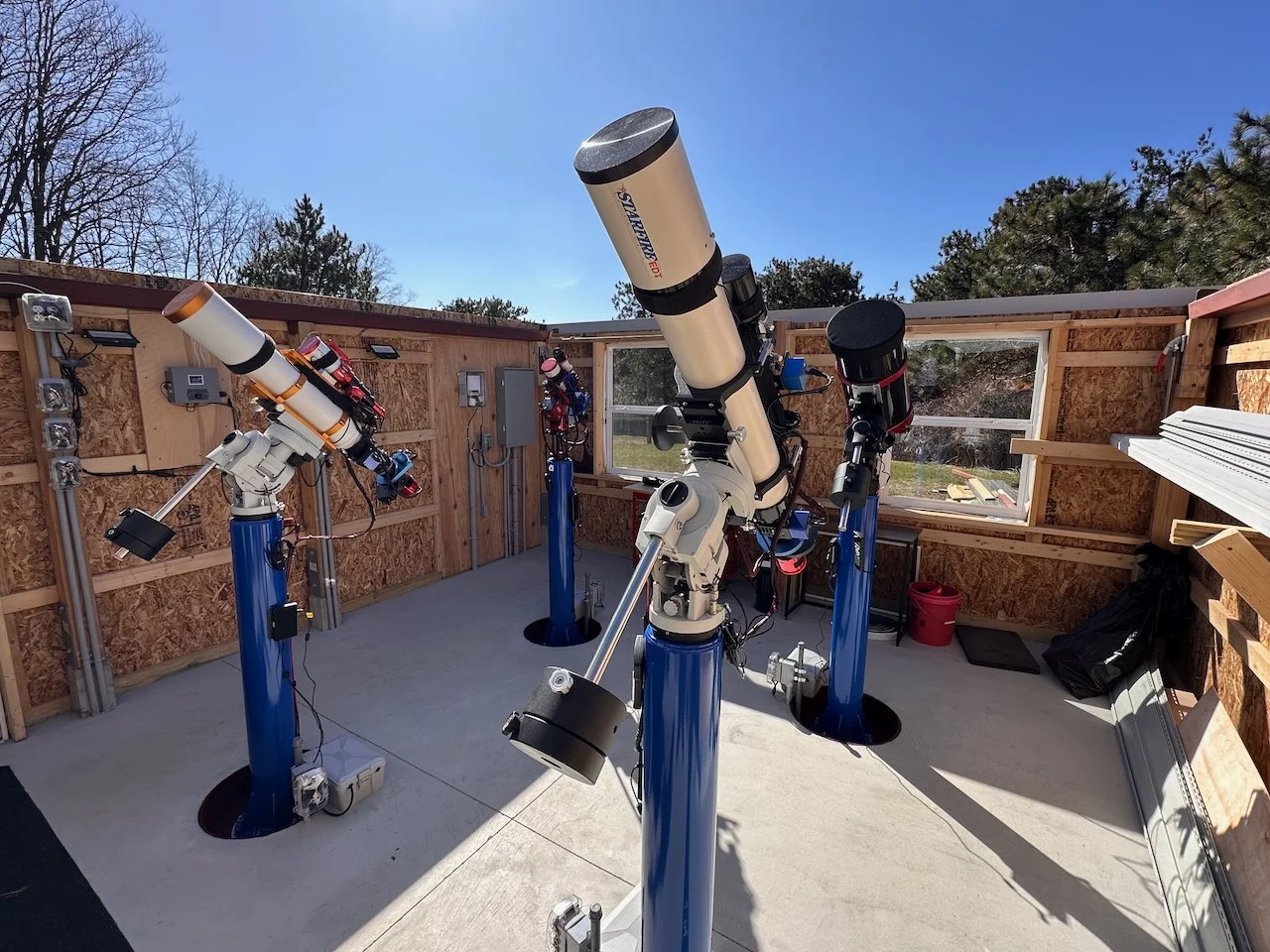
Whispering Skies Observatory with Roof Open
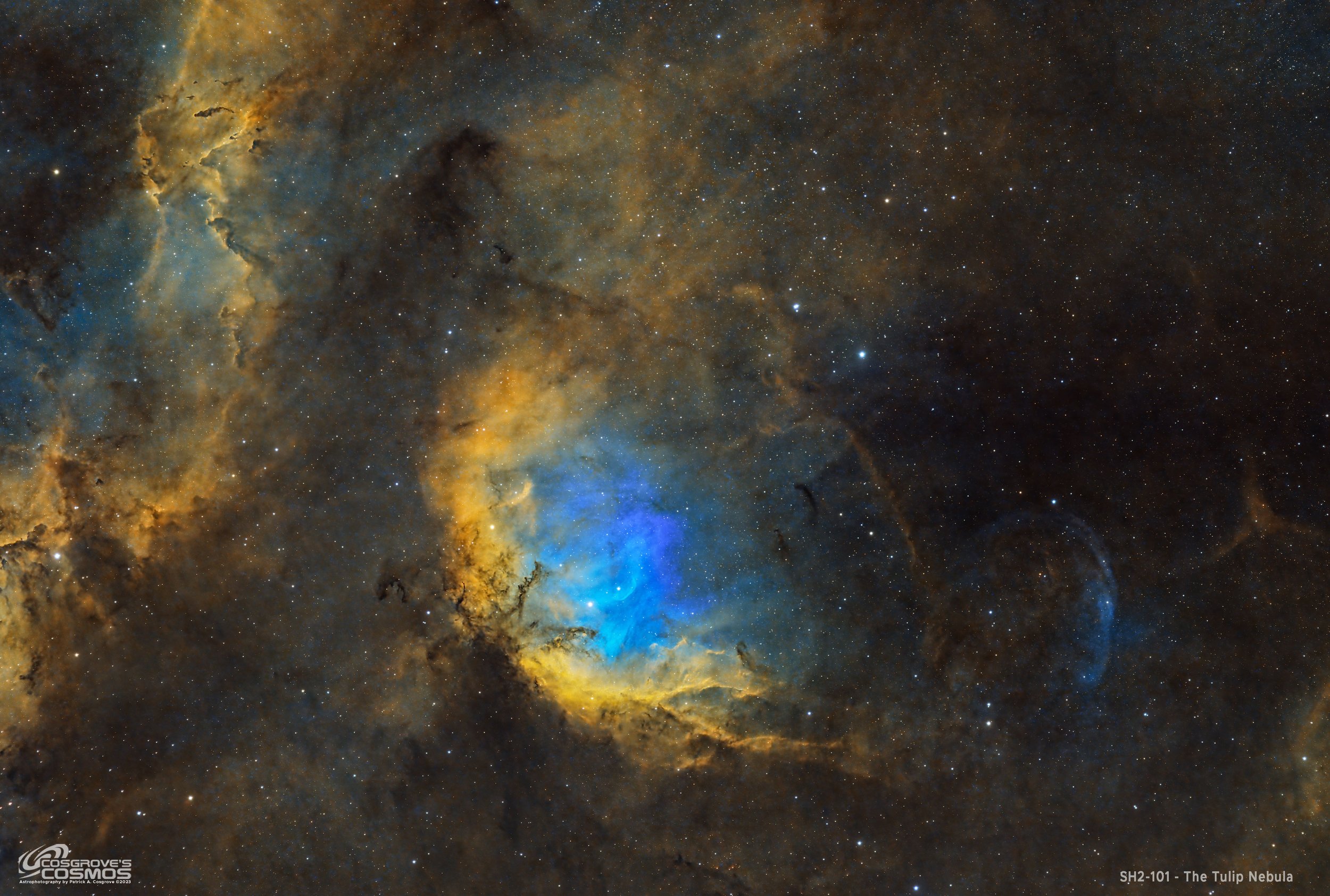
SSH2-101 - The Tulip Nebula - 12.8 Hours in SHOrgb (click to view)
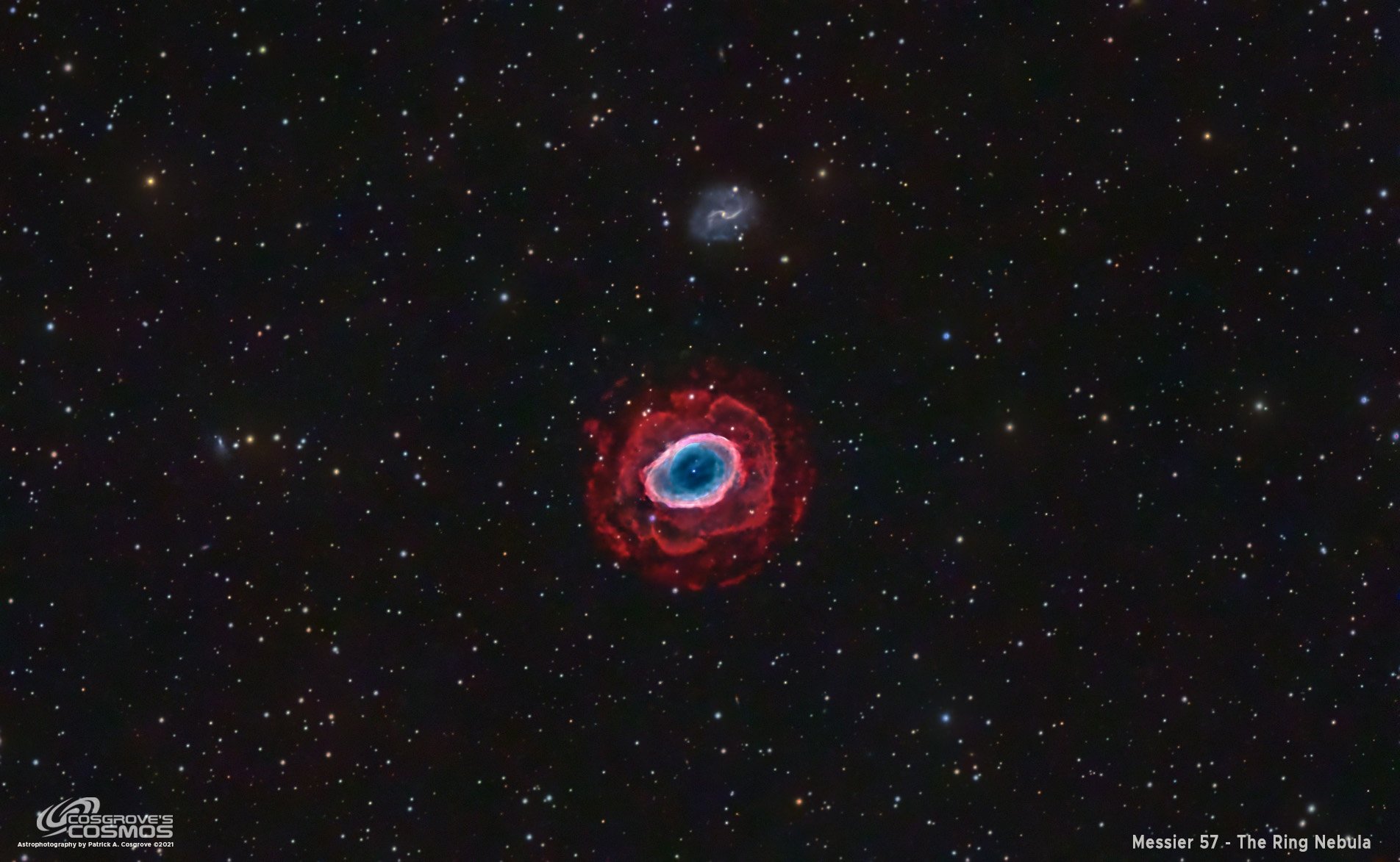
Messier 57 - The Ring Nebula - 14.7 hours in LHaRGB (click to view)
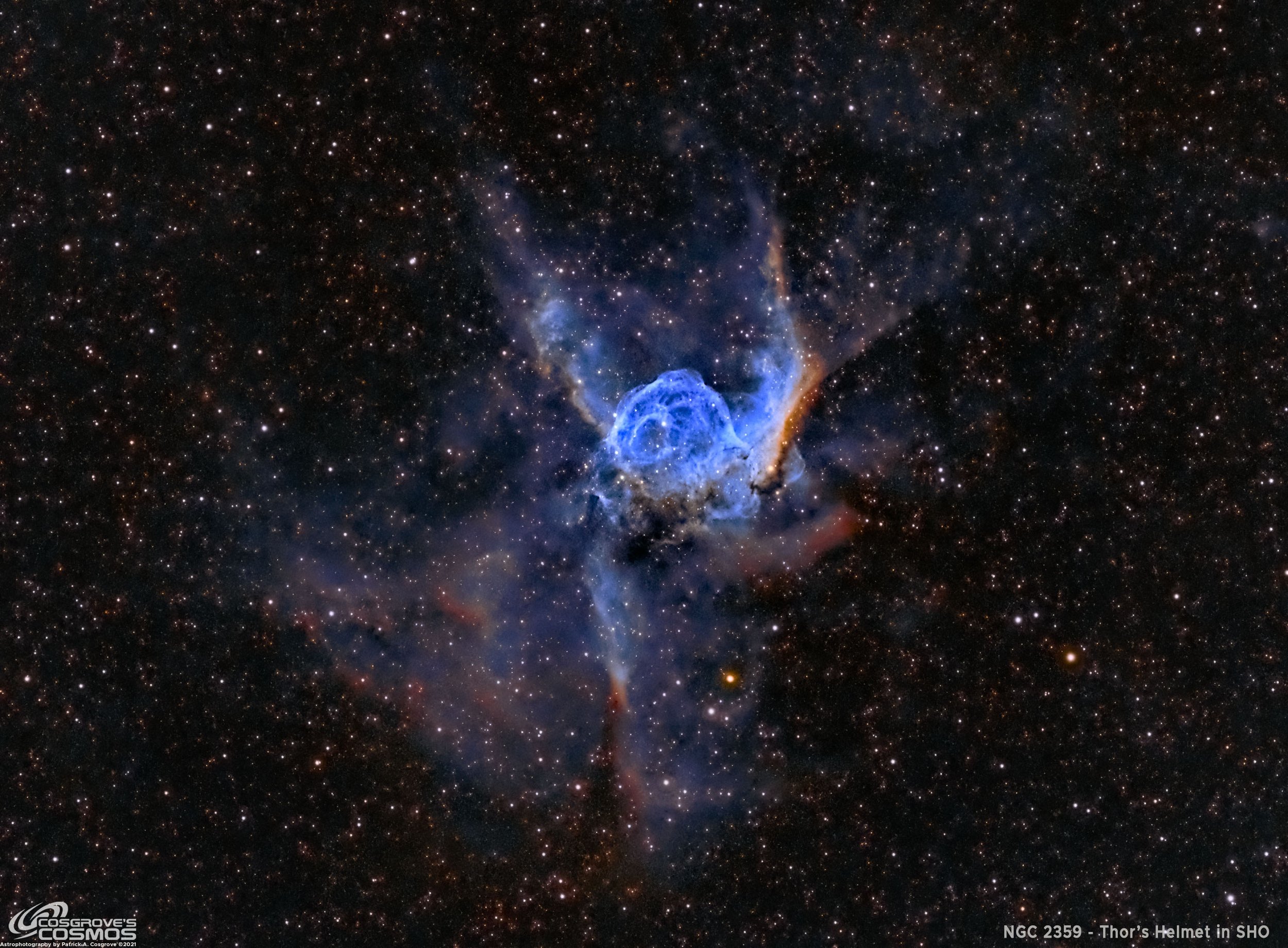
NGC 2359 - Thor’s Helmet in SHO ~only 2.5 hours! (click to view)
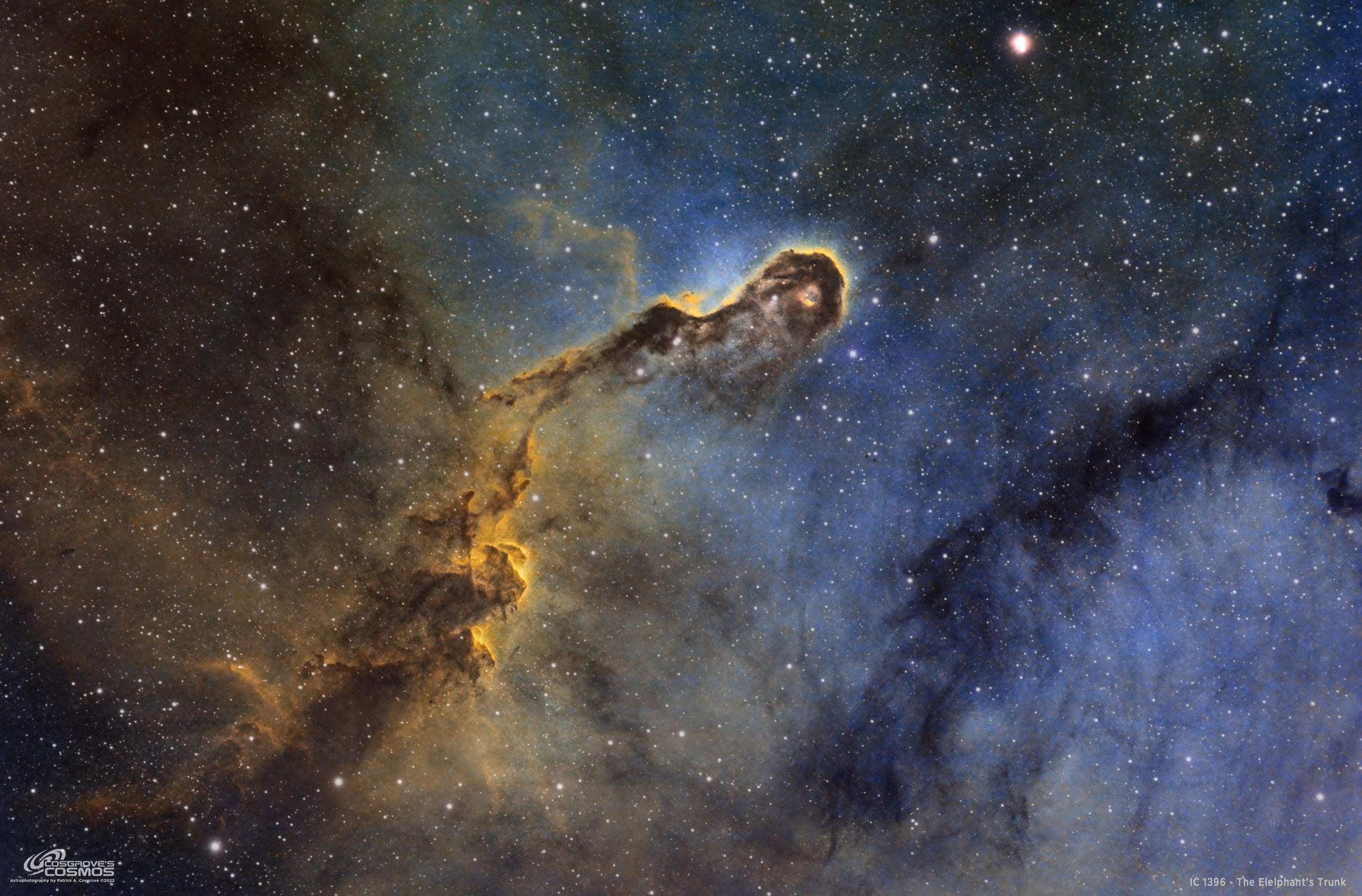
IC 1396A - The Elephant’s Trunk - 7.3 hrs in SHO (click to view)
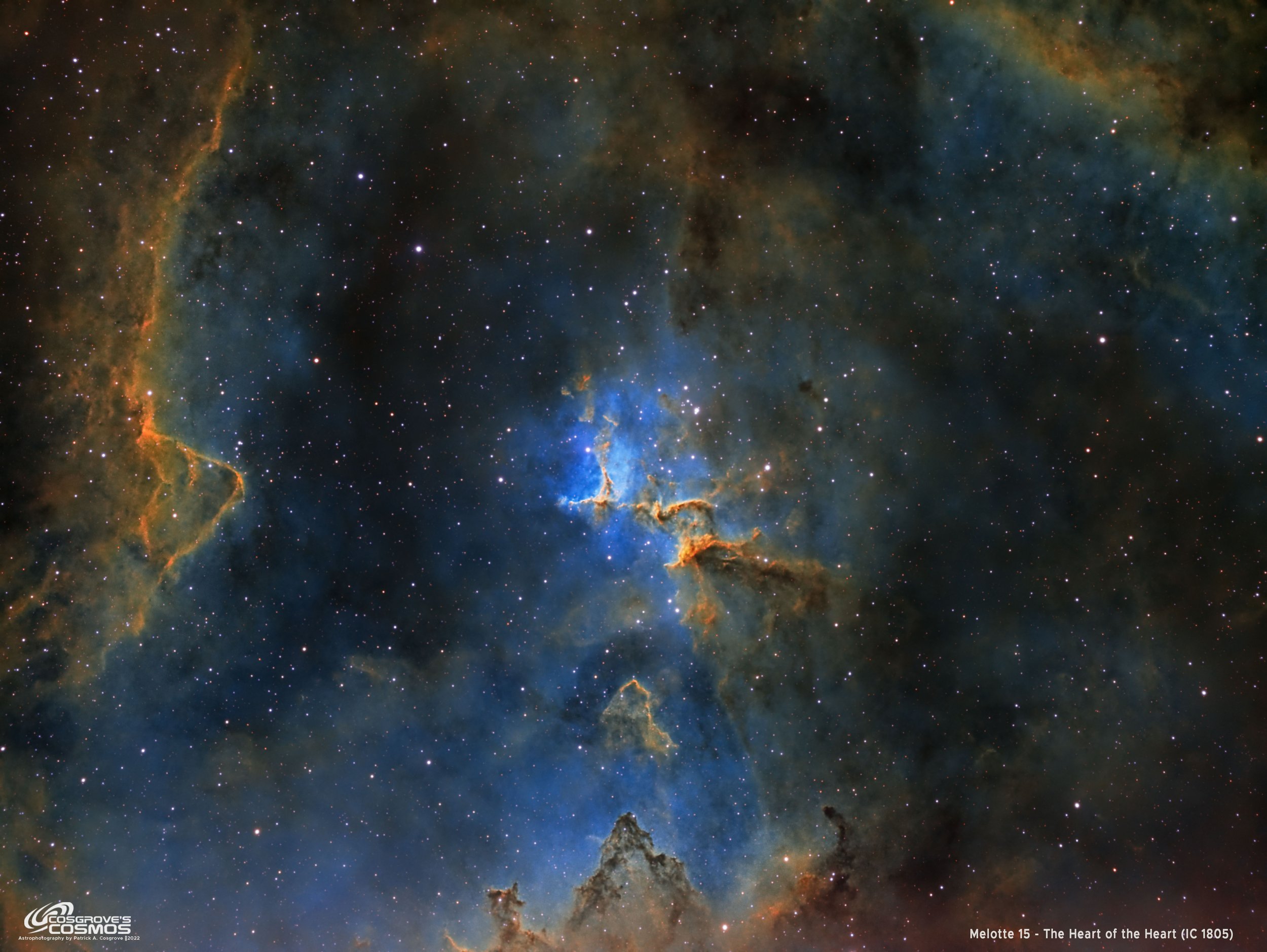
Melotte 15 - The Heart of the Heart Nebula (IC 1805) - (click to view)
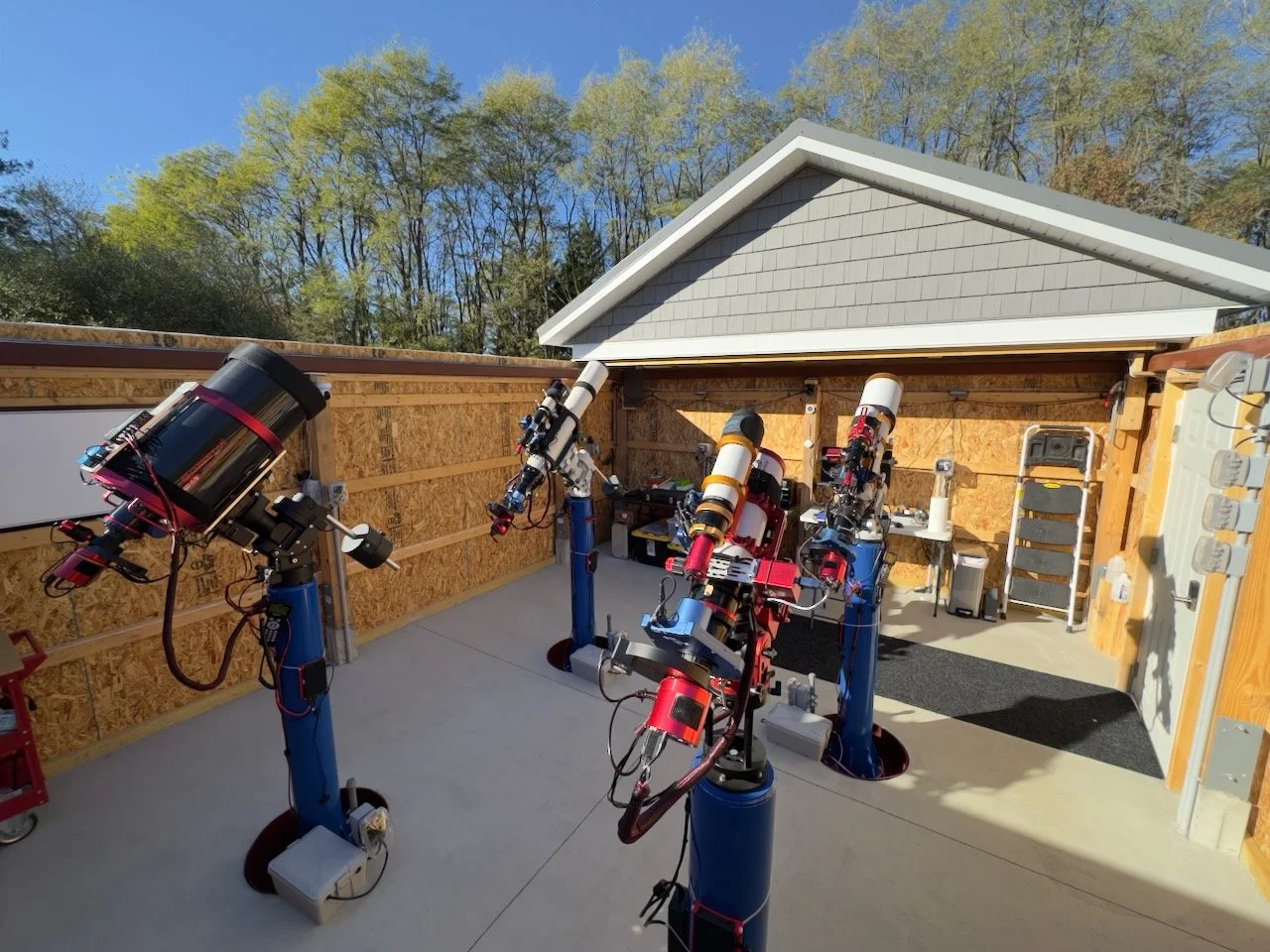
Whispering Skies Observatory - looking North (click to view)
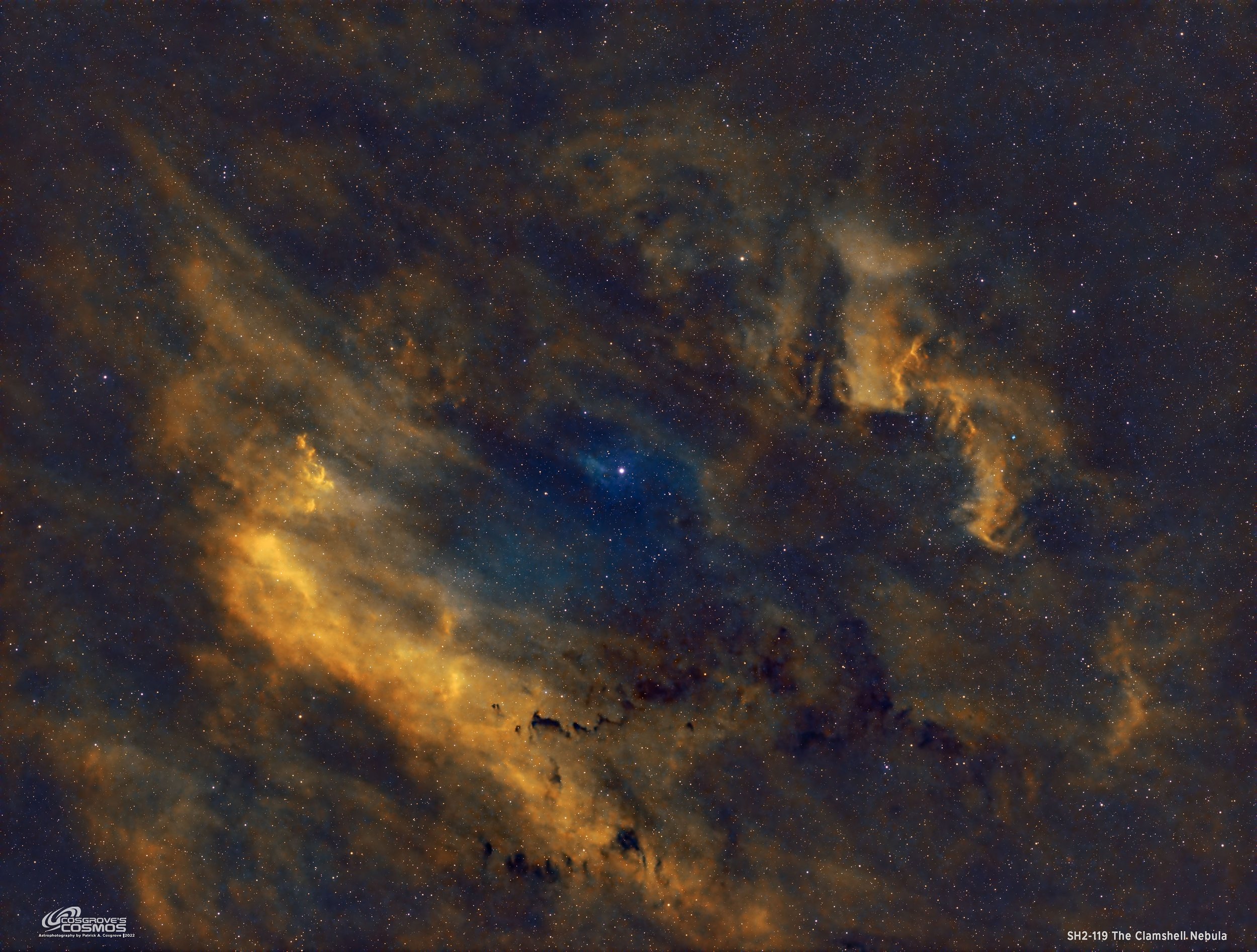
SH2-119 The Clamshell Nebula - 3.5 Hours in SHO - (vlick to view)
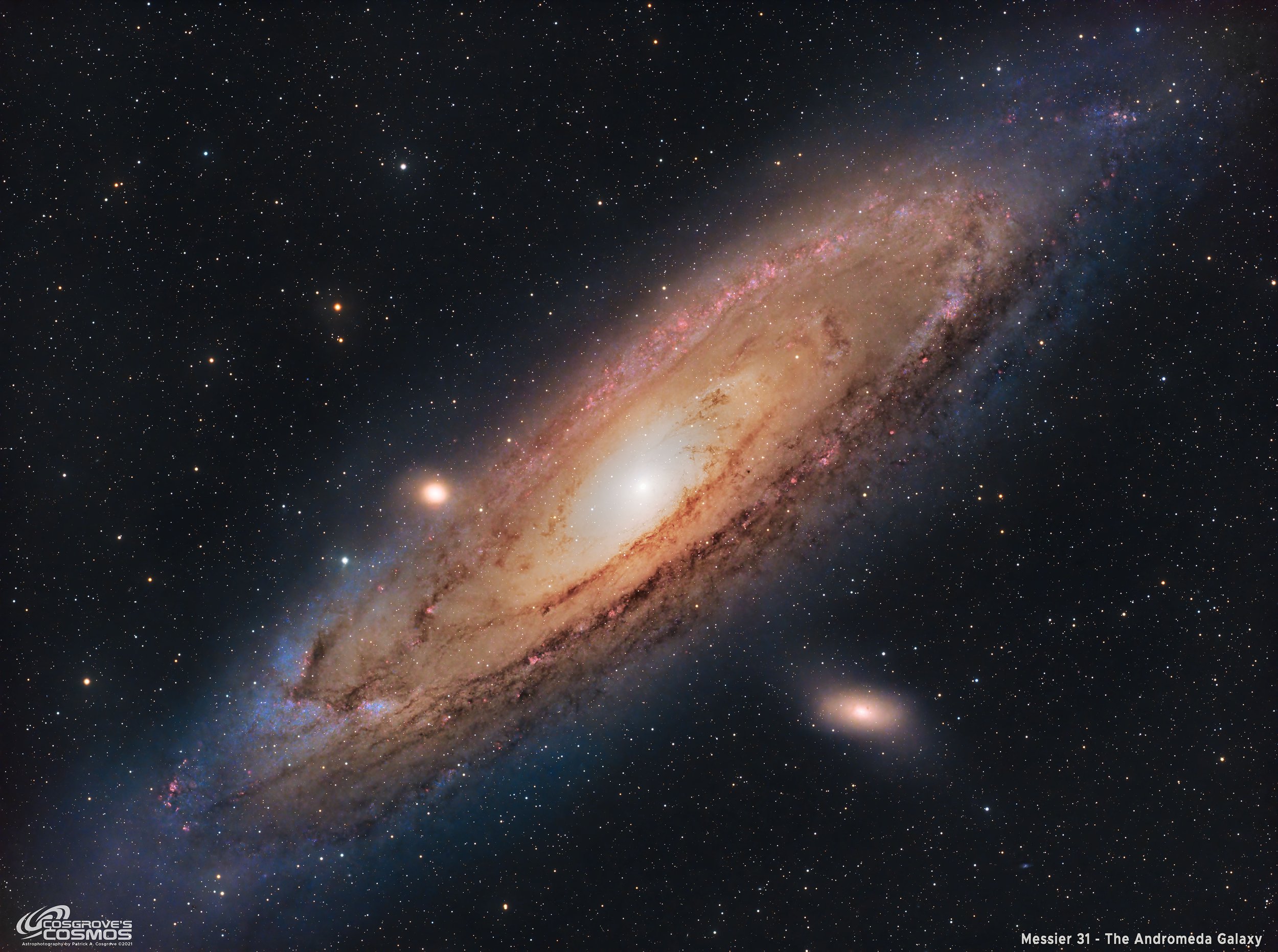
Messier 31 - The Andromeda Galaxy - 6 hours in LHaRGB (click to view)
Aerial view of Whispering Skies Observatory (click to view)
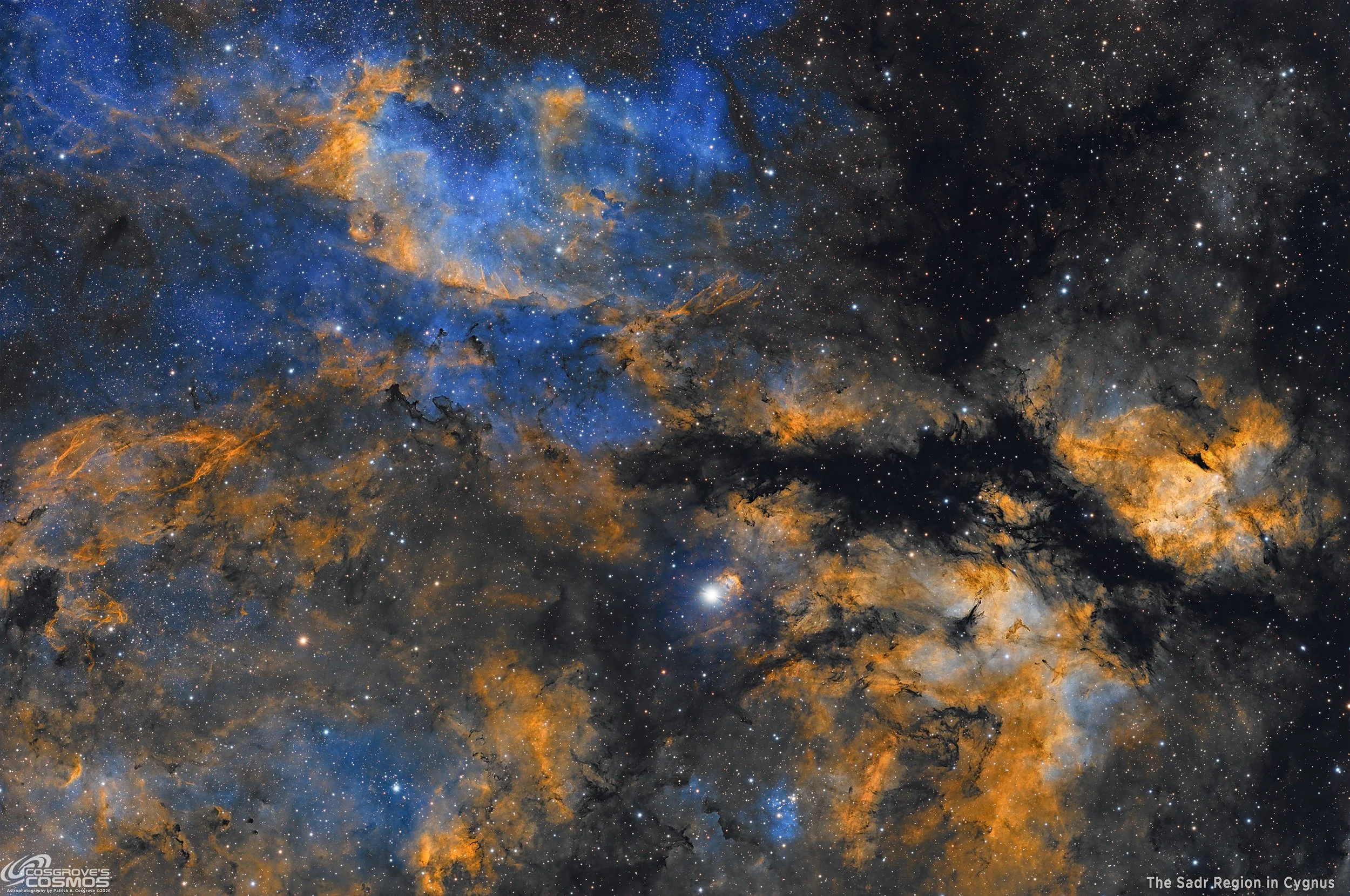
The Sadr Region of the Cygnus
Welcome to Cosgrove’s Cosmos
I created this site to share my deep-sky astrophotography and the practical lessons I’ve learned—what worked, what didn’t, and why. I’m still learning every day, and my goal is to make that learning useful to others who want to improve their own results.
Here you’ll find
- Full imaging project reports — target selection, capture details, and annotated, step-by-step processing walkthroughs
- Telescope & imaging-train setup details
- Gear notes and field-proven configurations
- Tips & techniques for capture and processing
- Observatory project updates and build details
Everything is here so you can see exactly what I do and how I do it—learn from the wins and the mistakes—and apply it to your own astrophotography journey.
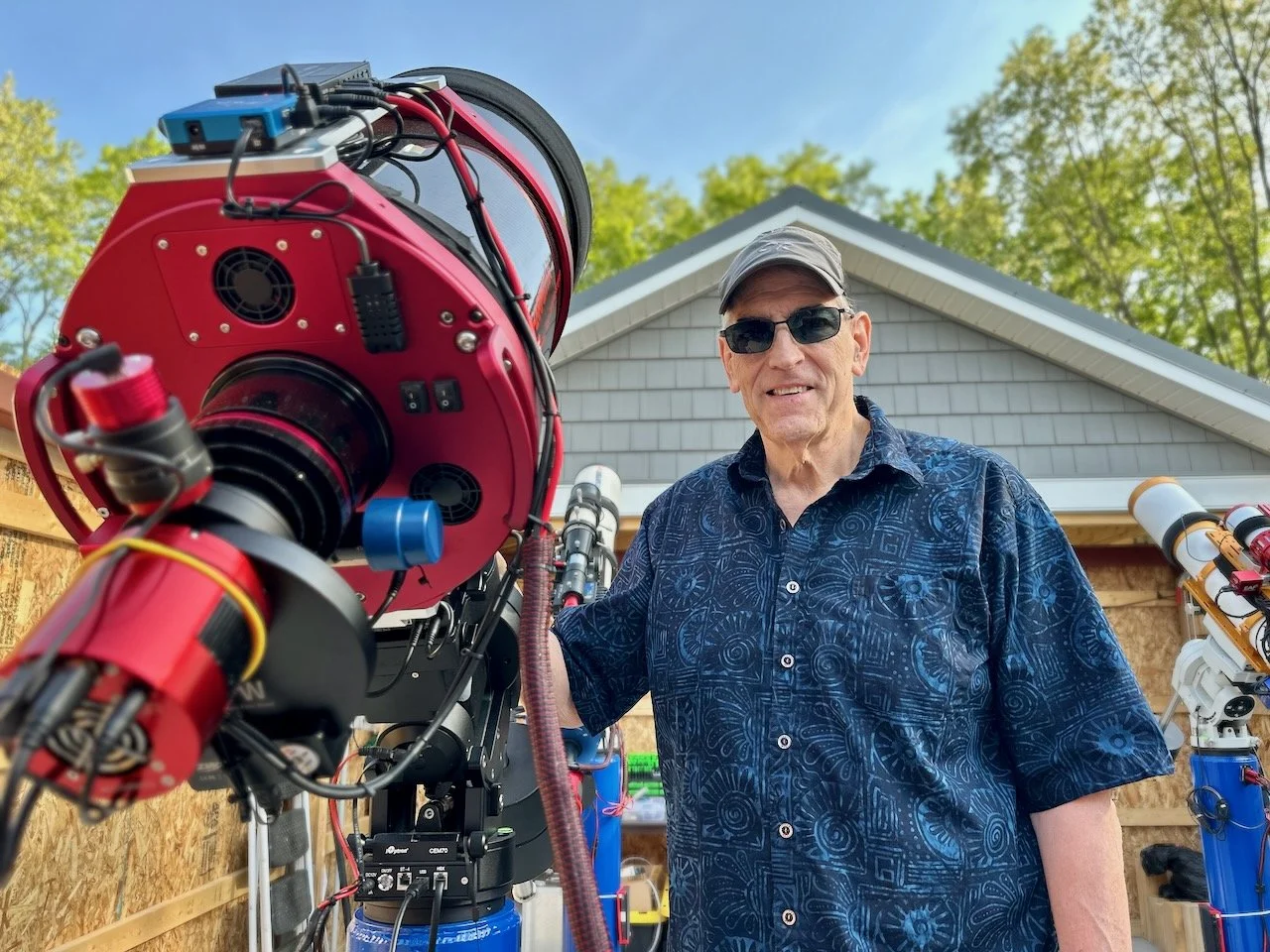
This is me with my most recent telescope platform - the Sharpstar SCA260 V2!
WhyAstrophotography?
Because it is a challenge. Because it is precise. Because it allows a person to capture amazing pictures of objects in our Universe that can’t easily be seen with the naked eye. Because it feels like magic. Because it adds a dash of the extraordinary to the common elements of our life.
Astrophotography lets you reveal real structure in the deep sky—by collecting faint photons over time and extracting signal from noise. It’s equal parts planning, precision capture, and careful processing.
I share the full story behind each image—what I chose, why I chose it, how I captured it, and exactly how I processed it—including the projects that didn’t go well, because that’s where a lot of the learning happens.
Want the deeper explanation of how this works?
(photons → telescope → sensor → tracking → stacking → processing)
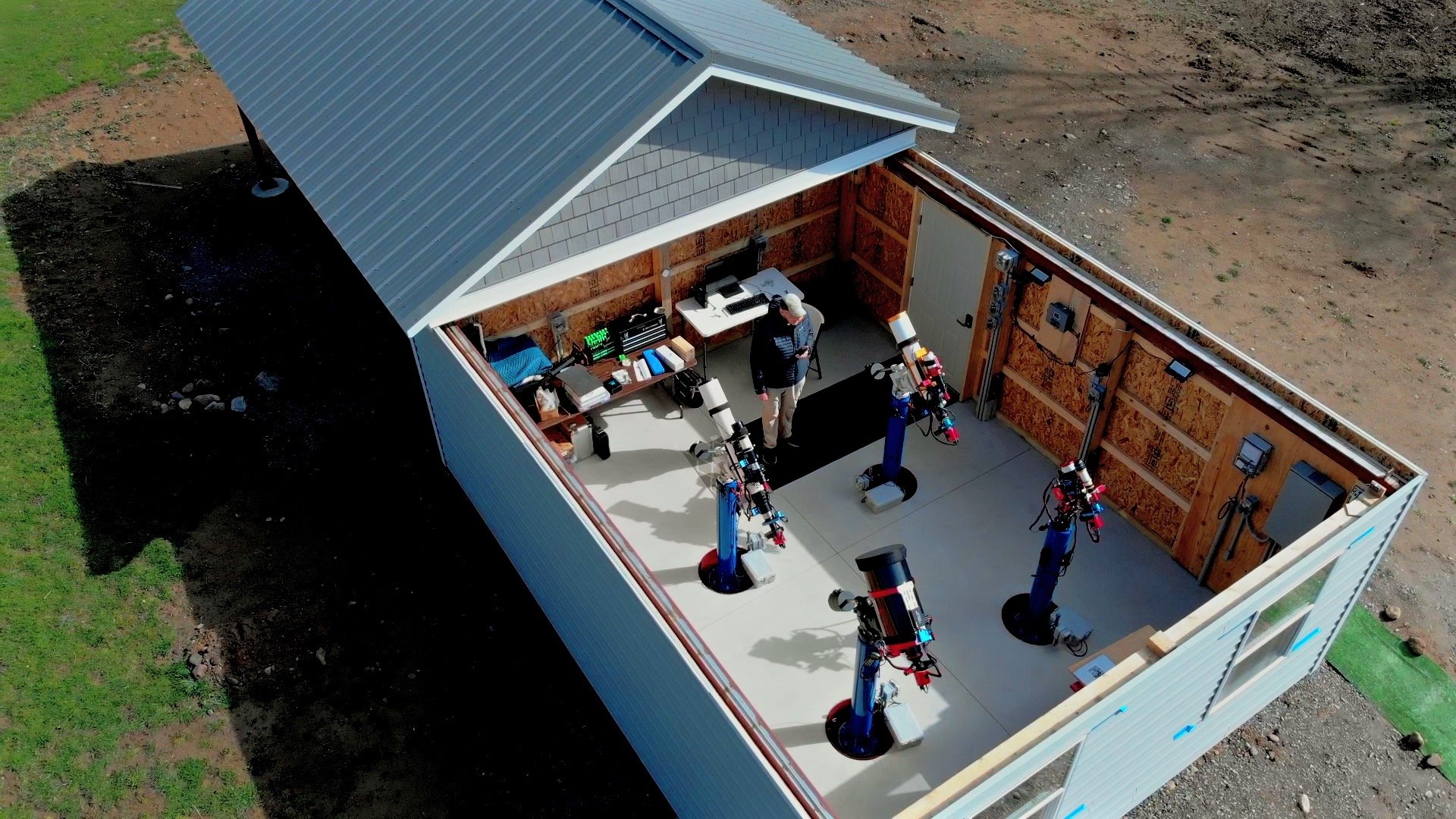
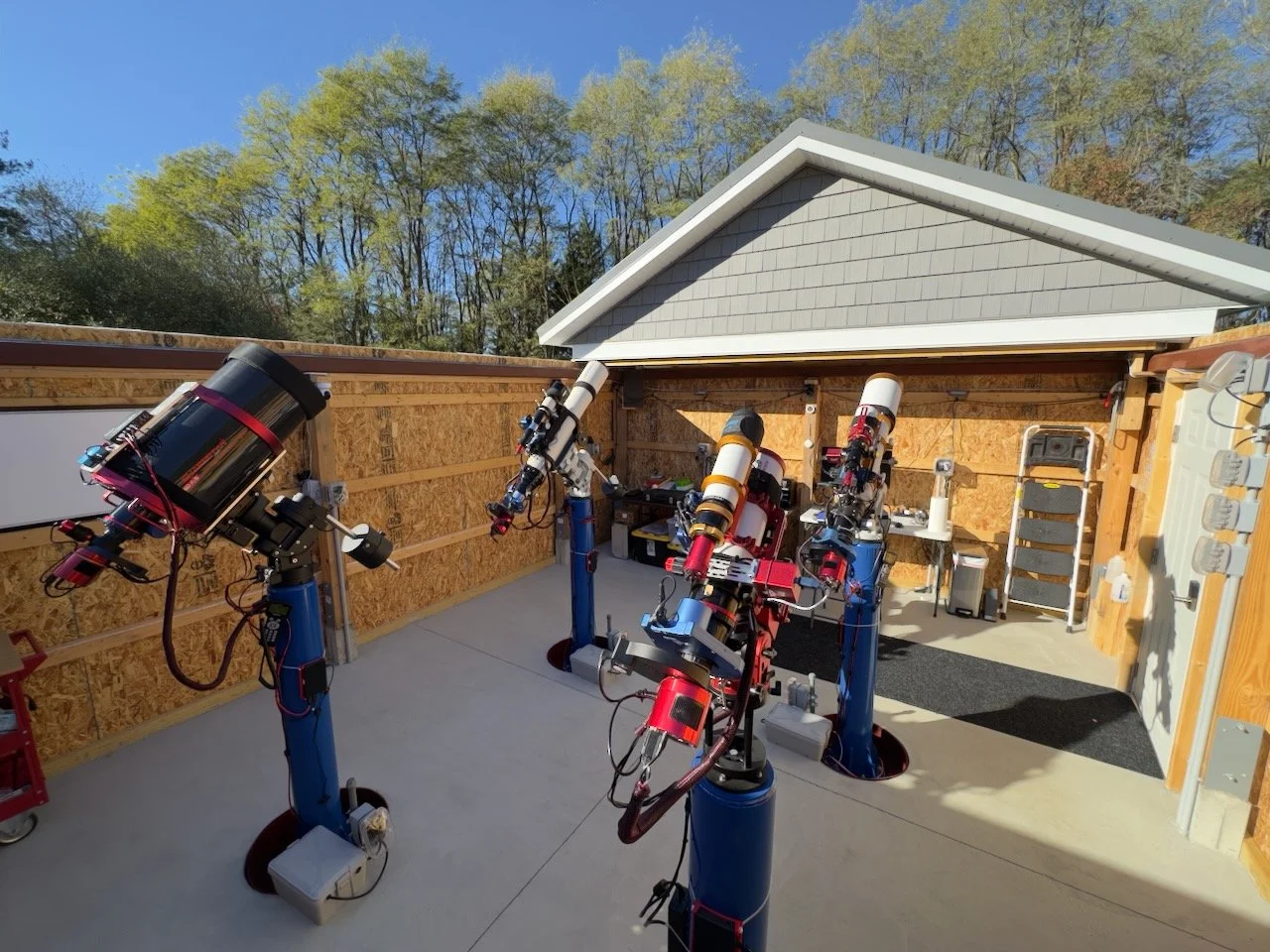
Whispering Skies Observatory - 16 x 20 feet in size - four telescope piers. After many years spent capturing from my driveway this is a bit step up for me!
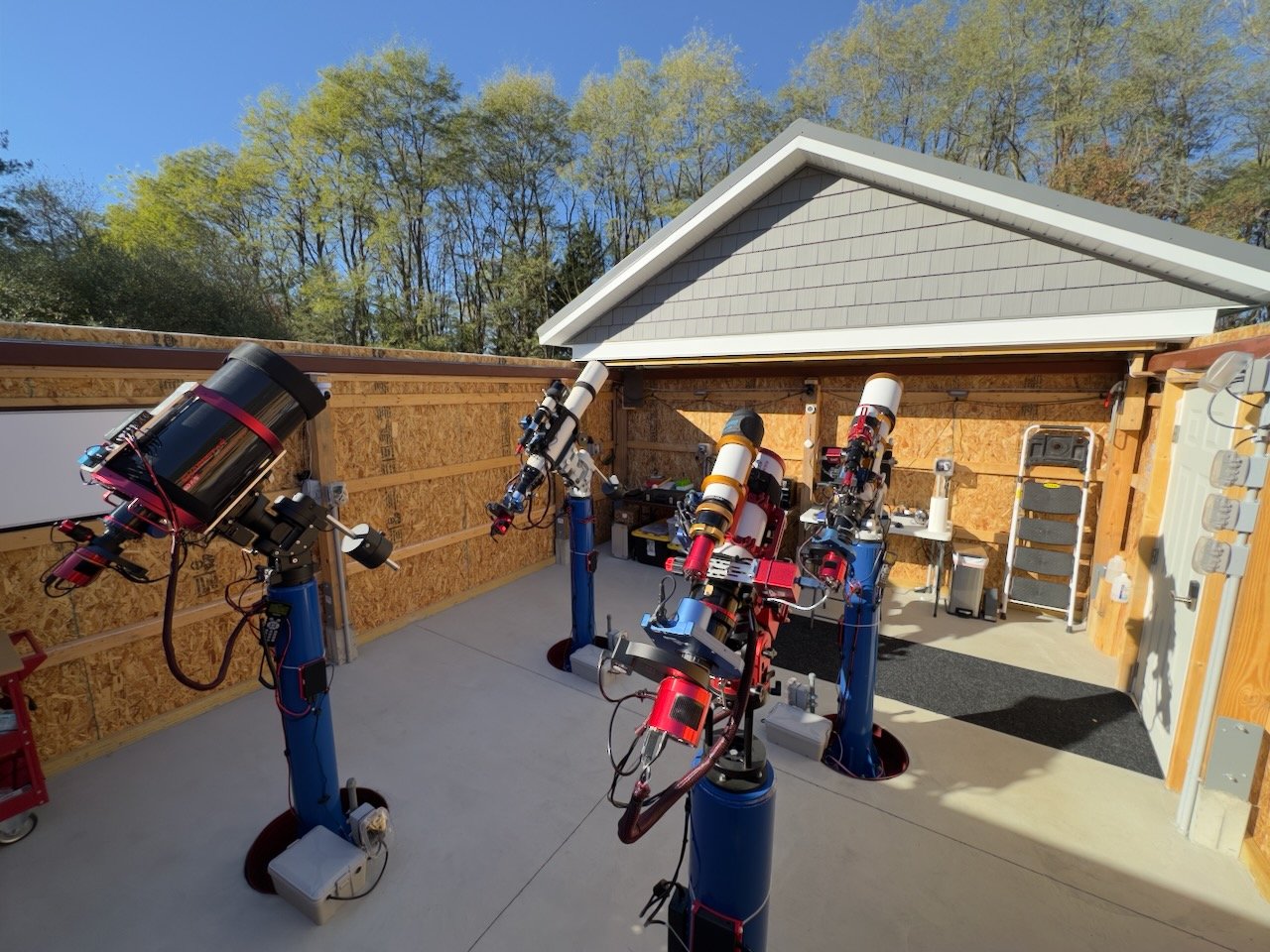
The inside of Whispering Skies Observatory - completed in May of 2025. All images from 2025 and on were captured here.
Video Introduction
Play Me: My “Welcome and Introduction” video for this webpage and my YouTube Channel - this runs about 10 minutes and tells you a bit about me.
What’s New?
A Snapshot of Recent Additions
Review the “Recent Additons” Page
Recent Highlights
Latest Imaging Project Post
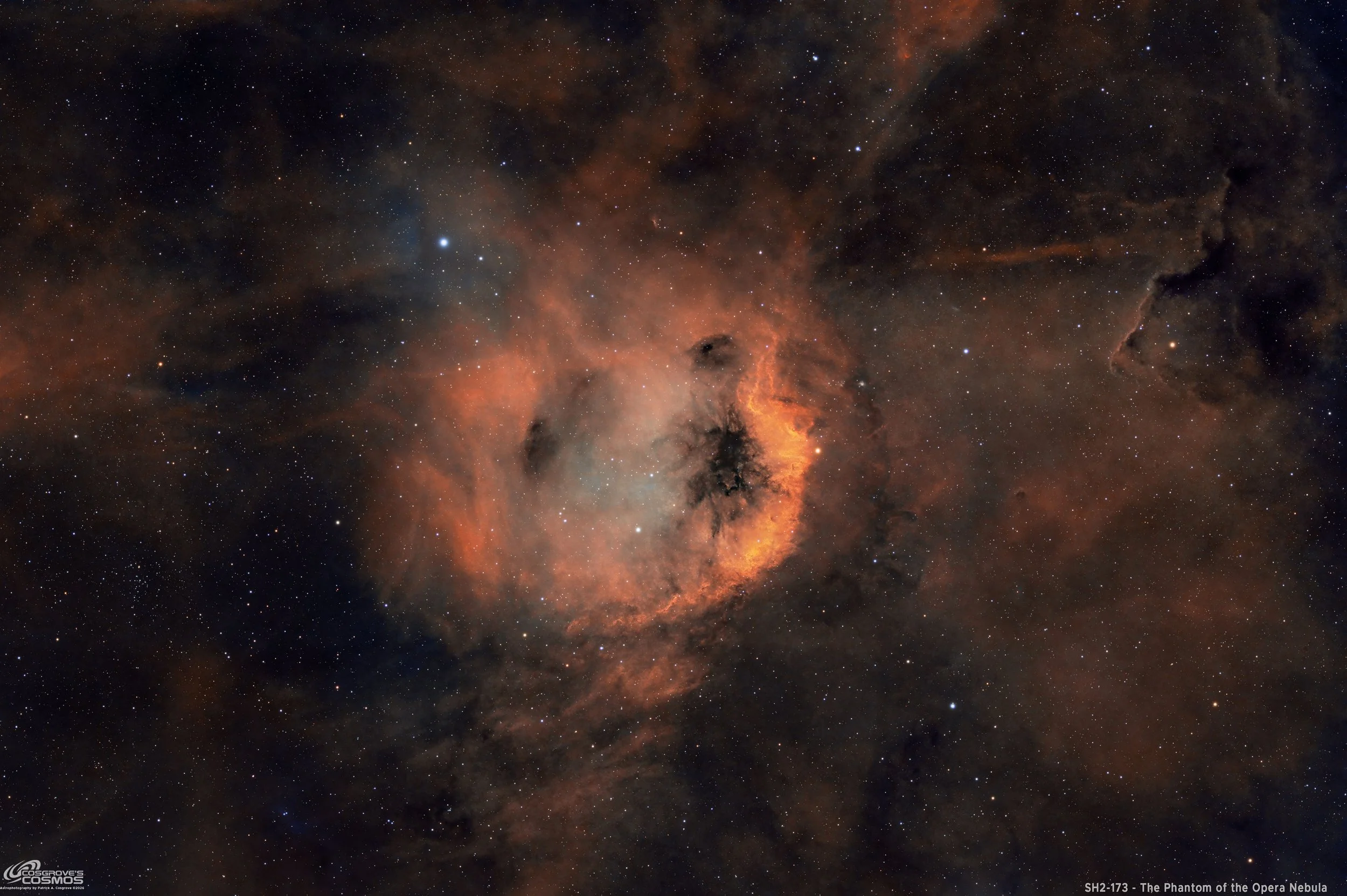
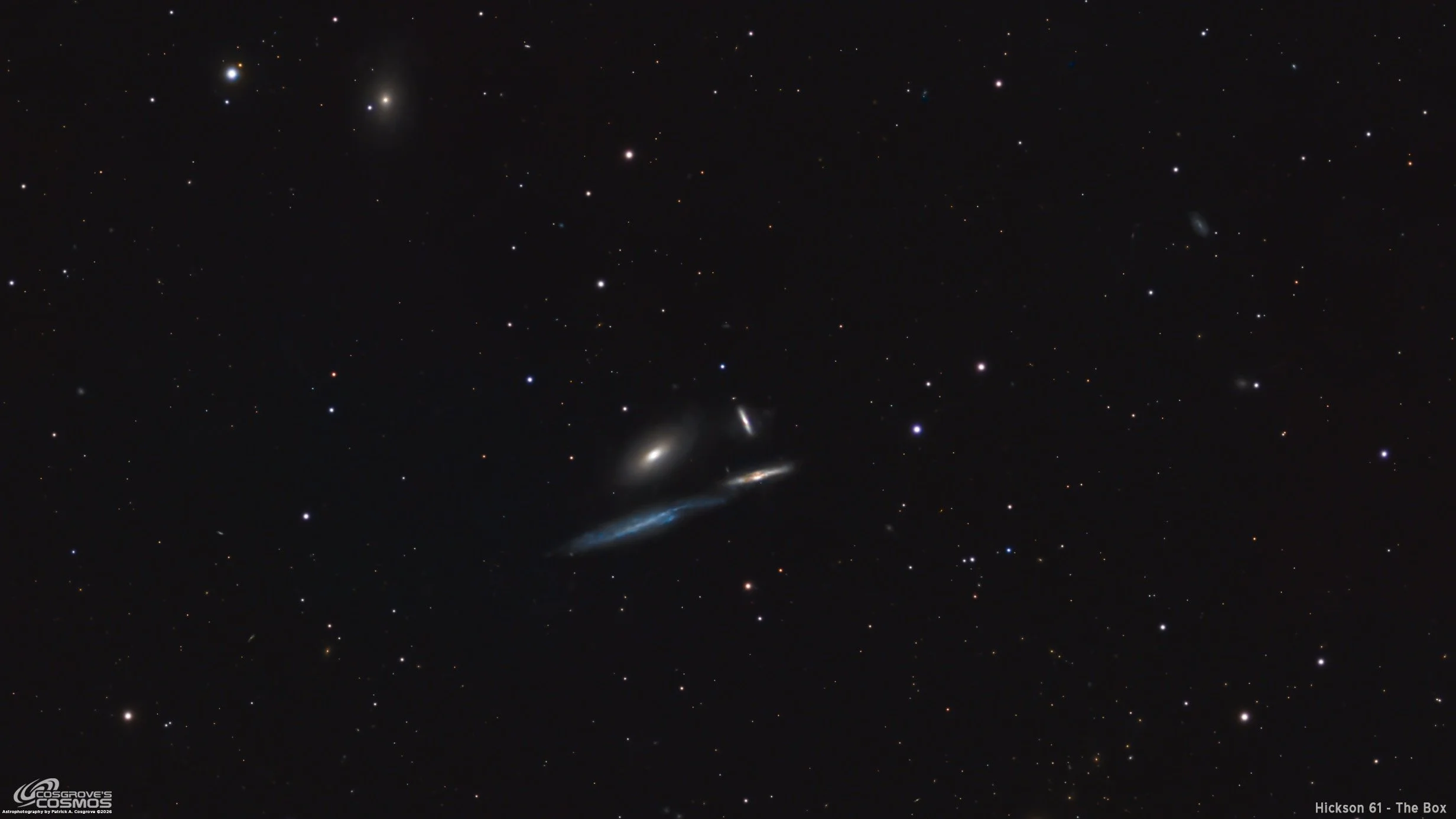
Hickson 61, better known as “The Box,” is a tiny apparent grouping of faint galaxies in Coma Berenices. This LRGB image captures NGC 4169, NGC 4173, NGC 4174, and NGC 4175 — four small galaxies arranged in a striking box-like pattern. Most of the group lies roughly 170–200 million light-years away, while NGC 4173 is likely a closer foreground galaxy that happens to line up with the others. Captured from Whispering Skies Observatory over two April nights, this 7-hour 48-minute project highlights the challenge and reward of imaging small, distant galaxy groups where scale, faintness, and perspective all matter.
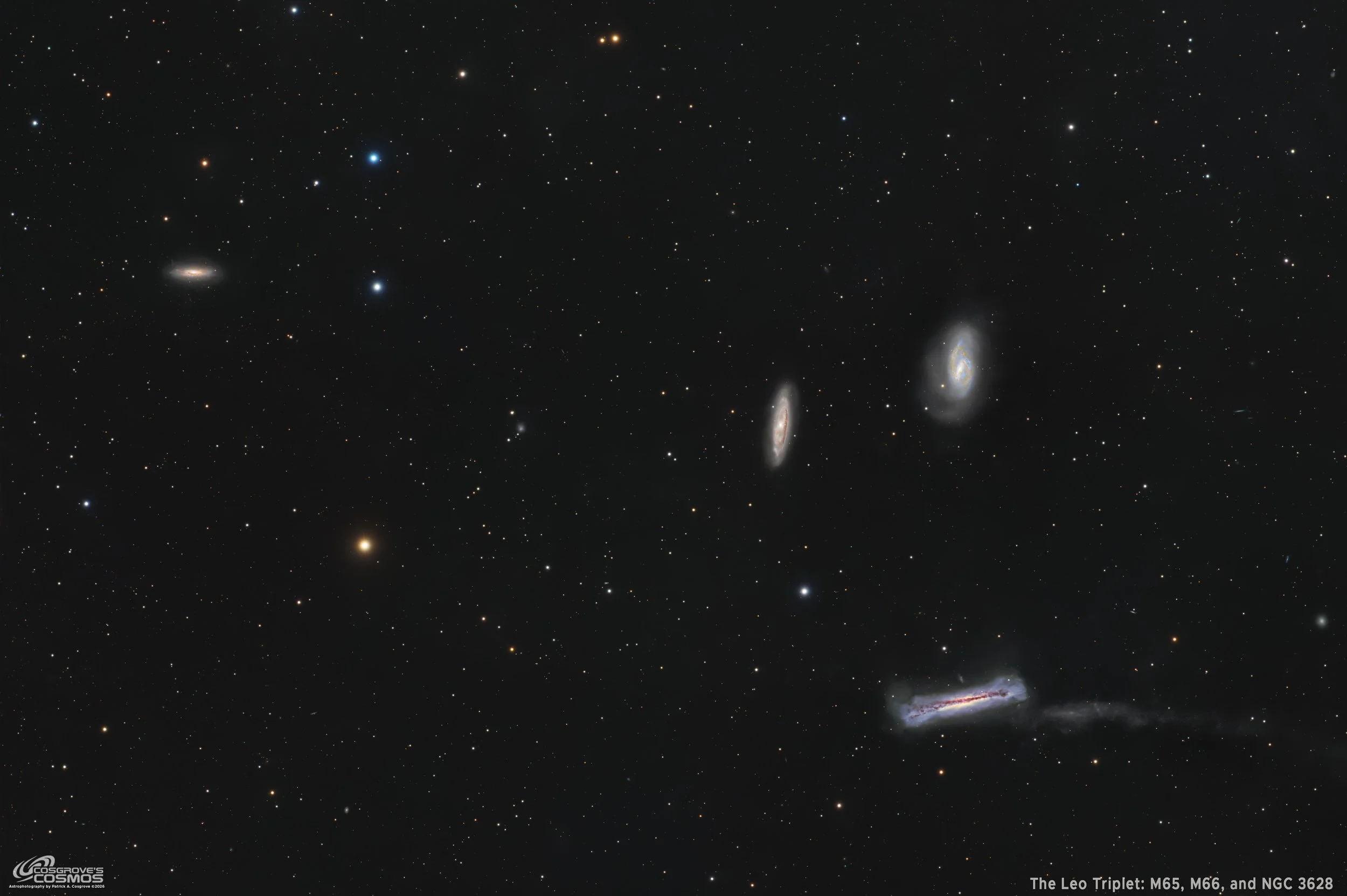
This image captures the Leo Triplet — M65, M66, and NGC 3628 — along with nearby NGC 3593 in a wide-field LRGB view from Whispering Skies Observatory. With 12.6 hours of integration, the image reveals the three main galaxies, the smaller surrounding galaxy field, and the faint tidal tail extending from NGC 3628. This project also served as first light for the new ASI2600MM-Pro camera on my FRA400 platform.
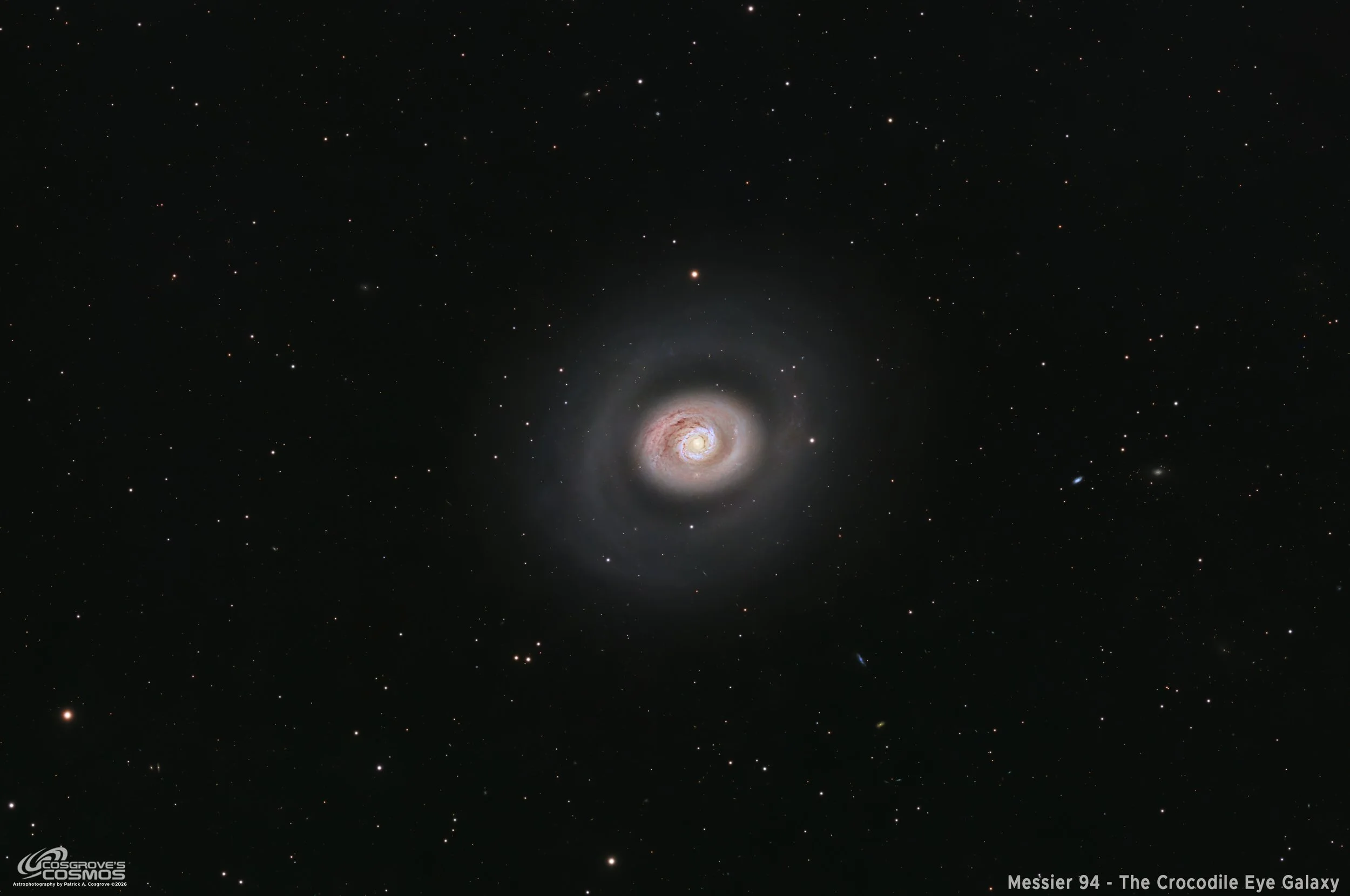
Messier 94, the Crocodile Eye Galaxy, is a compact but structurally complex spiral galaxy in Canes Venatici, about 16 million light-years away. This LRGB image captures its bright central core, active star-forming inner ring, and faint extended outer disk using 12h 49m 30s of data from Whispering Skies Observatory.
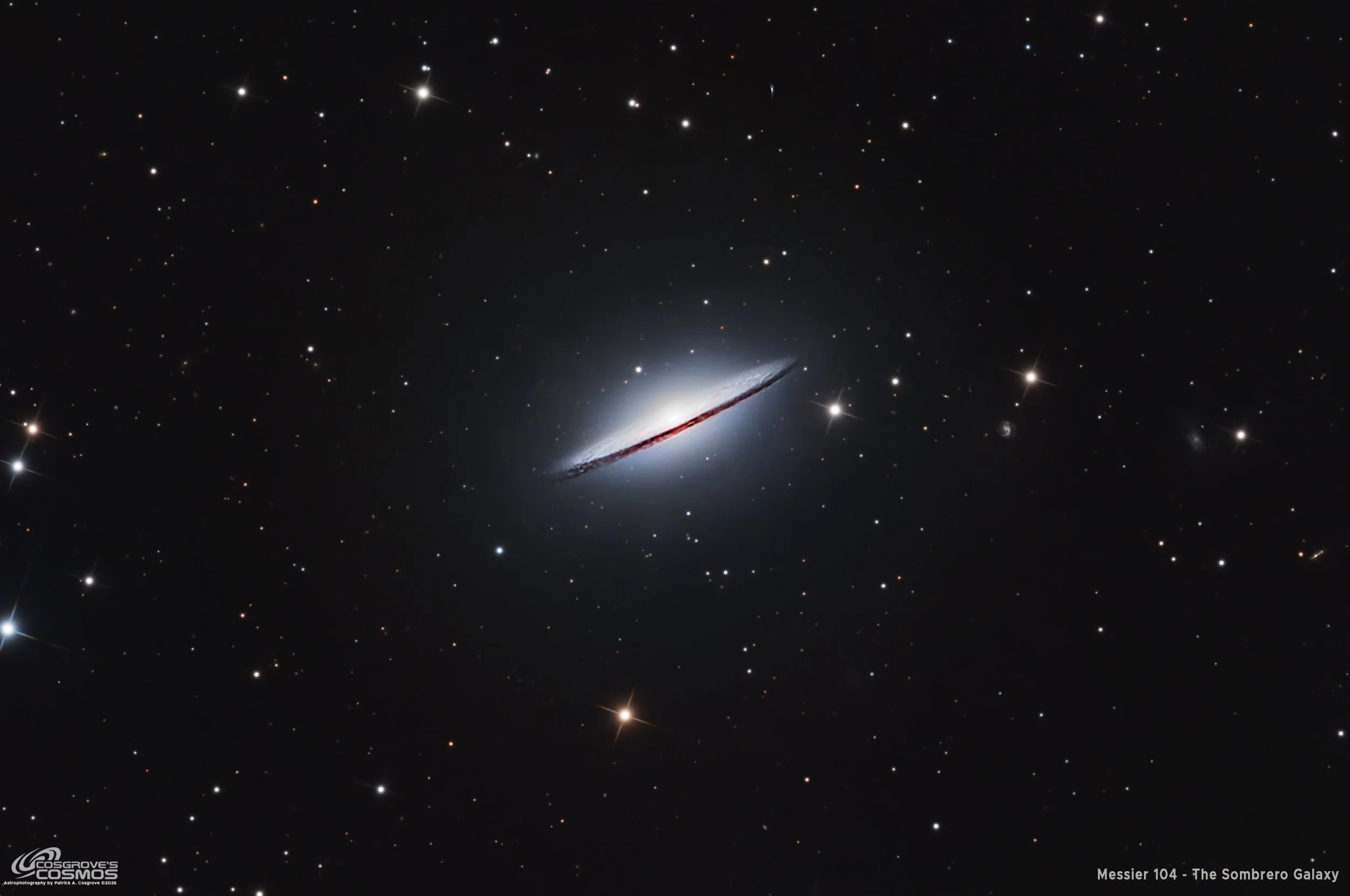
Messier 104, the Sombrero Galaxy, is one of the most recognizable galaxies in the spring sky. This project captures its bright central bulge, sharp equatorial dust lane, and faint outer halo using 11 hours of LRGB data from the Sharpstar SCA260 V2 at Whispering Skies Observatory.
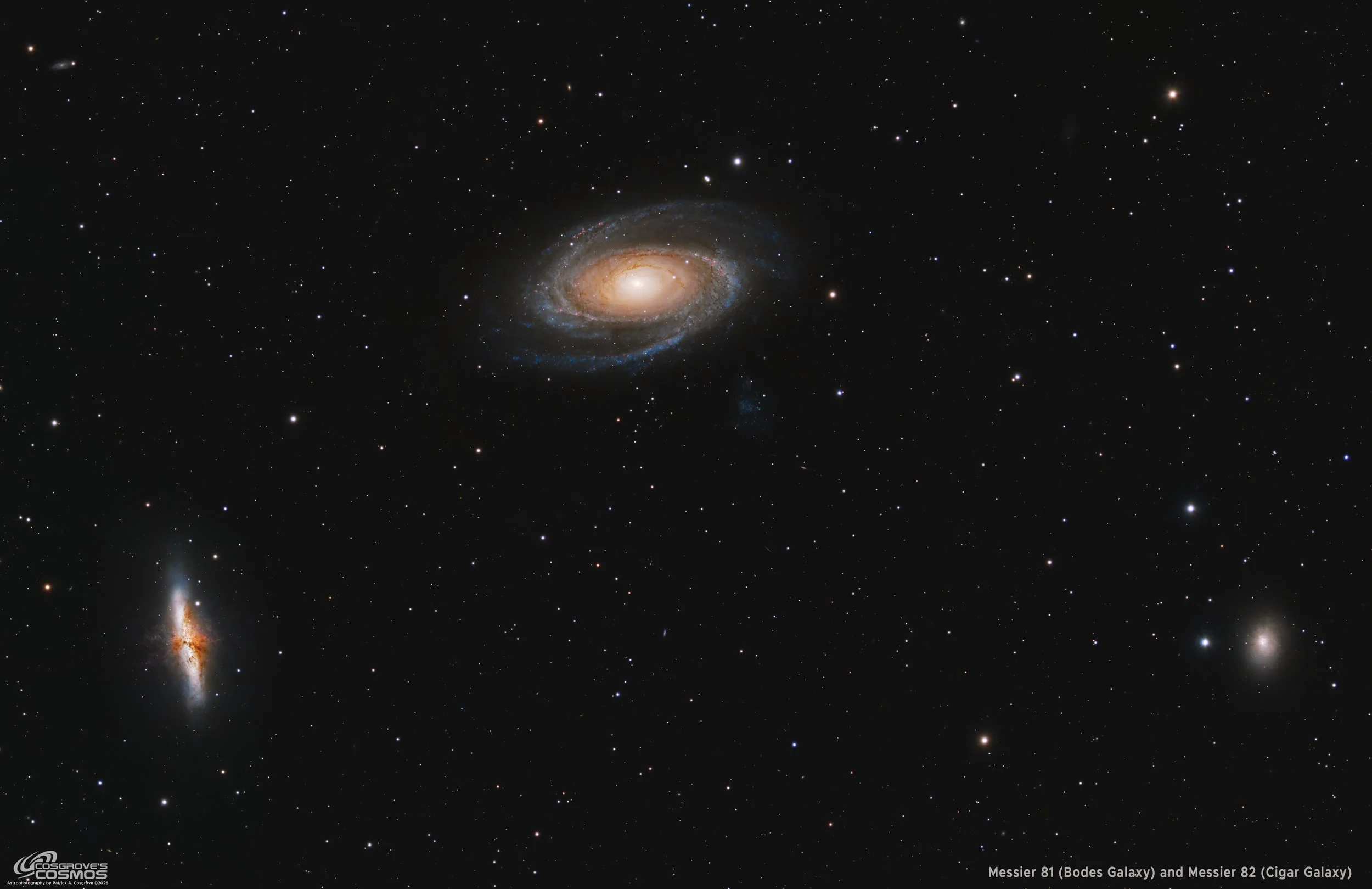
First light on my Astro-Physics 155mm Starfire EDFS platform captured a classic interacting galaxy field in Ursa Major: M81, M82, and NGC 3077. This image combines LRGB and H-alpha data to highlight the contrast between the grand-design spiral structure of M81, the starburst-driven outflow in M82, and the disturbed companion galaxy NGC 3077.
NGC 2174 — the Monkey Head Nebula — is a luminous star-forming cloud in Orion, roughly 6,400 light-years away. In this project I captured the nebula in narrowband (Hα, OIII, SII), revealing glowing hydrogen arcs, oxygen-rich structure, and dark dust lanes sculpted by intense radiation from young, massive stars. The result is a high-contrast look at an active H II region where stellar feedback is actively reshaping its birth cloud.
A new Orion classic from Whispering Skies Observatory: B33 (the Horsehead Nebula) silhouetted against IC 434, paired with NGC 2024 (the Flame Nebula) and its intricate dust lanes. Captured October 27–28, 2025 using LRGB + Hα for a total of 5 h 59 m 30 s, this project emphasizes clean star color and high-contrast dust structure while preserving the region’s faint, extended nebulosity.
Orion’s sword is one of the most famous regions in the night sky, and for good reason. This widefield take on M42/M43 and the Running Man blends short and longer RGB/L exposures with H-alpha to balance the bright core against the faint, sculpted outer nebulosity—an image that showcases both the beauty and the ongoing starbirth of our nearest major stellar nursery.
Stephan’s Quintet is a compact group of galaxies in Pegasus caught in the middle of a slow-motion cosmic collision – four true members being stretched, stripped, and reshaped by gravity while a fifth foreground spiral simply photobombs the scene. This deep LRGB image reveals distorted spiral arms, long tidal tails, and the bright cores of galaxies that are gradually merging into a single massive system hundreds of millions of light-years away.
This project explores Sh2-171, part of the NGC 7822 star-forming complex in Cepheus, a sprawling H II region about 3,000 light-years away where hot young stars are carving pillars and cavities into the surrounding gas. Captured over 33.5 hours in narrowband SHO with an Astro-Physics 130 mm Starfire and ASI2600MM-Pro, the image reveals the intricate structure and subtle filaments of this faint but remarkably active stellar nursery.
A 34.5-hour SHO+RGB portrait of Sh2-157 (the Lobster Claw) with the Bubble Nebula in frame—captured over five October nights with the FRA400/ASI1600 and processed in PixInsight; full workflow and annotations inside.
My Second Attempt - and my finest - with NGC 7380 - The Wizard Nebula.
This is the result of 25 hours of narrowband and RGB exposure on my Williams Optics 132 FLT APO platform, equipped with a 0.8 reducer and an ASI2600MM-Pro camera.
This was another image captured from my new observatory, which allowed for capture on marginal nights.
This is the first year I have started targeting Dark Nebulae. It’s been a learning experience.
On this project, I targeted Barnard 150 - The Seahorse Nebula. Even with more than 18 hours of integration, I ran into noise issues.
You need to do a lot of stretching, and this amplifies the high noise. While NoiseXterminator is extremely effective, when handling this much noise, I encountered some ugly artifacts, which greatly frustrated me. So the project reportsto learn more!
Latest Gear Post
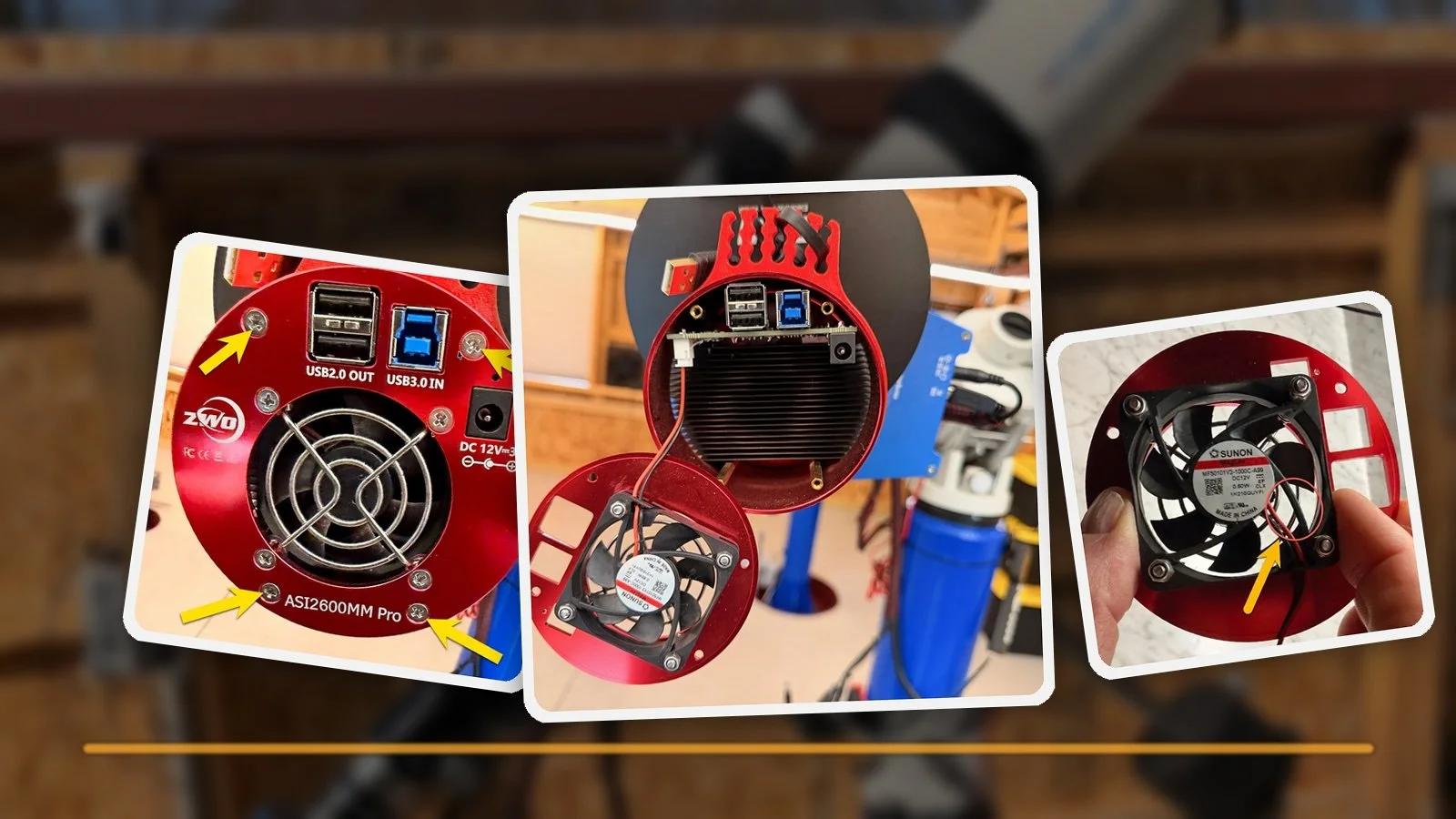
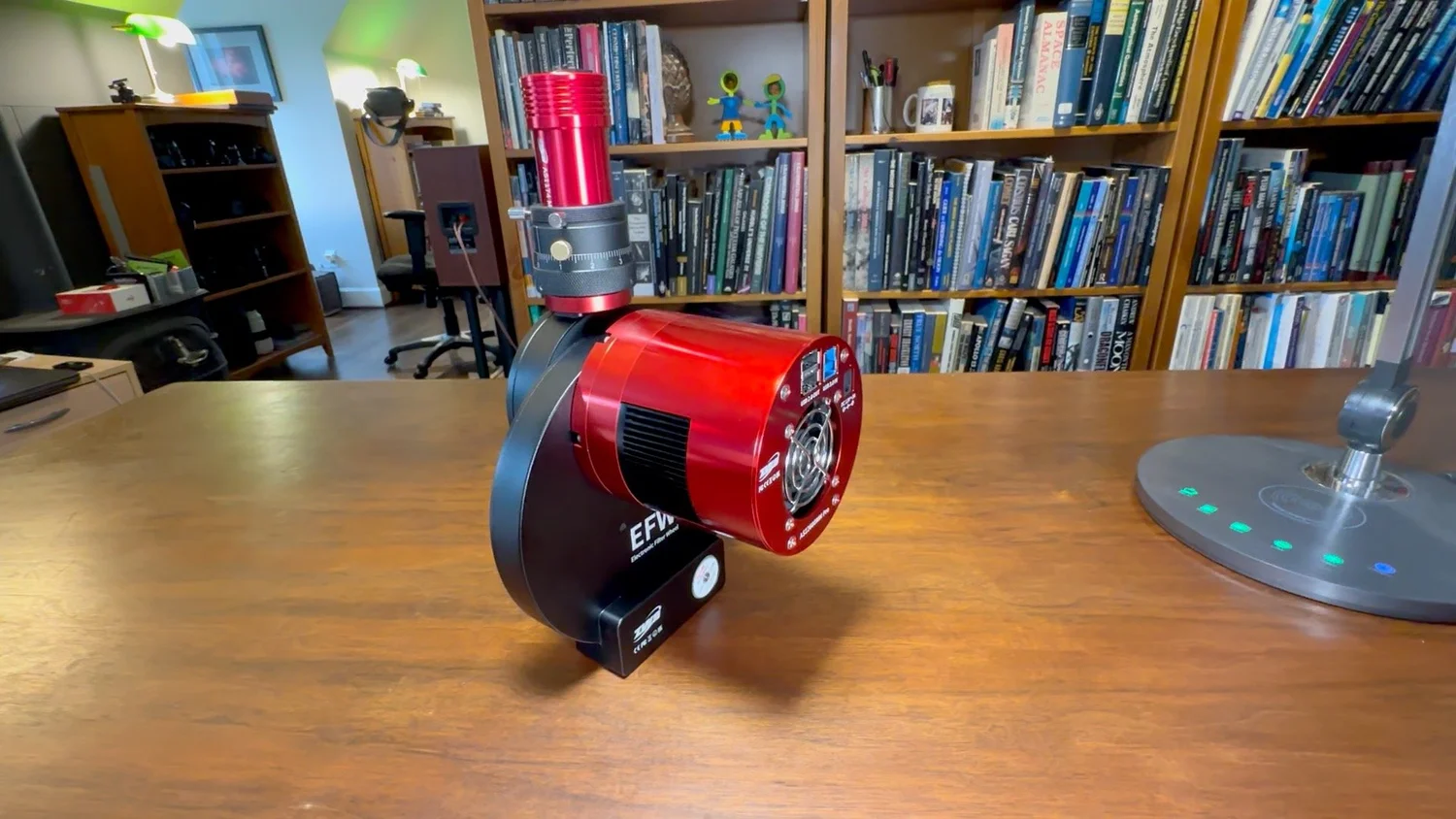
When my ASI2600MM-Pro suddenly developed a loud, vibrating fan, I pulled the camera apart to find the cause. What I found was a missing fan blade — and that kicked off a deeper search into the original fan specs, viable replacement options, and ways to reduce vibration without sending the camera back for service.
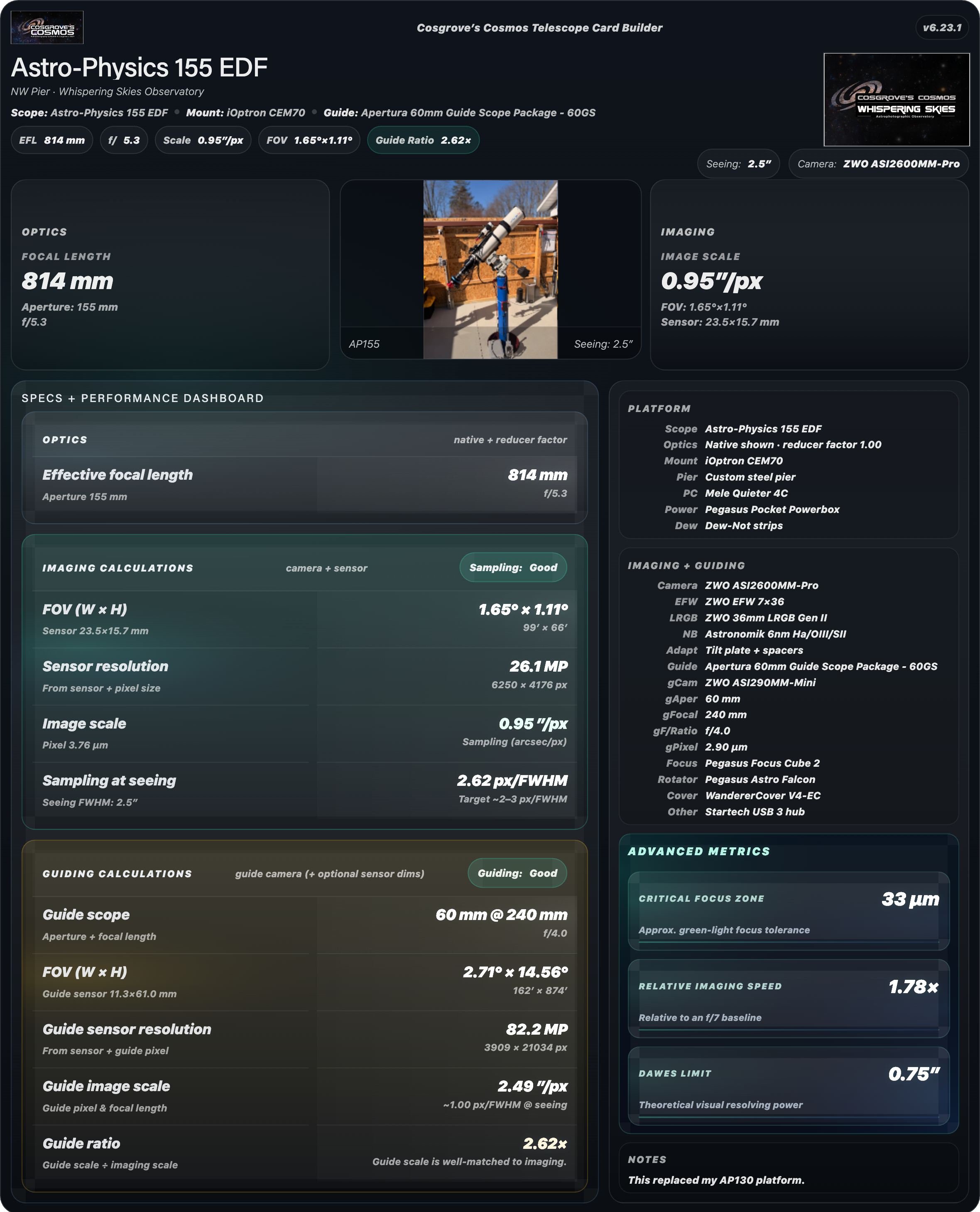
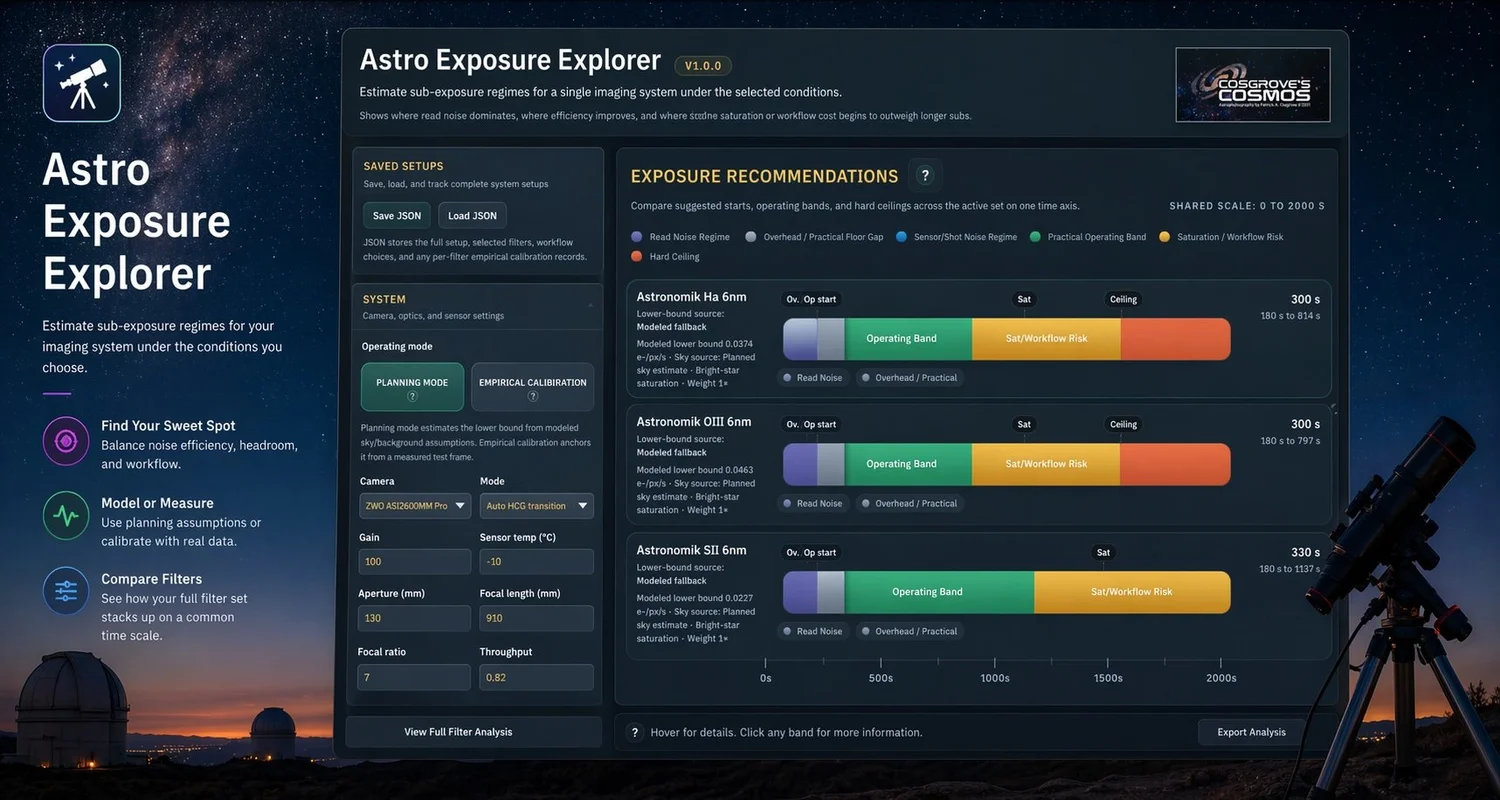
An interactive Telescope Platform Card Builder Tool: enter platform specs, get a polished card with the key calculated imaging metrics.
The tool is mobile-friendly with on-page displays plus high-resolution PNG export for sharing - it works best with larger screens.
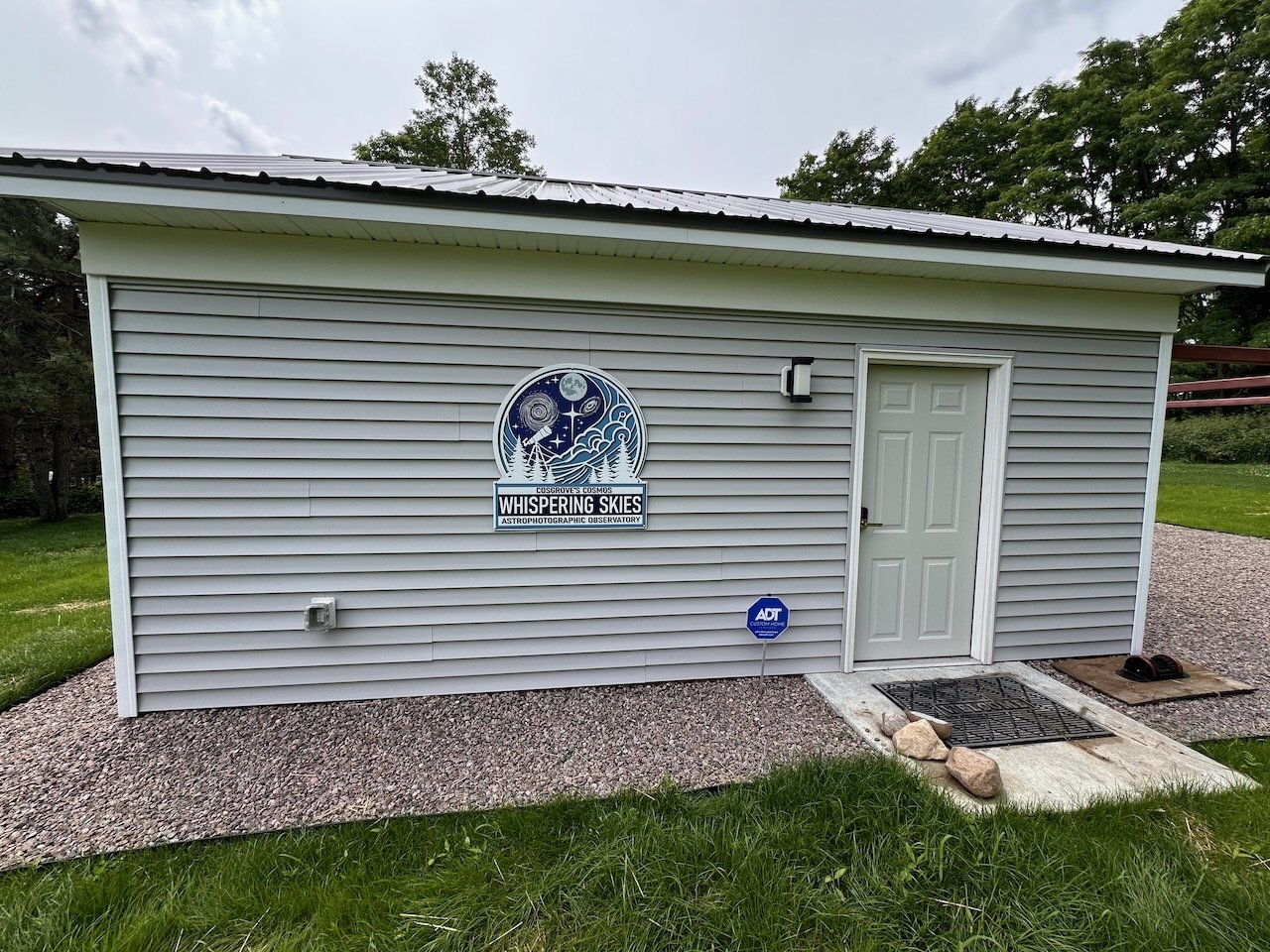
An overview of my Whispering Skies Observatory. The build is now complete, and while I have posted many articles from the planning and build, this one provides an overview of the completed observatory.
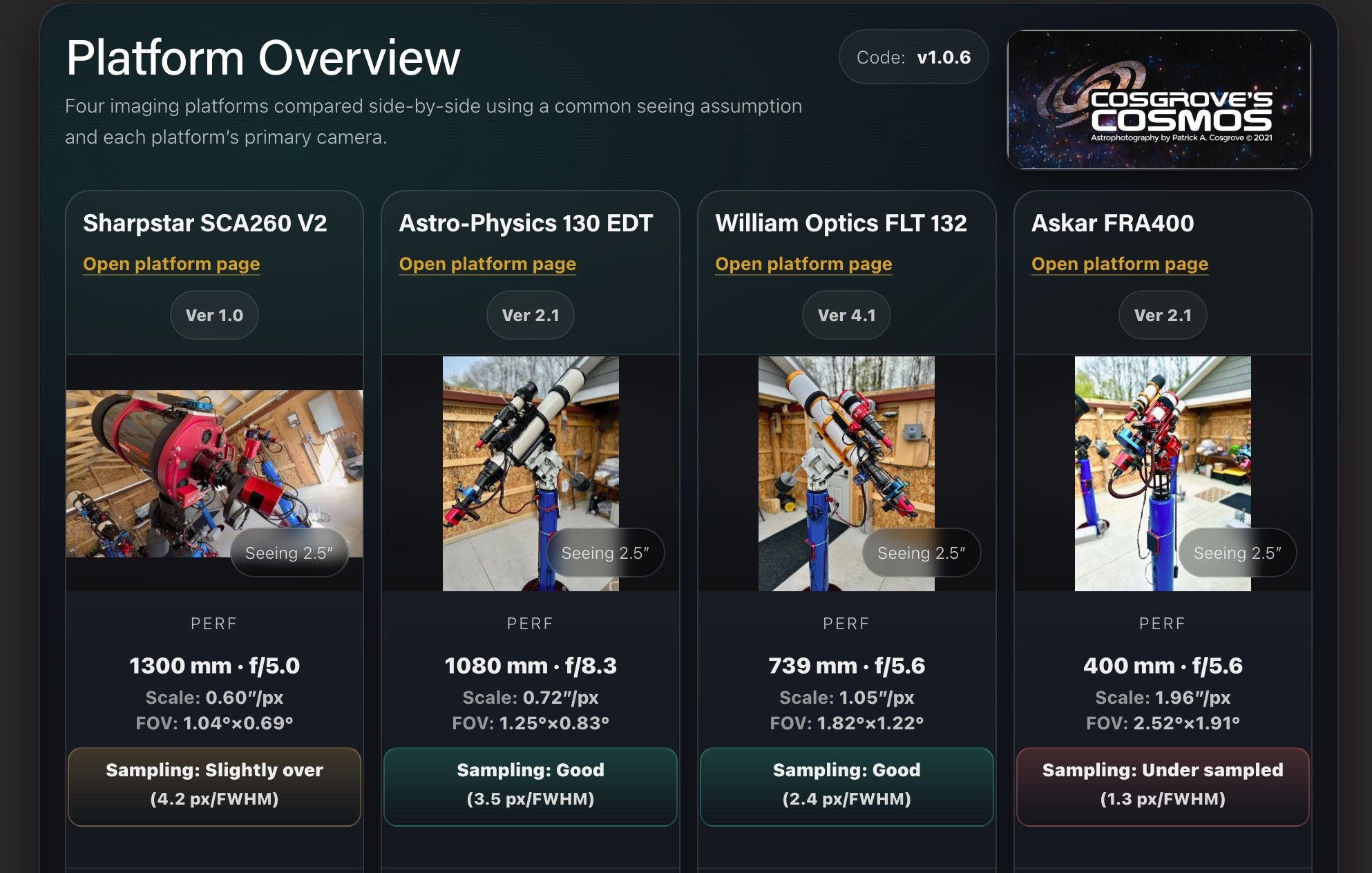
A detailed look at how I built a deliberate four-platform imaging system: FRA400 for wide-field context, WO132 for mid-scale general work, AP130 for refractor reach on smaller/brighter targets, and SCA260 for tight galaxy framing. Includes current pier assignments, rationale, and links to each platform’s live specs/configuration pages.
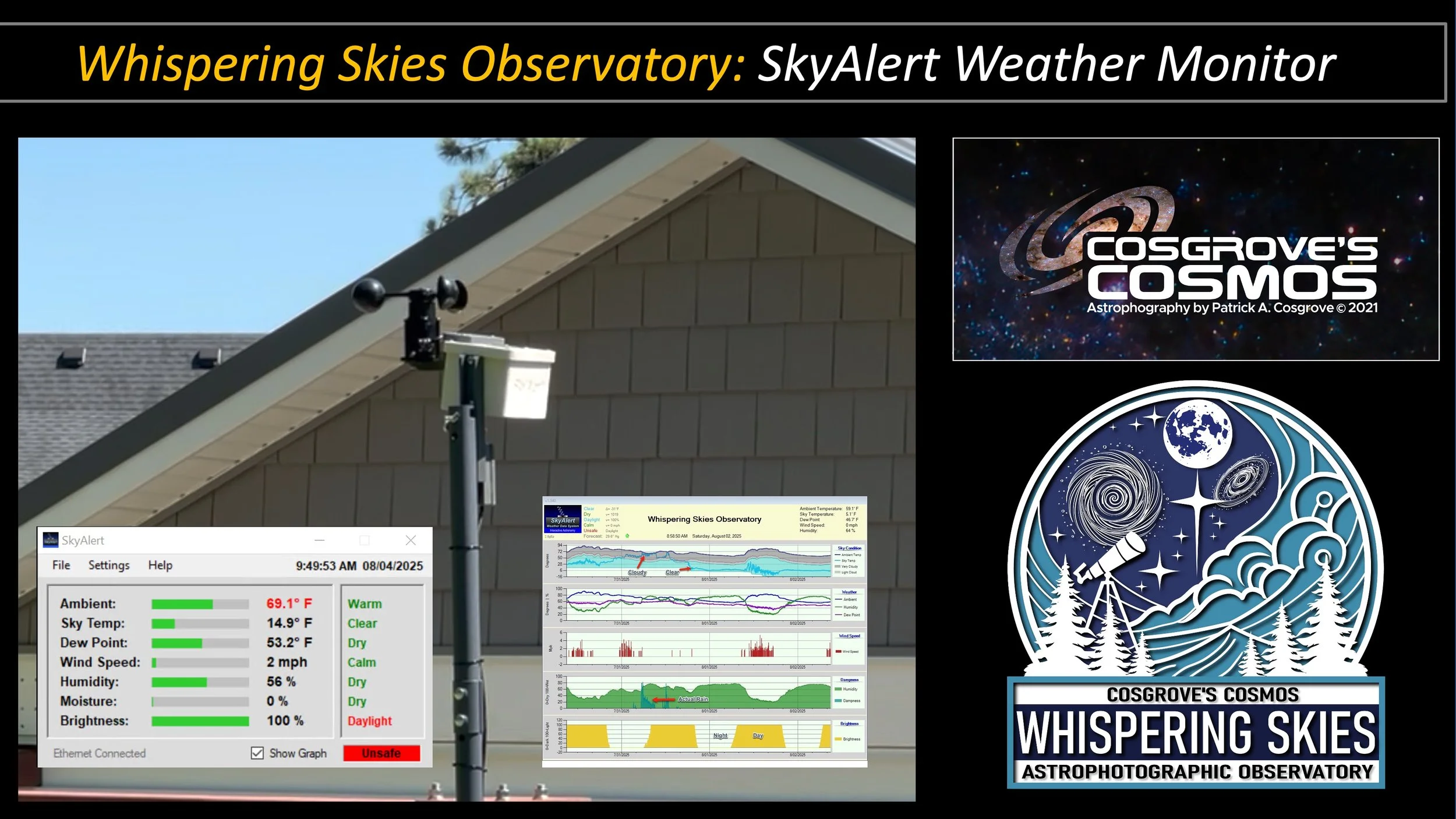
This post covers the SkyAert Weather Monitoring system but Interactive Astronomy. Combined with the SkyRoof motor and control system, this provides a lever of weather monitoring and automation to protect your gear during those long data collection cycles.
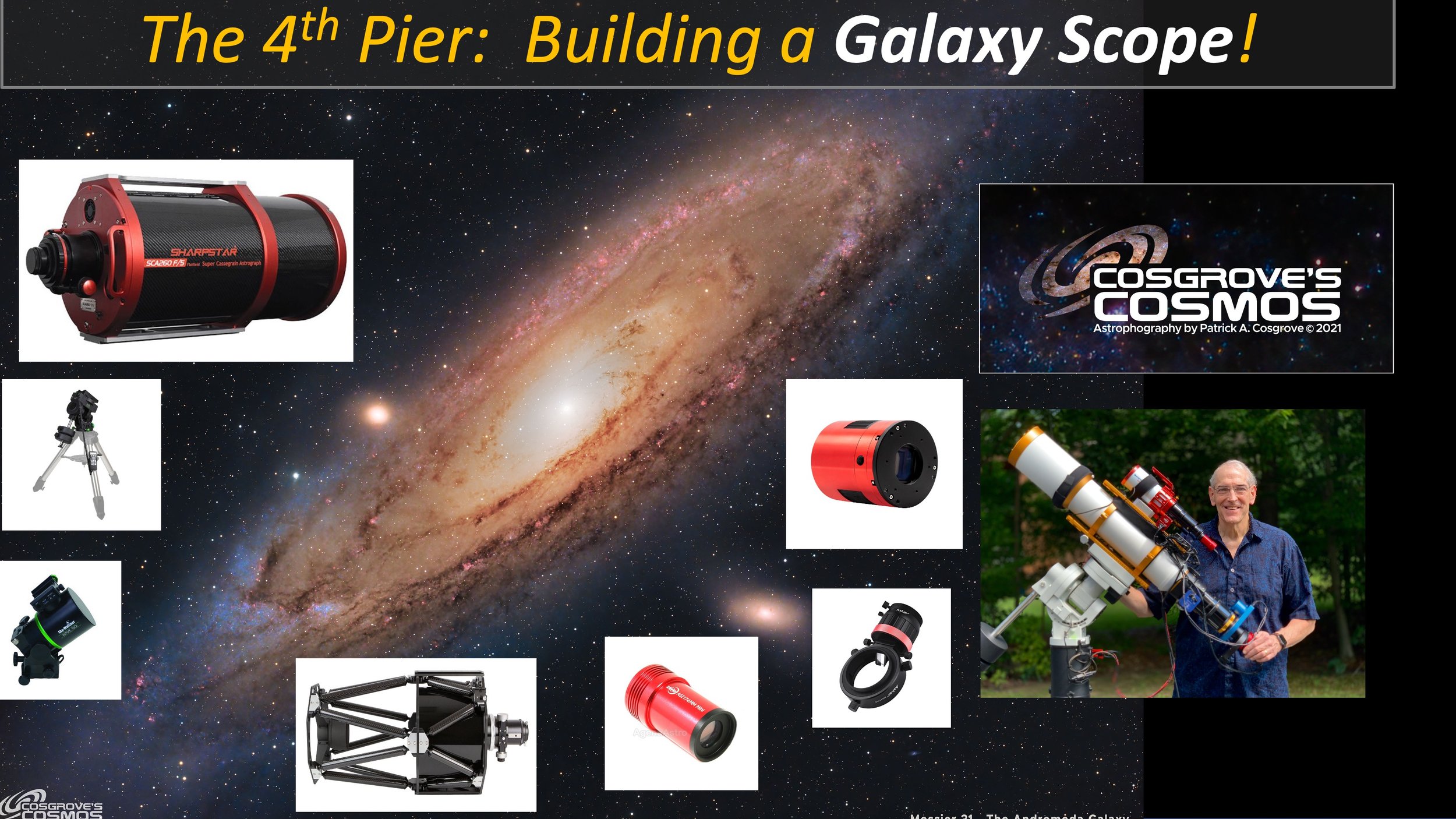
This post documents the setup and configuration of my New ‘Galaxy” scope, the Sharpstar SCA260 V2.
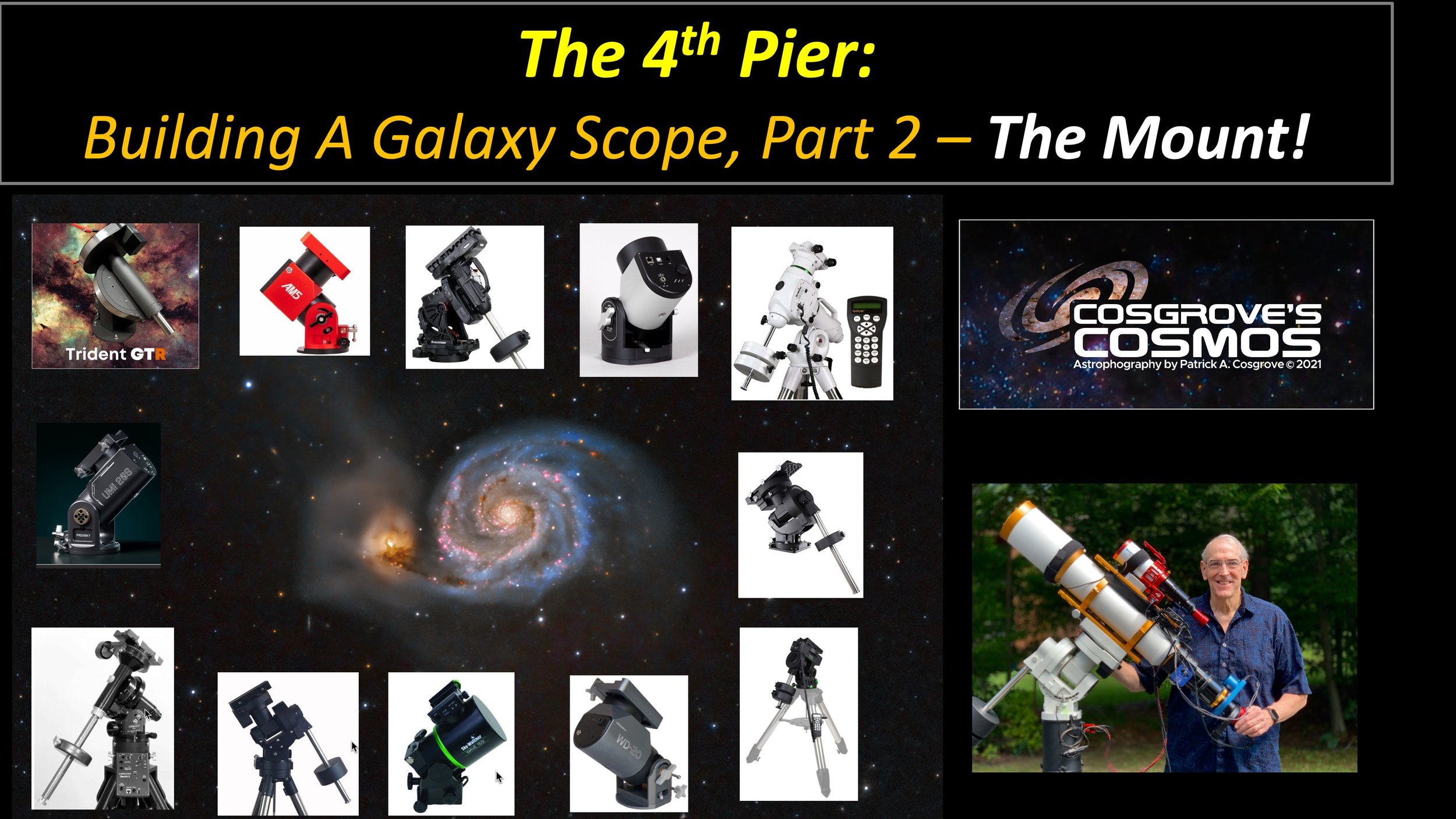
Part 2 of the series where I choose the element of my galaxy Scope platform.
In this post, I look at my Mount options and make a choice that I think will work best for me.
I need a telescope for the 4th pier of my new observatory! So, what kind of scope platform should I put together? I decided on a Galaxy Scope. This blog shares my thoughts on how to put this together - and it might just help you as well!
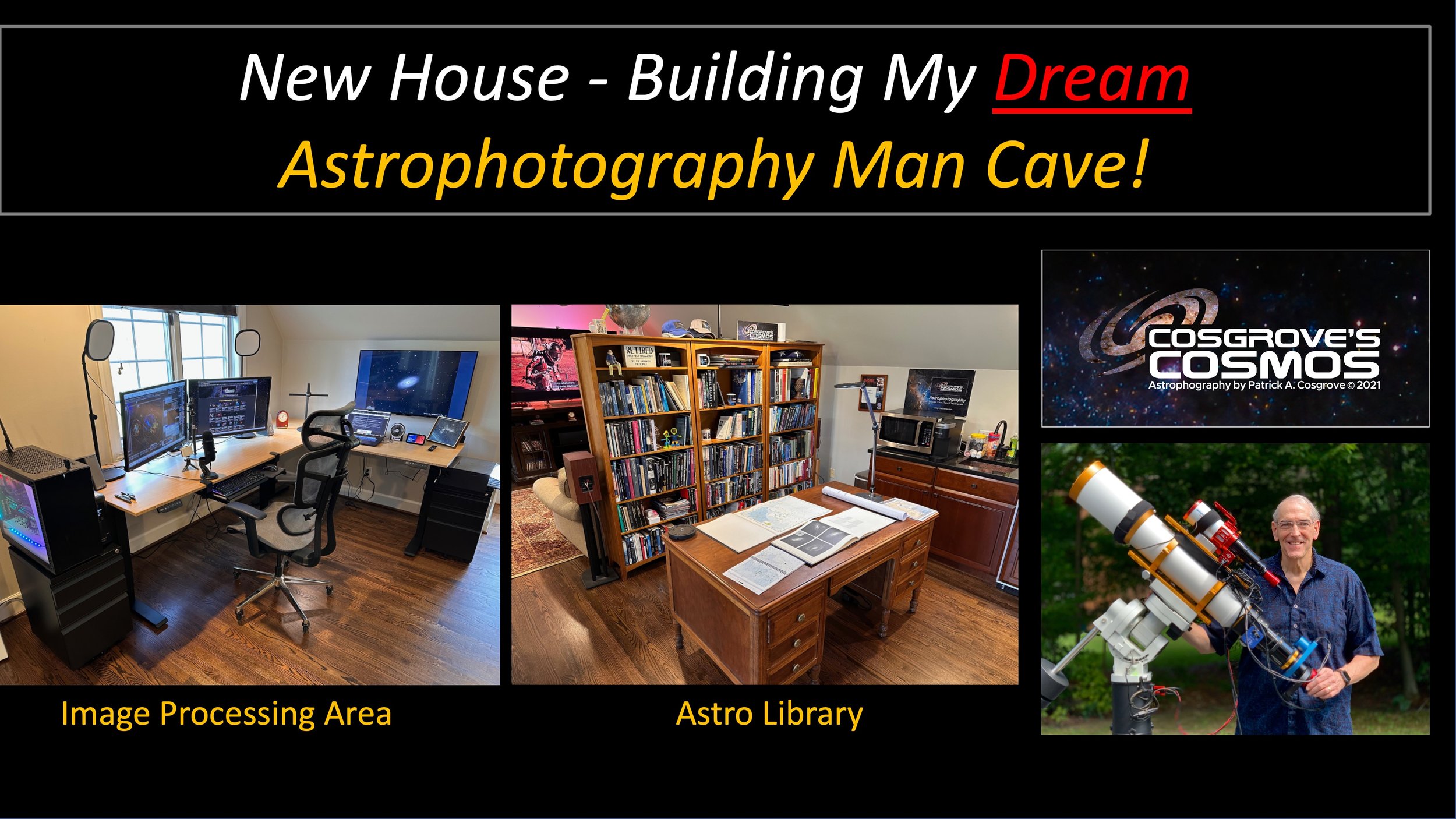
I just moved to a new house that will allow me to finally build the observatory that I have been wanting - and in the process, I ended up having a new large space where I could set up my office. So I used this unexpected opportunity to build my Dream Astrophotography Man Cave! See what I did and how it came together. Maybe you will find a few ideas for your own workspace!
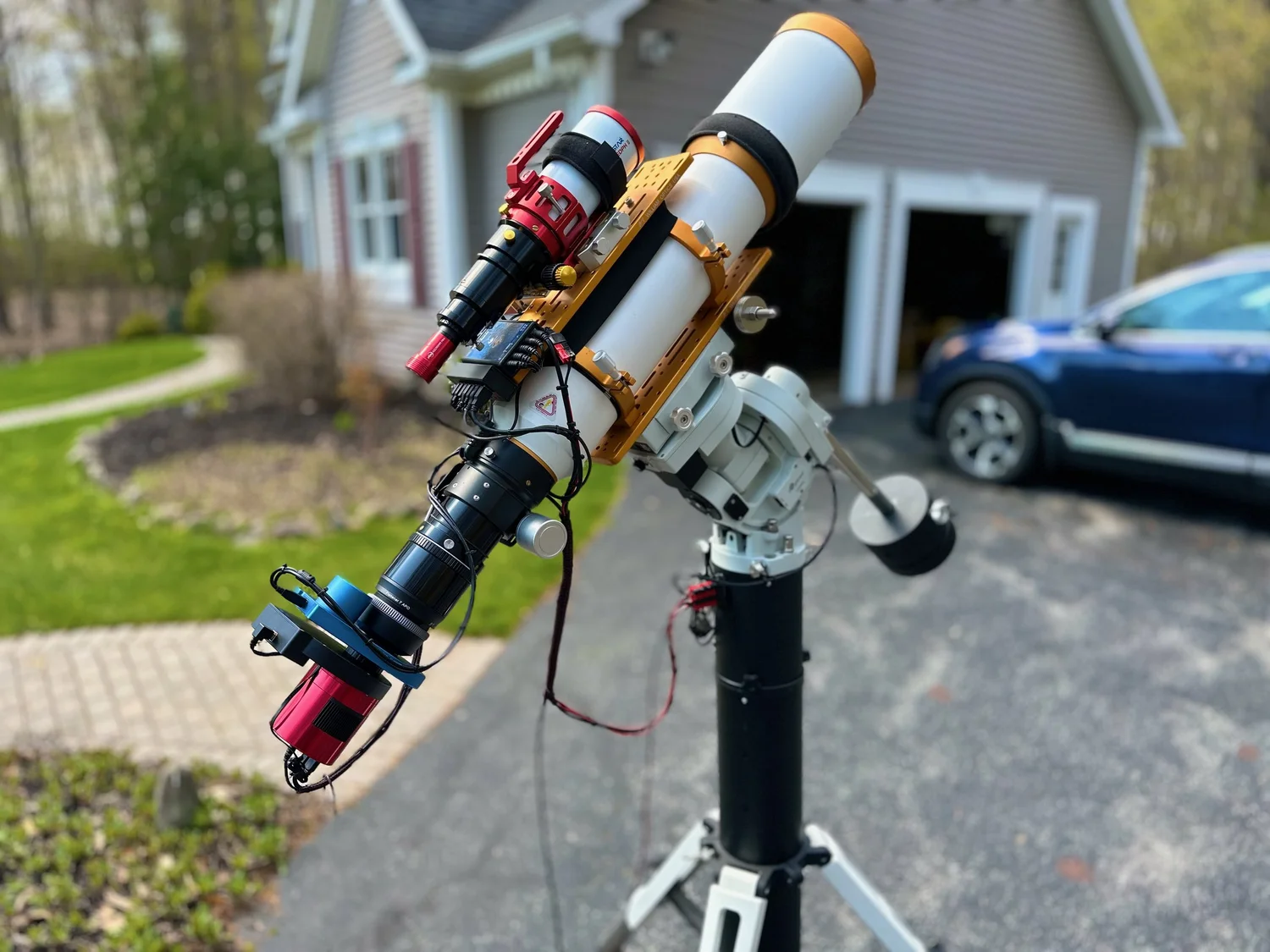
Version 4.1 of the Williams Optics 132mm platform is focused on moving into my newly completed Whispering Skies Observatory.
The upgrades include moving to a custom steel pier and shifting to a new Mele Quiter 4-C Micro Computer running Windows 11.
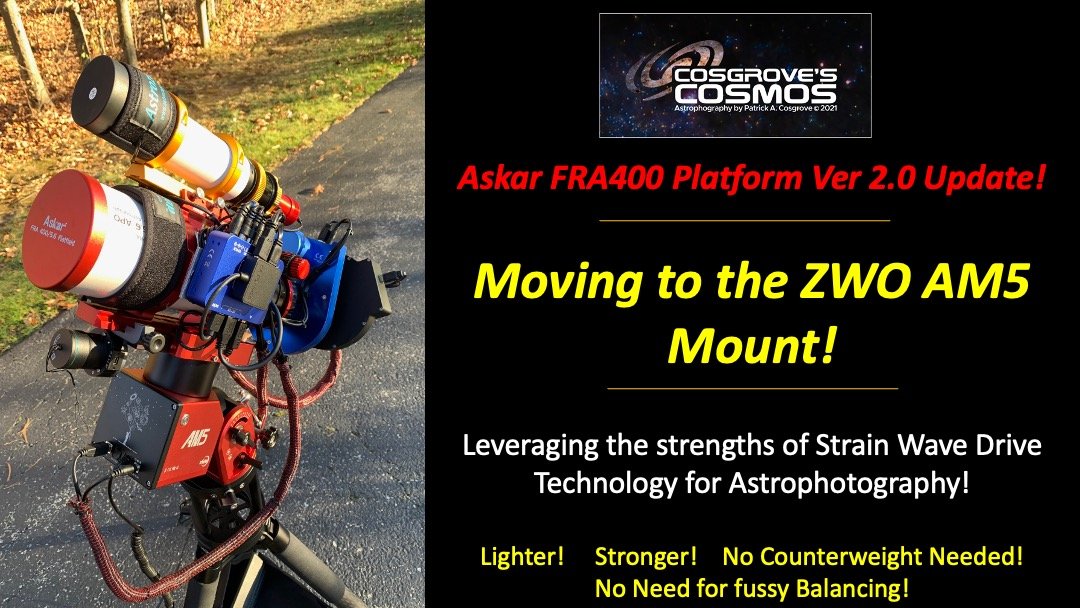
Version 2.0 of my Askar FRA400 Platform consists of a switch in mounts! I have gone from an IOptron CEM26 mount to a new ZWO AM5 Harmonic Drive! This post documents and discusses this change in the platform.
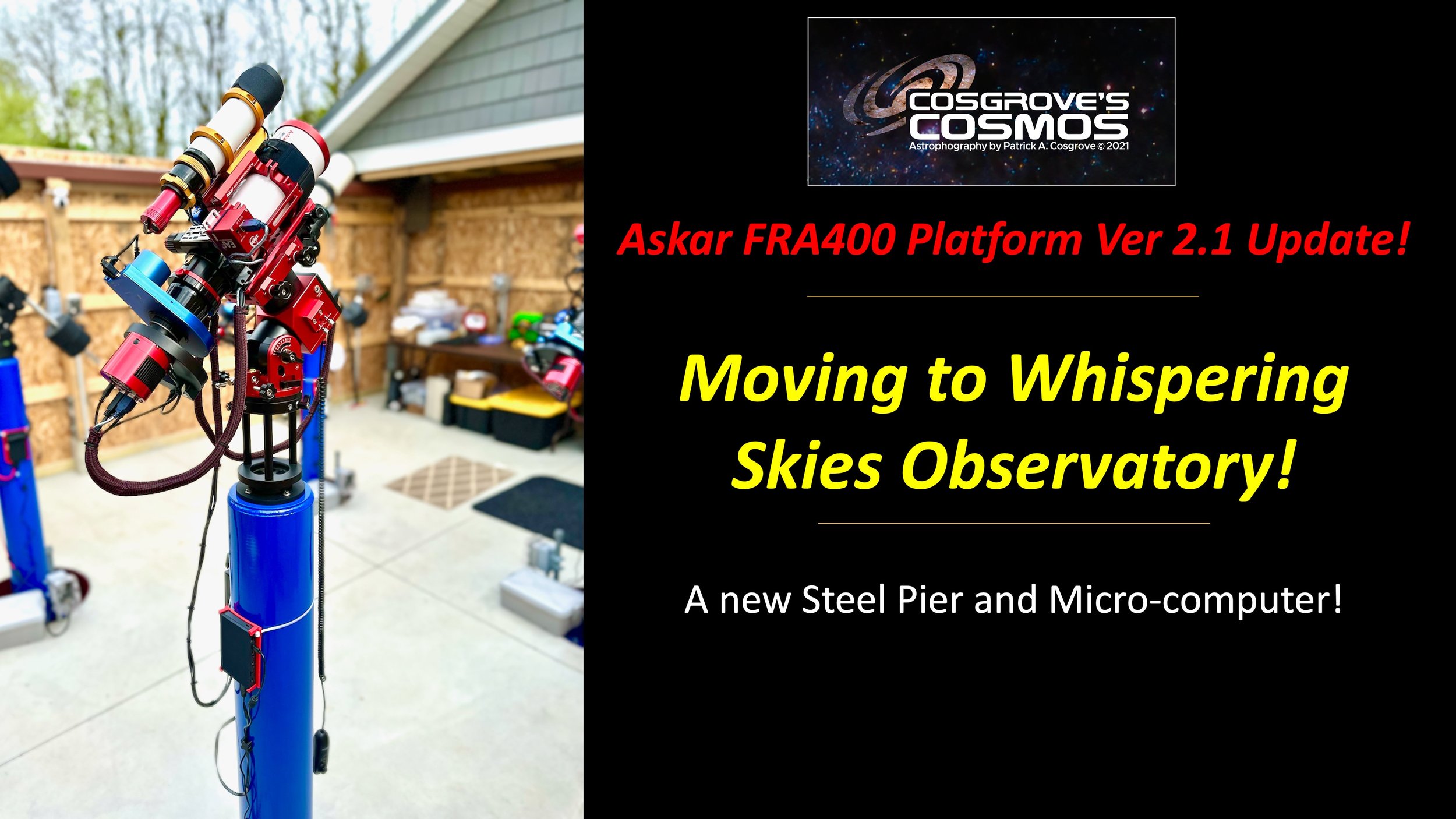
Version 2.1 of my Askar FRA400 Platform consists of a switch to a steel pier in the Southeast corner of my new Whispering Sies Observatory. Also changed was the computer from a laptop to a new Mele Quieter 4C mounted on the pier.
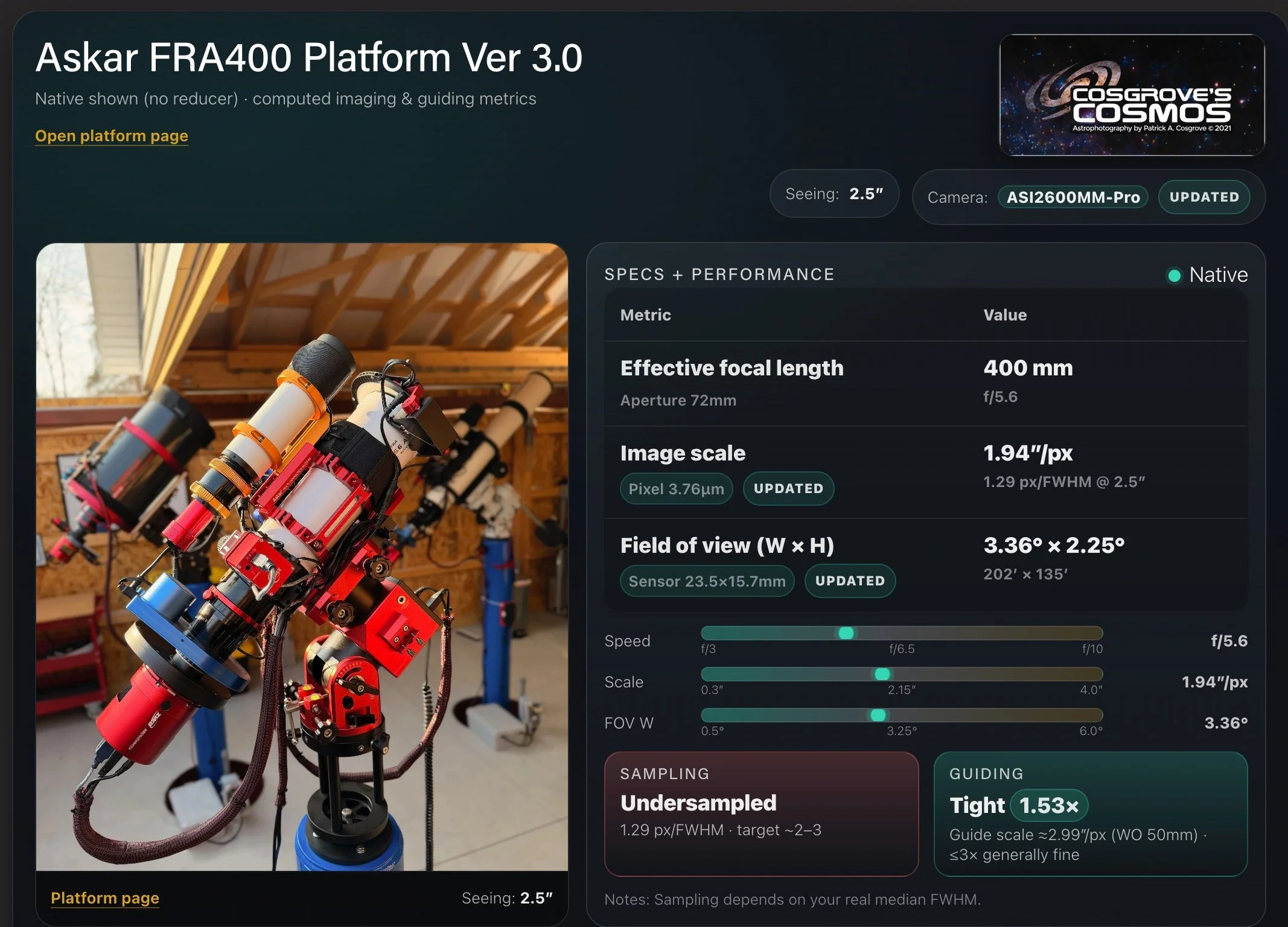
Version 3.0 of my Askar FRA400 Platform includes a switch to a new ZWO ASI2600MM-Pro Camera and 7×36mm filter wheel, as well as a new Wanderer Atro Motorized Cover/Flat light source.
The Latest Observatory Project Post
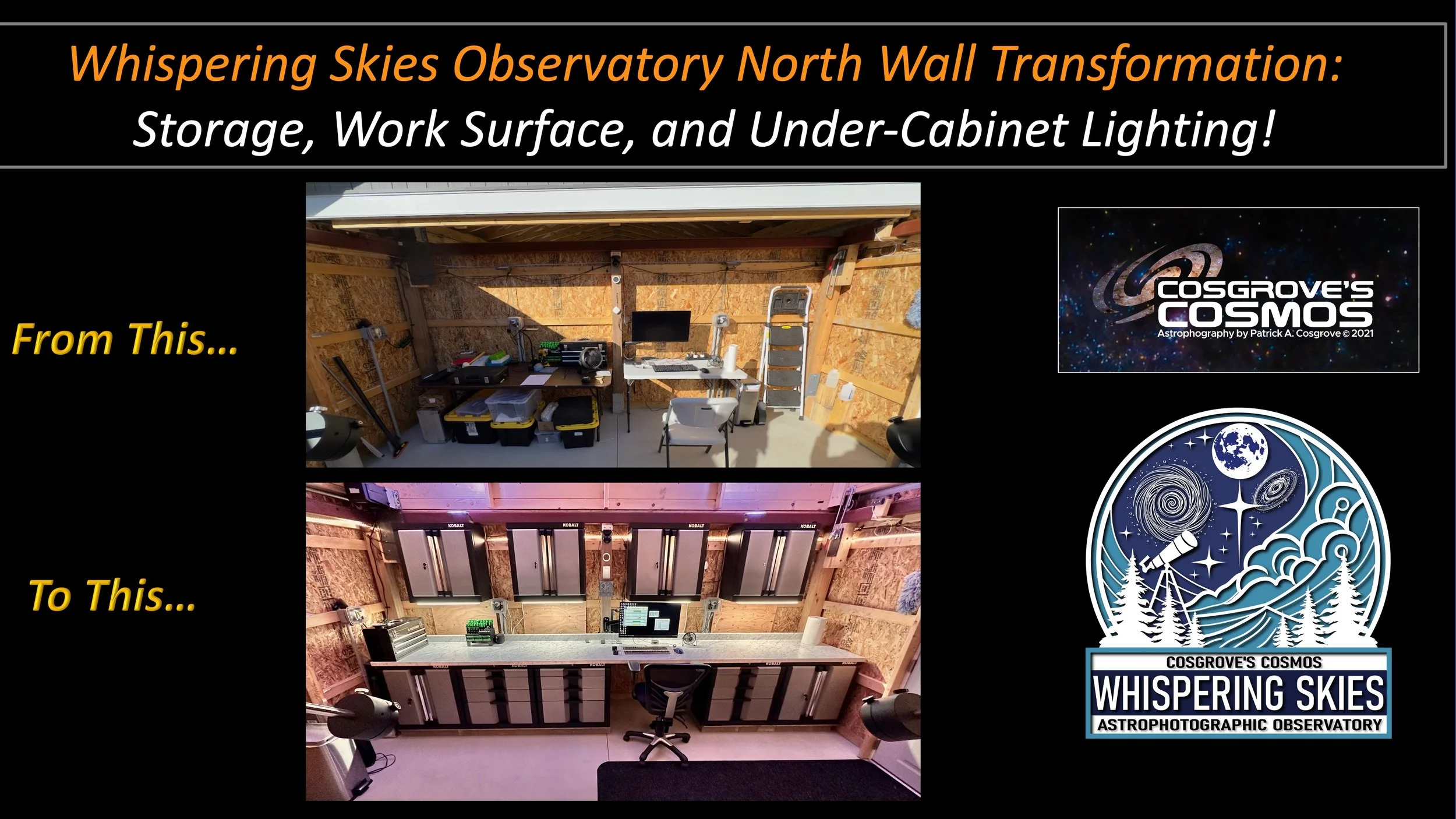
The final part of my Observatory project involved putting cabinets and a countertop on the North Wall of the observatory.
After two failed stars and working with a somewhat unusual collaborator, I developed an approach that met my budget objectives.
I still have one more step to complete, but that will have to wait for warmer weather when the paint cures. Stay tuned.
The October 2025 Update on the Whispering Skies Observatory Project! Coverd is images I have shut recently using the observatory as well as outdoor painting and indoor floor sealing and lighting projects. Also discussed are a few future projects that are currently in the planning stages.
I recently added a SkyALert Weather System Station from Interactive Astronomy. This page shows a weather map that is updated every 10 minutes!
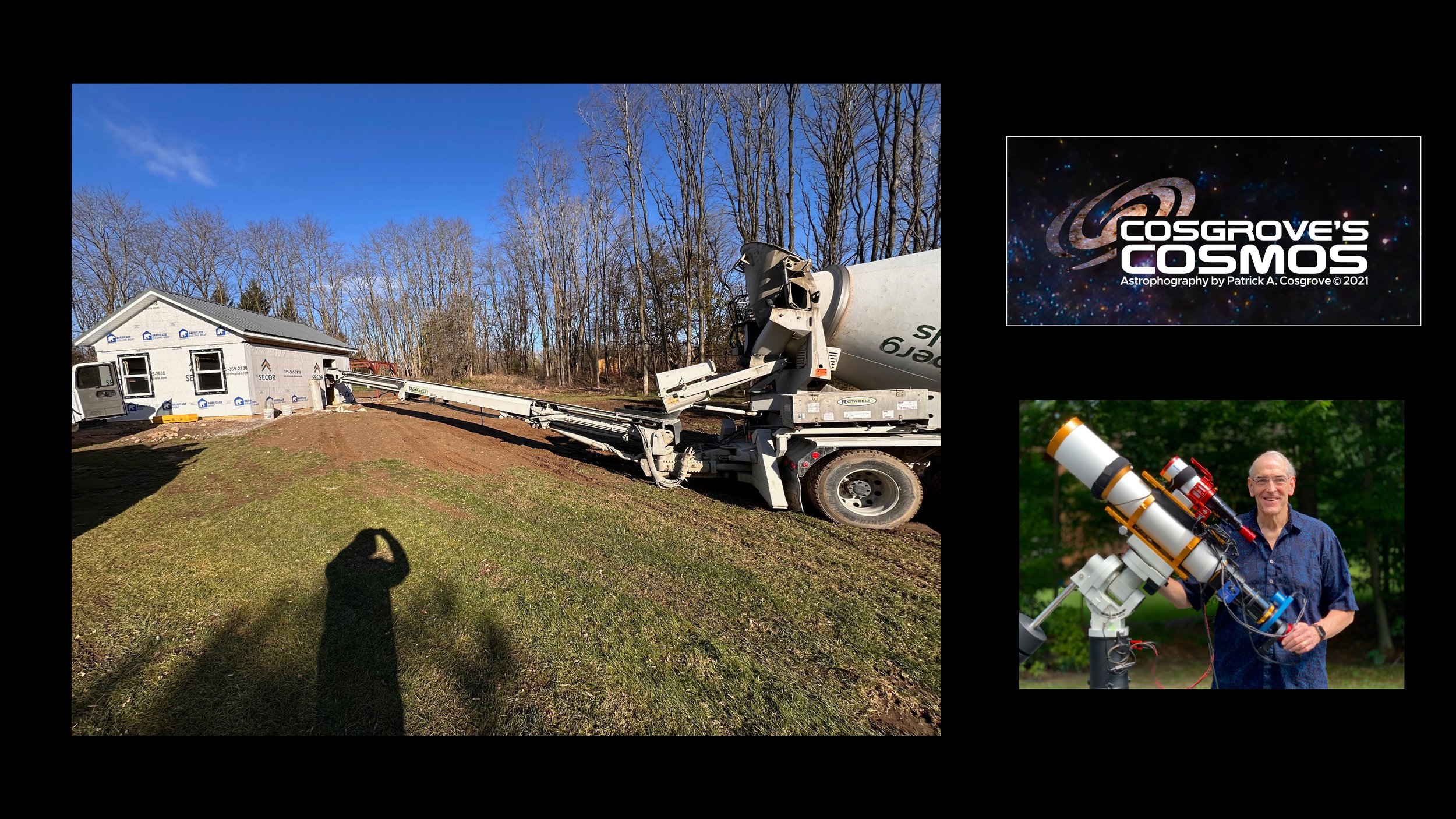
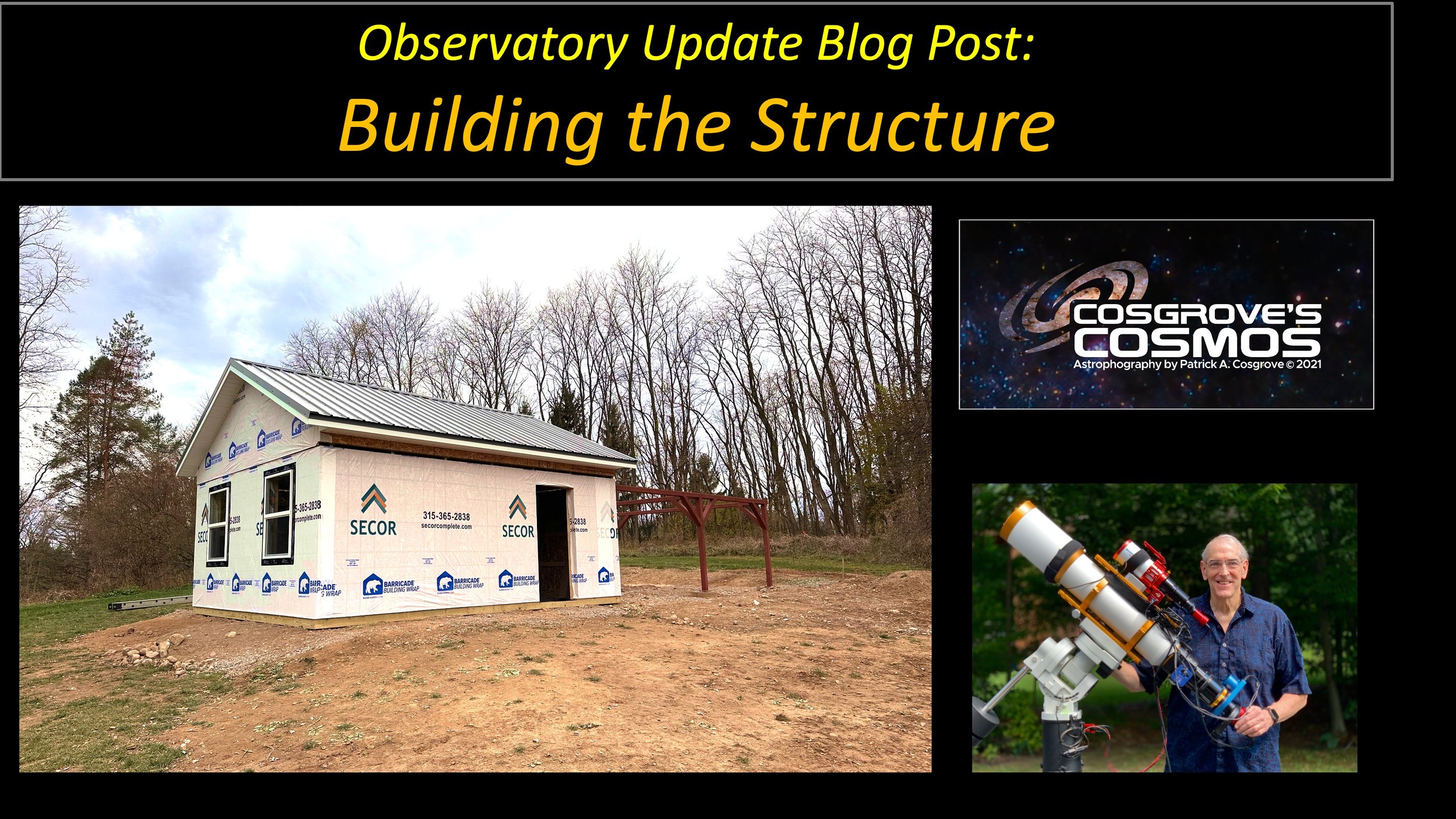
The construction phase of my observatory project is now complete!
It’s time to handle the drainage and the lawn restoration!
The construction phase of my observatory project is now complete!
In this video, I document the work completed to finalize the construction.
Finally - a huge milestone for the observatory project! The piers and scopes are now installed! Learn about how this was accomplished!
The construction phase of my observatory project is now complete!
To celebrate this, I created a drone video showing it’s current state!
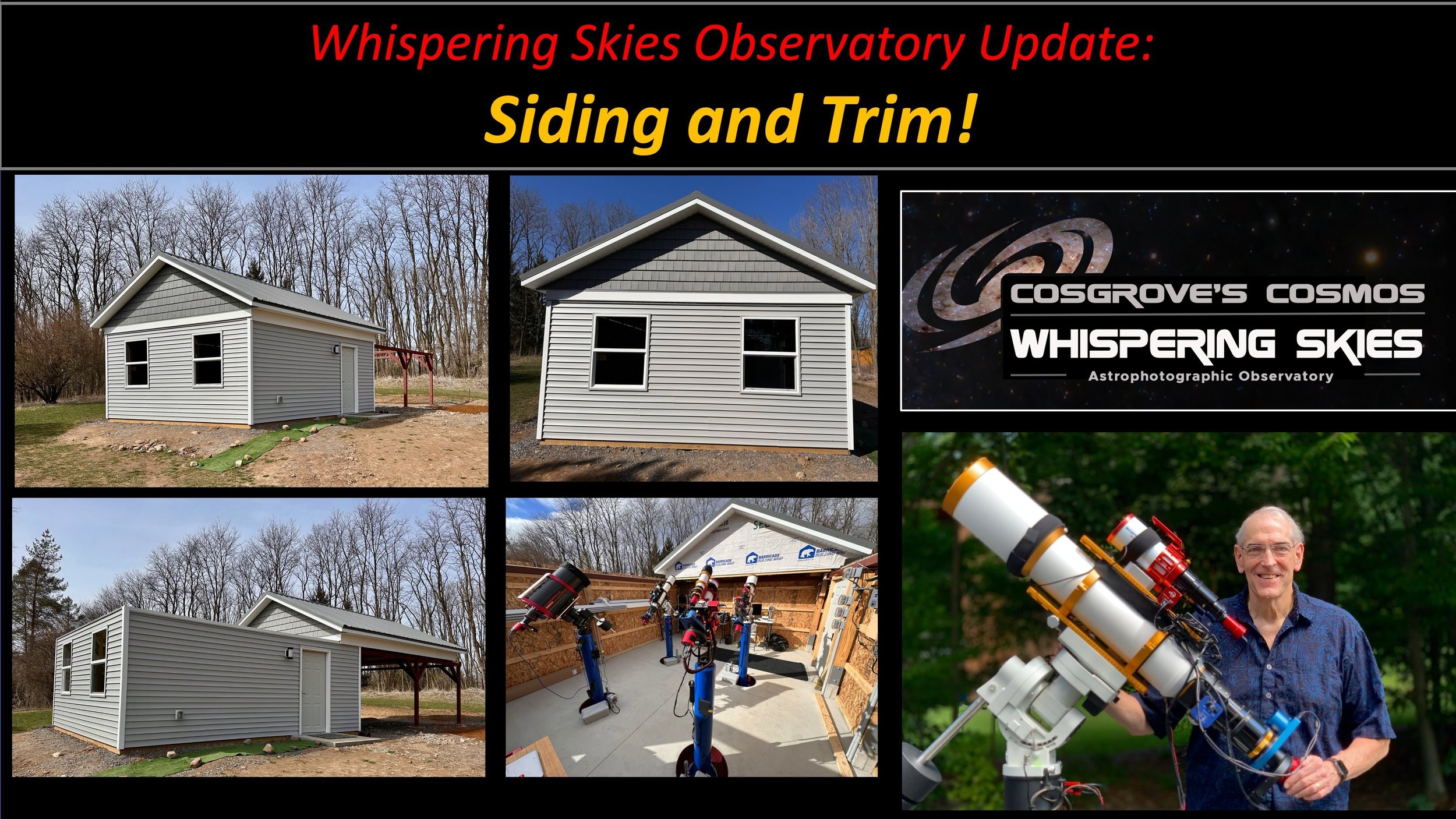
With the slightly better - and warmer - weather, we have made progress on finishing the outside of the building!
Most of the siding and trim are now done, and once more material is delivered, the rest can be completed in one day.
Also shown is a sneak peek at the inside with piers and scopes set up!
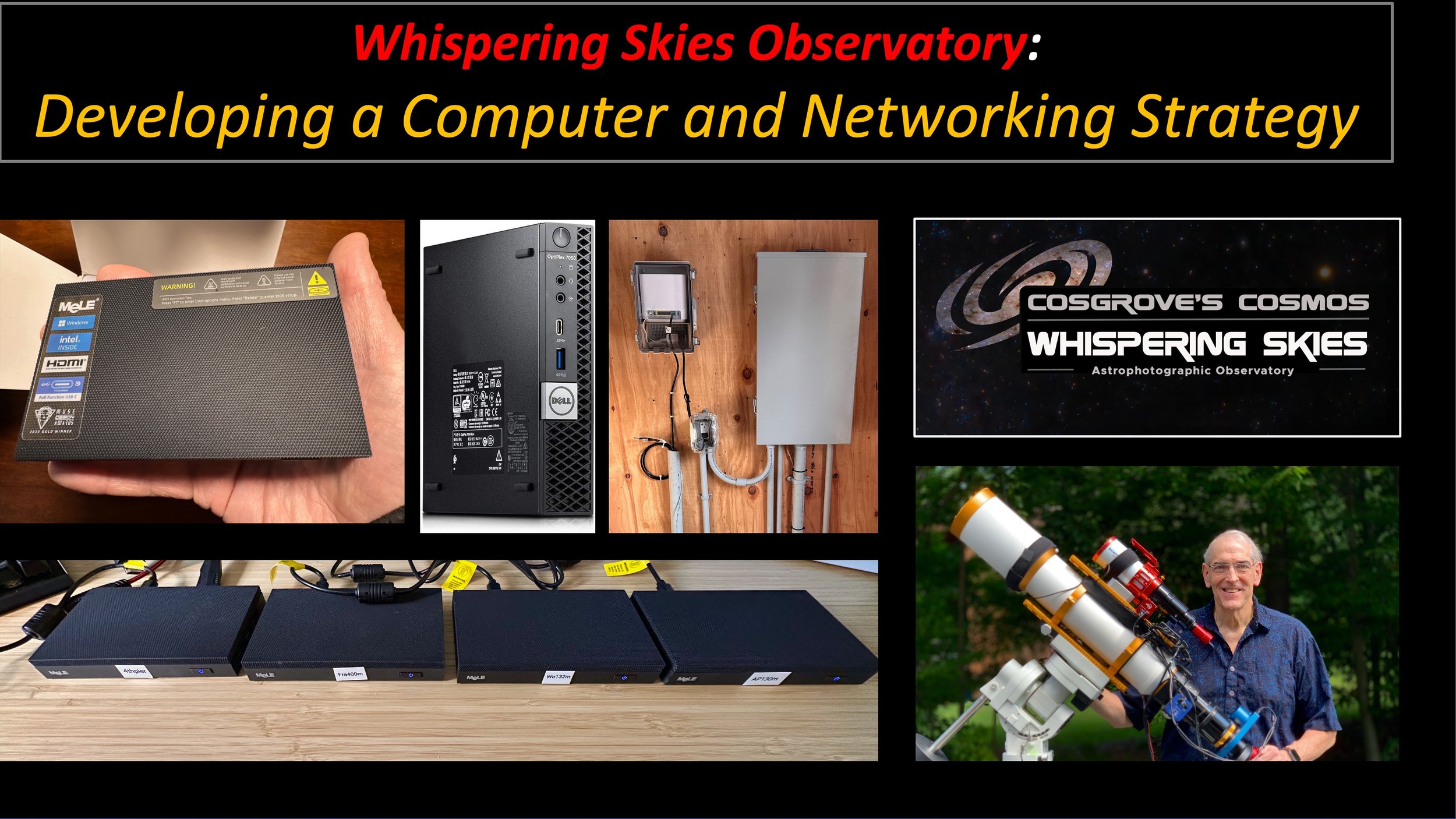
I am still waiting on the weather in order to complete the observatory, so I have been working on my computer and networking strategy for the observatory.
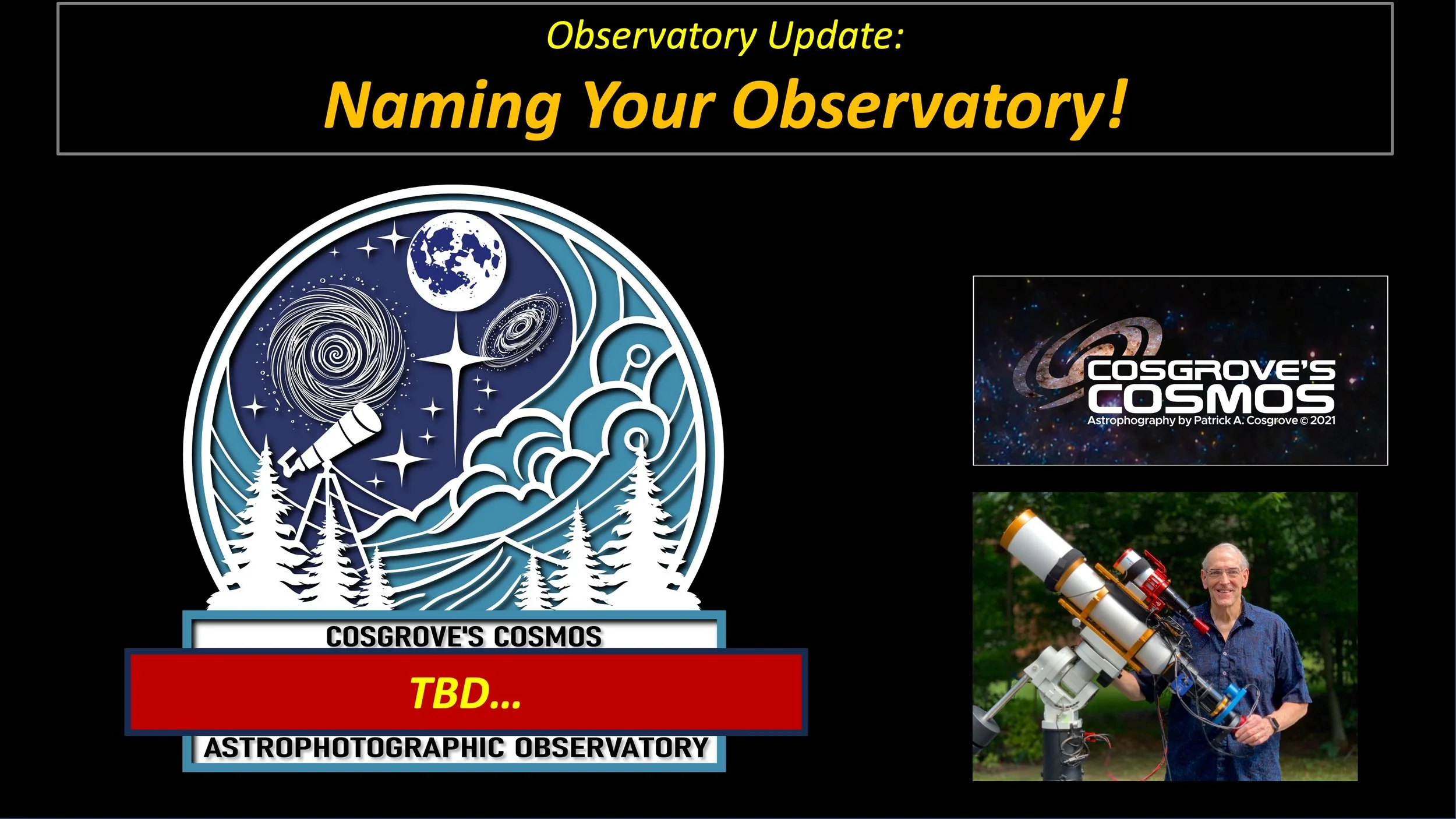
i finally have a name for my Observatory! Coming up with it was much more complicated than I thought it would be. This post explores when into that effort!
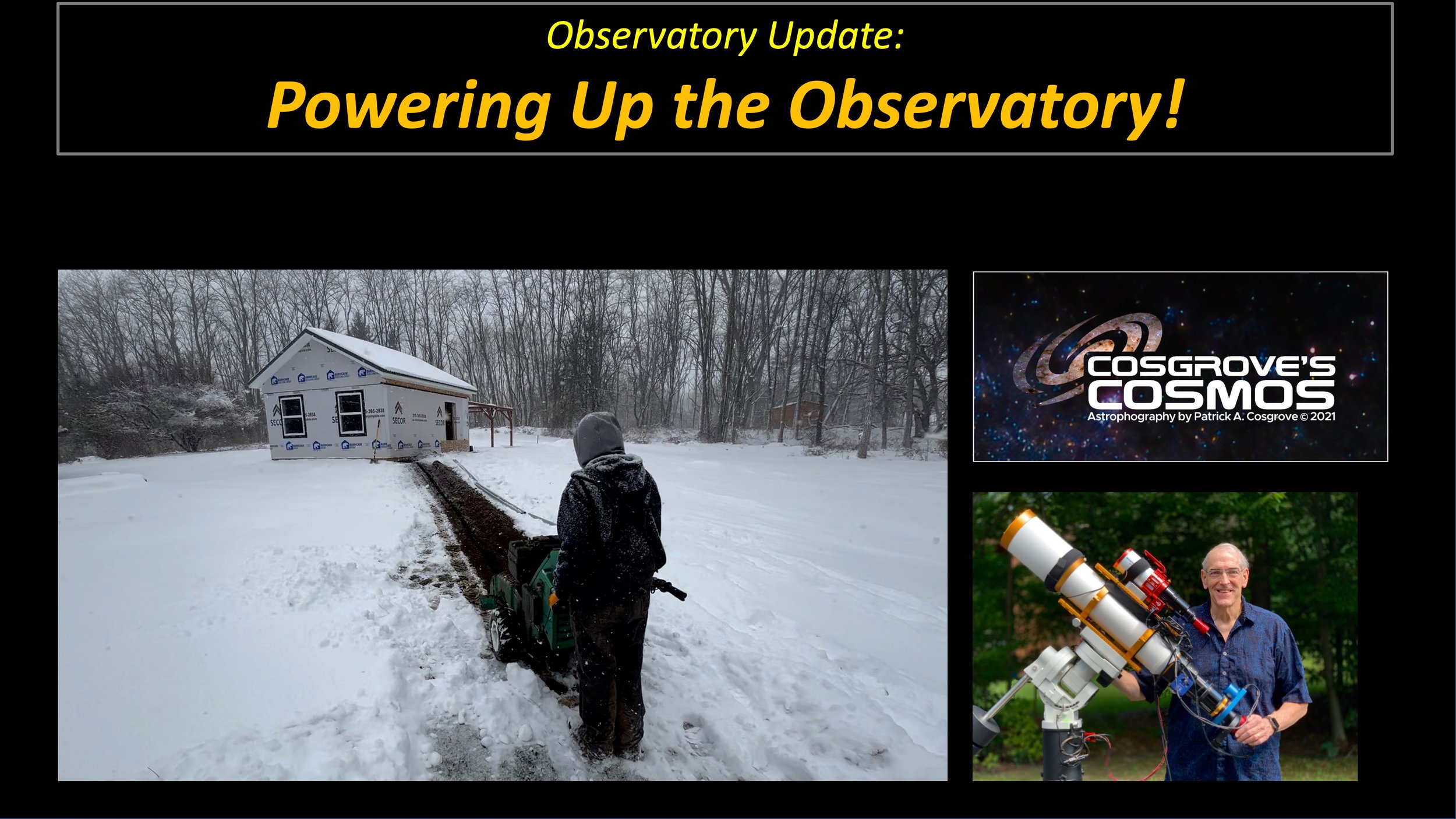
It may be Winter and snowing, but that did not stop the electrical installation for my Observatory Project!
This post covers electrical planning, running power from the house to the observatory, and then the finished installation of electrical service in the building.
This post discusses pouring the concrete slab we will use as the floor.
Before it can be poured, we have to know what we want for electrical service so we can plan under-slab conduits.
Then, the other prep for the pour is done, and finally, the concrete flows!
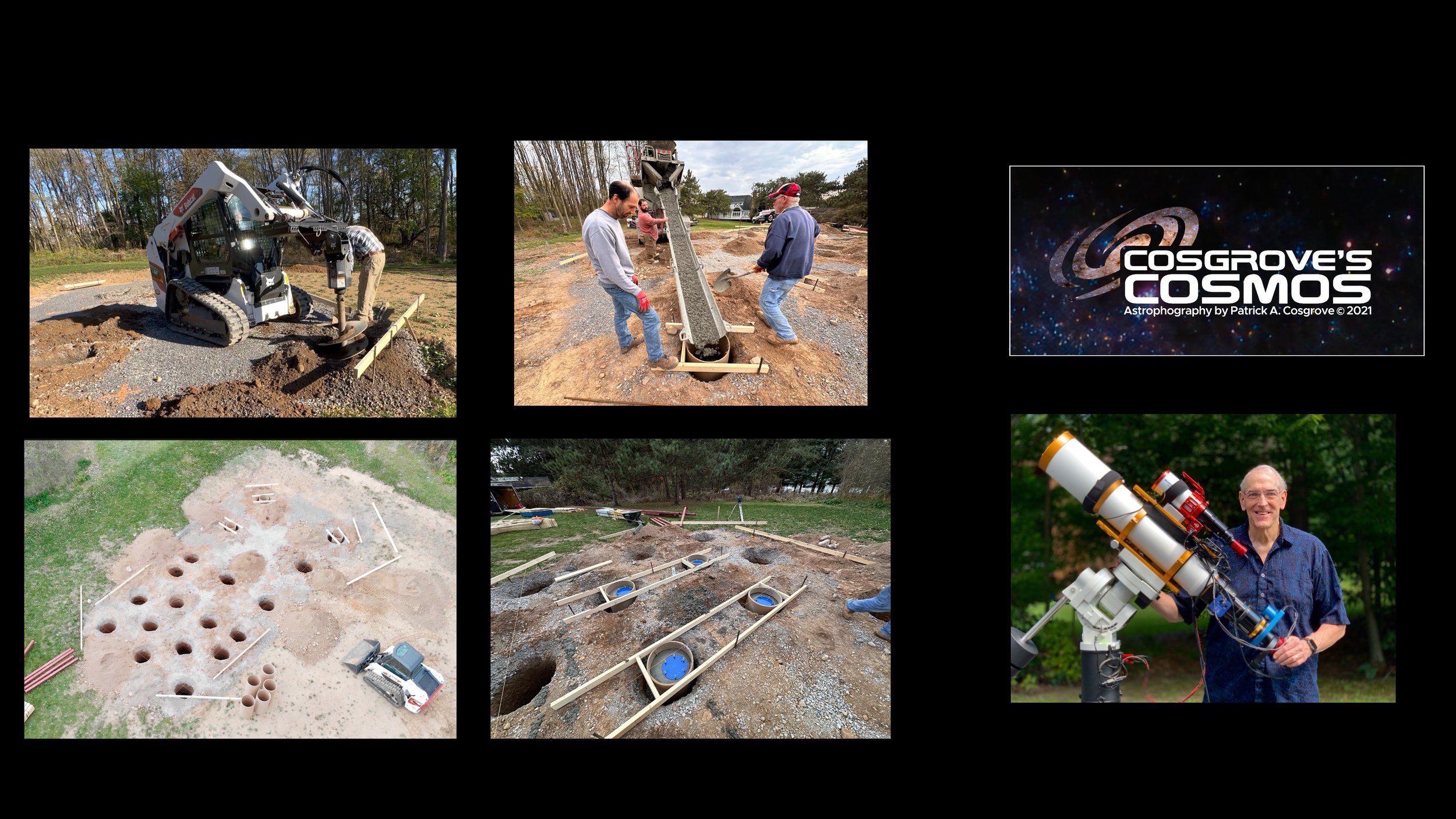
To supplement the two videos I have posted on this phase of construction, this blog post will cover the same information with some greater depth and additional background information.
Construction on the Observatory project have begun in earnest and the first phase is laying the foundation.
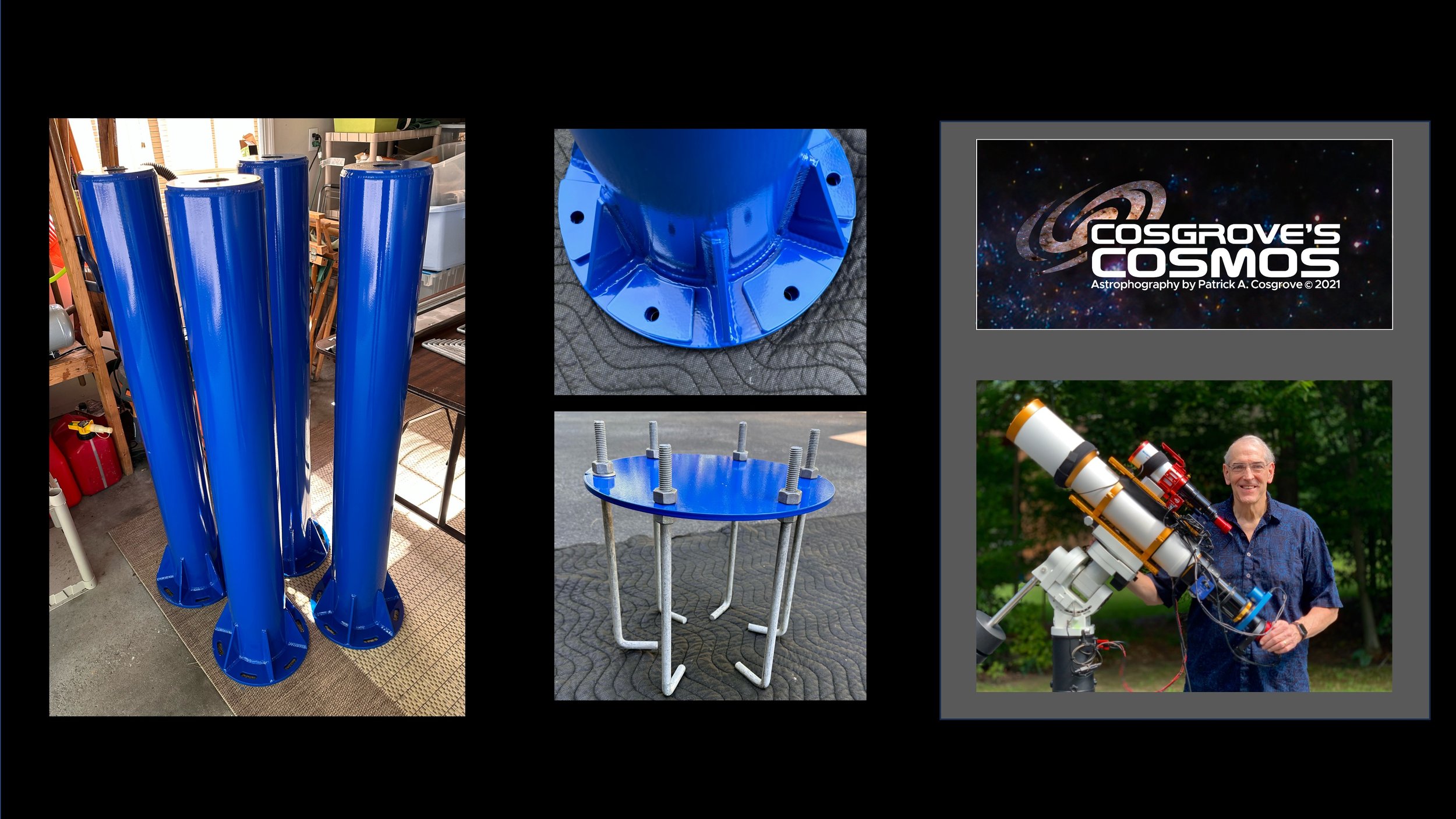
The Piers have come back from the painters and are now complete. This short blog post will review the final results!
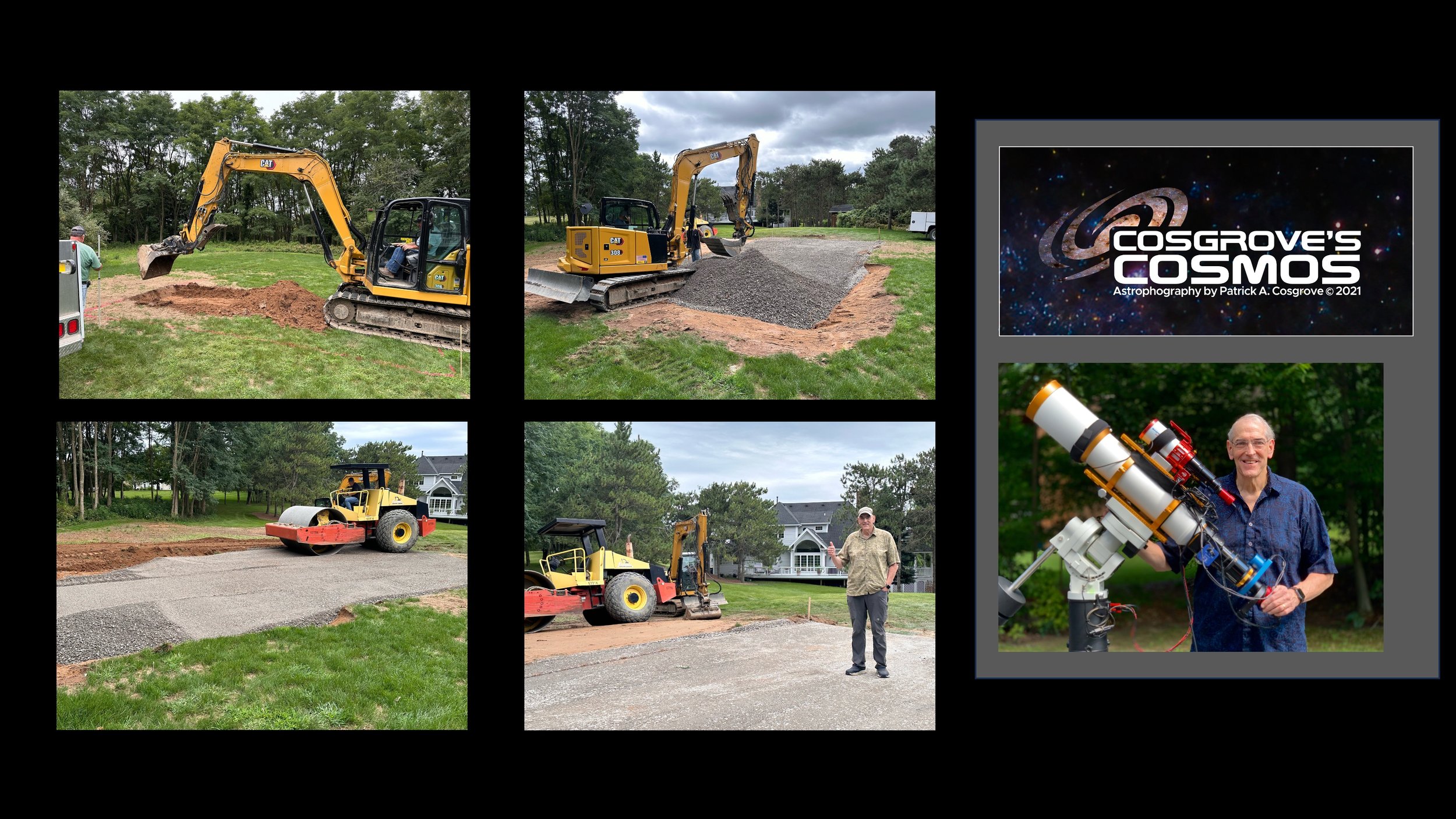
We have finally broken ground on the observatory project, and the excavation work is now complete!
This post is a companion article to the video I posted on my YouTube channel. Two days of work have been compressed into a few short minutes so you can see how the work progressed!
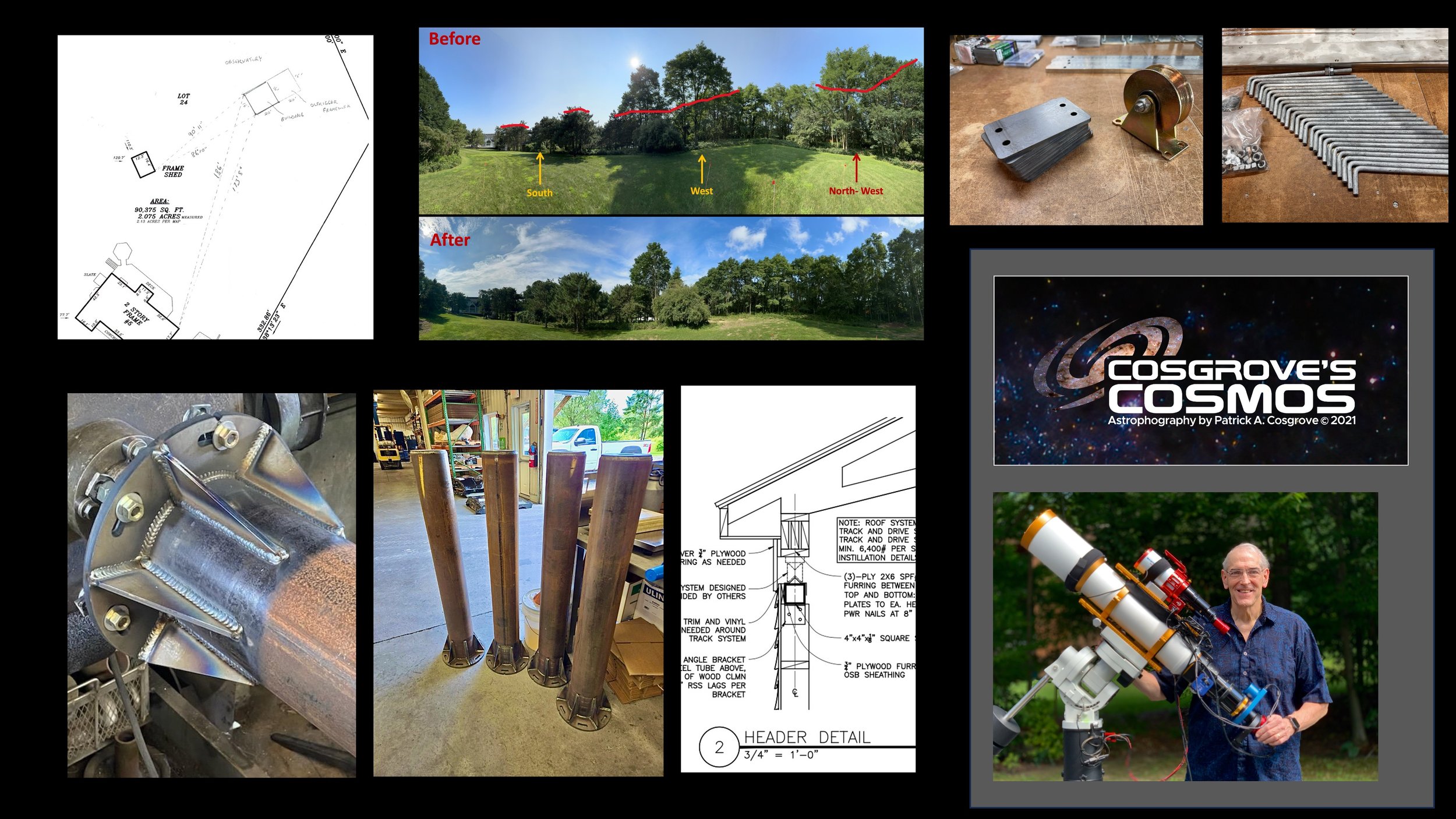
This is my last status report before construction commences on the observatory!
We have made progress on the final stamped plans, the building permit, and hardware acquisition, and I wanted to report on that!
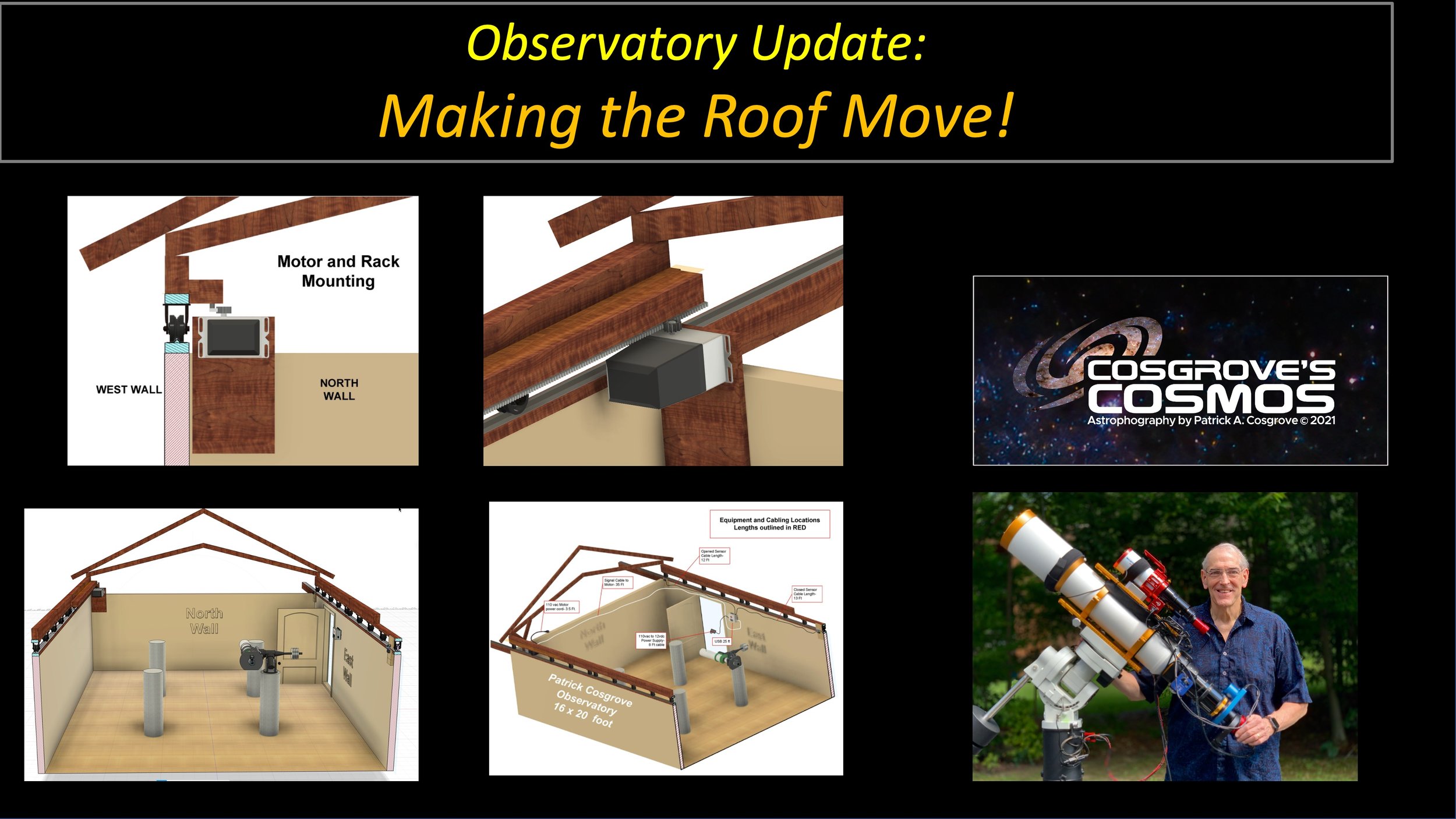
Now I need to plan for a way to move the roof on the observatory. After getting several recommendation, I decided to go with the SkyRoof System. Working with Jim Collins of IAA, I placed my order and plannned out how it would be installed for my application!
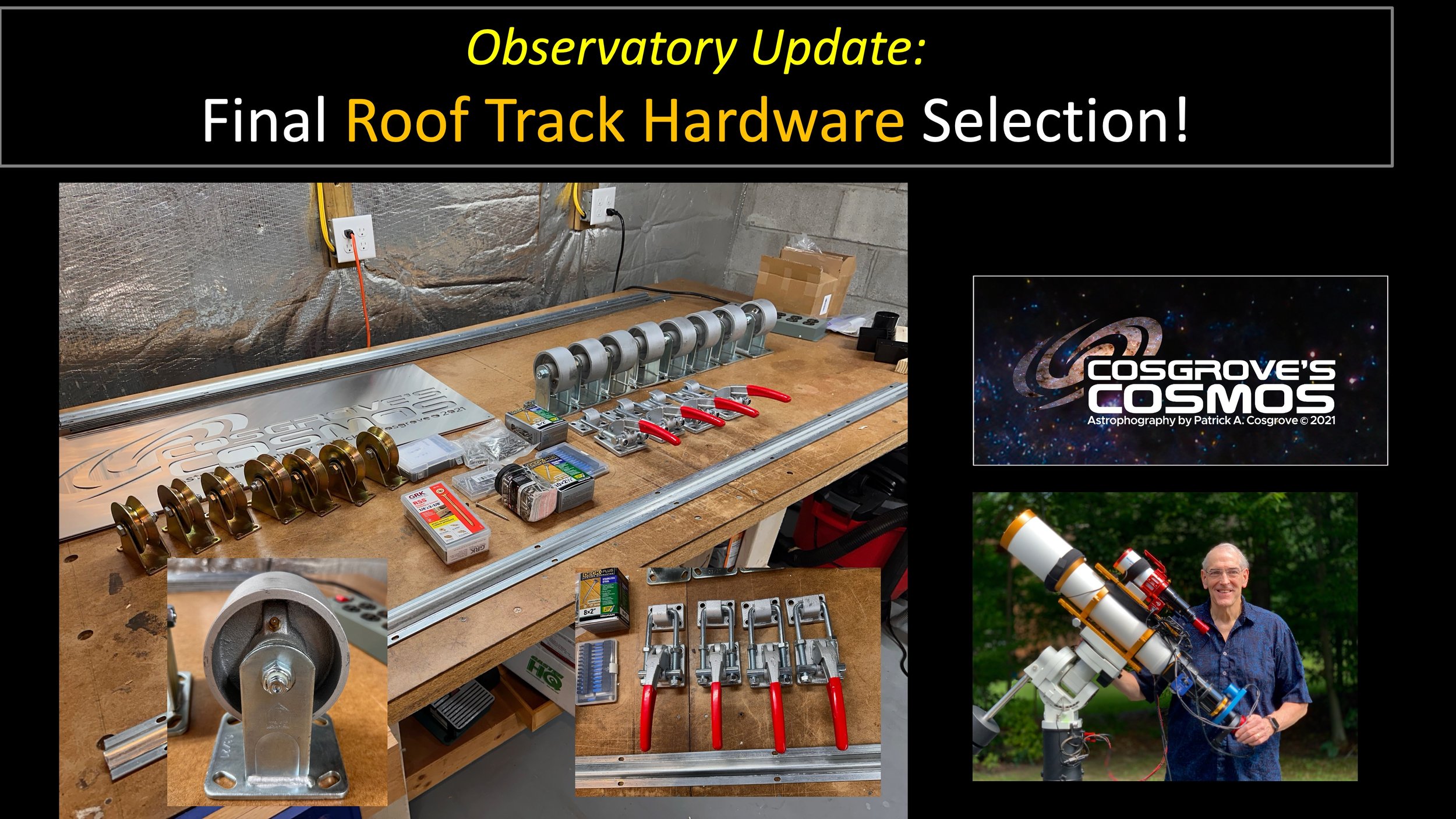
After a bit more research, my Roof Hardware choice changed once again. But these choicesare final as I ordered them and now have them on hand. This post updates where things stand with the hardware and reviews the final choices!
Explore the Site
Projects show the results. Gear, software tools, resources, and the observatory show how the results are made.
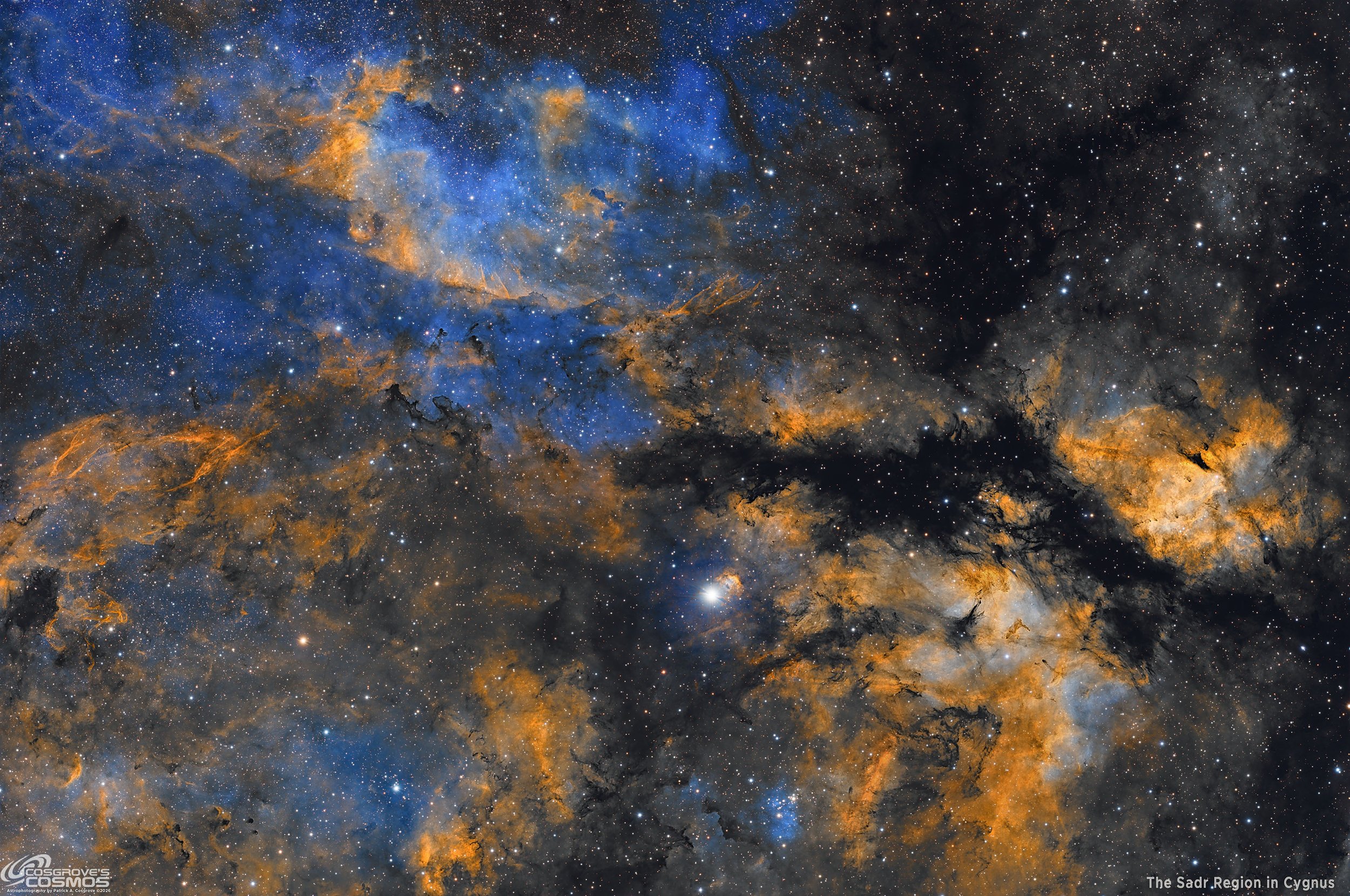
A wide-field view of the Sadr Region in Cygnus, combining 12 h 46 m of SHO narrowband data with RGB stars captured through the Askar FRA400 and ZWO ASI2600MM-Pro. This image reveals glowing emission nebulae, dark molecular clouds, young star clusters, and the bright foreground star Sadr along one of the richest stretches of the Milky Way.