Why Astrophotography?
Why Astrophotography? And how does it work?
by Patrick Cosgrove
Retired Image Science Research Director (Eastman Kodak) • Deep-sky Astrophotographer
January 20, 2026
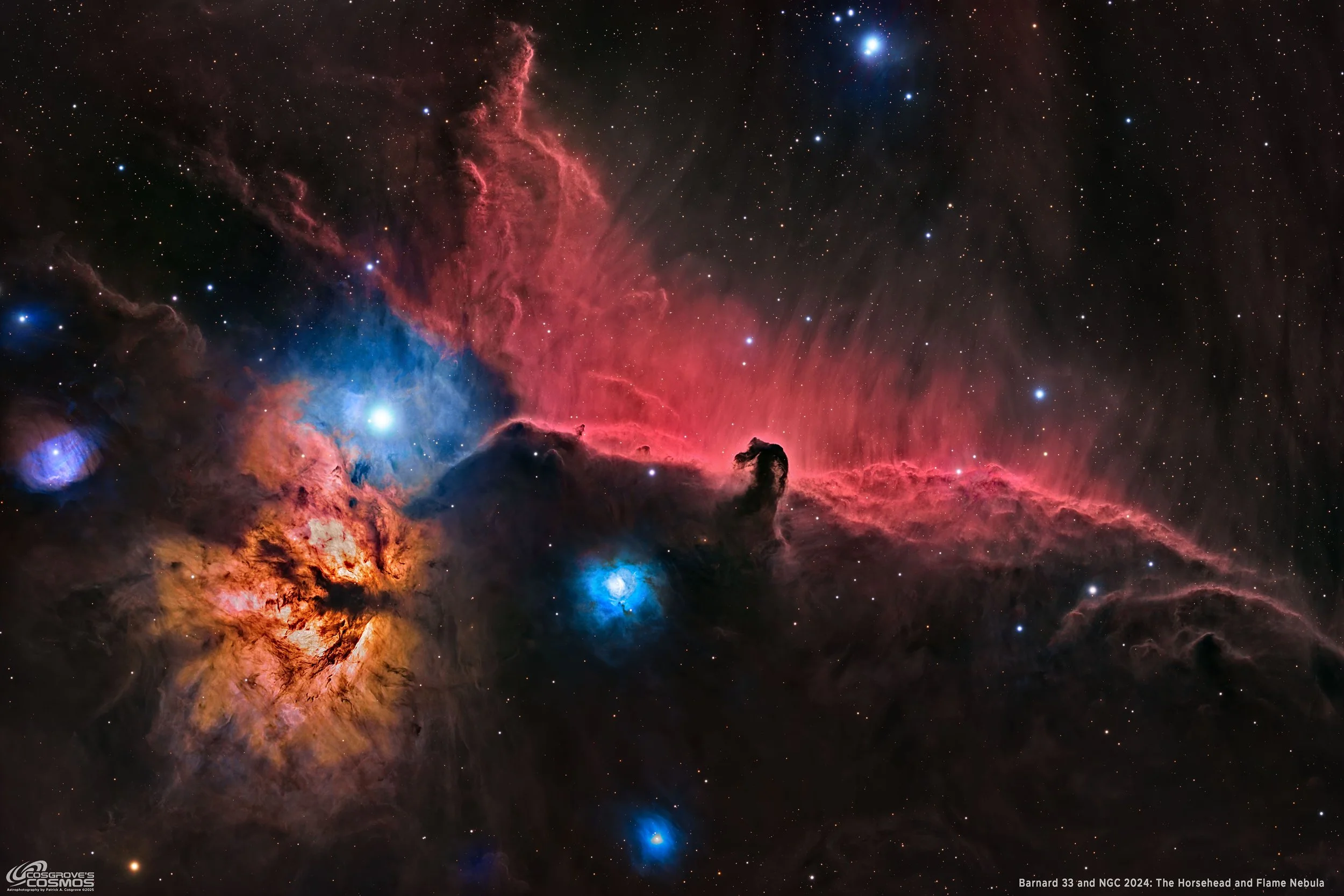
B33 (Horsehead Nebula) — captured from my backyard. This is what “ancient light” looks like when enough faint photons are collected over time .
Curious about this image? See the full Imaging Project report here: Barnard 33
Note: This is a continuation of a discussion from the Home Page - and a Deeper Dive!
What you’ll learn: How astrophotography works—from gathering faint photons with a telescope, to integrating light with a camera, to processing the data to reveal real structure hidden in the noise.
Why Astrophotography?
Because it is a challenge. Because it is precise. Because it allows a person to capture amazing pictures of objects in our Universe that can’t easily be seen with the naked eye. Because it feels like magic. Because it adds a dash of the extraordinary to the common elements of our life.
I am an Astrophotographer.
I capture Ancient Light.
I listen to Whispering Photons.
I span the unfathomable reaches of time and space.
………..And I do it from my backyard!
The Scale of the Universe boggles the mind…
The stars in our local corner of the Milky Way Galaxy are so far away that it can take years for their light to reach us. The light from other objects in our own galaxy can take as long as 100,000 years to get here - depending on where they are located. But ours is not the only galaxy in the night sky - there are millions and millions of other galaxies, and these are even further away. The light from these can take millions of years to reach us.
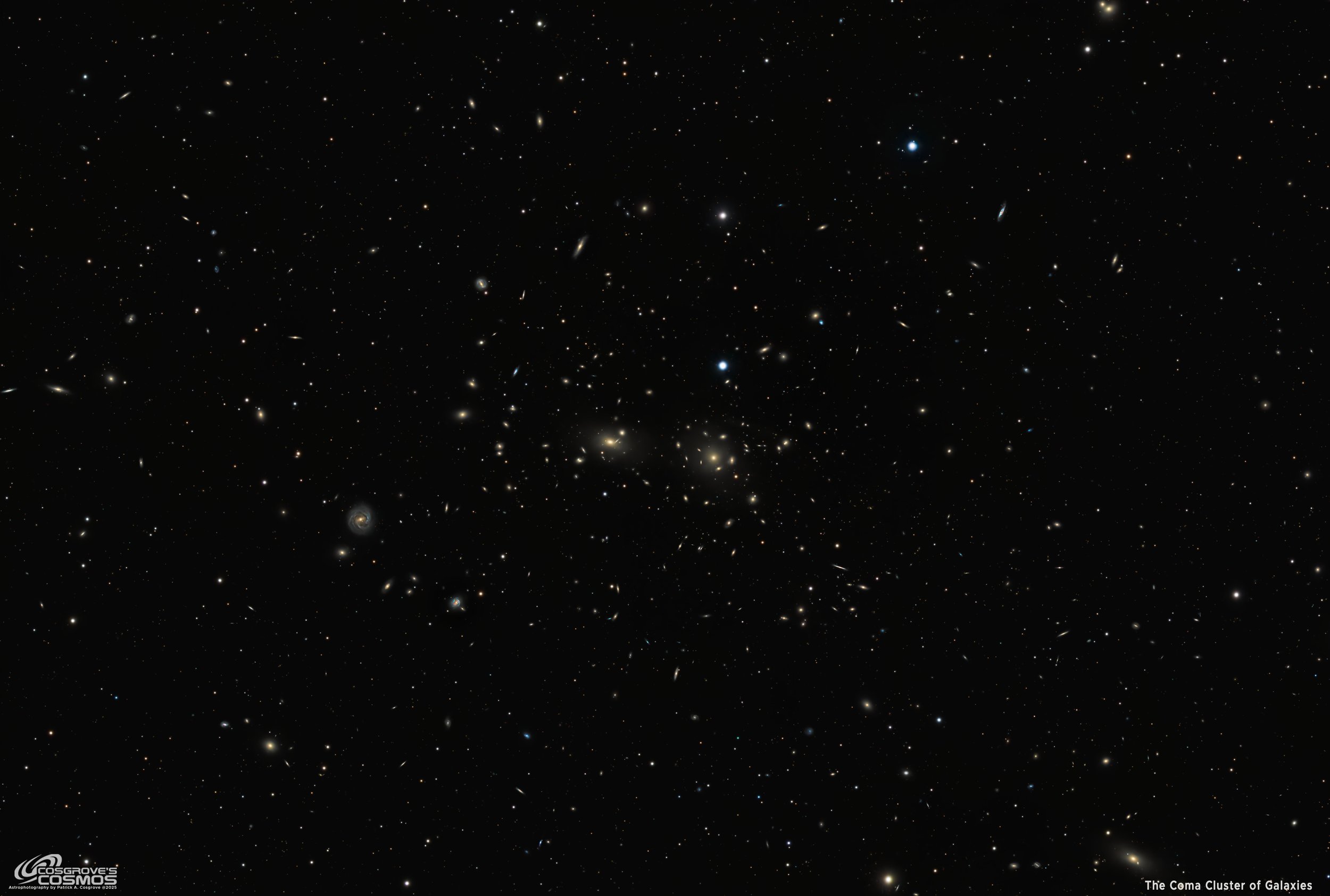
The Coma Cluster of Galaxies. What you are actually looking at is a cluster of over 1000 galaxies, which have an average distance of 320 million light-years away from Earth!
To see what is out there, our eyes need some help.
While stars can be bright, most of what is out there is very faint indeed. So faint that very little can be seen with our naked eyes… we just can’t catch enough photons with our eyes to trigger the sensation of sight.
A Telescope can help
It helps in two ways.
First - it acts as a funnel
It increases the area that is catching photons and focusing them onto a smaller area - such as our eye.
This telescope is 132 mm in diameter. A fully dark-adapted human pupil is about 7 mm. That means the telescope’s light-collecting area is about 356× larger than your eye’s. That extra collecting area lets us gather far more photons from faint objects than the eye ever can — especially when we integrate over time with a camera.
Second - it makes small things larger.
With my current imaging setup, the effective “magnification” is about 15× relative to a 50 mm lens on full-frame (35 mm). This really helps us to see some of the really smaller objects in the sky.
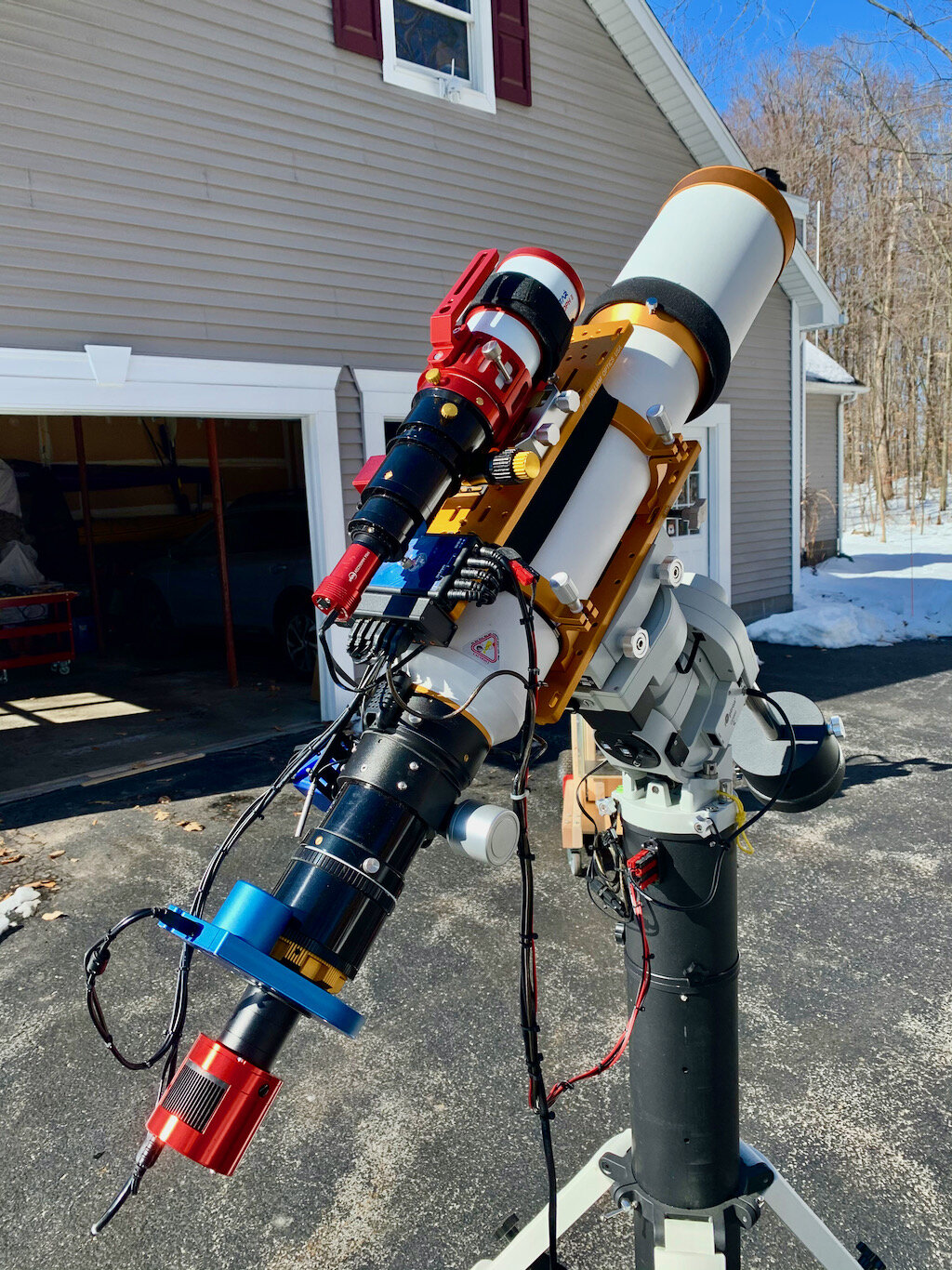
A telescope is really just a big light funnel.
A Camera Sensor can help
First - They integrate light over time.
Sensors can replace our eyes and - unlike our eyes - they can integrate light over longer periods of time and “store them away”. The eye can only integrate photons over very short periods of time - perhaps about 1/8 of second. Cameras and camera sensors, on the other hand, can integrate light over much longer periods of time.
Sometimes these very faint objects only have a very thin stream of photons reaching our telescopes. But camera sensors can catch many of those photons over time and build up an image. For some of my images, I have collected photons over a period of 30 hours to get the image!
Second - They can see a broader and more selective spectrum of light than our eyes
Sensor can see a wider portion of the spectrum that our eyes. With filters, we can also be very selective about what part o the spectrum we gatehr data from. This allows us to capture color as we normally think about it in our everyday world. But it also allow us to capture very tiny slices of the spectrum that are unique to objects in the sky and help us to see things our eye could not ever see.
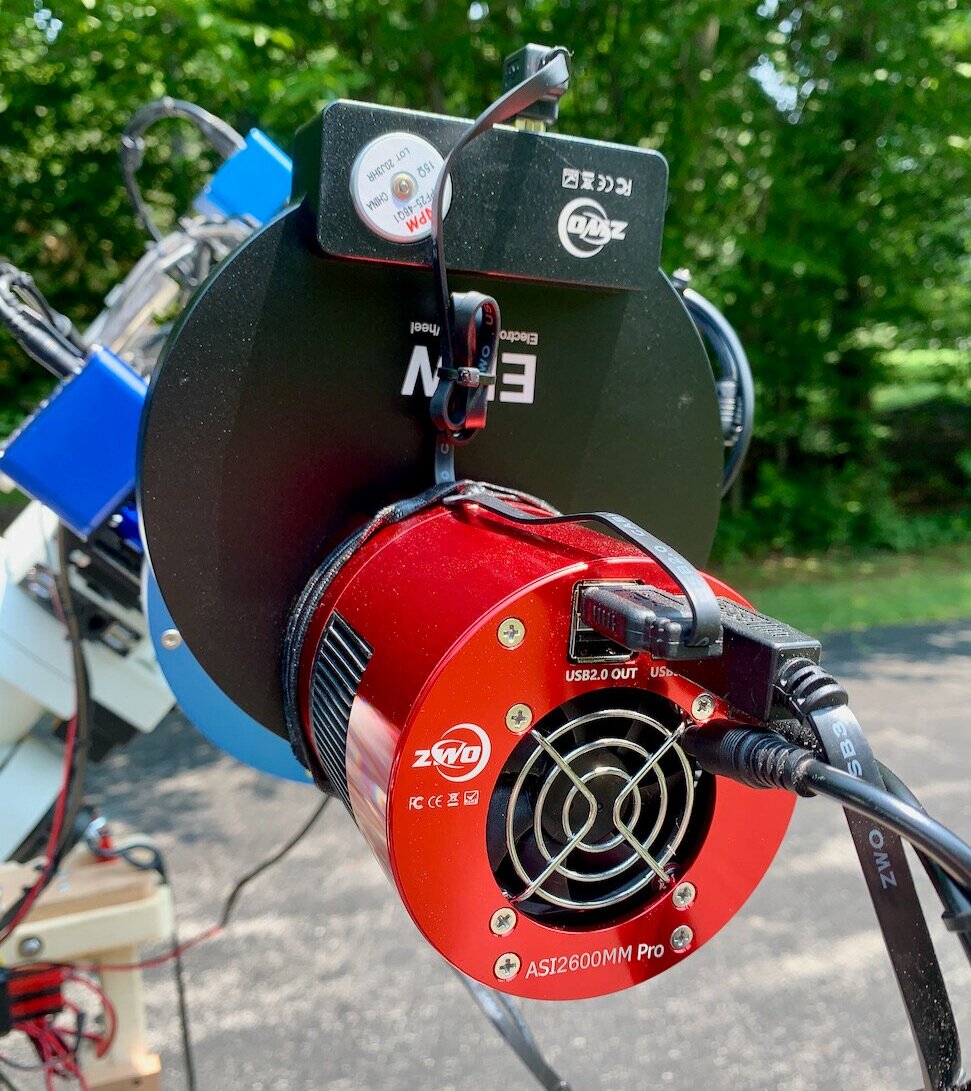
A camera can store light over longer periods of time than the eye.
A Tracking Telescope Mount Can Help
Our telescopes and camera work together to capture photons over time. While this is happening, the Earth is turning, causing our target to move across the sky. A tracking telescope mount turns with the sky, keeping the object precisely centered in our field of view.
Astrophotography is about catching the thin stream of incoming Photons over time, and the painstaking processing of those faint signals - teasing them from the background noise - so that we may see the amazing things that populate our Universe.
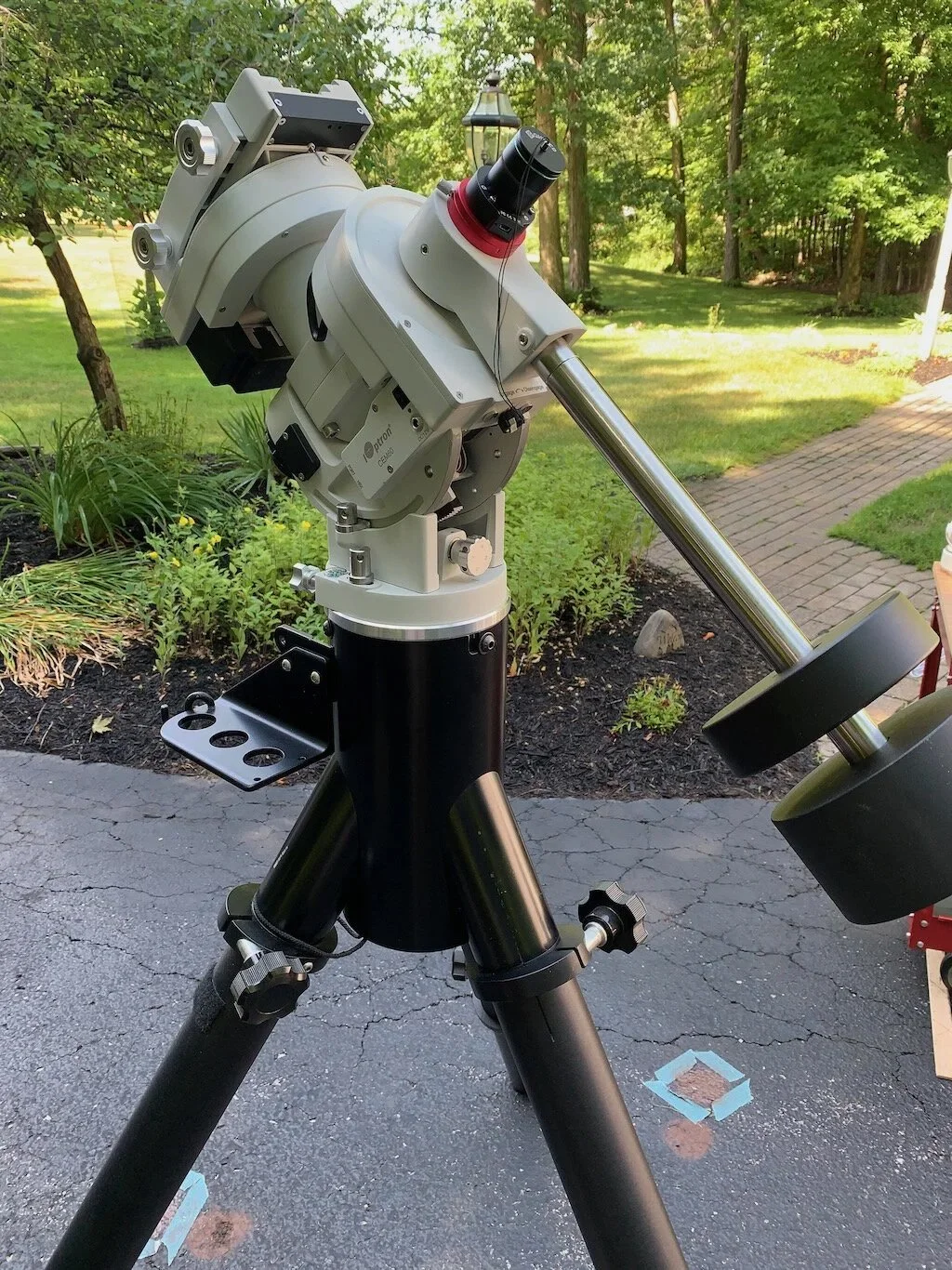
This is one of my iOptron CEM 60 mounts. This is a computerized GOTO mount that does a great job tracking the night sky.
Image Processing Can Help
We sample the night sky by taking short exposures, one after another, over and over again until we stop. These images are called “subframes” and must be calibrated, aligned, and integrated to sum their signals into one master image. This Pre-Processing is crucial to getting the best data for our images.
For example, stacking 300 subframes improves signal-to-noise roughly by √300 (~17×) compared to a single sub!
Once we have calibrated data, the challenge now to process and enhance it, pulling the thin signal from the background noise level and creating a final image that can allow our eyes to see and appreciate this part of the universe.
Image processing is extremely important and a skill that all astrophotographer must develop. Over time, with advancements in software and image processng methods, our capabilyt to create an image from a raw data set improves allowing new images to be processed from old data!
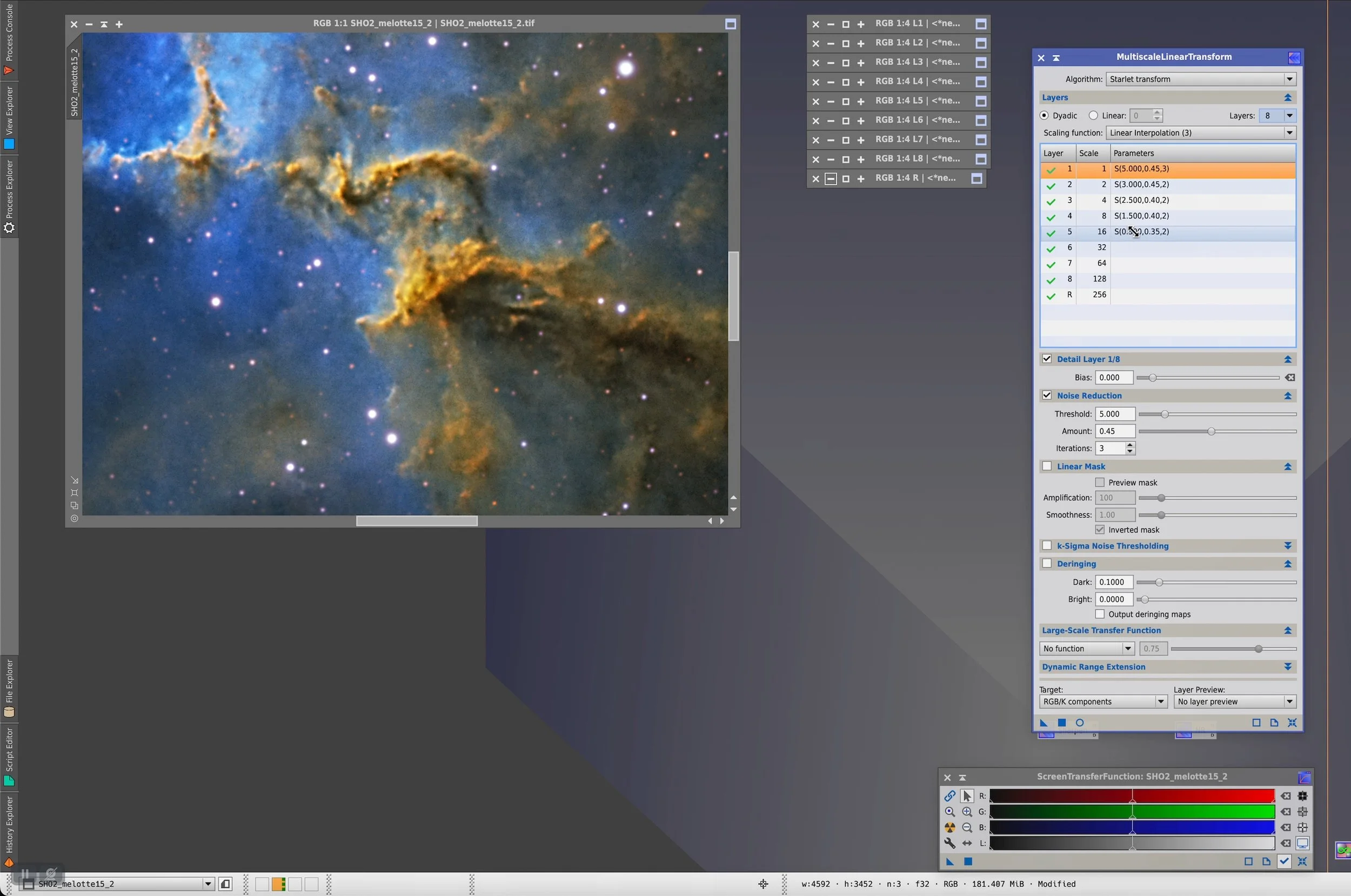
Working on an image in PixInsight - A powerful image processing platform used by most astrophotographers.
Sparking the Imagination….
There’s something kind of awesome about capturing these images.
Photons may travel for thousands or even millions of years - crossing the Universe and avoiding obstacles, gas, and dust - to finally enter the front of my telescope and to hit my camera sensor - to create a signal just barely above the noise level of the device.
These few photons - which have traveled so very far and for so very long - whisper to us and tell us of their home…
Astrophotographers must “ listen” very carefully to hear the stories they have to share…
Thank you for letting me share Journey into Astrophotography with you!
“Ready to see real examples? Start with the gallery and open any project report for the full story—target choice, capture, analysis, and processing.”