
Date: May 18, 2026
Cosgrove’s Cosmos Catalog ➤#0161
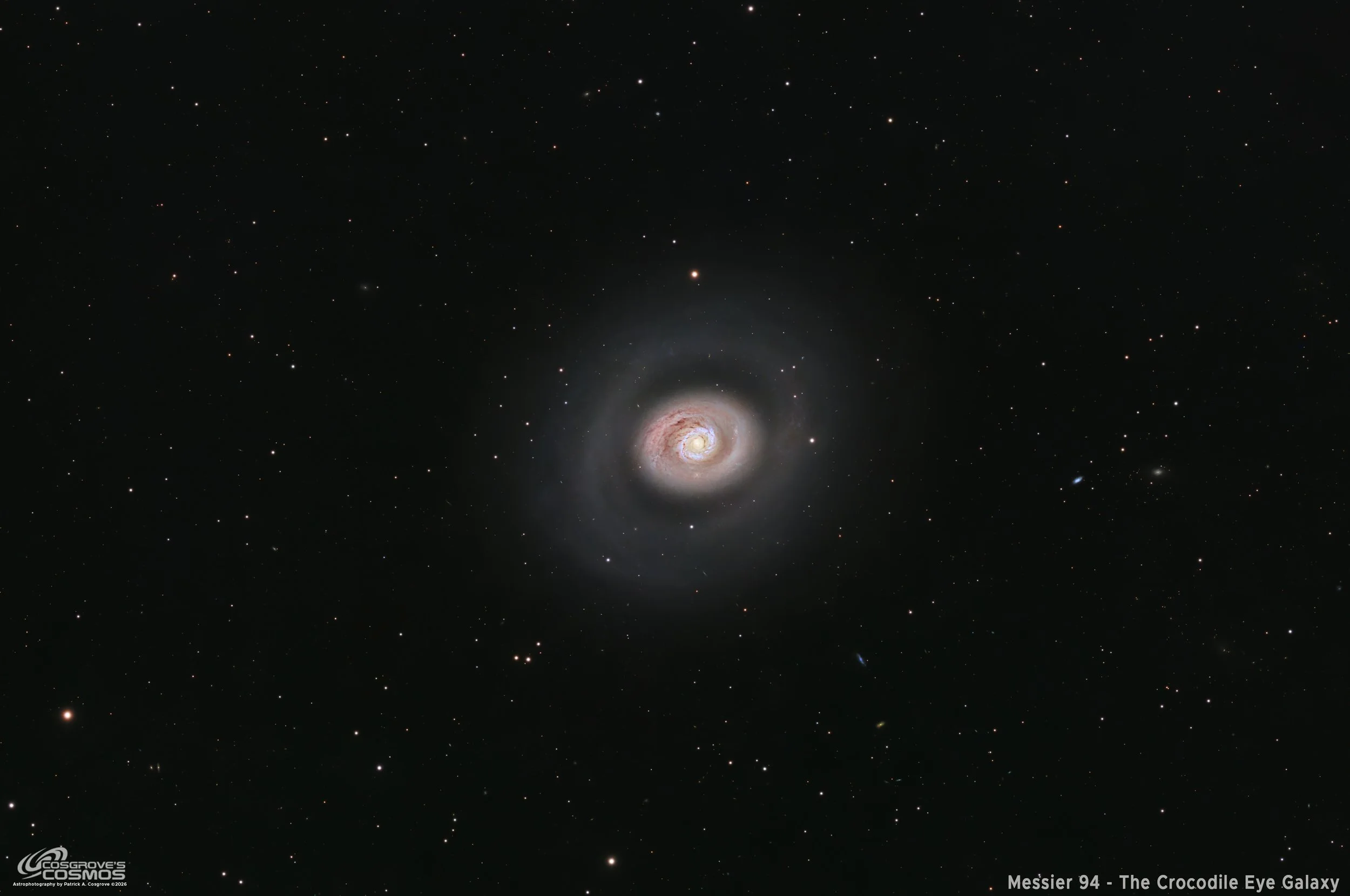
Messier 94 - The Crocodile Eye Galaxy (Click image for hi-res version via AstroBin.com.)
M94 — The Crocodile Eye Galaxy: a bright, compact spiral with an active star-forming ring, a faint extended outer disk, and more structure than its small apparent size first suggests.
🔭 Project Summary
Target: Messier 94 – The Crocodiles Eye Galaxy / Cat’s Eye Galaxy / NGC 4736
Capture Dates: April 11, 20, and 21, 2026
Constellation: Canes Venatici • Distance: ≈ 16 million light-years
Type: Face-on spiral galaxy with bright central region, active inner ring, and faint extended outer disk
Imaging Period: April 11–21, 2026 • Total Integration: 12 h 49 m 30 s (LRGB)
Filters: L · R · G · B (ZWO 36 mm LRGB Gen II)
Telescope: William Optics 132 mm f/7 FLT APO Refractor with P-FLAT7A 0.8× reducer
Camera: ZWO ASI2600MM-Pro (−15 °C; Gain 0 LRGB)
Mount: iOptron CEM60 on custom steel pier
Processing: PixInsight (LRGB) & Photoshop
Location: Whispering Skies Observatory · Honeoye Falls, NY (USA)
Acquisition notes: L: 202 × 90 s; R: 103 × 90 s; G: 102 × 90 s; B: 106 × 90 s at −15 °C, Gain 0; total 12 h 49 m 30 s after culling bad or questionable subs.
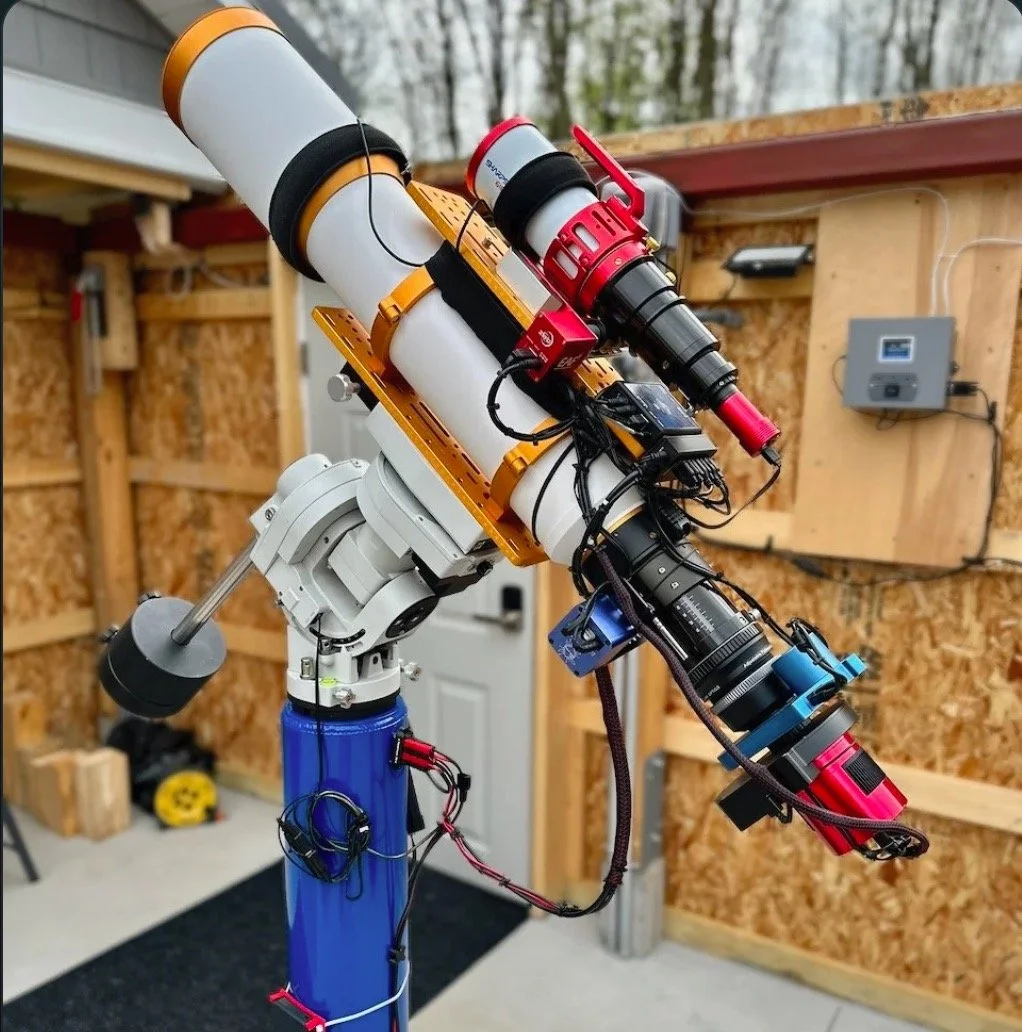
The WO 132 Platform (click on image to go to the blog entry for this scope)
📸 Capture Details
Nights: April 11, 20, and 21, 2026
| Channel / Filter | Frames × Exposure | Settings | Total |
|---|---|---|---|
| L — ZWO Lum (36 mm unmounted) | 202 × 90 s | bin 1×1 • −15 °C • Gain 0 | 5 h 03 m |
| R — ZWO Red (36 mm unmounted) | 103 × 90 s | bin 1×1 • −15 °C • Gain 0 | 2 h 34 m 30 s |
| G — ZWO Green (36 mm unmounted) | 102 × 90 s | bin 1×1 • −15 °C • Gain 0 | 2 h 33 m |
| B — ZWO Blue (36 mm unmounted) | 106 × 90 s | bin 1×1 • −15 °C • Gain 0 | 2 h 39 m |
| Total Integration (after culling): 12 h 49 m 30 s (LRGB) | |||
Calibration Frames
- 30 × dark frames @ 90 s, bin 1×1, −15 °C, Gain 0
- 30 × dark-flats @ each flat exposure time, bin 1×1, −15 °C, Gain 100 or Gain 0 as needed
- Flats: 15 each — L, R, G, B
Table of Contents Show (Click on lines to navigate)
Annotated Image
This annotated image was created with the ImageSolver and FinderChart scripts in PixInsight.
The Location in the Sky
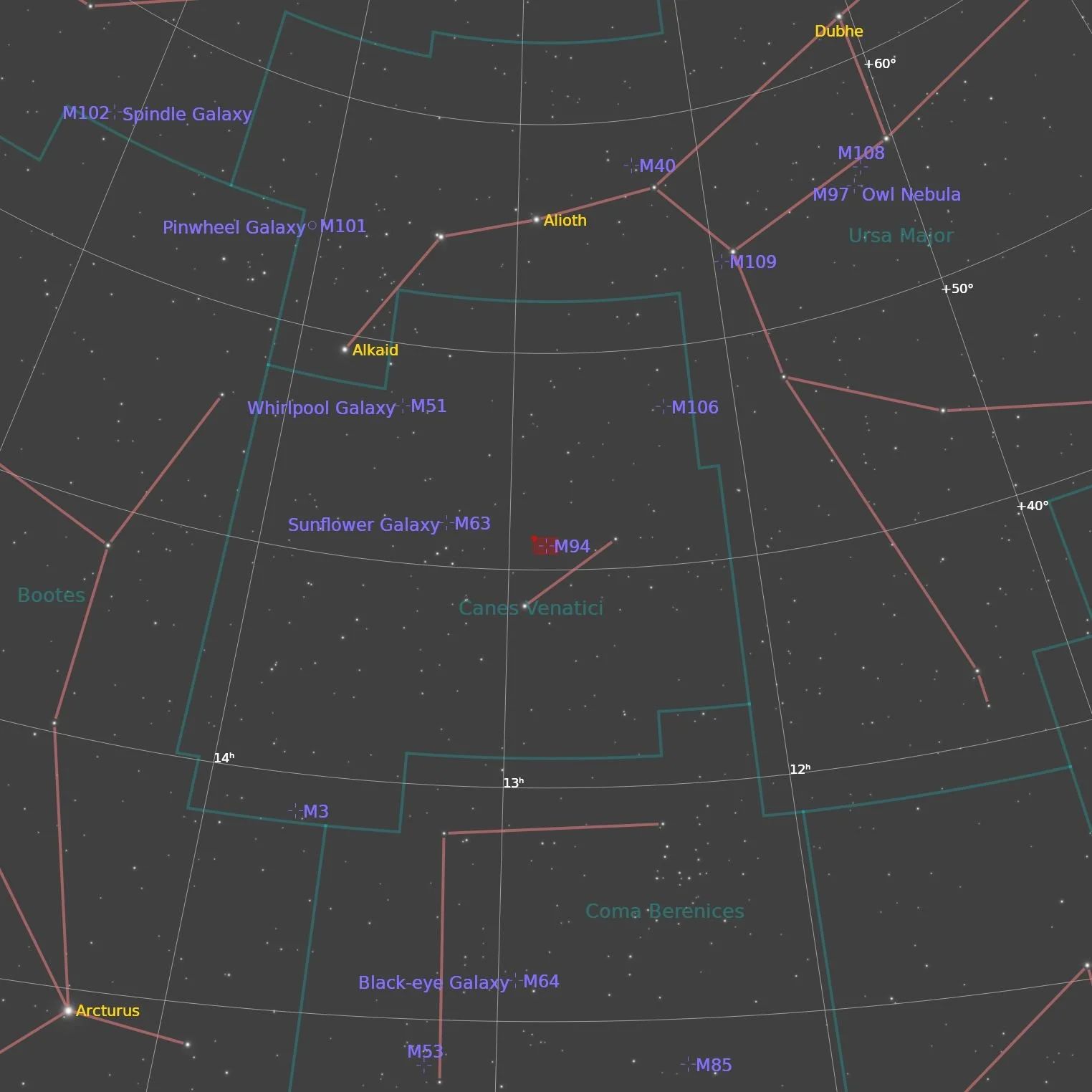
This annotated image was created with the ImageSolver and FinderChart scripts in PixInsight.
About The Target
🔭 Overview
Messier 94, commonly known as the Crocodile’s Eye Galaxy (sometimes just the Croc’s Eye Galaxy) and also known as the Cat’s Eye Galaxy, is a bright spiral galaxy in the constellation Canes Venatici. It is also cataloged as NGC 4736. M94 is one of the more distinctive nearby galaxies because of its bright central region, compact face-on appearance, and surrounding ring-like structure. At roughly 16 million light-years away, it is close enough to show meaningful structure in amateur images, but distant enough that we are looking at the combined light of tens of billions of stars.
Located near the bright star Cor Caroli, M94 sits in a part of the sky rich with spring galaxies. Visually, it presents a bright, concentrated core surrounded by a much fainter disk. In deeper images, the galaxy shows a prominent inner ring and a broader outer structure that has often been described as a ring, although modern studies suggest that the outer feature is better understood as a complex pattern of spiral arms rather than a simple closed ring. This combination of a bright central region, active star-forming ring, and faint extended outer disk makes M94 a deceptively interesting target: easy to recognize, but not simple to fully capture or process.
📜 History
M94 was discovered on March 22, 1781, by the French astronomer Pierre Méchain, who was a close collaborator of Charles Messier. Méchain reported the object to Messier, who observed it two nights later and added it to his catalog on March 24, 1781. Messier described it as a nebula without stars, with a brilliant center and diffuse surrounding glow. At the time, the true nature of galaxies was not yet understood; objects like M94 were cataloged as “nebulae” because they appeared as unresolved cloudy patches in the telescopes of the period.
As telescope technology and astronomical understanding improved, M94 was recognized as a separate galaxy beyond the Milky Way. Its bright core and ringed structure drew attention in both professional and amateur studies. It became part of the New General Catalogue as NGC 4736, and later observations across optical, ultraviolet, infrared, and radio wavelengths revealed that its apparently simple face-on form hides a more complicated internal structure. The galaxy is also a principal member of the nearby M94 Group.

Charles Messier (1730-1817)

Pierre Méchain (1744-1804)
(Credit: By Hurle - Stoyan R. et al. Atlas of the Messier Objects: Highlights of the Deep Sky. — Cambridge: Cambridge University Press, 2008. — P. 23. Original painting is located at the Bibliothèque de l'Observatoire de Paris., Public Domain, https://commons.wikimedia.org/w/index.php?curid=9784
🔬 Science
Scientifically, M94 is especially interesting because of its structure. It has a bright inner region, an active star-forming ring, and a much fainter outer disk. The inner ring is a site of enhanced star formation, likely connected to gas being driven inward by the galaxy’s oval or weak bar-like central structure. This type of ring can form where gas collects at resonant locations in a rotating galaxy disk, triggering new star formation.
M94 is also classified as having a LINER nucleus, meaning its central spectrum shows emission from weakly ionized gas. LINERs are common in nearby galaxies and can be associated with several physical processes, including low-level nuclear activity, shocks, or evolved stellar populations. One of the more important modern findings is that M94’s outer “ring” is not simply a passive, closed ring of old stars. Ultraviolet and infrared observations have shown that the outer structure is active and contains ongoing star formation. This makes M94 a useful nearby example of how disk galaxies can continue building structure and forming stars well outside their central regions.
💡 Interesting Notes
M94 is sometimes described as a “ringed” galaxy, but that shorthand can be misleading. The inner ring is real and visually prominent, while the outer structure is more complex and appears to be made of spiral-arm segments when studied at multiple wavelengths. That is part of what makes M94 appealing as an imaging target: the bright core is relatively easy to record, but the faint outer disk and subtle surrounding structure require deeper exposure and careful processing.
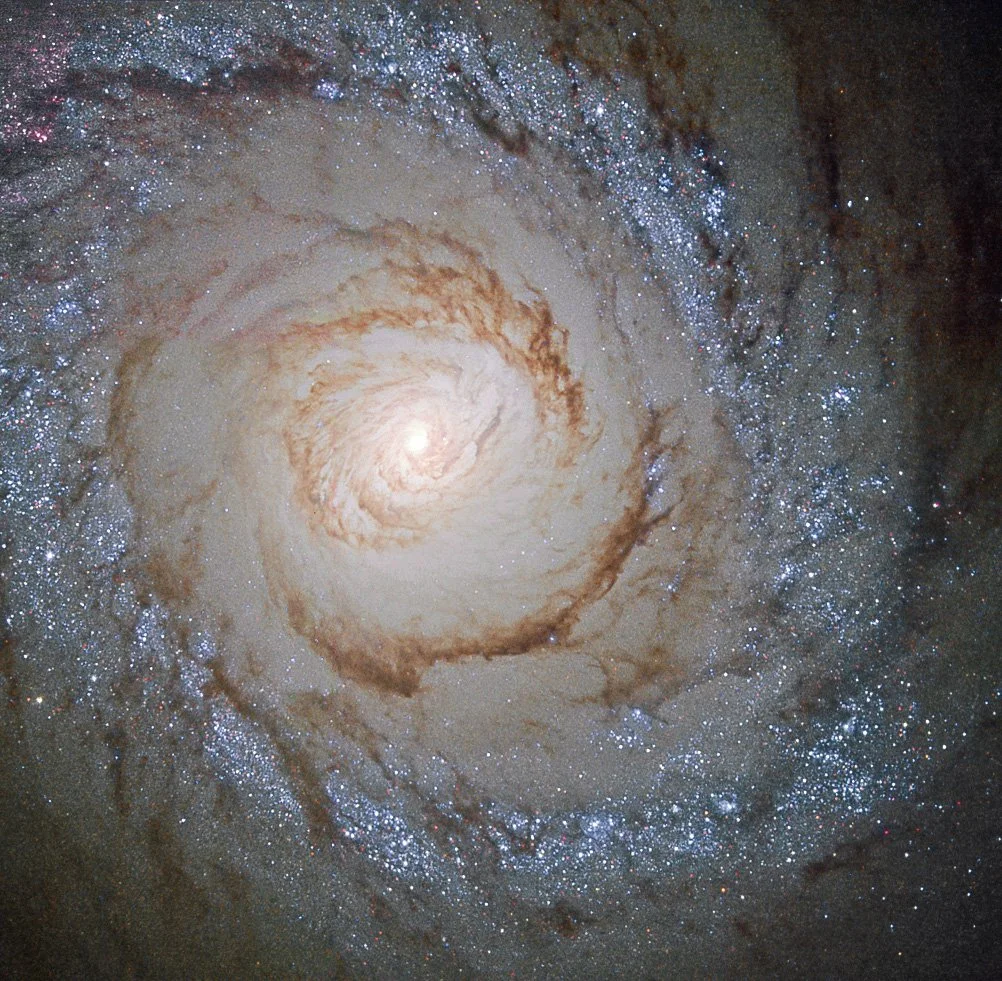
The Core area of M94 showing the bright “ring” of new star formation! (By ESA/Hubble, CC BY 4.0, https://commons.wikimedia.org/w/index.php?curid=44328816)
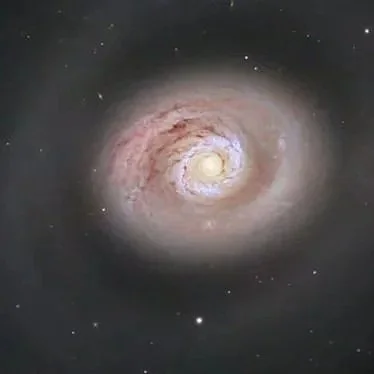
My version of the image, zoomed in to show the Ring area.
Another interesting point is that M94 has been discussed in connection with questions about dark matter distribution. Some studies of its rotation and mass structure have suggested that its inner regions may be dominated more strongly by ordinary luminous matter than expected, making it an unusual and debated case. That does not mean M94 has “no dark matter” in any simple sense, but it does make the galaxy a useful object in discussions about how mass is distributed in real galaxies. For beginners, M94 is a bright spring galaxy with a striking core. For more experienced observers and imagers, it is a layered target: a compact bright nucleus, an active star-forming inner ring, a faint extended disk, and a scientific story that is still more complicated than it first appears.
About the Project
Planning and Weather
This is the second image processed from the batch of images captured on April 11, 20, and 21. Being smack-dab in the middle of galaxy season, I was looking for - you guessed it - galaxies!
I was looking for a target for my William Optics 132mm scope, which uses a reducer to give a 740mm focal length. This is a great and fast scope configuration, but with its current focal length, it does best with larger galaxies.
I noticed that M94 was well-positioned, and I realized that I had not shot this galaxy since my very first attempt back in June of 2021. This was a 4.8-hour LRGB integration with my AP130 platform. This platform was slow with an f/8.35 set of optics, but it did have a wonderful set of optics and a great image scale for galaxy use.
This earlier project can be seen here:
Here is the image captured then:
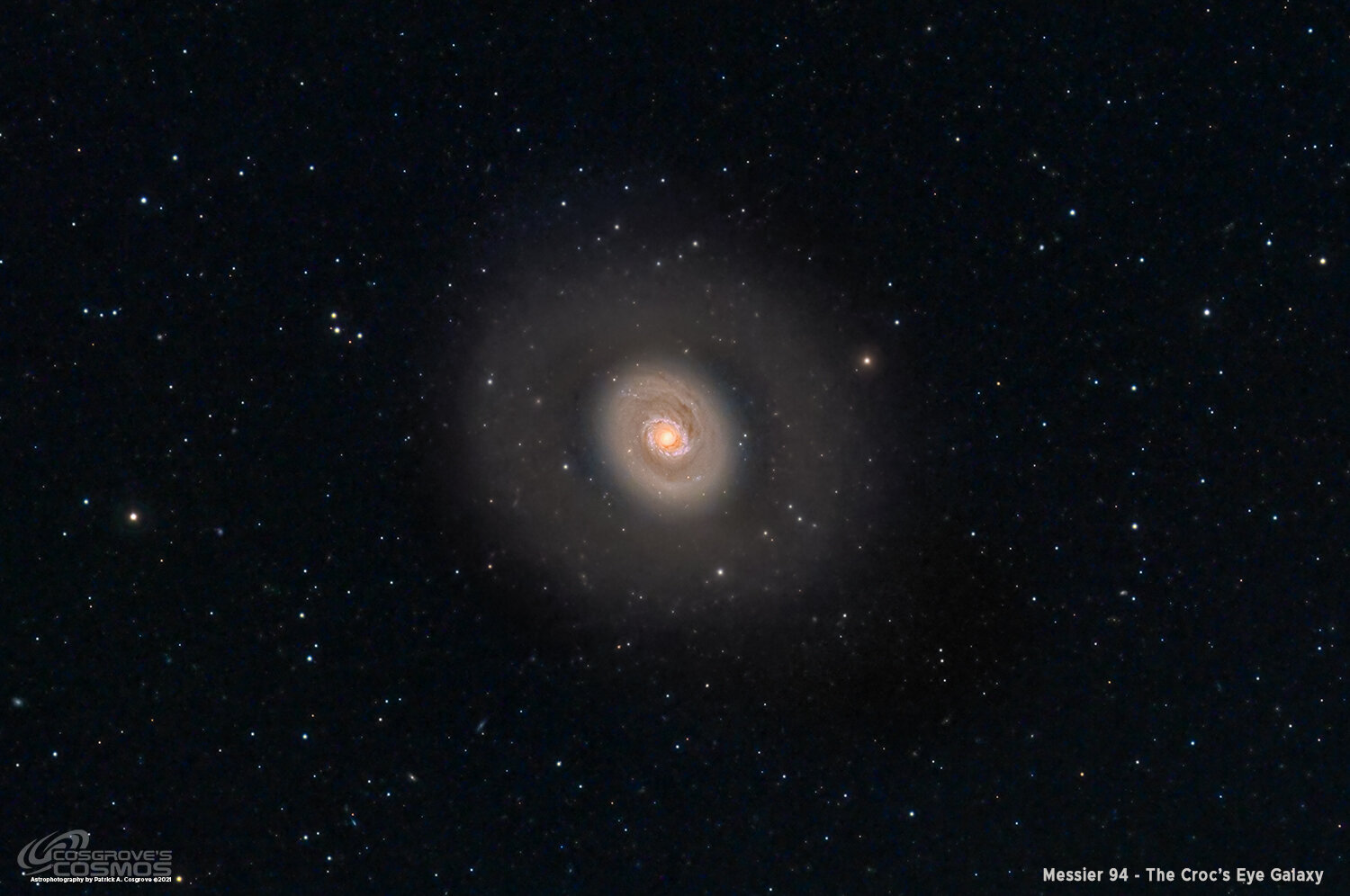
The June 2021 version of M94.
I decided to revisit this target with an eye toward improving it. My original image was not bad, so this might be a challenge. But the WO132 is a much faster set of optics, and with my new observatory arrangement, I was hopeful that I could move the ball further down the field, so to speak.
Data Collection
One of these tools focuses on determining a practical sub-exposure range. The exposure has to be long enough to overcome read noise and operational workflow losses, but not so long that too many stars saturate or the background sky brightness consumes too much usable well depth. The tool uses the camera's physics, the filter, the workflow, and sky brightness to estimate a safe exposure range.
This tool is called the Astro Exposure Explorer, and it is free. You can see its recommendations for this situation below.
Data collection was uneventful. The WO132 platform is a solid performer, and there was no drama during any of the capture nights.
I chose to collect roughly twice as many luminance subs as color subs, which I have been doing more and more lately. I chose a subframe exposure of 90 seconds, with a gain of zero, and a camera temperature of -15 degrees C.
The 90-second exposure seems popular with this camera in broadband mode, and I have always gotten good results with it.
I have recently started creating my own software tools. These began as utilities I wanted for my own work, and once they became useful, I decided to make them available for free on my website.
One of these tools focuses on determining an optimal subframe exposure range.
The exposure has to be long enough to overcome read noise and operational workflow issues, but not so long as to saturate too many stars or fill the well with background sky brightness, thus reducing the dynamic range of response. This tool uses the physics of the camera/filter/workflow/skybrightness to estimate the safe exposure range.
This tool is called the Astro Exposure Explorer Tool, and is free.
You can see its recommendations below for this situation below:
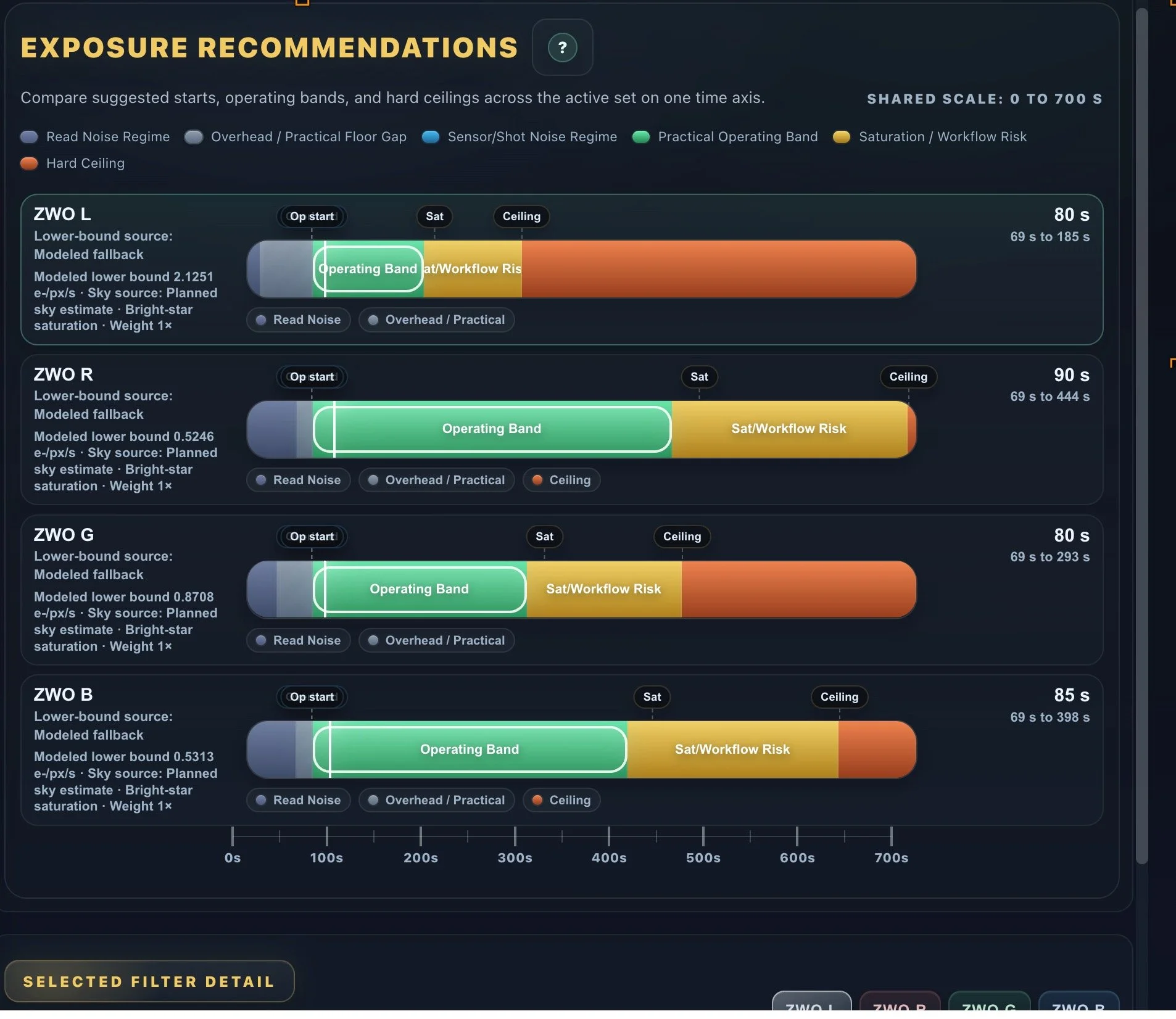
This tended to validate my sub-exposure selection.
Tracking seemed to be going well, so no concerns here.
I used PixInsight’s SubFrameSelector to identify and eliminate over 1.5 hours of subs with poor star metrics or suspiciously degraded frame quality. Some frames showed bloated stars, while others showed unusually small detections that likely reflected cloud attenuation or unreliable star measurement. Neither case helped produce the strongest master images, so those frames were culled. This left me with 12.8 hours for integration.
So, how would this capture session compare to my 2021 capture? Strictly on a time basis, the 2021 exposure accounts for only 37% of the hours captured on this current project. But you have to go deeper than that to understand the real differences.
To compare these two systems, I used another new tool that I developed - the Astro Systems Comparison Tool - to compare the two systems, and here were the results:
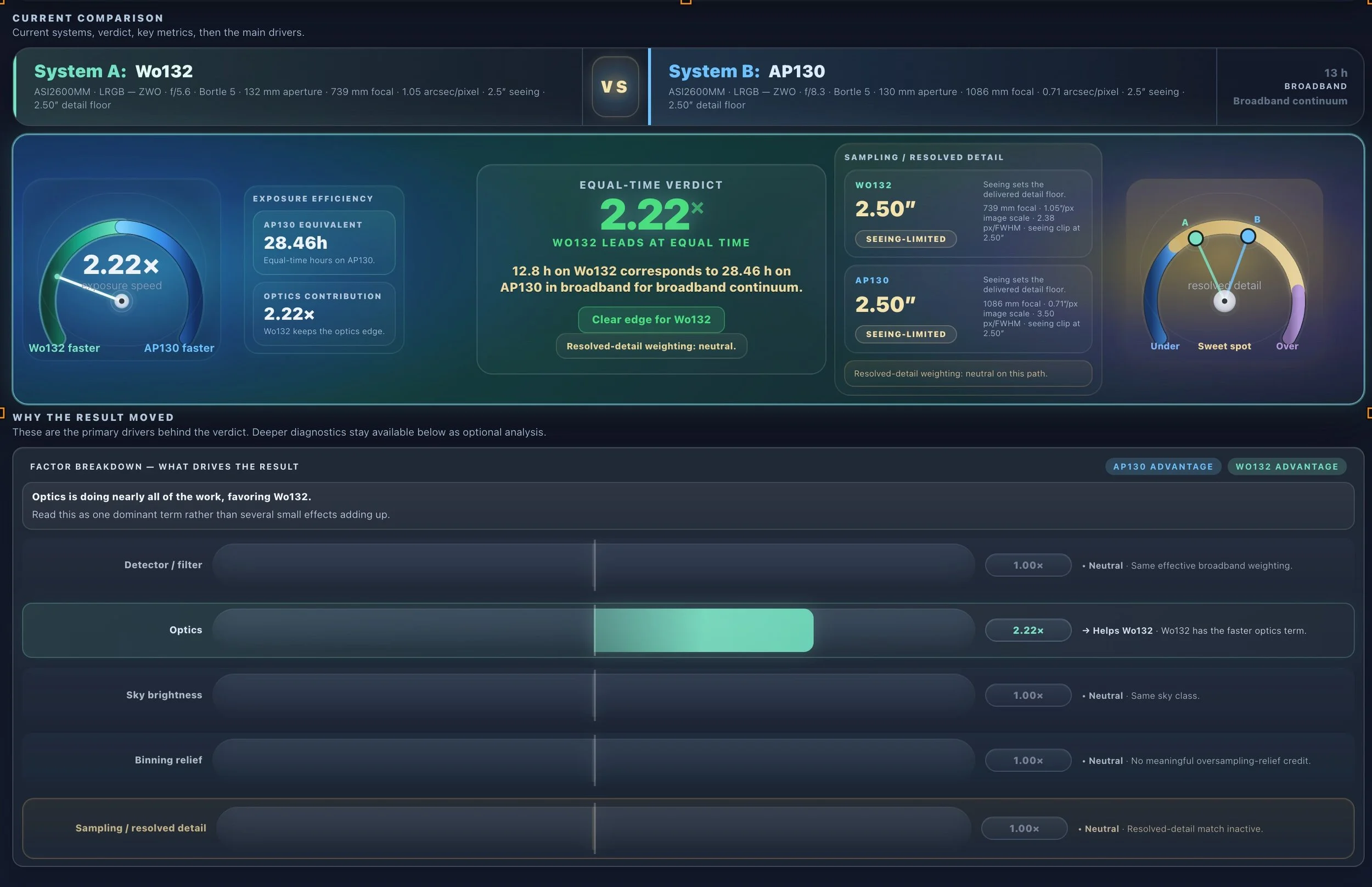
Results from the Astro Systems Comparison Tool.
According to this result, the 12.8 hours of integration I achieved on the current WO132 platform are equivalent to 28.46 hours on the AP130 platform as it existed back in 2021.
I only had 4.8 hours in the earlier image, so there should be a clear step up in signal-to-noise ratio. Another thing that stood out was that, despite differences in image scale, both systems were still limited by the local seeing.I only had 4.8 hours, so there should have been a full step up in SNR. Another thing that was evident was that, despite differences in image scale, both were limited by the local seeing!
This is a fun tool to play with, and I find myself using it more and more to compare systems and changes I could make to improve their efficiency. It's free, so check it out!
So I should be able to have a much richer signal set in the new image. But will this improve the quality that much? We shall see.
Processing Overview
Pre-processing
As noted above, I spent a lot of time in Blink and SubFrameSelector culling subs with poor sharpness or questionable star metrics.
This left me with about 500 frames to preprocess, and this took about 90 minutes to run on my image processing workhorse.
Post-Processing
The processing plan for this image was pretty straightforward.
I used my typical LRGB workflow that looks something like this:
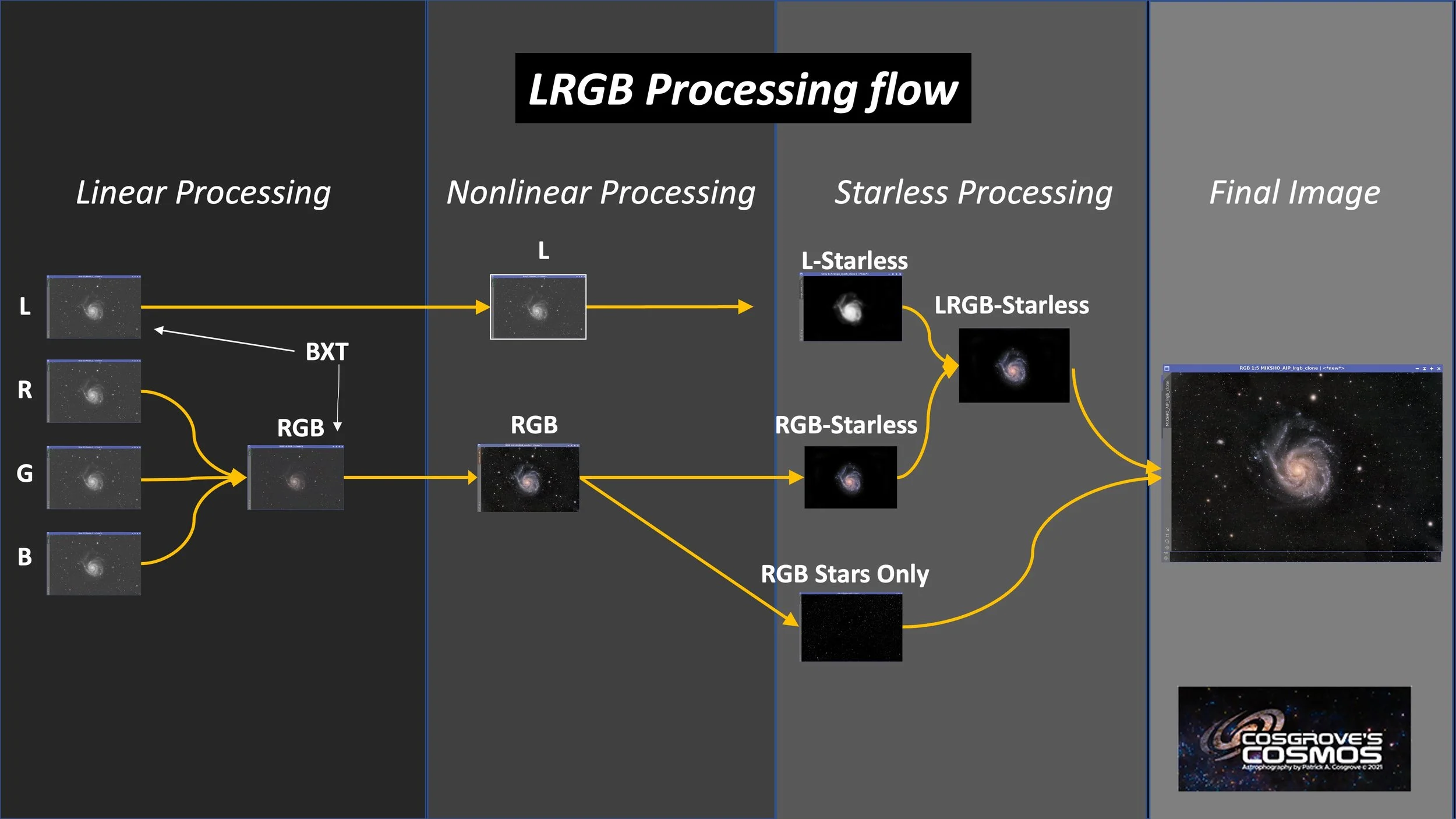
My typical LRGB Starless Workflow.
The processing itself looked as if it should be simple.
The challenge with this image is that it wants to be a big, bright fuzzball. Very careful processing is needed to bring out the subtle details.
I found that careful use of HDRMT could bring out these details. The trick seemed to be to use masks to isolate the galaxy's central region. Now, HDRMT is not meant to be used in this manner, but for this image, this seemed to work fine.
Another issue is a ring of bright, slightly bluer data around the core. I have never seen this before in a galaxy. Typically, the central region is red, while the outer regions of the galaxy are blueish. I thought this might be an artifact, but subsequent research indicated that there is an unusual ring of new star formation around the core.
This project also became one of the first real uses of my own software during processing. I used an early prototype of my Astro Color Mixer script for PixInsight. The tool was inspired by the Color Mixer panel in Photoshop’s Camera Raw Filter, which I find to be one of the most convenient ways to adjust hue, saturation, and luminance by color band. I wanted a PixInsight version with higher compute precision and features that made more sense for astrophotography.
This tool will be called the Astro Color Mixer. I first created a working prototype that is browser-hosted, and you can see that here:
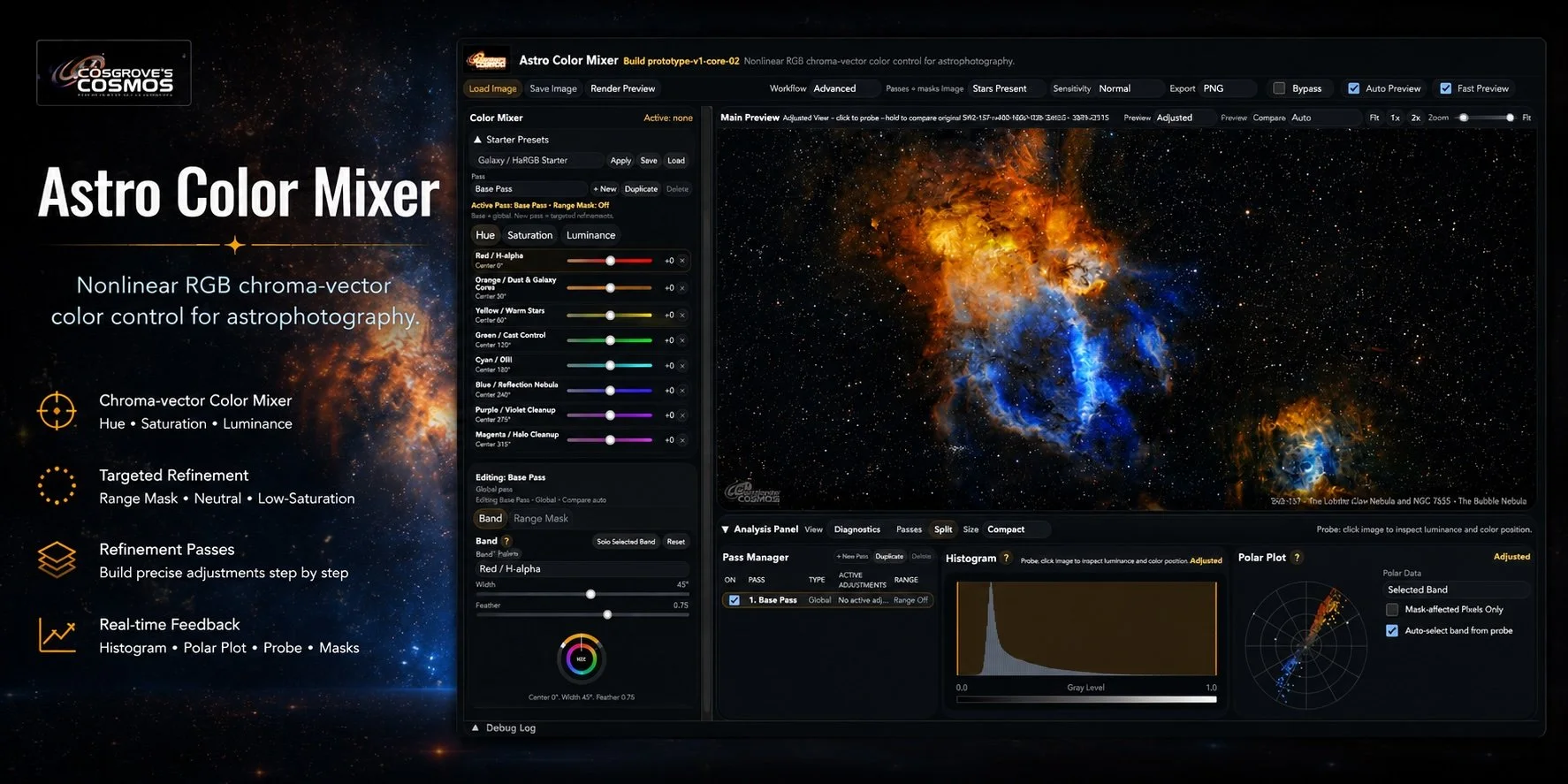
The browser-based prototype for my new Astro Color Mixer PixInsight Script;
I found porting it to PixInsight challenging, as you have to create the user interface within the PixInsight environment, which has a learning curve. But I had an initial version, and this would be the very first project to use it.
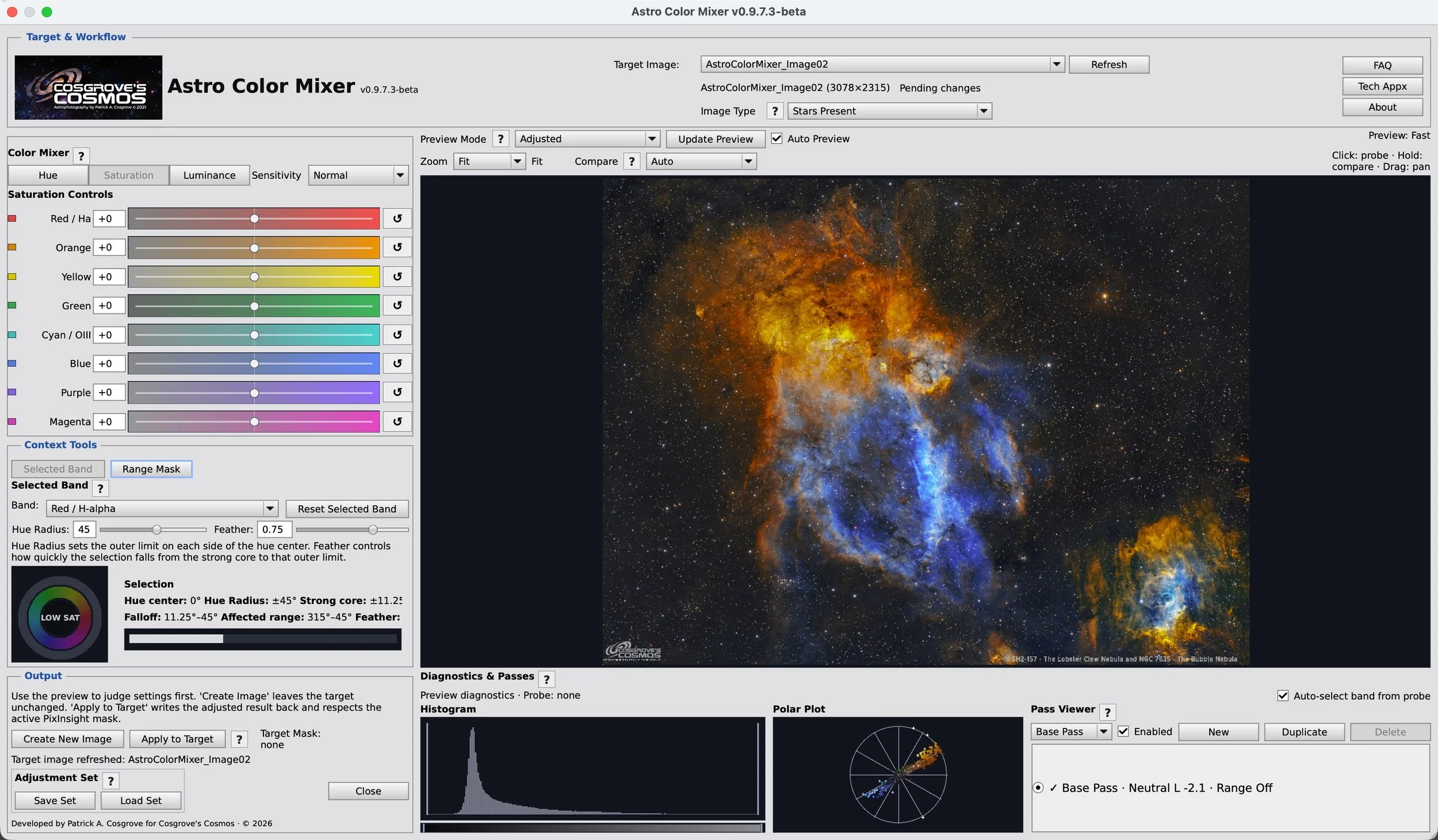
I found that the initial 4× zoom level made it unusable for images with small targets, such as a galaxy. So, I went back to the drawing board and added a 12x zoom with the ability to resample from the main image at higher zoom levels. This seems to work great.
Andi used it for the final color positon of the image.
Detailed and Annotated Image Processing Walkthrough
Typically, I conclude one of these imaging projects by documenting the processing steps I used on this image. But this section can make the overall post very large and, at times, slow to load.
I am now creating a secondary, standalone page to hold this information. You can access this page by clicking the link below. Returning to this page is as simple as clicking the back arrow in your browser or selecting a different menu option at the top of the page.
I hope you like this new format!
Use the link below to see the detailed image processing walkthrough for this imaging project.
Messier 94 Image Processing Deep Dive
Final Results
I am pretty happy with the final results. The outer halo came through more fully and more smoothly, while the core details were better defined. The blues in this galaxy are not coming through as strongly as I expected, and I am a little disappointed that the blues in this galaxy just are not coming through strongly. This seems to be a concern not only with this image but also with the last few LRGB images. I am wondering if this is caused by my relatively inexpensive ZWO LRGB filter set.
As you compare these two images, what is your takeaway?
More Info
🔭 Target Details
SIMBAD Astronomical Database — Messier 94 / NGC 4736 – Core reference entry listing coordinates, identifiers, object type, radial velocity, and links to related astronomical literature for M94.
CDS Aladin Lite — Interactive Sky Atlas – Web-based sky viewer; enter “M94” or “NGC 4736” to pull up survey imagery, overlay catalogs, and explore the surrounding Canes Venatici field.
M94 — In-The-Sky.org – Observing-oriented summary with position, magnitude, constellation, rise/transit/set times, and visibility information from any location.
Messier 94 — NASA Hubble Messier Catalog – NASA overview of M94 with distance, constellation, brightness, discovery notes, and Hubble-based background on the galaxy.
📜 History & Naming
Messier 94: Cat’s Eye Galaxy — Messier-Objects.com – Accessible target profile covering M94’s discovery, catalog designations, physical properties, and observing information.
Galaxy Messier 94 — DeepSkyCorner – Compact observing and historical summary, including M94’s location, classification, distance, and star-forming inner ring.
Messier 94 — Cosgrove’s Cosmos – Earlier Cosgrove’s Cosmos M94 project page, useful as an internal comparison point for this new image, equipment configuration, exposure depth, and processing approach.
🔬 Science & Observations
Starburst Galaxy Messier 94 — ESA/Hubble – ESA/Hubble feature highlighting the bright ring around M94, where new stars are forming at a high rate.
Galactic Wheels within Wheels — NASA/JPL – Spitzer infrared view showing how M94’s apparent ring structure changes when observed outside visible light.
M94, NGC 4736 — NSF NOIRLab – Ground-based image and science note emphasizing M94’s structure, classification, and appearance in the constellation Canes Venatici.
Unveiling the Nature of M94’s Outer Region — Astrophysical Journal / ADS – Research paper focused on M94’s extended outer region, star formation, and the interpretation of the galaxy’s outer “ring.”
💡 Interesting Facts & Outreach
Center of Starburst Galaxy Messier 94 — NASA/Hubble Lithograph – Educational NASA resource explaining the starburst ring, faint outer spiral-arm structure, and M94’s unusual mass-distribution discussion.
Galactic Wheels within Wheels — Spitzer / Caltech – Caltech-hosted Spitzer feature explaining why M94’s historical “two-ring” description is more complicated than it first appears.
Heating and Cooling of the Neutral ISM in the NGC 4736 Ring — Astronomy & Astrophysics – Research paper examining gas heating, dust cooling, and star formation within M94’s ring structure.
Supermassive Black Hole Mass Measurement in NGC 4736 — ADS – Recent research using JWST-based stellar kinematics to measure the central black hole mass in M94.
Imaging Platform Used
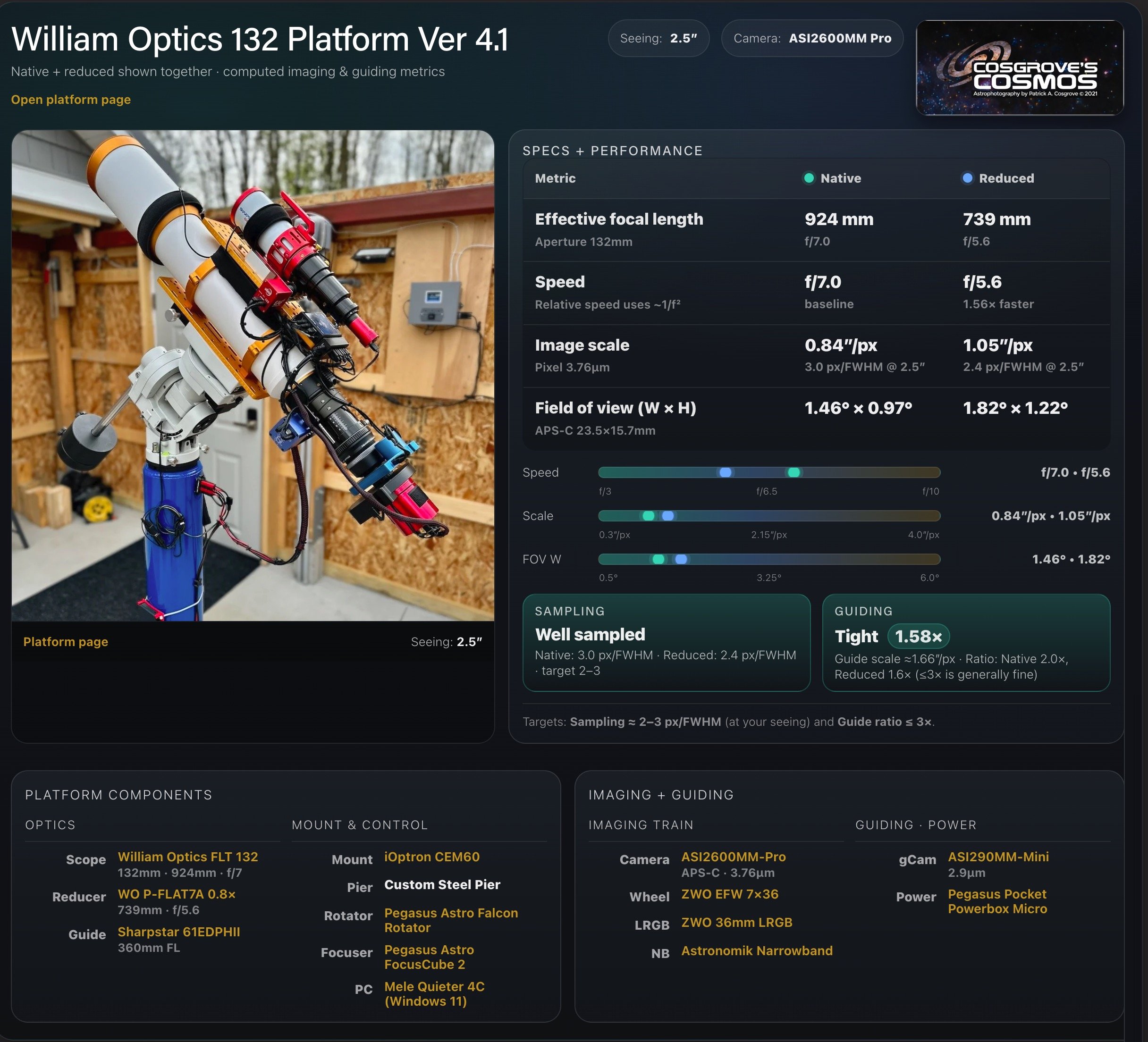
Platform used for this project
Software
Capture Software: PHD2 Guider, NINA
Image Processing: PixInsight, Photoshop - assisted by Coffee, extensive processing indecision and second-guessing, editor regret, and much swearing…