Imaging Projects
In this blog, I will share the results of all of my imaging projects. The newest will be at the top and the oldest will be further down the stack. Going back in time here is interesting - some of my early stuff was pretty rough - but I did not see it that way at the time - I was thrilled to get anything back that looked like an image! Hopefully, you will see how my work has progressed with time!
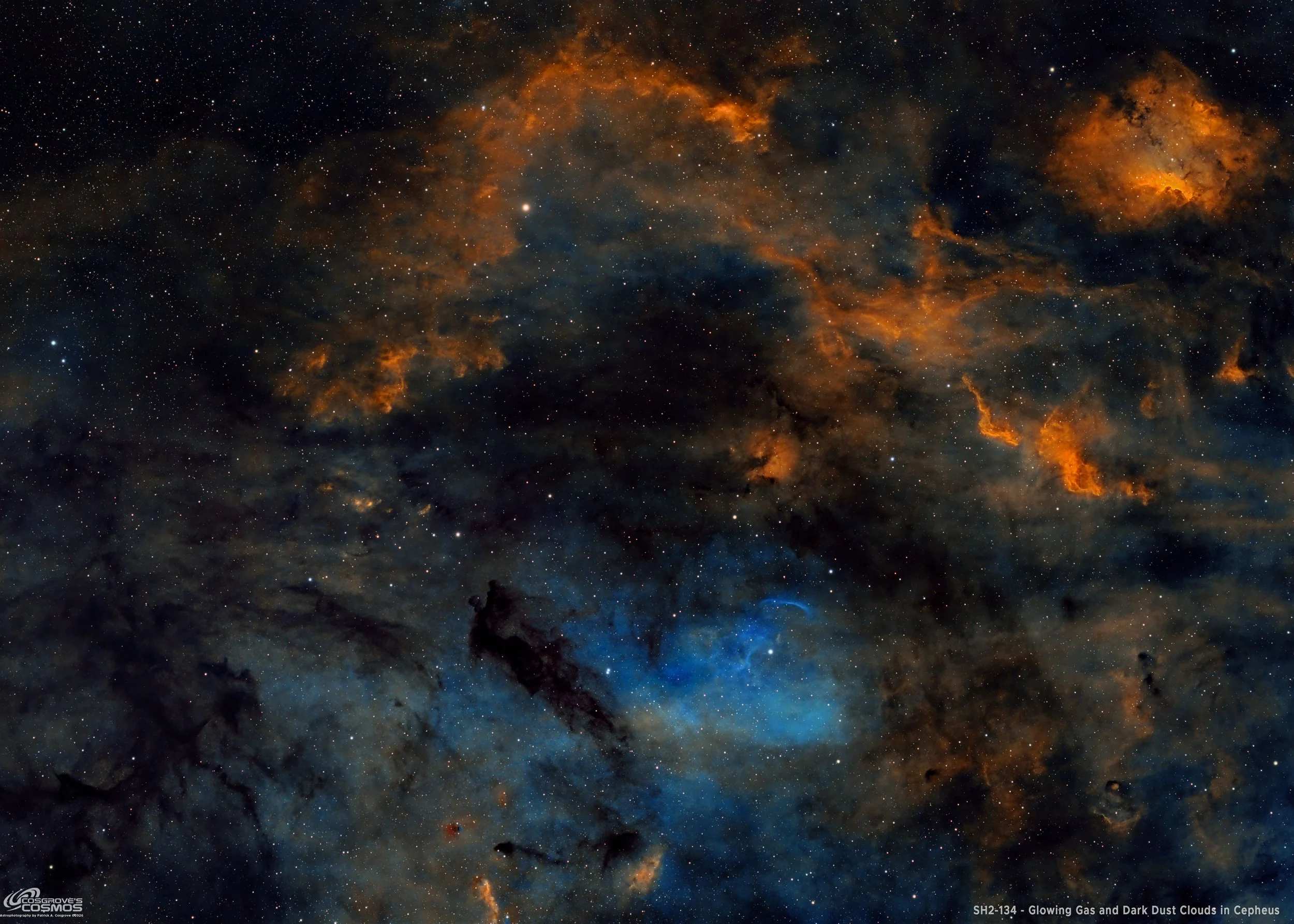
SH2-134: Glowing Gas and Dark Clouds in Cepheus: A Dew-Drenched 18 hours of SHOrgb
Explore the rich nebular landscape surrounding Sh2-134 in Cepheus, where glowing filaments weave around intricate dark clouds and the hot supergiant Lambda Cephei illuminates its surroundings. Captured over three September nights with my Askar FRA400 and ASI2600MM-Pro, this image combines 17 hours 52 minutes of SHO narrowband and RGB exposures. The full project includes the region’s history and science, an annotated image, capture details, and a detailed processing walkthrough.
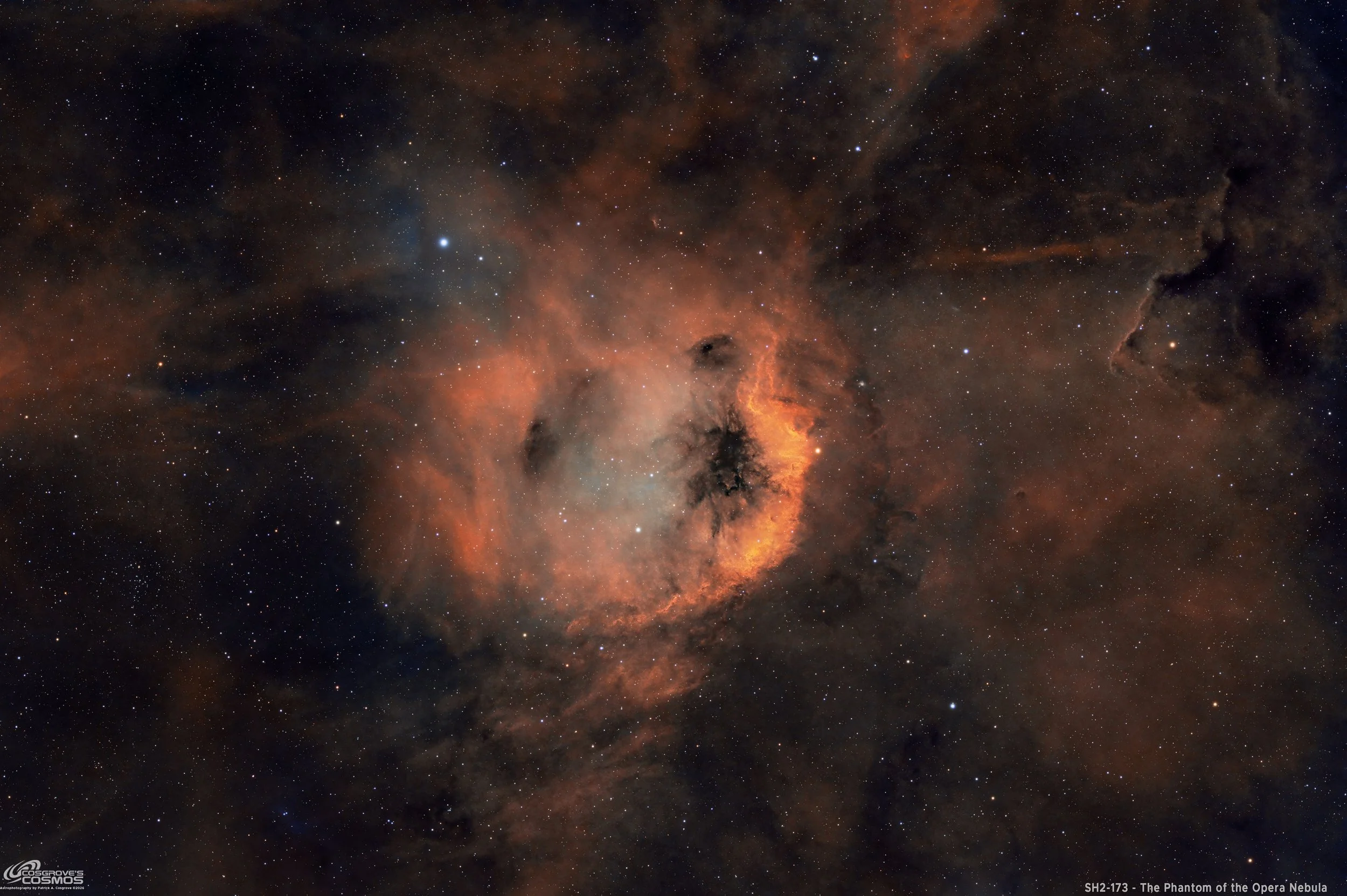
SH2-173 - The Phantom of the Opera Nebula | 15.77 hours of SHOrgb
A ghostly face emerges from the stars of Cassiopeia. Meet Sh2-173, the Phantom of the Opera Nebula, captured in 15 hours and 46 minutes of SHO narrowband and RGB imaging with my Astro-Physics 155mm refractor. Explore the glowing gas and dark dust behind the mask, the nebula’s history, and the evidence for a new generation of stars taking shape nearby—along with the capture details and processing behind the image.
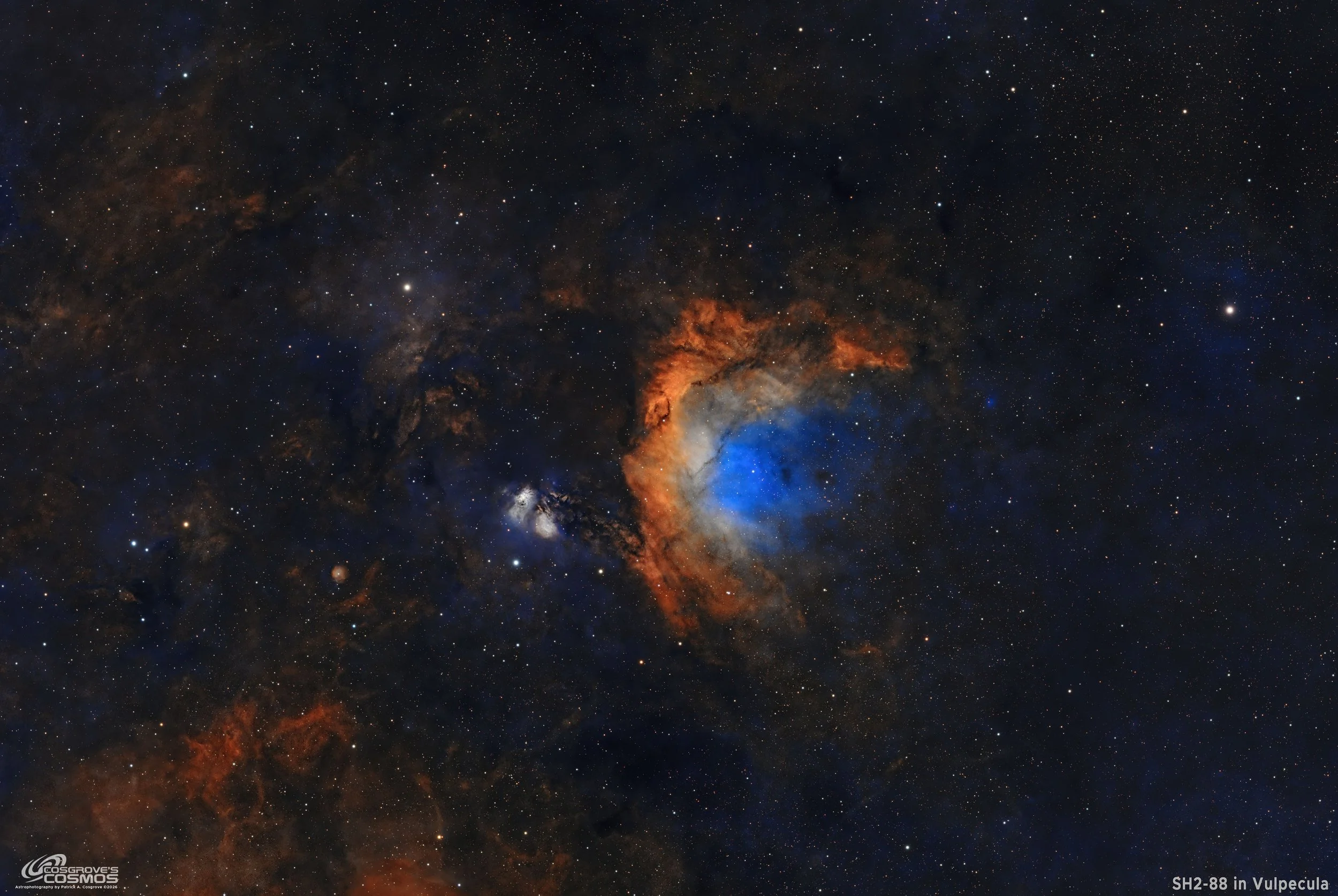
SH2-88 - A Tulip-Style Nebula in Vulpecula - 12.37 hours of SHO + RGB Stars
This project presents SH2-88, a complex star-forming region in Vulpecula approximately 7,500–7,800 light-years from Earth. The final image combines 12 hours 22 minutes of SHO narrowband data with RGB stars, captured over three nights using a William Optics FLT 132 refractor and ZWO ASI2600MM-Pro camera. The processing walkthrough follows the complete workflow—from calibration and channel combination through color development, star processing, and final refinement.
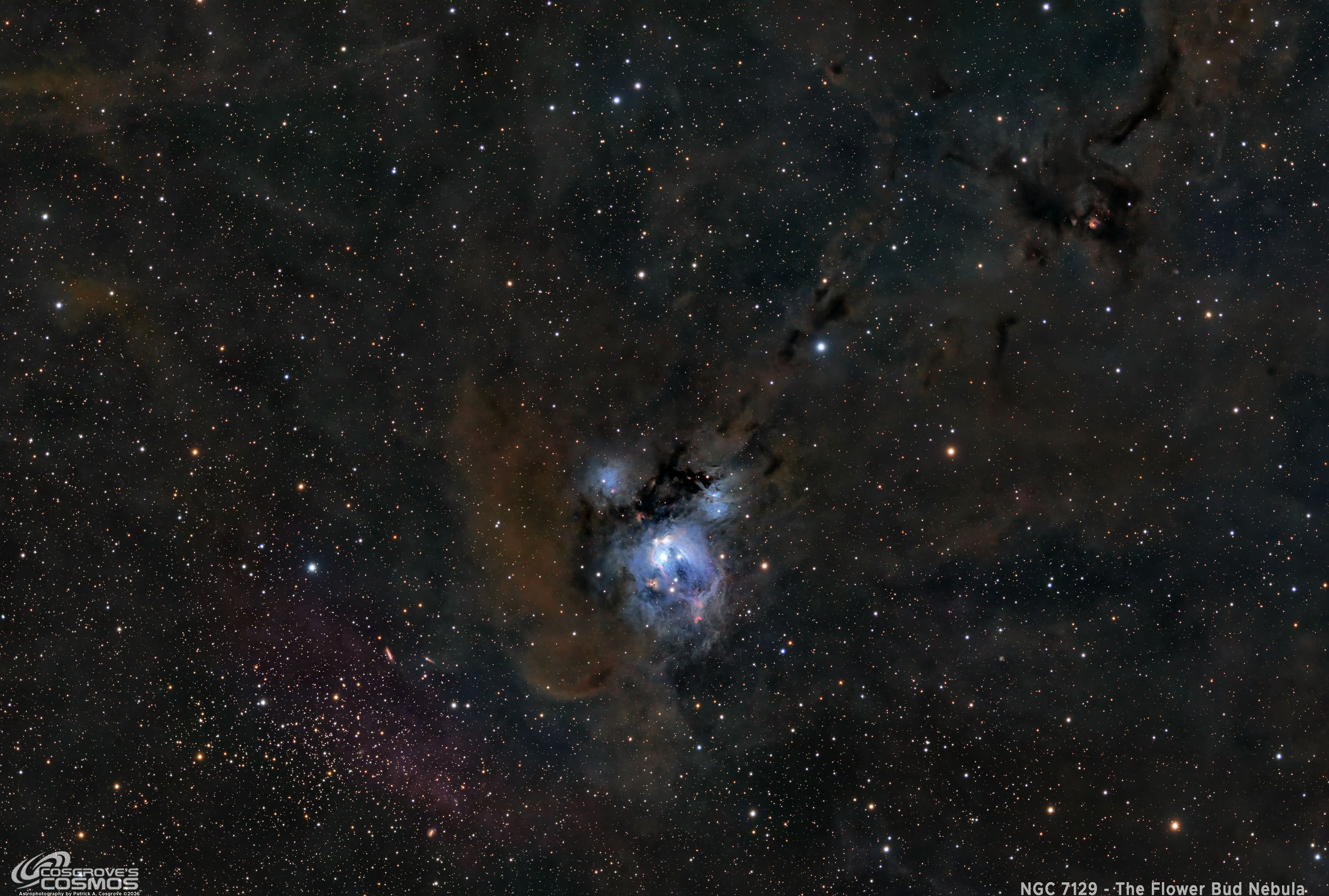
NGC 7129 - A Cosmic Rosebud! | ~14 hours of LRGB.
NGC 7129, the Flower Bud Nebula, is a young star-forming region in Cepheus where blue reflection nebulosity, dark molecular dust, and newborn stars share the same field. This 13-hour, 54-minute LRGB project captures the glowing central nebula, surrounding Cepheus dust clouds, and nearby clusters including NGC 7142, revealing a scene where starlight is just beginning to break out of the cloud that formed it.
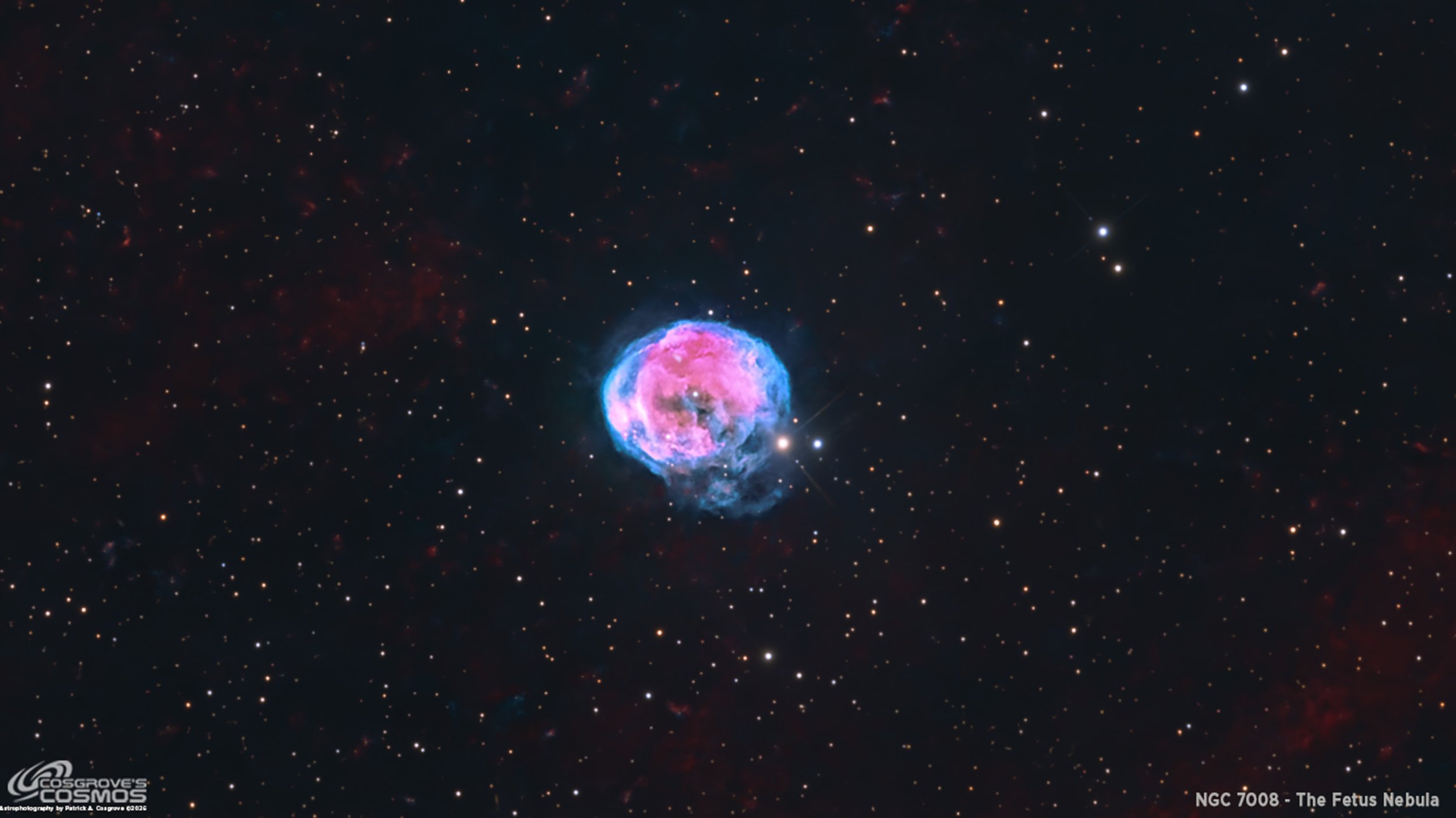
NGC 7008 - The Fetus Nebula (10.5 hours of HOOrgb) - Pushing the Limits of my Gear & Sky!
NGC 7008, the Fetus Nebula, became a small-target processing challenge wrapped inside a wide-field Cygnus scene. Captured over four July nights with the SCA260 platform, this HOO image with RGB stars combines 10.5 hours of data to reveal the nebula’s compact, knotted shell while preserving a natural star field around it. The final result balances the science and the struggle: a dying Sun-like star’s glowing remnant, only about 86 arcseconds across, pulled carefully out of a rich and imperfect summer sky.
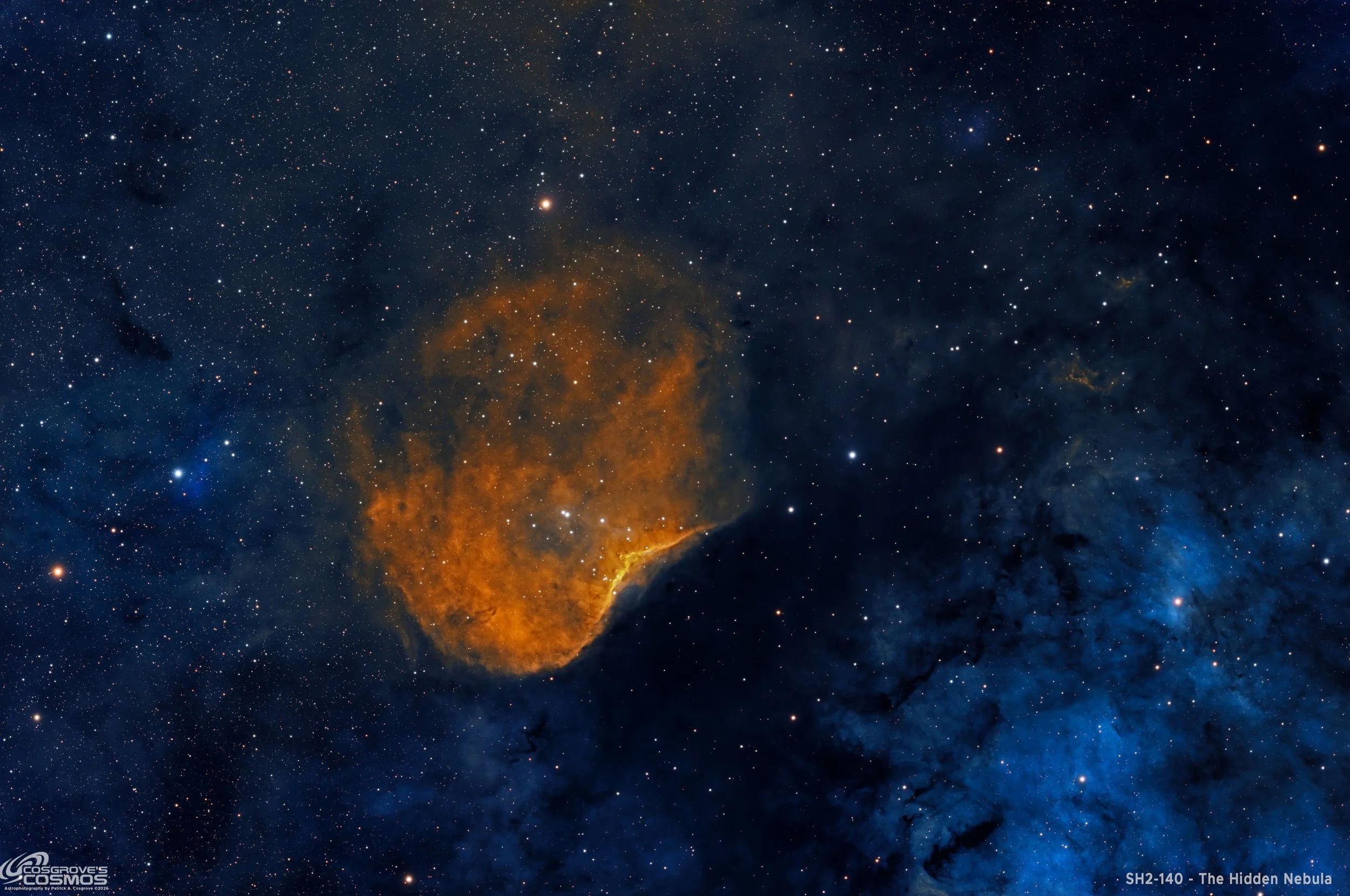
SH2-140 - The Hidden Nebula- 12.38 hours of SHO + RGB Stars
A wide-field view of the Sadr Region in Cygnus, combining 12 h 46 m of SHO narrowband data with RGB stars captured through the Askar FRA400 and ZWO ASI2600MM-Pro. This image reveals glowing emission nebulae, dark molecular clouds, young star clusters, and the bright foreground star Sadr along one of the richest stretches of the Milky Way.
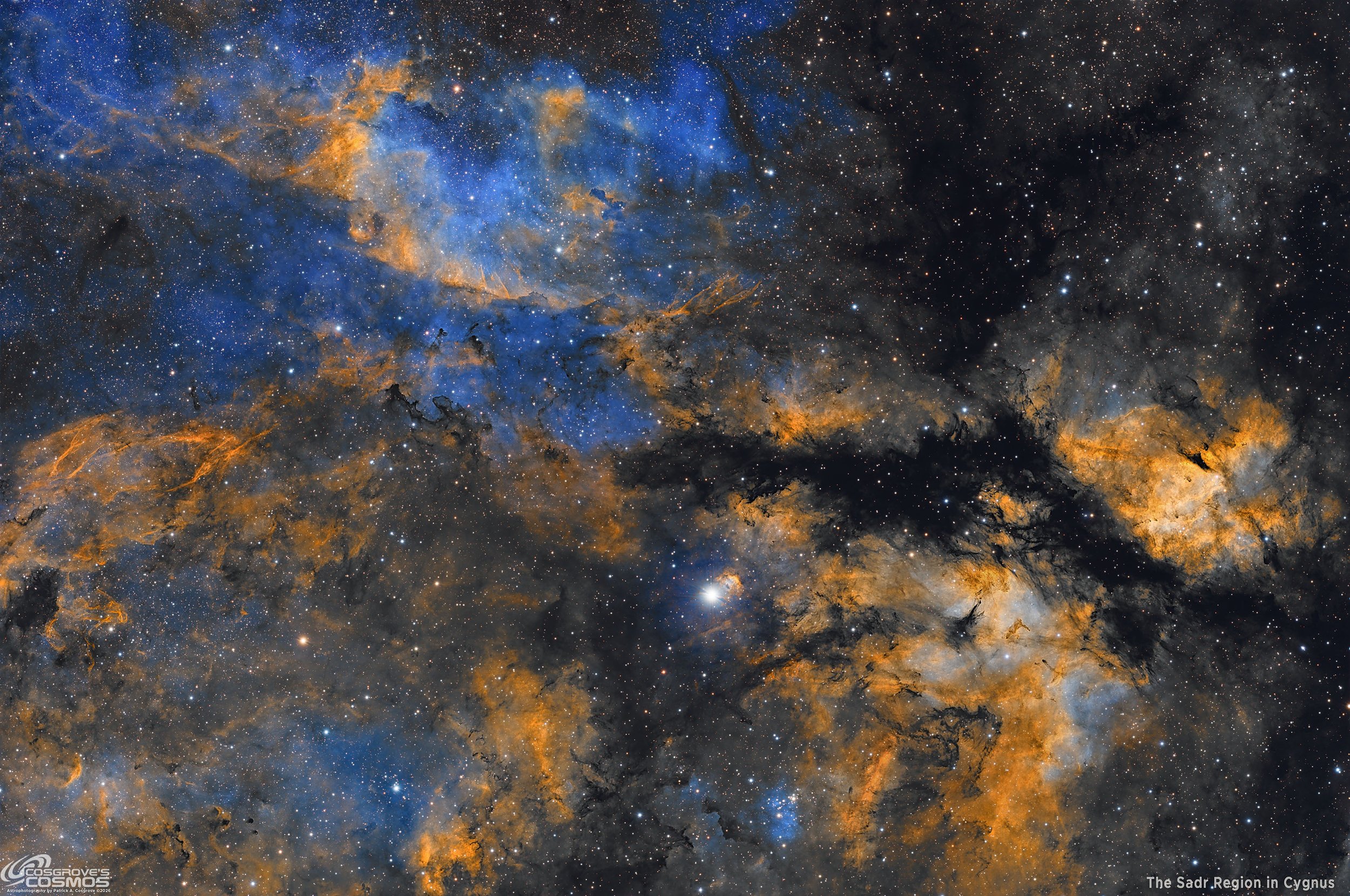
The Sadr Region of Cygnus: IC 1318 & Gamma Cygni Nebula - 12.75 hours of SHRrgb.
A wide-field view of the Sadr Region in Cygnus, combining 12 h 46 m of SHO narrowband data with RGB stars captured through the Askar FRA400 and ZWO ASI2600MM-Pro. This image reveals glowing emission nebulae, dark molecular clouds, young star clusters, and the bright foreground star Sadr along one of the richest stretches of the Milky Way.
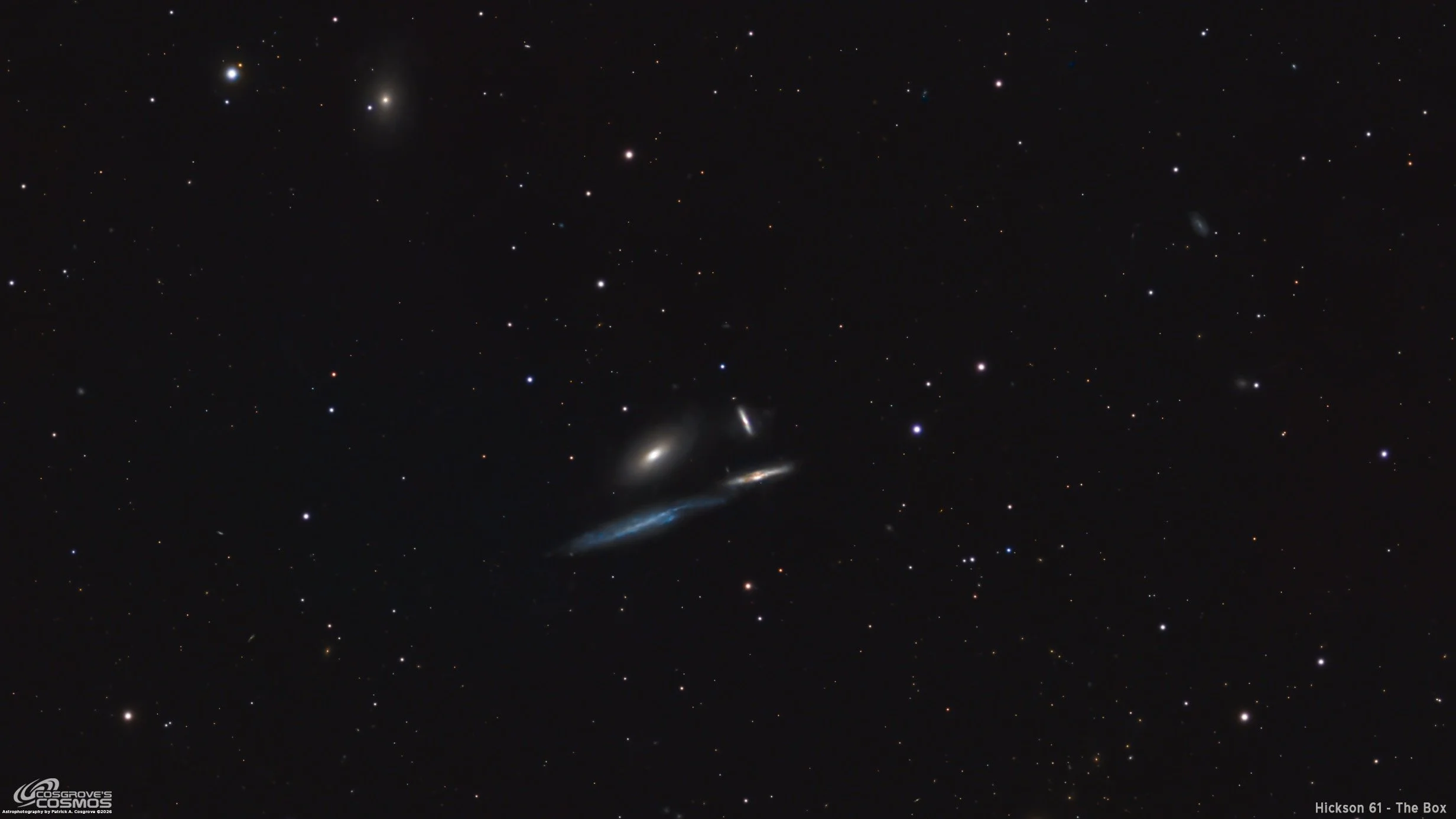
Hickson 61 — “The Box” | Tiny Galaxies, Tough Data! - 7.8h LRGB
Hickson 61, better known as “The Box,” is a tiny apparent grouping of faint galaxies in Coma Berenices. This LRGB image captures NGC 4169, NGC 4173, NGC 4174, and NGC 4175 — four small galaxies arranged in a striking box-like pattern. Most of the group lies roughly 170–200 million light-years away, while NGC 4173 is likely a closer foreground galaxy that happens to line up with the others. Captured from Whispering Skies Observatory over two April nights, this 7-hour 48-minute project highlights the challenge and reward of imaging small, distant galaxy groups where scale, faintness, and perspective all matter.
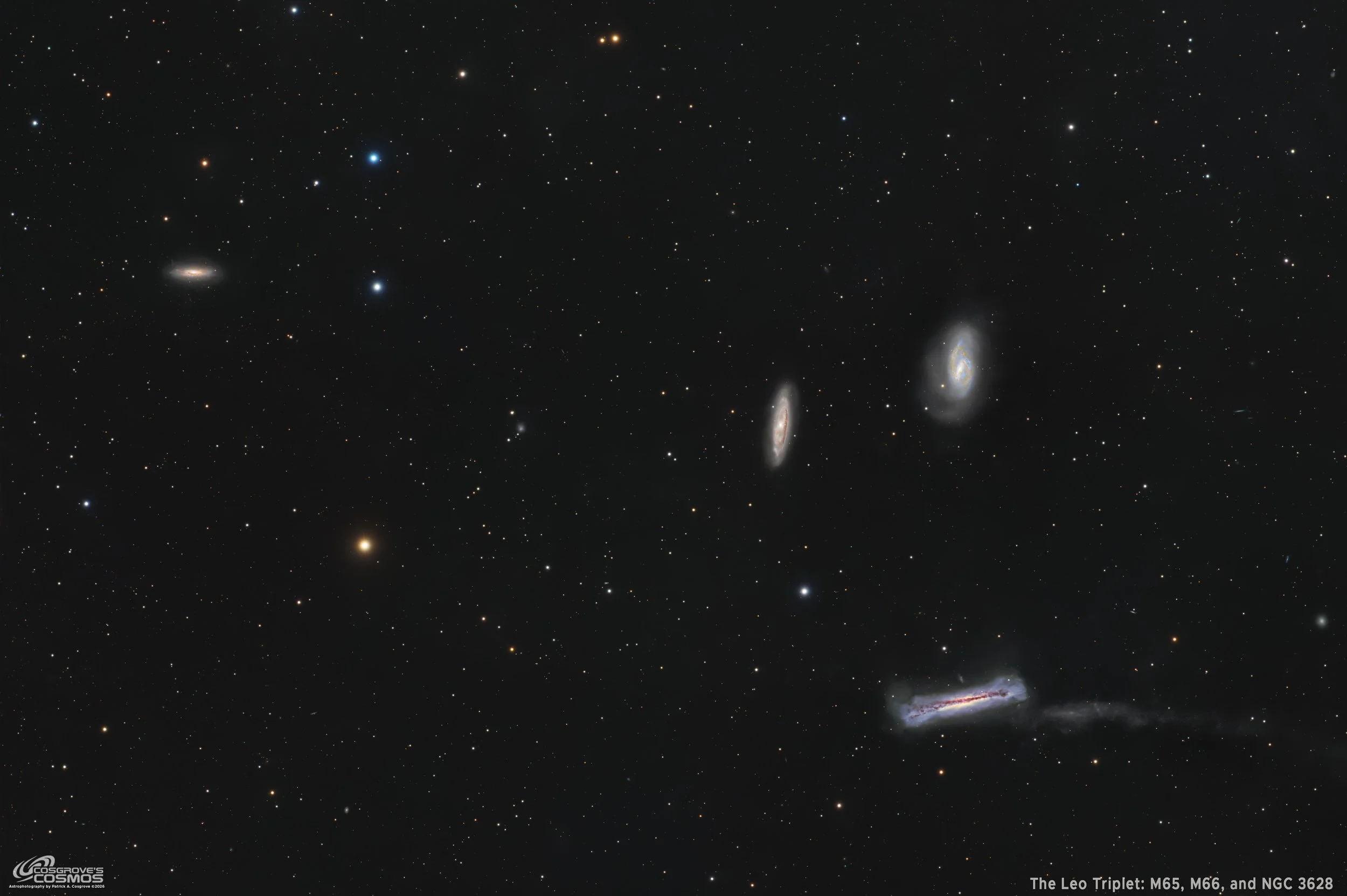
The Leo Triplet: M65, M66, and NGC 3628 - 12.6 hours of LRGB - First Light for the FRA400’s New Camera!
This image captures the Leo Triplet — M65, M66, and NGC 3628 — along with nearby NGC 3593 in a wide-field LRGB view from Whispering Skies Observatory. With 12.6 hours of integration, the image reveals the three main galaxies, the smaller surrounding galaxy field, and the faint tidal tail extending from NGC 3628. This project also served as first light for the new ASI2600MM-Pro camera on my FRA400 platform.
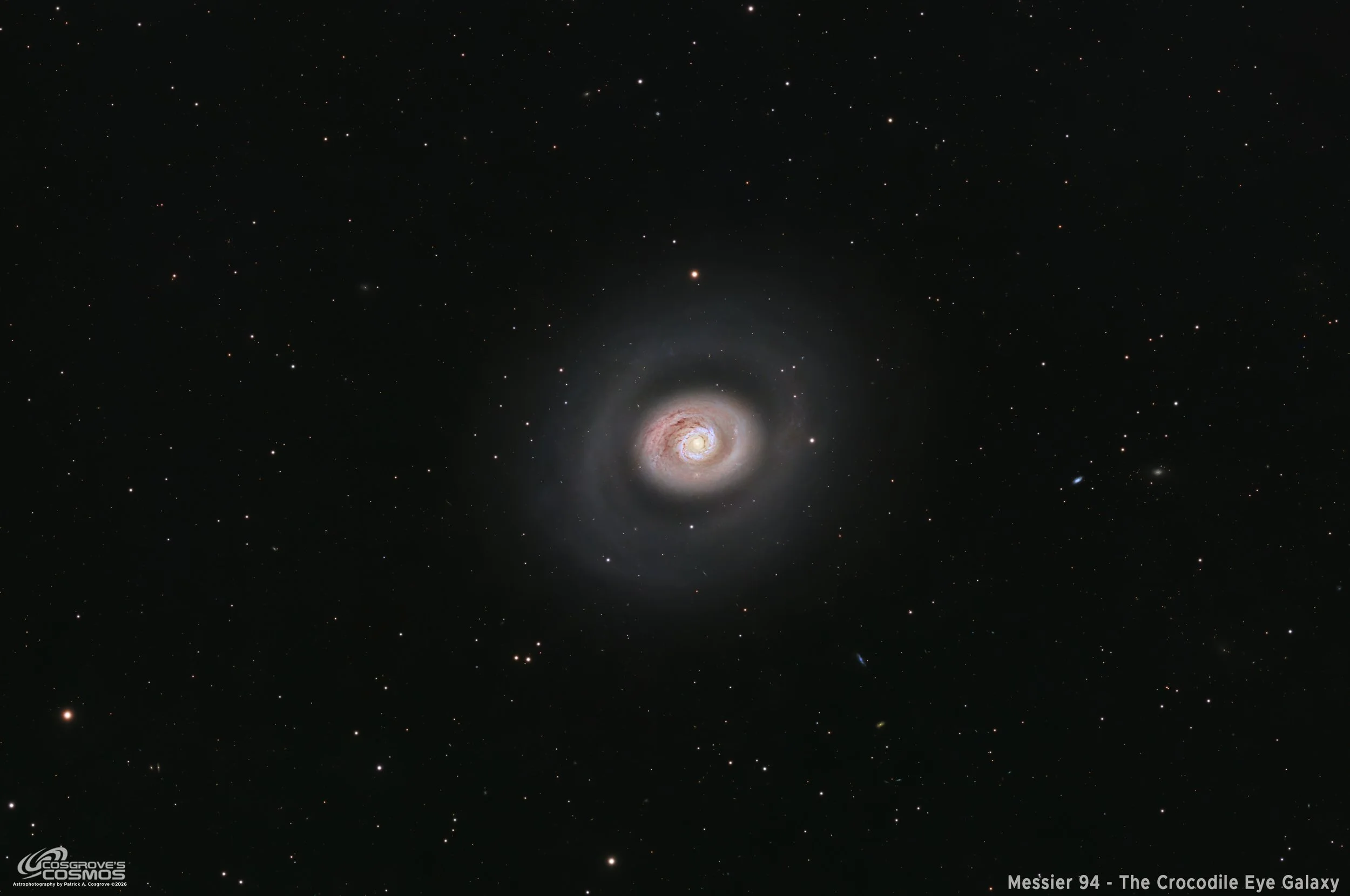
Messier 94 - The Crocodile Eye Galaxy - 12.8 Hours in LRGB
Messier 94, the Crocodile Eye Galaxy, is a compact but structurally complex spiral galaxy in Canes Venatici, about 16 million light-years away. This LRGB image captures its bright central core, active star-forming inner ring, and faint extended outer disk using 12h 49m 30s of data from Whispering Skies Observatory.
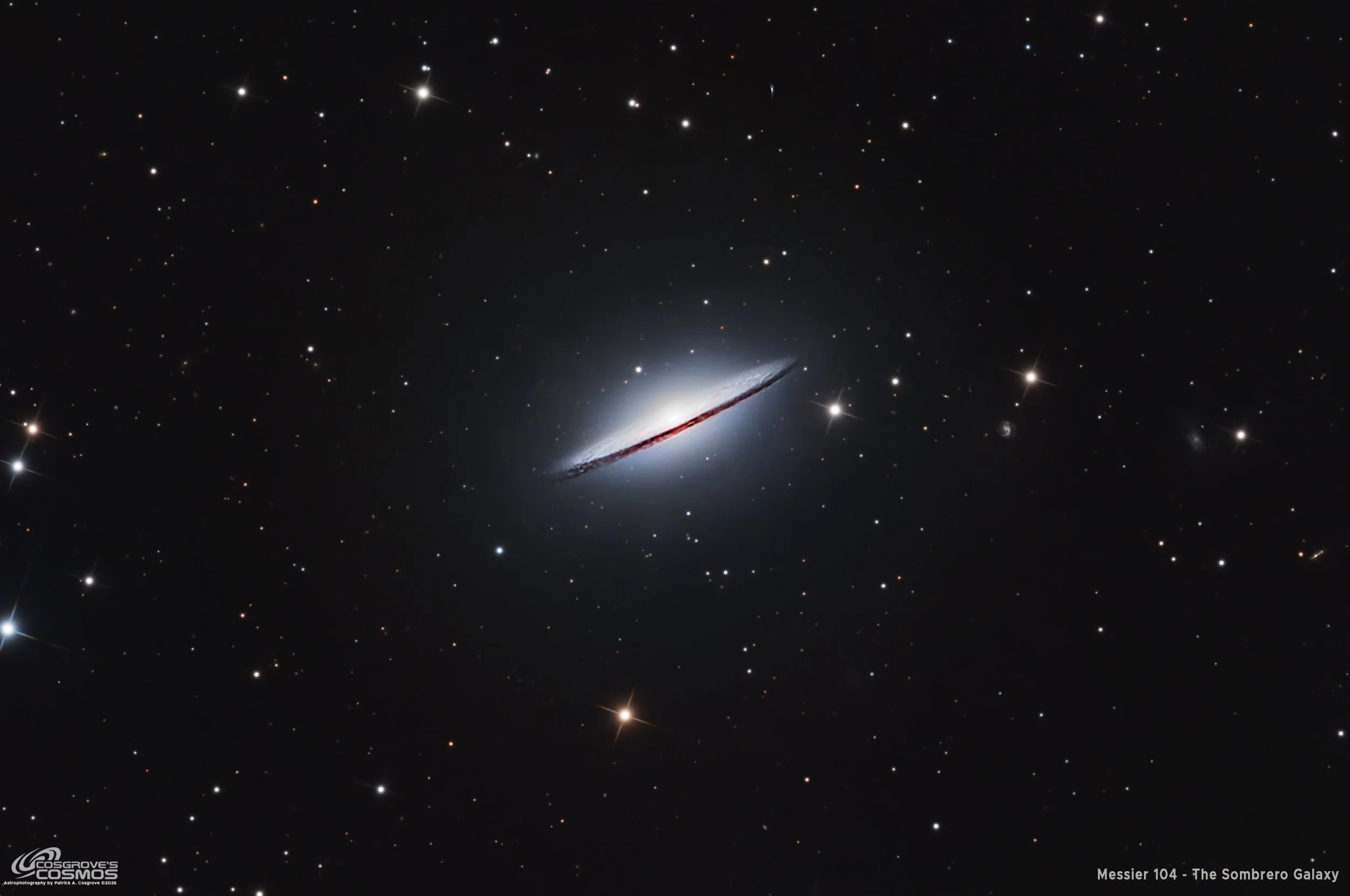
Messier 104 - The Sombrero Galaxy - 11 Hours in LRGB - Dealing with a Challenging Set of Issues…
Messier 104, the Sombrero Galaxy, is one of the most recognizable galaxies in the spring sky. This project captures its bright central bulge, sharp equatorial dust lane, and faint outer halo using 11 hours of LRGB data from the Sharpstar SCA260 V2 at Whispering Skies Observatory.
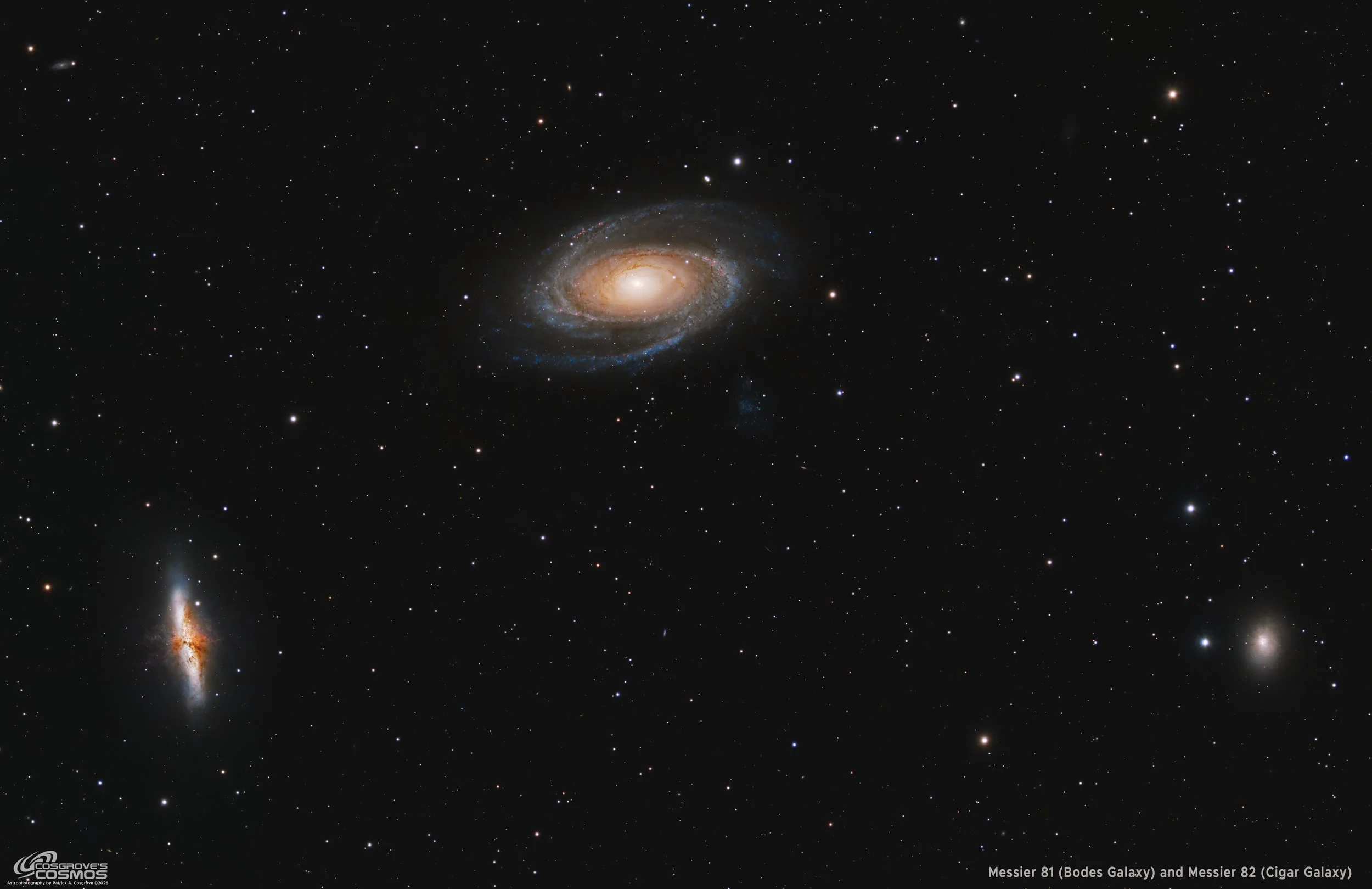
First Light on the AP155 Platform: M81, M82, and NGC 3077 - 4.6 Hours of HaLRGB!
First light on my Astro-Physics 155mm Starfire EDFS platform captured a classic interacting galaxy field in Ursa Major: M81, M82, and NGC 3077. This image combines LRGB and H-alpha data to highlight the contrast between the grand-design spiral structure of M81, the starburst-driven outflow in M82, and the disturbed companion galaxy NGC 3077.
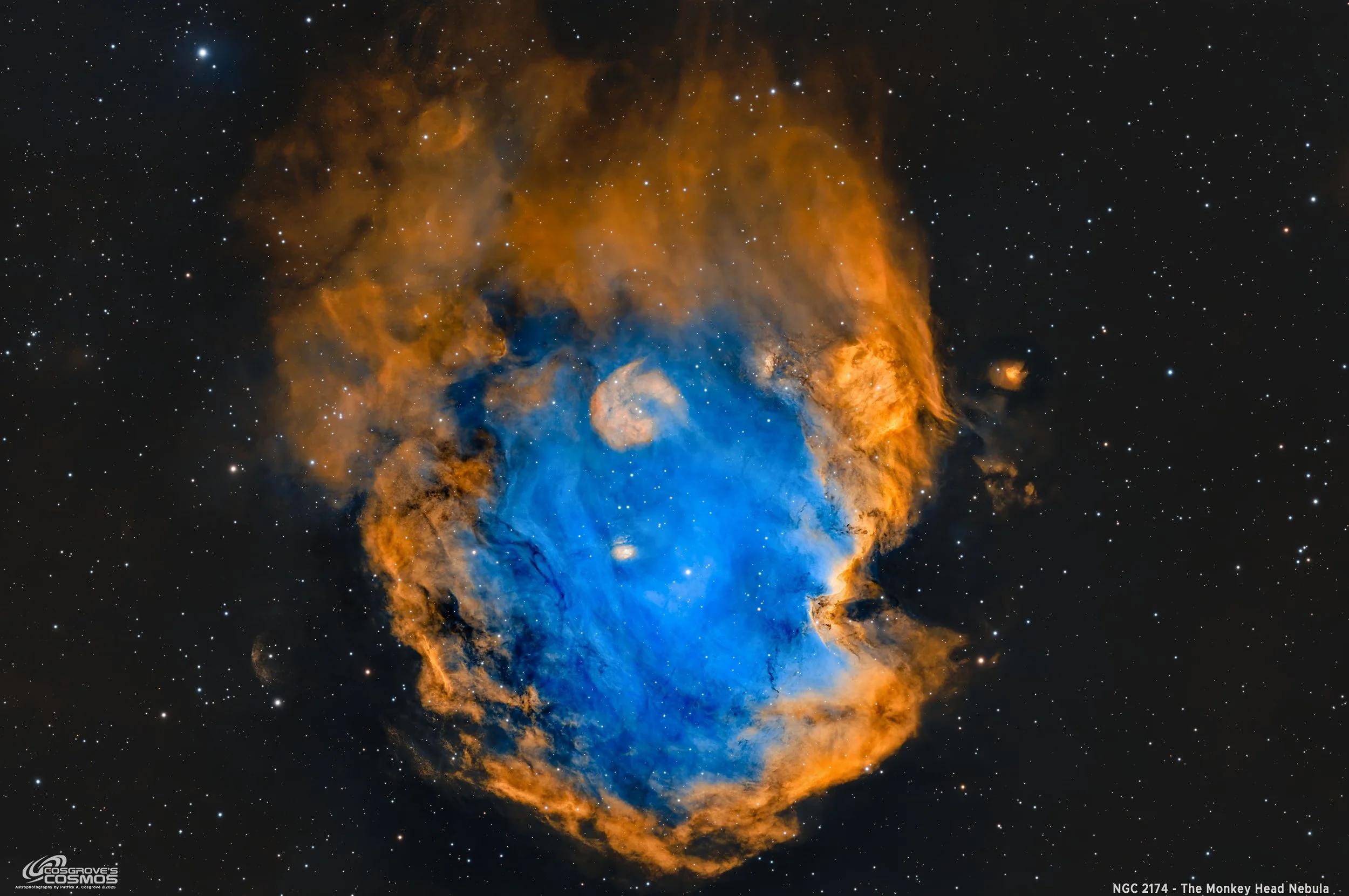
NGC 2174 - The Monkey Head Nebula - 5.1 hours SHO
NGC 2174 — the Monkey Head Nebula — is a luminous star-forming cloud in Orion, roughly 6,400 light-years away. In this project I captured the nebula in narrowband (Hα, OIII, SII), revealing glowing hydrogen arcs, oxygen-rich structure, and dark dust lanes sculpted by intense radiation from young, massive stars. The result is a high-contrast look at an active H II region where stellar feedback is actively reshaping its birth cloud.