Dates: May 14 2025 - March 6, 2026
Astro-Physics 130mm Starfire Platform Ver 2.1

Specs + Performance
| Metric | Value |
|---|---|
| Effective focal lengthAperture 130mm | 1080 mmf/8.3 |
| Image scalePixel 3.76µm | 0.72″/px3.5 px/FWHM @ 2.5″ |
| Field of view (W × H)Sensor 23.5×15.7mm | 1.25° × 0.83°75′ × 50′ |
Sampling
Well sampled
3.5 px/FWHM · target ~2–3
Guiding
Tight 1.74×
Guide scale ≈1.25″/px (TV-76) · ≤3× generally fine
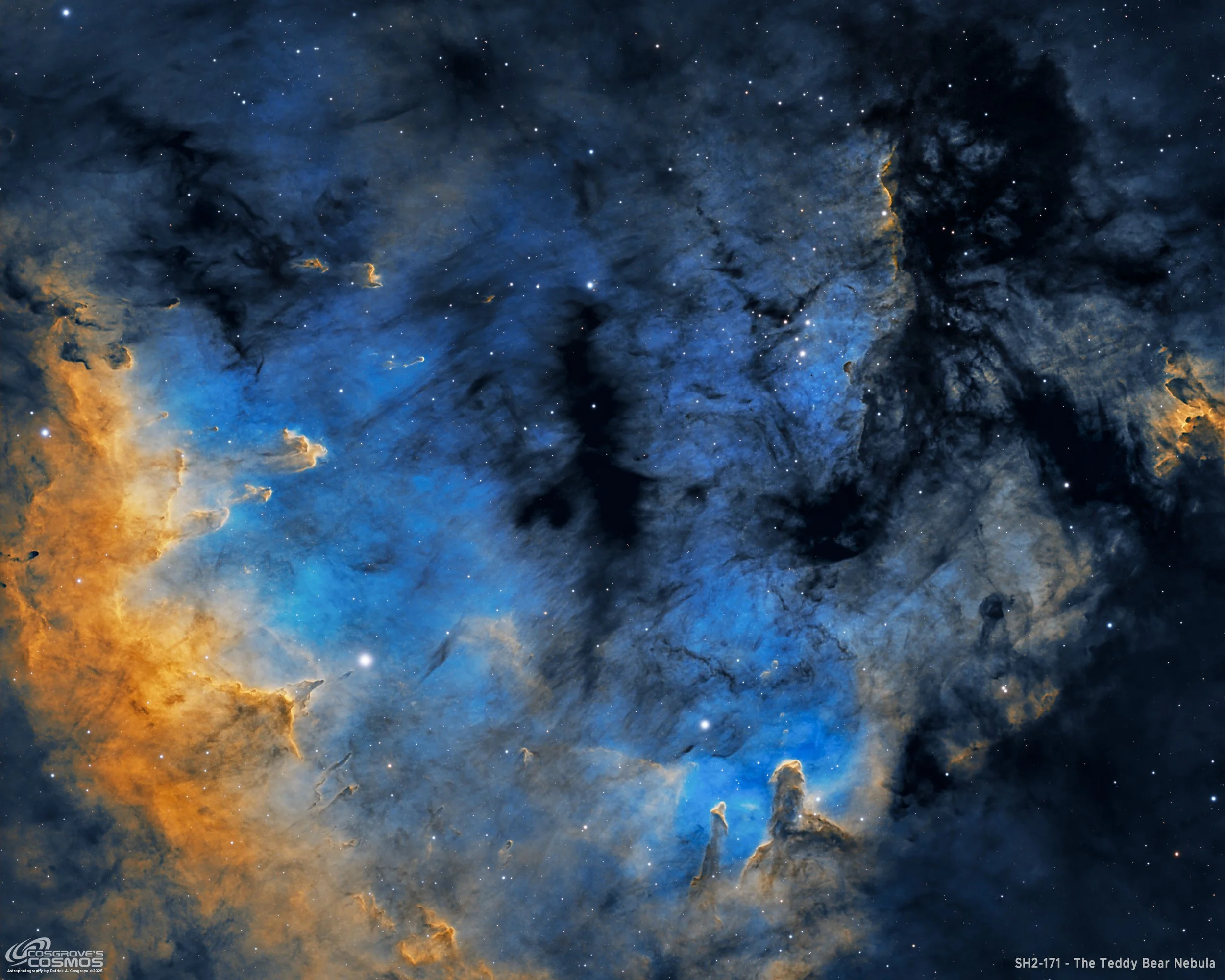
This project explores Sh2-171, part of the NGC 7822 star-forming complex in Cepheus, a sprawling H II region about 3,000 light-years away where hot young stars are carving pillars and cavities into the surrounding gas. Captured over 33.5 hours in narrowband SHO with an Astro-Physics 130 mm Starfire and ASI2600MM-Pro, the image reveals the intricate structure and subtle filaments of this faint but remarkably active stellar nursery.
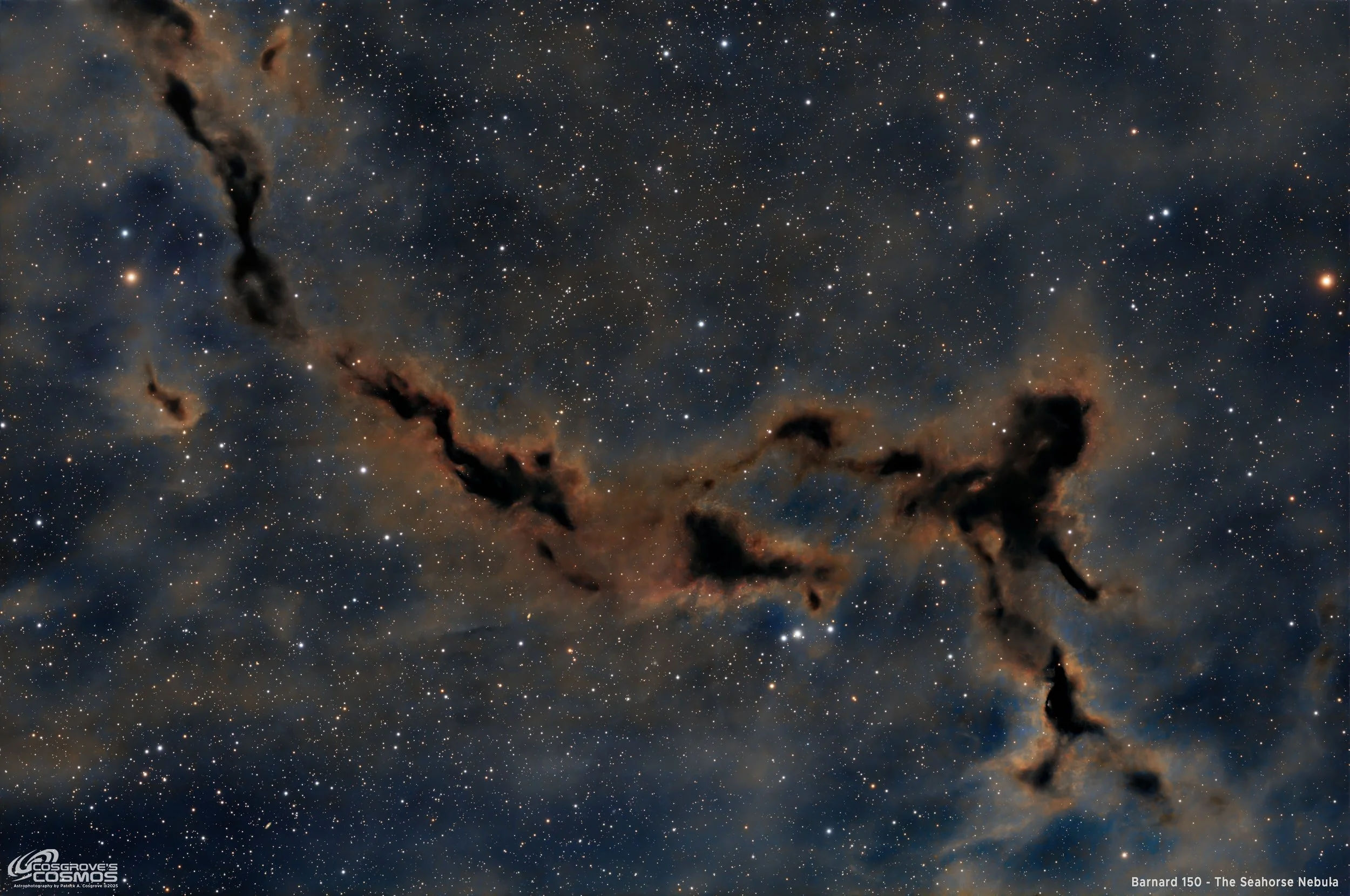
This is the first year I have started targeting Dark Nebulae. It’s been a learning experience.
On this project, I targeted Barnard 150 - The Seahorse Nebula. Even with more than 18 hours of integration, I ran into noise issues.
You need to do a lot of stretching, and this amplifies the high noise. While NoiseXterminator is extremely effective, when handling this much noise, I encountered some ugly artifacts, which greatly frustrated me. So the project reportsto learn more!

Astrobin Top Pick Nominee!
IC 5068 is a very faint nebula that is part of the North American/Pelican Nebula region and is often passed over for these brighter nebulae. But this region is a beautiful piece of the sky in narrowband!
Shot with my AP130 Platform with ~12 hours of SHO and RGB-Stars capture.

Sh2-54 is an interesting HII region with some dark dust located in the constellation Sperpens Cause (The Tail). Also seen is the open cluster NGC 6604. This image is a result of 8.9 hours of SHO Data.

The NGC 5364 Group is part of the vast Virgo Cluster of Galaxies and showcase a mix of galay morphologies in one frame.
This shot was the very first from my AP130 platform after it had been installed in my new observatory.

Finally! Some clear nights and some new fresh from the universe photon data! This imaging project covers SH2-112 - A diffuse emission nebula located about 5,600 light-years away in Cygnus. This is the result of 15.6 hours of SHOrgb data. Not of lot of info is available about this beautiful object, but I find it fascinating to study!

This is a REPROCESSING PROJECT for Sharpless 101 (specifically Sh2-101) also known as the Tulip Nebula. This object is located approximately 6000 light-years away in the constellation of Cygnus (The Swan). This was a 12.8-hour integration with the AP130 platform using the ZWO ASI2600MM-Pro Camera.
I was able to significantly improve the image and am quite pleased with the improvement I was able to produce - but you be your own judge of this!
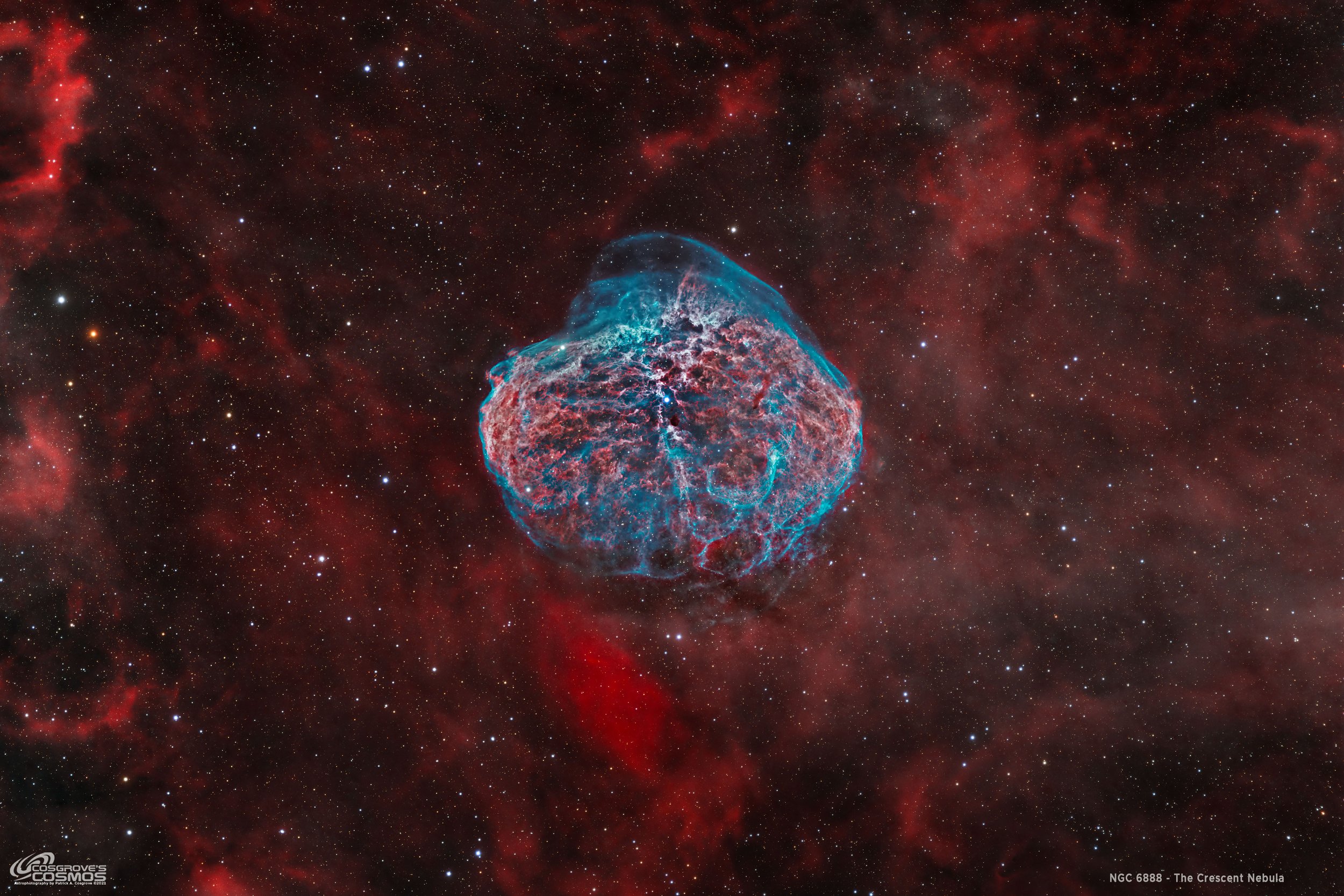
NGC 6888 - The Crescent Nebula is a famous emission nebula located in the constellation of Cygnus. This is a reprocessing project using image data first captured in September 2022.
SInce. I have no new data to process due to the wildfire smoke, I decided to use some new tools and processes to see if i could pull more details out from the O3 shell that surrounds the nebula.
THe resulting image show much more O3 detail - including some interesting convection cells towards the bottom of the nebula
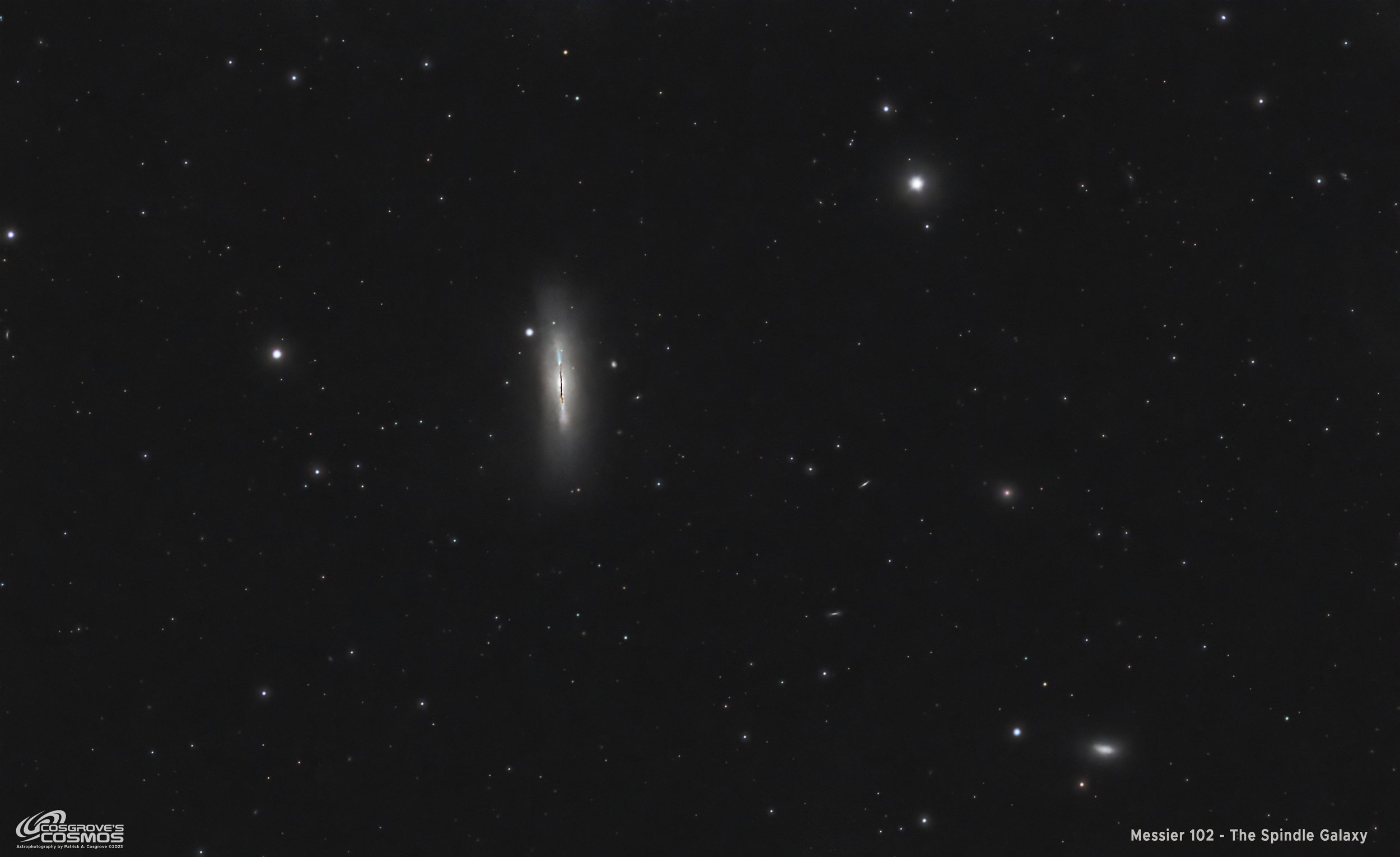
Messier 102, also known as NGC 5866 and the Spindle Galaxy, is located 50 Million light-years away in the constellation of Draco. Its diameter is 60,000 light-years, making it 2/3rds the size of our Milkyway even though it has about the same mass.
NGC 5866 is one of the two galaxies known as the Spindle Galaxy. The other, NGC 3115, is an edge-on lenticular galaxy located in the constellation Serpens.
This was another image from the lul in the smoke plumes from Alberta. Because of this, this image was starved for integration time and shot through some smoke still in the sky - so this image is not as good as I would like it to be. But - if you zoom in, you can see a lot of detail in the galaxy's dust lane!

Messier 104, also known as the Sombrero Galaxy, is a stunning sight in the night sky. Located in the constellation Virgo, this galaxy stands out due to its unique shape. With a bright central bulge surrounded by a flat disk of stars, it resembles a sombrero hat. It is estimated to be approximately 28 million light-years away from Earth and spans about 94,000 light-years across.
I have always wanted to shoot this target, but this project produced a result far below what I was shooting for as conditions were poor (smoke plumes), and integration ended up being a ridiculous 1.7 hours!
Surprisingly the resulting image is not that bad. It's not good, either.
It did better than expected because of its capable Camera. But at least I have a baseline for when I shoot this target again n the future!
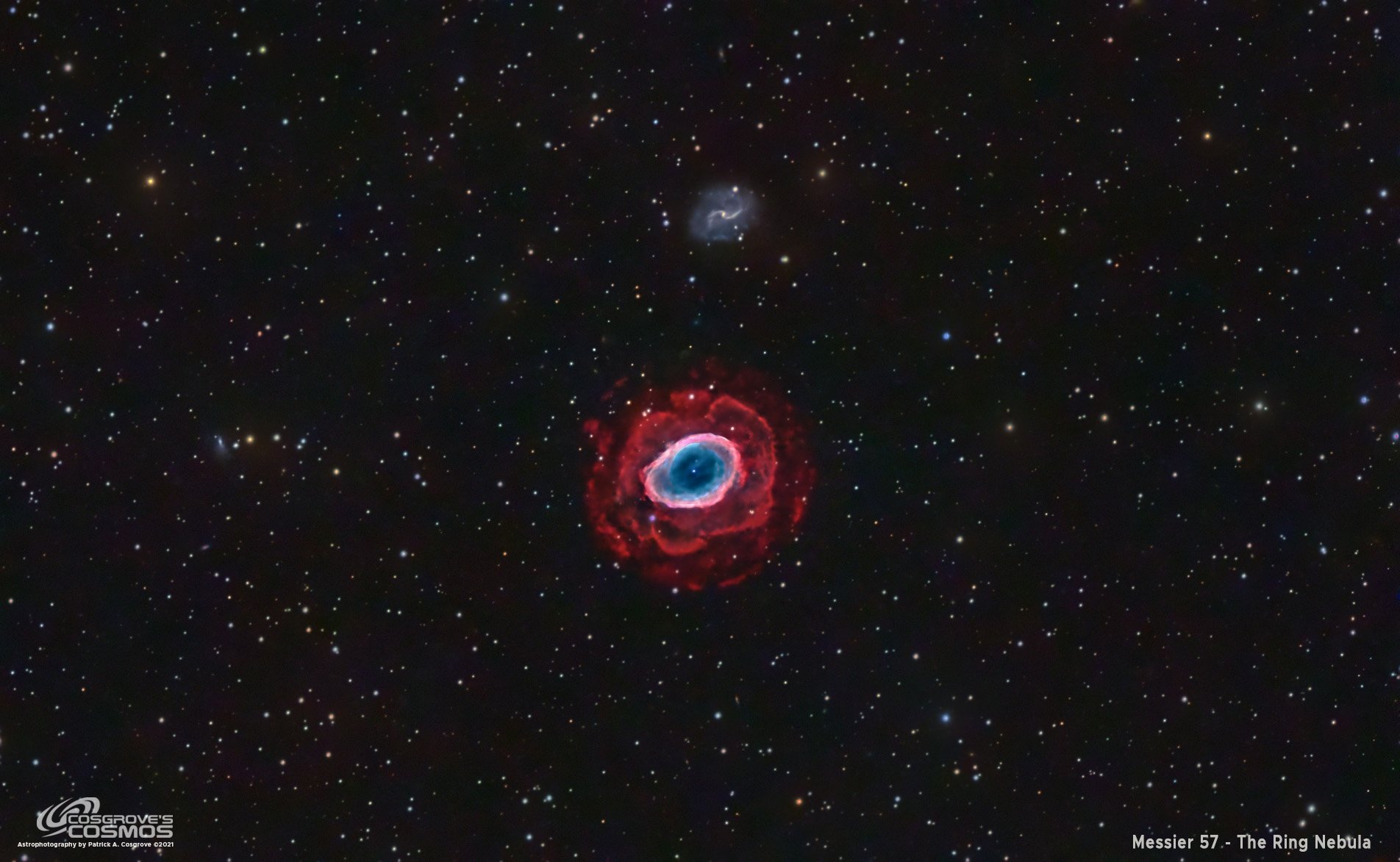
Messier 57, the Ring Nebula has long been a visual favorite of mine. This was a reprocess of data that was collected in 2022. Based on 14.7 hours of HaLRGB, this data showed the rarely seen outer shell. I wanted to see if I could improve on that image with advanced tools and techniques. Since the original image was published, I created a new imaging project for posting to contain both the old and the new versions in the collection.
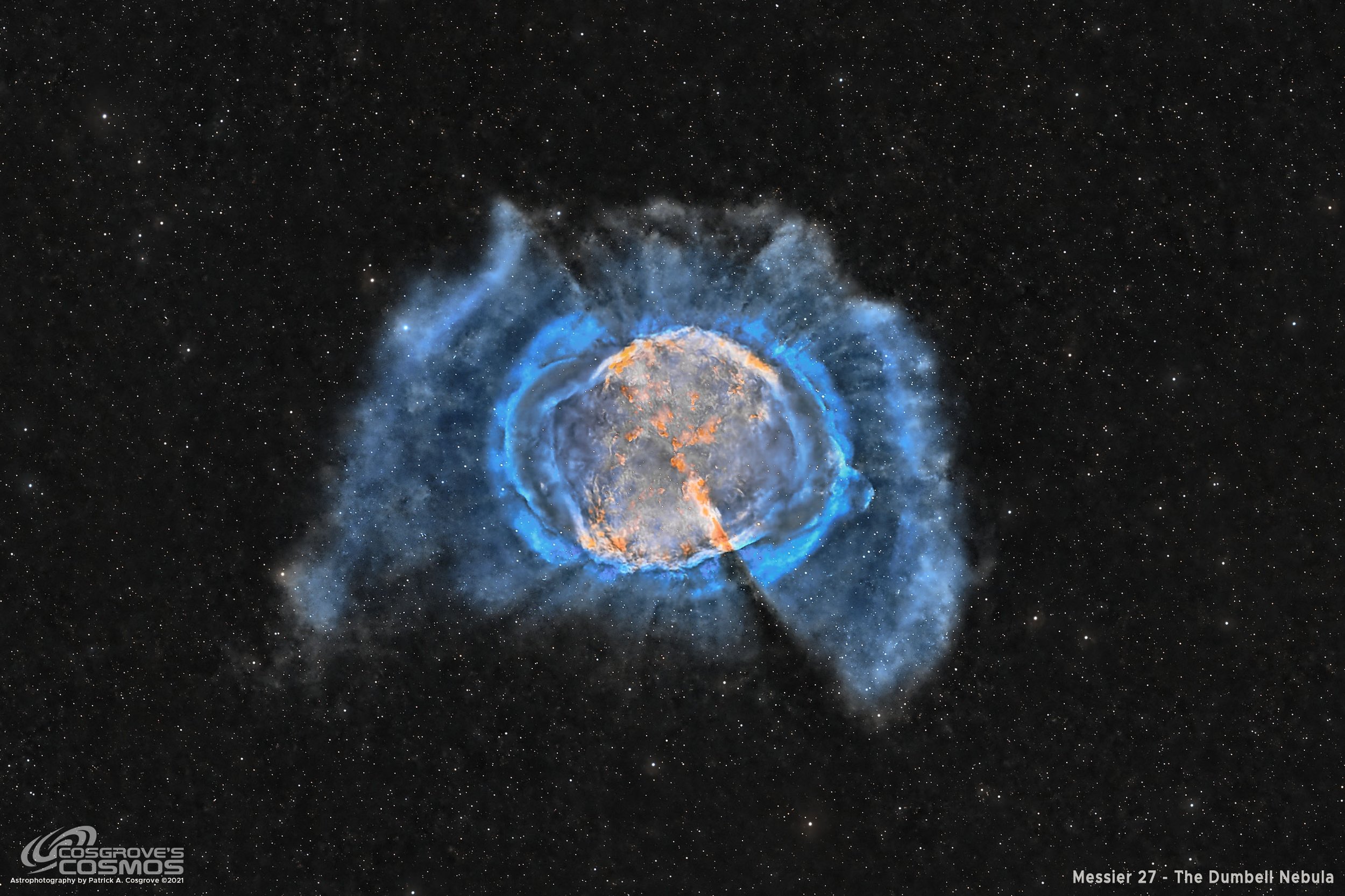
This imaging project is not a recapture of data for M27 - the Dumbell Nebula. Rather it is an effort to reprocess old data using new tools and new processing methods to address some concerns I had about the original image - where I thought that the stars were bloated and unsharp, and that I thought I should be able to bring out more detail in the amazing outer gas shells that narrowband imaging shows for this target.
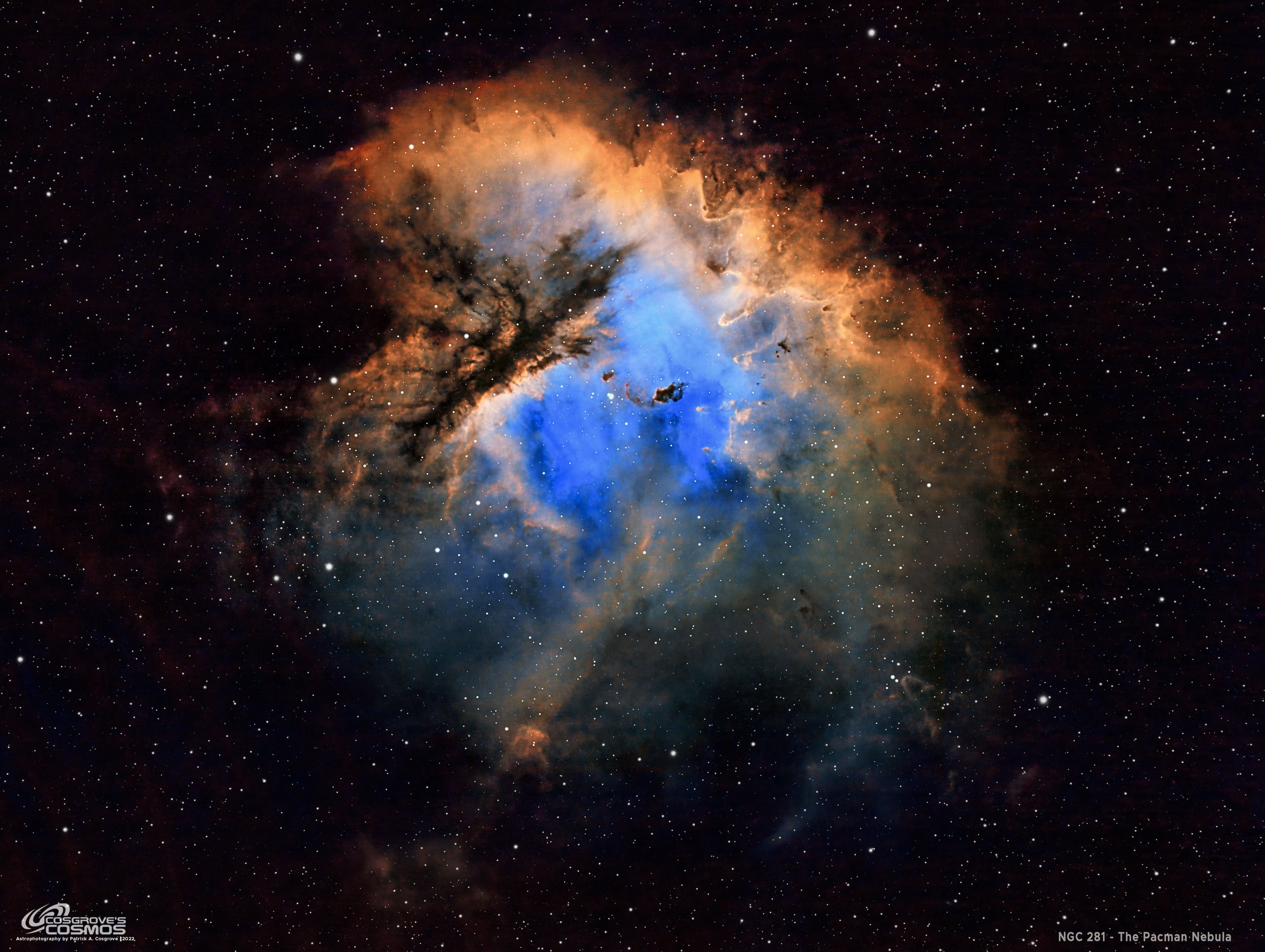
NGC 281, better known as the “Pacman” Nebula, is located 9,500 light-years away in the constellation of Cassiopea.
This was the second time I shot this target. This image is the result of 8 hours of narrowband data rendered in the Hubble SHO palette.
This data was collected on my Astro-Physics 130mm f/8.35 APO refractor, and a ZWO ASI2600MM-Pro camera - all mounted on my IOptron CEM 60 Mount.
This image suffered from a strange circular artifact that took the form of nested rings in the corner of the image. Dealing with this caused me to make my background sky a bit darker than I would have preferred, but I think the image has a certain amount of drama and pop because of it!
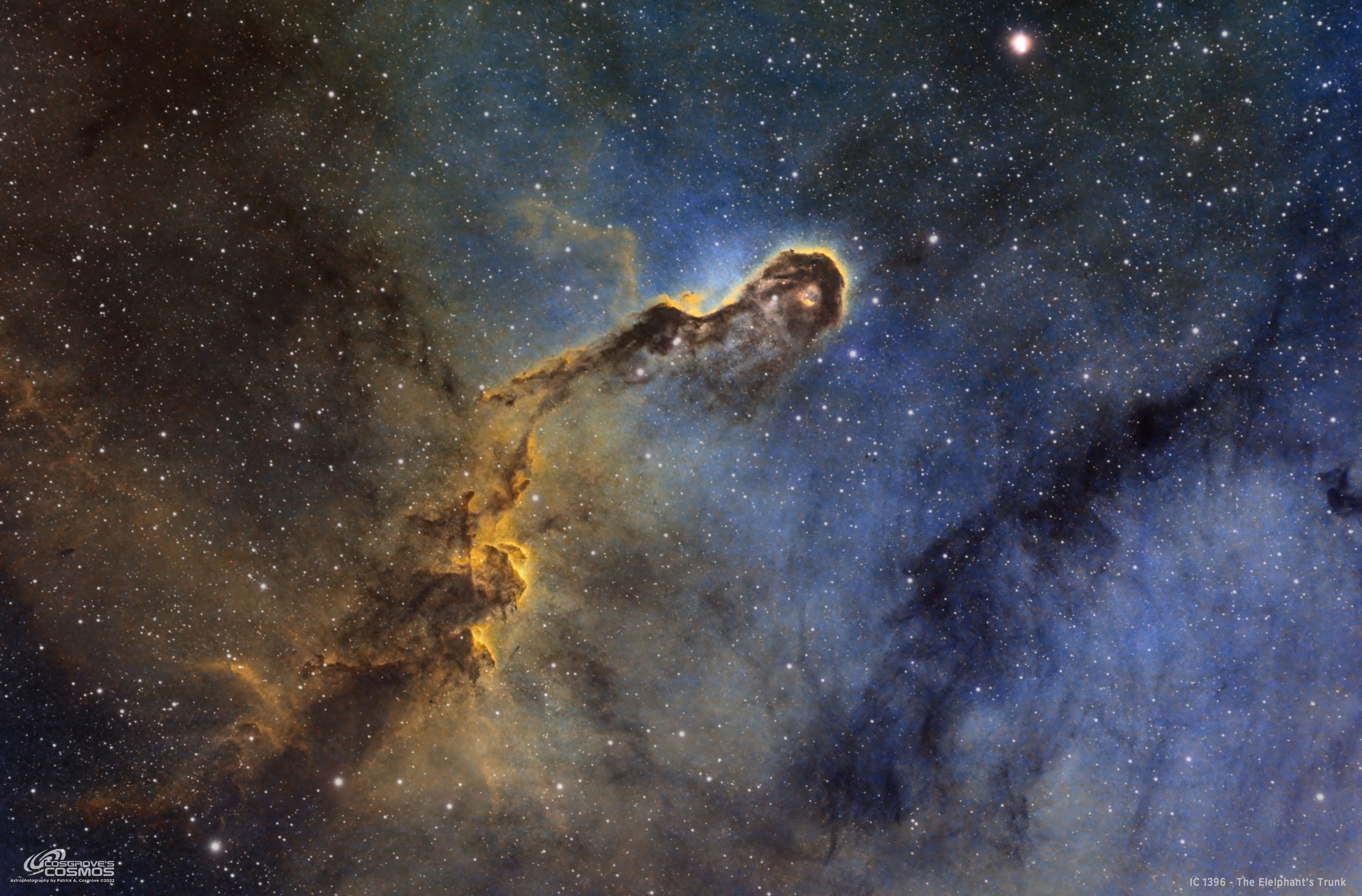
IC 1396A - The Elephants Trunk Nebula is located 2400 light-years away in the constellation of Cepheus. This is my fourth project involving this target - but the first where I used the newer generation ZWO ASI26MM-Pro camera and full narrowband data set at this image scale. My goal here was to collect about 15 hours on target. I only ended up getting 7.3 hours. My usual reason for missing my integration target is weather. Not this time. This time I was hit with a nasty virus and the worst cold of my life! I had to watch two precious clear nights slip away whilst I coughed and hacked away inside in misery….
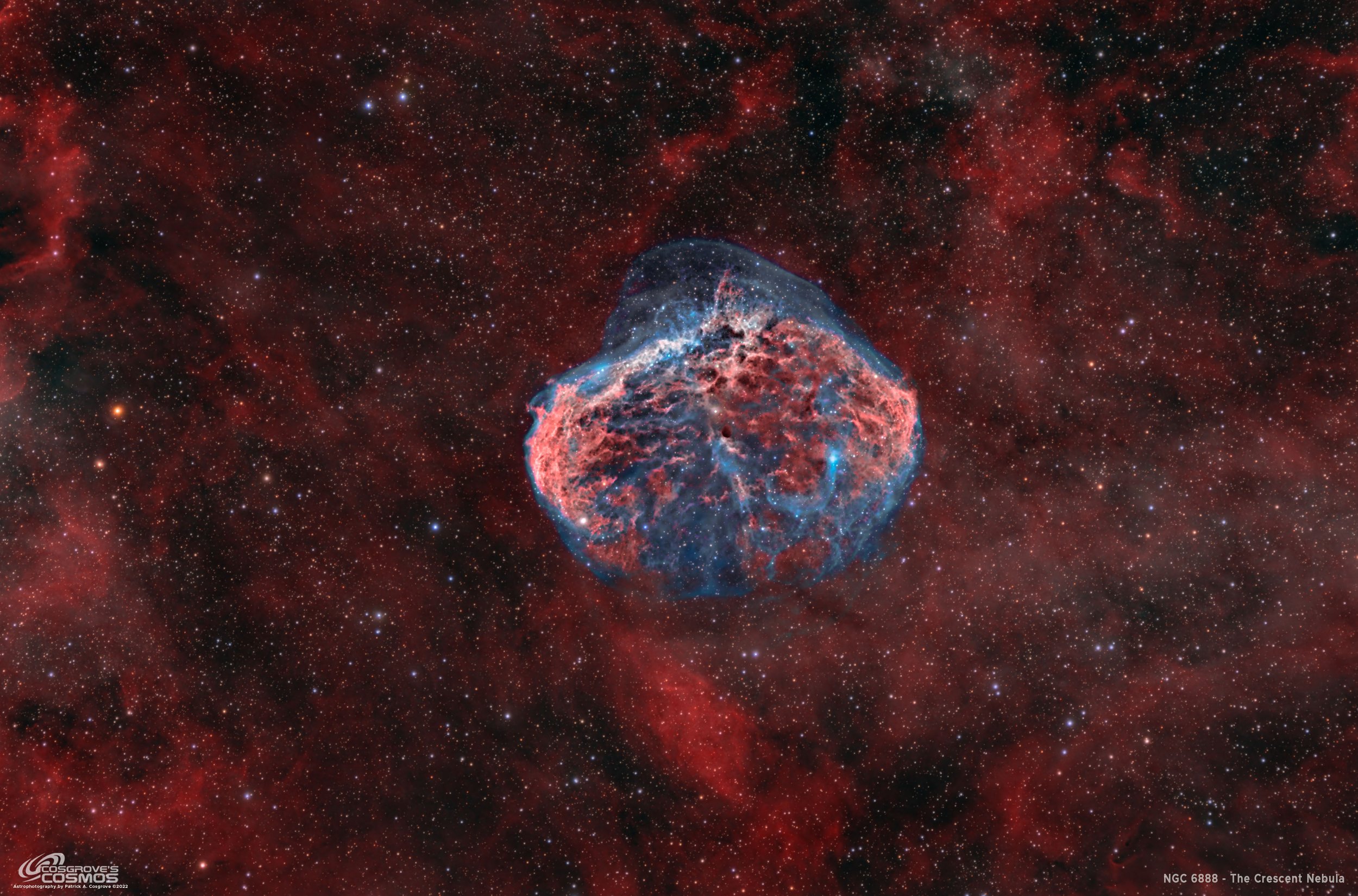
NGC 6888 - The Crescent Nebula is a famous emission nebula located in the constellation of Cygnus. This is my third time imaging this target, and this is clearly my best take on it yet! This image is the result of 12.9 hours of narrowband and broadband integration - all shot on my Astro-Physics 130mm EDT and a ZWO ASI2600MM-Pro camera, I shot this as a bi-color HOO image an dused RGB data stars in it. Extensive use of starless processing was used to get this result. See more details in the posting.
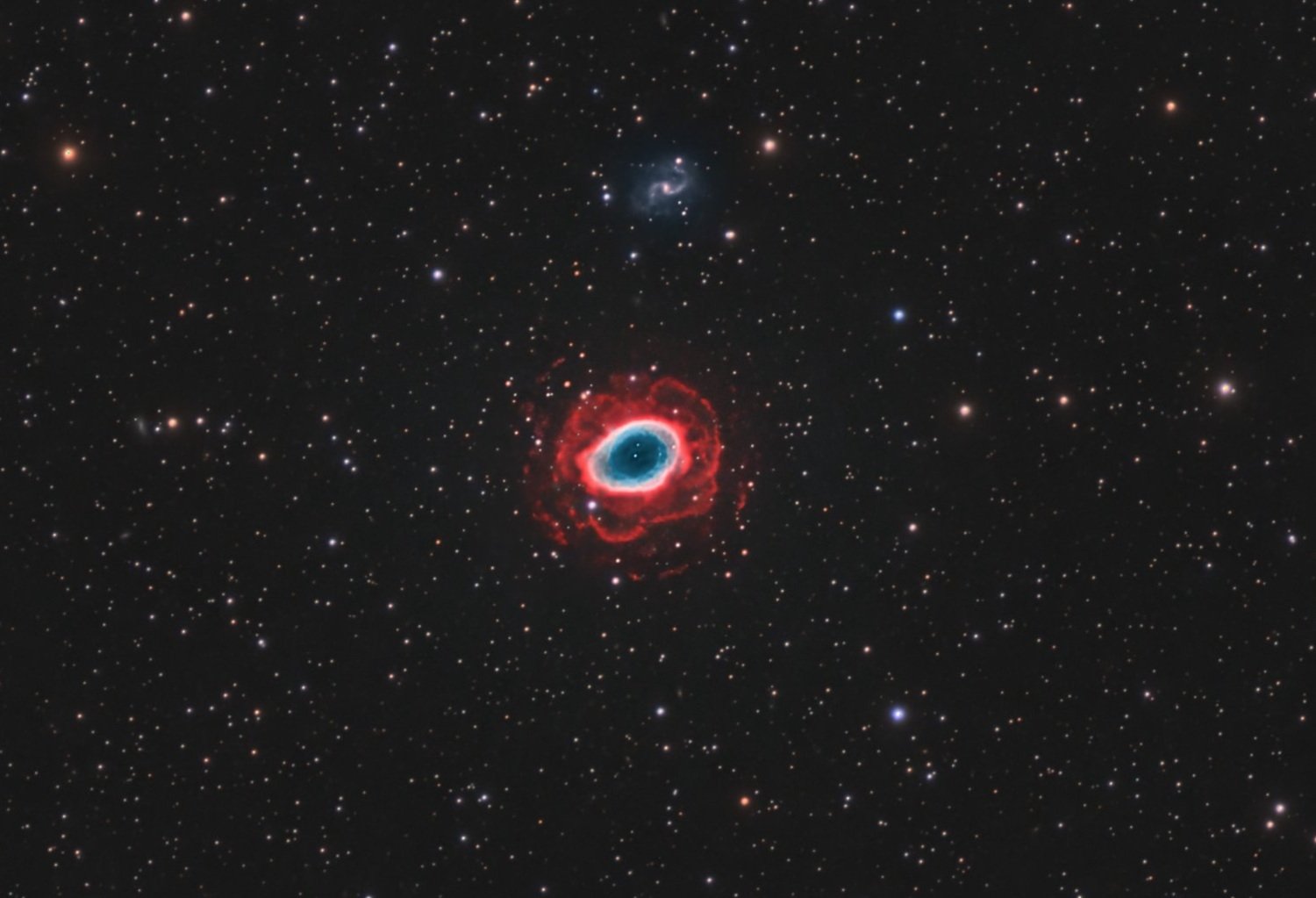
Messier 57, the Ring Nebula has long been a visual favorite of mine. It is also a target that I have shot two times before with poor results due to its small size. This time I wanted to try to do the best job I could, given the limitations of my current gear. I also wanted to get a really long integration. Finally, I wanted to add Ha data in an attempt to capture the red outer gas rings that are not seen visually and often not seen in the typical amateur images. While I ran into problems on the way, did pretty well in meeting my goals. See the full post for the entire story!
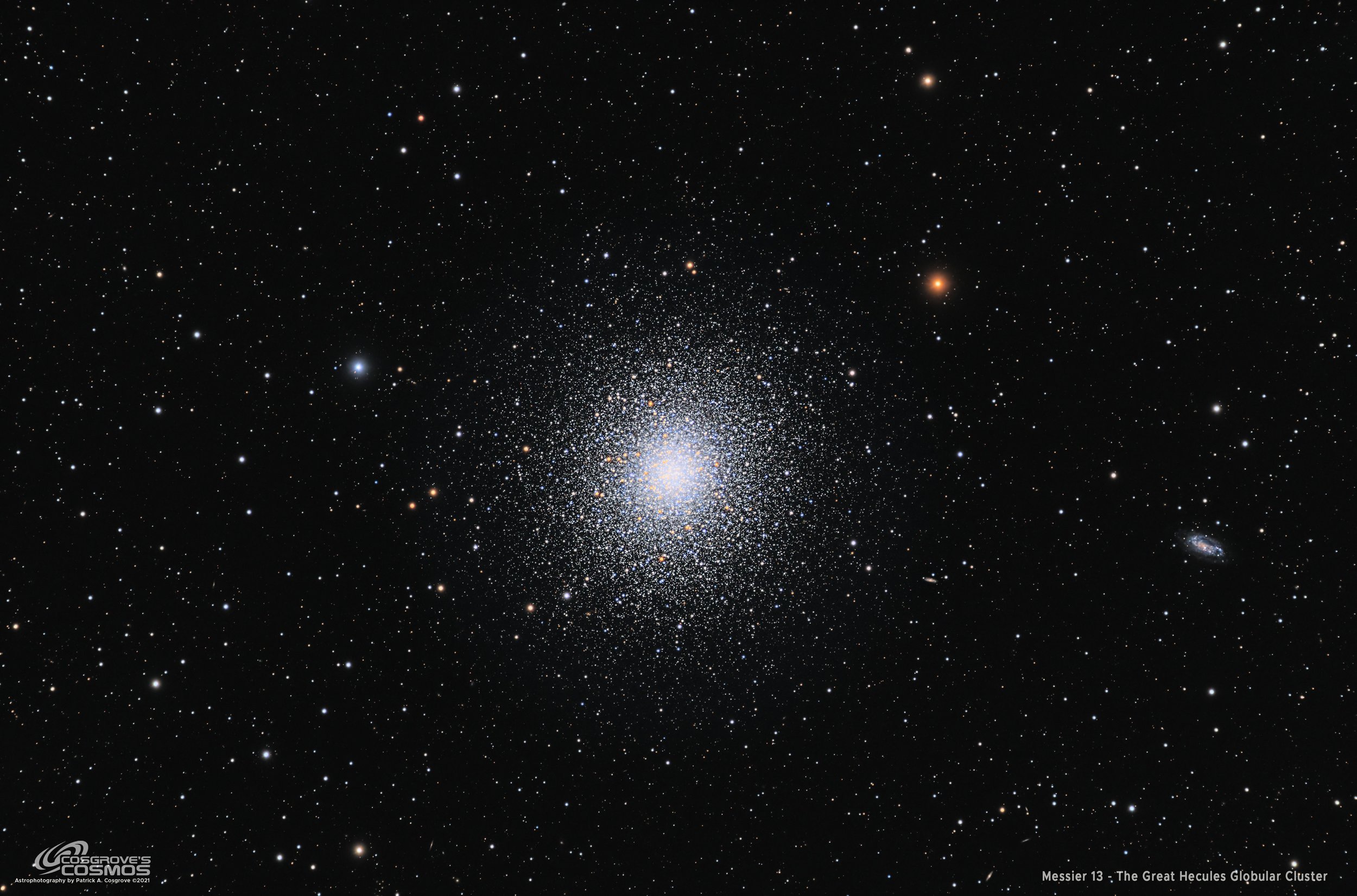
Messier 13 - the Great Hercules Cluster - is one of the finest examples of a Globular Cluster that can be found in our skies. It consists of a giant ball of 100,000-500,00 stars packed into an area 145 light-years across. M13 can be found between 22,000 and 25,000 light-years away in the constellation of Hercules.
This is a 5.6 8.5 hour integration in LRGB using my Astro-Physics 130mm scope the ZWO ASI2600MM-Pro camera. This is the fourth time I have shot this target and this one is clearly my best - displaying a remarkable sharpness in detail.
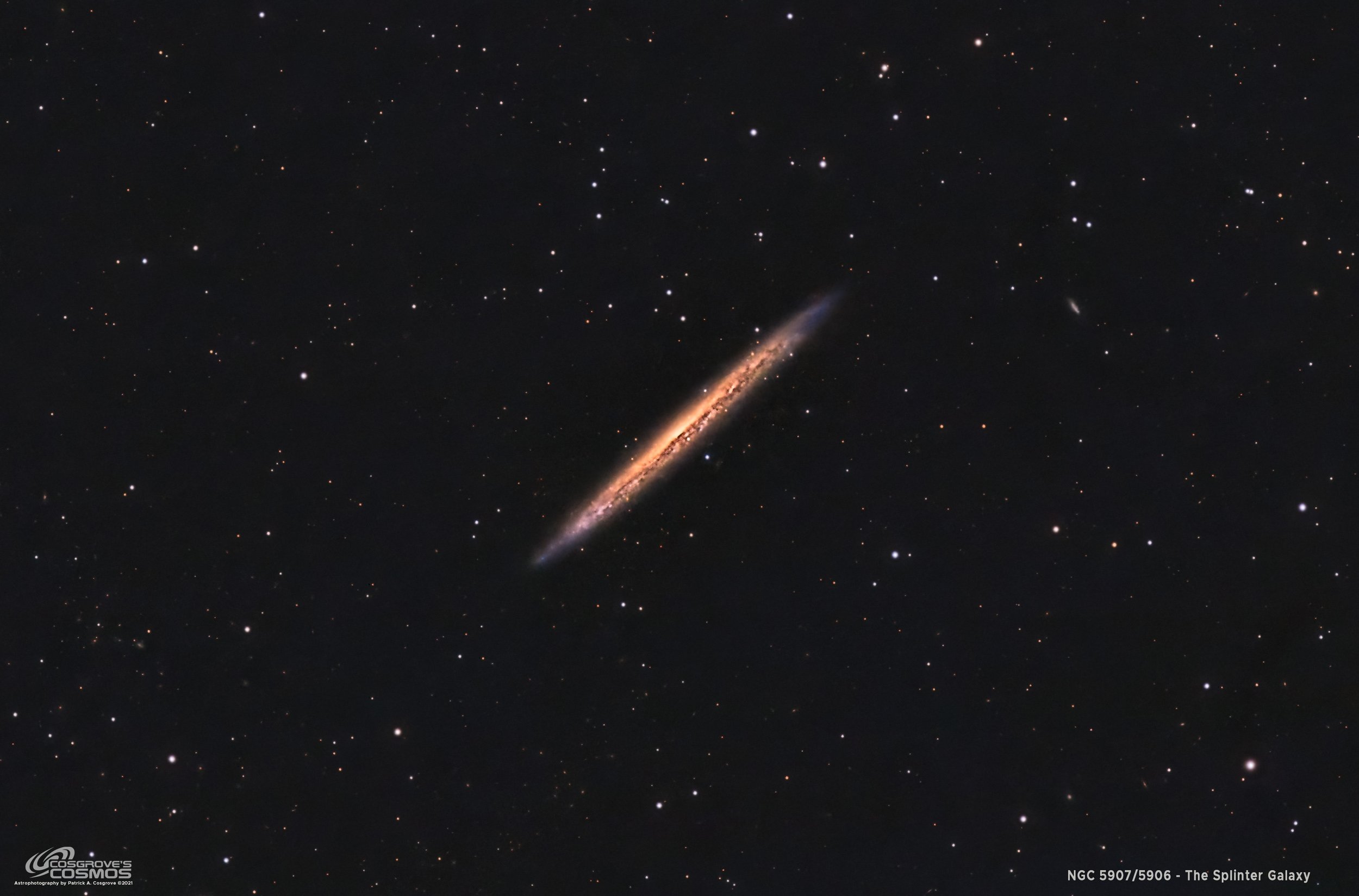
NGC 5907 -The Splinter Galaxy - is another example of an edge-on Spiral galaxy that displays significant dust lane detail across its middle. Its located 54.5 million Light years away in the constellation of Draco. This was shot with my Astro-Physics 130mm with the ASI2600MM-Pro camera. 8 hours of integration in LRGB. It was a real challenge to pull out the details from this very small galaxy.
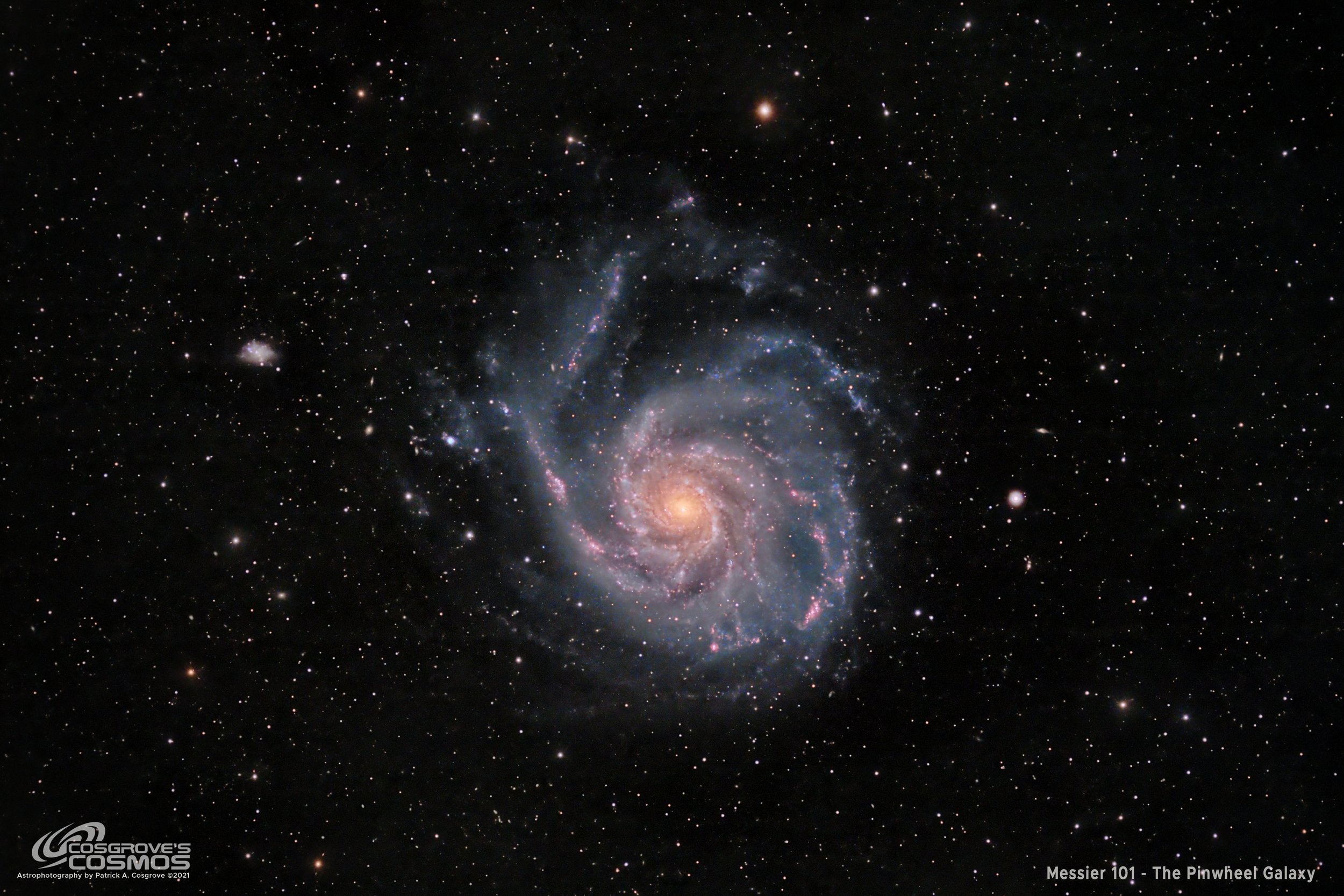
My third attempt shooting Messier 101 - the Pinwheel Galaxy. My first was in 2020 using an OSC camera and a two-hour exposure. Not bad for a first attempt. My second was in 2021 using an ASI1600MM-Prop mono camera. 15-hour integration! However many data problems and a very poor final results. This time around I am using my Astro-Physics 130mm with the ASI2600MM-Pro camera. 11 hours of integration in LHaRGB.
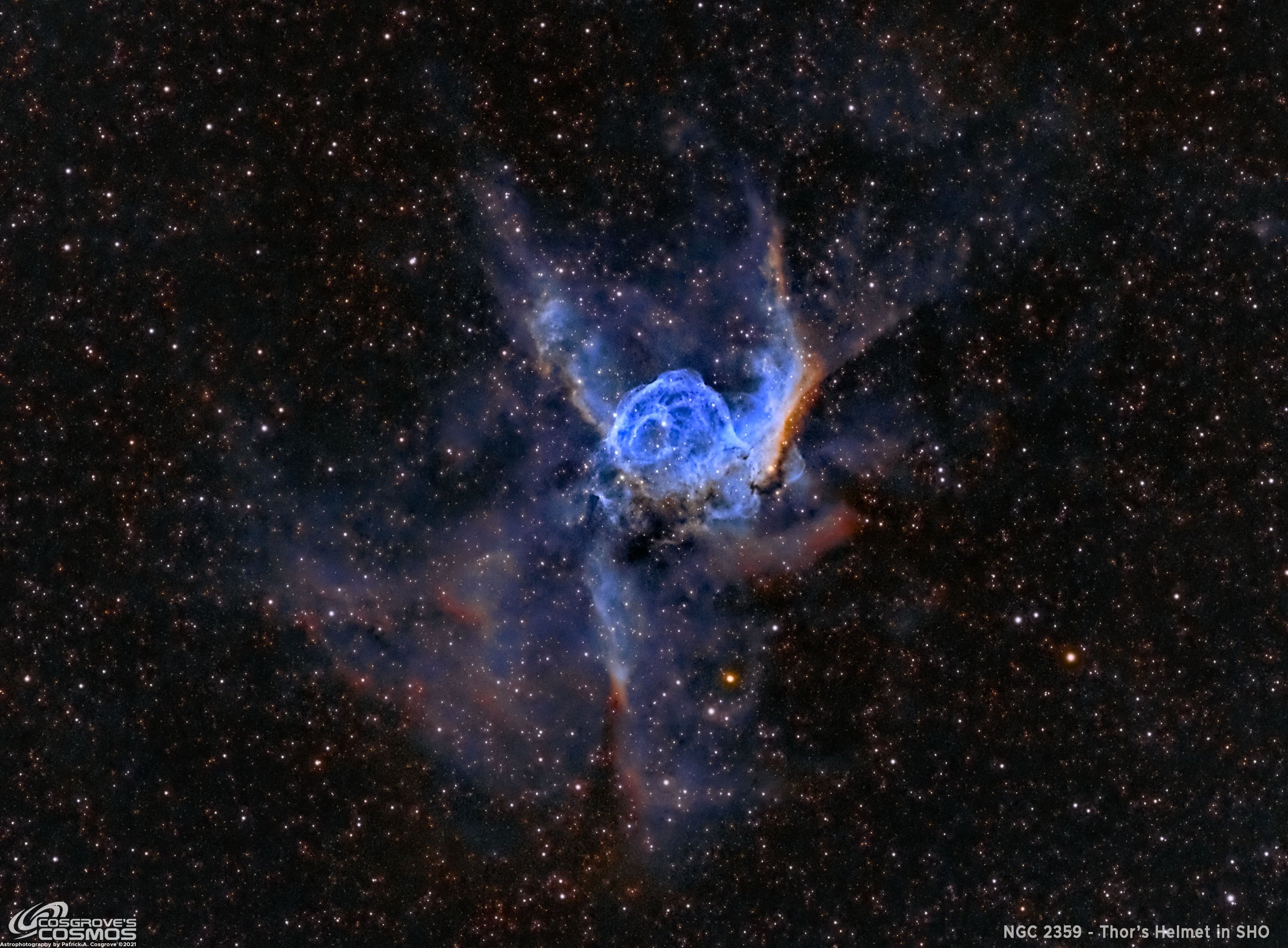
NGC 2359 - Thor’s Helmet - is my first image of 2022. This image is the result of 2.5 hours of narrowband data - limited by weather and the fact that this target is very low in the sky for me and access is very limited each night due to trees on my property. I had hoped to gather more data but at this point, it is now too late in the year. So my challenge was to see what I could do with such limited data. detailed processing strategy and log provided!

This is the 10th and final image to come from a capture season that occurred this past November. SH2-115 is a large emission nebula located in Cygnus. This was the result of 4 hours of narrowband data integration taken with the Williams Optics 132mm FLT APO scope, the CEM60 mount, and the ASI1600MM-Pro camera.
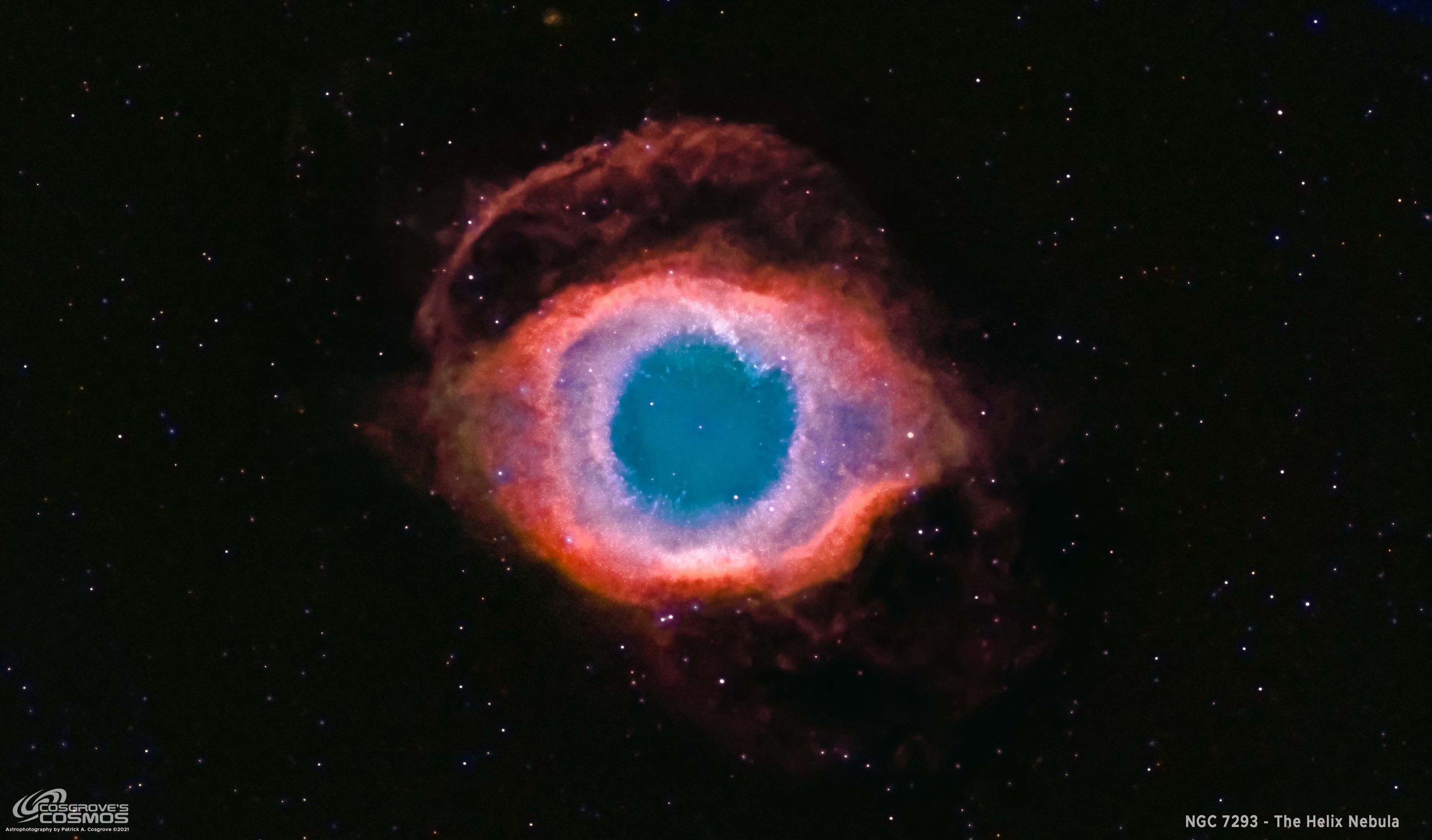
This was my second attempt to capture NGC 7293 - the Helix Nebula - located in the constellation of Aquarius. This time I had high expectations as I was using longer integration times, a longer focal length scope, and a new generation ASI2600MMPro camera. However - LOTS of things went wrong with this capture and its data came out pretty compromised! Some intense image processing minimized the impact of these problems - but the final image falls far short of my expectations. A good example of what can go wrong!

A narrow field view of NGC 1499, The California Nebula, which is a rich H2 region located 1,00 light-years away in the constellation of Perseus. This was shot in narrowband with total integration of 10 hours.
This was shot with the AP130 platform using the ZWO ASI2600MM-Pro Camera.
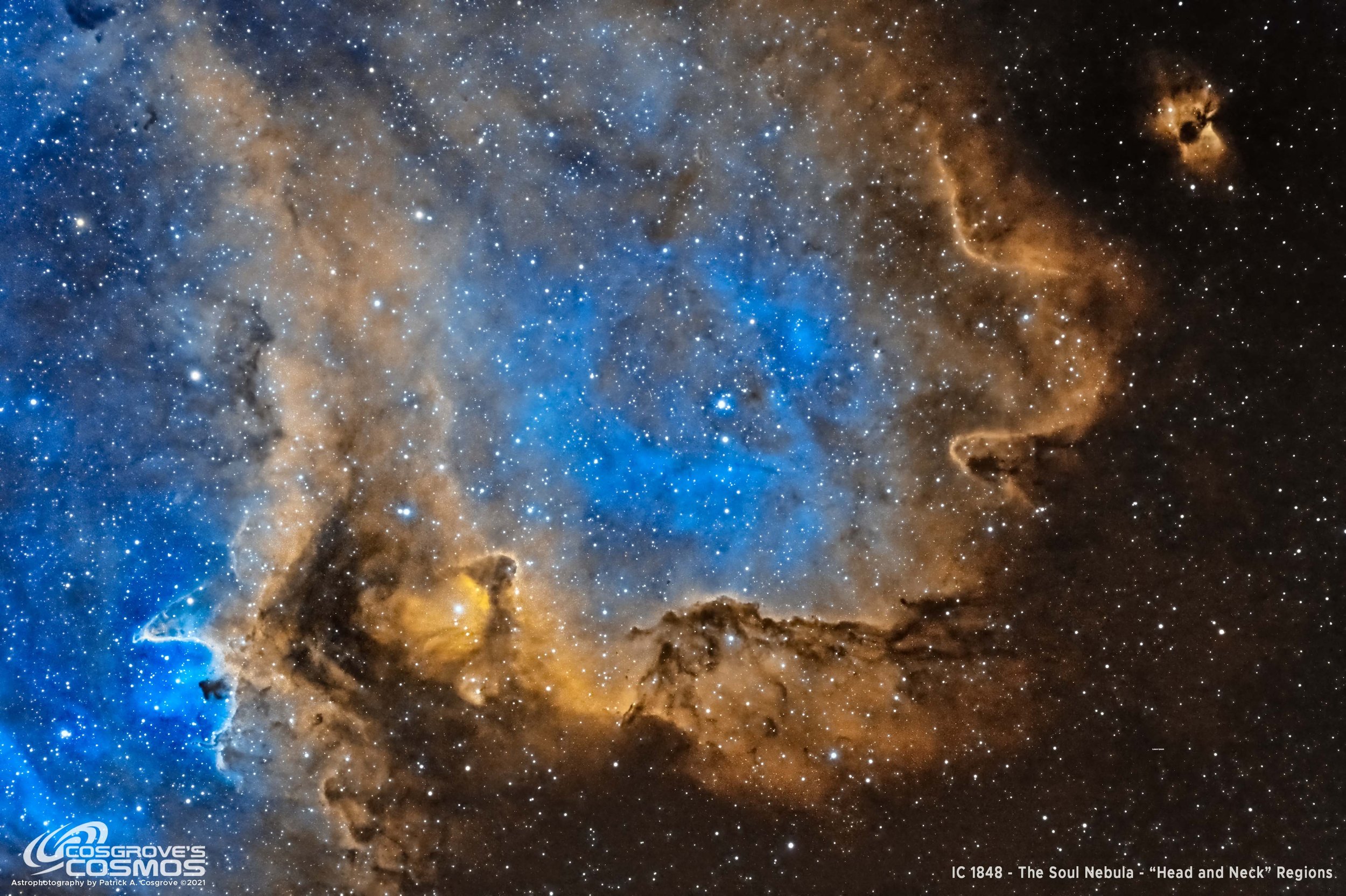
IC1848, known as the Soul Nebula, is located ~6500 light-years away in the constellation Cassiopeia. This is image was from an aborted project. I only captured 2 hours of NB data when the weather turned and I lost my shooting window. I had so little data I abandoned the project and did not even capture cal data for it! But I decided to use the data to test out a newly built image processing computer and was surprised the image tuned out better than I have imagined (at least it was not horrible!)
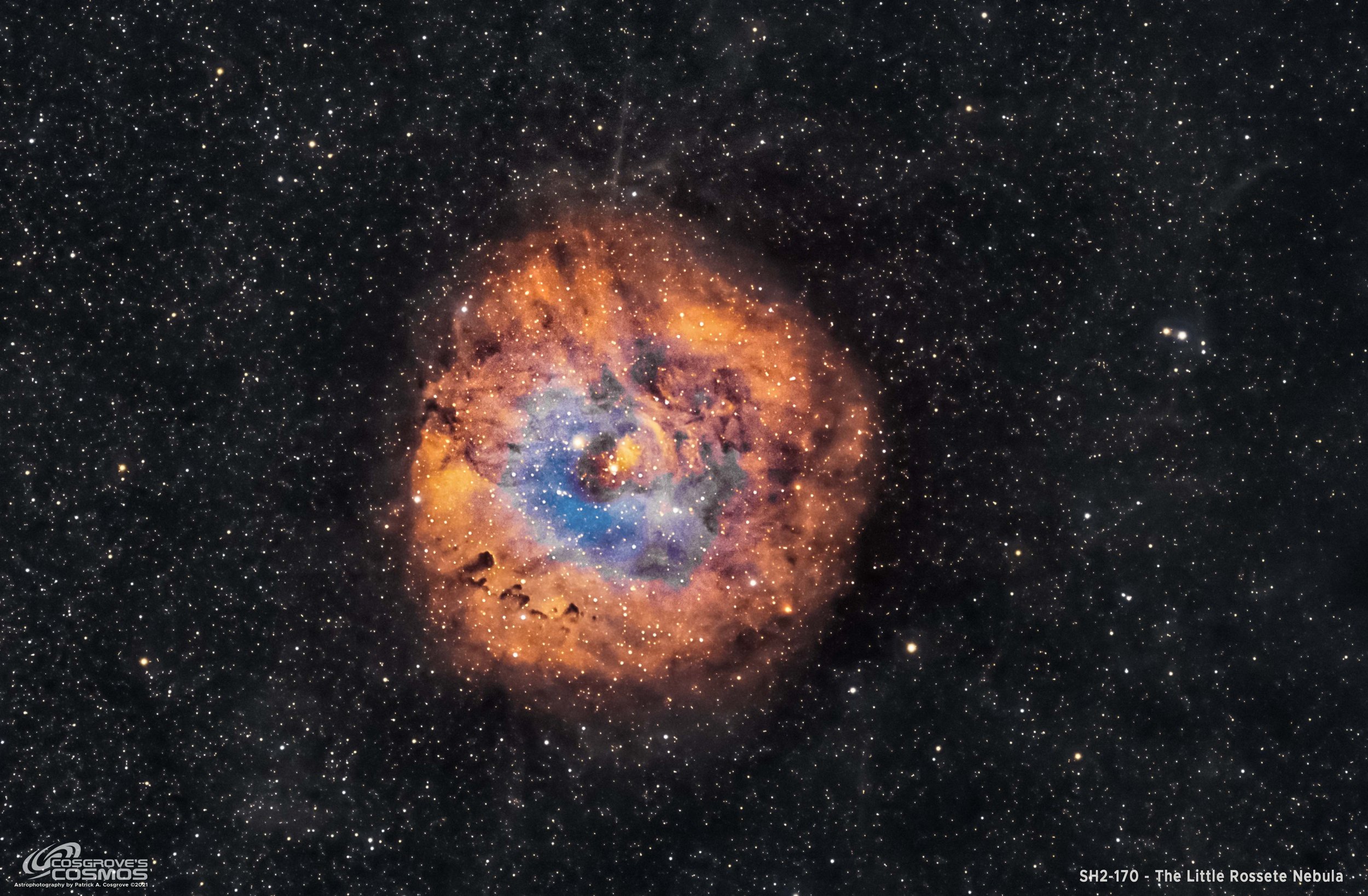
SH2-170, also known as the “Little Rosette Nebula,” is a rich H2 region located 7500 light-years away in the constellation of Cassiopeia. This was shot in narrowband with total integration of 7 hours.
This was shot with the AP130 platform using the ZWO ASI2600MM-Pro Camera.
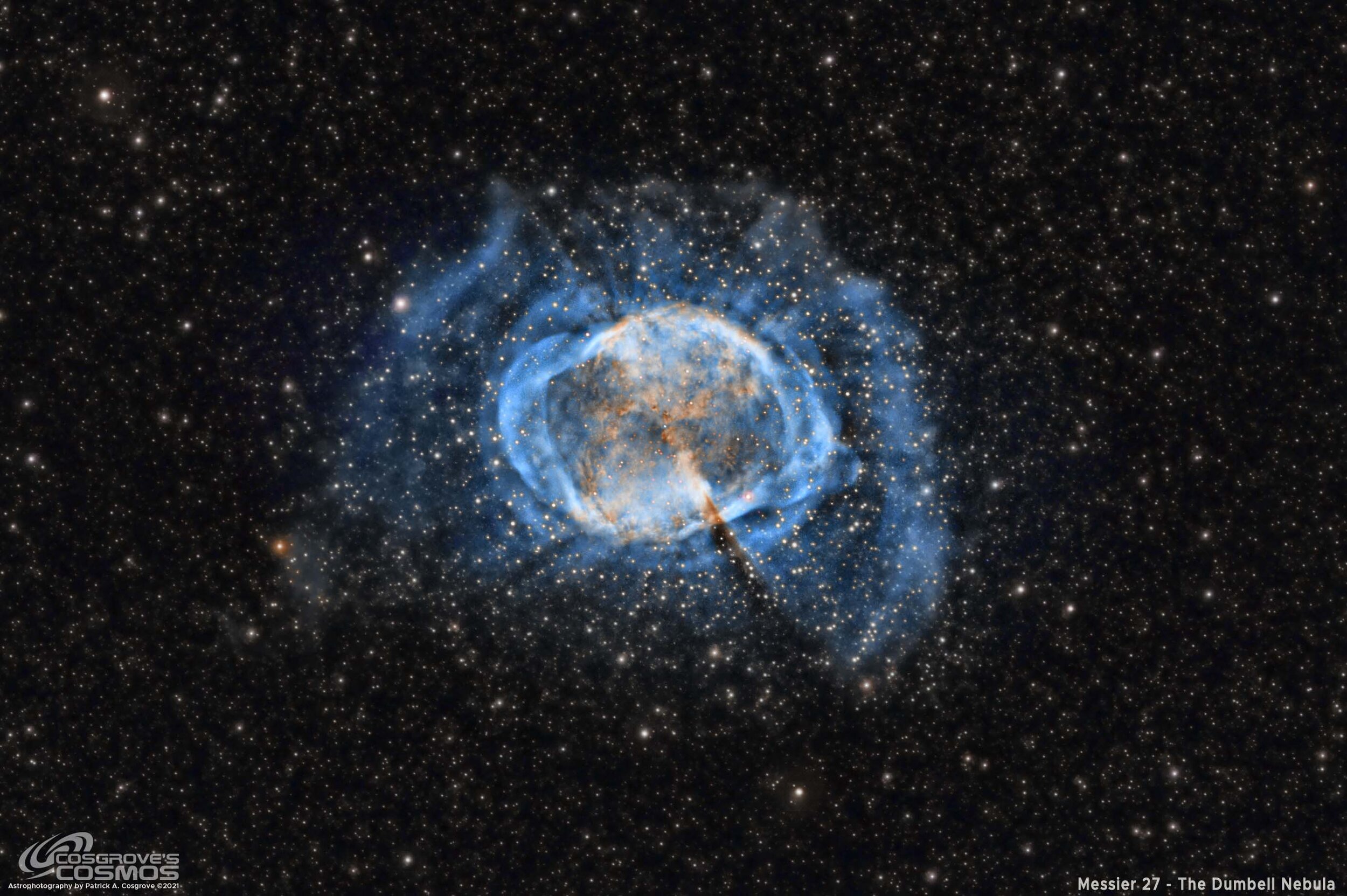
Messier 27 is the well know and often photographed Dumbbell Nebula located about 1200 light-years away in the constellation Vulpecula. This is the third time that I have imaged this object - and this one stands out because it was taken in narrowband with over 10.25 hours of integration! It reveals details that I have rarely seen associated with M27.
This was shot with the AP130 platform using the ZWO ASI2600MM-Pro Camera.

Sharpless 101 (specifically Sh2-101) is also known as the Tulip Nebula and is located approximately 6000 light-years away in the constellation of Cygnus (The Swan). Steven Sharpless first cataloged this rich H II emission region in 1959 in his second catalog of nebulae. Early photographic images of this area resembled a flower, and this gave rise to its common name.
This was a 12.8-hour integration with the AP130 platform using the ZWO ASI2600MM-Pro Camera.
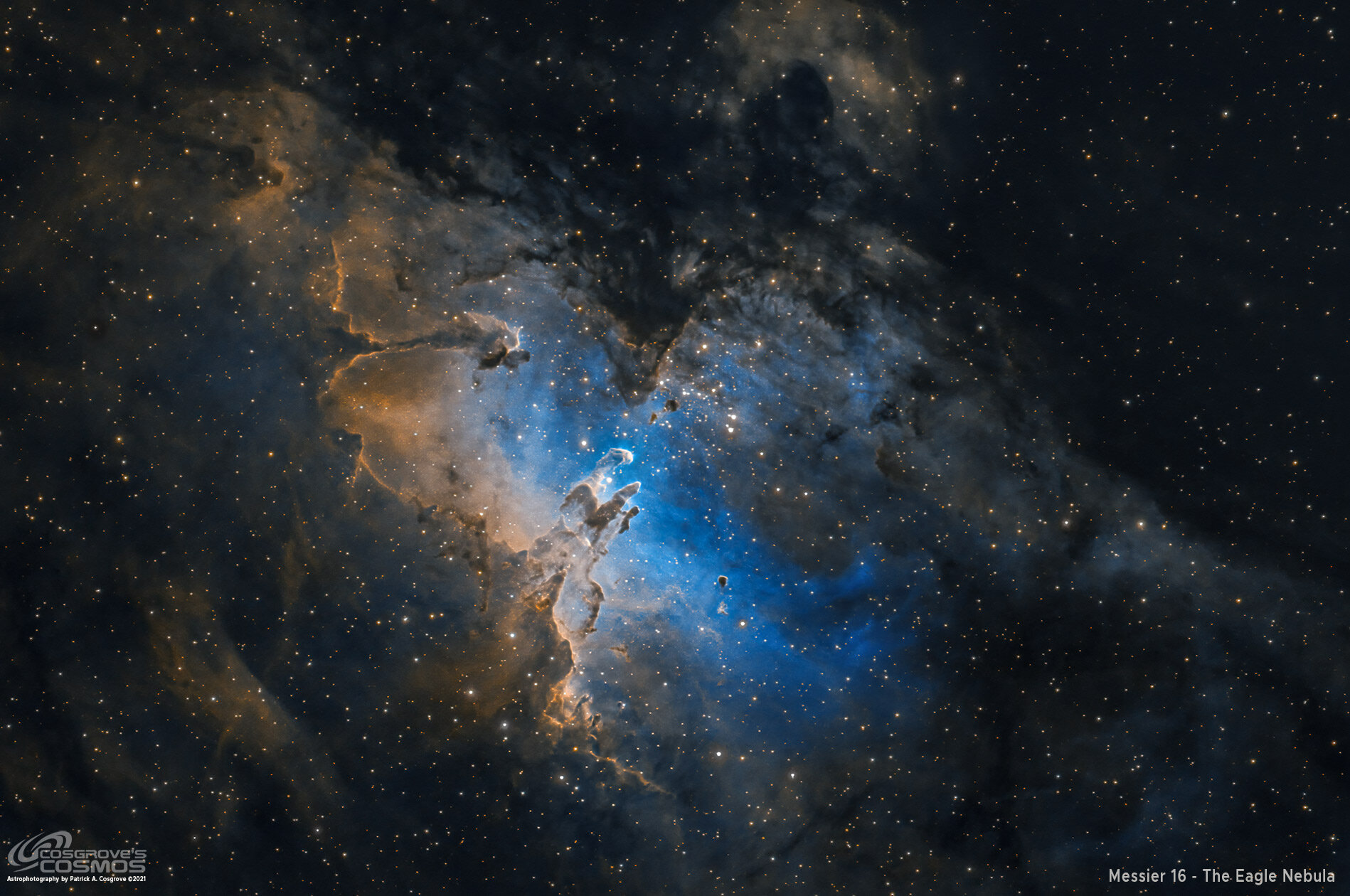
My third time shooting Messier 16 - The Eagle Nebula - this time with the ASI2600MM-Prop camera shooting in SHO. Difficult conditions required some new processing techniques.
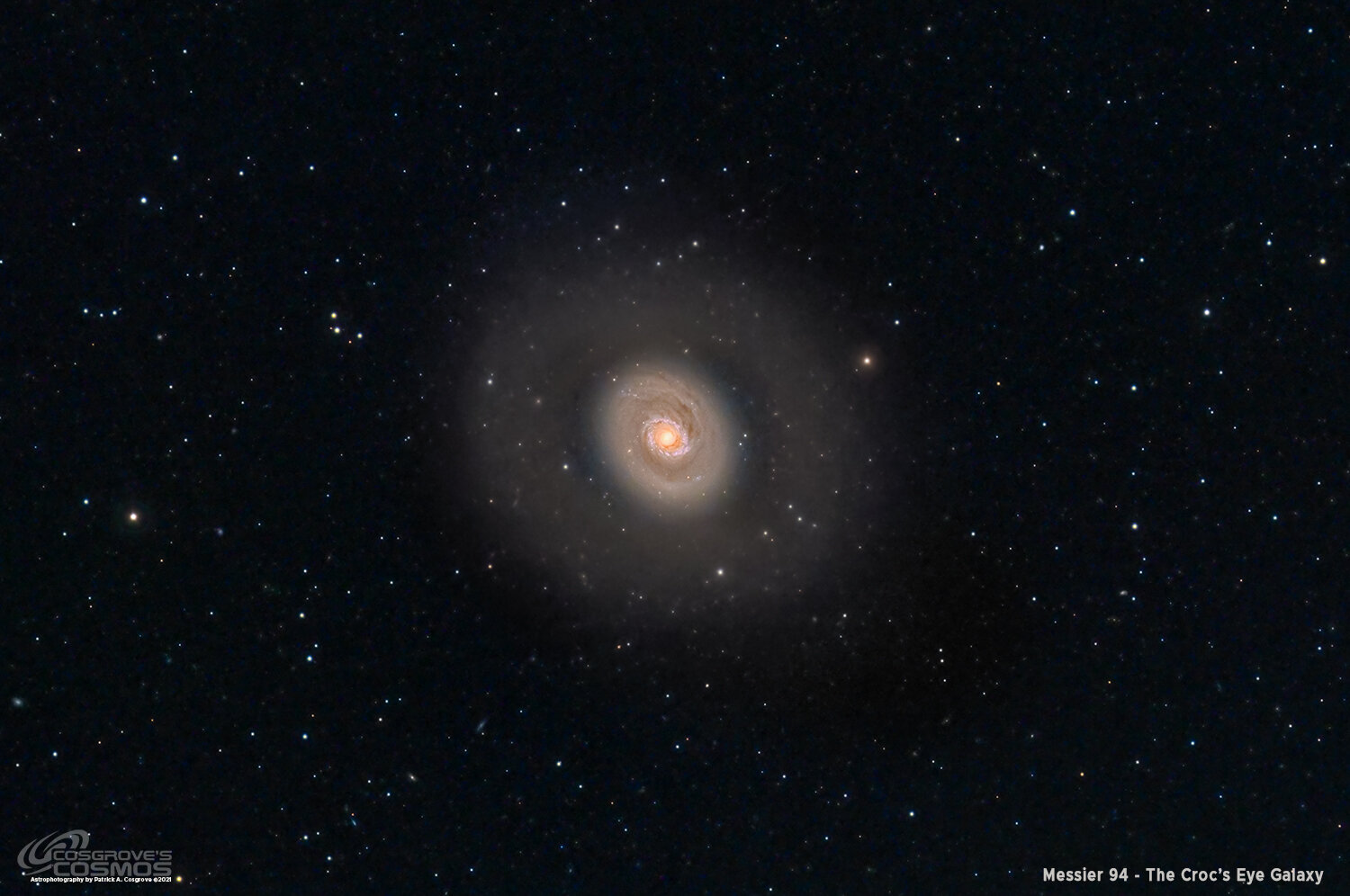
Messier 94 is also known as NGC 4736 and has at least two common names: "The Cat' Eye Galaxy" and "The Croc's Eye Galaxy", with the later of which seems more popular this days. This galaxy is located 16 Million Light Years away in the Constellation Canes Venatici (The Hunting Dogs). Shot over two evenings in last June of 2021 using my William Optics 132 FLT Plafrform and the ASI1600M-Pro Mono Camera.
Table of Contents Show (Click on lines to navigate)
Summary of Changes
A Move to a Steel Pier
After many years of using the trusty IOptron Tri-Pier to hold this telescope up, a major change has been made!
With the completion of my Whispering Skies Observatory Project, the AP130 telescope platform has now been moved to its steel pier in the Northwest corner of the observatory!
This should prove to be a very solid mount for this heavy platform.
I used a modified IOptron Top Pier plate to adapt the CEM 60 mount to the pier. The Pier was drilled out to support the four bolts that secure the top plate to the top of the pier, and then the CEM60 just dropped into place!

The top of thepier with the 4 bolt holes

Bolts just started - note the countersinking on the holes.

Bolted down!

The scope mounted!
A New Micro-Computer
As with all of the scope now mounted in the observatory, I have also shifted from a laptop computer to control it over to a new Mele Quieter 4C fanless micro computer. This computer is mounted on the pier using a custom 3D-printed bracket and a long cable strap.

New Software
In addition to this, I have moved from using Sequence Generator Pro to using NINA. NINA is free, and in my opinion, is easier to use and has superior capabilities.
Current Configuration
So here is where the AP130 Platform is at now:
Scope: Astro-Physics 130mm F/8.35 Starfire APO built in 2003
Guide Scope: Televue TV76 F/6.3 480mm APO Dublet
Main Focus: Pegasus Astro Focus Cube 2
Guide Focus: Pegasus Astro Focus Cube 2
Mount: Custom Steel Pier - New
Tripod: IOptron Tri-Pier with column extension - new
Main Camera: ZWO ASI2600MM-Pro
Filter Wheel: ZWO EFW 7x36
Filters: ZWO 36mm unmounted Gen II LRGB filters
Astronomiks 36mm unmounted 6nm Ha, OIII, & SII filters
Rotator: Pegasus Astro Falcon Camera Rotator
Guide Camera: ZWO ASI290MM-Mini
Power Dist: Pegasus Astro Pocket Powerbox
USB Dist: Startech 7-slot USB 3.0 Hub
Computer: Mele Quieter 4C Micro computer running Win 11
NGC 2174 — the Monkey Head Nebula — is a luminous star-forming cloud in Orion, roughly 6,400 light-years away. In this project I captured the nebula in narrowband (Hα, OIII, SII), revealing glowing hydrogen arcs, oxygen-rich structure, and dark dust lanes sculpted by intense radiation from young, massive stars. The result is a high-contrast look at an active H II region where stellar feedback is actively reshaping its birth cloud.