Imaging Projects
In this blog, I will share the results of all of my imaging projects. The newest will be at the top and the oldest will be further down the stack. Going back in time here is interesting - some of my early stuff was pretty rough - but I did not see it that way at the time - I was thrilled to get anything back that looked like an image! Hopefully, you will see how my work has progressed with time!
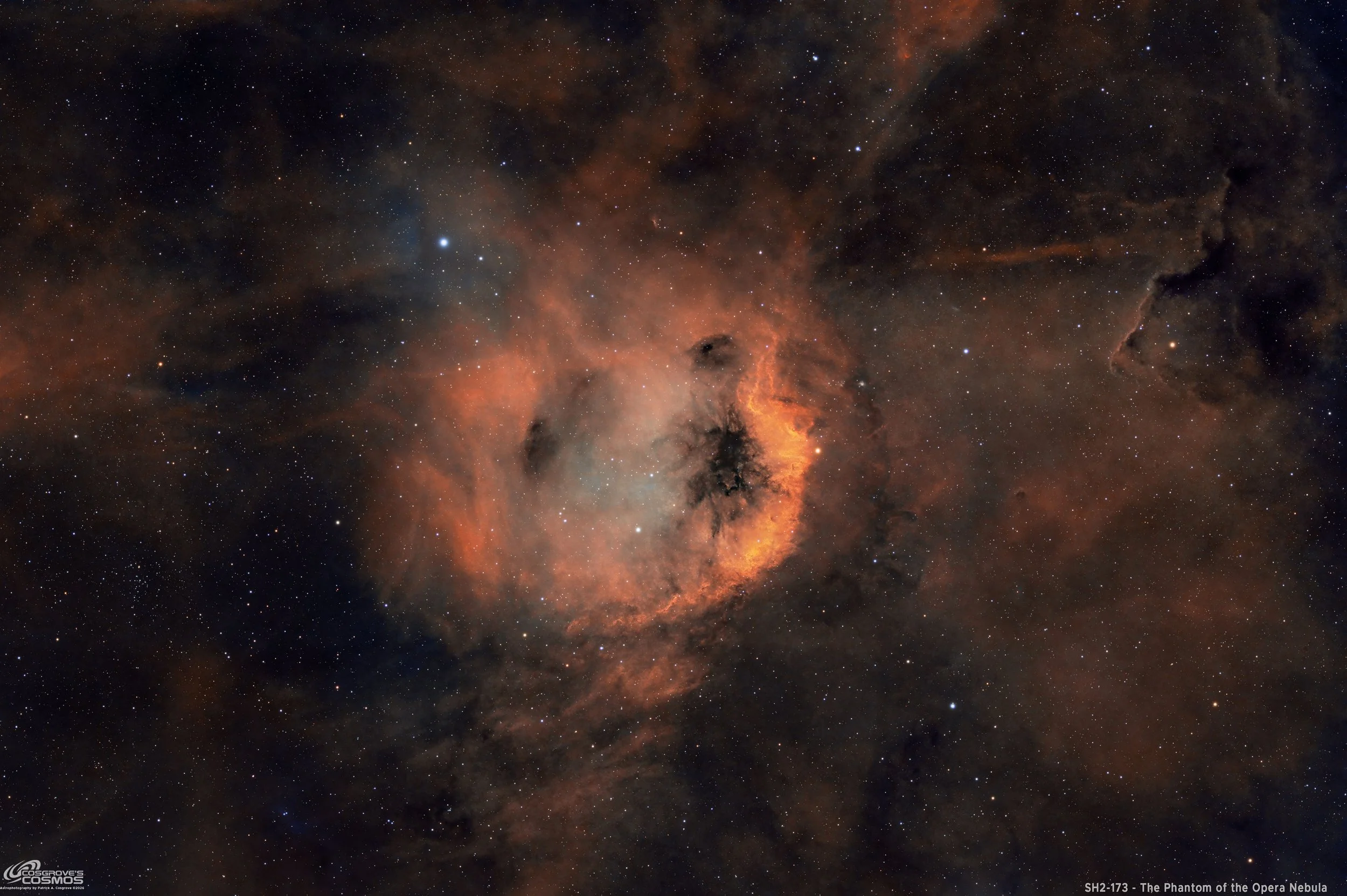
SH2-173 - The Phantom of the Opera Nebula | 15.77 hours of SHOrgb
A ghostly face emerges from the stars of Cassiopeia. Meet Sh2-173, the Phantom of the Opera Nebula, captured in 15 hours and 46 minutes of SHO narrowband and RGB imaging with my Astro-Physics 155mm refractor. Explore the glowing gas and dark dust behind the mask, the nebula’s history, and the evidence for a new generation of stars taking shape nearby—along with the capture details and processing behind the image.
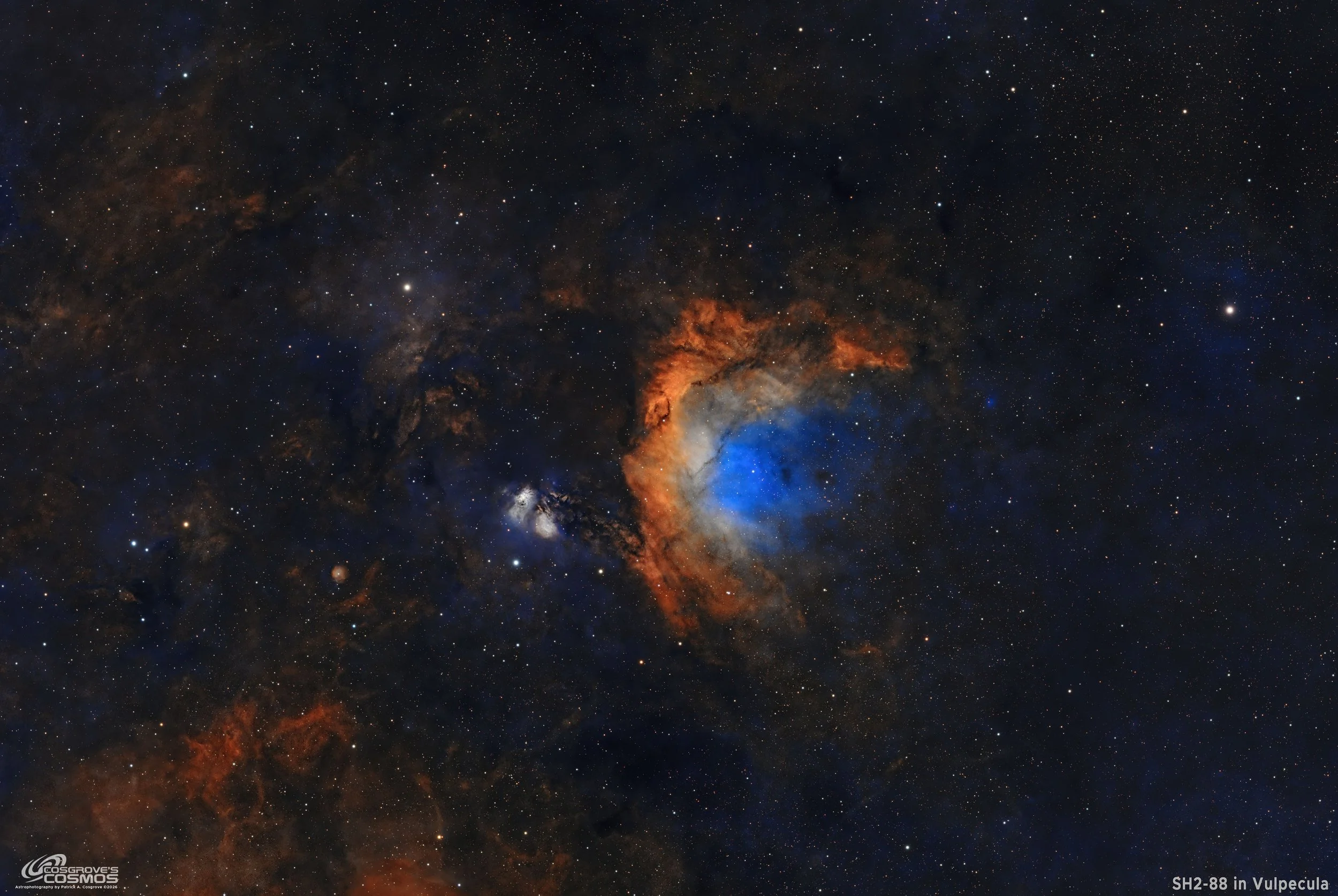
SH2-88 - A Tulip-Style Nebula in Vulpecula - 12.37 hours of SHO + RGB Stars
This project presents SH2-88, a complex star-forming region in Vulpecula approximately 7,500–7,800 light-years from Earth. The final image combines 12 hours 22 minutes of SHO narrowband data with RGB stars, captured over three nights using a William Optics FLT 132 refractor and ZWO ASI2600MM-Pro camera. The processing walkthrough follows the complete workflow—from calibration and channel combination through color development, star processing, and final refinement.
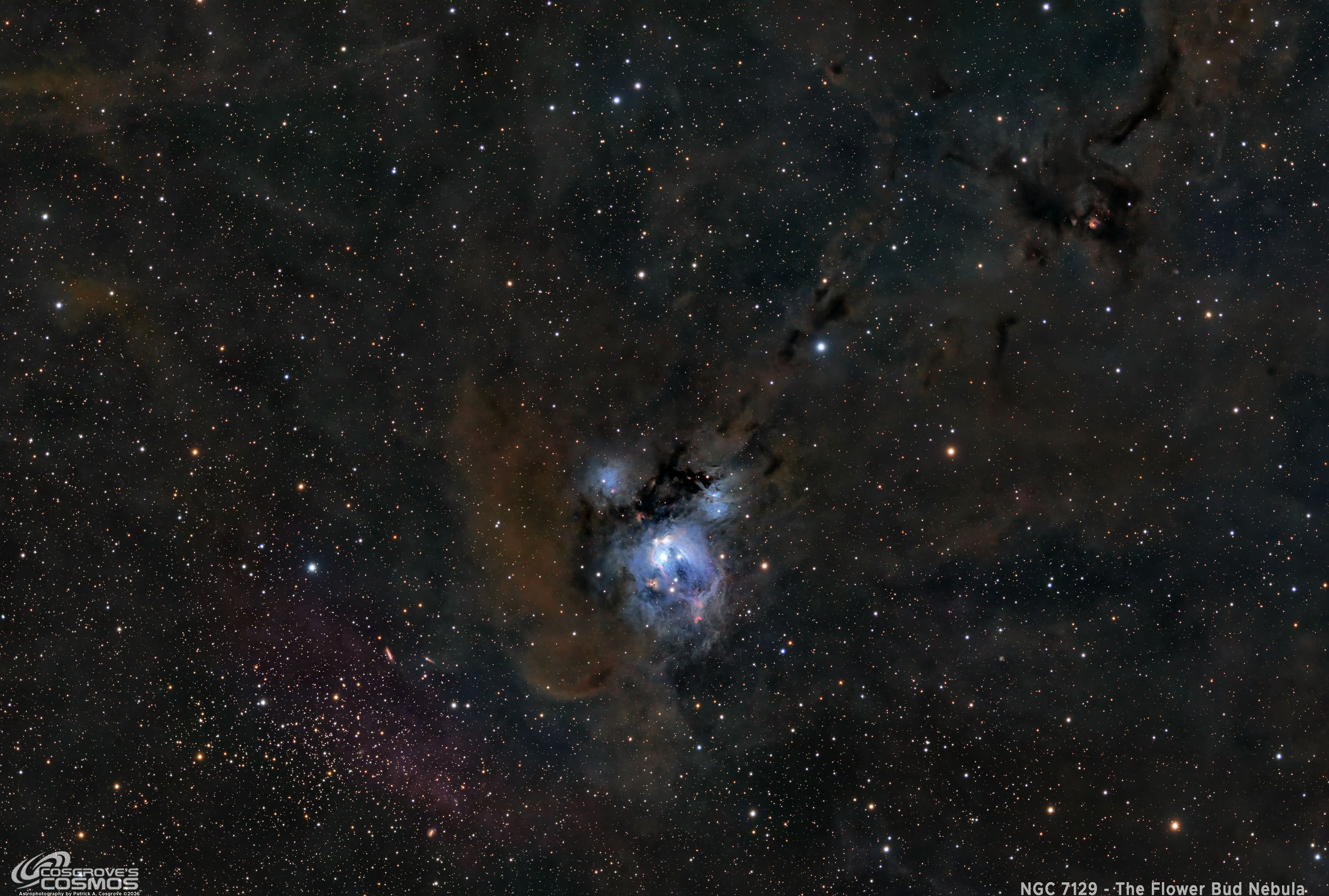
NGC 7129 - A Cosmic Rosebud! | ~14 hours of LRGB.
NGC 7129, the Flower Bud Nebula, is a young star-forming region in Cepheus where blue reflection nebulosity, dark molecular dust, and newborn stars share the same field. This 13-hour, 54-minute LRGB project captures the glowing central nebula, surrounding Cepheus dust clouds, and nearby clusters including NGC 7142, revealing a scene where starlight is just beginning to break out of the cloud that formed it.
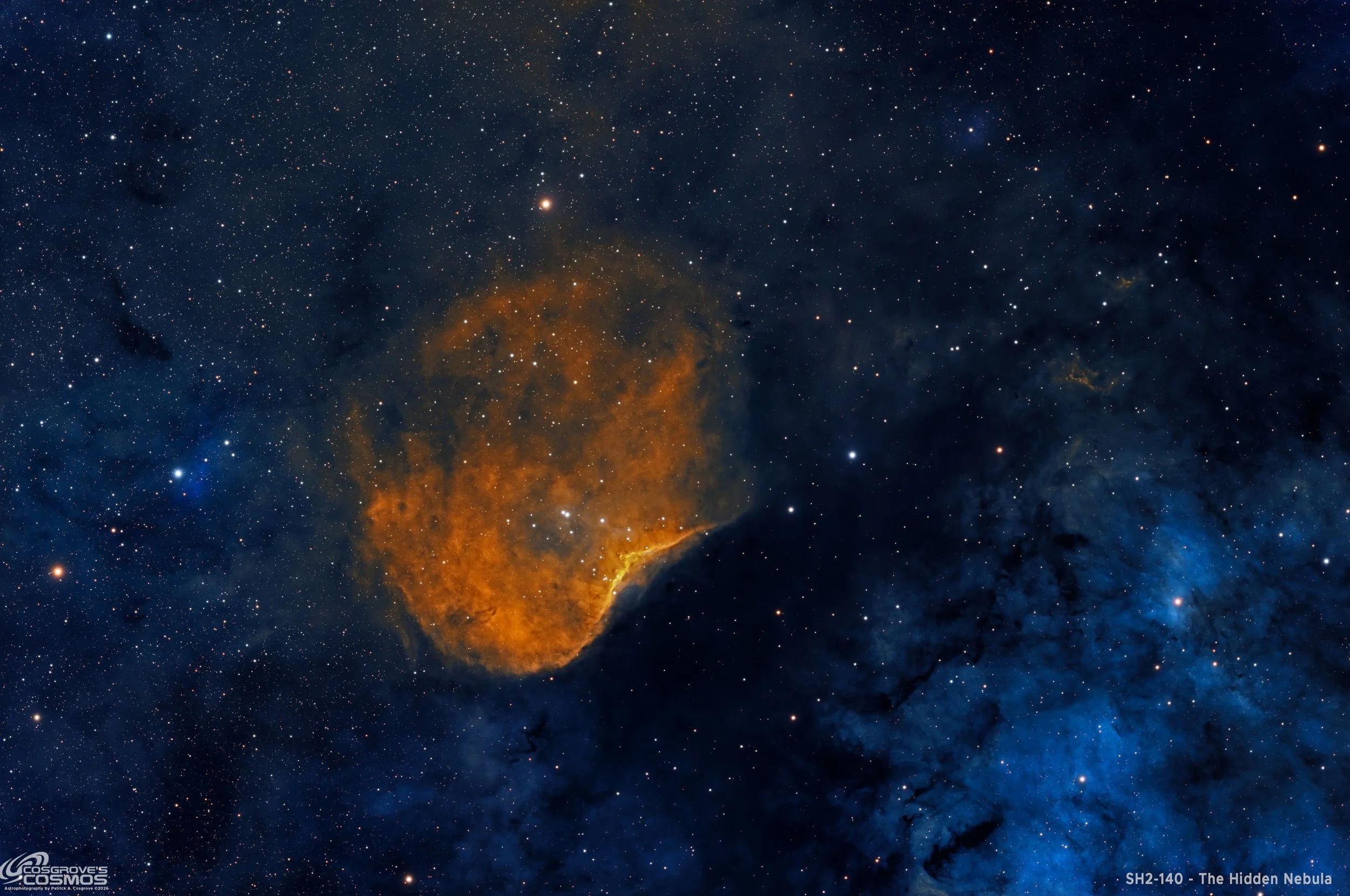
SH2-140 - The Hidden Nebula- 12.38 hours of SHO + RGB Stars
A wide-field view of the Sadr Region in Cygnus, combining 12 h 46 m of SHO narrowband data with RGB stars captured through the Askar FRA400 and ZWO ASI2600MM-Pro. This image reveals glowing emission nebulae, dark molecular clouds, young star clusters, and the bright foreground star Sadr along one of the richest stretches of the Milky Way.
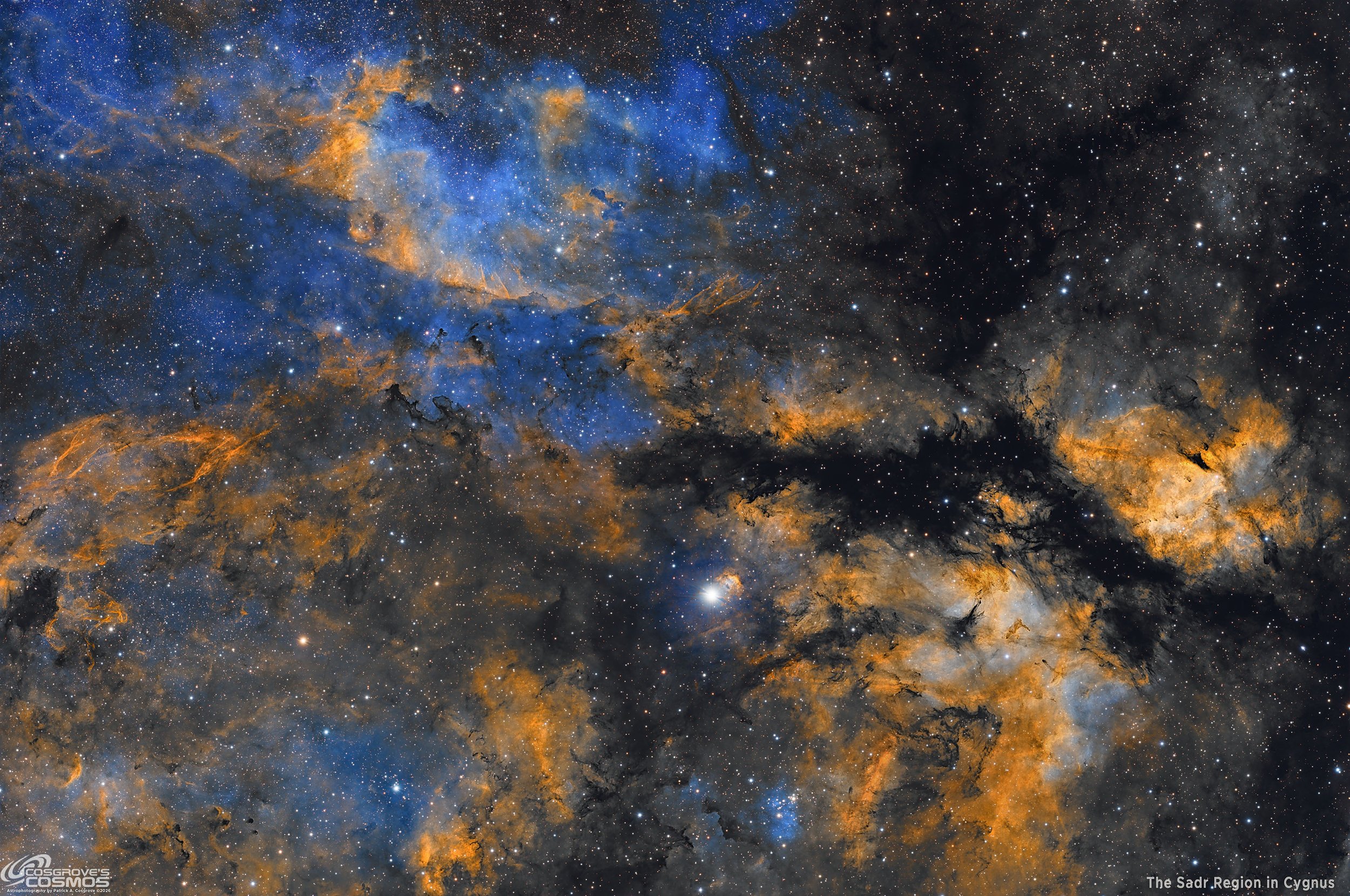
The Sadr Region of Cygnus: IC 1318 & Gamma Cygni Nebula - 12.75 hours of SHRrgb.
A wide-field view of the Sadr Region in Cygnus, combining 12 h 46 m of SHO narrowband data with RGB stars captured through the Askar FRA400 and ZWO ASI2600MM-Pro. This image reveals glowing emission nebulae, dark molecular clouds, young star clusters, and the bright foreground star Sadr along one of the richest stretches of the Milky Way.
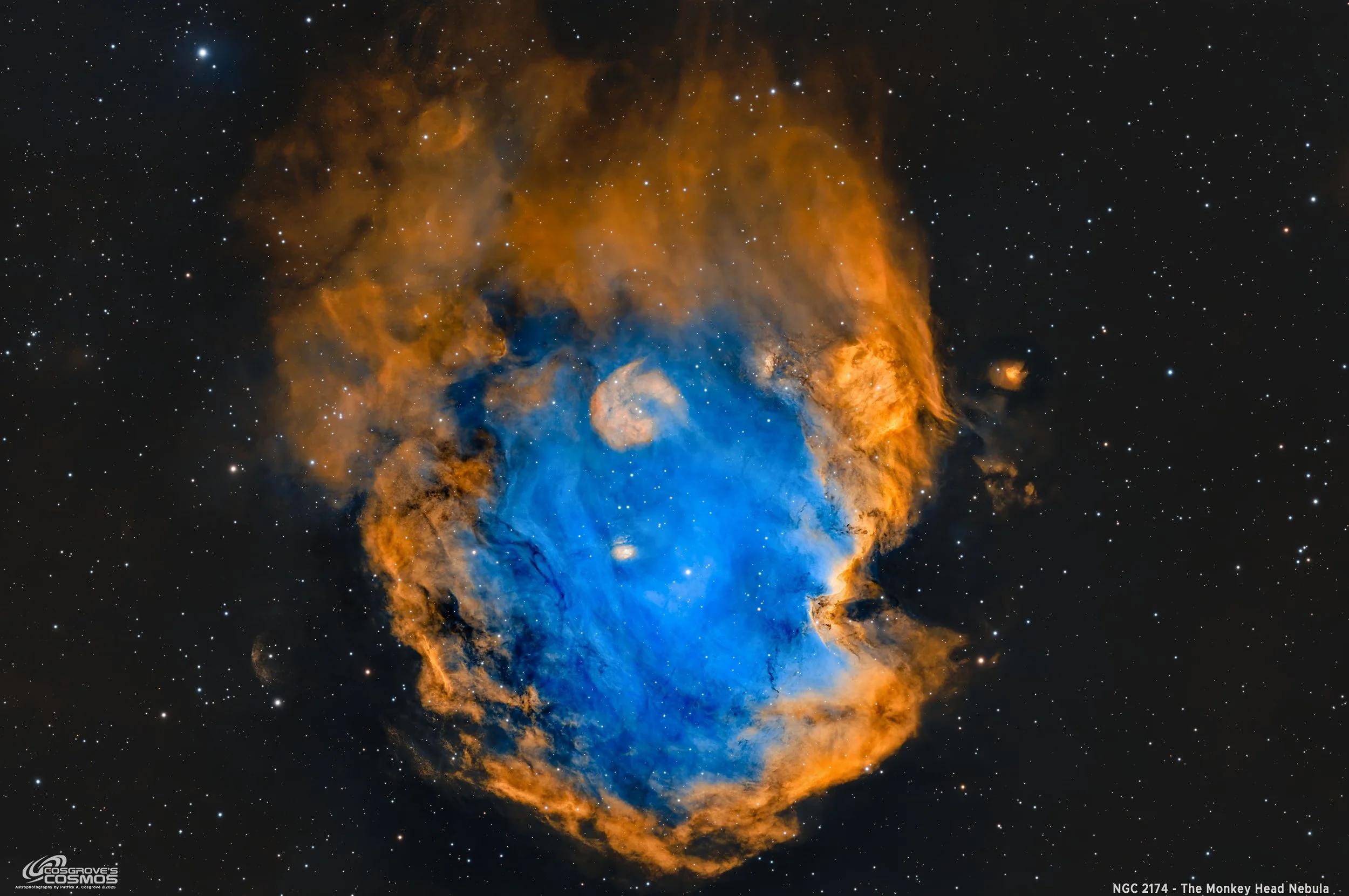
NGC 2174 - The Monkey Head Nebula - 5.1 hours SHO
NGC 2174 — the Monkey Head Nebula — is a luminous star-forming cloud in Orion, roughly 6,400 light-years away. In this project I captured the nebula in narrowband (Hα, OIII, SII), revealing glowing hydrogen arcs, oxygen-rich structure, and dark dust lanes sculpted by intense radiation from young, massive stars. The result is a high-contrast look at an active H II region where stellar feedback is actively reshaping its birth cloud.
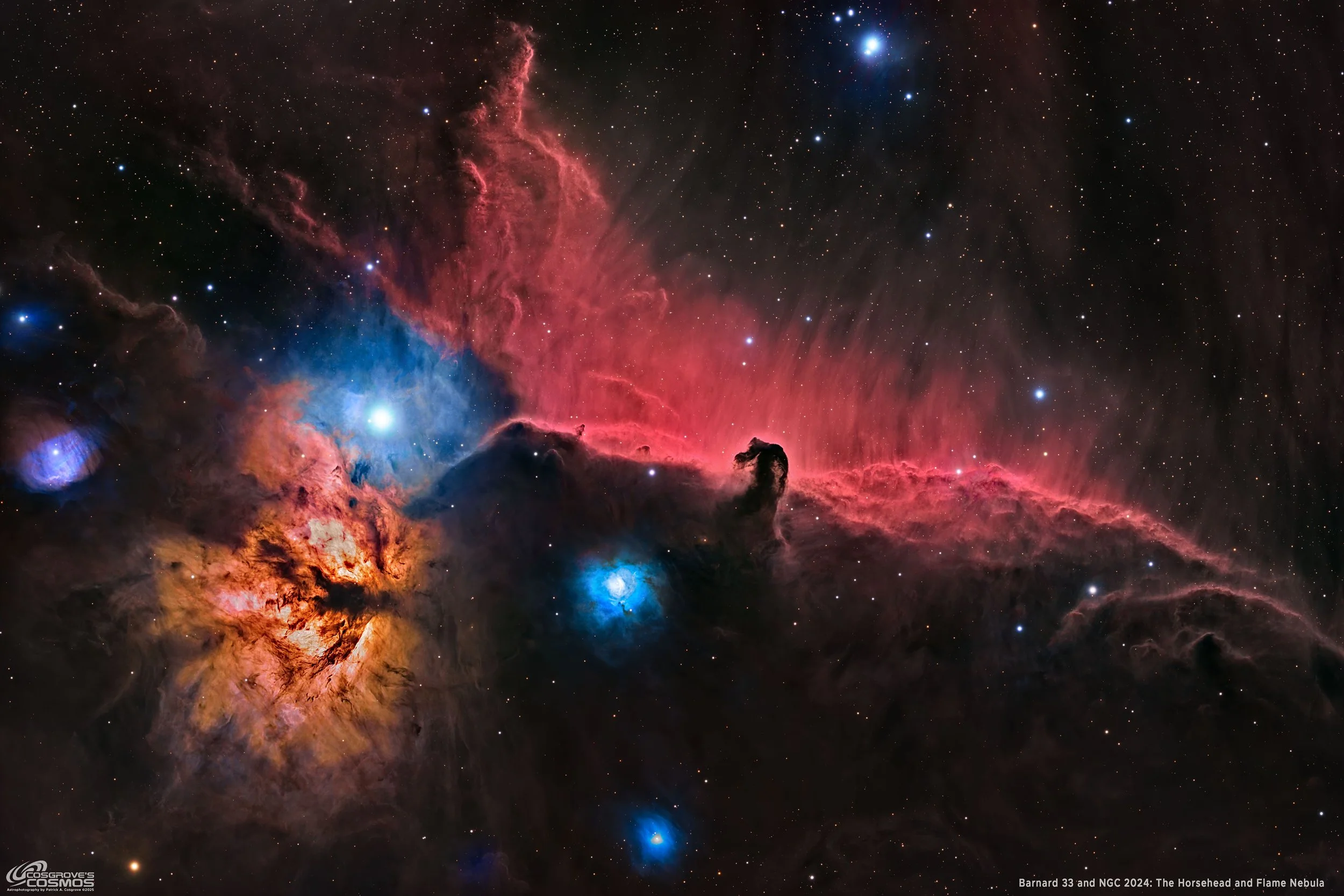
Barnard 33 & NGC 2024 - The Horsehead and Flame Nebula - 6 hours in HaLRGB
A new Orion classic from Whispering Skies Observatory: B33 (the Horsehead Nebula) silhouetted against IC 434, paired with NGC 2024 (the Flame Nebula) and its intricate dust lanes. Captured October 27–28, 2025 using LRGB + Hα for a total of 5 h 59 m 30 s, this project emphasizes clean star color and high-contrast dust structure while preserving the region’s faint, extended nebulosity.
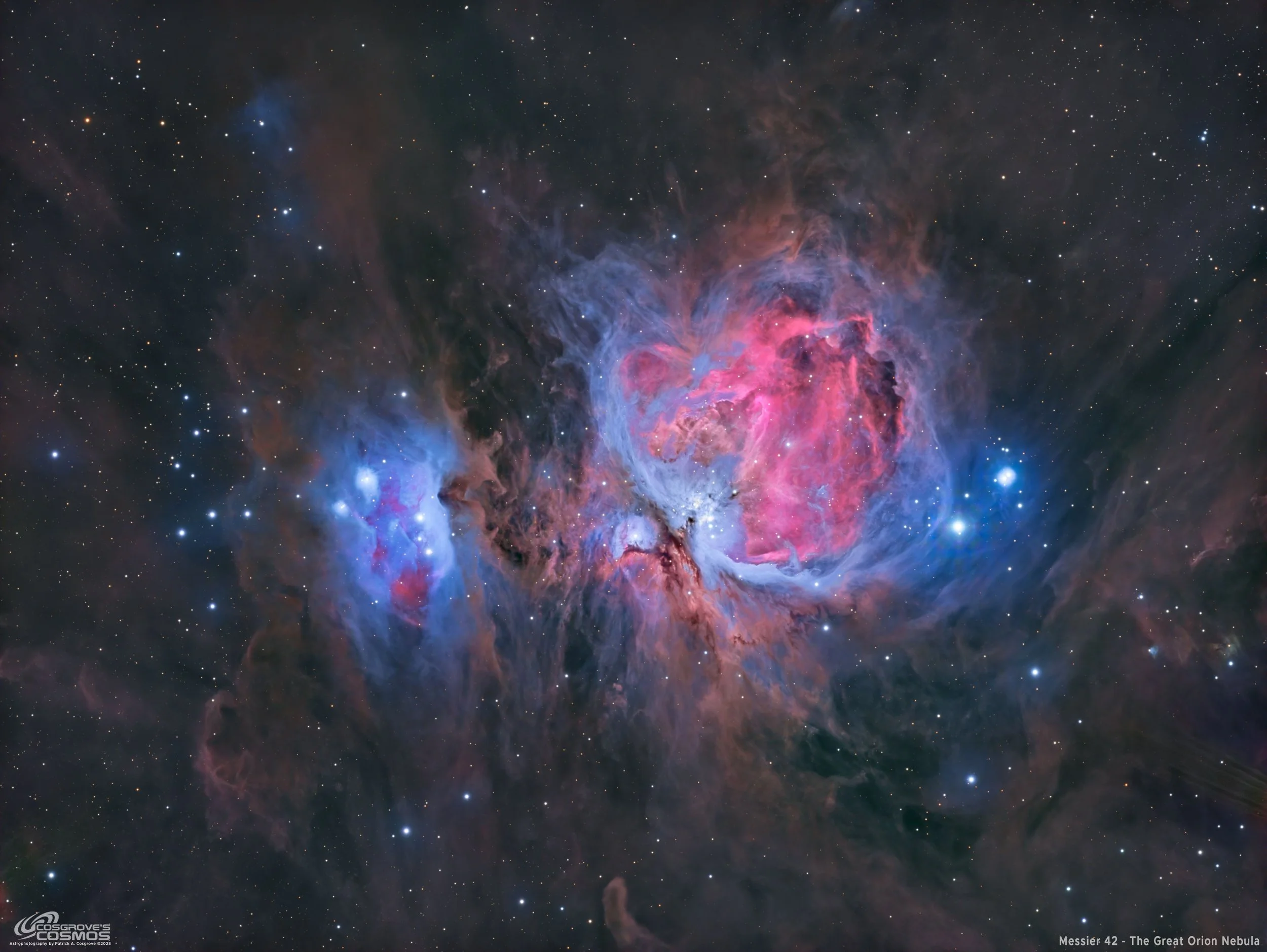
Messier 42/43 – The Great Orion Nebula - 6.35 hours in HaLRGB
Orion’s sword is one of the most famous regions in the night sky, and for good reason. This widefield take on M42/M43 and the Running Man blends short and longer RGB/L exposures with H-alpha to balance the bright core against the faint, sculpted outer nebulosity—an image that showcases both the beauty and the ongoing starbirth of our nearest major stellar nursery.

SH2-171 – The Teddy Bear Nebula - 33.5 Hours of SHO
This project explores Sh2-171, part of the NGC 7822 star-forming complex in Cepheus, a sprawling H II region about 3,000 light-years away where hot young stars are carving pillars and cavities into the surrounding gas. Captured over 33.5 hours in narrowband SHO with an Astro-Physics 130 mm Starfire and ASI2600MM-Pro, the image reveals the intricate structure and subtle filaments of this faint but remarkably active stellar nursery.

SH2-157 – The Lobster Claw Nebula - 34.5 Hours of SHOrgb! Plus The Bubble Nebula!
A 34.5-hour SHO+RGB portrait of Sh2-157 (the Lobster Claw) with the Bubble Nebula in frame—captured over five October nights with the FRA400/ASI1600 and processed in PixInsight; full workflow and annotations inside.

NGC 7380 – The Wizard Nebula Revisited - This time with 25 Hours of SHOrgb!
My Second Attempt - and my finest - with NGC 7380 - The Wizard Nebula.
This is the result of 25 hours of narrowband and RGB exposure on my Williams Optics 132 FLT APO platform, equipped with a 0.8 reducer and an ASI2600MM-Pro camera.
This was another image captured from my new observatory, which allowed for capture on marginal nights.
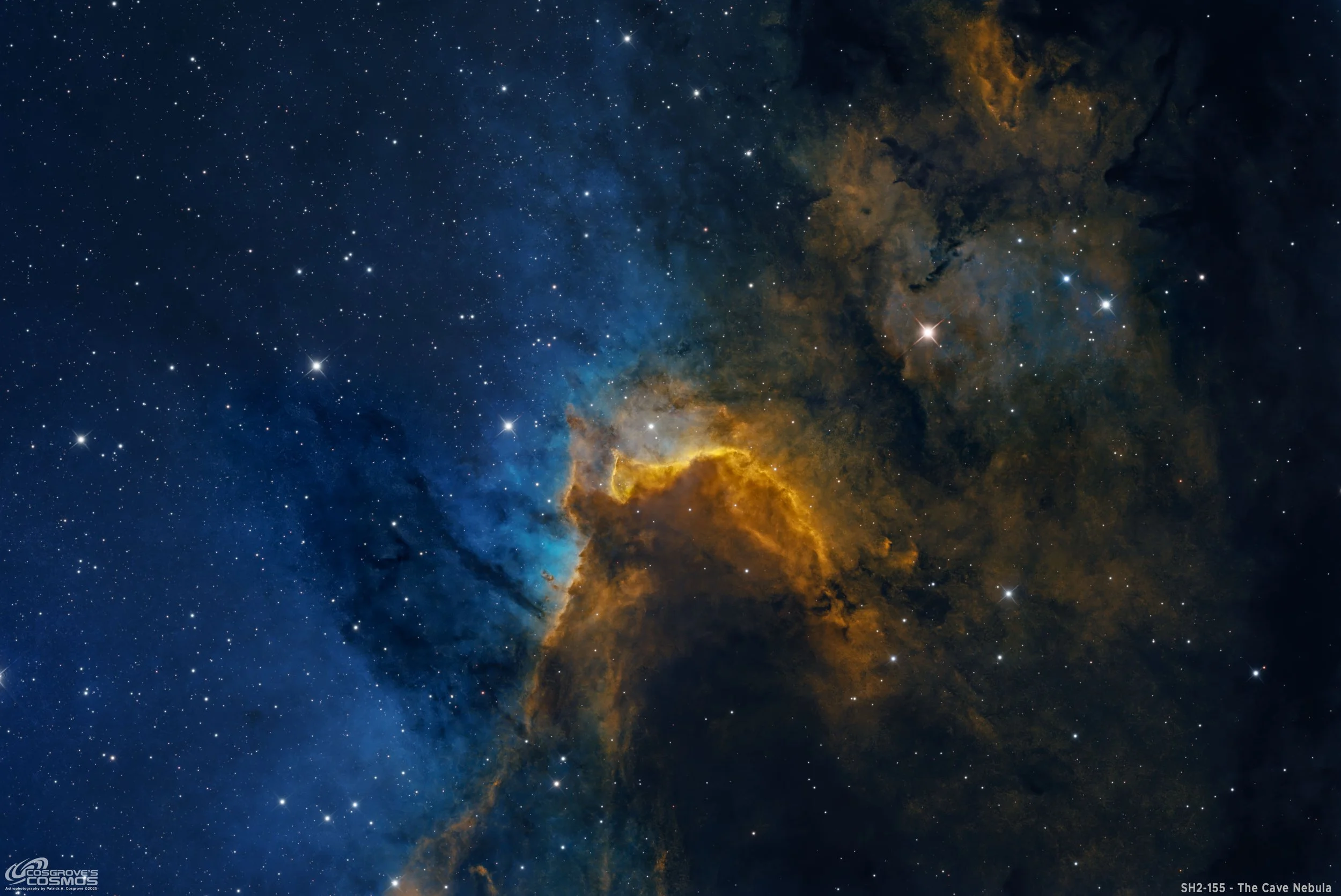
SH2-155 - The Cave Nebula 13.5 hours SHO (My 150th Project!)
After 5 years, I revisited SH2-155 - The Cave Nebula, this time gathering 13.5 hours narrowband data. This was shot with my new galaxy scope and the resulting colors really pop and dark dust is very mysterious looking!
This data was collected over three nights at the end of August 2025.
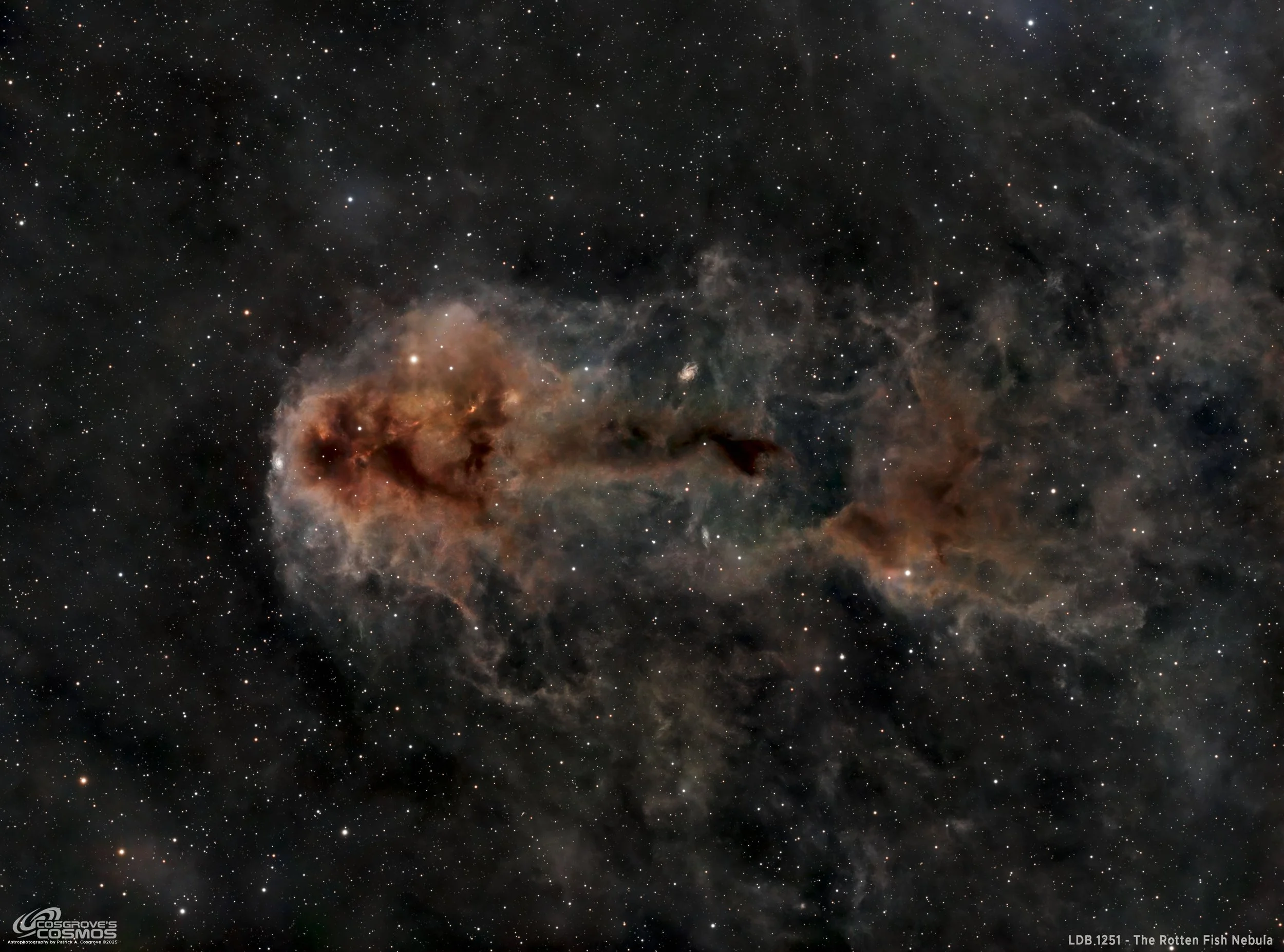
LDN 1251 - The Rotten Fish Nebula (18.9 hours LRGB)
My second dark nebula image ever!
This image results from 19 hours of LRGB exposure with my FRA400 scope.
This was a challenging image to process as the nebula was so tenuous. I also had to deal with microlensing effects on the bright stars due to the ASI1600MM-Pro sensor.
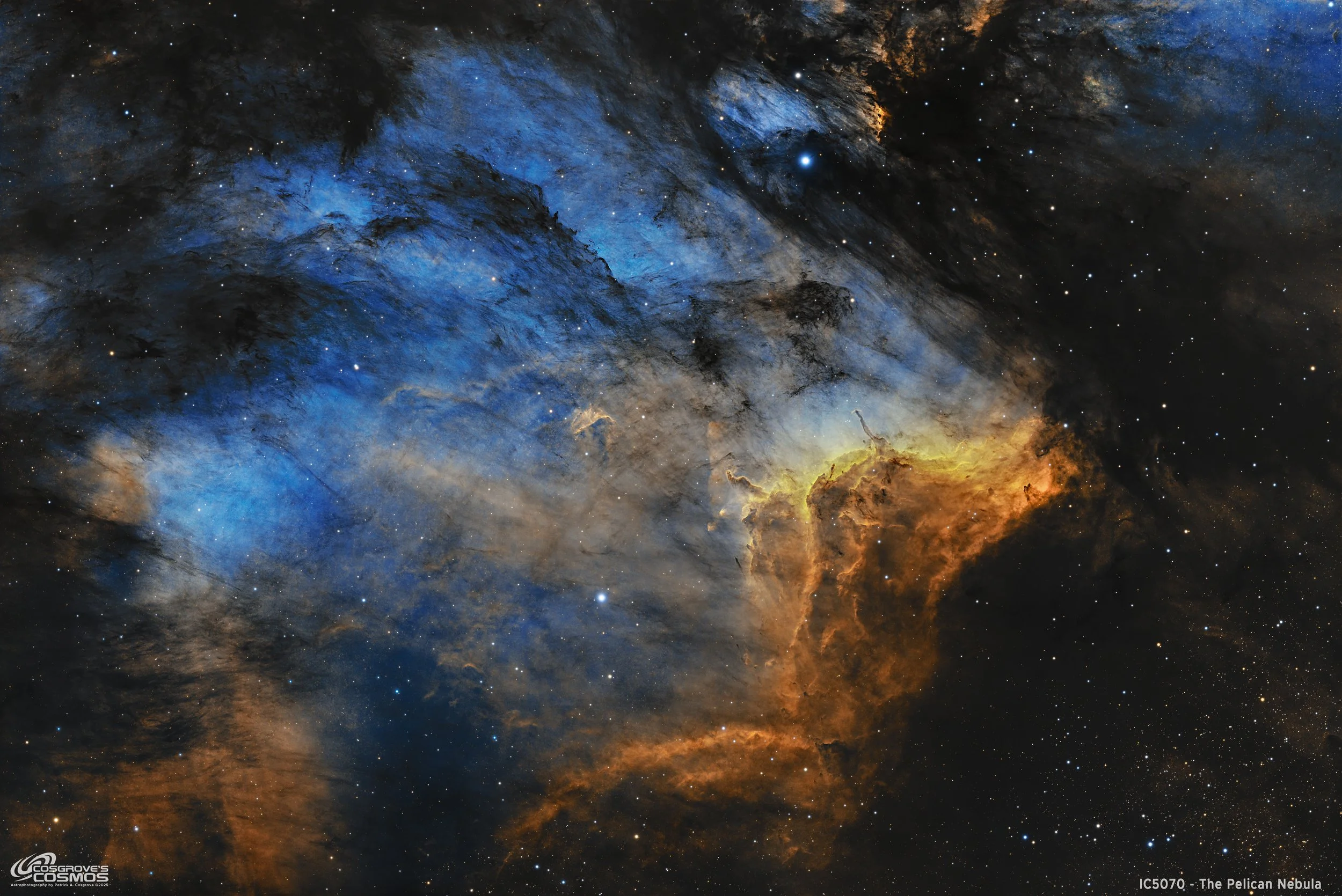
IC 5070 - The Pelican Nebula! 18.75 hours of SHO (my longest integration yet!)
My third attempt - and my finest - at IC 5070 - The Pelican Nebula.
This is the result of almost 19 hours of narrowband exposure on my Williams Optics 132 FLT APO platform with a 0.8 reducer and an ASI2600MM-Pro camera.
This was another image that was captured from my new observatory tht allowed capture on marginal nights.

SH2-124 - The Hidden Nebula (~14.2 hours in SHOrgb)
SH2-124 is a rich region of stars, dark dust, and emission nebulae located about 8,500 light-years away in the constellation of Cygnus.
This image is the result of 14.2 hours of SHOrgb data collection with my small Akskar FRA400 telescope platform.

IC 5068 - The Forsaken Nebula and the “Black Waterfall”- (11.9 hours in SHOrgb)
Astrobin Top Pick Nominee!
IC 5068 is a very faint nebula that is part of the North American/Pelican Nebula region and is often passed over for these brighter nebulae. But this region is a beautiful piece of the sky in narrowband!
Shot with my AP130 Platform with ~12 hours of SHO and RGB-Stars capture.

NGC 6543 - The Cat’s Eye Nebula w/ NGC 6522 (14.6 hours in LRGB)
This image of NGC 6543 - The Cat’s Eye - is the result of 14.6 hours of LRGB data captured with my Sharpstar SCA260V2 Platform. It was a faint and challenging object that also had very bright portions. This made it one of the most challenging targets I have processed yet. I must have reprocessed that data 8 or 9 times before I ended where I did. Was this the best image I could get from that data? I don’t think so. In the end, the effort exhausted me and I was ready to move on!!
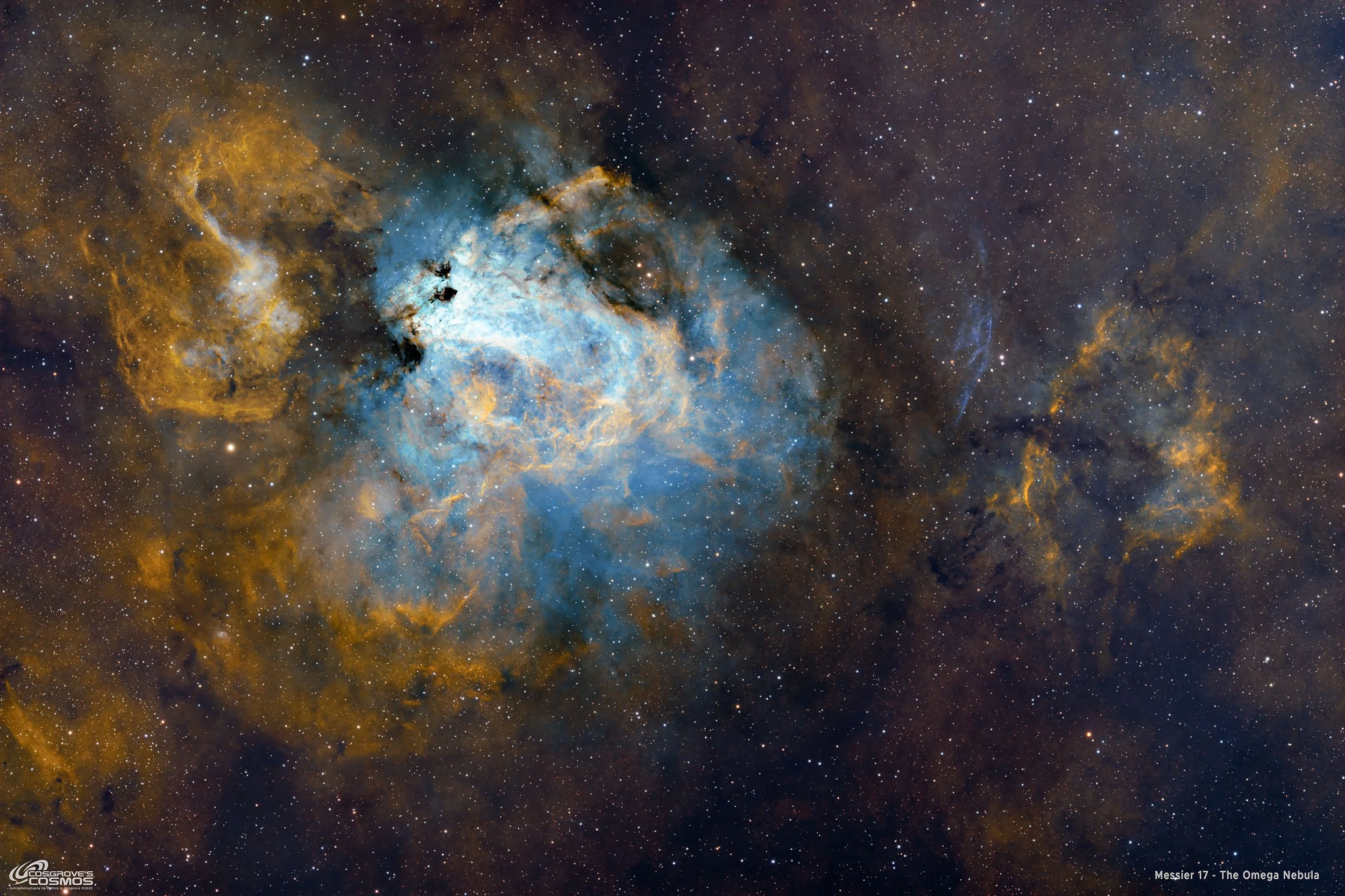
Messier 17 - The Omega Nebula - Victory After Heartbreak! (17 hours SHOrgb on M17!)
Messier 17, The Omega Nebula, is a bright and popular target in the summer constellation of Sagittarius.
This image is the result of 17 hours of SHOrgb exposure on my William Optics 132 LFT platform.
The narrowband view of this shows the target in a way that is not often seen.
Considering that this project started with three nights of exposure, where 2 of the nights had all of the frames out of focus, I am really happy with the final results.
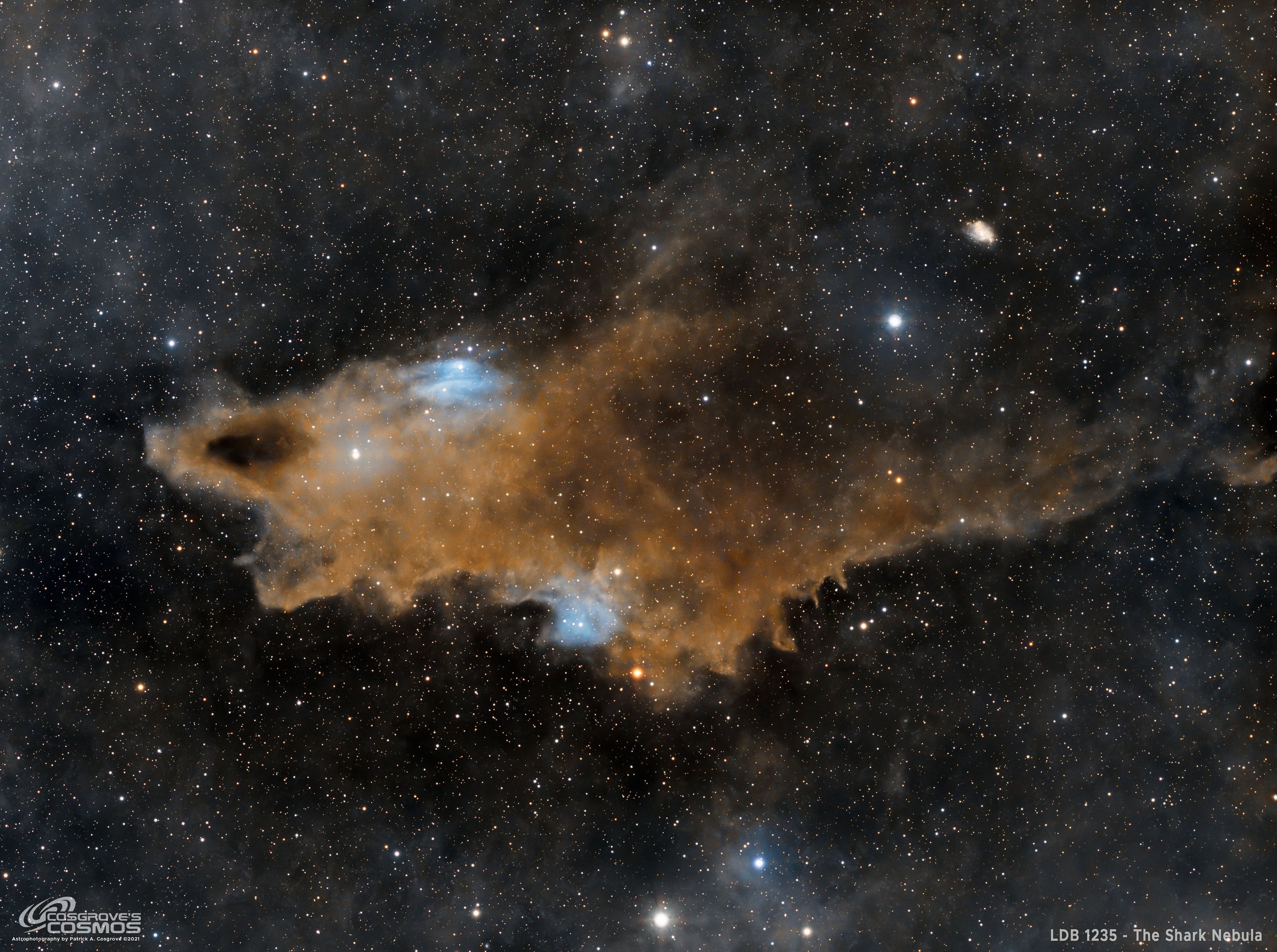
LDN 1235 - The Shark Nebula - My 1st Attempt at a Dark Nebula (7.4 hours LRGB)
My first dark nebula image!
This image results from 7.4 hours of LRGB exposure with my FRA400 scope.
This was a challenging image to process as the nebula was so tenuous. I also had to deal with microlensing effects on the bright stars due to the ASI1600MM-Pro sensor.
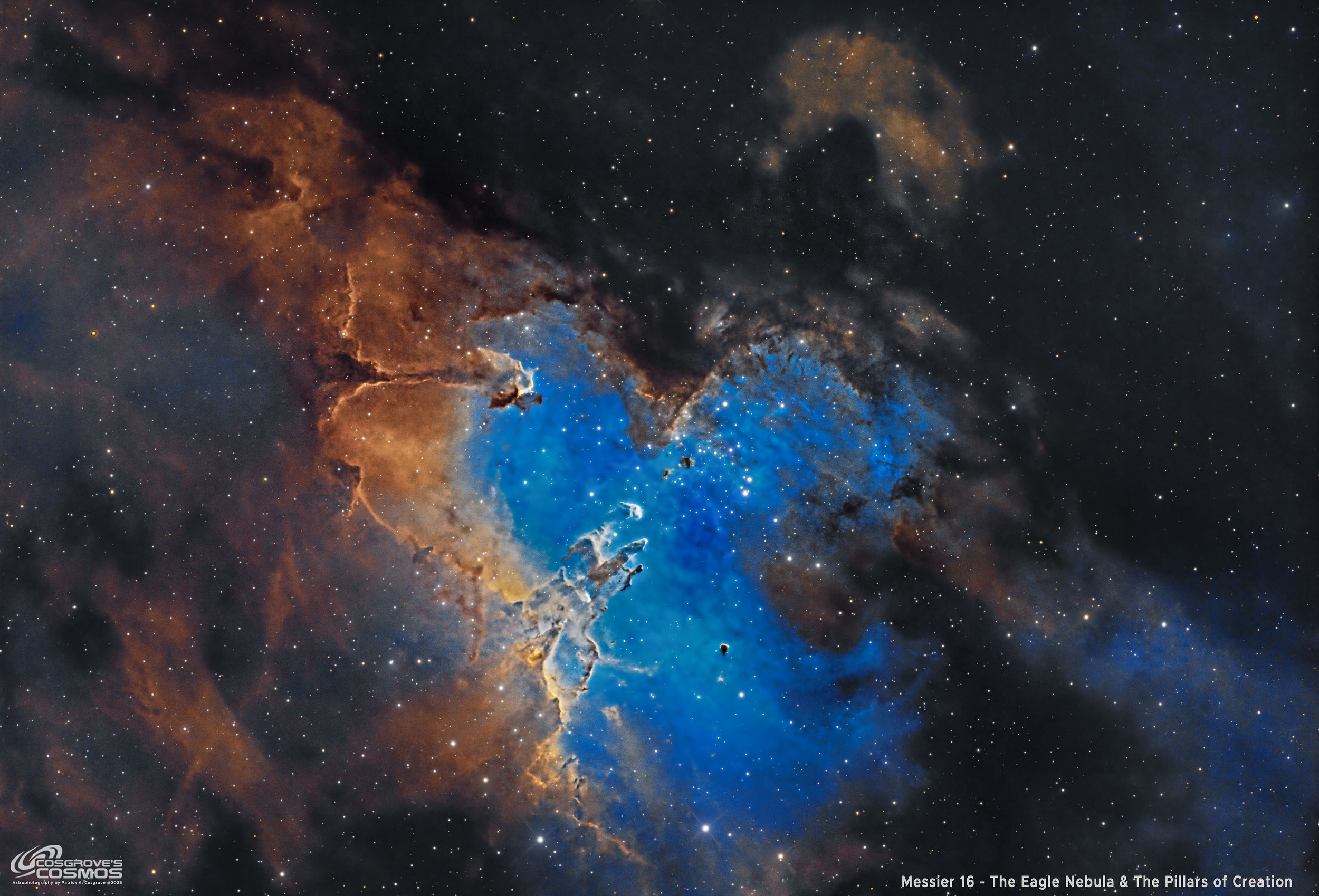
Messier 16 - The Eagle Nebula/The Pillars of Creation, 4.75 hours in SHO (A Narrowband Test of the SCA260 Scope)
This was a quick test to see how the Sharpstar SCA260 V2 scope did with a narrowband target. Selected was Messier 16, centered on the Pilrs of Creation. This was the result of 4.75 hrs of data collected on a very hot night, with the camera only getting to -10C.
Processing was a challenge due to Star Removal blemishes and some optical artifacts on some bright stars.
See the full report for details.