Imaging Projects
In this blog, I will share the results of all of my imaging projects. The newest will be at the top and the oldest will be further down the stack. Going back in time here is interesting - some of my early stuff was pretty rough - but I did not see it that way at the time - I was thrilled to get anything back that looked like an image! Hopefully, you will see how my work has progressed with time!
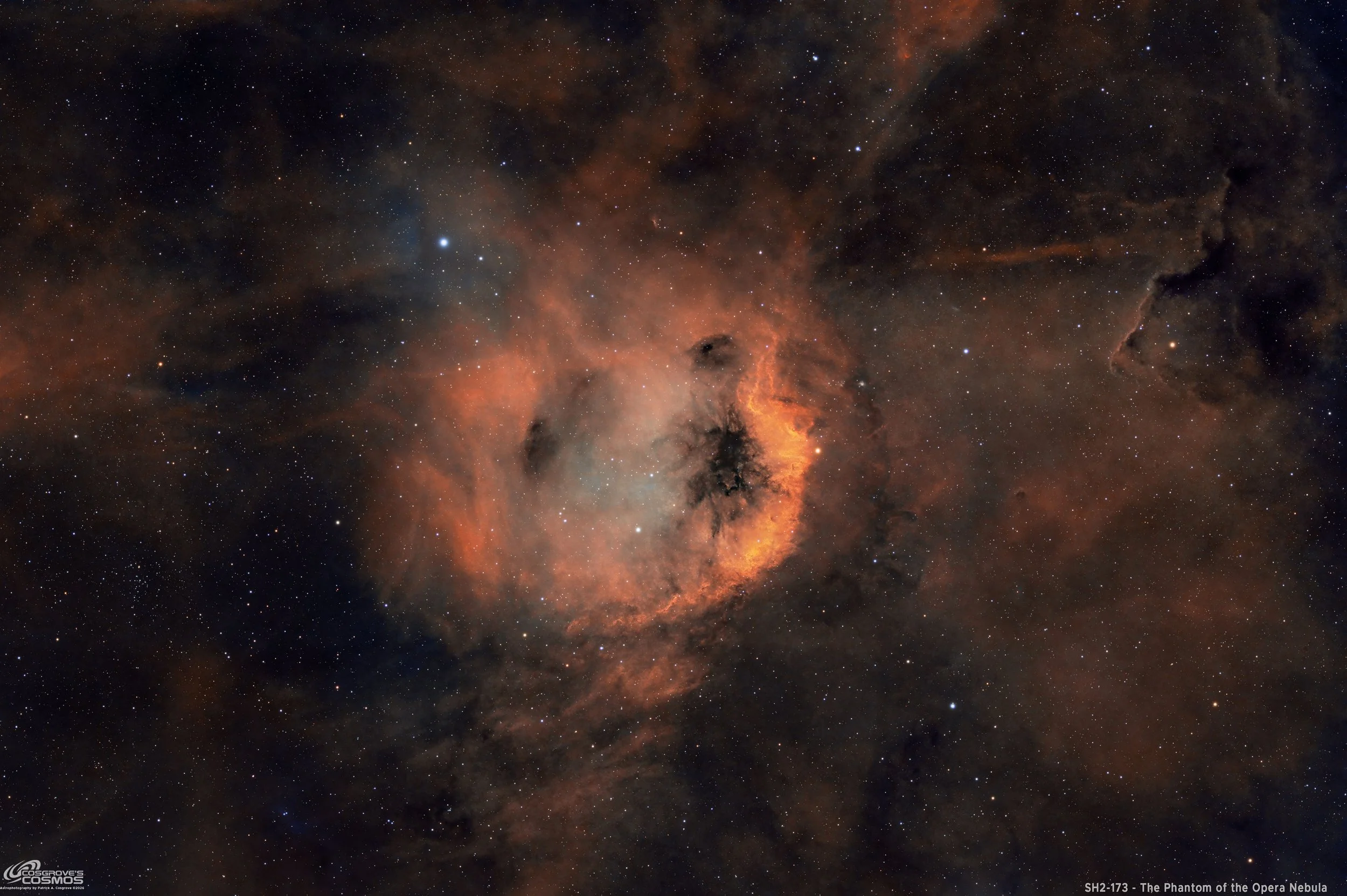
SH2-173 - The Phantom of the Opera Nebula | 15.77 hours of SHOrgb
A ghostly face emerges from the stars of Cassiopeia. Meet Sh2-173, the Phantom of the Opera Nebula, captured in 15 hours and 46 minutes of SHO narrowband and RGB imaging with my Astro-Physics 155mm refractor. Explore the glowing gas and dark dust behind the mask, the nebula’s history, and the evidence for a new generation of stars taking shape nearby—along with the capture details and processing behind the image.

SH2-157 – The Lobster Claw Nebula - 34.5 Hours of SHOrgb! Plus The Bubble Nebula!
A 34.5-hour SHO+RGB portrait of Sh2-157 (the Lobster Claw) with the Bubble Nebula in frame—captured over five October nights with the FRA400/ASI1600 and processed in PixInsight; full workflow and annotations inside.
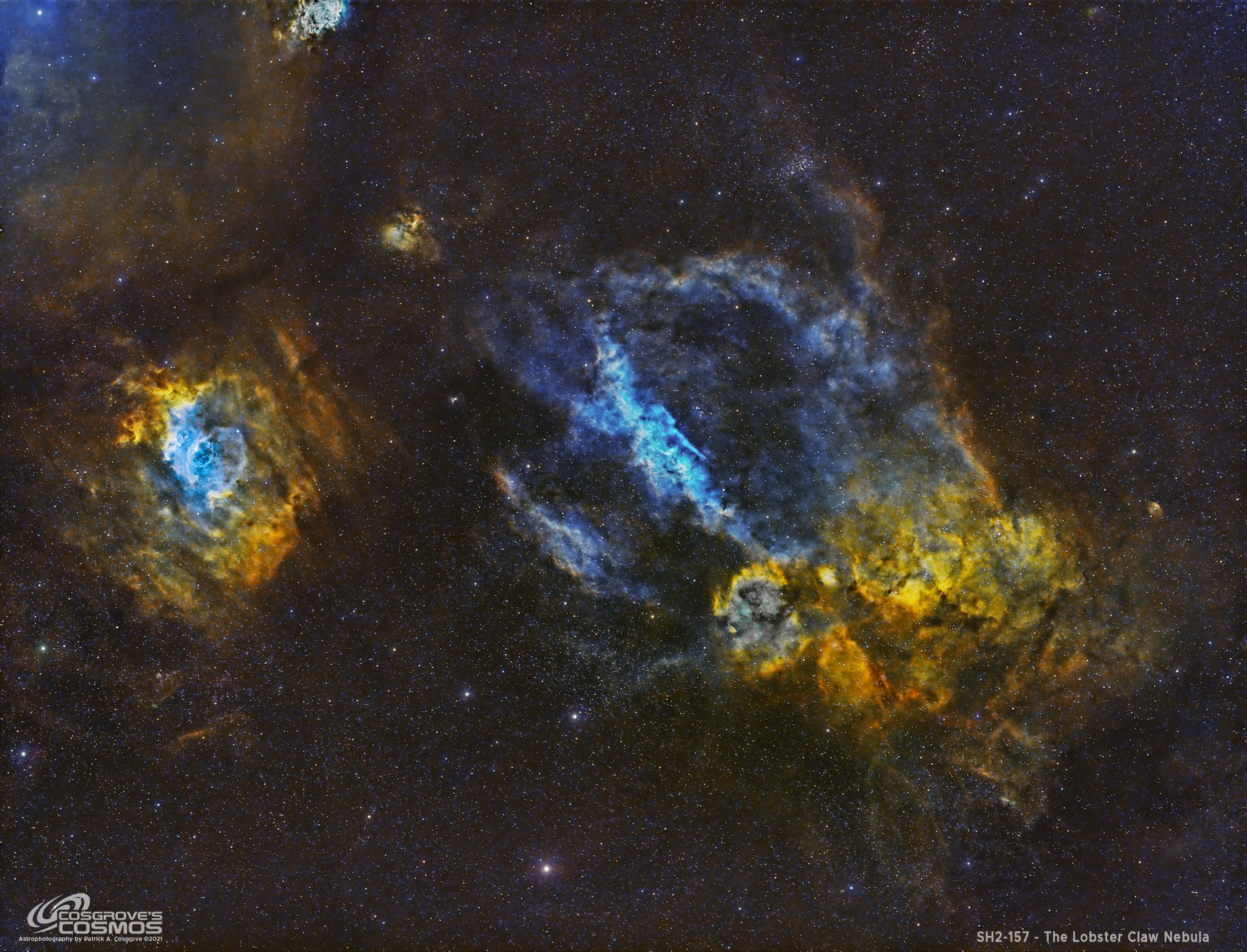
A Reprocess of SH2-157, The Lobster Claw Nebula - 4.25 hours in SHO.
SH2-157, The Lobster Claw Nebula, is located 11,000 light-years away in the constellation of Cassiopeia. This is a Reprocess Project - working with data in 2024 that was captured in 2021. I wanted to see if I could improve on this image. I think I did!
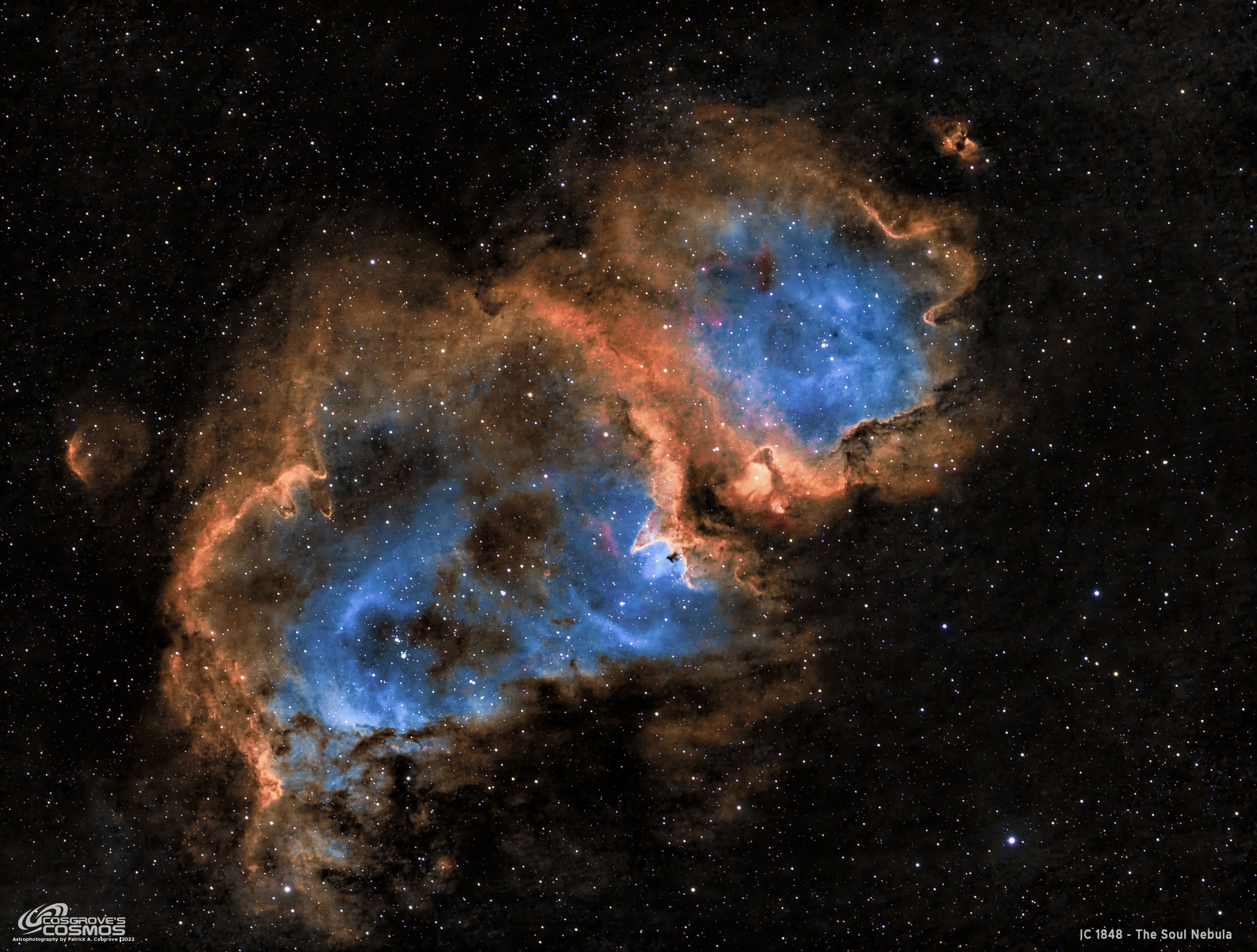
IC 1848 - The Soul Nebula - 6.8 hours in SHO (and a Change in Horses Mid-Stride!)
IC 1848, Better known as The Soul Nebula, is an emission nebula located 6,500 light-years away in the cancellation of Cassiopeia.
This image results from 6.8 hours of narrowband data collected with my Askar FRA400 Astrograph and my ZWO classic ASI1600MM-Pro camera on the nights of Oct 20 and 22 and Nov 23 of 2022.
The first two nights were collected using the IOPtron CEM26 mount, and the third night was collected using a brand new ZWO AM5 Harmonic mount. This was the first time using the AM5, and it did an exceptional job with tracking errors reduced by 400%!
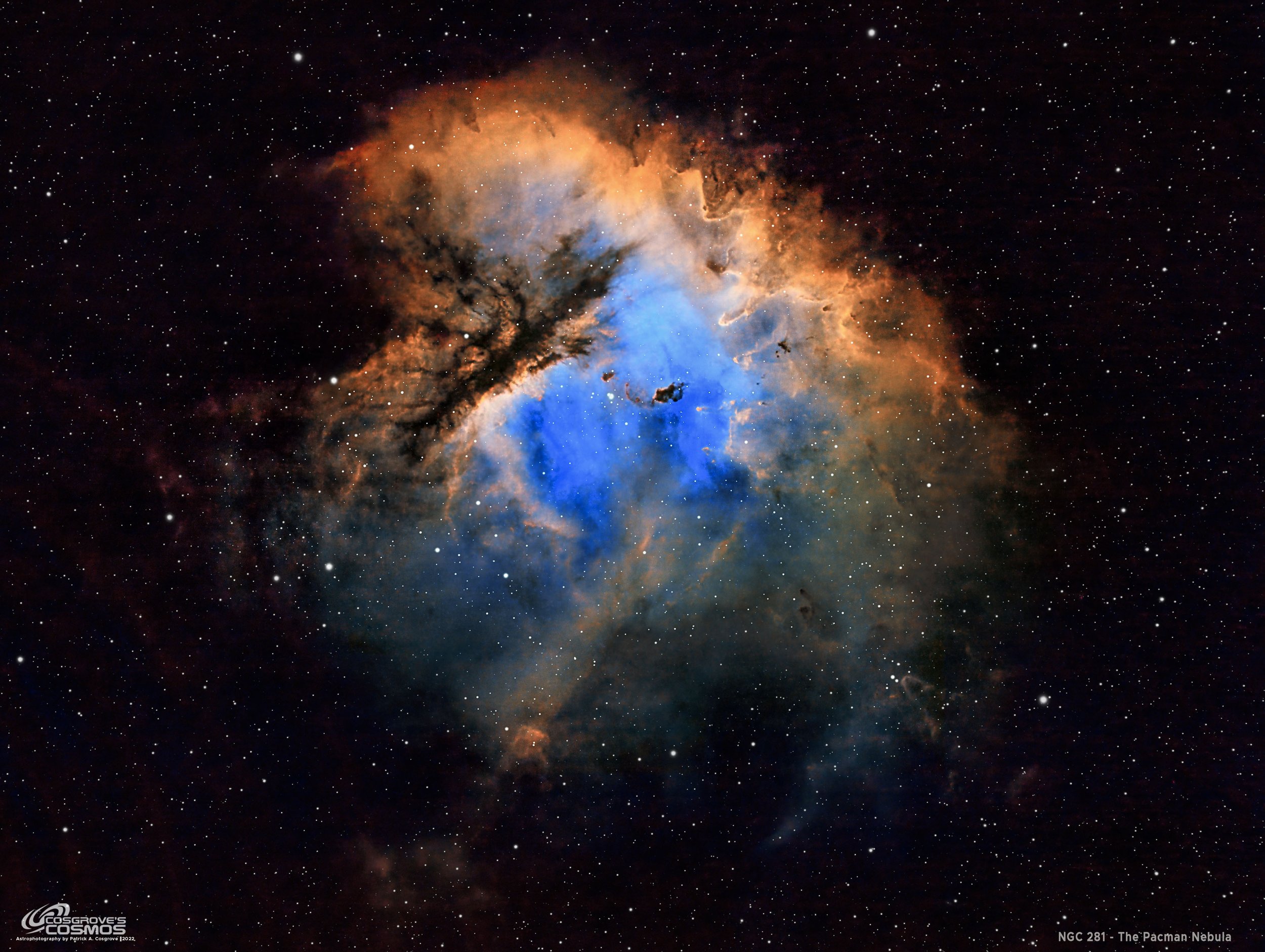
NGC 281 - The Pacman Nebula - 8 hours in SHO (Fighting a Strange Artifact!)
NGC 281, better known as the “Pacman” Nebula, is located 9,500 light-years away in the constellation of Cassiopea.
This was the second time I shot this target. This image is the result of 8 hours of narrowband data rendered in the Hubble SHO palette.
This data was collected on my Astro-Physics 130mm f/8.35 APO refractor, and a ZWO ASI2600MM-Pro camera - all mounted on my IOptron CEM 60 Mount.
This image suffered from a strange circular artifact that took the form of nested rings in the corner of the image. Dealing with this caused me to make my background sky a bit darker than I would have preferred, but I think the image has a certain amount of drama and pop because of it!
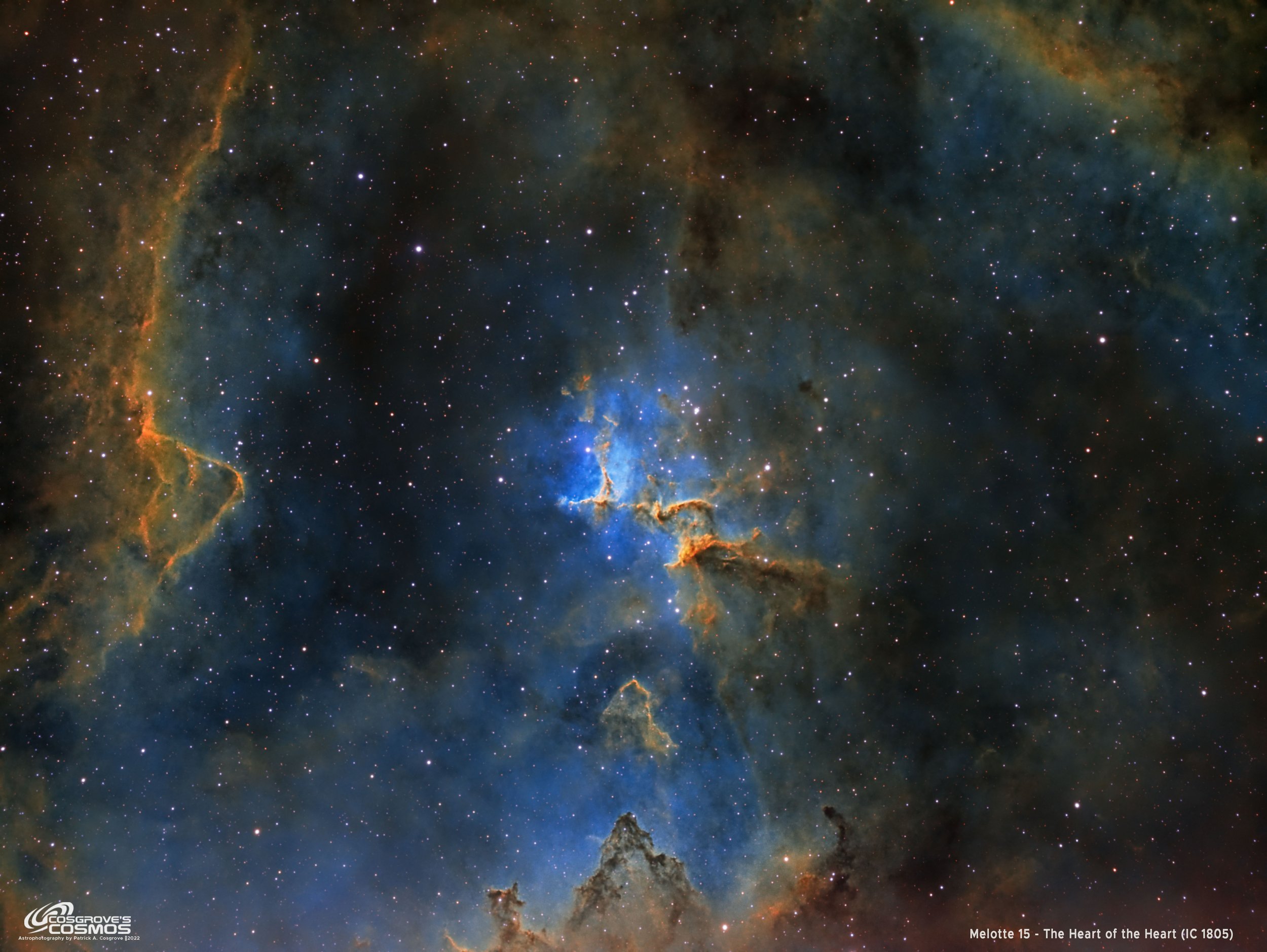
Melotte 15 - The Heart of the Heart Nebula (IC 1805) - 5.5 hours of SHO
Melotte 15, better known as the “Heart of the Heart,” is an open cluster with emission and reflection nebulae that creates an interesting structure that can be found in the center of IC 1805 - the Heart Nebula.
This rich region is located about 7,100 light-years from Earth in the constellation of Cassiopea.
This is image is the result of 5.5 hours of narrowband data collected on my William Optics 132mm FLT platform using a ZWO ASI1600MM-Prop camera.
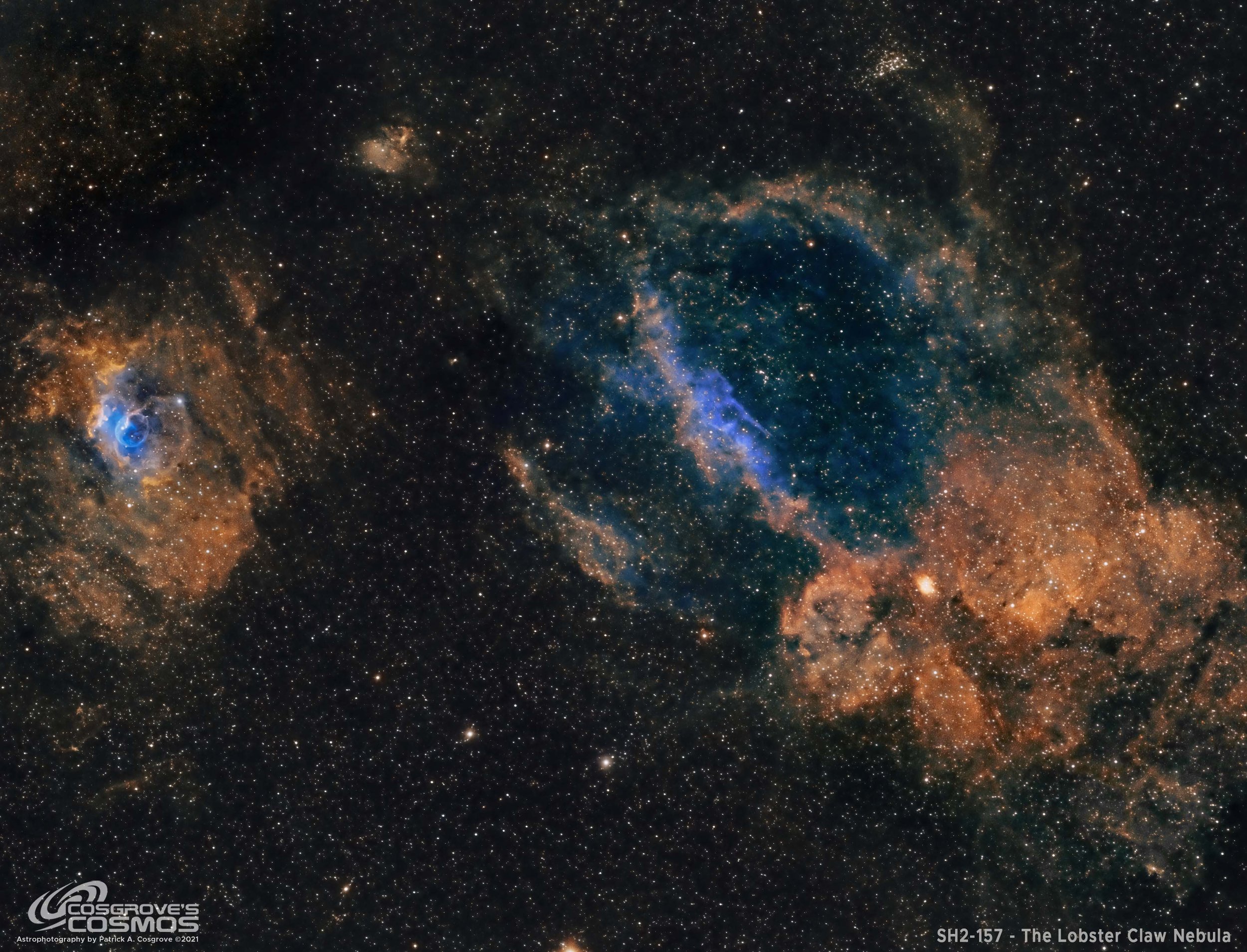
SH2-157 The Lobster Claw Nebula - with NGC 7635 (The Bubble Nebula) in SHO - 4.25 hours.
SH@-157, The Lobster Claw Nebula, is located 11,000 light-years away in the constellation of Cassiopeia. A faint object, this was captured on the night of November 8th when I hoped to have two more nights of clear weather. That did not happen and this image was created with only 4.25 hours of data. I hope to revisit this object, collect more hours and do it justice. This was shot on my wide-field FRA400 rig and is rendered in the Hubble SHO palette.
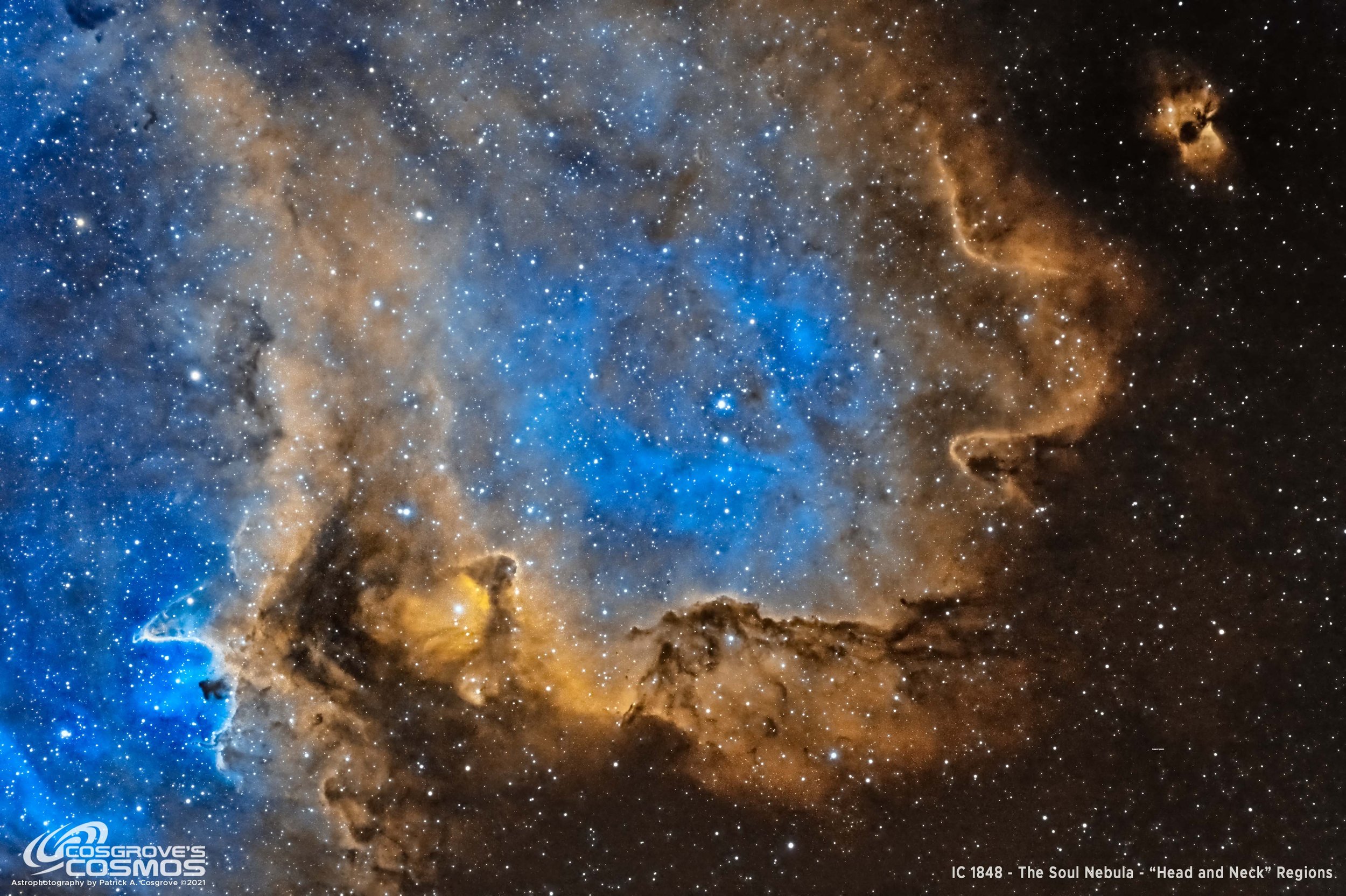
IC 1848 - The Soul Nebula - Only 2 Hours of NB Data from an Abandoned Project
IC1848, known as the Soul Nebula, is located ~6500 light-years away in the constellation Cassiopeia. This is image was from an aborted project. I only captured 2 hours of NB data when the weather turned and I lost my shooting window. I had so little data I abandoned the project and did not even capture cal data for it! But I decided to use the data to test out a newly built image processing computer and was surprised the image tuned out better than I have imagined (at least it was not horrible!)
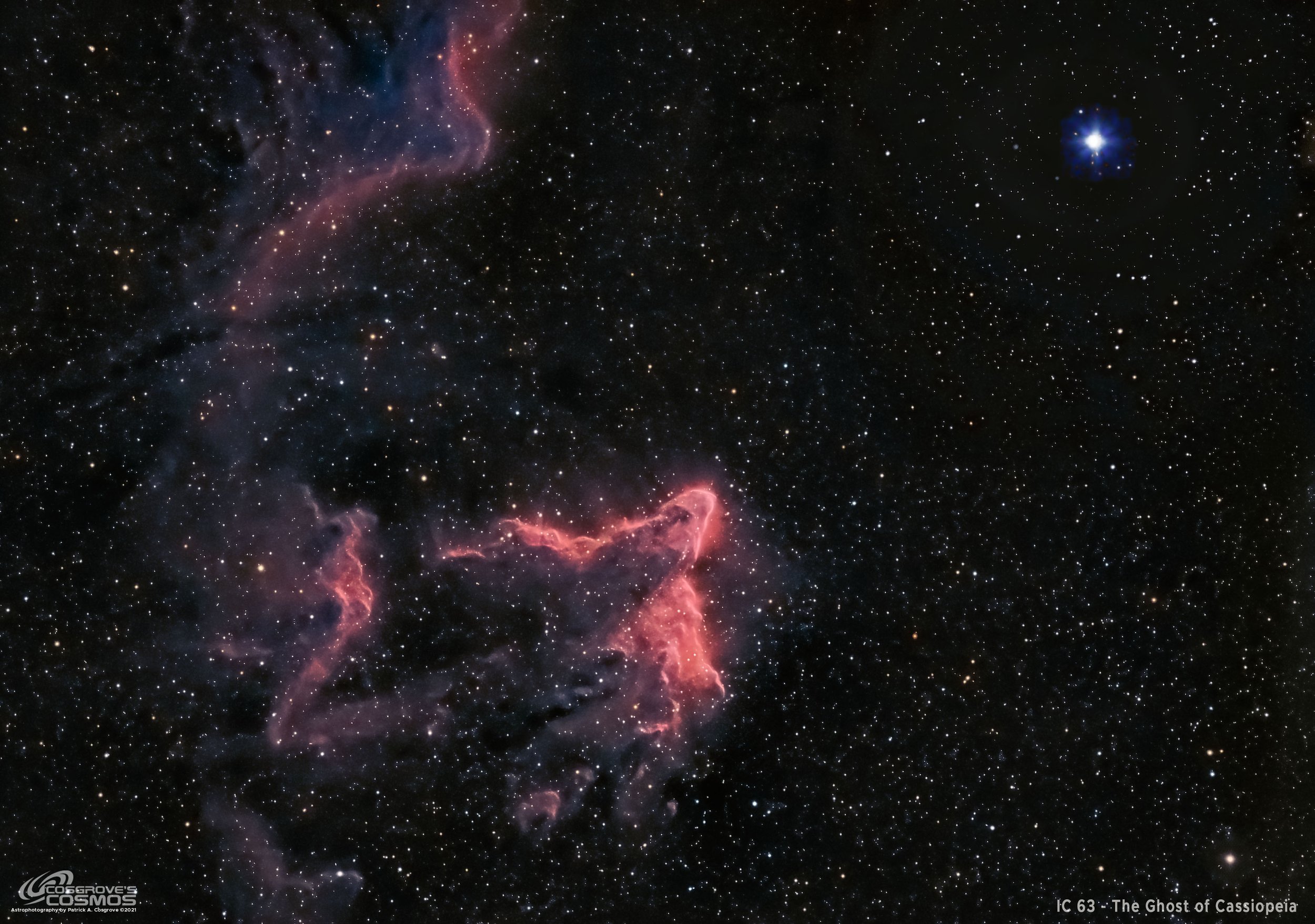
IC 63 - “The Ghost of Cassiopeia” in LHaRGB, ~10 hours
Located in 550 light-years wat in the constellation of Cassiopeia, IC 63 is known as the Ghost of Cassiopeia. This HII region is blasted by the Bright Star Gamma Cassiopeia which is located only 4 light-years from the nebula.
This is mage is the result of almost 10 hours of integration - unfortunately - the data had several significant issues that made processing very difficult. While the final image is far from perfect, it was clearly a case of making a silk purse from sow’s ear!
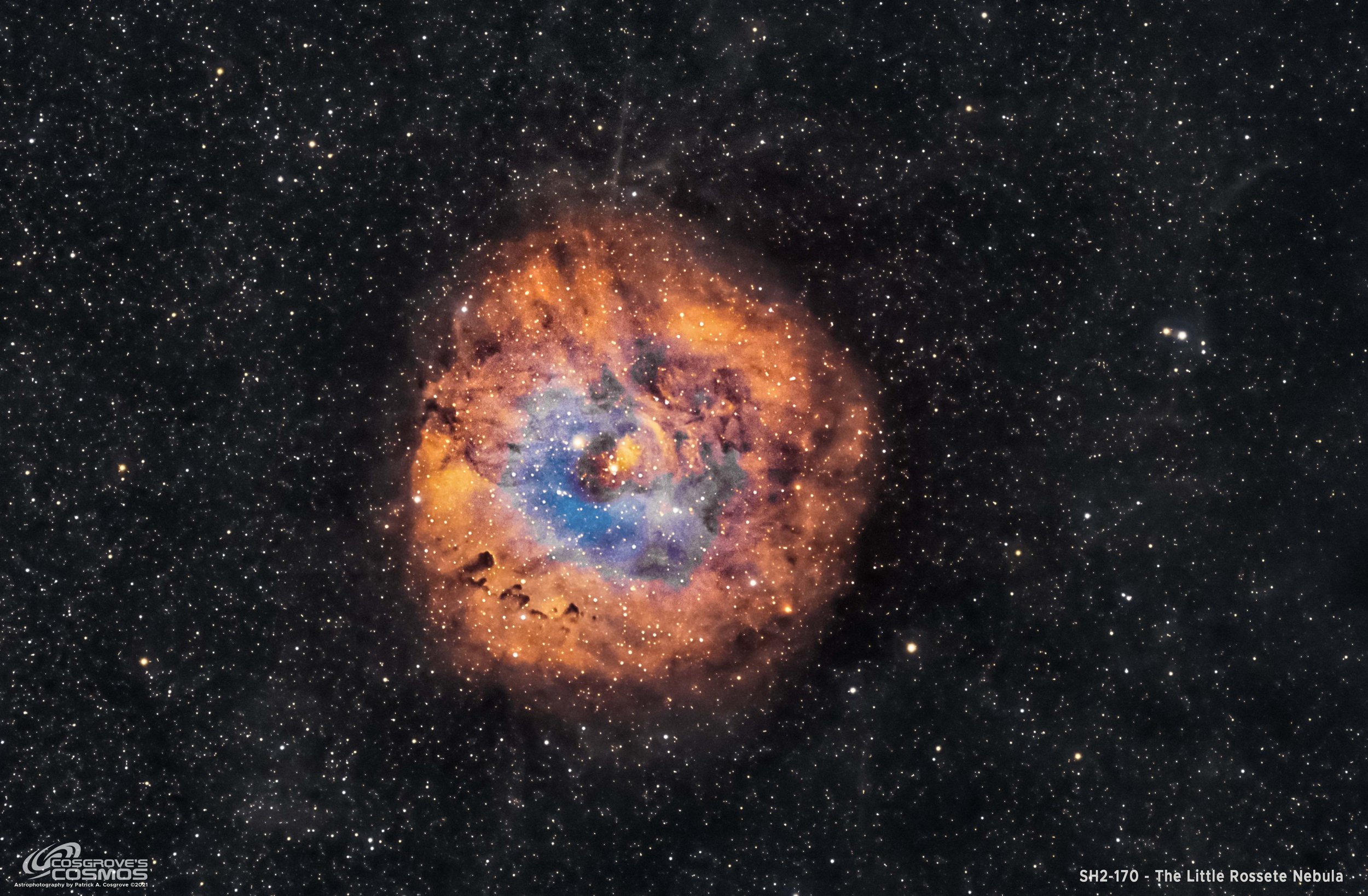
SH2-170, The “Little Rosette” Nebula in SHO - 7 hours.
SH2-170, also known as the “Little Rosette Nebula,” is a rich H2 region located 7500 light-years away in the constellation of Cassiopeia. This was shot in narrowband with total integration of 7 hours.
This was shot with the AP130 platform using the ZWO ASI2600MM-Pro Camera.
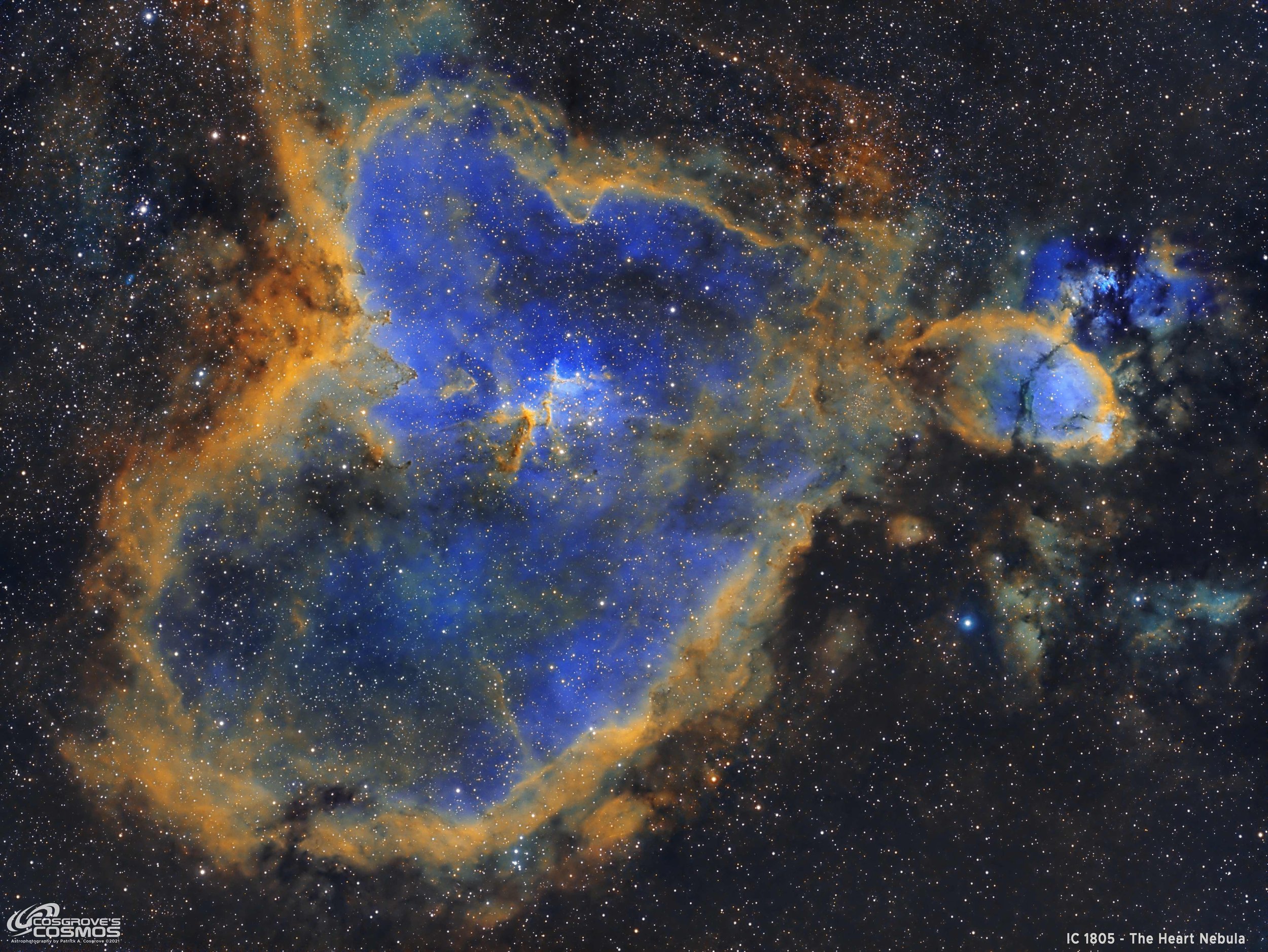
IC 1805 - The Heart Nebula in SHO - 11.5 Hours
IC 1805 is also known as SH2-190 and more commonly as the Heart Nebula. It is located 7500 light-years away in the constellation of Cassiopeia. First discovered by William Herschel in 1787, the Heart Nebula is a region of glowing gas and dark dust lane.
This is a result of a 11.5 hour exposure on my widefield shot taken on my portable FRA400 camera platform - processed using the Hubble SHO palette.
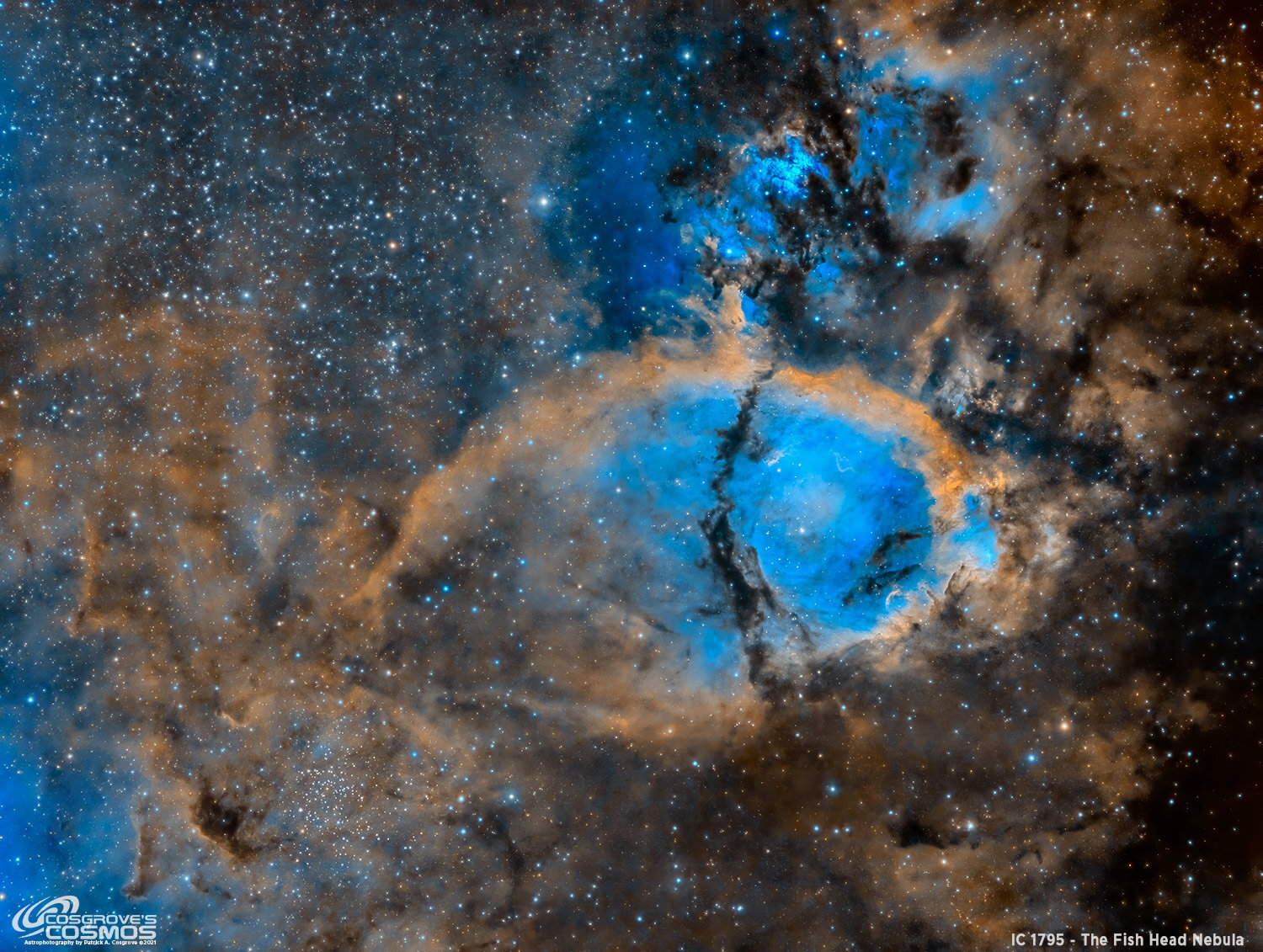
IC 1795 - The Fish Head Nebula in SHO
IC 1795, also know as the Fish Head Nebula, is an area of new star formation with glowing gas and dust, in the constellation of Cassiopeia. It is actually a portion of the larger Heart Nebula complex (IC 1805) that is located about 6000 light-years from earth. Since my scope cannot fit the entire Heart nebula into its field of view, I opted to frame just the fish head portion of the nebula. This was to be shot with my Mono camera and narrowband filters so that I could get the Hubble Palette colors that I am quite fond of.
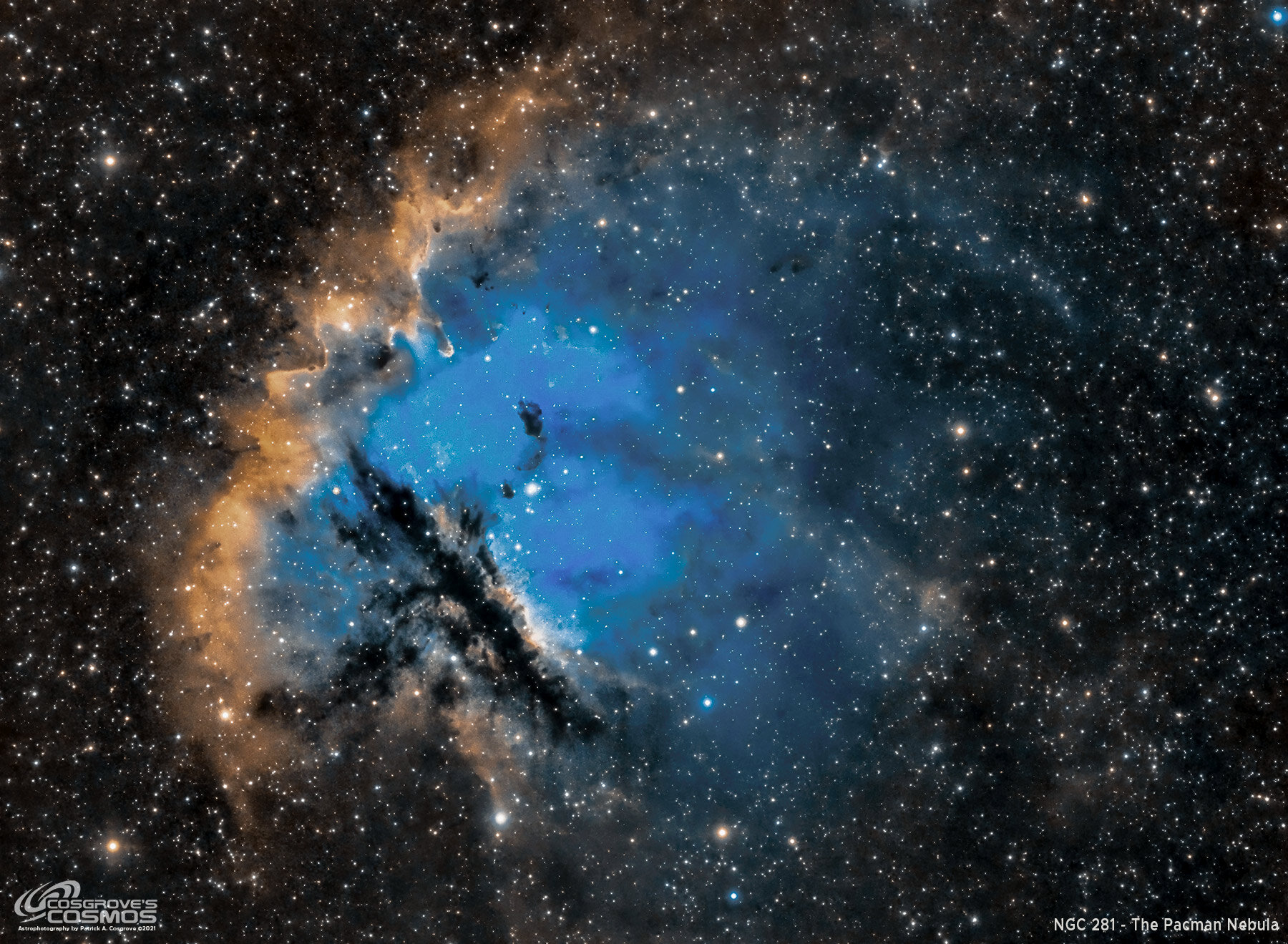
NGC 281 - The Pacman Nebula in the Hubble Palette
NGC 281 - The Pacman Nebula. Also known as IC 11 and Sh2-18,4 this is a bright emission nebula located 9500 light-years away in the constellation of Cassiopeia and is part of the Perseus arm of our own Milky Way galaxy. Captured with a mono camera on my Astro-Physics 130mm Platform.

NGC 7635 - The Bubble Nebula in SHO
NGC7635 - The Bubble Nebula - A narrowband image in the Hubble Palette. Also known as Sharpless 162 and Caldwell 11. The Bubble Nebula can be found in the constellation Cassiopeia, not far from the Open Cluster Messier 52. This area is a rich HII region and the bubble itself was created by stellar winds from a massive hot blue Wolf-Rayet star, AO 20575, that shed its material about 300,000 years ago to form the bubble. This star is 44 times larger than our sun. The Bubble itself is found in a massive molecular cloud that contains the expansion of the bubble and is excited by the same star, causing it to glow as well.