Imaging Projects
In this blog, I will share the results of all of my imaging projects. The newest will be at the top and the oldest will be further down the stack. Going back in time here is interesting - some of my early stuff was pretty rough - but I did not see it that way at the time - I was thrilled to get anything back that looked like an image! Hopefully, you will see how my work has progressed with time!
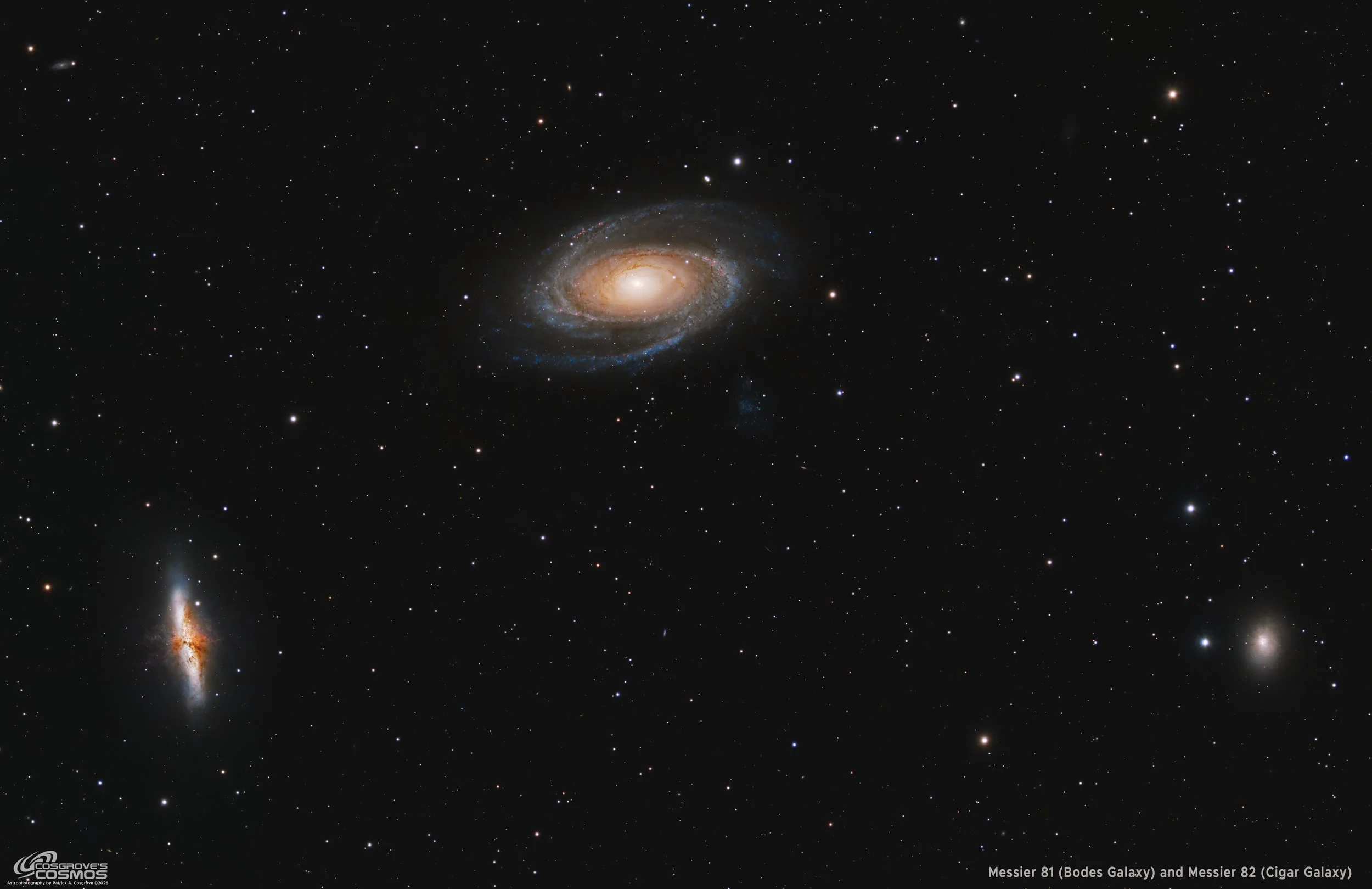
First Light on the AP155 Platform: M81, M82, and NGC 3077 - 4.6 Hours of HaLRGB!
First light on my Astro-Physics 155mm Starfire EDFS platform captured a classic interacting galaxy field in Ursa Major: M81, M82, and NGC 3077. This image combines LRGB and H-alpha data to highlight the contrast between the grand-design spiral structure of M81, the starburst-driven outflow in M82, and the disturbed companion galaxy NGC 3077.
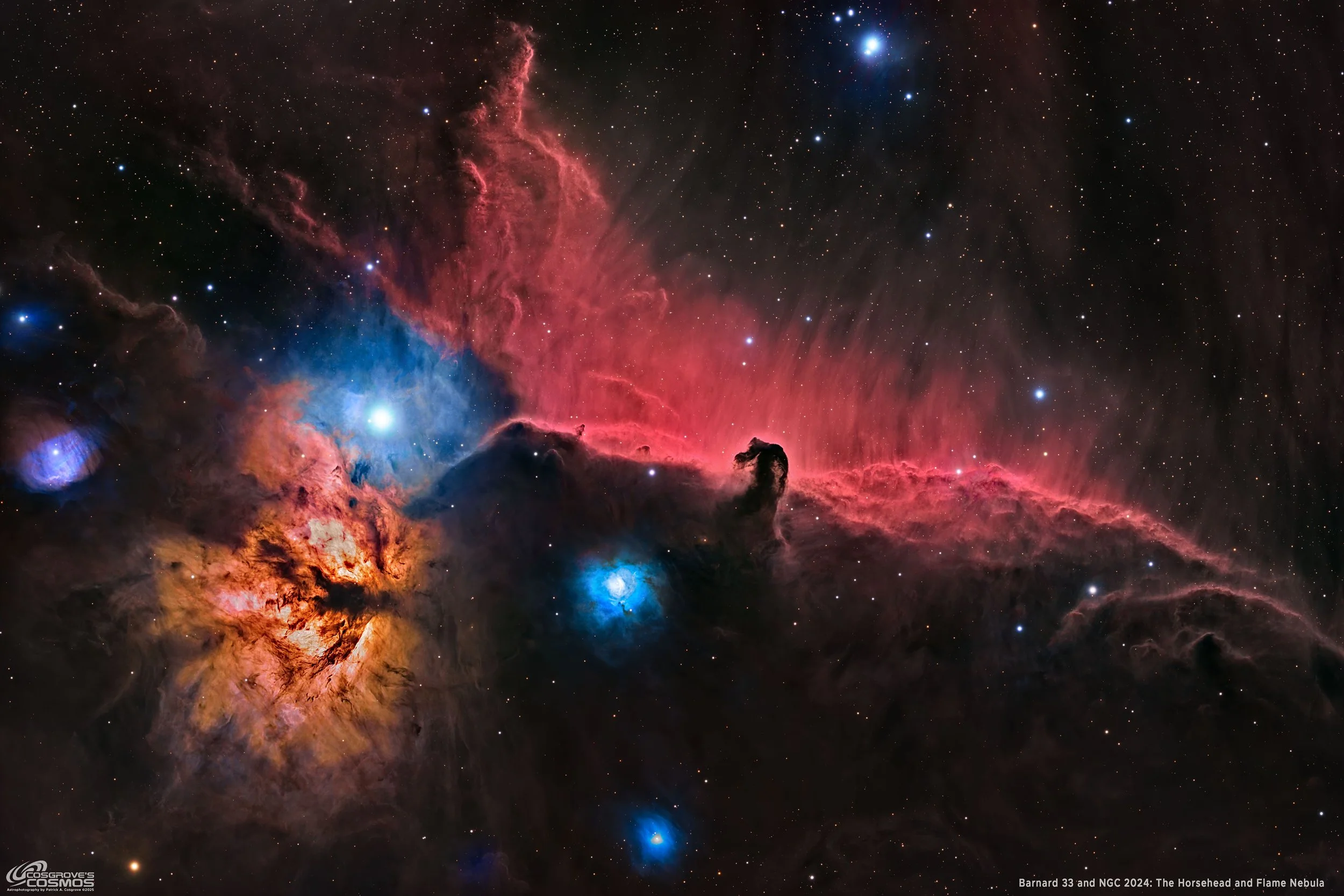
Barnard 33 & NGC 2024 - The Horsehead and Flame Nebula - 6 hours in HaLRGB
A new Orion classic from Whispering Skies Observatory: B33 (the Horsehead Nebula) silhouetted against IC 434, paired with NGC 2024 (the Flame Nebula) and its intricate dust lanes. Captured October 27–28, 2025 using LRGB + Hα for a total of 5 h 59 m 30 s, this project emphasizes clean star color and high-contrast dust structure while preserving the region’s faint, extended nebulosity.
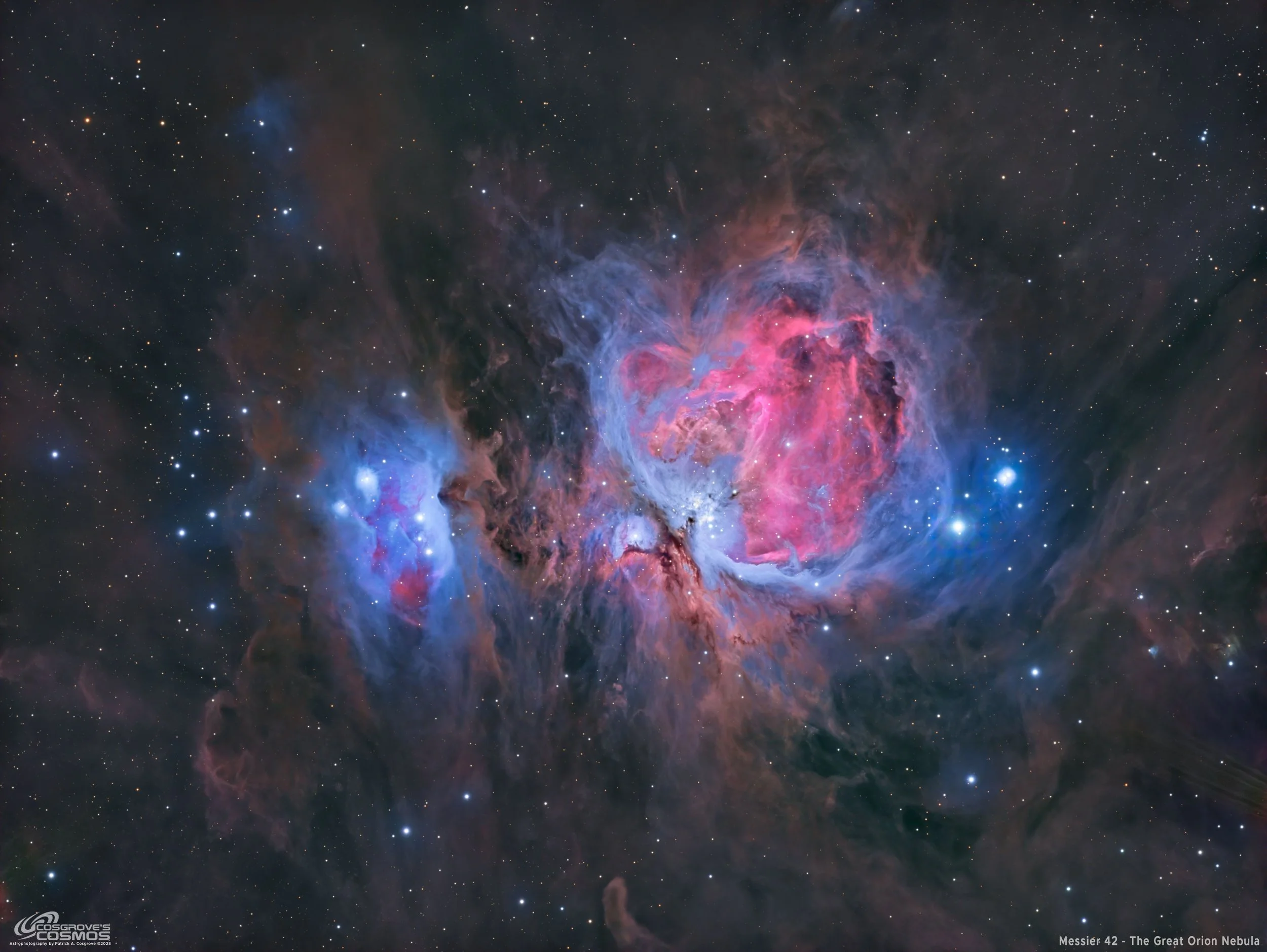
Messier 42/43 – The Great Orion Nebula - 6.35 hours in HaLRGB
Orion’s sword is one of the most famous regions in the night sky, and for good reason. This widefield take on M42/M43 and the Running Man blends short and longer RGB/L exposures with H-alpha to balance the bright core against the faint, sculpted outer nebulosity—an image that showcases both the beauty and the ongoing starbirth of our nearest major stellar nursery.

Messier 106 - First Light for The Sharpstar SCA260 V2! (10 hours in LHaRGB)
The first light for both my new Whispering Skies Observatory and my new Galaxy scope, the Sharpstar SCA260 V2!
This is M106 shot in HaLRGB with 10 hours and 7 minutes of integration!