Imaging Projects
In this blog, I will share the results of all of my imaging projects. The newest will be at the top and the oldest will be further down the stack. Going back in time here is interesting - some of my early stuff was pretty rough - but I did not see it that way at the time - I was thrilled to get anything back that looked like an image! Hopefully, you will see how my work has progressed with time!
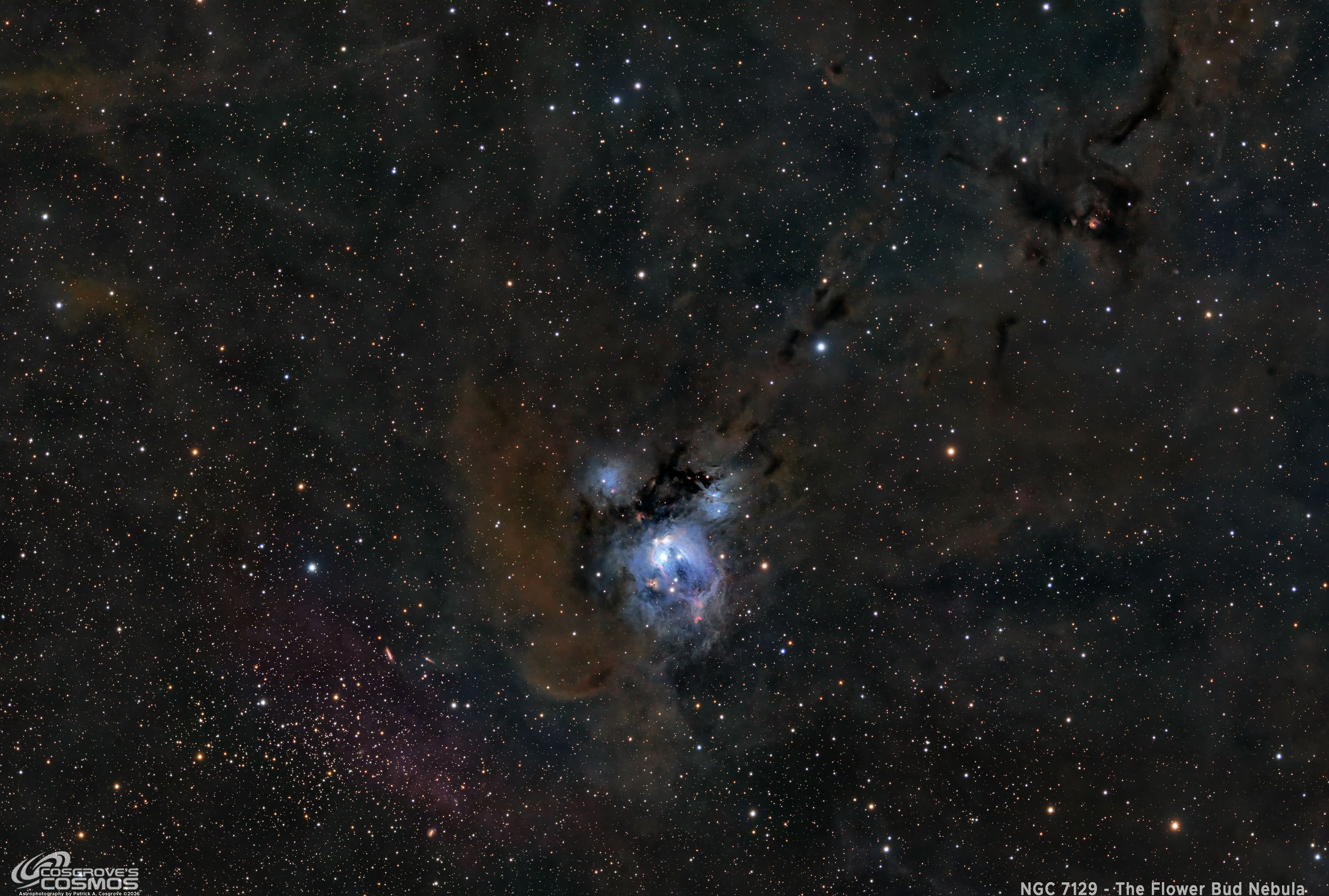
NGC 7129 - A Cosmic Rosebud! | ~14 hours of LRGB.
NGC 7129, the Flower Bud Nebula, is a young star-forming region in Cepheus where blue reflection nebulosity, dark molecular dust, and newborn stars share the same field. This 13-hour, 54-minute LRGB project captures the glowing central nebula, surrounding Cepheus dust clouds, and nearby clusters including NGC 7142, revealing a scene where starlight is just beginning to break out of the cloud that formed it.
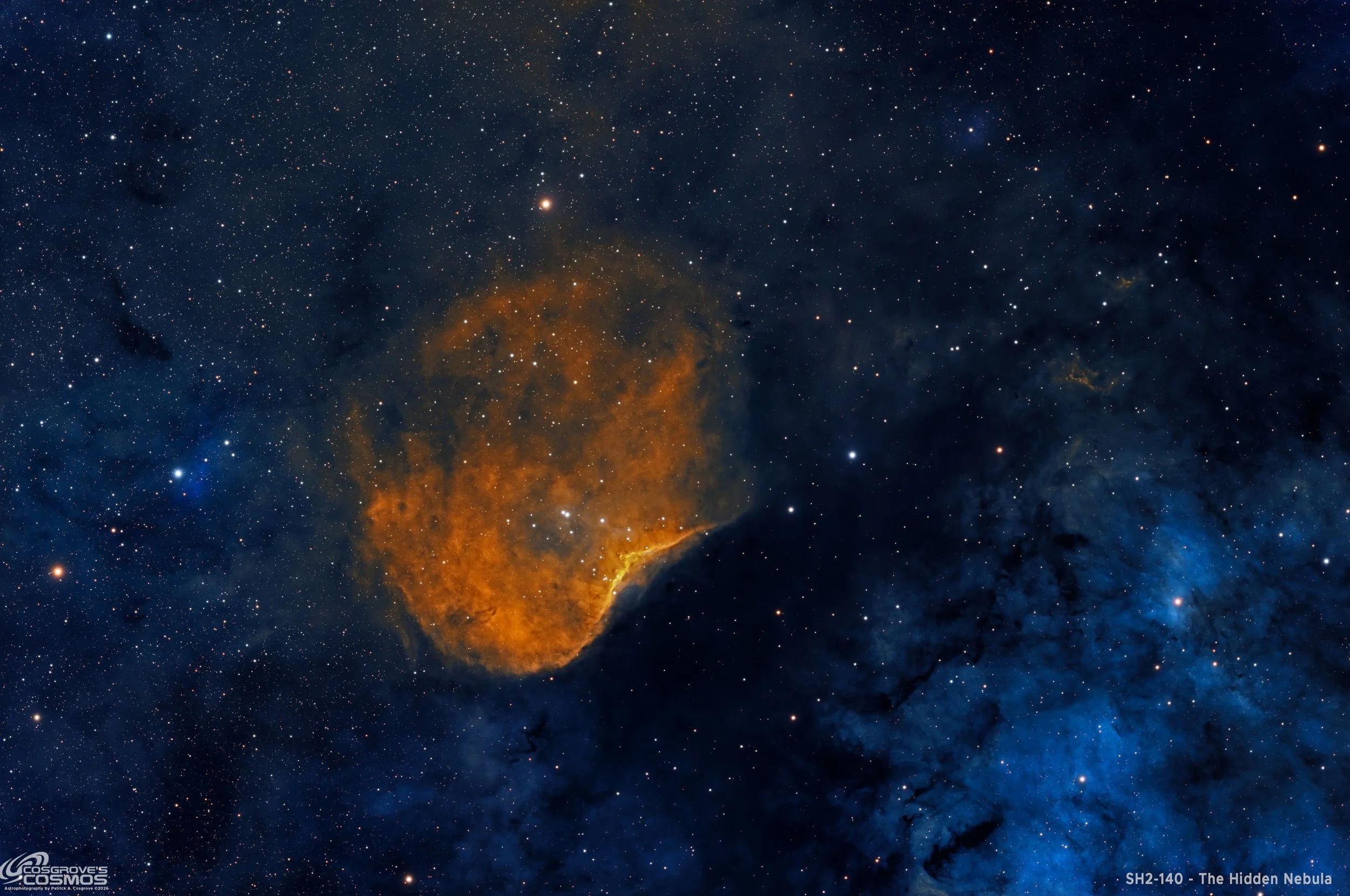
SH2-140 - The Hidden Nebula- 12.38 hours of SHO + RGB Stars
A wide-field view of the Sadr Region in Cygnus, combining 12 h 46 m of SHO narrowband data with RGB stars captured through the Askar FRA400 and ZWO ASI2600MM-Pro. This image reveals glowing emission nebulae, dark molecular clouds, young star clusters, and the bright foreground star Sadr along one of the richest stretches of the Milky Way.
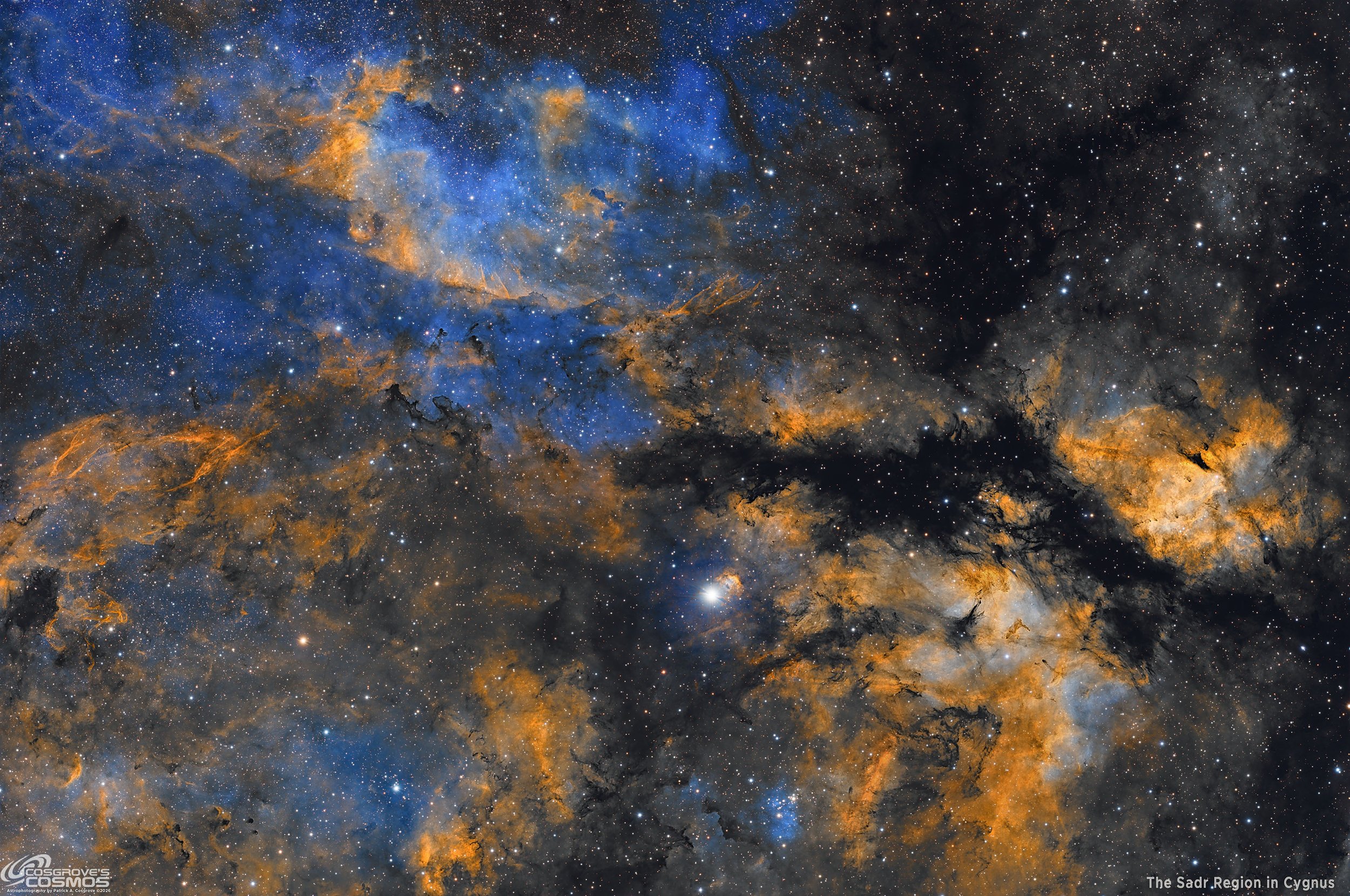
The Sadr Region of Cygnus: IC 1318 & Gamma Cygni Nebula - 12.75 hours of SHRrgb.
A wide-field view of the Sadr Region in Cygnus, combining 12 h 46 m of SHO narrowband data with RGB stars captured through the Askar FRA400 and ZWO ASI2600MM-Pro. This image reveals glowing emission nebulae, dark molecular clouds, young star clusters, and the bright foreground star Sadr along one of the richest stretches of the Milky Way.
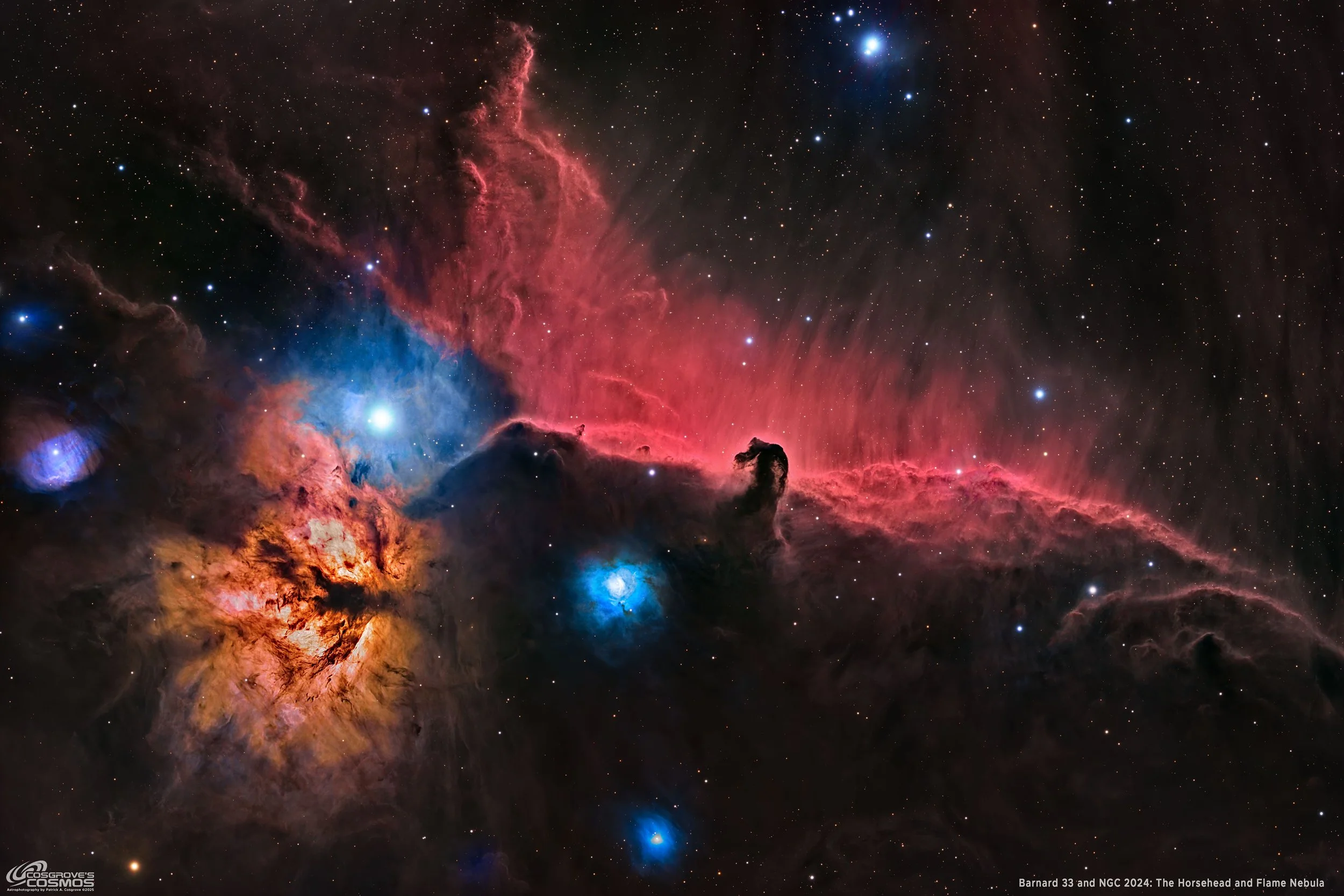
Barnard 33 & NGC 2024 - The Horsehead and Flame Nebula - 6 hours in HaLRGB
A new Orion classic from Whispering Skies Observatory: B33 (the Horsehead Nebula) silhouetted against IC 434, paired with NGC 2024 (the Flame Nebula) and its intricate dust lanes. Captured October 27–28, 2025 using LRGB + Hα for a total of 5 h 59 m 30 s, this project emphasizes clean star color and high-contrast dust structure while preserving the region’s faint, extended nebulosity.
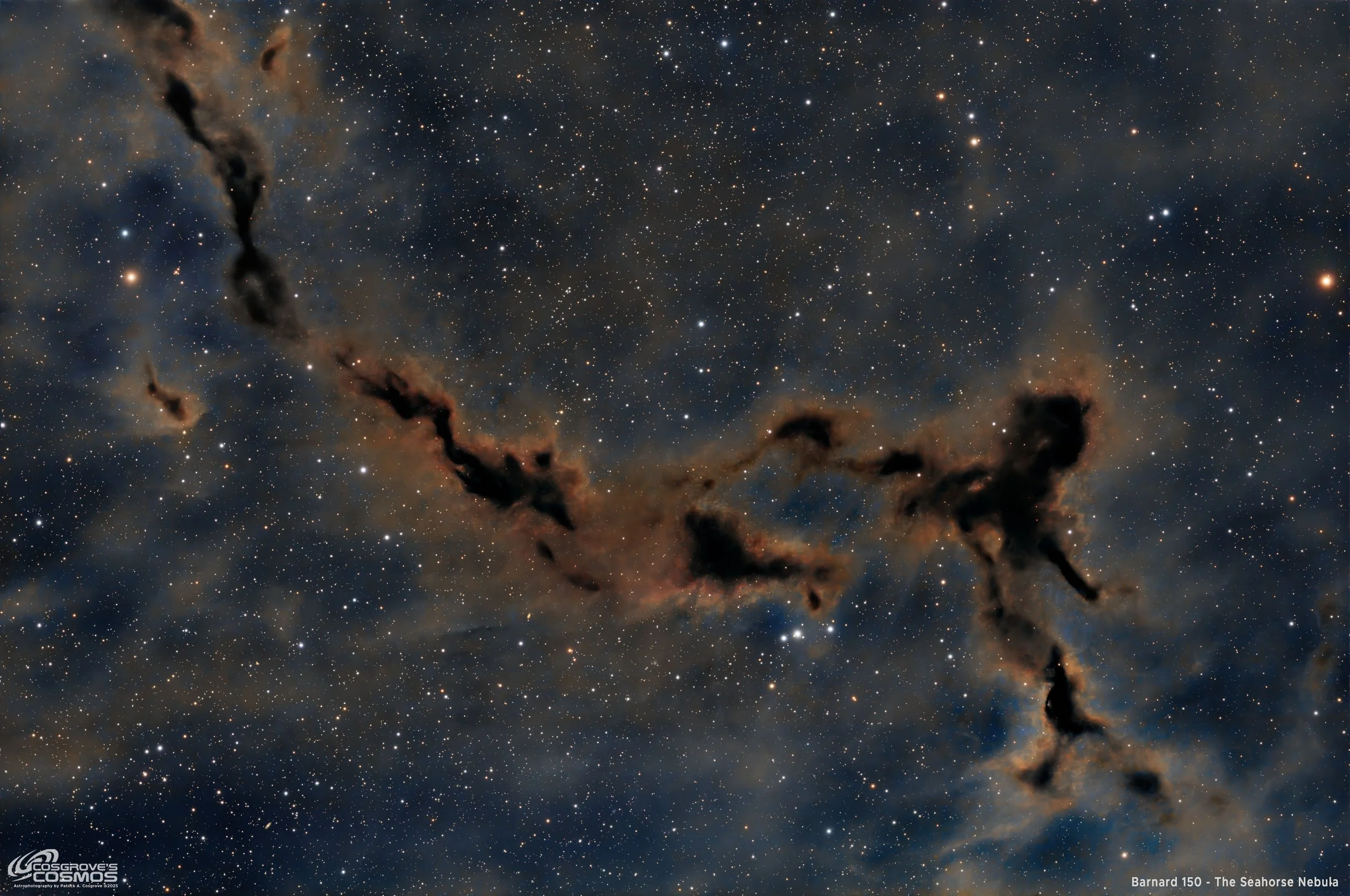
Barnard 150 - The Seahorse Nebula(18.3 hours in LRGB) - Using the Wrong Tool For the Job!
This is the first year I have started targeting Dark Nebulae. It’s been a learning experience.
On this project, I targeted Barnard 150 - The Seahorse Nebula. Even with more than 18 hours of integration, I ran into noise issues.
You need to do a lot of stretching, and this amplifies the high noise. While NoiseXterminator is extremely effective, when handling this much noise, I encountered some ugly artifacts, which greatly frustrated me. So the project reportsto learn more!
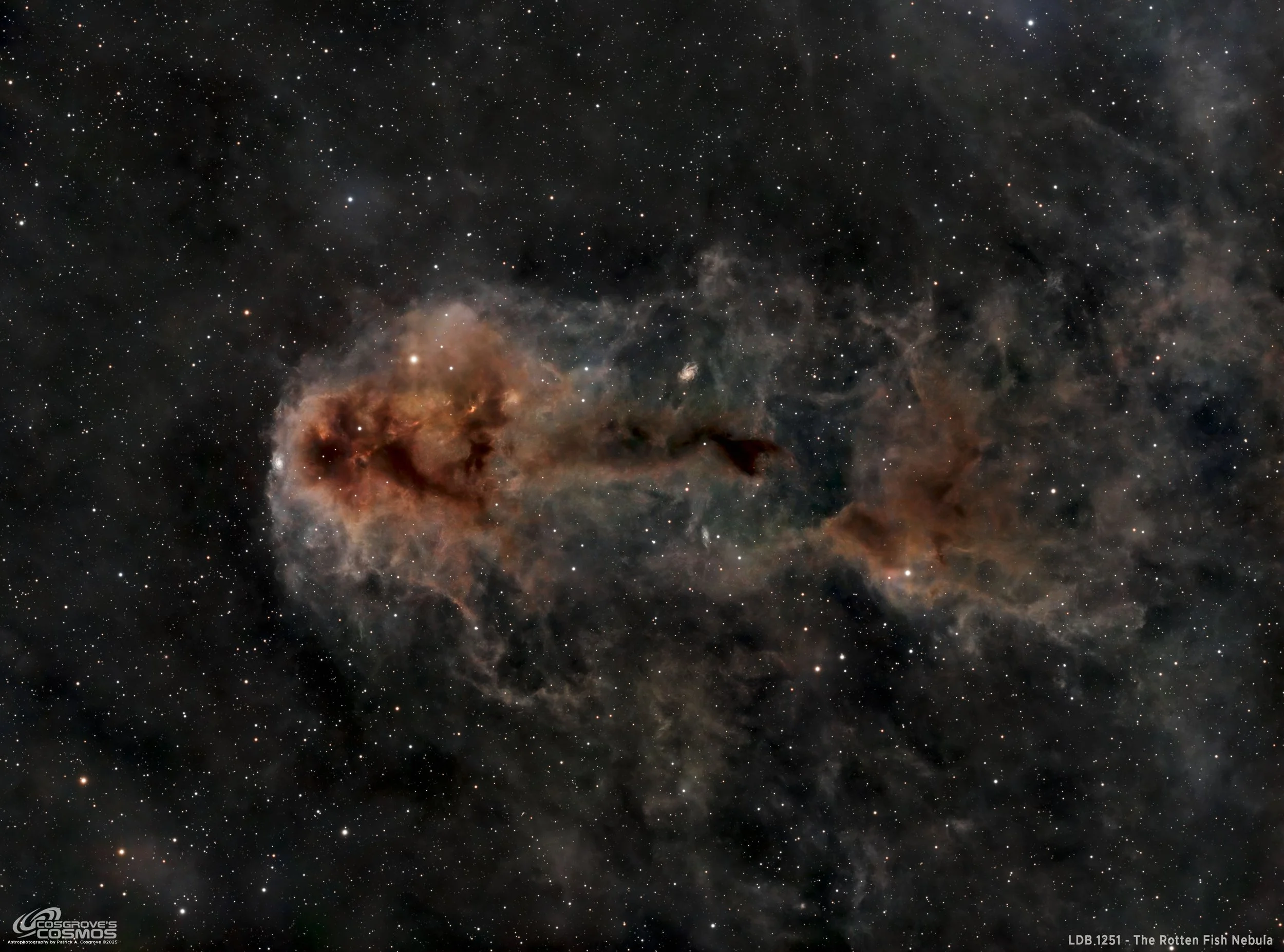
LDN 1251 - The Rotten Fish Nebula (18.9 hours LRGB)
My second dark nebula image ever!
This image results from 19 hours of LRGB exposure with my FRA400 scope.
This was a challenging image to process as the nebula was so tenuous. I also had to deal with microlensing effects on the bright stars due to the ASI1600MM-Pro sensor.
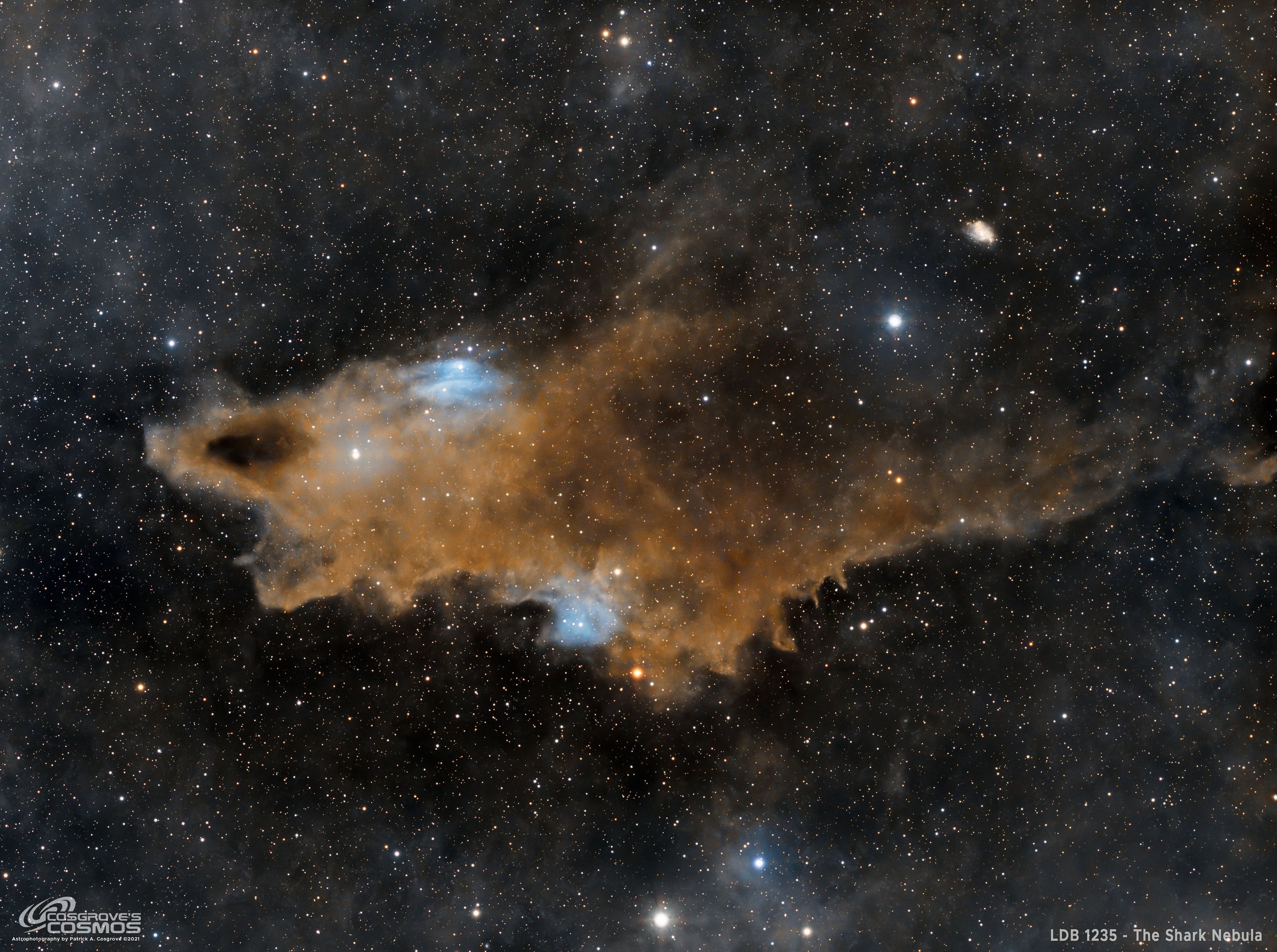
LDN 1235 - The Shark Nebula - My 1st Attempt at a Dark Nebula (7.4 hours LRGB)
My first dark nebula image!
This image results from 7.4 hours of LRGB exposure with my FRA400 scope.
This was a challenging image to process as the nebula was so tenuous. I also had to deal with microlensing effects on the bright stars due to the ASI1600MM-Pro sensor.
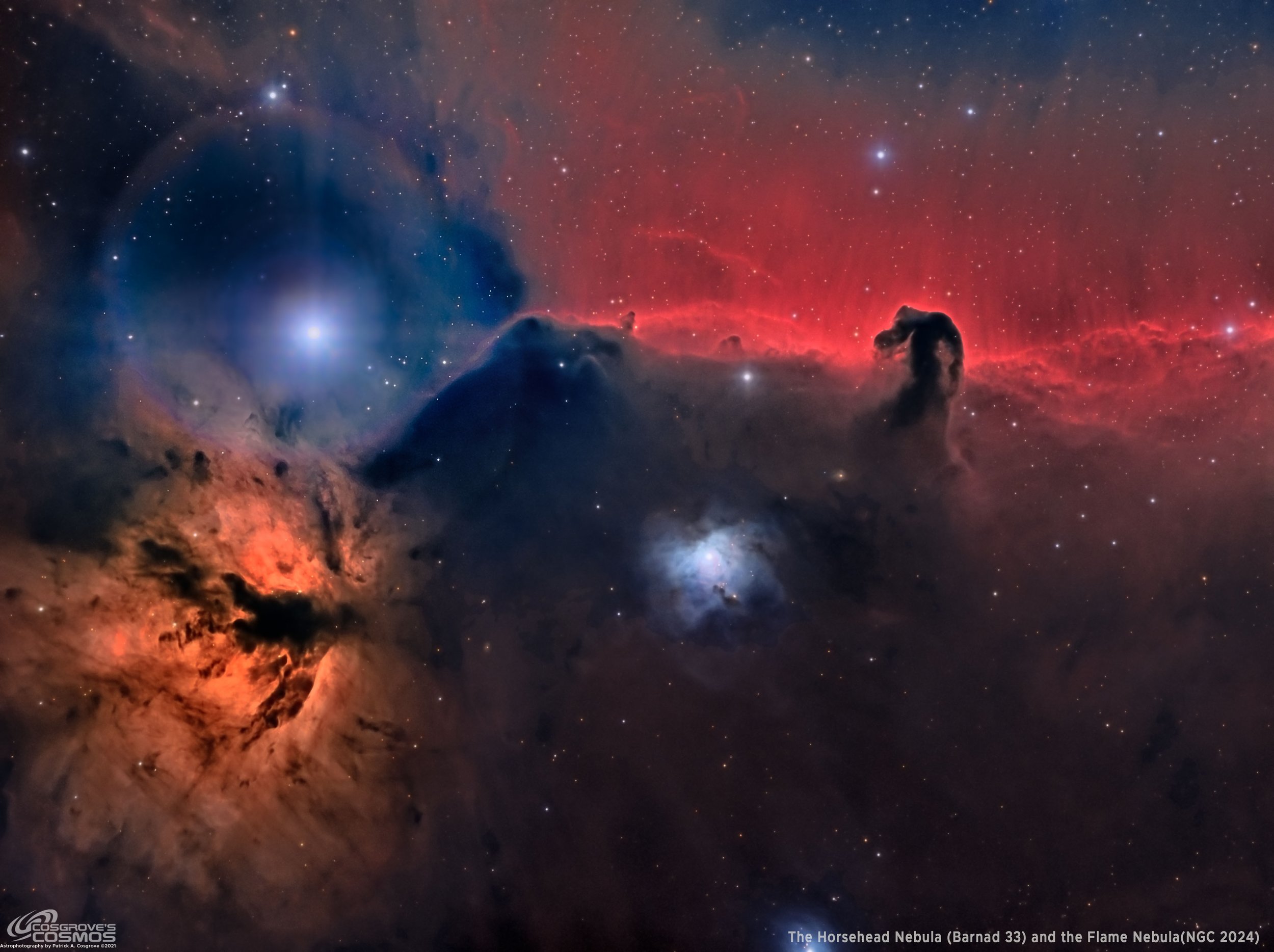
B33: The Horsehead and The Flame Nebula (NGC 2024) in LHaRGB - A “Failed” Image
The Horsehead Nebula is a small dark nebula located just to the south of the bright star Alnitak - the left-most star on Orions Belt. It is located some 1300 light-year from the earth. On the other side of Alnitak is the Flame Nebula.
This is my second attempt on this target - but I would have to classify it as a “Failed” image. The ASI1600MM-Pro camera does not work well with bright stars in the field and this image has halos and microlensing artifacts that are very difficult to process out and I am not satisfied with my results here. But even a “Failed” image offers some learning opportunities, so I share it in that spirit!
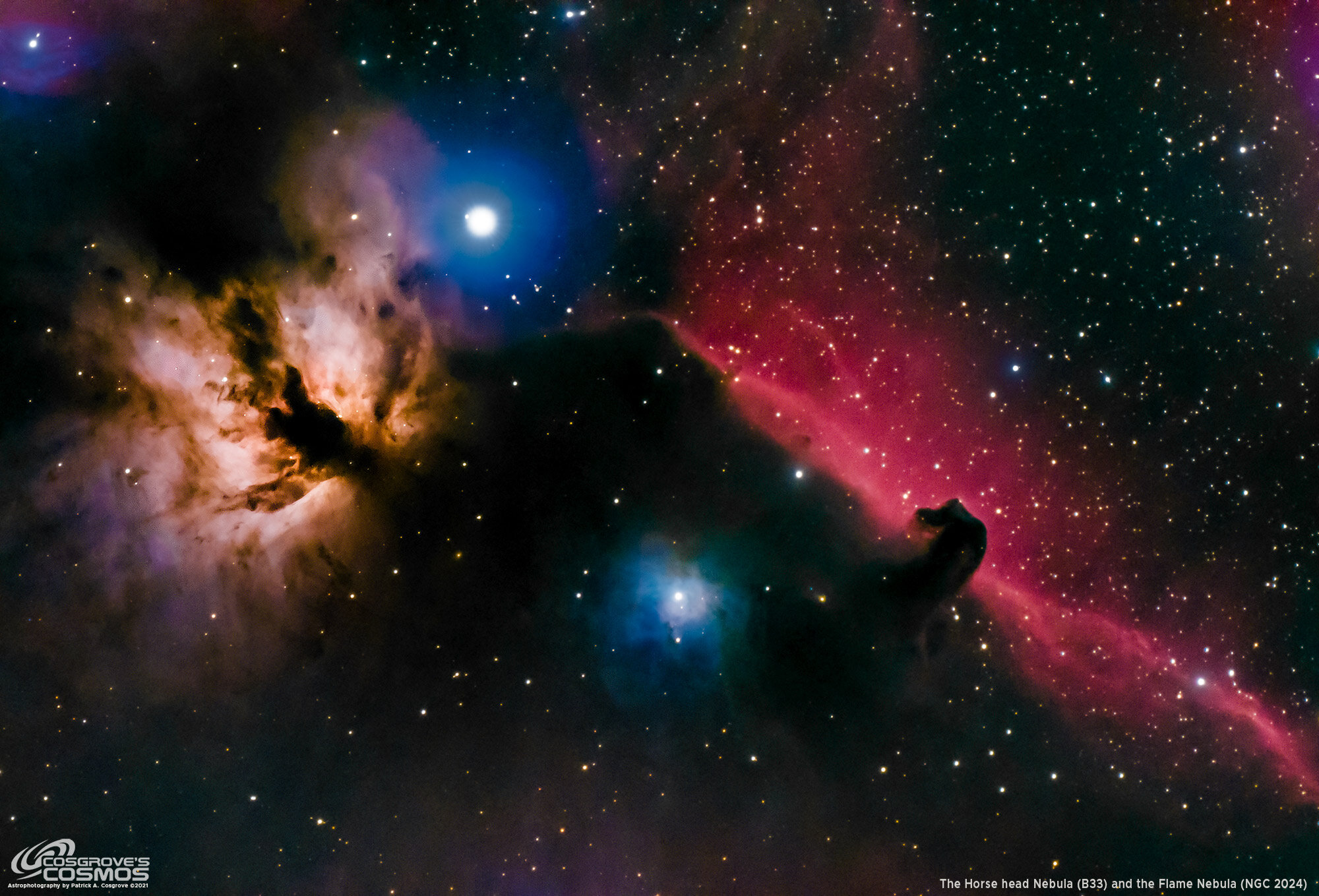
B33: The Horsehead and NGC 2024: The Flame Nebula
The Horsehead Nebula is a small dark nebula located just to the south of the bright star Alnitak - the left-most star on Orions Belt. It is located some 1300 light-year from the earth. On the other side of Alnitak is the Flame Nebula. This region is rich in dust and molecular clouds that are ionized by the radiation coming from Alnitak. This is a rich area for star formation. This image was the result of 90 minutes of exposure.