Imaging Projects
In this blog, I will share the results of all of my imaging projects. The newest will be at the top and the oldest will be further down the stack. Going back in time here is interesting - some of my early stuff was pretty rough - but I did not see it that way at the time - I was thrilled to get anything back that looked like an image! Hopefully, you will see how my work has progressed with time!
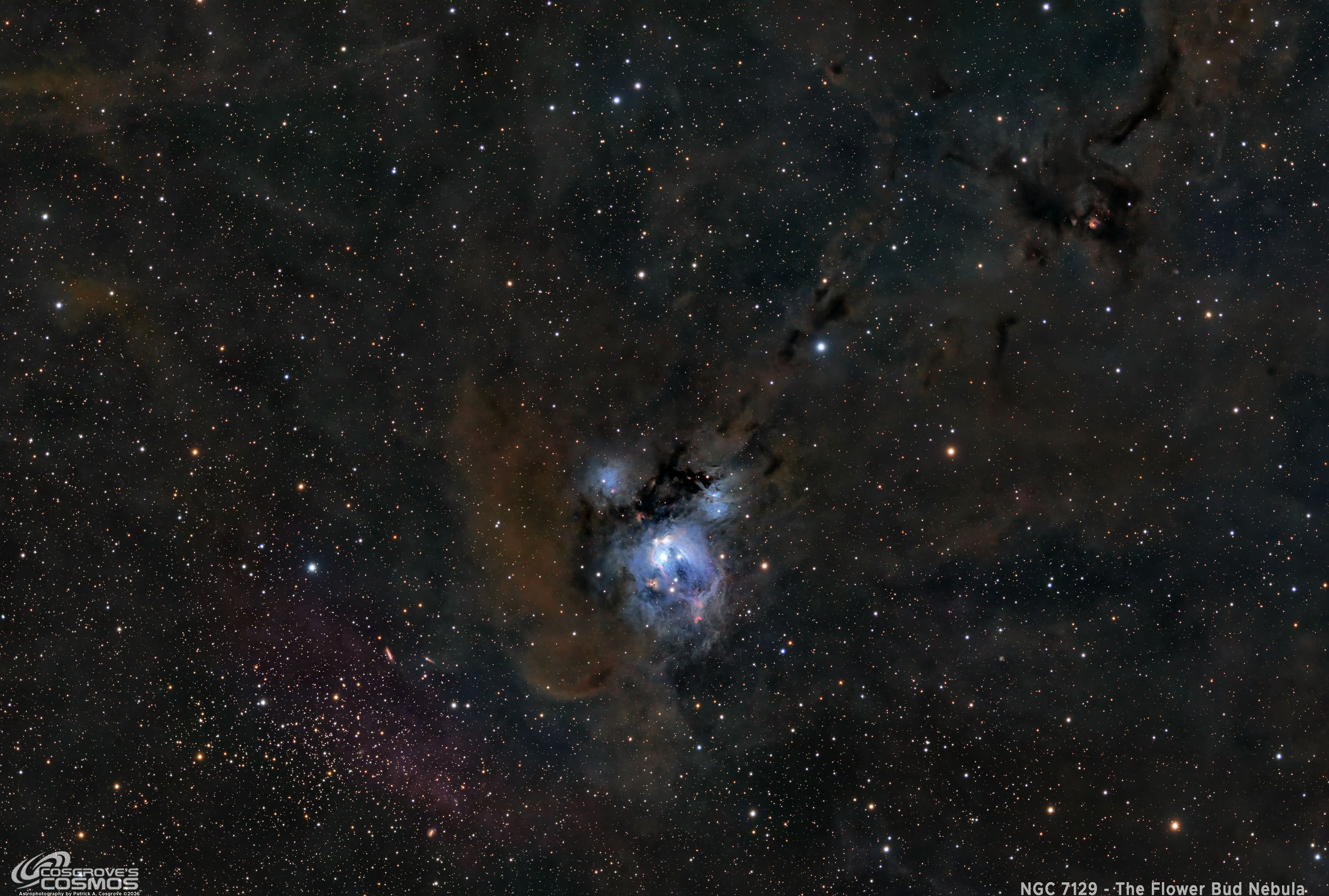
NGC 7129 - A Cosmic Rosebud! | ~14 hours of LRGB.
NGC 7129, the Flower Bud Nebula, is a young star-forming region in Cepheus where blue reflection nebulosity, dark molecular dust, and newborn stars share the same field. This 13-hour, 54-minute LRGB project captures the glowing central nebula, surrounding Cepheus dust clouds, and nearby clusters including NGC 7142, revealing a scene where starlight is just beginning to break out of the cloud that formed it.
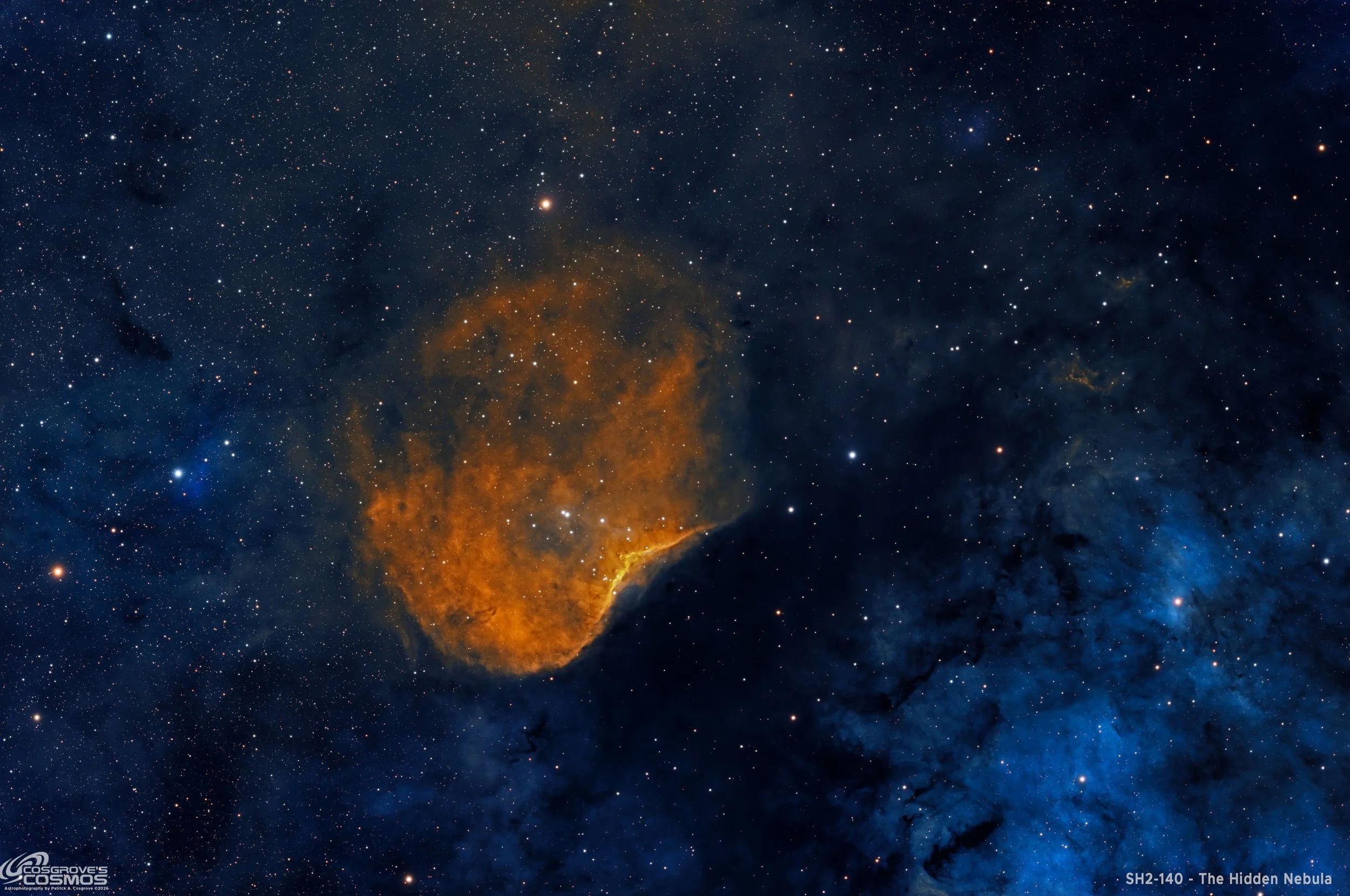
SH2-140 - The Hidden Nebula- 12.38 hours of SHO + RGB Stars
A wide-field view of the Sadr Region in Cygnus, combining 12 h 46 m of SHO narrowband data with RGB stars captured through the Askar FRA400 and ZWO ASI2600MM-Pro. This image reveals glowing emission nebulae, dark molecular clouds, young star clusters, and the bright foreground star Sadr along one of the richest stretches of the Milky Way.

SH2-171 – The Teddy Bear Nebula - 33.5 Hours of SHO
This project explores Sh2-171, part of the NGC 7822 star-forming complex in Cepheus, a sprawling H II region about 3,000 light-years away where hot young stars are carving pillars and cavities into the surrounding gas. Captured over 33.5 hours in narrowband SHO with an Astro-Physics 130 mm Starfire and ASI2600MM-Pro, the image reveals the intricate structure and subtle filaments of this faint but remarkably active stellar nursery.

NGC 7380 – The Wizard Nebula Revisited - This time with 25 Hours of SHOrgb!
My Second Attempt - and my finest - with NGC 7380 - The Wizard Nebula.
This is the result of 25 hours of narrowband and RGB exposure on my Williams Optics 132 FLT APO platform, equipped with a 0.8 reducer and an ASI2600MM-Pro camera.
This was another image captured from my new observatory, which allowed for capture on marginal nights.
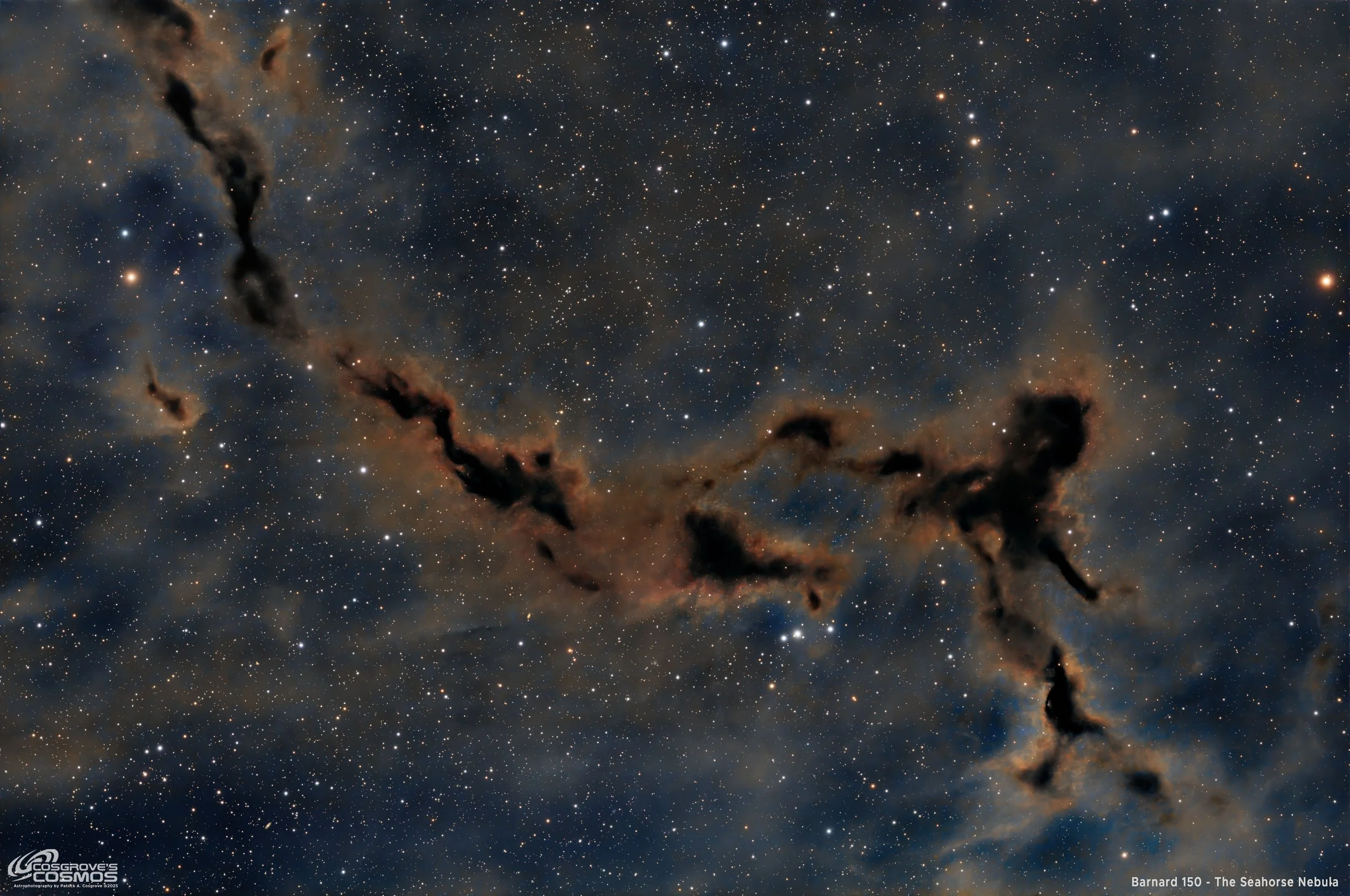
Barnard 150 - The Seahorse Nebula(18.3 hours in LRGB) - Using the Wrong Tool For the Job!
This is the first year I have started targeting Dark Nebulae. It’s been a learning experience.
On this project, I targeted Barnard 150 - The Seahorse Nebula. Even with more than 18 hours of integration, I ran into noise issues.
You need to do a lot of stretching, and this amplifies the high noise. While NoiseXterminator is extremely effective, when handling this much noise, I encountered some ugly artifacts, which greatly frustrated me. So the project reportsto learn more!
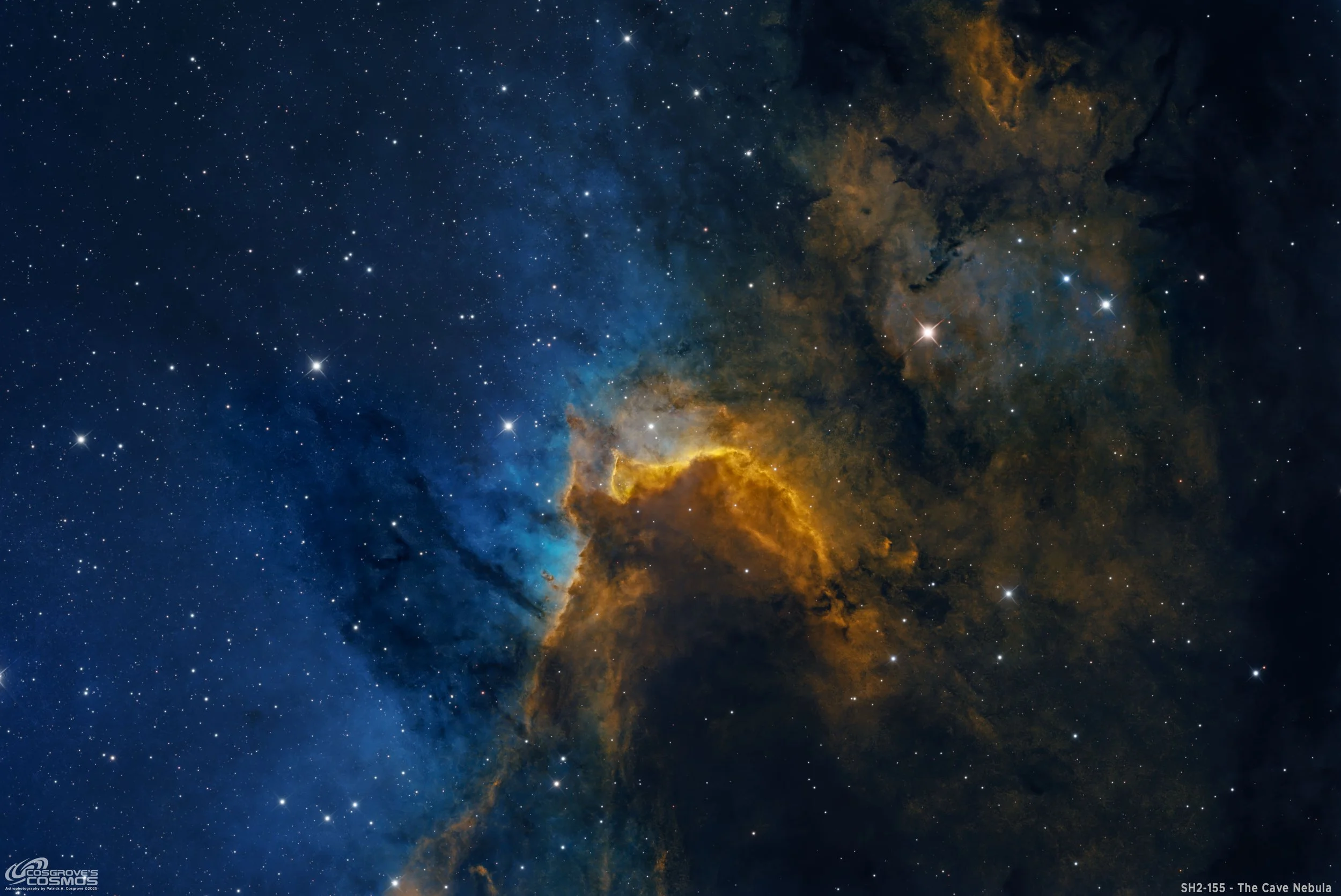
SH2-155 - The Cave Nebula 13.5 hours SHO (My 150th Project!)
After 5 years, I revisited SH2-155 - The Cave Nebula, this time gathering 13.5 hours narrowband data. This was shot with my new galaxy scope and the resulting colors really pop and dark dust is very mysterious looking!
This data was collected over three nights at the end of August 2025.
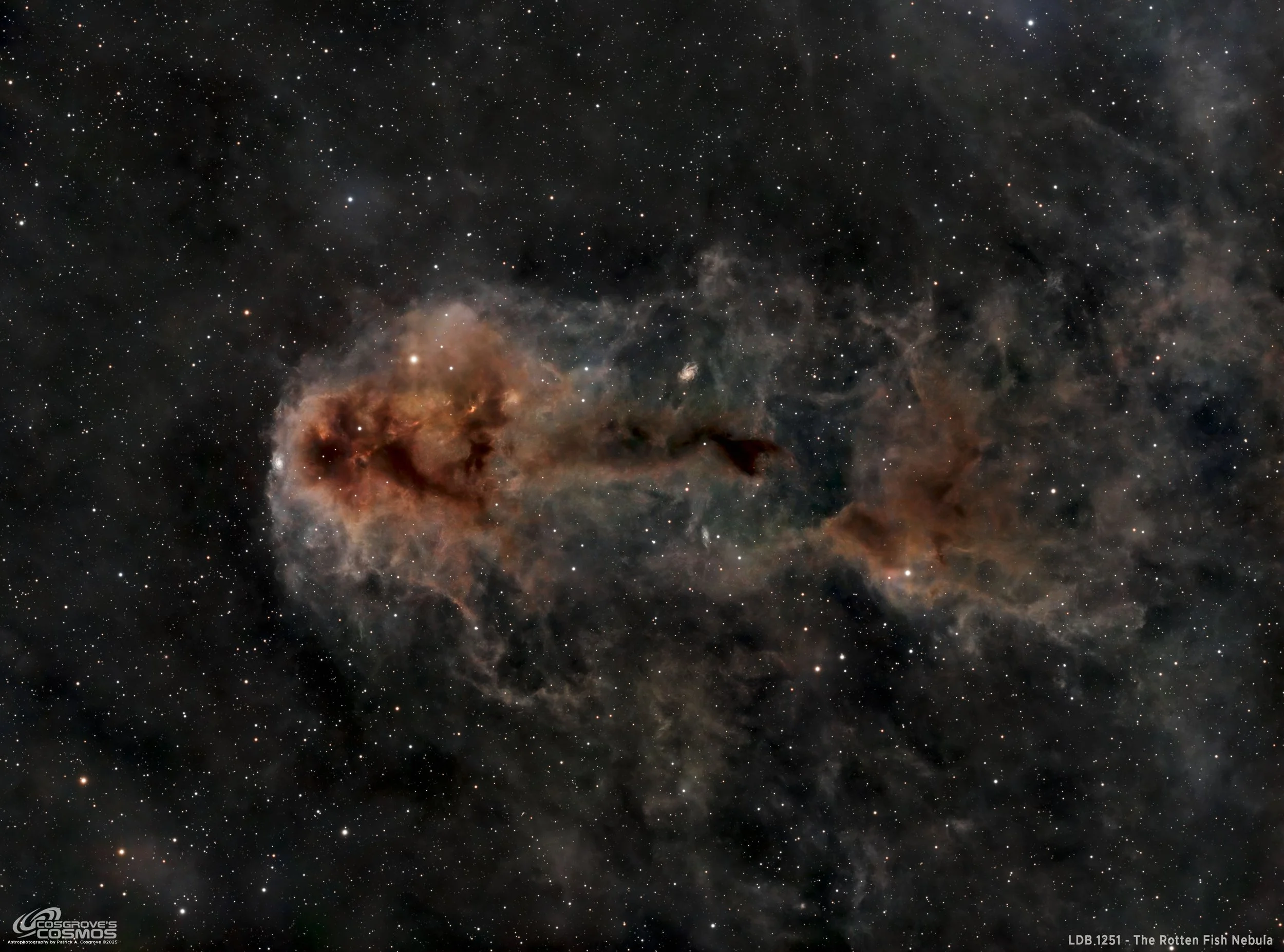
LDN 1251 - The Rotten Fish Nebula (18.9 hours LRGB)
My second dark nebula image ever!
This image results from 19 hours of LRGB exposure with my FRA400 scope.
This was a challenging image to process as the nebula was so tenuous. I also had to deal with microlensing effects on the bright stars due to the ASI1600MM-Pro sensor.
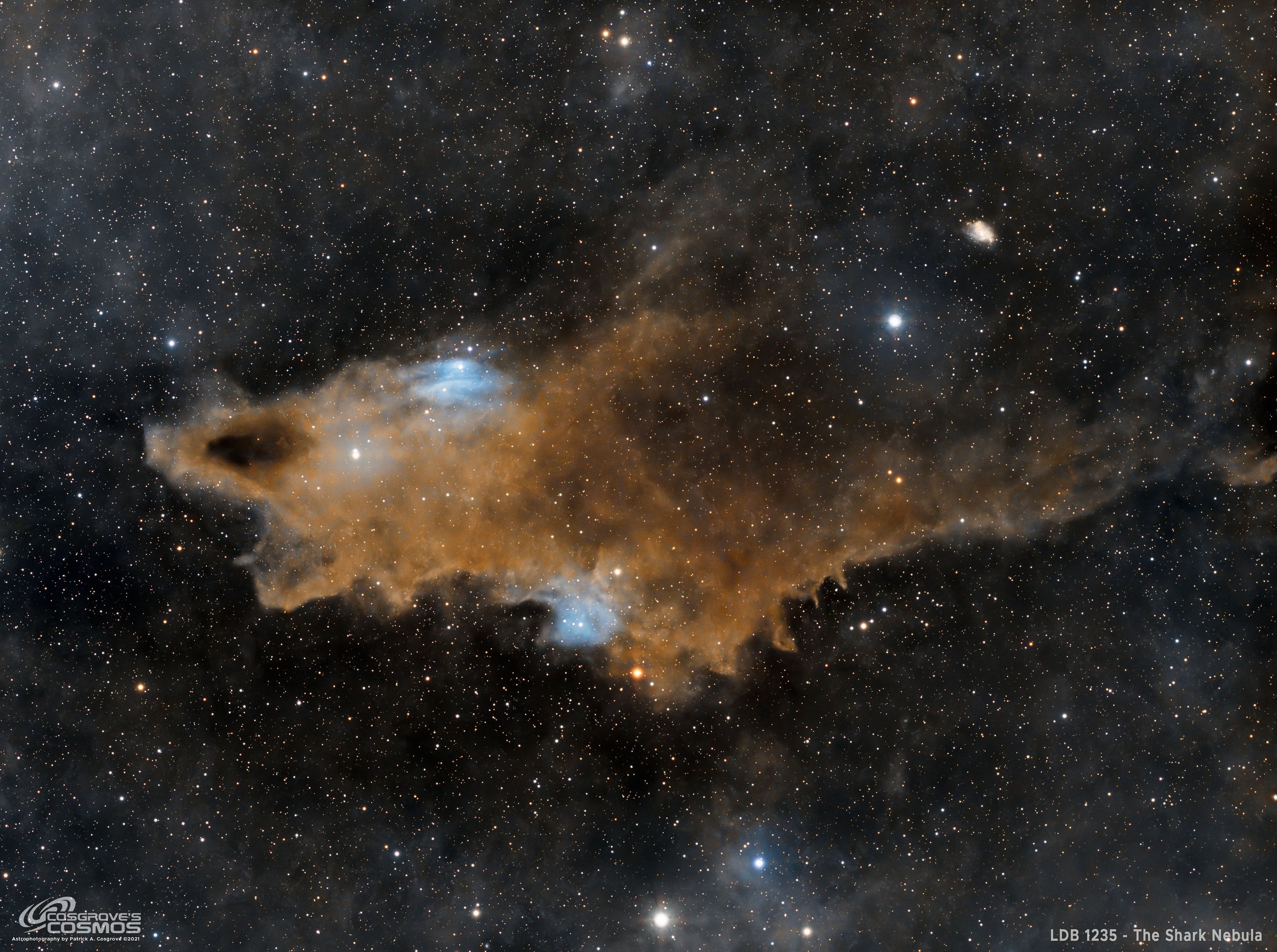
LDN 1235 - The Shark Nebula - My 1st Attempt at a Dark Nebula (7.4 hours LRGB)
My first dark nebula image!
This image results from 7.4 hours of LRGB exposure with my FRA400 scope.
This was a challenging image to process as the nebula was so tenuous. I also had to deal with microlensing effects on the bright stars due to the ASI1600MM-Pro sensor.
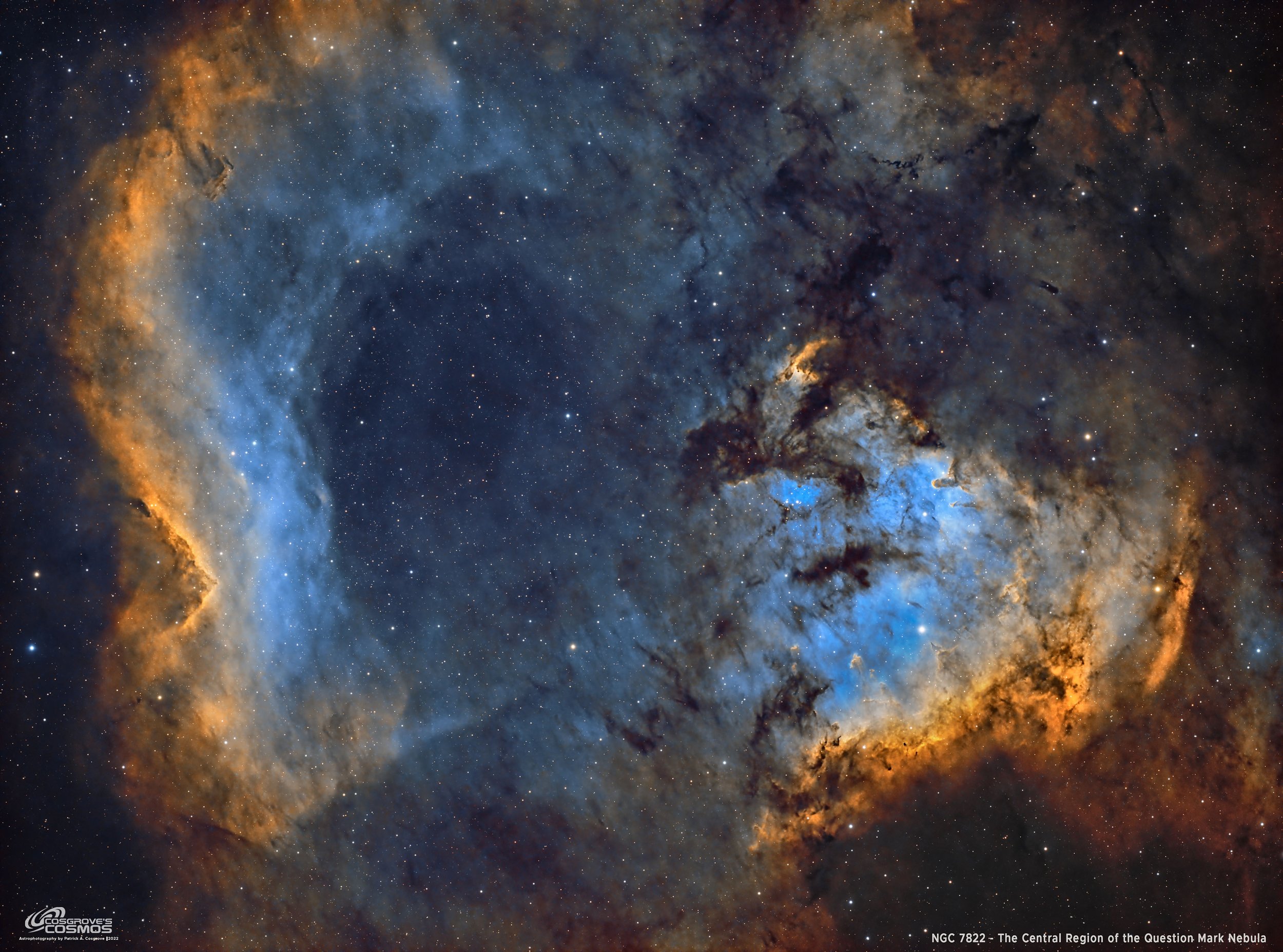
NGC 7822 - The Central Portion of the Question Mark Nebula (~14 hours in SHOrgb)
NGC 7822 is the Clamshell Nebula - located 2900 light years away in the constellation of Cepheus. This is a very large target, and with my smallest scope, I could still only fit the central portion of this complex area into the camera's field of view. This image results from just under 14 hours of integration and consists of a mix of narrowband data for the nebula and broadband RGB data for the stars.
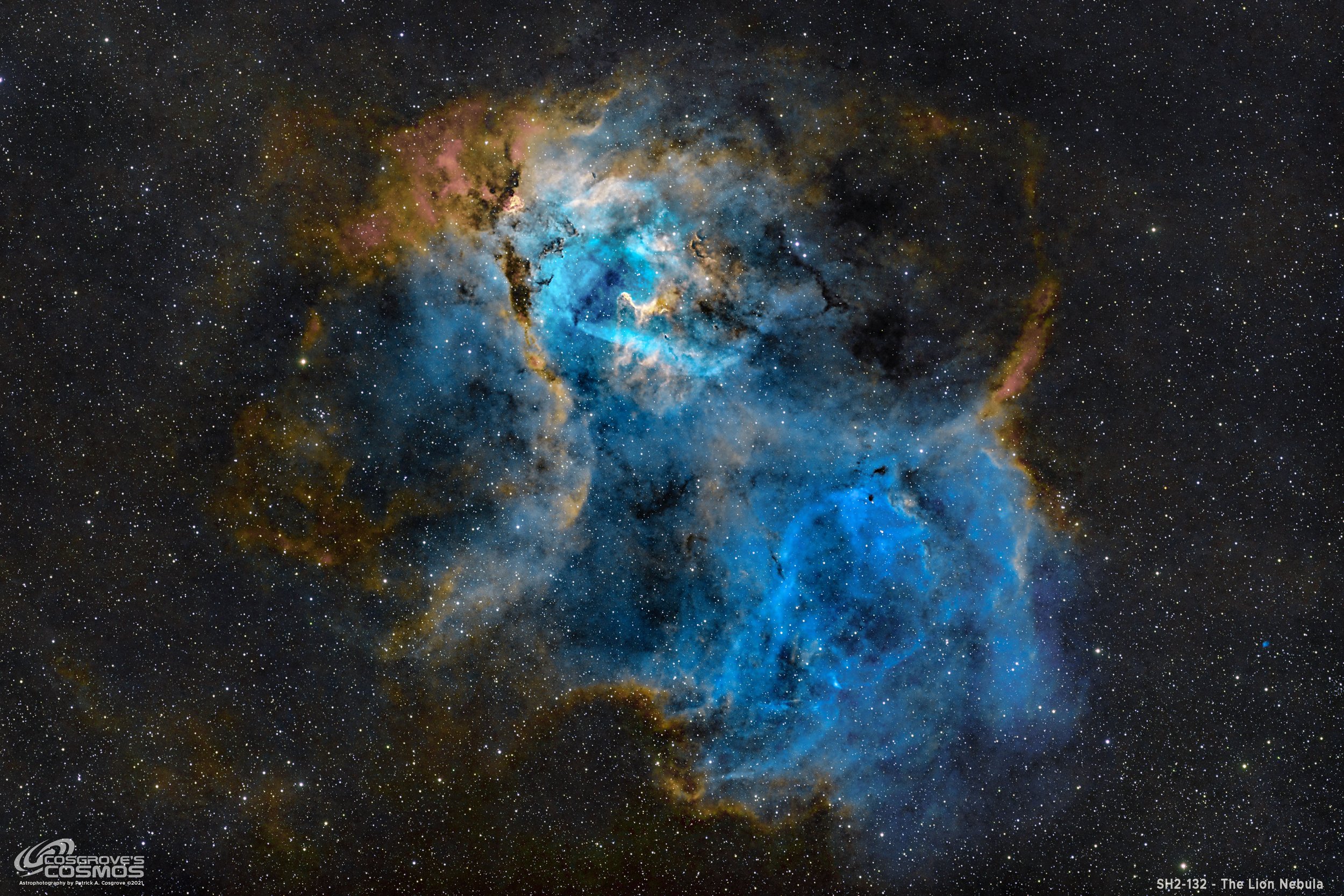
SH2-132 - A Reprocess of The Lion Nebula in SHO (8.33 hours)
This is an Image Reprocessing Project for SH2-132, also known as The Lion Nebula - whose data was originally collected in September of 2021.
The Lion Nebula is a rich HII region with star clusters, emission nebulae, and dark dust regions. Located in the southern portion of the constellation Cepheus, the Lion Nebula is roughly 10,00 light-years away in the Perseus Arm of the Milky Way Galaxy. This is a very faint and challenging target.
This image was taken on the Askar FRA400 Platform with 8.33 hours of exposure in narrowband.
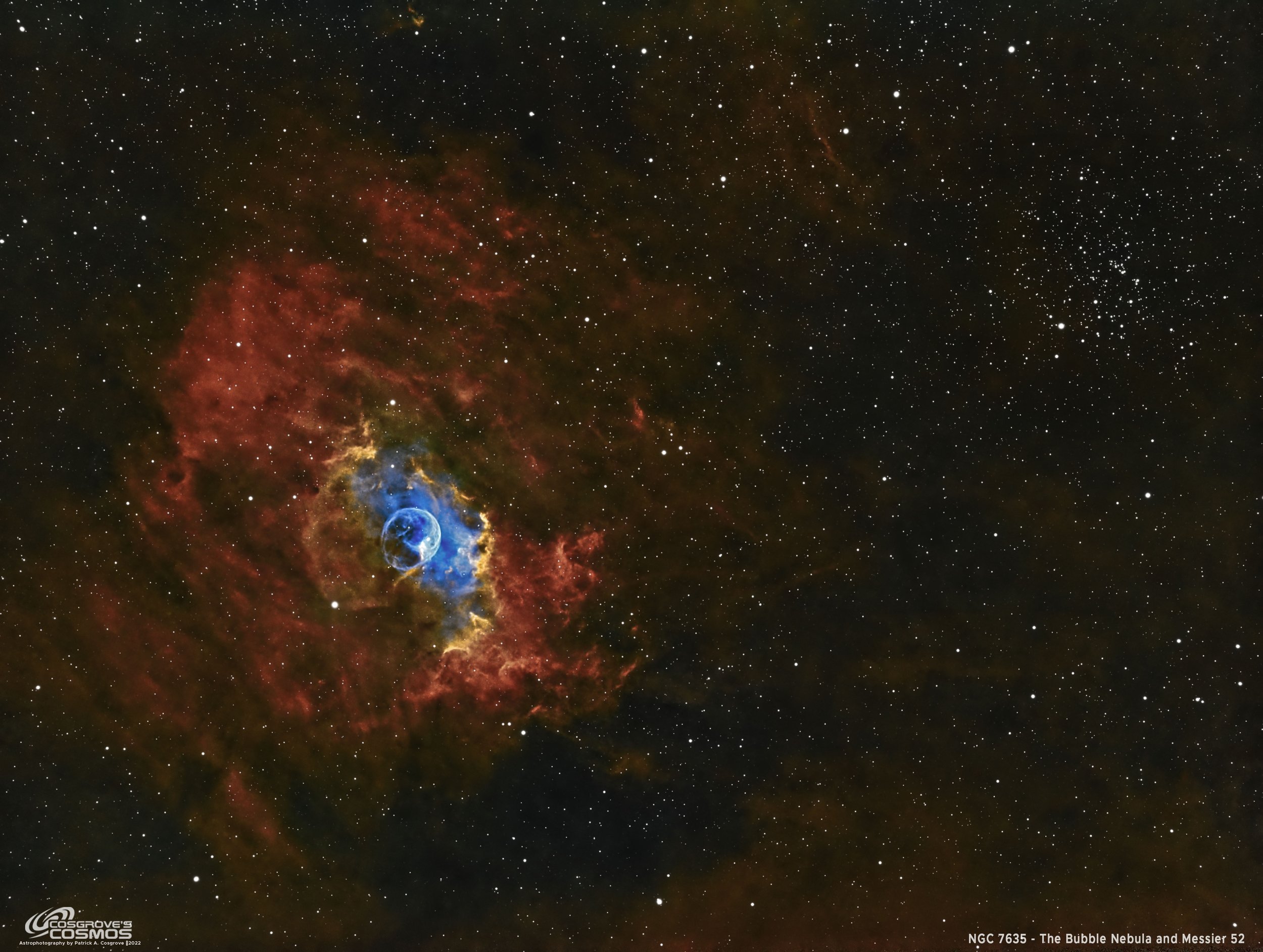
NGC 7635 - The Bubble Nebula w/M52 - 8.25 hours in SHO - Not Sure I Love it.
NGC 7635 - The Bubble Nebula with M52. 8.25 hours in SHO.
This image was shot on my William Optics 132mm FLT APO platform, using a ASI1600MM-Pro Camera and the IOptron CEM60 mount.
The original goal was to do a deeper integration of at least 15 hours - and while the weather would have supported this, I missed two clear nights due to illness.
This image has a very high color and contrast position - almost too high for me, but I disliked the lower contrast and saturation versions more - so this is it. I am not sure I love this image….
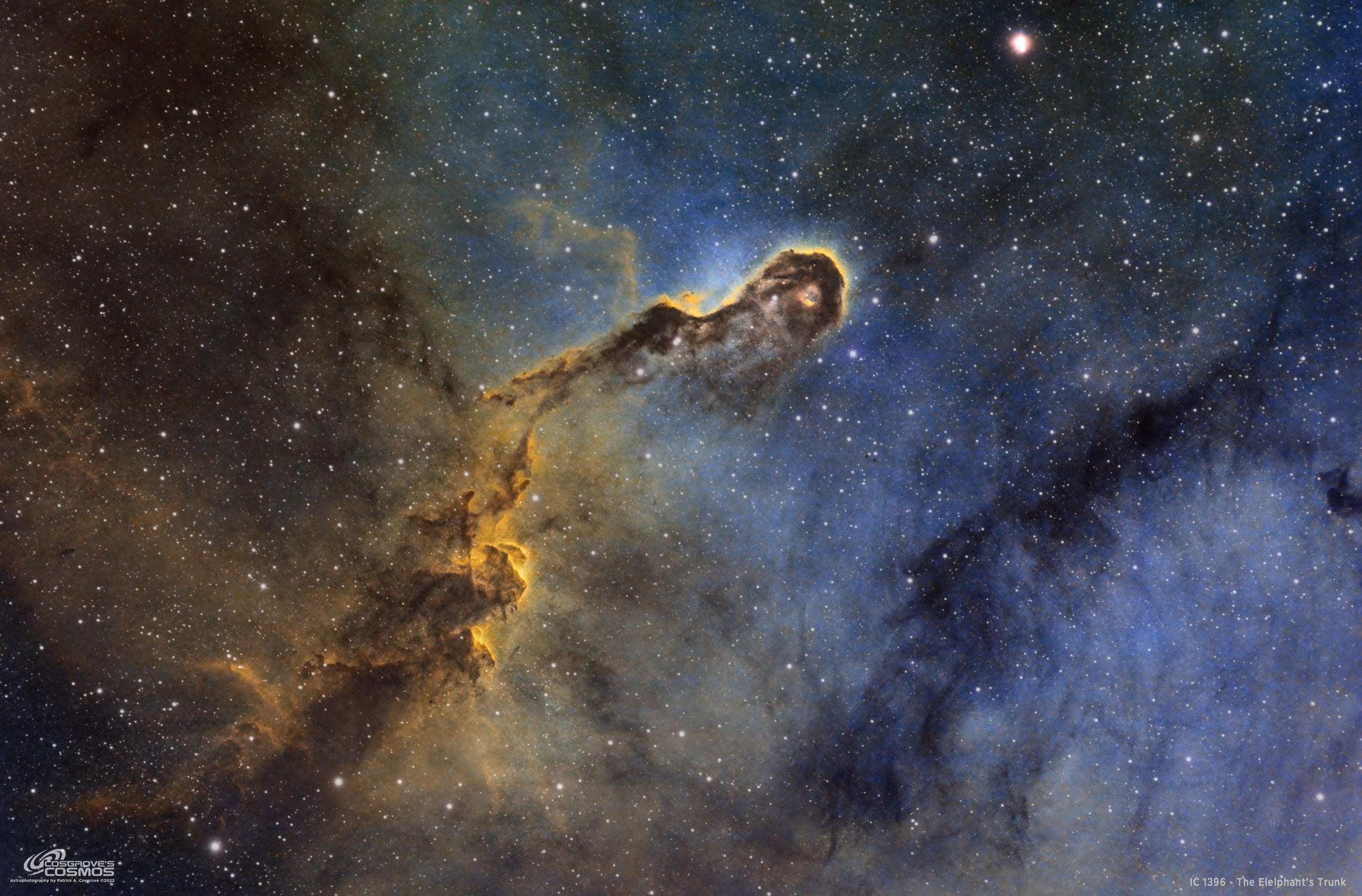
IC 1396A - The Elephant’s Trunk - 7.3 hrs in SHO (a Case of Virus Interuptus)
IC 1396A - The Elephants Trunk Nebula is located 2400 light-years away in the constellation of Cepheus. This is my fourth project involving this target - but the first where I used the newer generation ZWO ASI26MM-Pro camera and full narrowband data set at this image scale. My goal here was to collect about 15 hours on target. I only ended up getting 7.3 hours. My usual reason for missing my integration target is weather. Not this time. This time I was hit with a nasty virus and the worst cold of my life! I had to watch two precious clear nights slip away whilst I coughed and hacked away inside in misery….
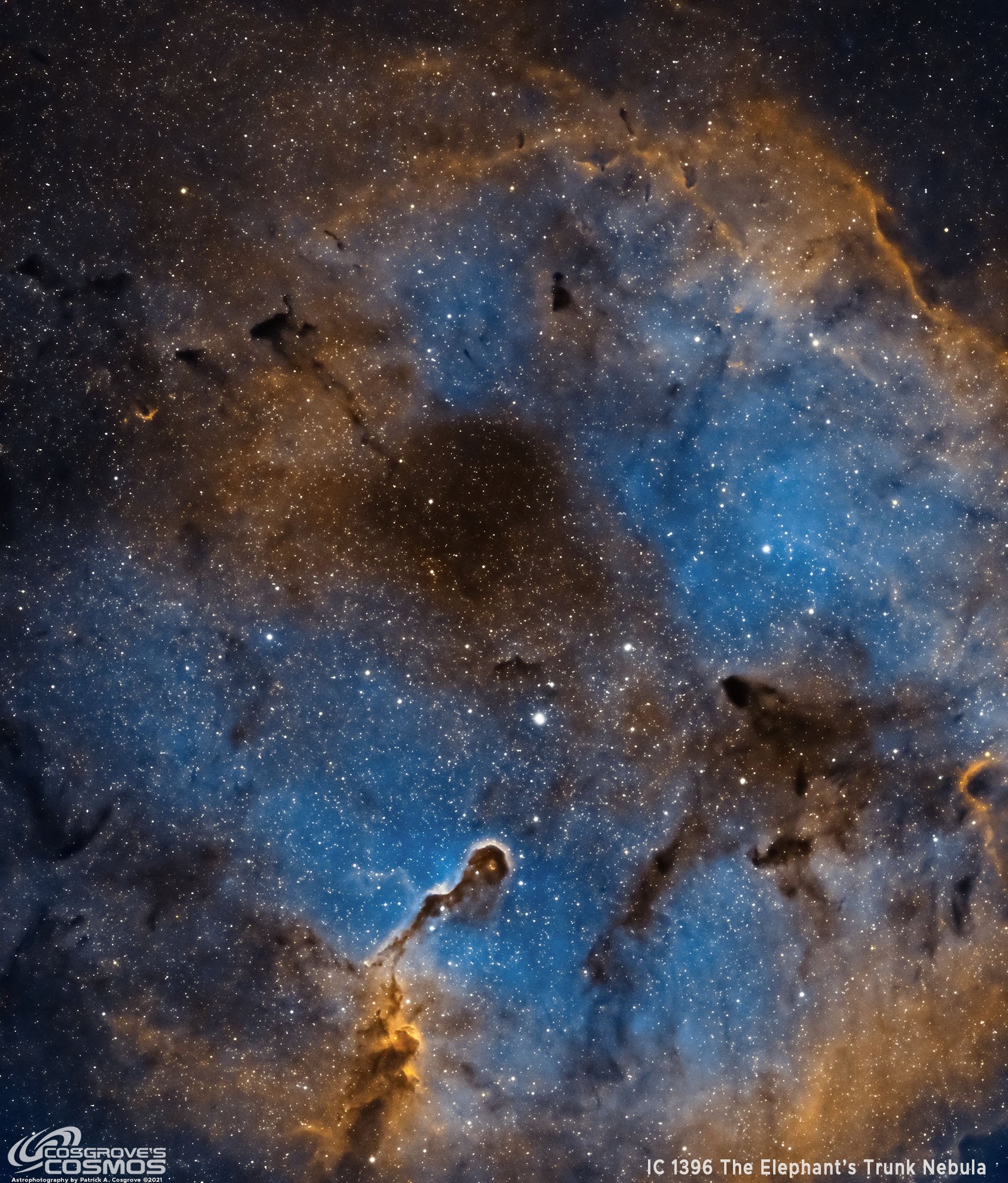
IC 1396/1396A - The Elephant's Trunk Nebula
IC 1396, also known as The Elephant Trunk Nebula is rich region emission nebulae and dark dust regions. Located in the constellation Cepheus, the Lion Nebula is roughly 2400 light-years away.
This image was taken on the Askar FRA400 Platform with only 3 hours of exposure in narrowband - and was the first image where the FRA was used for portable operations on a trip to North Carolina.
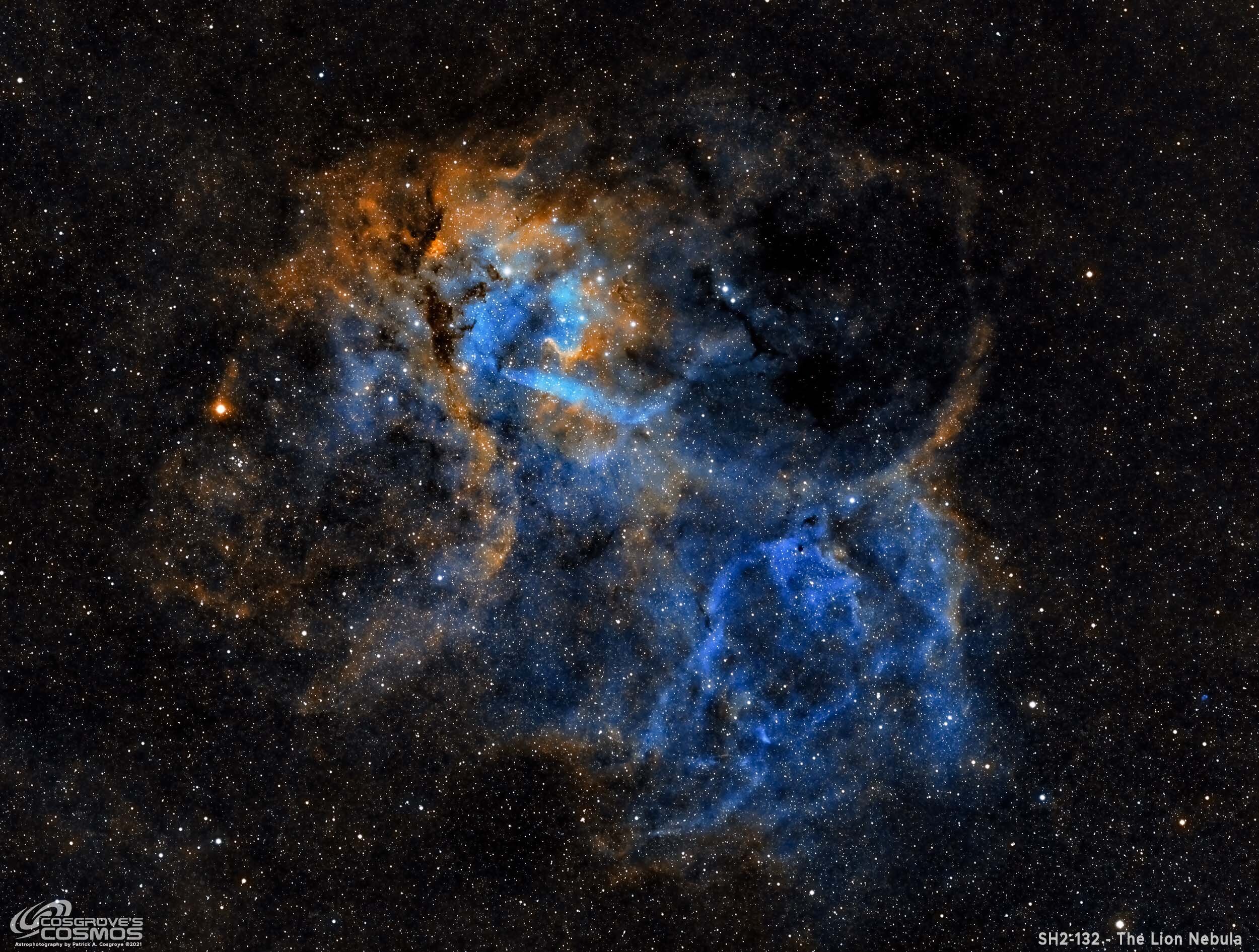
SH2-132 The Lion Nebula in SHO (8.33 hours)
SH2-132, also known as The Lion Nebula, is a rich HII region with star clusters, emission nebulae, and dark dust regions. Located in the southern portion of the constellation Cepheus, the Lion Nebula is roughly 10,00 light-years away in the Perseus Arm of the MilkyWay Galaxy. This is a very faint and challenging target.
This image was taken on the Askar FRA400 Platform with 8.33 hours of exposure in narrowband,
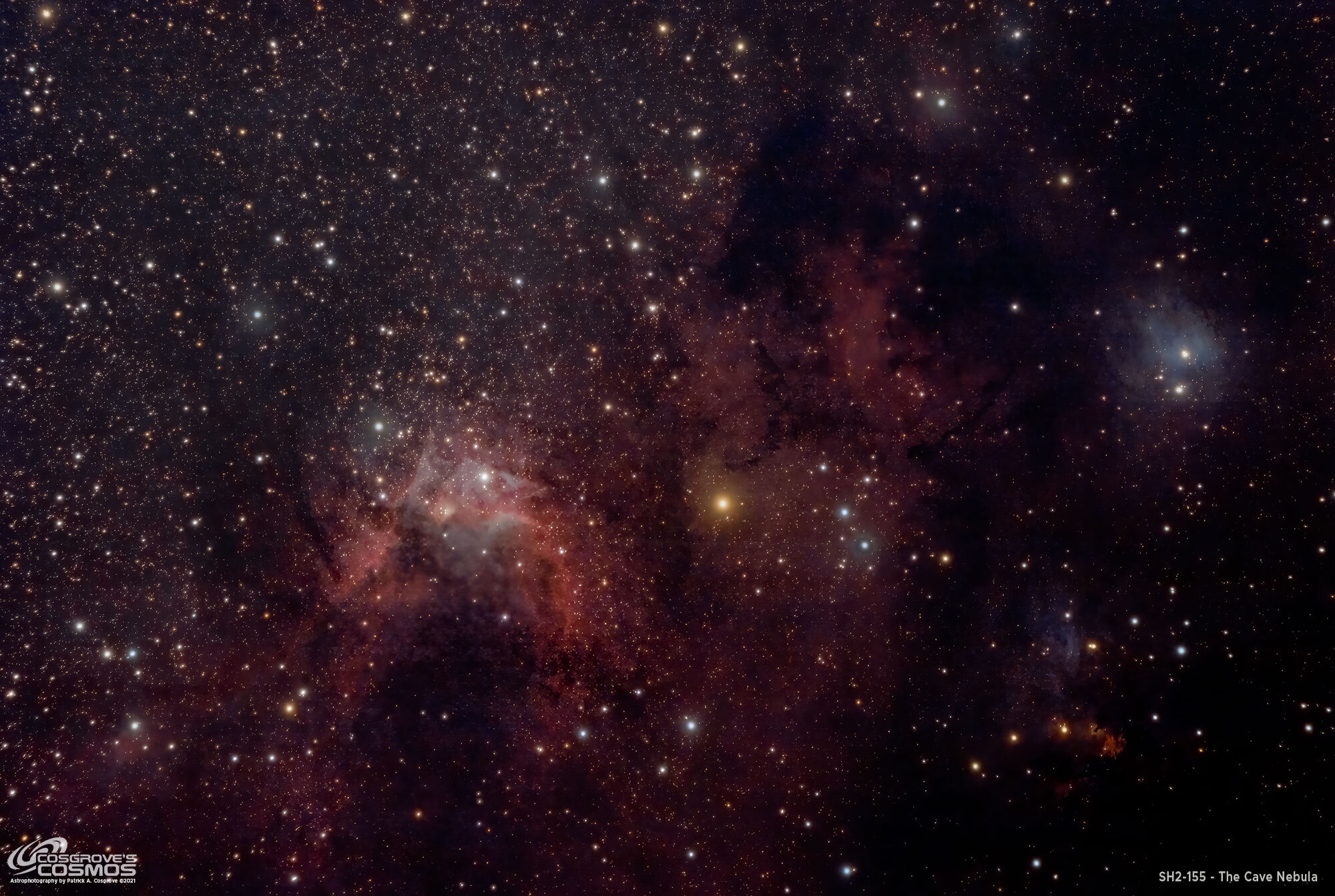
SH2-155 - The Cave Nebula
SH2-155 - The Cave Nebula - also known as Caldwell 9, is a diffuse nebula found in the constellation Cepheus. It is actually a part of a much larger complex of nebulae n the region which includes the emission, reflection, and dark nebulae. The designation indicates that this part of the Sharpless Catalog of emission nebulae which are located north of the declination -27 degrees. Sh2-155 is located 2400 light-years away and is an ionized HII region with evidence of star formation activity.
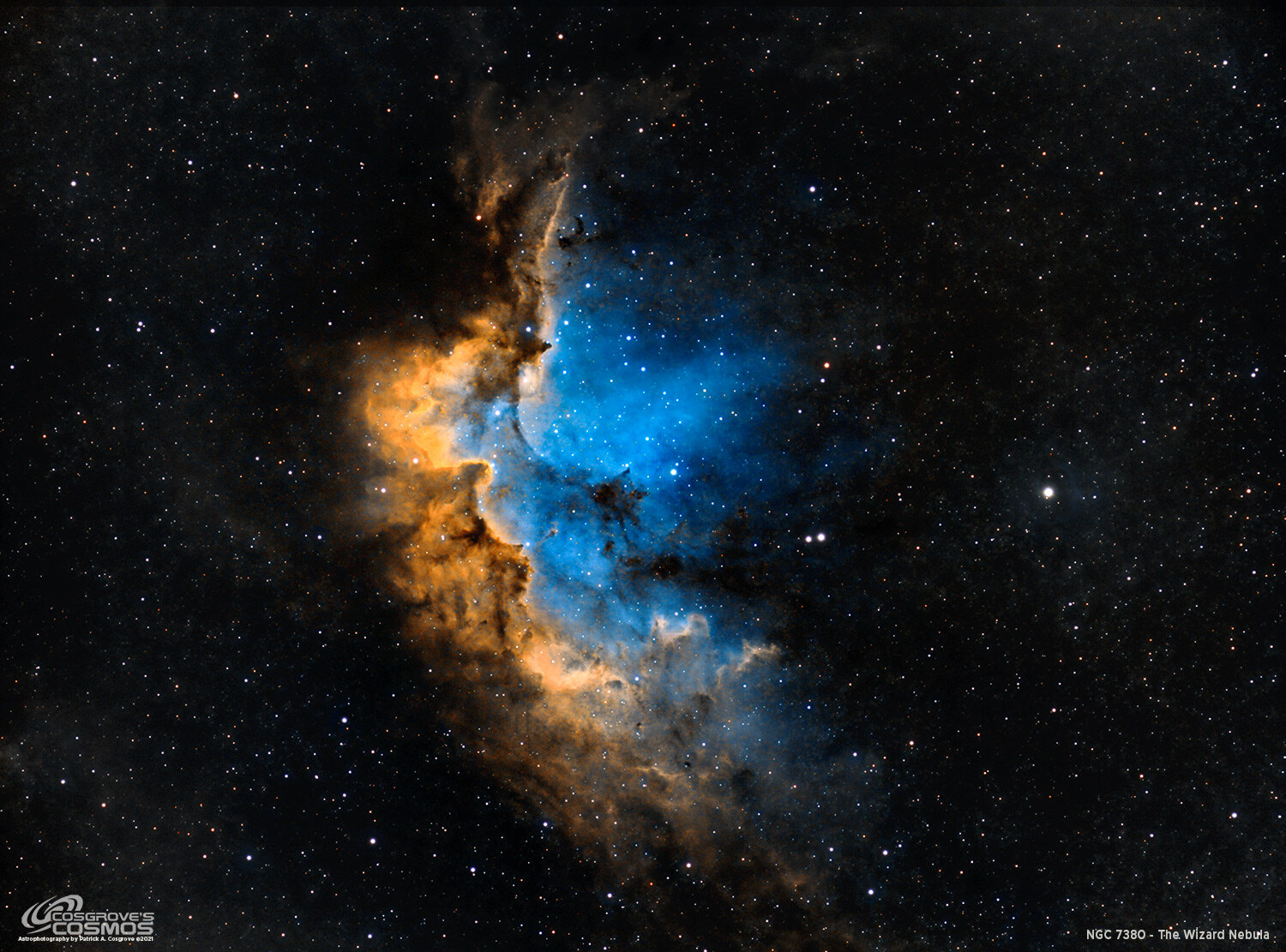
NGC 7380 - The Wizard Nebula - in Hubble Palette with Mixed Narrowband and RGB Filters
NGC 7380, Also known as the Wizard Nebula, the Flying Horse Nebula, and Sh2-142, is a gas, dust, and young star region. Located 7200 light-years away in the constellation Cepheus, the Wizard Nebula is tough to see visually but is a favorite imaging target. Most people have no trouble making out the Wizard - wearing a pointed hat, a well-defined nose, and a bright blue star for his eye. He also appears to be wearing a cloak and posing with his hands and fingers outstretched. FIrst complete Narrowband image attempted.
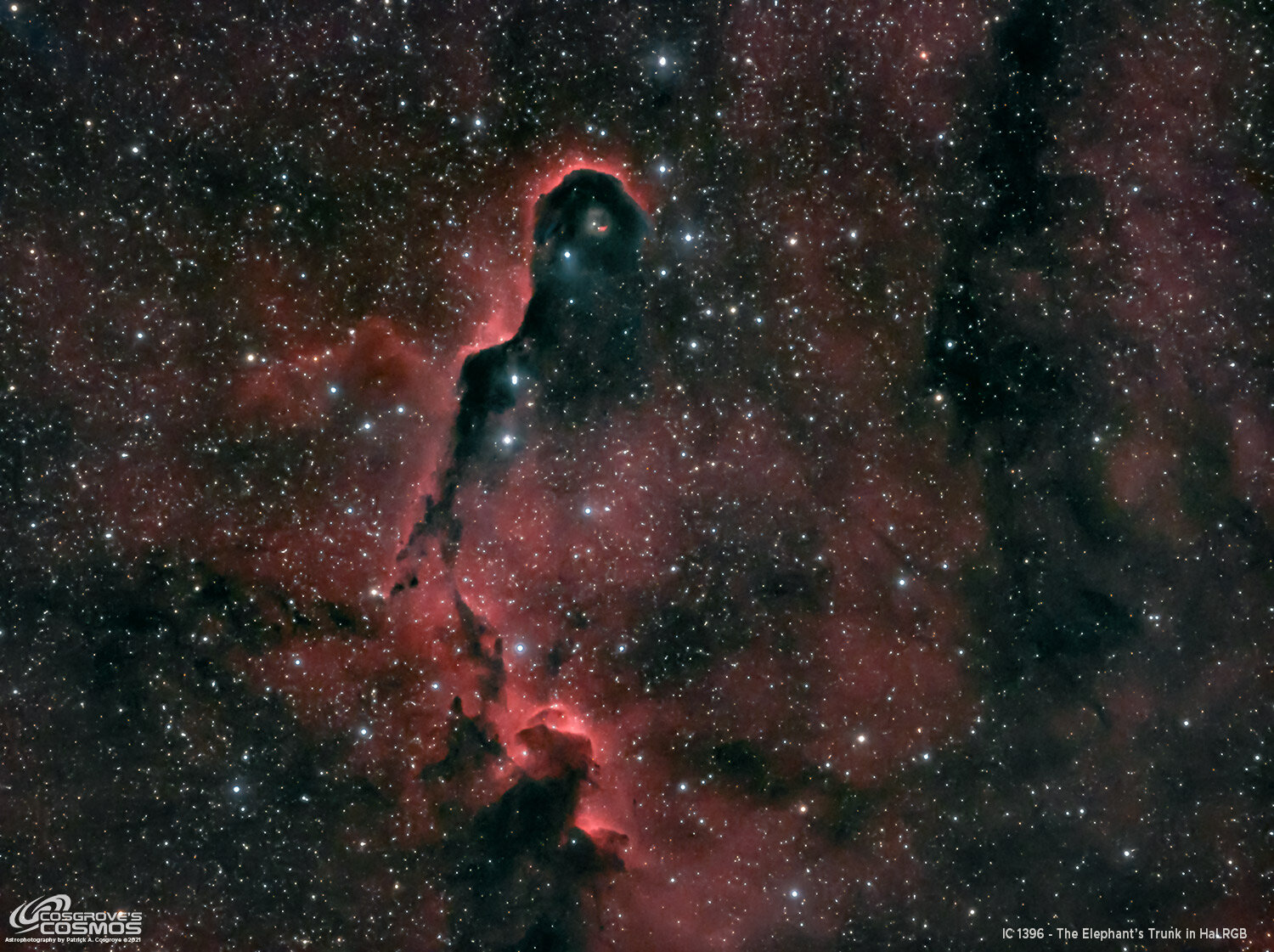
IC 1396 - The Elephant’s Trunk - Now with Added Ha
IC1396 - The Elephant's Trunk Nebula. This is a follow-up project. A few nights after the initial capture effort for this target, I went out and captured Ha data to integrate into the image. This made a massive improvement in the final image.
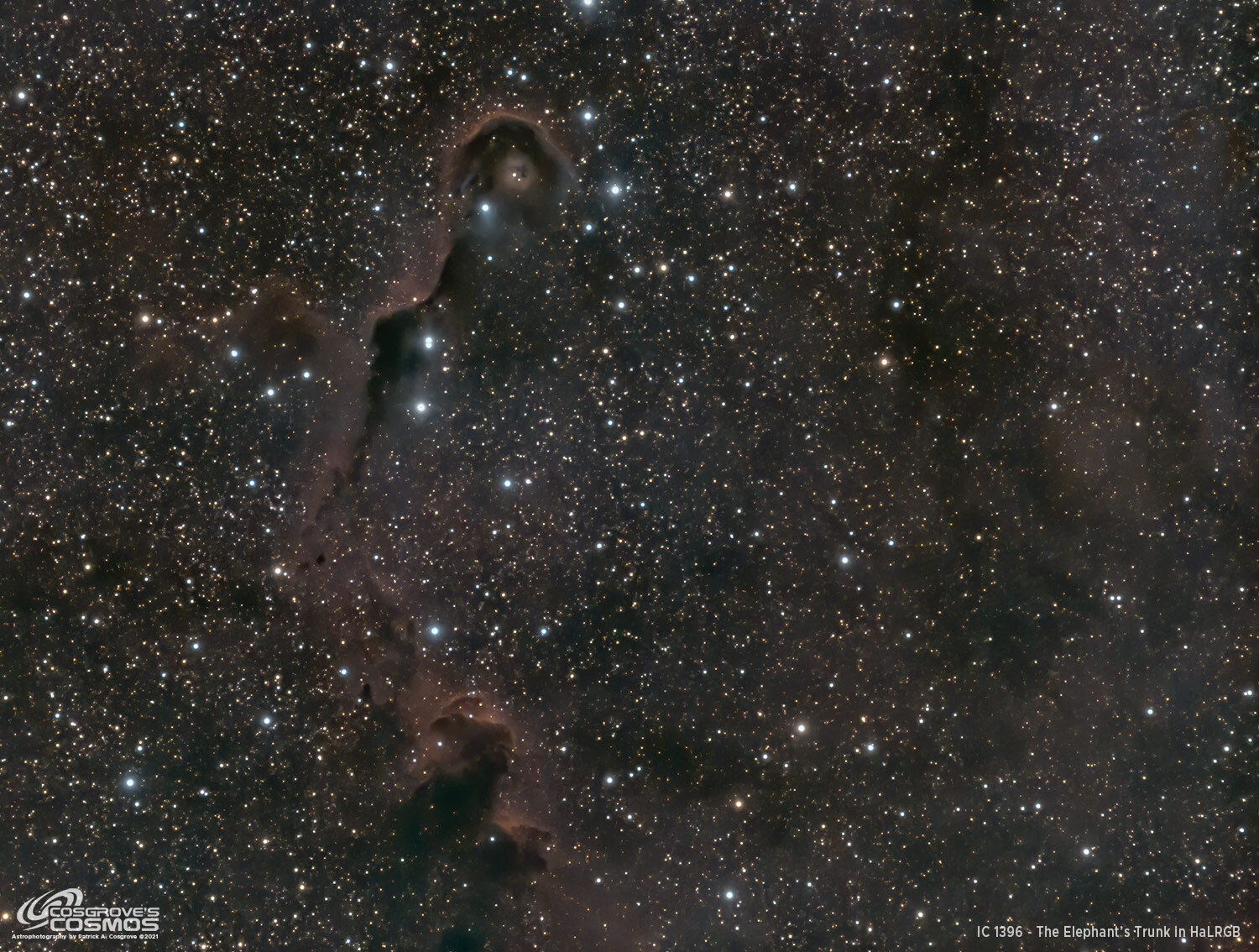
IC 1396 - The Elephant’s Trunk - in LRGB
IC1396 - The Elephant's Trunk Nebula. Located about 2400 light-years from Earth, in the constellation of Cepheus, IC1396 is a bright region of gas and dust. This area is rich in star formation, with over 10K newly formed blue stars. The prominent dust feature rimmed with glowing emission light is called the Elephant's Trunk Nebula and is designated IC1396A. This was my second attempt at an LRGB image using a Mono camera.
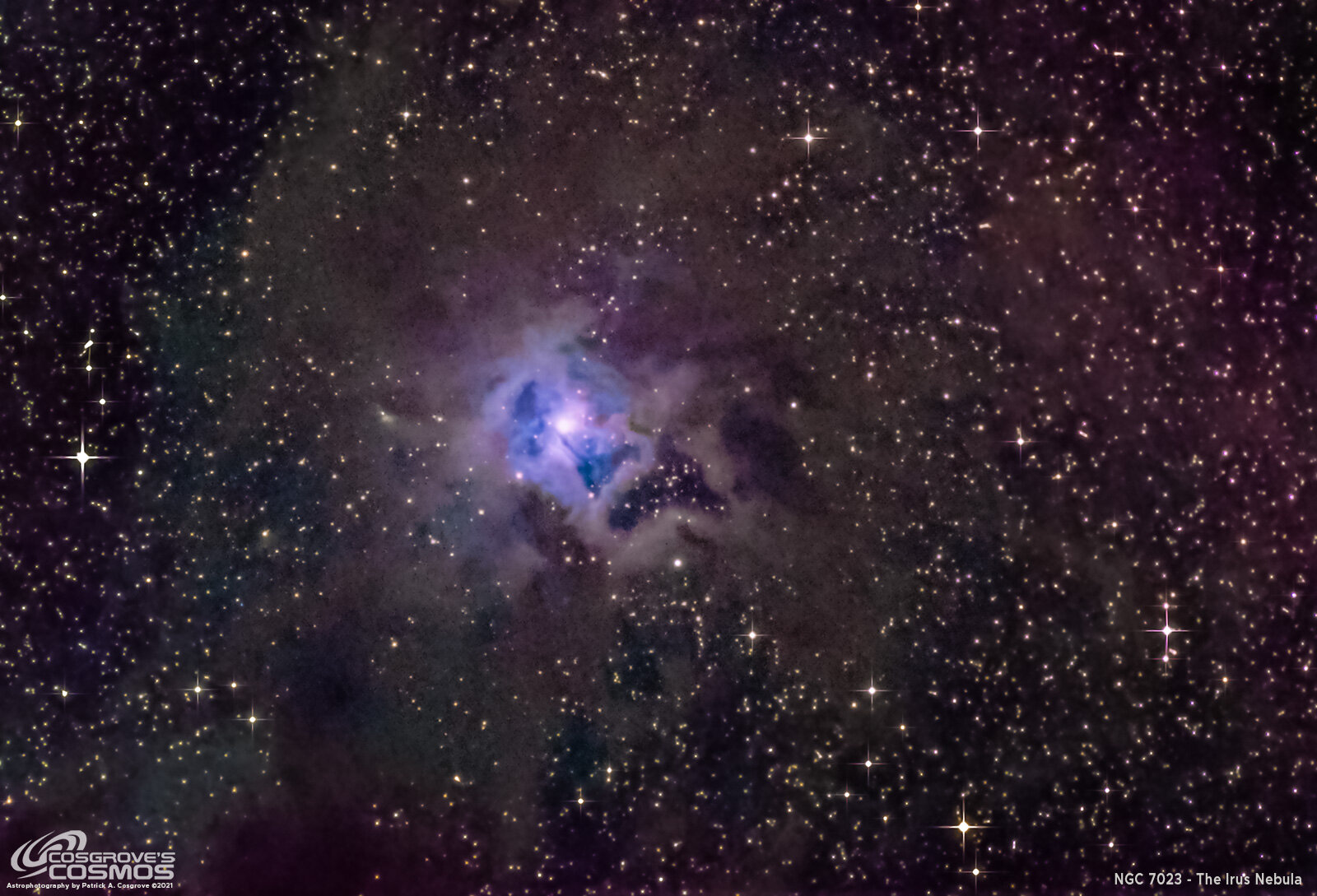
NGC 7023 -The Iris Nebula
NGC 7023, also known as the Iris Nebula, is located in the constellation Cepheus and is only 1300 light-years away. NGC 7023 is actually the small cluster of stars in the nebula center - these stars are surrounded by both emission and dark nebulae.
I like the effect you get with this nebula as there are many dark clouds as dark clouds, and in some cases, these clouds are back-illuminated. I was surprised that we had a clear night last night - it was originally forecasted to be cloudy. This is a key week for Astrophotography as the moon is new, so I could not miss an opportunity to go after this object. The plan was to capture 65 x 180-second exposures. Alas, I was hit by some high-level clouds at exposure 35, and I had to shut down.