Imaging Projects
In this blog, I will share the results of all of my imaging projects. The newest will be at the top and the oldest will be further down the stack. Going back in time here is interesting - some of my early stuff was pretty rough - but I did not see it that way at the time - I was thrilled to get anything back that looked like an image! Hopefully, you will see how my work has progressed with time!
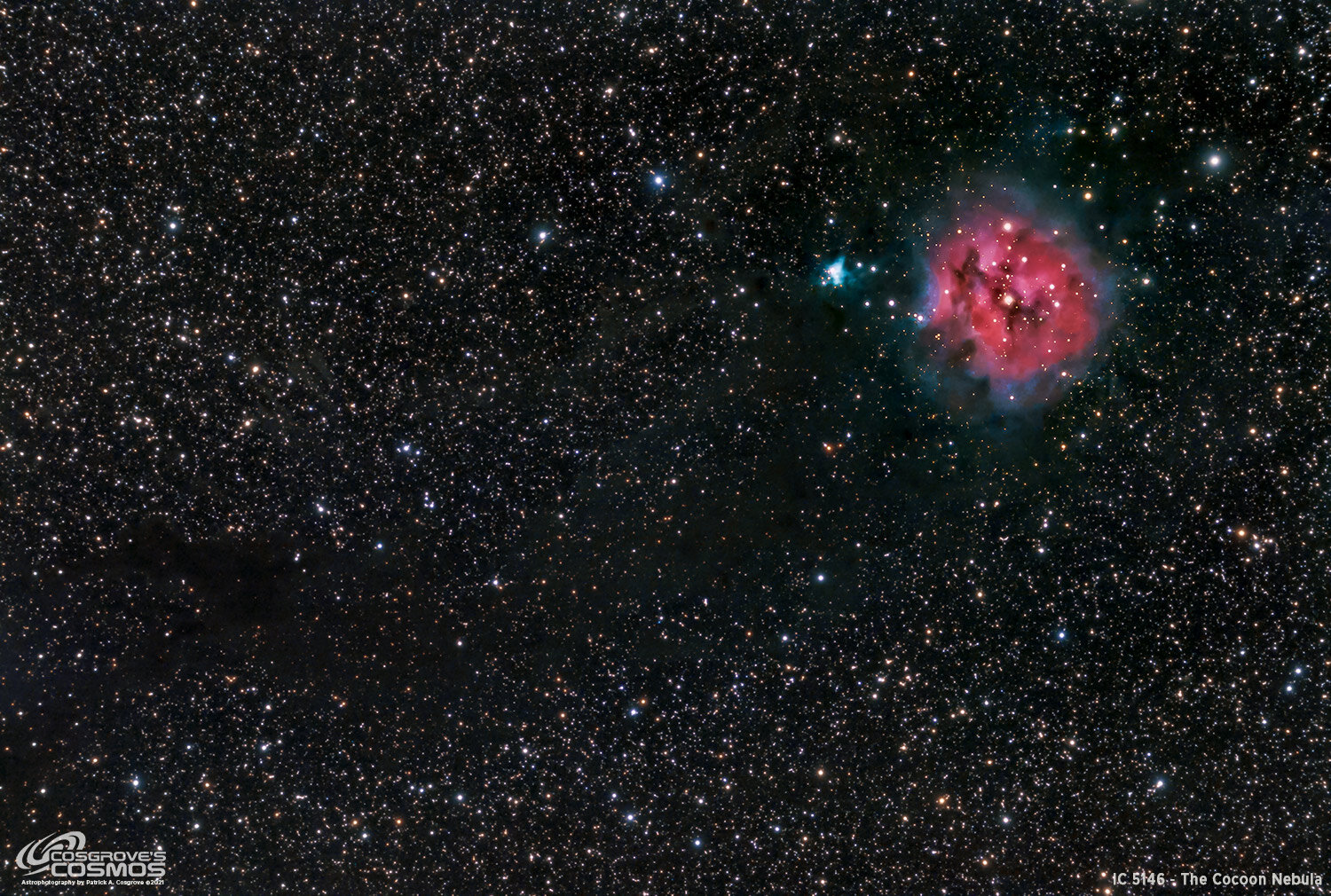
IC 5146 - The Cocoon Nebula
Located 4000 light-years from Earth, IC 5146 - better known as the Cocoon Nebula, is an area of both bright and dark nebulae in the constellation of Cygnus the Swan. The red portion is due to light shining from hydrogen emissions, while the blue portions of the nebula consist of dust reflecting the light young hot blue stars. At the core of the nebula is a bright star that only formed about 100,000 years ago. The shell of gas is about 15 light-years across. Also seen is a dark lane of dust that appears to project from the main nebula towards the west. This dark object is an obscuring cloud of dust known as Barnard 168. To me, it almost looks as if the dark cloud is emanating from and trailing the Crescent Nebula - I like the effect!
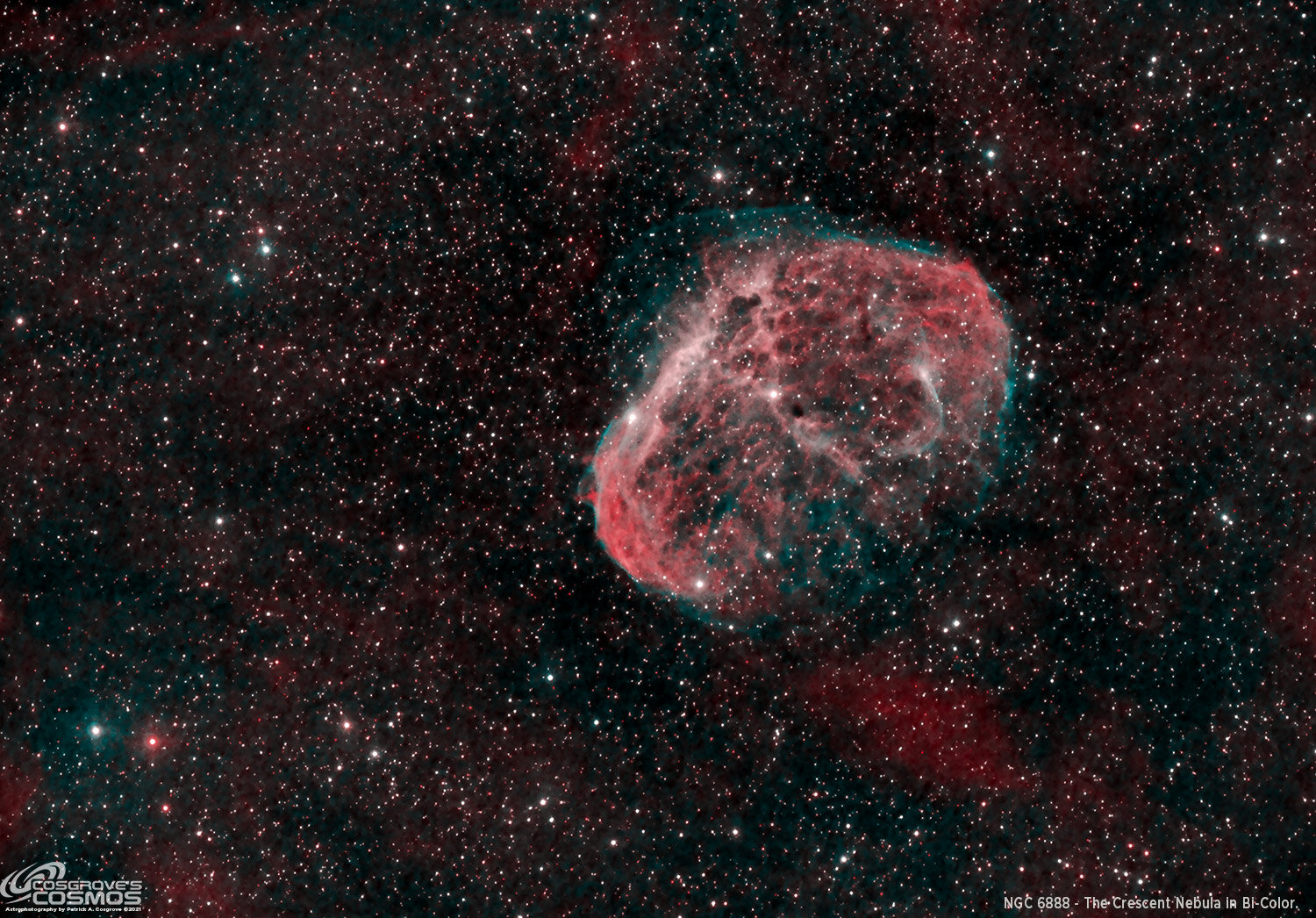
NGC 6888 - The Crescent Nebula in Bi-Color
NGC 6888, the Crescent Nebula. Found in the constellation Cygnus the Swan, The Crescent Nebula is an emission nebula located 5,000 light-years away. This was my very first attempt to image with narrowband filters - creating a Bi-Color image with Ha and OIII filters.
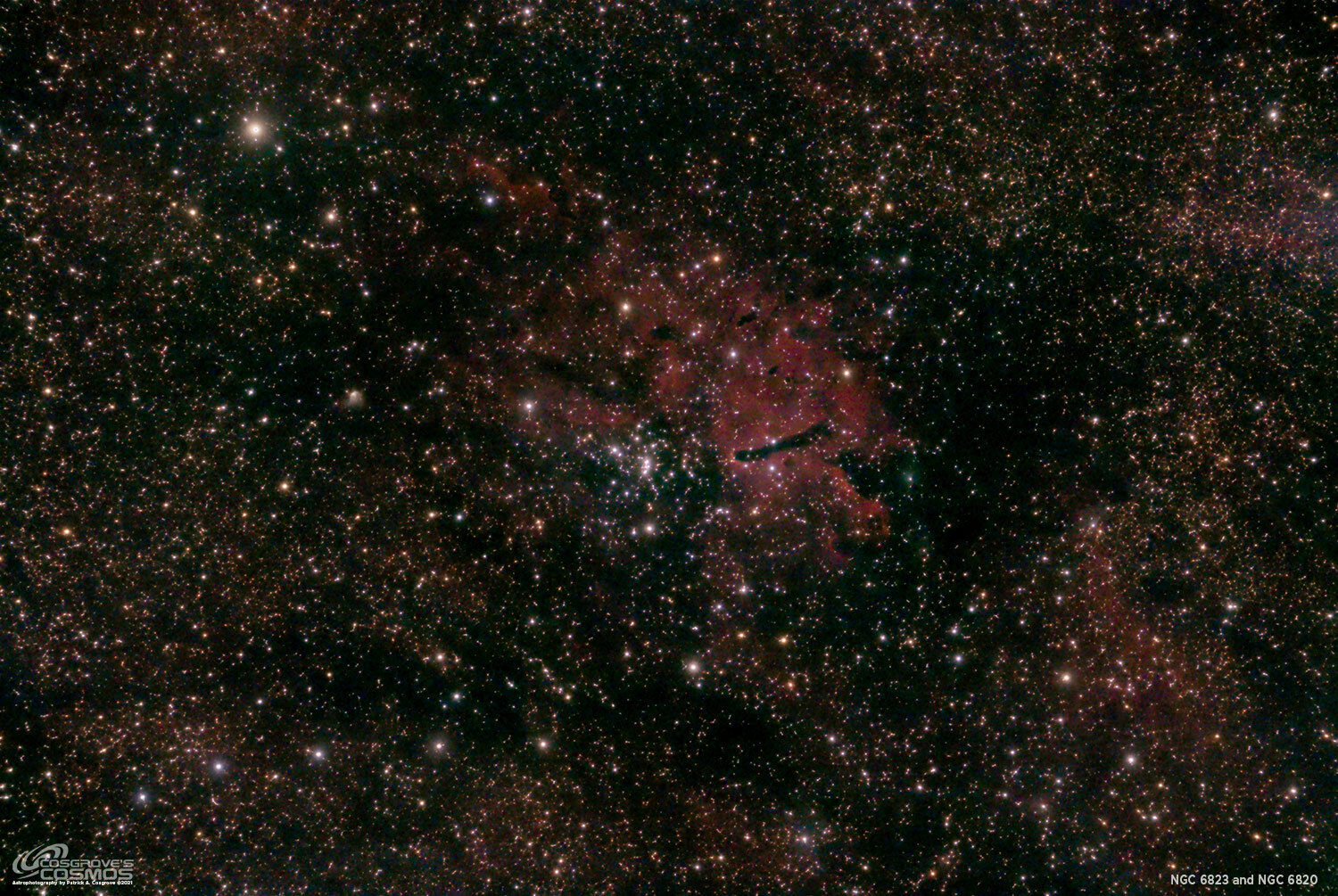
NGC 6823 & 6820 - An Open Cluster w/Nebula - Quite Possibly The Worst Image I Have Ever Taken!
Located in the constellation Vulpecula, NGC 6823 is a small open cluster of stars and associated reflection nebula, NGC 6820. The cluster is located about 6000 light-years away and measures about 50 light-years across.
This was one of the worst images I have ever done. Target not carefully chosen, no plan in place, poor shooting conditions. Just a real Bluh Image!
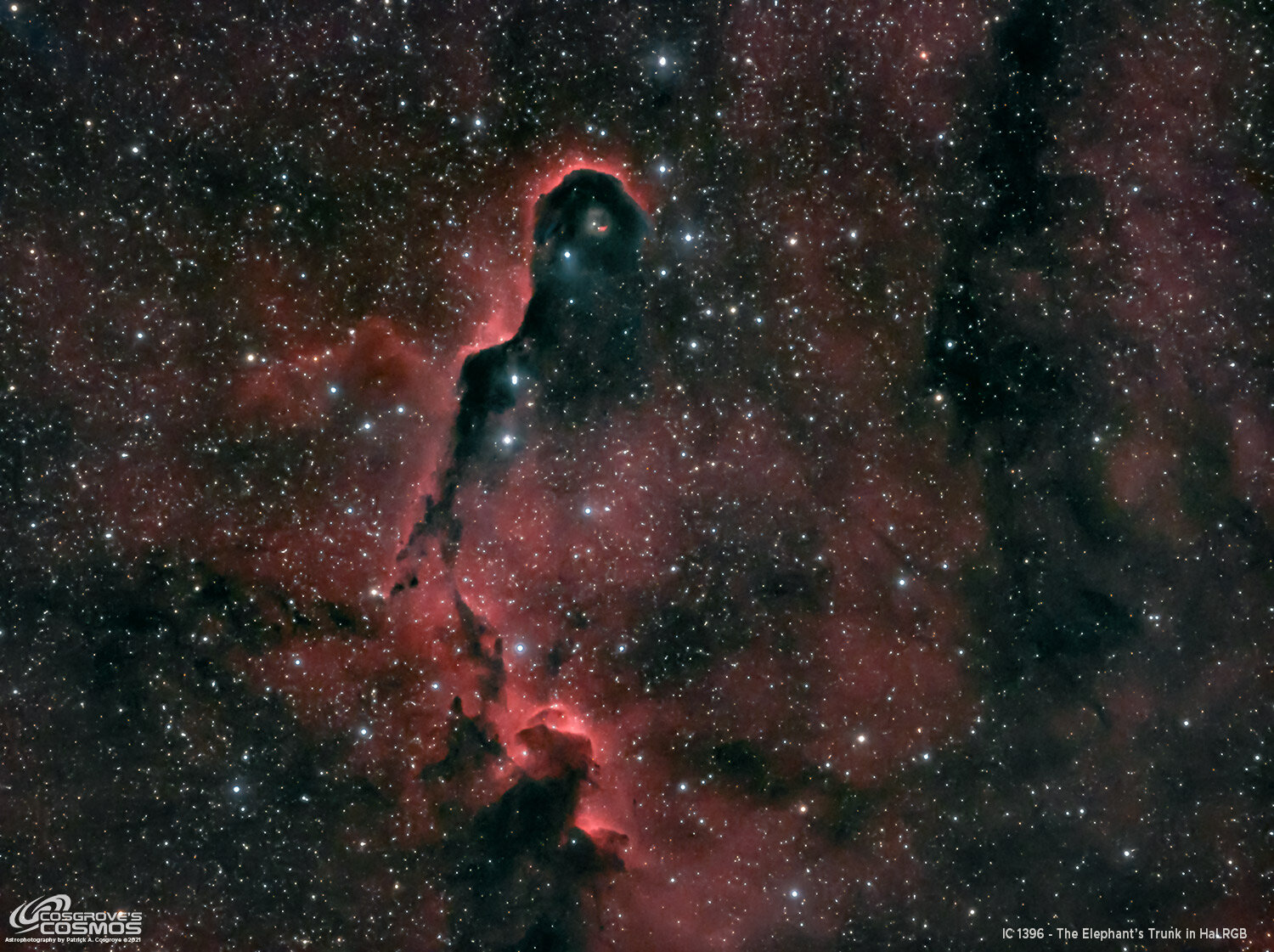
IC 1396 - The Elephant’s Trunk - Now with Added Ha
IC1396 - The Elephant's Trunk Nebula. This is a follow-up project. A few nights after the initial capture effort for this target, I went out and captured Ha data to integrate into the image. This made a massive improvement in the final image.
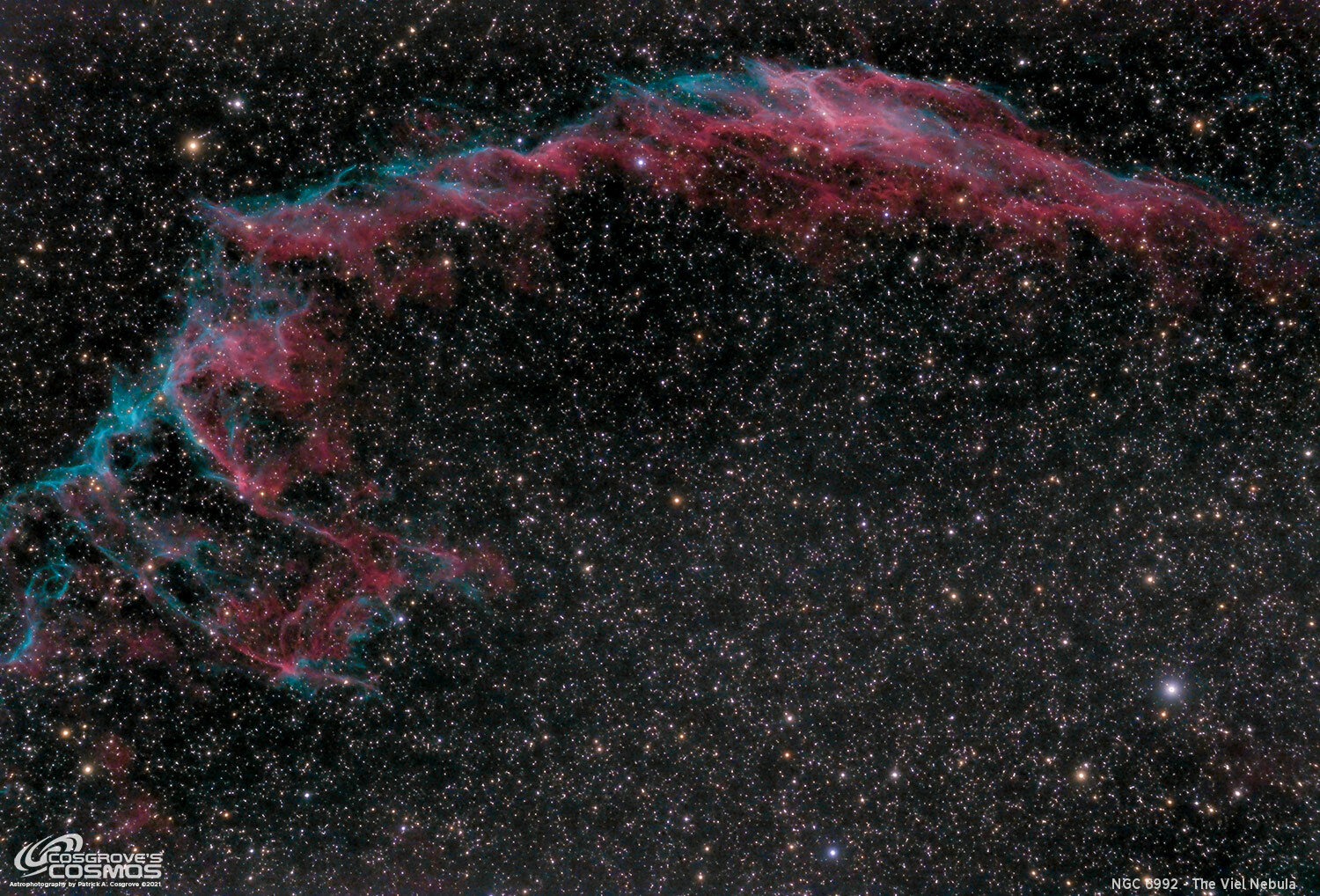
NGC 6992 - The Veil Nebula
NGC 6992, The Veil nebula, is a collection of hot gas and dust that forms a portion of a supernova remnant. Located 2400 light-years in the constellation of Cygnus, It forms one visible portion of the Cynus Loop - an expanding shockwave bubble from a star that went supernova between 10,000 and 20,000 years ago. The expanding gas from this explosion compressed Hydrogen, Oxygen, and Sodium, causing the formation of shockwaves and causing the colors you see here.
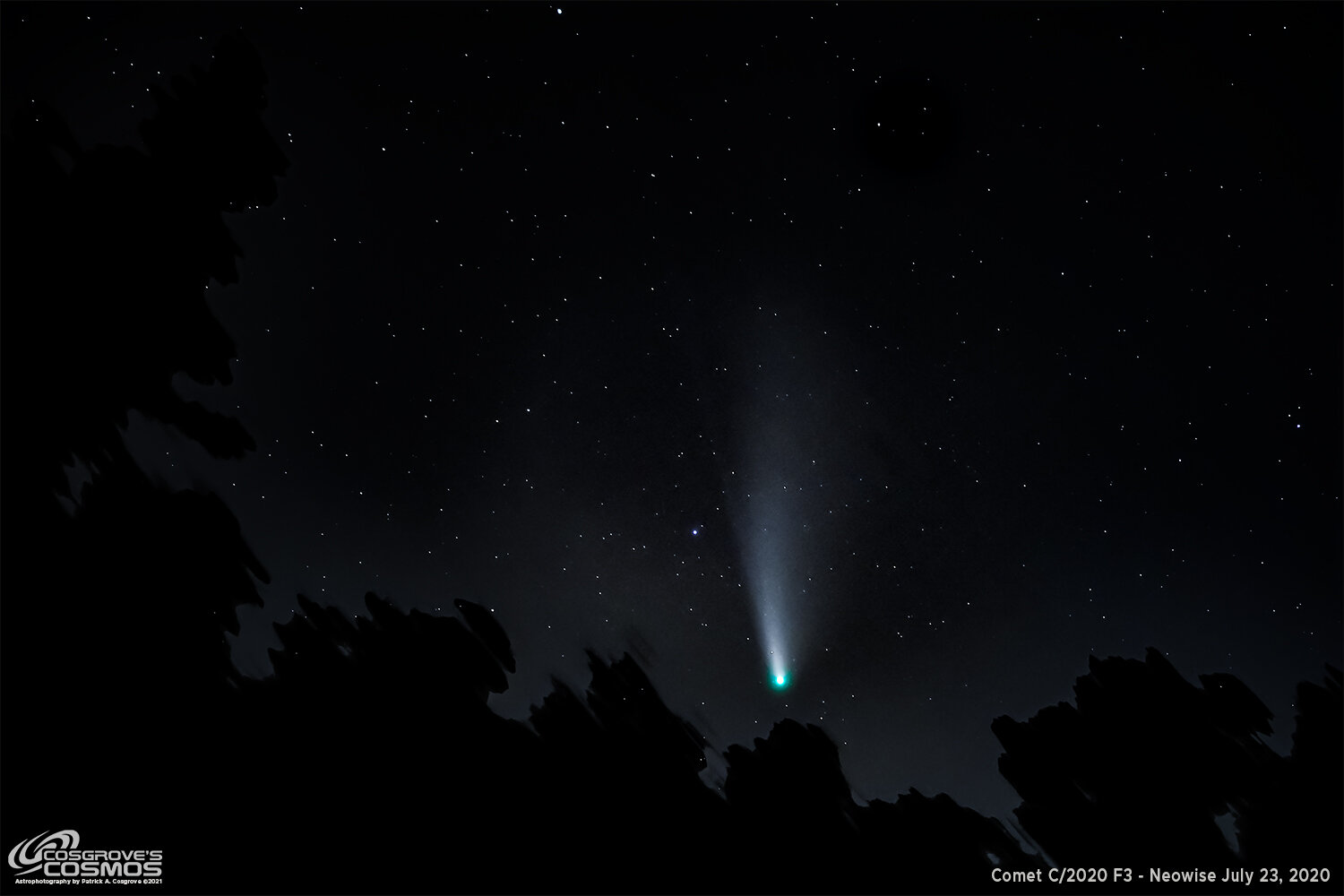
C/2020 F3 Comet Neowise
And now for something completely different. I don’t typically go after Solar System objects, but Comet Neowize blazed onto the scene during the Summer of 2020, and everyone who breathes air was asking me if I was going to shoot the comet. So I decided to make a half-assed effort to do that while I was talking other subs on the other scopes.

Messier 20 - The Trifid Nebula - Mono Camera FIrst Light!
Messier 20 is known by the common name “The Trifid Nebula” and by NGC 6514. It is a star-forming region in the constellation of Sagittarius and is located about 4100 light-years away. This was the very first image on the AP-130 platform and my very first use of a mono camera forming an LRGB image!
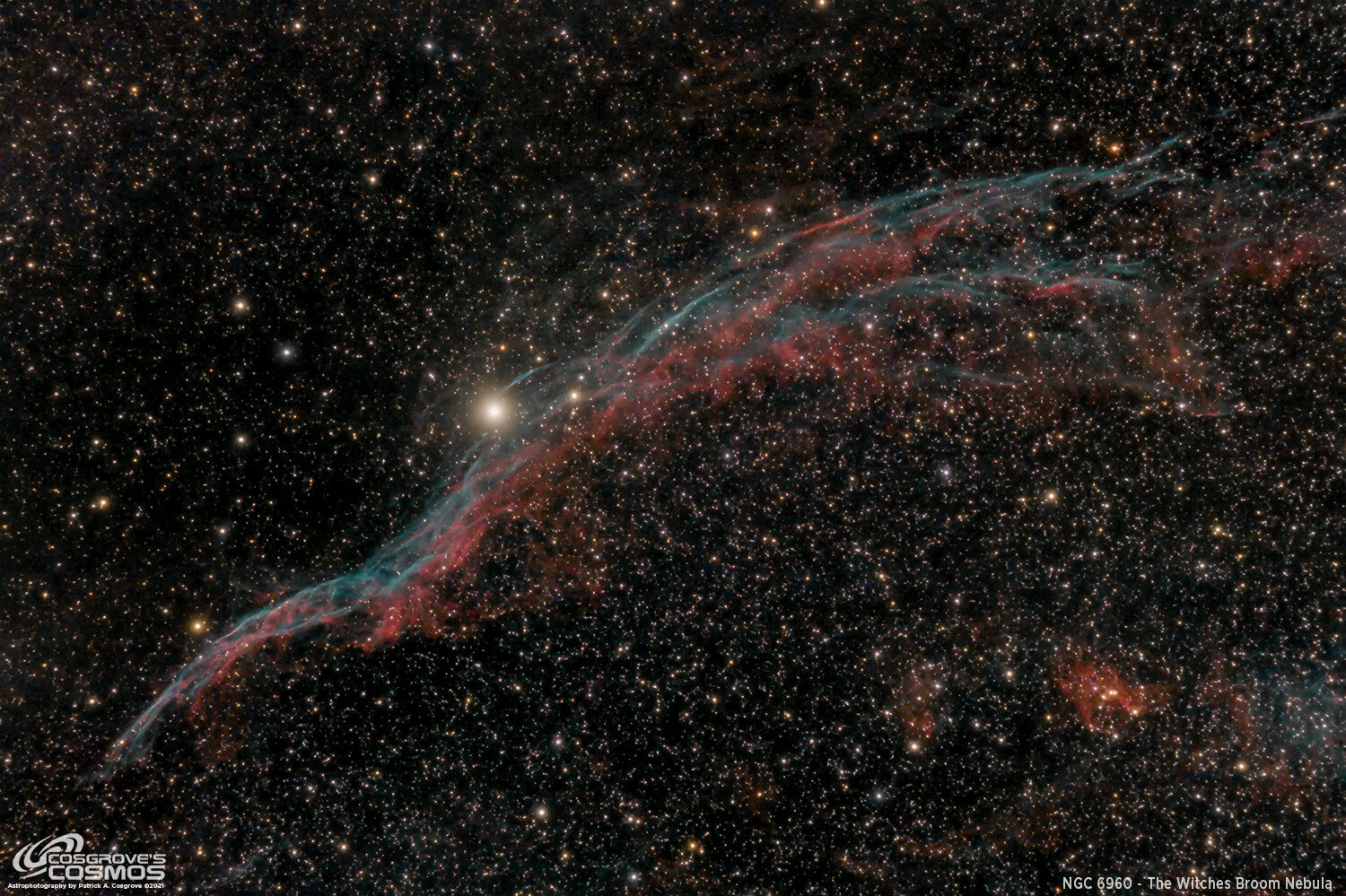
NGC 6960 - The Witches Broom Nebula
NGC 6960 - The Witches Boom Nebula
Some time between 10,000 and 20,000 years ago - a star - twenty times more massive than our Sun, went supernova. The exploding outer layer of gas was blown off and has expanded in size ever since. This "ring" is known as the Cygnus Loop or the Veil nebula, and is now over 3 degrees in diameter (6 times bigger than a full Moon!) and is located 2400 light-years away in the constellation Cygnus the swan. Parts of this loop are brighter and have their own designations. NGC 6960 is one of those. It is also known as the Western Veil, The Finger of God, The Lacework Nebula, The Filamentary Nebula, and Caldwell 34. The bright star in the image is 52 Cygni. The colors are from the emission of Hydrogen, Oxygen, and Sodium gas excited by stars.
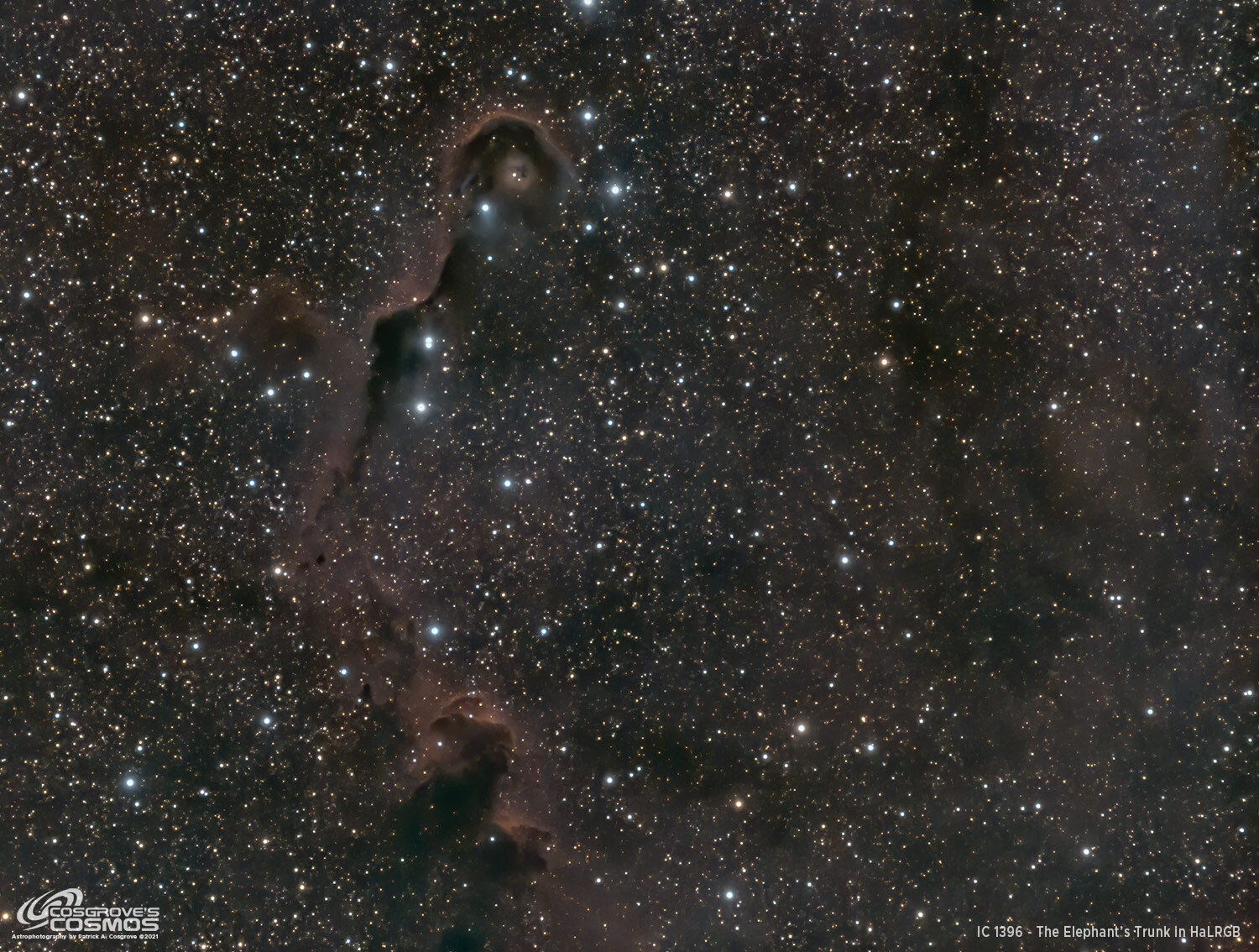
IC 1396 - The Elephant’s Trunk - in LRGB
IC1396 - The Elephant's Trunk Nebula. Located about 2400 light-years from Earth, in the constellation of Cepheus, IC1396 is a bright region of gas and dust. This area is rich in star formation, with over 10K newly formed blue stars. The prominent dust feature rimmed with glowing emission light is called the Elephant's Trunk Nebula and is designated IC1396A. This was my second attempt at an LRGB image using a Mono camera.
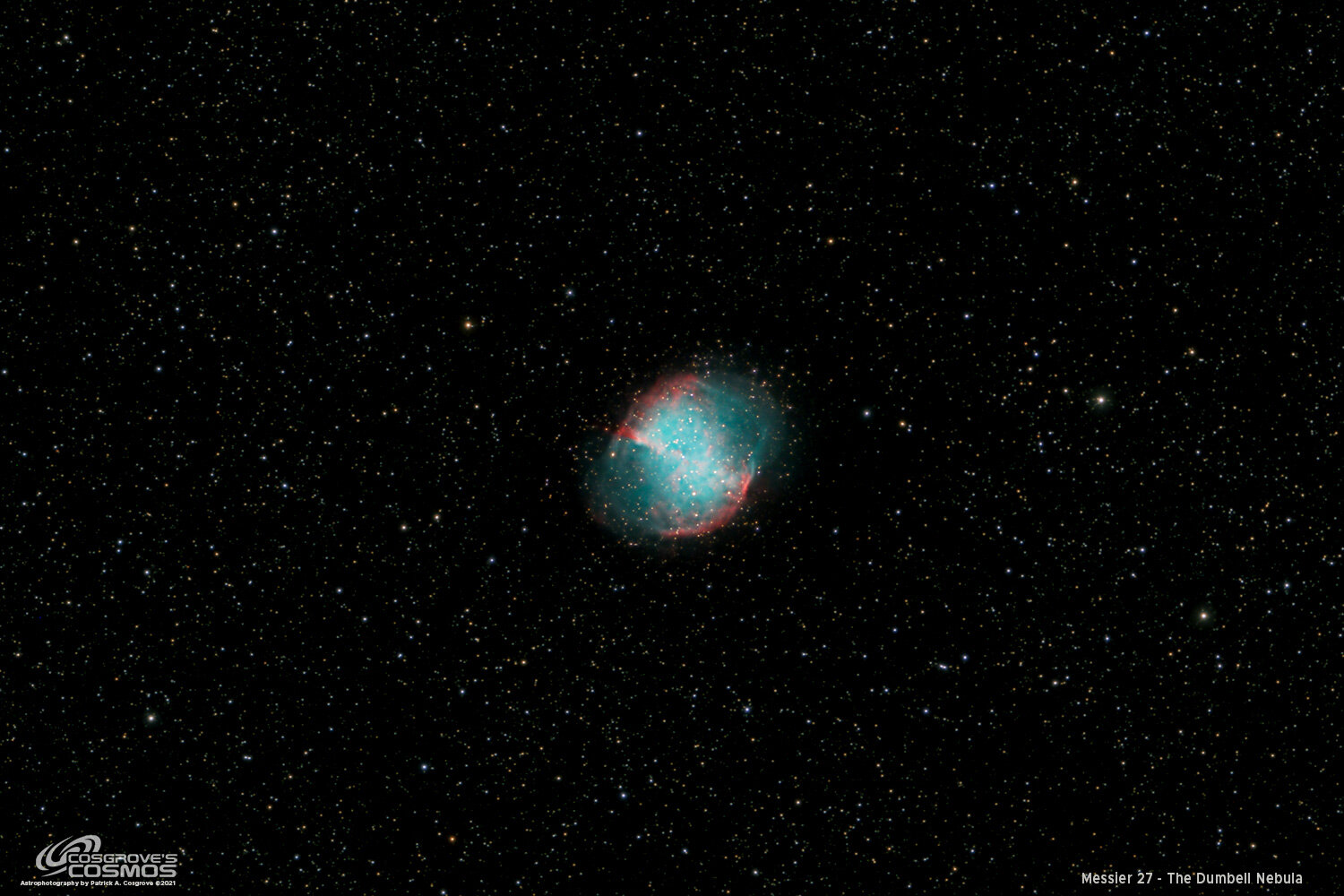
Messier 27 - The Dumbell Nebula
Messier 27 is a planetary nebula in the Constellation Vulpecula and is located about 1200 light-years away. M27 is also known as the “Apple Core” nebula and NGC 6853. It's basically a star the blew up between 10,000 and 14,000 years ago, and we get to see its expanding gas cloud. While this object is small, it is twice the size of the Messier 57 (The Ring Nebula) and allows for a bit more detail to be imaged. This was my second attempt at M27, the first being 2019 when I was first starting. See the comparison between the two.
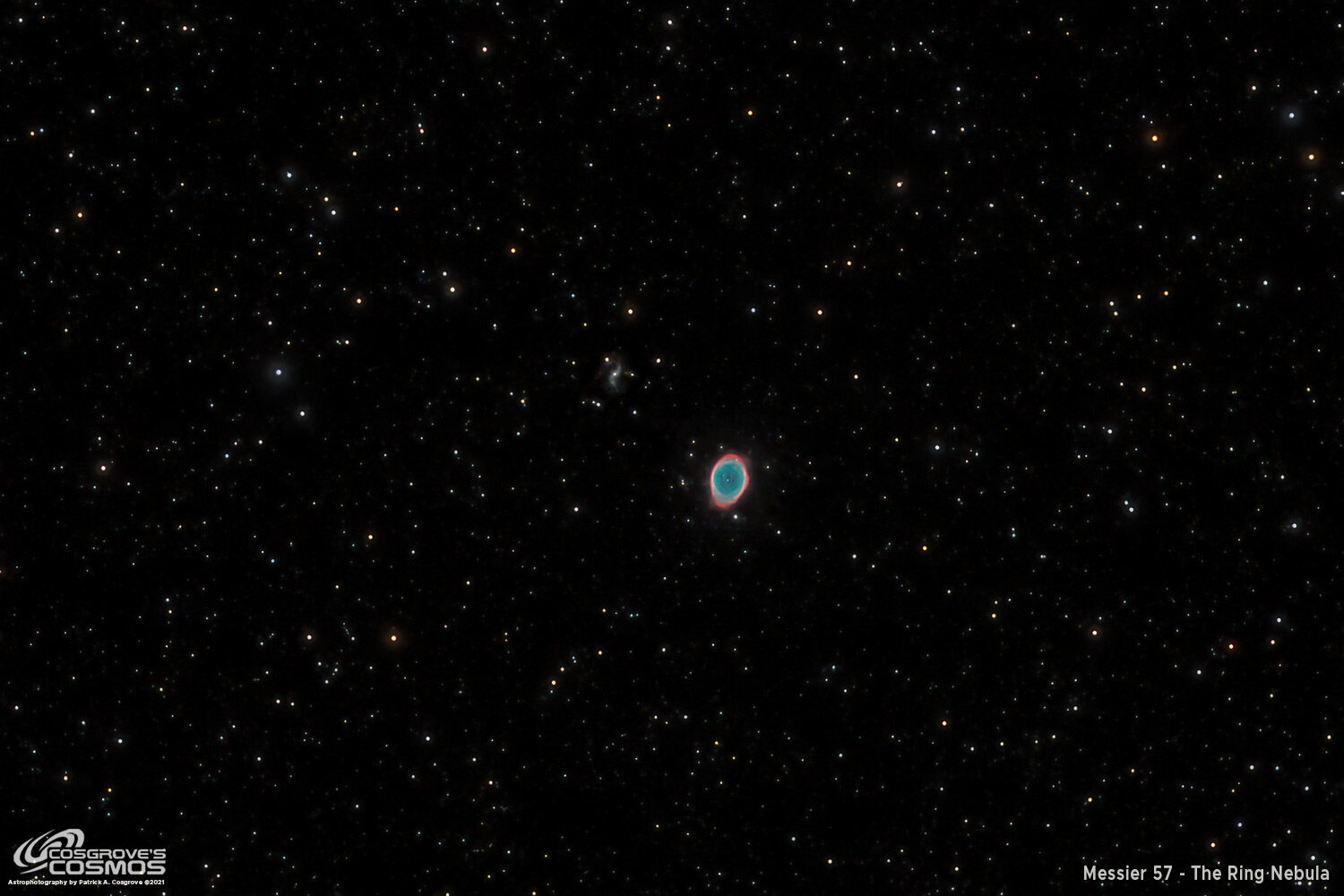
Messier 57 - The Ring Nebula
Messier 57, also known as NGC 6720, and the “Ring Nebula” is located about 2400 light-years away in the constellation Lyra. M57 is a planetary nebula - an expanding shell of gas and dust expelled by its star in the last stages of its life. The outer shell is expanding at a rate of ~one arcsecond per century. The blue-green color of the central area is due to doubly ionized oxygen. This was my second attempt at M57, the first being 2019 when I was just starting. See the comparison between the two.
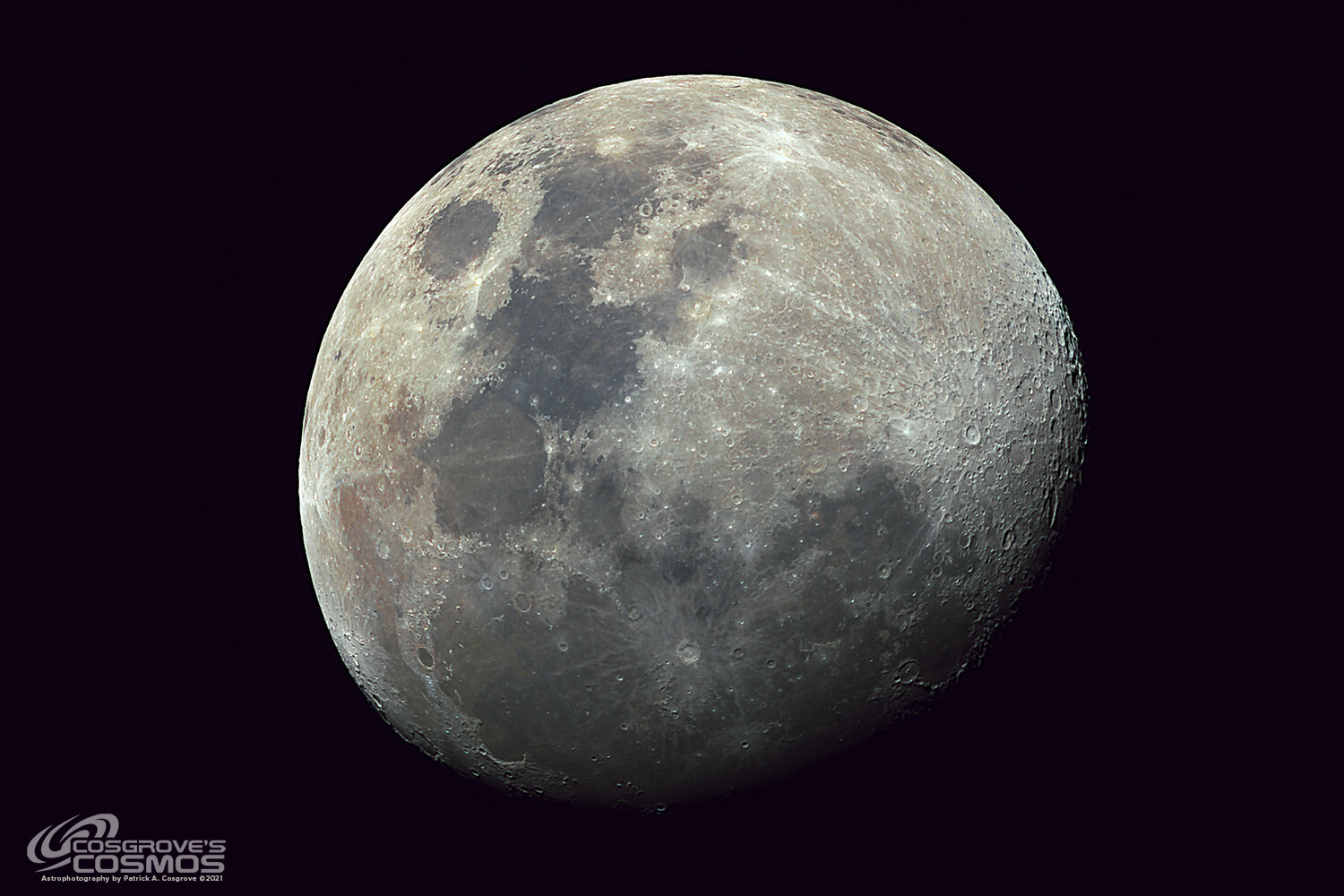
The Moon - July 1, 2020
The Moon. Best seen at full size. I took this shot on the night of 7-1-20. I don't normally do Moon or planet imaging, but I was tweaking part of my rig and the Moon as there ... so why not. The Moon was in its Waxing Gibbous phase and had an illumination of 83%. This is the percentage of the Moon illuminated by the Sun. On July 1, the Moon is 10.81 days old.

Messier 8 - The Lagoon Nebula
Messier 8, also known as the Lagoon Nebula, is a giant interstellar cloud located in the constellation Sagittarius and is 4000-6000 light-years away. This is a rich star-forming region - in fact, it is one of the two such regions that are bright enough to be seen with the naked eye under dark skies.
This is my second effort shooting this target.

Messier 16 - The Eagle Nebula / Pillars of Creation
My Second time shooting Messier 16 - The Eagle Nebula - this time with the ASI294MC-Pro OSC camera. A significant improvement in quality is shown.

Arp 271 - Interacting Galaxies: NGC 5426 & NGC 5427
Arp 271 consists of two distant spiral galaxies, NGC 5426 & NGC 5427) that are interacting and gravitationally linked. The galaxies are located a whopping 130 Million light-years from earth, in the cancellation of Viro. Both galaxies are of a similar size and have been interacting for millions of years, and they will continue to for millions more. It is not known whether they will collide or not. But we do know that the mutual gravitational attraction has created "bridges" of stars, gas, and dust between them.
The Arp designation refers to "The Atlas of Peculiar Galaxies," a catalog of peculiar galaxies produced by Halton Arp in 1966.

Messier 17 - The Omega Nebula
M17 is one of those objects that has collected a lot of common names over the years. Most often known as the Omega Nebula, it has also been called the Swan, Horseshoe, and Check-Mark Nebula.
As you look towards the southern sky during summer, you are actually looking to a very bright portion of our own Milky Way Galaxy, and M17 is part of that region. The Omega Nebula is a large region of Hydrogen II Gas located in the constellation Sagittarius. It is between 5000 and 6000 light-years from earth and has a diameter of about 15 light-years.

NGC 4631: The Whale Galaxy and NGC 4656: The Hockey Stick
NGC 4631(The Whale) and NGC 4656 ((The Hockey Stick) are fascinating pair of galaxies. Both galaxies fit in the same frame, and this creates an interesting composition.
NGC 4631 is the larger and brighter of the two. Located about 30 Million light-years from Earth, this galaxy has a wedge-shaped form that resembles a whale, thus - its name. In addition, NGC 4631 has a nearby dwarf elliptical galaxy, NGC 4627, as a companion.
NGC 4656, the Hockey Stick - also known as the Crowbar Galaxy, is a highly warped barred-spiral galaxy. Its distinctive shape is due to a *recent* gravitational interaction with NGC 4631. T

NGC 5981, NGC 5982, & NGC 5985: The Draco Triplet
The Draco Group of Galaxies are a string of three primary galaxies that can be seen in a common field of view in the constellation Draco. The largest and roundest one seen at the bottom of the frame is NGC 5985. This has a barred spiral structure, and the arms are clearly visible in this shot. NGC 5981 can be seen at the top of the frame. This is also a barred spiral galaxy, but it is seen almost edge-on. The galaxy in the center is NGC 5982. It is an elliptical galaxy - which is typically seen as nebulous without any obvious structure. These galaxies are approximately 100 Million light-years from earth.
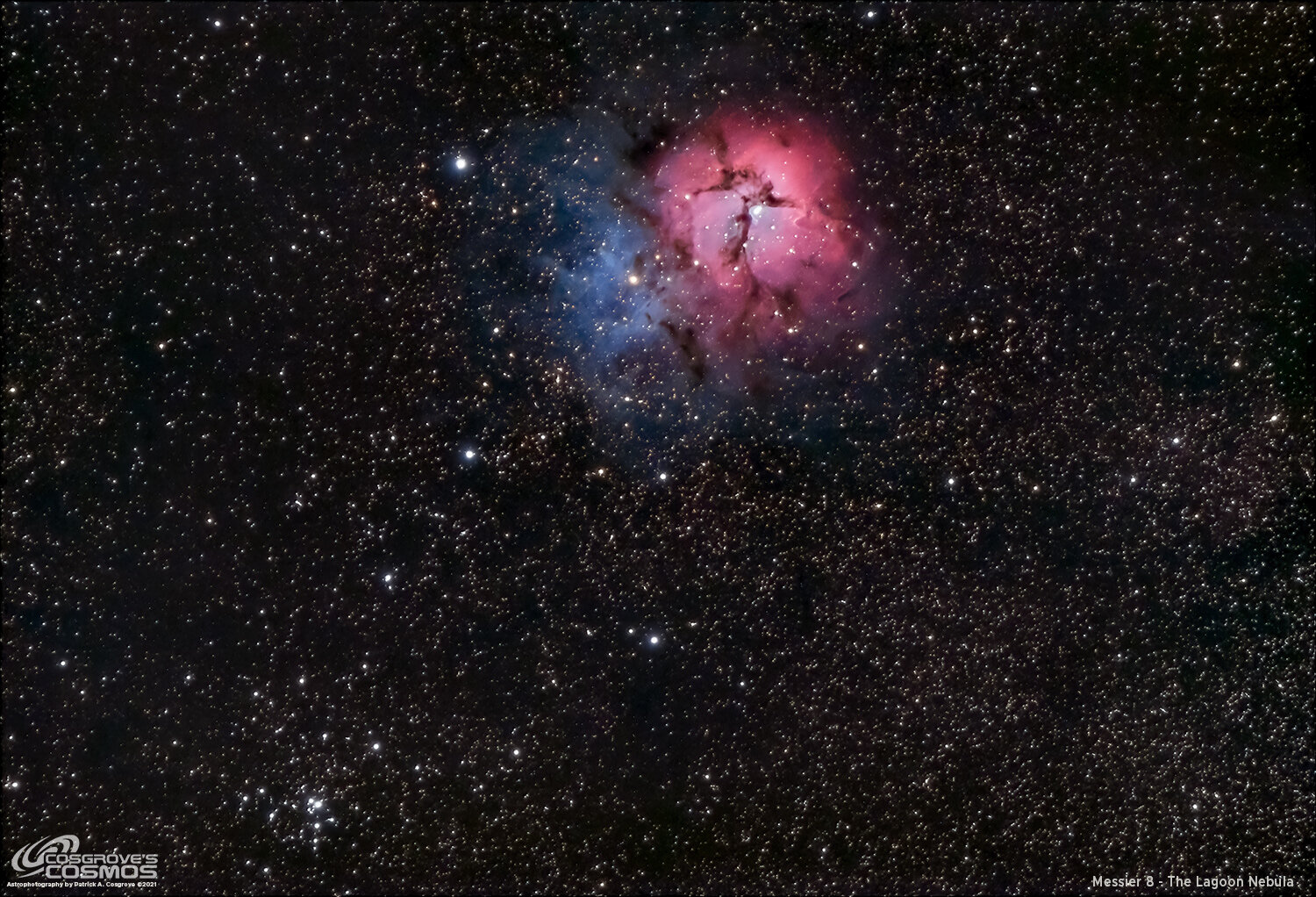
Messier 20 - The Trifid Nebula
The first imaging attempt on Messier 20, commonly known as the Trifid Nebula, is a Hydrogen II region in Sagittarius located about 5000 light-years from earth. The name "Trifid" means "divided into three lobes," This describes the impression when seen visually in a Telescope. This object combines an open cluster of stars, an emission nebula (the red portion), and a reflection nebula (the blue portion), making it a rich target for astrophotography. The dark lanes are concentrations of dust and gas that form nurseries for the formation of new stars
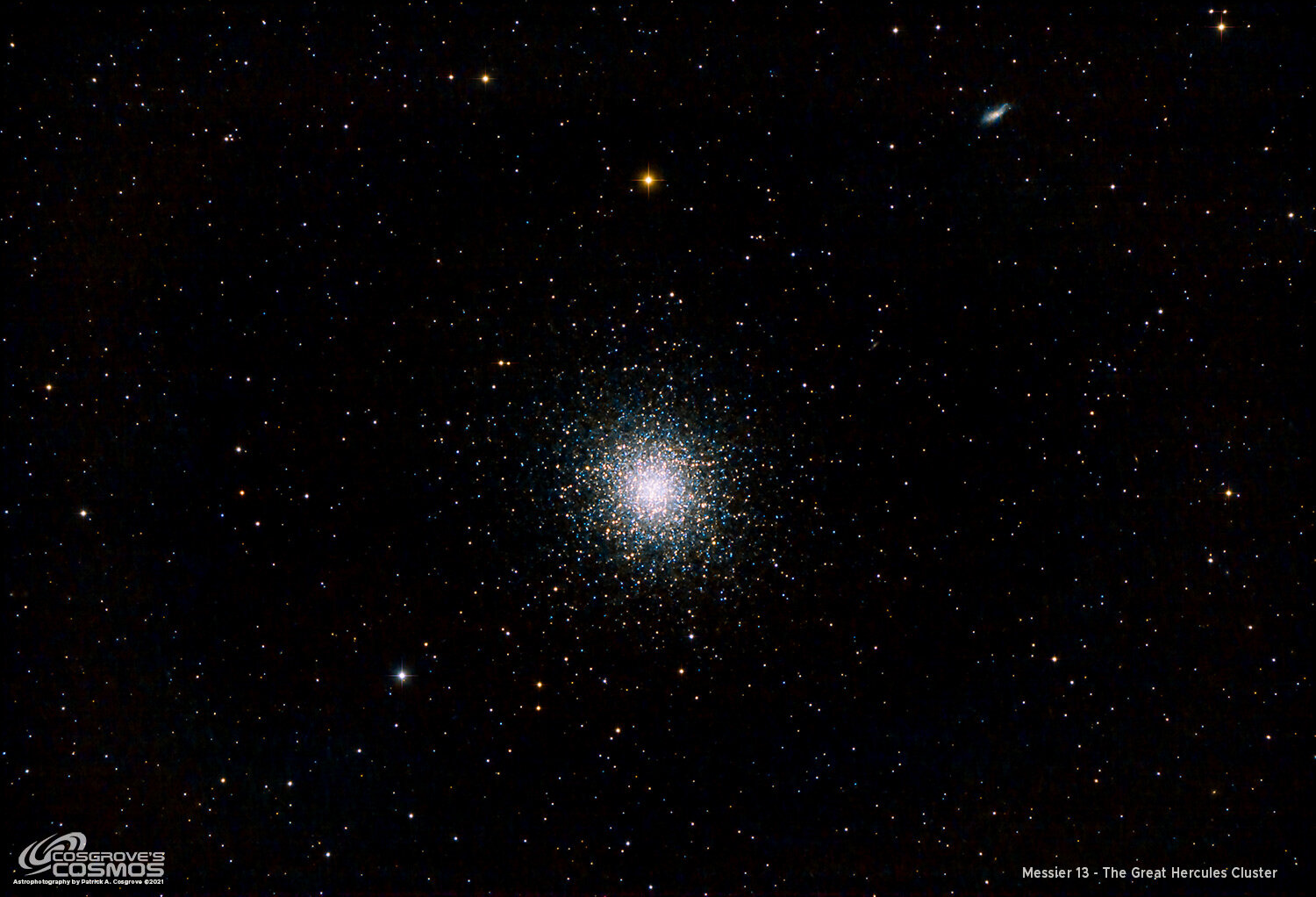
Messier 13 - The Great Globular Cluster
Messier 13 - The Great Hercules Cluster is about 22-25 thousand light-years away and is about 145 light-years in diameter. This consists of a ball of several hundred stars packed together. This and other globular clusters are distributed around the outer plane of the galaxy and seem to be made of ancient stars.
This is the second time I shot this target with the WO132mm Platform. The first was in 2019.