Imaging Projects
In this blog, I will share the results of all of my imaging projects. The newest will be at the top and the oldest will be further down the stack. Going back in time here is interesting - some of my early stuff was pretty rough - but I did not see it that way at the time - I was thrilled to get anything back that looked like an image! Hopefully, you will see how my work has progressed with time!
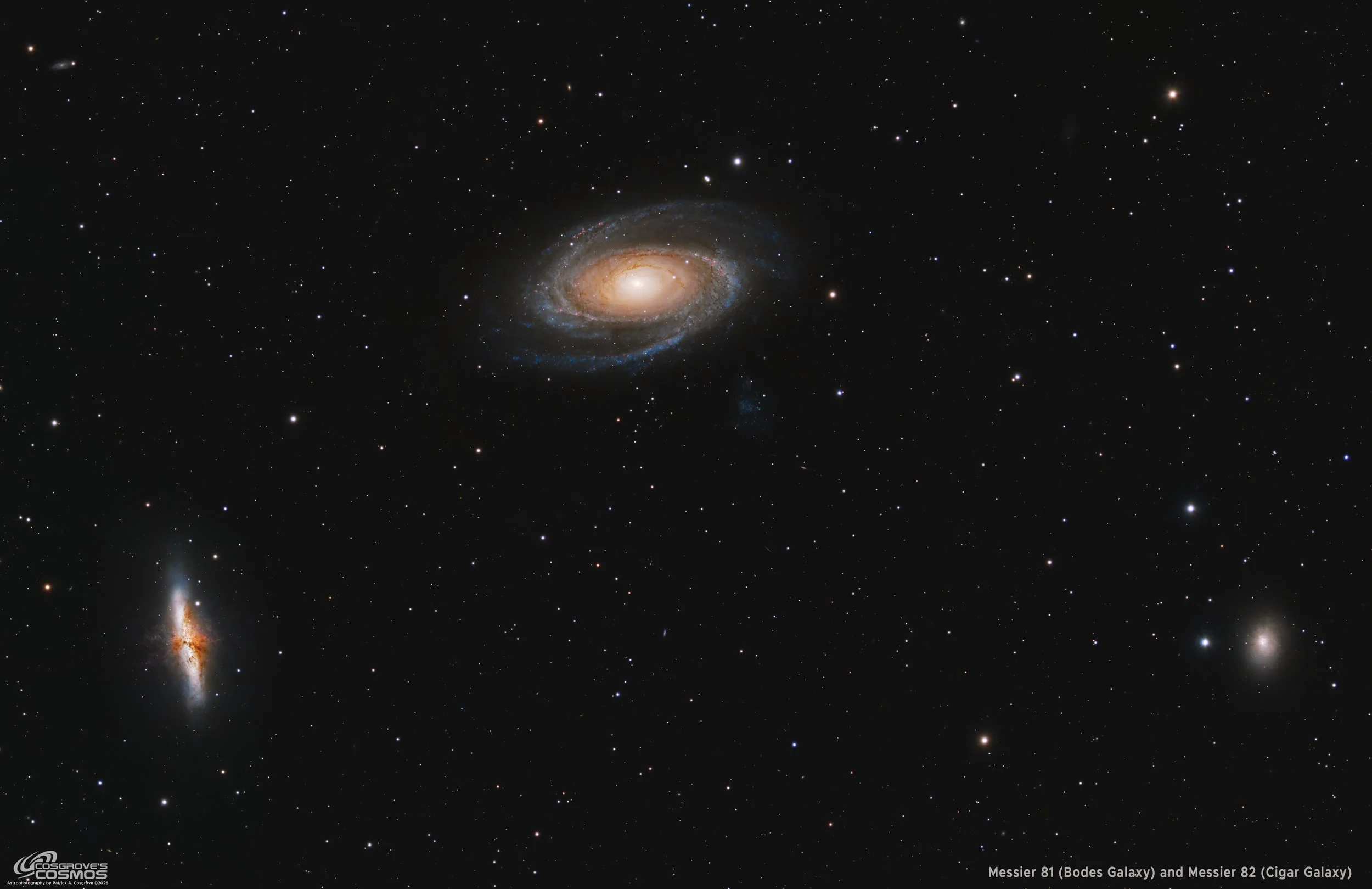
First Light on the AP155 Platform: M81, M82, and NGC 3077 - 4.6 Hours of HaLRGB!
First light on my Astro-Physics 155mm Starfire EDFS platform captured a classic interacting galaxy field in Ursa Major: M81, M82, and NGC 3077. This image combines LRGB and H-alpha data to highlight the contrast between the grand-design spiral structure of M81, the starburst-driven outflow in M82, and the disturbed companion galaxy NGC 3077.
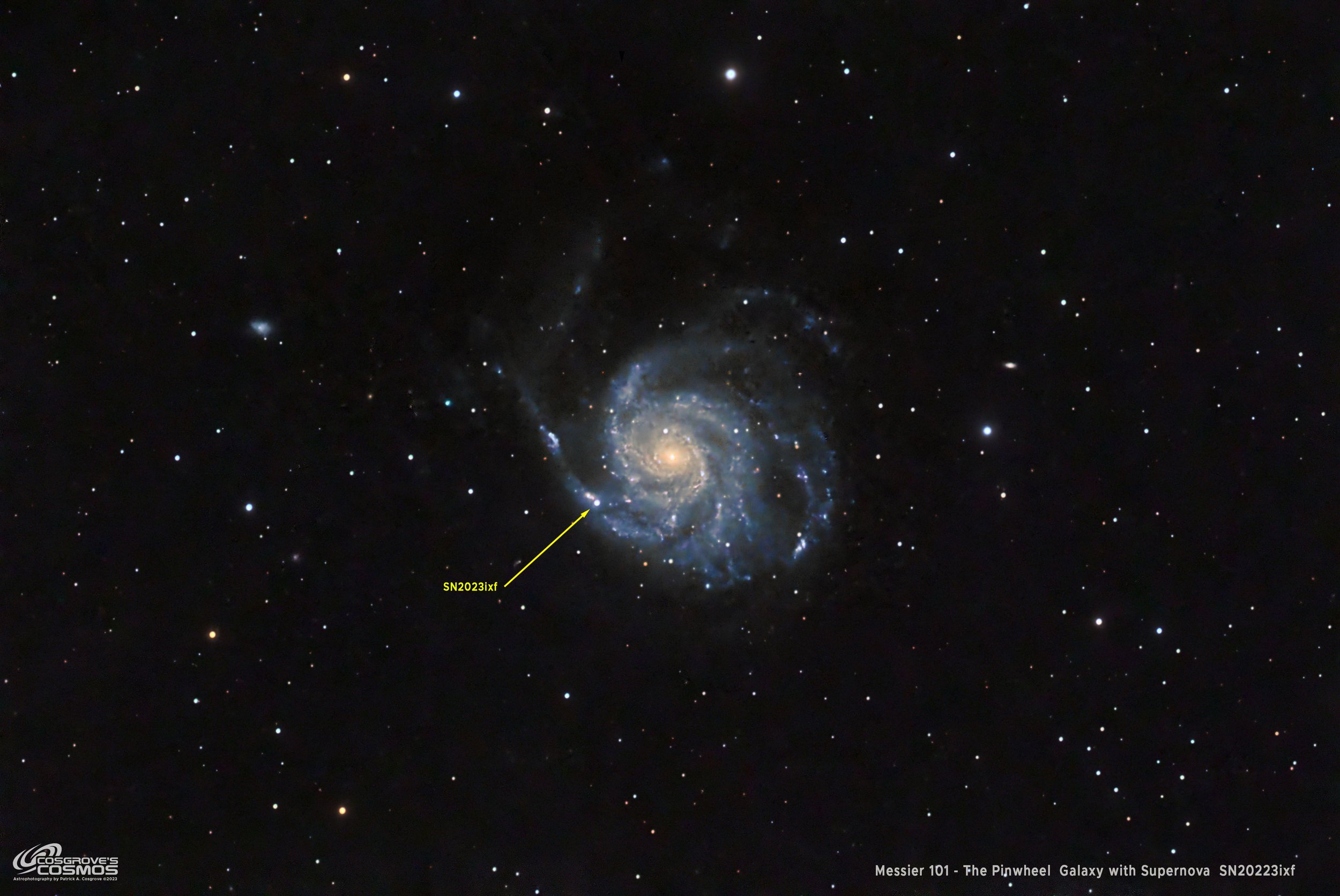
Messier 101 Supernova SN2023ixf ~3 Hrs in LRGB - Yet Another Supernova Shot - But This One Is Mine!
With the recent discovery of a bright supernova in the well-known Messier 101 - The Pinwheel Galaxy - a lot of astrophotographers have been going out of their way to grab an image of this galaxy during this event.
As a result, there are many - probably TOO many - images of this going around.
So why take an image myself? Is it because I think I can do better? NOPE! After all, I shot this on a widefield scope not suitable for galaxies, and I ended up shooting through smoke and with too little integration. So why do it?
Well - I wanted my own image of this event- and I wanted an excuse to explore what supernovae really are - after all - here I am looking at one!
So this posting will delve into this topic….
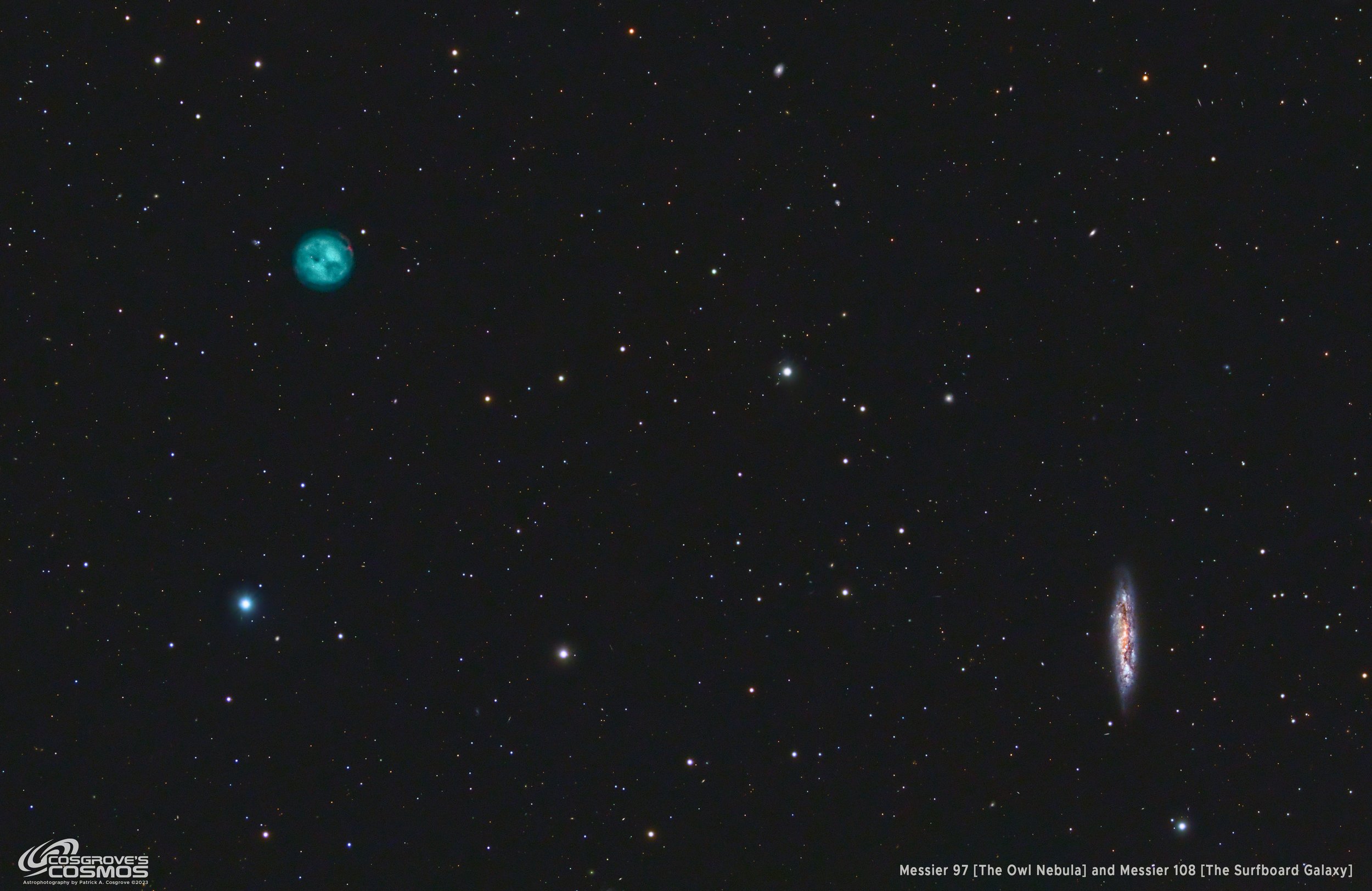
Messier 97 - The Owl Nebula and Messier 108 - The Surfboard Galaxy - 4 hours LRGB
This imaging project captures two messier objects in the same field of view!
Messier 97 is a planetary nebula better known as the Owl Nebula.
Messier 108 is better known as the Surfboard Galaxy.
This image resulted from just under 4 hours of LRGB exposure. It was shot on my William Optics 132mm Plaform after being upgraded with a flattened/0.8X Reducer and a new ZWO ASI12600MM-Pro camera.
This image was the first project I have been able to do in 2023 and was taken on two nights when the Jet Stream pushed the Smoke Plume from the Alberta Wildfires to the south of us. But this image still suffered from smoke effects!
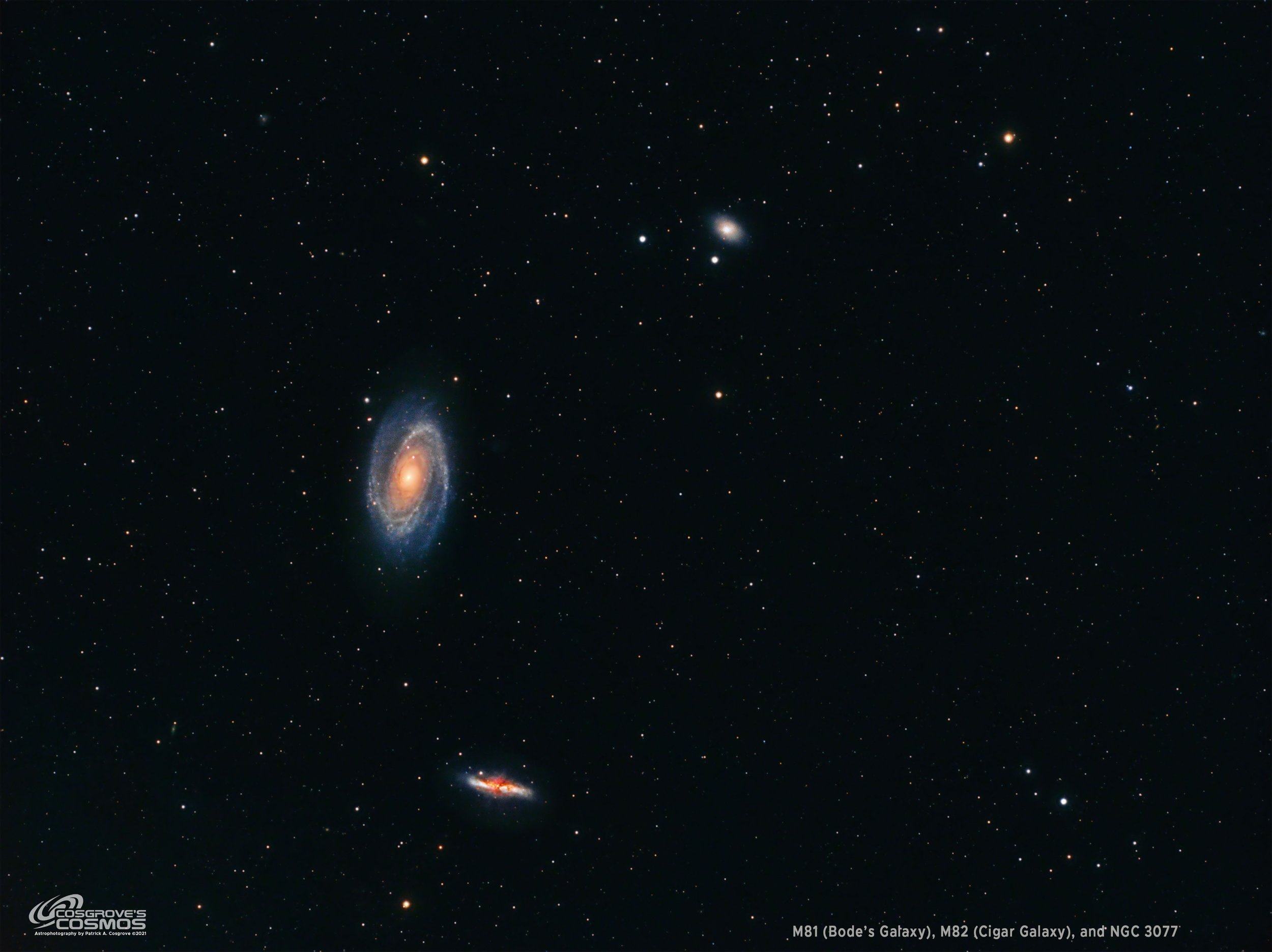
Messier 81/82 Wide Field: 3.5 hours LRGB - A Failed Quest for IFN!
I decided to try using my widefield Askar FRA400 platform to image the region around M81 & M82 to try and capture IFN (integrated Flux Nebula). This effort failed miserably! The resulting image was not too bad, but I was not able to get the kind of integration needed to capture this elusive feature! While this was a major disappointment, the resulting image shows M81, M82, and a third small galaxy NGC 3077 in a very nice part of the sky.
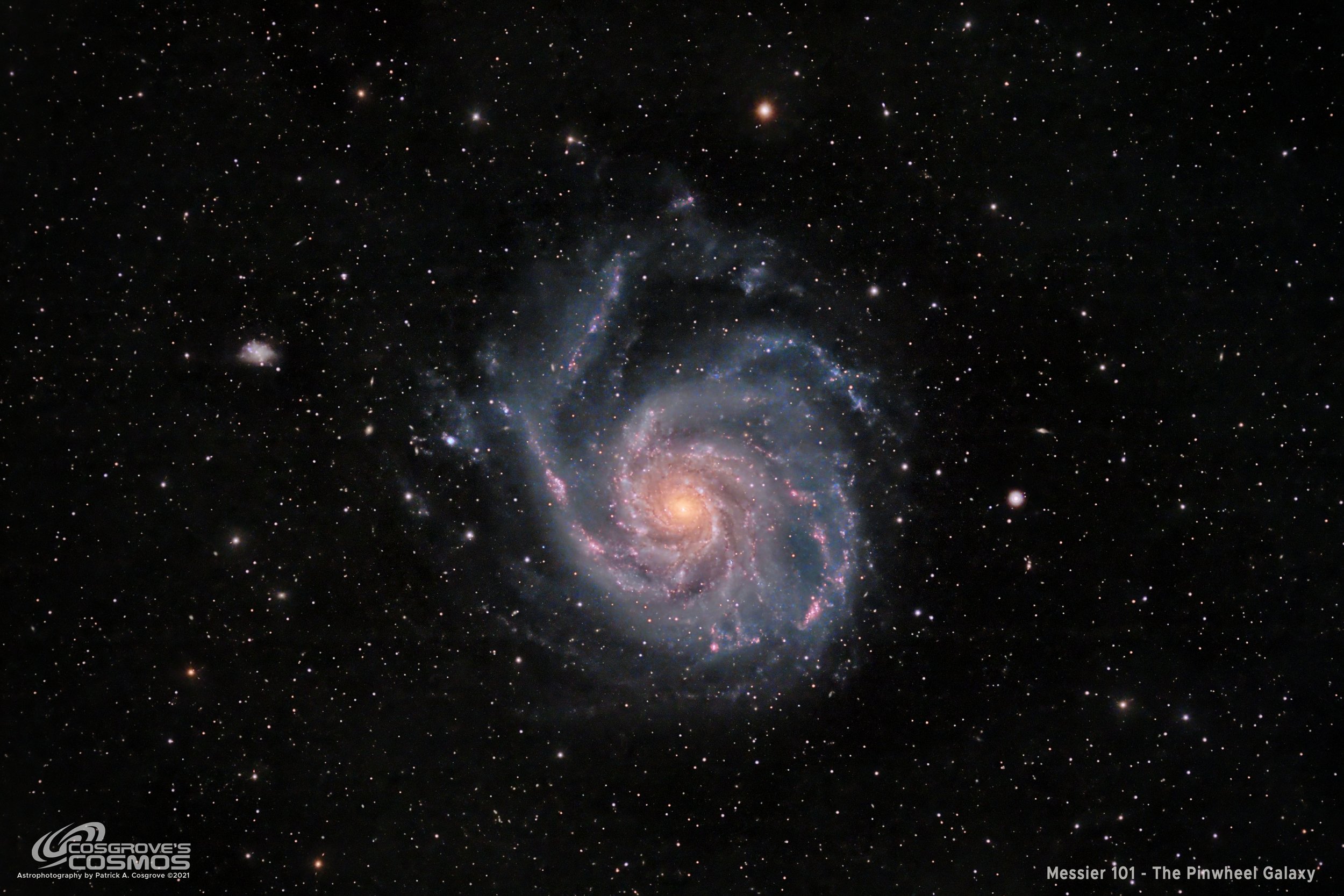
M101 - The Pinwheel Galaxy in LHaRGB (11 hours)- a third attempt!
My third attempt shooting Messier 101 - the Pinwheel Galaxy. My first was in 2020 using an OSC camera and a two-hour exposure. Not bad for a first attempt. My second was in 2021 using an ASI1600MM-Prop mono camera. 15-hour integration! However many data problems and a very poor final results. This time around I am using my Astro-Physics 130mm with the ASI2600MM-Pro camera. 11 hours of integration in LHaRGB.
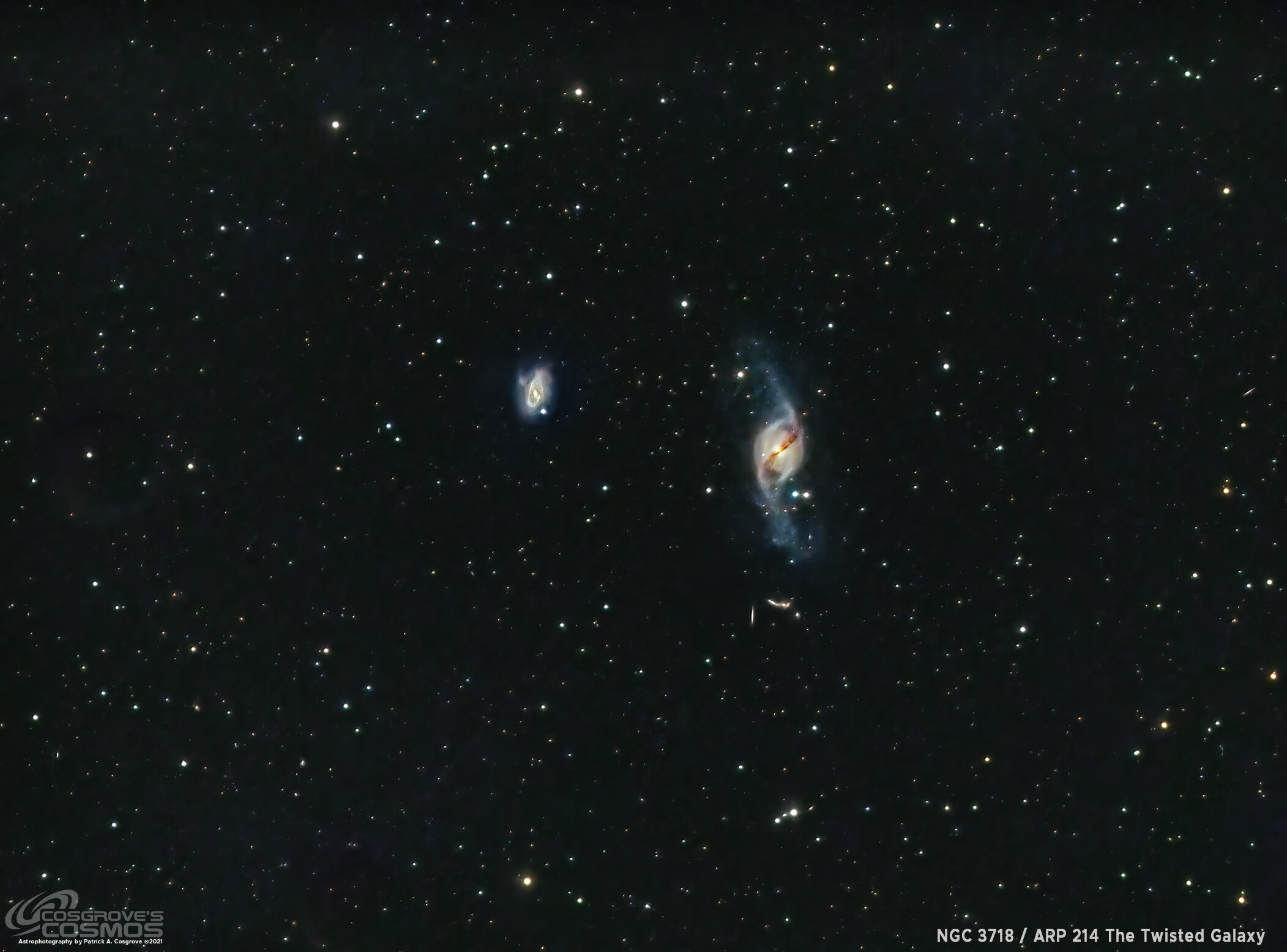
NGC 3718 /ARP 214 - The Twisted Galaxy
NGC 3718, also know as ARP 214, is a distorted spiral galaxy in the Constellation Ursa Major and is located about 59 Million Light Years away. Its distorted form is thought to be gravitational interaction with the other galaxy seen in this image - NGC 3729 - at some point in the distant past. These are all part of a group of galaxies known as the Ursa Major Cluster.
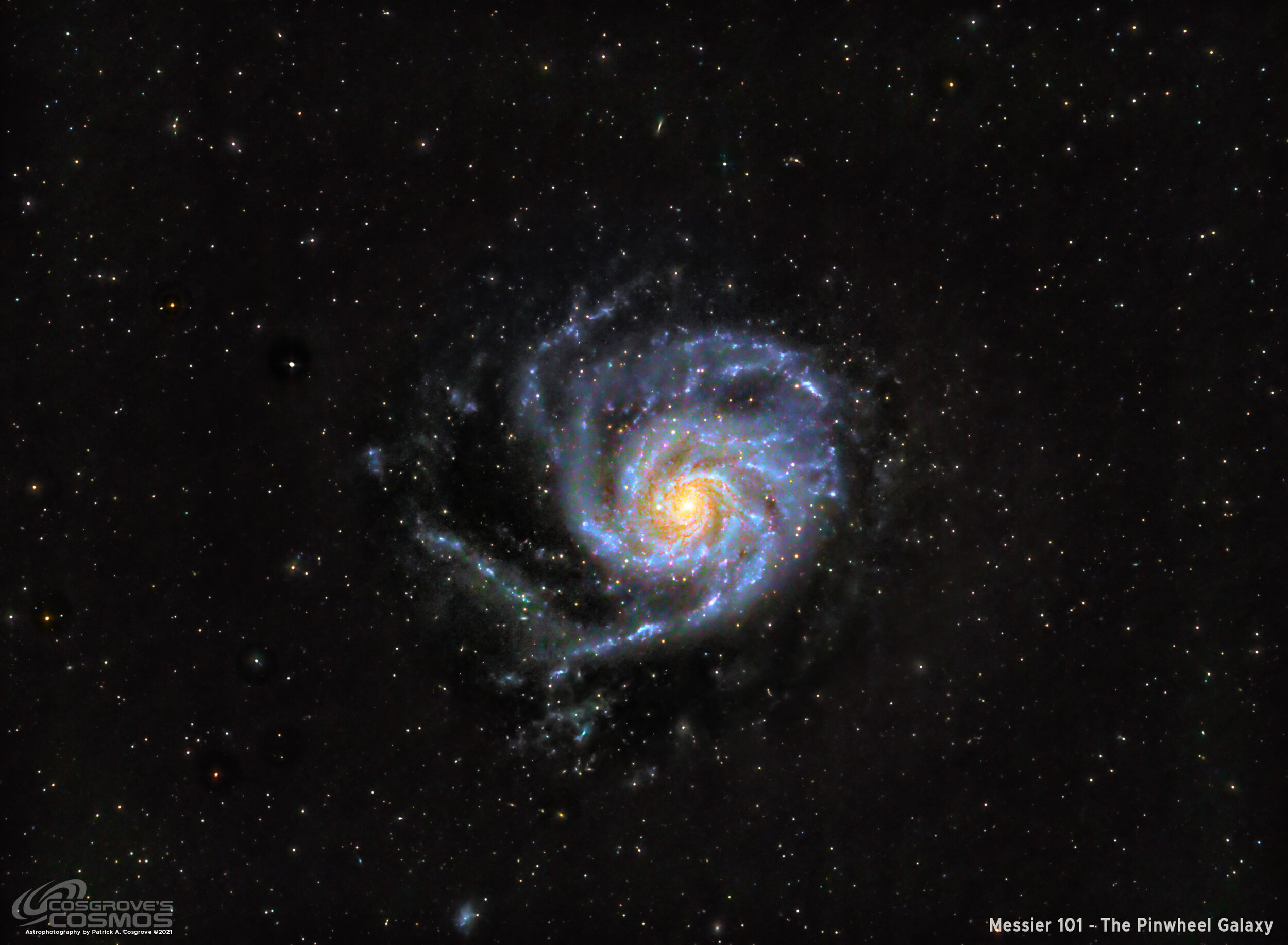
M101 - The Pinwheel Galaxy: Things don't always work out!
I first shot the Pinwheel Galaxy last year using my One-Shot-Color Camera. I wanted to try it again and see what I could get using a mono camera and L,R,G,B & Ha filters with a longer set of exposures.
So I recently imaged this target over the span of 5 nights, starting on May13. I collected the normal LRGB filter data and I also collected some narrowband images through my Hydrogen-Alpha Filter. The equipment is pretty automated now so I could get things running and then try to sleep on the sofa - still keeping a general eye on things during the night…..
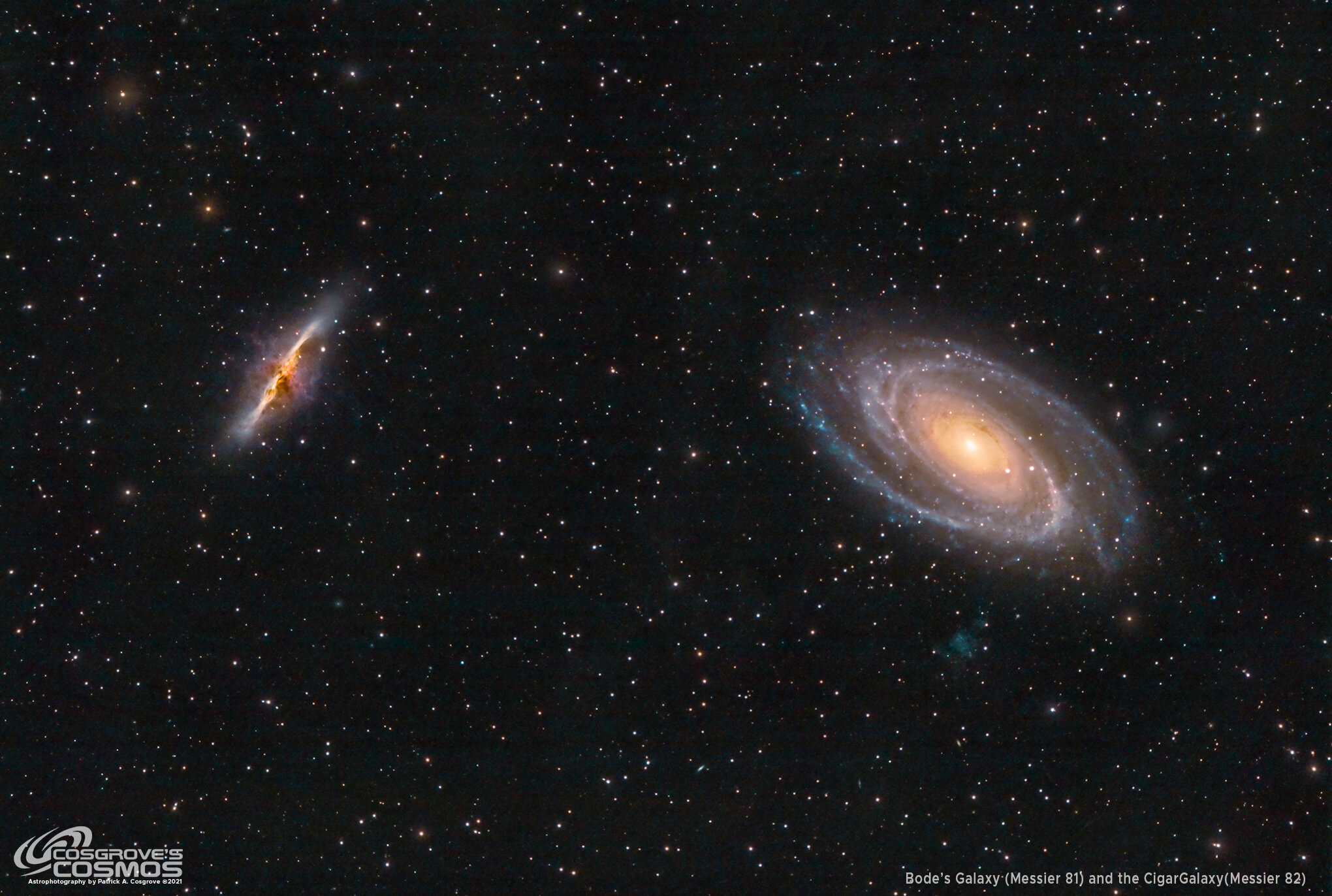
Messier 81: Bode's Galaxy and Messier 82: the Cigar Galaxy
Messier 81, also known as NGC 3031 and Bode's Galaxy, is a beautiful spiral galaxy located 12 Million light years away in the constellation Ursa Major. This post tells the story of this capture -which consists of 9.9 hours of integration using the ZWO ASI294MC-Pro and the William Optics 132mm FLT APO Platform.

Messier 108 - The Surfboad Galaxy
Messier 108, also known as NGC 3556 and the "Surfboard Galaxy", is a barred spiral galaxy located in the constellation of Ursa Major and is 45.9 Million Light years away. M108 is about 110,00 light-years across and presents at an angle of 75 degrees from our line of sight. M108 has a massive black hole at its center that is estimated to be 24 million solar masses - about 8 times the size of the black hole at the core of our own Milky Way.
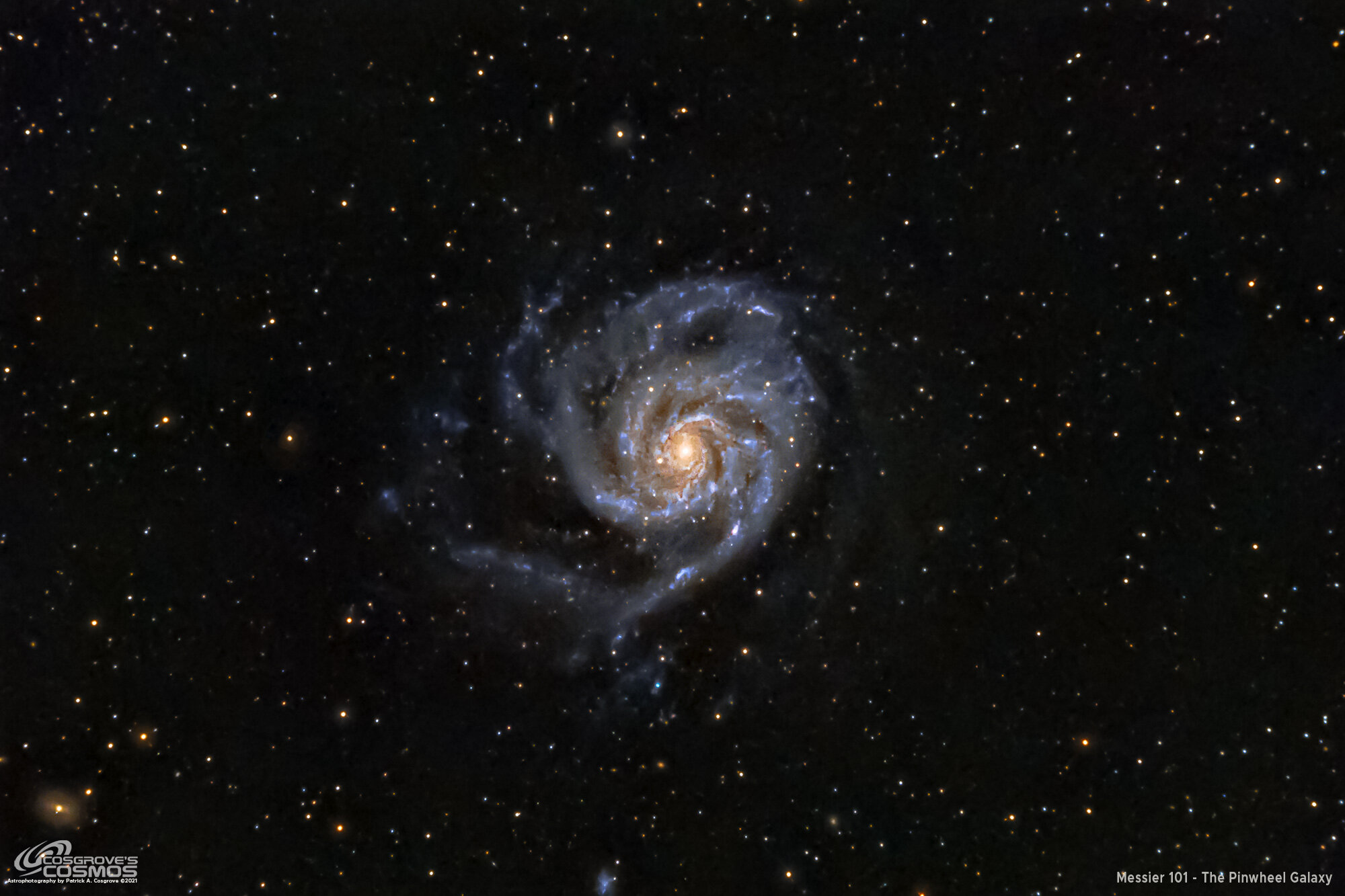
Messier 101 - The Pinwheel Galaxy - 2020 Version
Located in the constellation Ursa Major (the Big Dipper), M101 is a large face-on spiral galaxy located 21 Million light-years from Earth. It is almost twice the size of our own galaxy, the Milky Way, about 170,000 light-years across and containing about a trillion stars. M101 is asymmetrical - it has been distorted by the tidal forces from other galaxies in its local group. This was captured on the William Optics 132mm Platform.