Imaging Projects
In this blog, I will share the results of all of my imaging projects. The newest will be at the top and the oldest will be further down the stack. Going back in time here is interesting - some of my early stuff was pretty rough - but I did not see it that way at the time - I was thrilled to get anything back that looked like an image! Hopefully, you will see how my work has progressed with time!
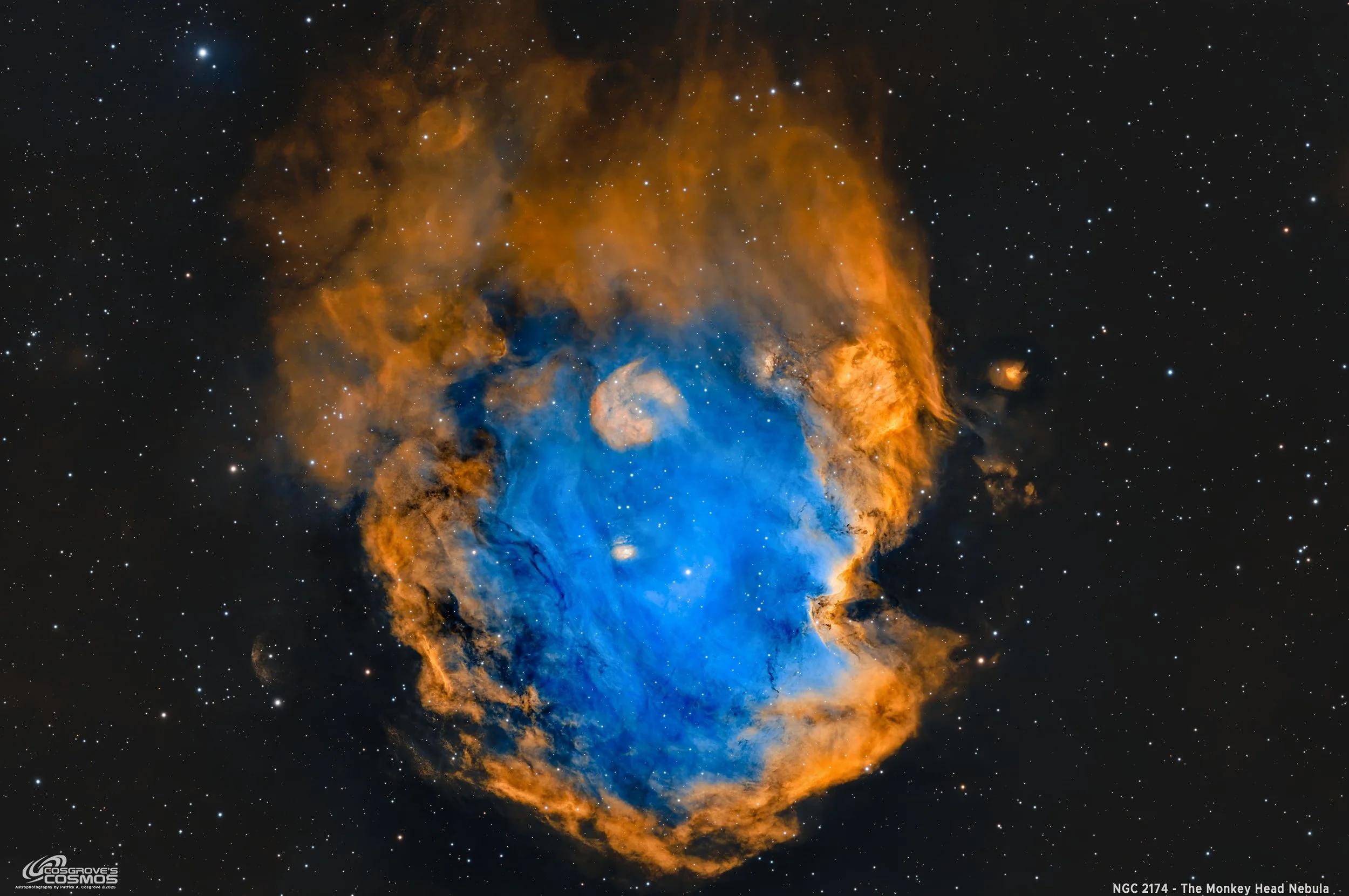
NGC 2174 - The Monkey Head Nebula - 5.1 hours SHO
NGC 2174 — the Monkey Head Nebula — is a luminous star-forming cloud in Orion, roughly 6,400 light-years away. In this project I captured the nebula in narrowband (Hα, OIII, SII), revealing glowing hydrogen arcs, oxygen-rich structure, and dark dust lanes sculpted by intense radiation from young, massive stars. The result is a high-contrast look at an active H II region where stellar feedback is actively reshaping its birth cloud.
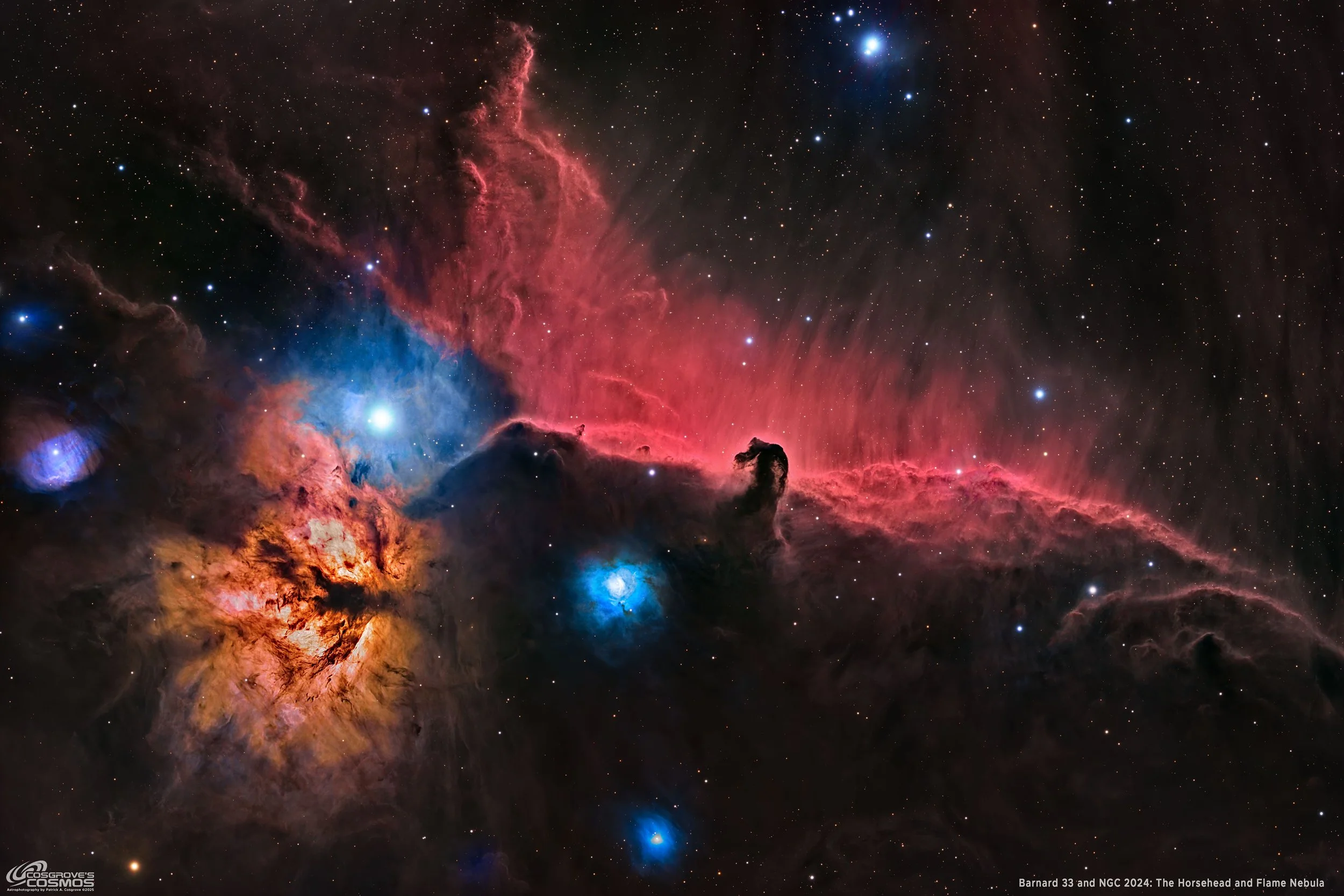
Barnard 33 & NGC 2024 - The Horsehead and Flame Nebula - 6 hours in HaLRGB
A new Orion classic from Whispering Skies Observatory: B33 (the Horsehead Nebula) silhouetted against IC 434, paired with NGC 2024 (the Flame Nebula) and its intricate dust lanes. Captured October 27–28, 2025 using LRGB + Hα for a total of 5 h 59 m 30 s, this project emphasizes clean star color and high-contrast dust structure while preserving the region’s faint, extended nebulosity.
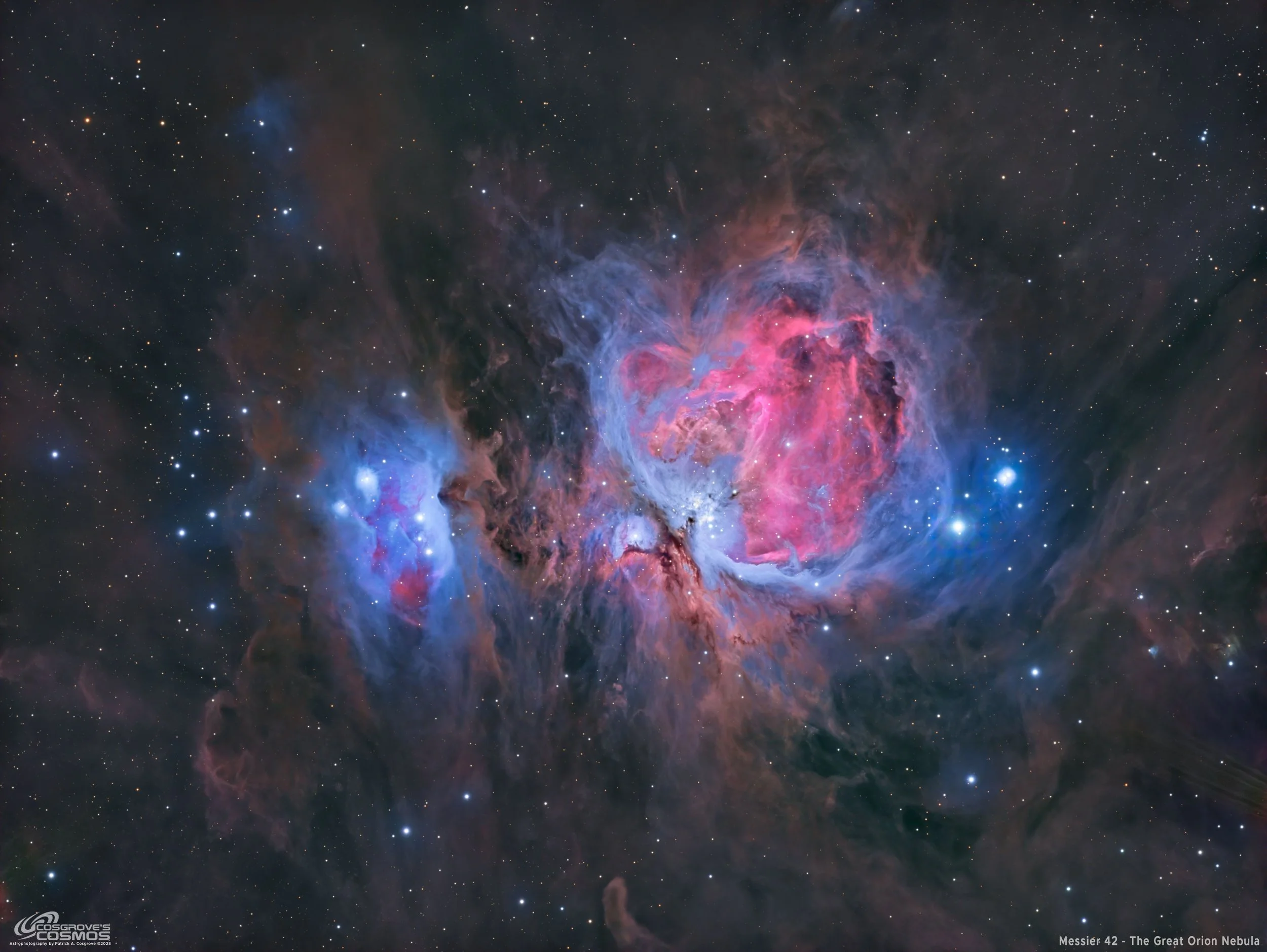
Messier 42/43 – The Great Orion Nebula - 6.35 hours in HaLRGB
Orion’s sword is one of the most famous regions in the night sky, and for good reason. This widefield take on M42/M43 and the Running Man blends short and longer RGB/L exposures with H-alpha to balance the bright core against the faint, sculpted outer nebulosity—an image that showcases both the beauty and the ongoing starbirth of our nearest major stellar nursery.
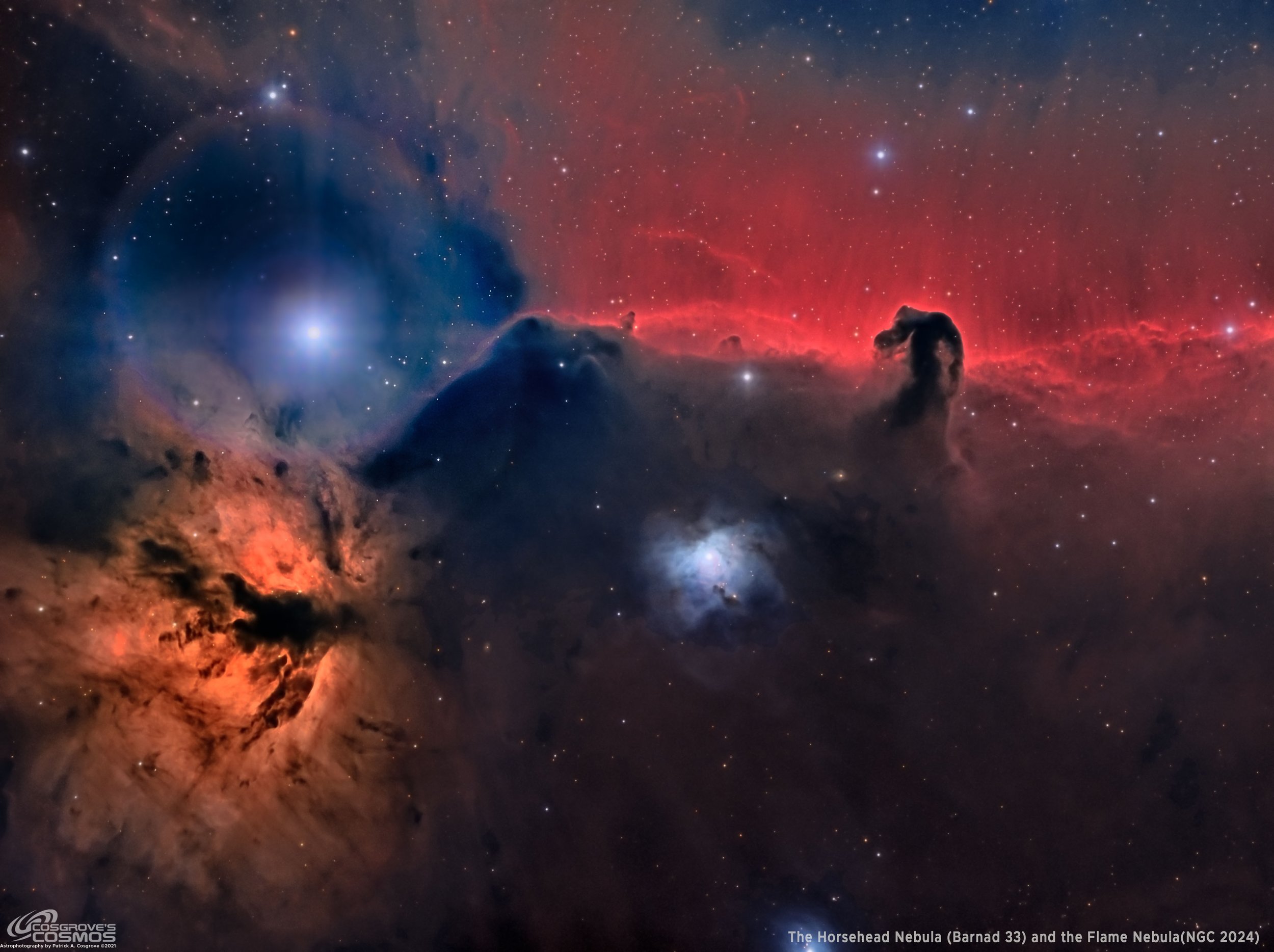
B33: The Horsehead and The Flame Nebula (NGC 2024) in LHaRGB - A “Failed” Image
The Horsehead Nebula is a small dark nebula located just to the south of the bright star Alnitak - the left-most star on Orions Belt. It is located some 1300 light-year from the earth. On the other side of Alnitak is the Flame Nebula.
This is my second attempt on this target - but I would have to classify it as a “Failed” image. The ASI1600MM-Pro camera does not work well with bright stars in the field and this image has halos and microlensing artifacts that are very difficult to process out and I am not satisfied with my results here. But even a “Failed” image offers some learning opportunities, so I share it in that spirit!

NGC 2174 - The Monkey Head Nebula
NGC 2174- Known as the Monkey Head Nebula. This object is located in the constellation Orion and is associated with NGC 2175 - an Open Cluster embedded in the nebula. This is only 6400 light-years away, so it's in the galactic neighborhood, so to speak.
Surprisingly short 36-minute exposure image
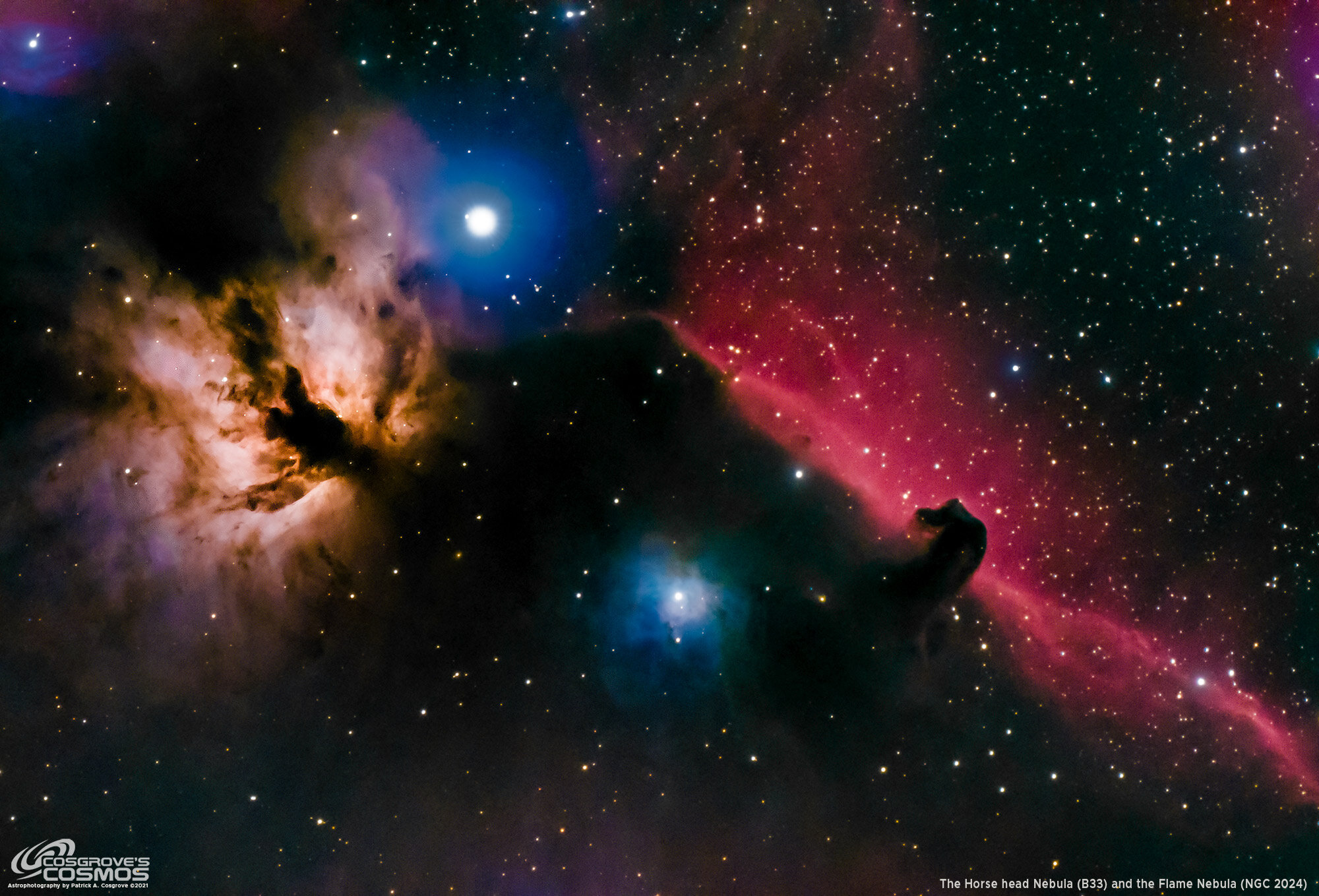
B33: The Horsehead and NGC 2024: The Flame Nebula
The Horsehead Nebula is a small dark nebula located just to the south of the bright star Alnitak - the left-most star on Orions Belt. It is located some 1300 light-year from the earth. On the other side of Alnitak is the Flame Nebula. This region is rich in dust and molecular clouds that are ionized by the radiation coming from Alnitak. This is a rich area for star formation. This image was the result of 90 minutes of exposure.
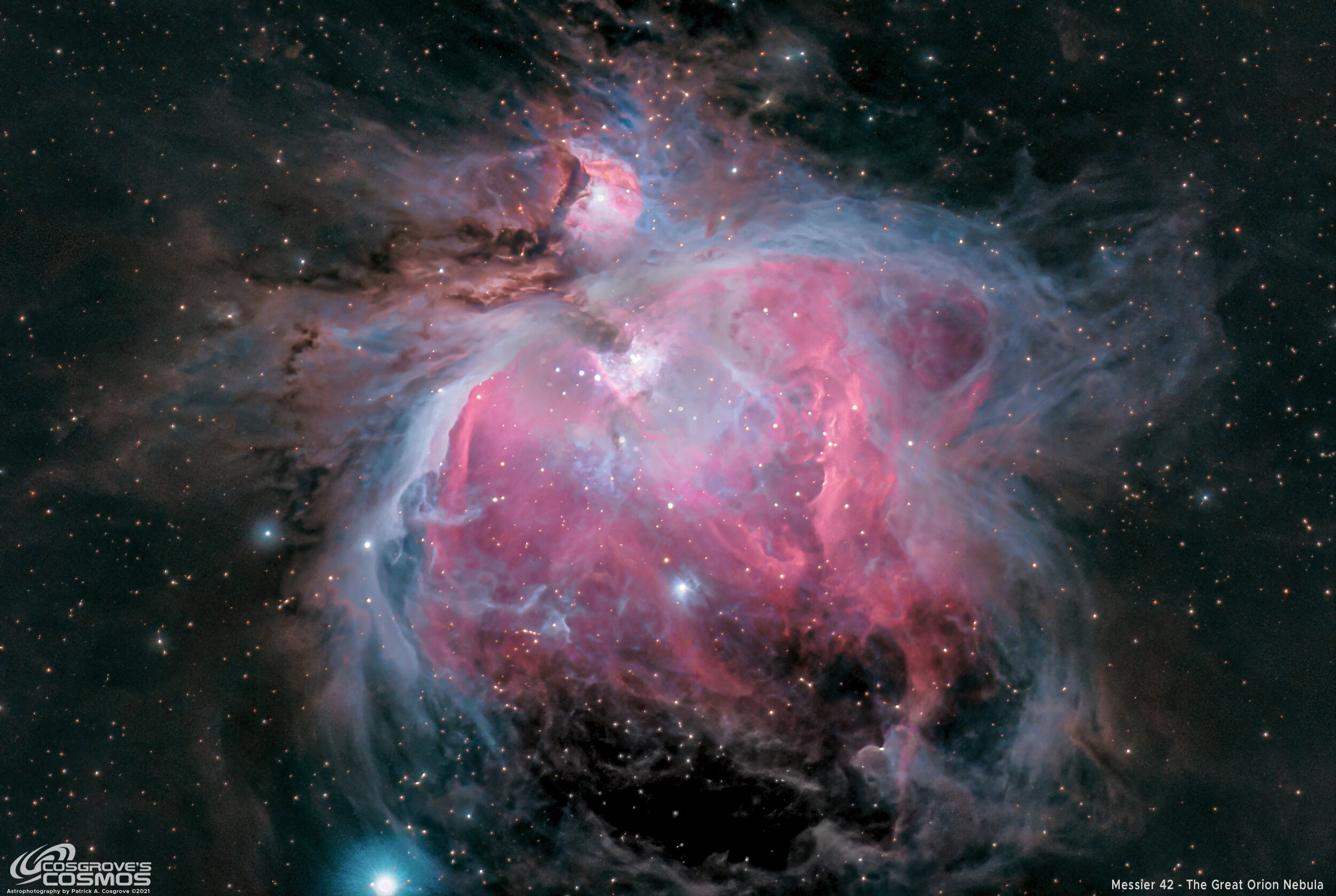
Messier 42 - The Great Orion Nebula
Messier 42 - The Great Orion Nebula. Also known as NGC 1976. Everybody that does astrophotography shoots this very famous object at some point or another. This is my very first shot at it. This bright nebula is located 1300 light-years away in the constellation Orion. It can be seen as part of the sword in Orion's belt and is visible to the naked eye. The Orion Nebula is a large cloud of gas and dust that is an area of new star formation and is a known stellar nursery. Located in the core is the famous tight star cluster known as the Trapezium. This is located in the brightest part of the nebula.