Observing & Sky Events
Curated by Patrick Cosgrove
Created -July 2021. Major Revisions: May 2025, January 2026
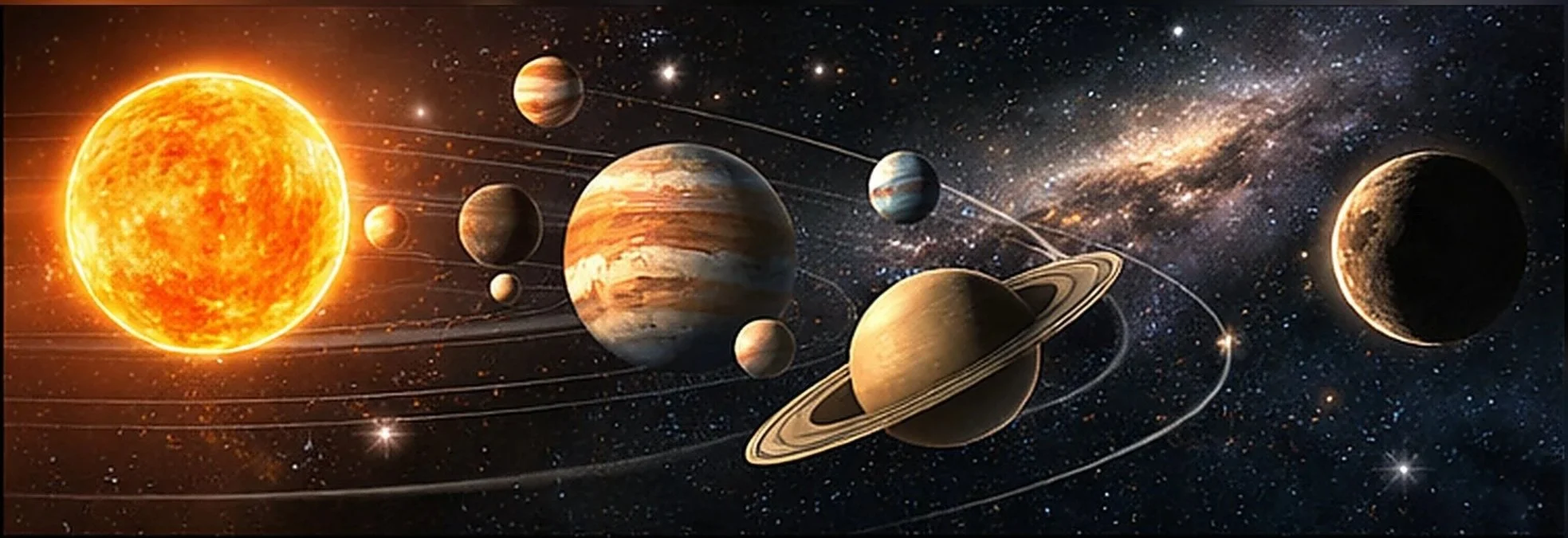
This section focuses on planning and tracking what’s in the sky—solar system objects, seasonal events, and the practical tools you use to observe or image them. It includes ephemerides, visibility and rise/set information, finder charts, dark-sky resources, and trackers for things like comets, asteroids, meteor showers, auroras, and satellites.
Area of Focus: “Planning and tracking: what to observe, where it is, and when it’s best.”
This is a curated reference list maintained by Patrick Cosgrove (Cosgrove’s Cosmos). Links are selected for practical value to observers and astrophotographers.
Last updated: January 2026
Found a dead link or have a suggestion? Use the form on the Resources Hub.
This page is the home for time-sensitive observing tools (what’s up tonight, when to look, where to look).
For deeper catalog-style research and object reference, see Targets, Catalogs & Databases.
For planetarium apps and capture/planning software → Astrophotography Software & Processing
For deep-sky catalogs and ‘what’s in my frame’ references → Targets, Catalogs & Databases
Table of Contents Show (Click on lines to navigate)
Mobile Apps & Field Tools (Sky Maps, Satellites, Forecasts)
Use these mobile-friendly tools in the field to identify what you’re seeing, plan quick sessions, track satellites, and check conditions—especially when you don’t want to bring a laptop.
Planetarium & “What am I looking at?” (apps)
SkySafari – A full-featured planetarium and observing companion (deep database + strong search). Great for star-hopping and telescope integration; paid tiers vary by platform.
Stellarium Mobile – Popular mobile planetarium with accurate sky simulation and a clean interface; solid for quick ID and planning (free + paid versions depending on platform).
Sky Tonight – Designed around the three questions you actually ask in the field: what is that, what can I see tonight, and how do I find it (free with optional upgrades).
Star Walk 2 – Very approachable “point your phone at the sky” planetarium with a slick UI; great for casual sessions and outreach (free with optional upgrades).
Night Sky (iOS) – Apple-ecosystem planetarium with strong polish + notifications and night mode; excellent for quick identification and event reminders (free/premium options).
Sky Guide (iOS) – Beautiful AR-style sky ID app that’s fast for “what’s that bright thing?” moments; great for beginners and outreach.
SkyView – Camera/AR sky identification (also available on Android) that’s easy for quick constellation and planet ID.
What’s Up Tonight & Event Alerts (apps)
Sky Tonight – A “what’s up tonight” workflow baked in: visibility, event calendar, and fast find/locate tools.
Night Sky (iOS) – Built-in alerts/notifications for upcoming sky events plus a nice “in the moment” sky view.
Sky Live (iOS) – “Dashboard-style” planning: what’s up, conditions/visibility scoring, and quick session decision support.
Satellites & ISS Tracking (apps)
Heavens-Above – The classic for reliable ISS/satellite pass predictions; web + official Android app.
ISS Detector – Simple, practical satellite/ISS tracker (also used for Starlink trains and other “bright objects”). Free with paid add-ons.
NASA – Spot The Station – Official NASA ISS tracker + flyover schedules and notifications for your location (mobile app and web info).
Cosmik – Live Satellite Tracker & Rocket Launch Alerts – Interactive 3D browser-based map tracking the ISS, Starlink, thousands of satellites, rocket launches, planets, comets, and deep-space probes. It also provides pass alerts, launch countdowns, webcasts, and plain-language space explainers, with no app or login required.
Conditions: Clouds, Transparency, Seeing, Aurora
Clear Outside – Astronomy-focused forecast (web + free apps) with cloud layers, darkness, Moon, and practical “traffic light” style indicators.
Astrospheric – Astronomy-specific conditions (clouds/transparency/seeing) with a strong “imager-first” focus; free + Pro tiers.
meteoblue – Astronomy Seeing (mobile) – Seeing + cloud layers + jet stream in one place; great for deciding whether it’s worth doing high-res work.
NOAA SWPC – Aurora 30-Minute Forecast – Official near-term aurora oval forecast map (excellent for quick “is this worth going out?” checks).
My Aurora Forecast & Alerts – Simple aurora probability + alerts (iOS; also available on Android) that’s easy to use in the field.
Observing the Night Sky (Naked Eye → Binoculars → First Telescope)
Gear Pathway (Eyes → Binoculars → First Telescope)
Naked Eye (no equipment)
Astronomy with the naked eye (Royal Museums Greenwich) – Practical beginner tips for seeing the best night-sky sights using only your eyes (dark adaptation, light control, what to look for, and how to get oriented).
I Didn’t Know That! Stargazing 101 (U.S. National Park Service) – A first-timer guide to a successful stargazing session: what to bring, protecting night vision, and how to make your first outing enjoyable and productive.
Binocular (best first “instrument”)
Binoculars for Astronomy: Ultimate Guide to Selecting and Buying (Sky & Telescope) – Clear guidance on what binocular specs matter for astronomy, what to buy, and how binoculars help you learn the sky quickly.
Binocular Stargazing Catalog (Sky & Telescope) – A curated list of deep-sky targets that work well in common handheld binoculars—ideal when you want “what should I look at next?”
First Telescope
How to Choose a Telescope for Astronomy (Sky & Telescope) – A reputable first-telescope buyer’s guide that explains the real tradeoffs and helps beginners narrow choices without hype.
General
How to Start Right in Astronomy (Sky & Telescope) – A practical beginner roadmap that explains what you can do with your eyes, why binoculars are often the best first “instrument,” and how to avoid the common beginner gear mistakes.
Skywatching Tips From NASA – Straightforward guidance for getting started, including why binoculars are a strong first step and how to build observing habits that actually stick.
Skywatching FAQ (NASA) – A beginner-friendly Q&A that clarifies what you can realistically see with naked eye vs binoculars vs a small telescope (and what changes as aperture increases).
Free “Let’s Go Stargazing” Guide (Sky & Telescope PDF) – A printable starter guide with stargazing basics and a Moon map—perfect for a first observing session with no equipment or just binoculars.
How To Start with Your New Telescope (Sky & Telescope) – A clean “first nights with a telescope” guide: sensible first targets (Moon/planets), setup tips, and how to avoid frustration early on.
Binocular Messier Observing Program (Astronomical League) – A structured list of objects you can observe with binoculars—excellent for beginners who want a clear set of goals without buying a telescope yet.
Deep Sky Binocular Observing Program (Astronomical League) – A follow-on binocular target list that expands beyond Messier objects once you’re comfortable finding things in the sky.
Cloudy Nights — Beginners Forum (No Astrophotography) – The best place to ask beginner questions about what you’re seeing and what equipment makes sense—high signal, lots of experienced observers.
Cloudy Nights — Binoculars Forum – A dedicated place for choosing binoculars, mounting options, and getting the most out of binocular observing (including curated “best of” threads). Asteroids
JPL Small-Body Database Browser – NASA/JPL’s authoritative lookup for every known asteroid or comet, giving orbital elements, physical parameters, ephemerides, and 3-D orbit visualisations.
Minor Planet Center – Database Search – The IAU clearing-house for asteroid and comet observations; provides discovery details, updated orbits, and ephemeris tables on demand.
NASA “Eyes on Asteroids” – Interactive 3-D web app that lets you track thousands of asteroids and comets in real time, replay past fly-bys, and preview future close approaches.
NASA CNEOS / Asteroid Watch – Center for Near-Earth Object Studies portal with daily close-approach tables, impact-risk lists, and news on planetary-defense research.
NEODyS-2 – European Near-Earth Object Dynamic Site offering continuously updated orbits, impact-risk pages, and custom ephemerides for every NEA.
In-The-Sky.org — Asteroids – Automatically generated list of the brightest asteroids currently visible, with finder charts tailored to any location.
Heavens-Above — Asteroids – Under “Astronomy → Asteroids,” you can create personalised ephemerides and sky charts for major asteroids alongside the site’s satellite tools.
Asteroid Lightcurve Database (LCDB) – NASA-PDS repository of 34 000+ published rotation light-curves and derived spin/shape data for asteroid research and amateur photometry projects.
Astronomical League – Asteroid Observing Program – Step-by-step visual/CCD observing award that teaches amateurs how to identify, track, and record asteroid positions and light-curves.
NEO Earth Close Approaches – Daily-updated list of upcoming near-Earth asteroid fly-bys with size estimates, miss distances, and quick-link orbit visualisers.
Atlases & Star Charts
Free Digital Star Atlases (Printable / Interactive)
TriAtlas Project (A, B & C Sets) – 300-page PDF atlas series (to mag 12.6) offering wide-field, intermediate, and ultra-detailed charts—excellent all-sky companion for deep-sky observers.
Deep-Sky Hunter Star Atlas – 110 printable A3 charts down to mag 10.2 (stars) and mag 14 (DSOs) plus 21 zoom maps of galaxy clusters; ideal for serious visual sweeps.
Taki’s 8.5-Magnitude Star Atlas (PDF) – 146 A4 charts plotting stars to mag 8.5 and 2,900+ DSOs—lightweight but deeper than most commercial pocket atlases.
Mag-7 Star Atlas – Free, printer-friendly charts to mag 7.25 with 550 deep-sky objects—great grab-and-go atlas for binocular or small-scope sessions.
Pretty Deep Maps – Hyper-linked PDF atlas covering the entire sky to about mag 18, with 6,700+ charts and 100k-object index for image-identification and planning.
Skymaps.com – Monthly Evening Sky Map – Free PDF star chart issued each month for northern, equatorial, and southern latitudes, annotated with current planet/comet positions and observing highlights.
Edmund Mag 5 Star Atlas (Edmund Optics) – A simple printable star atlas showing stars down to about magnitude 5, useful for learning the brighter naked-eye sky patterns before moving to deeper charts.
Constellations & Learning the Night Sky
A Guide to Learning the Constellations (PDF) – Charlotte Amateur Astronomers Association – A deeper, workshop-style PDF guide with step-by-step sky navigation using bright stars and seasonal patterns (good “one document to learn the sky” resource).
Astronomy.com – Learn the Constellations – A practical, beginner-friendly “how to navigate the sky” guide that emphasizes bright-star signposts and common asterism-based shortcuts (the kind of rules you actually use outside).
One Minute Astronomer – “A Whirlwind Tour of the Night Sky” (PDF) – A compact “field handout” that teaches navigation by major asterisms (e.g., Summer Triangle) and bright-star landmarks; great as a quick reference.
The Constellations (IAU) – A clear, authoritative introduction to constellations and how the sky is officially divided—great context before you start using star charts and planning tools.
Simple Rules to Navigate the Sky (AS-RAS) - A PowerPoint deck on learning and navigating the sky from the Astronomy Section of the Rochester Academy of Science
NOIRLab – The 88 Constellations – A visual, beginner-friendly constellation reference with downloadable images for all 88 IAU constellations—great for learning shapes and star patterns.
Learn the Night Sky Without an App: May’s Easiest Star-Hops for Beginners (Space.com) – A visual beginner guide to simple star-hopping paths, including Big Dipper routes such as arc to Arcturus and spike to Spica.
How to Find Constellations in the Night Sky (CPRE) – A clean beginner-friendly guide to finding major sky patterns, including Orion, the Plough/Big Dipper, Cassiopeia, and other recognizable landmarks.
A Whirlwind Tour of the Night Sky (One Minute Astronomer) – A compact printable guide to major naked-eye sky patterns, bright stars, seasonal landmarks, and simple ways to get oriented under the night sky.
Comets
NASA Science – Comets – Plain-language primer on what comets are, where they come from, and why they sprout glowing comae and tails, with links to current research and missions.
JPL Small-Body Database Browser – The authoritative NASA tool for up-to-date orbital elements, physical parameters, ephemerides, and 3-D orbit diagrams of every numbered or provisional comet.
Minor Planet Center – Comet Database Search – IAU clearing-house where discovery details, designation history, and continuously updated orbits for all known comets are published.
Comet Observation Database (COBS) – Global hub for amateur + professional observers to upload magnitude estimates and light curves; includes searchable reports and automatically generated graphs.
Weekly Information about Bright Comets – Seiichi Yoshida – Long-running weekly digest forecasting brightness trends, visibility maps, and discovery news for comets down to mag 14.
TheSkyLive – Comets – Real-time table of the brightest observable comets, updated several times per day and linked to interactive finder charts for any location.
In-The-Sky.org – Current Comets – Continuously updated listing of upcoming perihelia, perigees, and peak-brightness dates, each with custom altitude/time plots.
Sky & Telescope – Comet Observing – Magazine portal offering observing guides, monthly highlights, and expert tips on tracking or photographing the latest comets.
Comet Chasing – Skyhound – Up-to-date finder charts, visibility forecasts, and observing advice aimed squarely at backyard comet hunters.
AstroBackyard – “How I Photographed the Green Comet” – Practical, step-by-step imaging tutorial (gear, settings, processing) that doubles as a general guide to photographing any bright comet.
ESA Rosetta Image Archive – Full, high-resolution dataset from Rosetta’s rendezvous with Comet 67P, ideal for studying comet geology and activity.
Cometography (Gary Kronk) – Extensive historical catalogue weaving together centuries of observations and stories of every significant periodic or great comet.
Dark Skies
International Dark-Sky Association – Non-profit hub for light-pollution science, dark-sky parks, and advocacy resources.
LightPollutionMap.info – Interactive world map of artificial sky brightness with Bortle-scale overlays.
Meteors, Meteorites
Space Rocks: The Mineral Composition of Meteorites – A high-level overview of “space rocks” and what meteorites are made of (suggested by Kim and Joyce).
Meteors & Meteorites – NASA’s hub explaining the differences between meteoroids, meteors, and meteorites, how meteor showers form, and key observing resources.
What is a Meteor Shower? – Kid-friendly explainer of why meteor showers happen, what to look for, and tips for hosting a backyard “shooting-star party.”
Asteroid or Meteor? – Clear side-by-side comparison of asteroids, meteoroids, meteors, and meteorites—great quick refresher before using shower calendars or fall records.
American Meteor Society: Meteor Shower Calendar – Interactive calendar showing activity windows, peak nights, Moon phase, radiants, speeds, and parent bodies—excellent for planning sessions.
Meteor Shower Guide 2025 – Royal Observatory Greenwich guide with dates, expected rates, and practical viewing advice for the year’s major showers.
Meteor Showers – McDonald Observatory’s U.S.-friendly shower schedule plus an FAQ explaining meteor basics and dark-sky observing tips.
Meteor Showers: Shooting Stars Guide – Overview of meteor-shower physics, observing advice, annual highlights, and notable historical events like the 1833 Leonid storm.
Historic Meteorites – AMNH exhibit featuring famous falls and finds with context, specimen photos, and curatorial notes.
Meteoritical Bulletin Database – Searchable catalog of approved meteorites with names, classifications, find locations, and links to detailed write-ups—indispensable for researching specific specimens.
Moon
Maps
Interactive Moon Map & Lunar Features – A detailed, clickable lunar map with labeled maria, craters, and other surface features—great for learning what you’re seeing at the eyepiece.
Unified Geologic Map of the Moon (GIS v2) – USGS Astrogeology’s authoritative geologic map dataset of the Moon, useful for deeper context on lunar terrain, units, and formation history.
NASA Moon Map Resources – NASA’s “Observe the Moon Night” lunar map resource page, with accessible maps and materials designed for observing and outreach.
Phases
Moon Phases Calendar – Simple, easy-to-use lunar phase calendar with monthly views and location-aware timing.
Moon Phase Calendar & Calculator – StarDate’s lunar phase page with a calendar-style view plus tools for checking phases by date.
Moon Phases for Six Millennia – Astropixels reference catalog of lunar phases spanning thousands of years—excellent for historical or long-range planning.
General Info
NASA Moon – The one-stop portal for everything lunar: observing guides, Artemis mission updates, science news, images, and downloadable resources.
Virtual Moon Atlas – Free desktop atlas with high-resolution maps, feature search, customizable lighting, and export tools for planning detailed lunar observing sessions.
Lunar Photo of the Day (LPOD) – Daily annotated image curated by planetary scientist Chuck Wood, blending stunning photography with bite-size lunar science lessons.
Lunar Reconnaissance Orbiter (LRO) – Mission site with the QuickMap browser, global mosaics, and articles revealing the Moon’s geology in unprecedented detail.
Lunar and Planetary Institute – Moon Resources – Extensive repository of lunar science papers, maps, mission catalogs, and classroom activities.
USGS Gazetteer of Planetary Nomenclature – Moon – Official database of named lunar features with coordinates, diameters, and naming origins—indispensable for selenographers.
NASA Artemis Program – Overview of the missions, technology, and timelines driving humanity’s return to the lunar surface this decade.
ISRO Chandrayaan Missions – India’s Chandrayaan-1, 2 & 3 mission pages detailing instruments, discoveries (like polar water ice), and future plans.
Smithsonian Air & Space – Destination Moon – Virtual exhibit showcasing Apollo artifacts, spacecraft, and personal stories from the race to the Moon.
Google Arts & Culture – Moon Landing Project – Interactive timelines, 3-D models, and archival photos celebrating Apollo 11 and other milestone missions.
JAXA Kaguya (SELENE) – Japan’s lunar orbiter site with HD video flyovers, gravity data, and science results on the Moon’s origin and evolution.
Planets
General
Planets – NASA overview of the planets and ongoing exploration, with links to deeper mission and science pages.
The Planets – Wikipedia entry on The Planets (context, history, and references).
The Planets – User-friendly site with clear summaries, facts, and comparisons across all the major planets in our solar system.
NOVA: The Planets – PBS NOVA series page exploring the planets through modern astronomy and planetary science storytelling.Planets - In Our Solar System
Mercury
NASA Mercury Overview – Quick facts, interior/surface science, interactive graphics, and latest news.
MESSENGER Mission – NASA – Full archive of the 2011-2015 orbiter that mapped 100 % of Mercury and revealed its inner core, magnetic field, and ice-filled polar craters.
Mariner 10 Mission – Historic 1974-75 flyby that returned the first close-up images of Mercury and discovered its huge iron core.
USGS Mercury Global Mosaic – Downloadable, map-projected basemap at 166 m/px for detailed crater and albedo studies.
Mercury Fact Sheet – NSSDCA – One-page table of physical and orbital parameters for quick reference.
Venus
NASA Venus Overview – Essential facts, climate, interior structure, and image galleries.
Magellan Mission – Radar-mapped 98 % of Venus; mission summary, science results, and global SAR mosaics.
Pioneer Venus Project – Orbiter & probe data on Venus’s atmosphere and surface from the late 1970s/80s.
USGS Venus Cartography – High-resolution radar maps, geologic charts, and downloadable GIS layers.
Venus Fact Sheet – NSSDCA – Key planetary parameters in one place.
Earth
NASA “In-Depth: Earth” – Overview of Earth science, formation history, and exploration (linked to satellite missions).
Earth Fact Sheet – NSSDCA – Definitive table of bulk, orbital, and atmospheric data.
The Blue Marble – NASA Visible Earth – Downloadable, cloud-free global map ideal for Earth-Moon or Earth-planet size comparisons.
Planetary Fact Sheet Index – Jump-off page to compare every planet’s numbers against Earth.
Mars
NASA Mars Exploration Program – Mission timeline, science goals, rover/drone status, and multimedia.
Mars Quick Facts (PDF) – Printable one-sheet of essential stats, gravity, and day-length comparisons.
USGS MOLA Topographic Map of Mars – Global elevation map from Mars Global Surveyor laser altimetry; perfect for planning imaging targets.
Mars Fact Sheet – NSSDCA – Authoritative data table for mass, radius, orbital elements, and atmosphere.
NASA Mars Portal – Gateway to mission news, raw rover images, and multimedia about the Red Planet.
https://discover.join1440.com/topics/mars - 1440’s excellent overview of the planet Mars, along with a rich collection of articles and videos on topics related to Mars. Very well done.
Jupiter
NASA Jupiter Overview – Fast facts, internal structure, atmosphere, moons, and resource links.
Juno Mission – Current polar-orbiting probe mapping Jupiter’s gravity, magnetic field, and auroras.
Galileo Mission – 1995-2003 orbiter that delivered the first probe into Jupiter’s atmosphere and discovered subsurface oceans on moons.
USGS Astrogeology WMS Layers – Jupiter System – Browse/download basemaps and nomenclature layers for Jupiter and its satellites.
Jupiter Fact Sheet – NSSDCA – Detailed physical and orbital numbers.
Saturn
NASA Saturn Overview – Key facts, ring science, moons, and interactive resources.
Cassini-Huygens Mission – 2004-17 flagship orbiter (plus Titan lander) that revolutionized our view of Saturn and its moons.
Voyager Flybys of Saturn – Classic 1980/81 encounters that revealed the ring spokes, shepherd moons, and Titan’s haze.
USGS Saturn & Satellites Foundational Data – Links to global mosaics and DEMs for rings and major moons (Titan, Enceladus, Tethys, etc.).
Saturn Fact Sheet – NSSDCA – Comprehensive table of physical/atmospheric parameters.
Uranus
NASA Uranus Overview – Snapshot of the ice giant’s tilt, rings, atmosphere, and moons.
Voyager 2 Uranus Encounter – Mission images, discoveries, and legacy science.
USGS Uranus Gazetteer & Maps – Official feature names and downloadable cartographic products for Uranus’s moons.
Uranus Fact Sheet – NSSDCA – Physical, orbital, and atmospheric data at a glance.
Neptune
NASA Neptune “10 Things” – Fast facts, composition, storms, and rings of the outermost planet.
Voyager 2 Neptune Flyby – Image gallery and science summary from the only close encounter (1989).
USGS Neptunian System Gazetteer – Official nomenclature and links to Triton/Proteus map layers.
Neptune Fact Sheet – NSSDCA – Up-to-date mass, radius, density, and orbital elements.
Pluto(I know it’s no longer considered a planet. Call me a rebel!)
NASA Pluto Overview – Key facts, size comparisons, orbit data, and quick-read science highlights for the solar system’s famous dwarf planet.
New Horizons Mission – Mission hub for the 2015 fly-by that revealed Pluto’s mountains of water-ice, flowing nitrogen glaciers, and blue atmospheric haze. Includes image galleries, data sets, and Kuiper-Belt extended-mission updates.
USGS Pluto Global Mosaic (300 m/px) – High-resolution, map-projected basemap built from New Horizons LORRI/MVIC images—ideal for studying terrain or planning observation projects.
Pluto Fact Sheet – NSSDCA – Concise table of physical, orbital, and atmospheric parameters (mass, radius, surface gravity, temperature, pressure, composition). Perfect for quick reference or comparisons.
HubbleSite Pluto Image Archive – Historic and recent Hubble observations of Pluto and Charon, showing the dwarf planet’s surface variations and seasonal changes pre-New Horizons.
Pluto Exploration Timeline – NASA – Interactive timeline tracking every Pluto mission from early concepts to New Horizons and future Kuiper Belt objectives, plus links to mission science papers.
Exoplanets & Planet-Finding
NASA Exoplanet Exploration – Gateway to NASA’s exoplanet program with mission summaries, discovery dashboards, and interactive “What Is an Exoplanet?” explainers.
NASA Exoplanet Archive – The master database of all confirmed and candidate exoplanets, offering light-curve downloads, transit plots, and handy comparison tables.
Extrasolar Planets Encyclopaedia (exoplanet.eu) – Long-running, researcher-maintained catalogue that updates daily with new detections and includes tools for plotting planetary system parameters.
PHL Habitable Worlds Catalog – Curated list (formerly Habitable Exoplanets Catalog) ranking worlds by habitability metrics, maintained by the Planetary Habitability Laboratory.
Planet Hunters TESS (Zooniverse) – Citizen-science project that lets volunteers sift TESS light curves to spot new exoplanet transits missed by automated algorithms.
TESS Mission – Official site for NASA’s all-sky Transiting Exoplanet Survey Satellite, with data releases, discovery stats, and observing sector maps.
CHEOPS Mission – ESA – Europe’s CHaracterising ExOPlanet Satellite page detailing its high-precision follow-up of known planets to refine their sizes and densities.
Open Exoplanet Catalogue – Community-driven, open-source database of every published exoplanet, available in human-readable JSON/XML for custom apps or research.
Eyes on Exoplanets (NASA/JPL) – 3-D web tool that lets you “fly” to thousands of confirmed planets, view orbits, and compare planetary sizes interactively.
NASA Exoplanet Citizen Science Hub – Round-up of NASA-affiliated projects (Planet Hunters, Exoplanet Watch, Disk Detective) where amateurs can help discover and characterize new worlds.
Exoplanet Watch (NASA) – Program that supplies data—or guides you in collecting your own—to measure exoplanet transits and contribute light curves to a NASA database.
Planning
AstroBin – Major global astrophotography community with powerful planning inspiration—browse objects by constellation, equipment, and imaging results to help choose targets.
Astroplanner - AstroPlanner is a software application for Macintosh and Windows computers that facilitates astronomical observation planning, visualisation, and logging, as well as the control of telescopes with computerised go-to mounts or digital setting-circle controllers. AstroPlanner is shareware, and you are welcome to download and try a fully-functional version at no cost. (Thanks to Dave Kreiton for the addition!)
Messier Planner – A simple, purpose-built planner for the Messier objects: see what’s best placed from your location/date, build an observing plan, and track what you’ve already observed. (Thanks to Tom McCrorie for suggesting this!)
SpaceWeather - News and information about the Earth-Sun environment. Great info and site. Thanks to Dave Kreiton for suggesting this!
Telescopius – Convenient online toolset for astrophotography planning and target selection, including object visibility and framing aids.
Satellites
Ooma – Communications Satellites & Space Exploration – Intro article explaining satellite types and orbits (good for beginners). (Thanks to Tyler and Kelly for suggesting!)
Heavens-Above – Real-time pass predictions and 3-D visualisation for ISS, Starlink, and thousands of satellites.
Live ISS Tracking - This NASA site shows the International Space Station (ISS) 's position at any given moment. Suggested by Rick Albrecht
For launches, missions, and agency indices → Space Exploration & Missions on the Astronomy Fundamentals Page
Star Charts Online
Stellarium Web – Browser-based planetarium with real-time sky simulation.
TheSkyLive – Planetarium – Interactive chart with planetary positions, comet tracks, and deep-sky database.
Google Sky – Google Maps interface overlaying multi-wavelength all-sky imagery.
The Sun
NASA Science – Our Sun: Facts – Concise NASA primer covering the Sun’s age, size, structure, fusion engine, and role in the solar system.
Sun – Wikipedia – Comprehensive article on the Sun’s physical properties, internal layers, magnetic activity, solar cycle, and the long history of solar research.
NASA “Spots, Waves & Wind: A Solar Science Timeline” – Illustrated timeline tracing major milestones in humanity’s study of the Sun, from ancient eclipse records to modern spacecraft.
SpaceWeather.com – Daily updates on sunspots, flares, CMEs, aurora forecasts, and real-time solar wind data for observers and radio/aurora watchers.
NOAA Space Weather Prediction Center (SWPC) – Official U.S. hub for real-time space-weather measurements, solar storm alerts, and geomagnetic forecasts.
Solar Dynamics Observatory (SDO) – Mission site streaming ultra-high-resolution images of the Sun in multiple wavelengths, showcasing flares, prominences, and sunspot evolution.
Helioviewer – Interactive web tool to browse, zoom, and create movies from archival and near-real-time solar images (SDO, SOHO, Solar Orbiter, etc.).
Astronomical League – How to Safely Observe the Sun – Step-by-step guide to solar filters, projection methods, and gear for safe visual or photographic solar observing.
NASA Eclipse Viewing Safety – NASA’s authoritative instructions for eye-safe viewing of partial, annular, and total solar eclipses (glasses, filters, pin-hole viewers).
Sun 101 – National Geographic (YouTube) – Three-minute video explainer on how the Sun works, why it’s vital to life on Earth, and what happens during extreme solar activity.
Supernova
Rochester Astronomy – Bright Supernovae – Daily-updated list of current supernova discoveries with finder charts. Unique resource of the latest Supernova reports.
IAU Transient Name Server (TNS) – Official, up-to-the-minute database of newly discovered supernovae and other transients.
Time & Ephemeris Tools
JPL Horizons Online Ephemeris – Generates high-precision positions and velocities for Solar-System bodies (planets, moons, asteroids, comets, spacecraft) for any date, location, or coordinate system.
USNO Julian Date Converter – Quickly convert calendar dates/times to Julian Dates (and back) with the U.S. Naval Observatory’s official calculator.
In-The-Sky.org Rise/Set & Finder Charts – Creates customised rise-and-set tables and printable finder charts for planets, comets, asteroids, or deep-sky objects for any observing site.
Heavens-Above Interactive Sky Chart – Real-time star chart (plus satellite/ISS passes and Iridium flares) centred on your location and time, ideal for planning sessions.
Timeanddate Astronomy Calculator – Computes sunrise/sunset, moonrise/moonset, twilight times, solar noon, and object altitudes for thousands of cities worldwide.
Minor Planet Center Ephemeris Service – On-demand ephemerides and orbital elements for asteroids, comets, and irregular planetary satellites direct from the IAU’s MPC.
IOTA Occultation Predictions – Up-to-date predictions of lunar, asteroid, and planetary occultations with downloadable path maps and timing tables.
Stellarium Web Online Star Map – Browser-based planetarium that shows the sky from any location and date, with real-time alt-az coordinates, transits, and ephemerides.
Weather
Astrospheric – Astronomy-focused forecasts for cloud cover, transparency, and seeing, with a layout designed specifically for observers and imagers.
Clear Outside – A clean, quick-check forecast that highlights cloud cover, transparency, and seeing—great for deciding if tonight is worth setting up.
Clear Sky Chart (Clear Dark Sky) – High-resolution, hour-by-hour charts for clouds, transparency, seeing, darkness, smoke, and more for thousands of observing locations.
Clear Dark Sky Charts – Hour-by-hour forecasts of cloud cover, transparency, and seeing for 6,000+ North American observing sites, plus Moon-phase illumination.
UCAR/RAP Satellite Imagery – Near real-time satellite loops that make it easy to see current cloud cover and how weather systems are moving.
NOAA/NWS Radar (RIDGE) – Live radar and weather imagery products useful for tracking incoming clouds and precipitation near your location.
NASA GOES Satellite Viewer – GOES satellite imagery and loops for broad regional context, especially useful for monitoring larger-scale cloud patterns. (Provided to me by Gary Opitz - thanks, Gary!)
SpaceWeather – Updates on solar activity, geomagnetic storms, and aurora potential that can influence observing plans and night-sky conditions.
For planetarium apps and capture/planning software → Astrophotography Software & Processing
For deep-sky catalogs and ‘what’s in my frame’ references → Targets, Catalogs & Databases