Imaging Projects
In this blog, I will share the results of all of my imaging projects. The newest will be at the top and the oldest will be further down the stack. Going back in time here is interesting - some of my early stuff was pretty rough - but I did not see it that way at the time - I was thrilled to get anything back that looked like an image! Hopefully, you will see how my work has progressed with time!
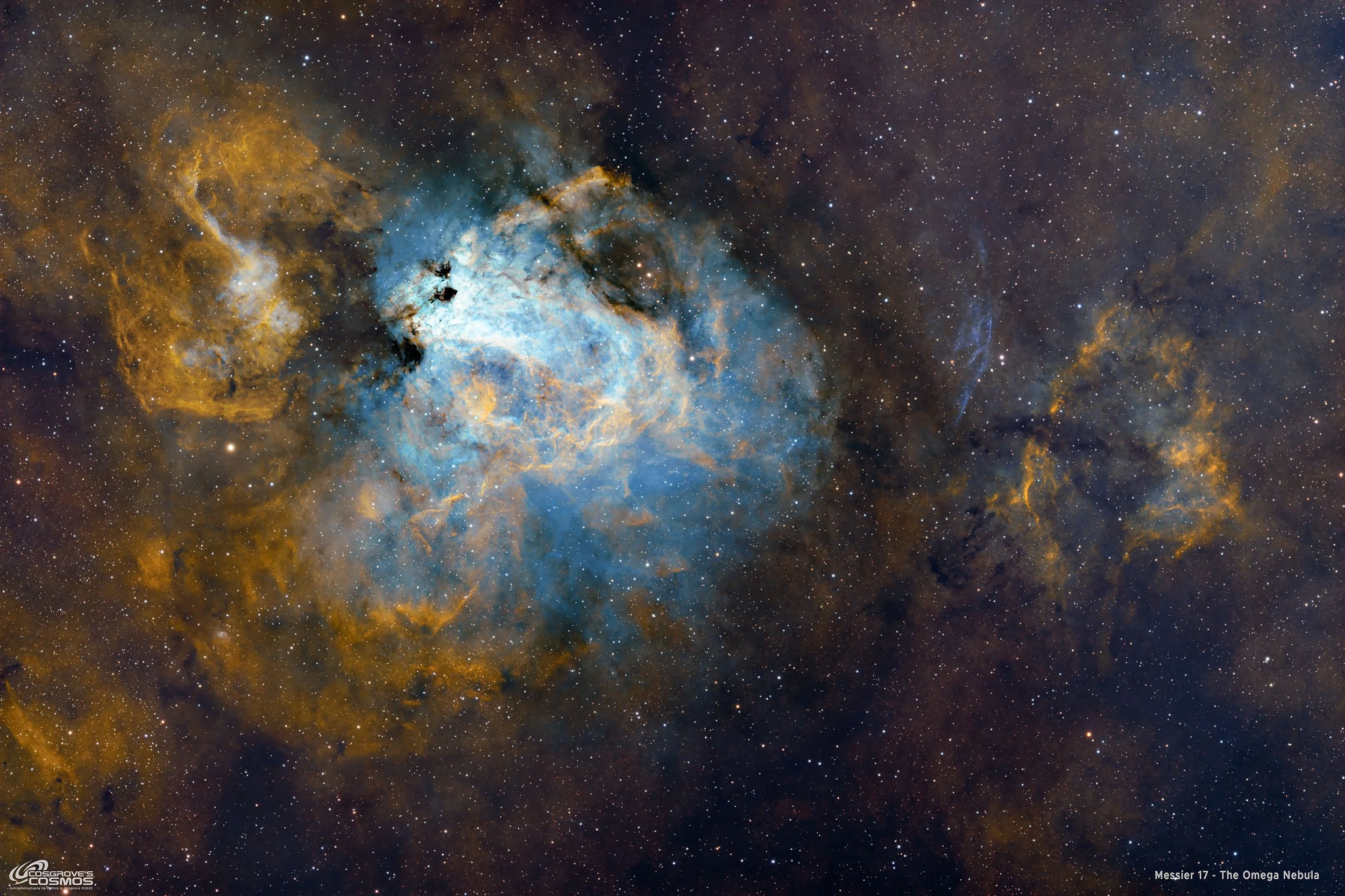
Messier 17 - The Omega Nebula - Victory After Heartbreak! (17 hours SHOrgb on M17!)
Messier 17, The Omega Nebula, is a bright and popular target in the summer constellation of Sagittarius.
This image is the result of 17 hours of SHOrgb exposure on my William Optics 132 LFT platform.
The narrowband view of this shows the target in a way that is not often seen.
Considering that this project started with three nights of exposure, where 2 of the nights had all of the frames out of focus, I am really happy with the final results.
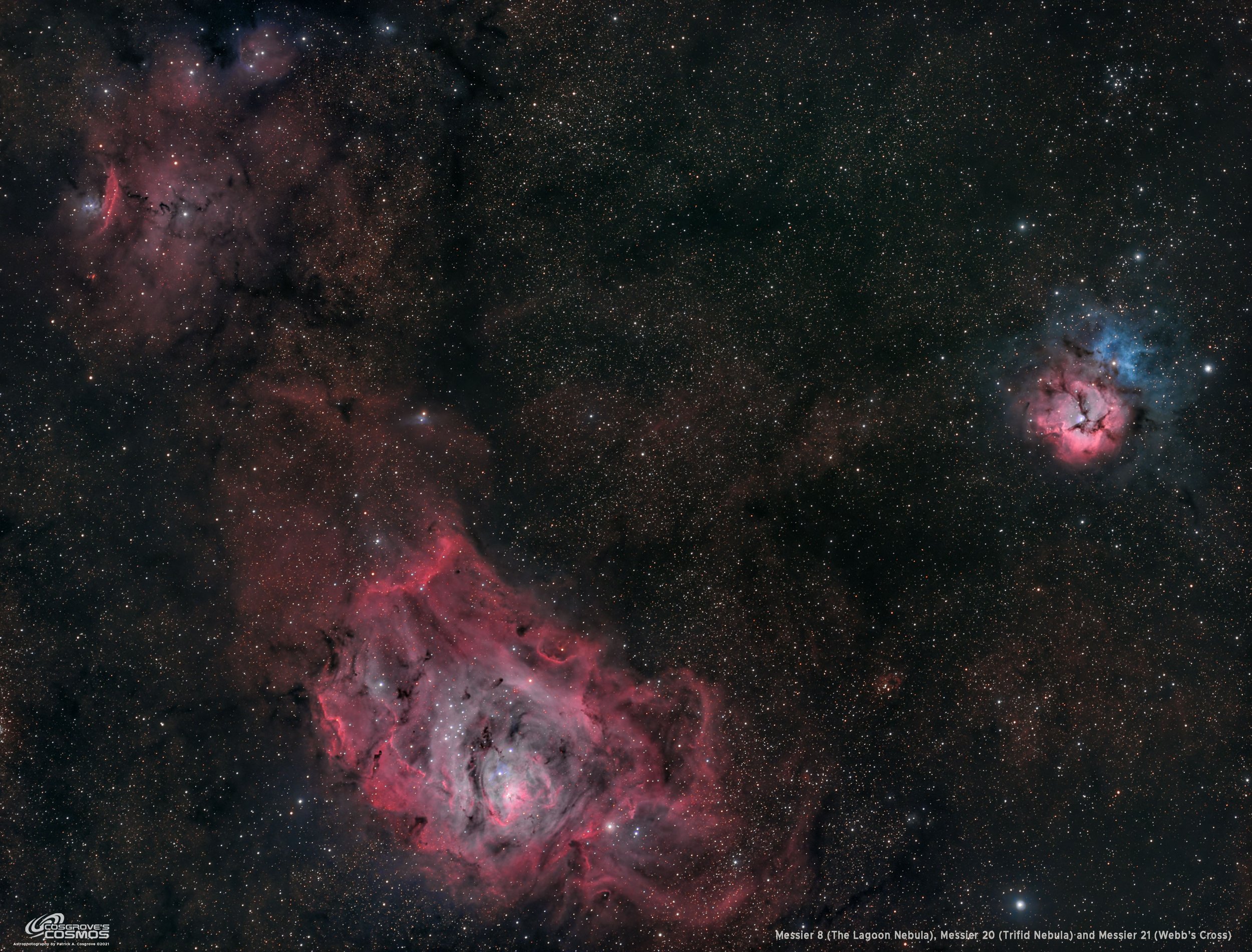
Messier 8, 20, and 21: A Rich Region in Sagittarius - 3.9 hours in HaRGB
This imaging project is a group photo taken in a rich portion of the constellation Sagittarius. It is the result of just 4 hours of LHaRGB integration. In this group, you can see Messier 8 (The Lagoon Nebula), Messier 20 (The Trifid Nebula), and Messier 21 ( Webb’s Cross). Also seen is the “Fist” shaped nebula on the upper left that is most strongly associated with IC 4685. This was taken with my Askar FRA400 widefield scope platform.
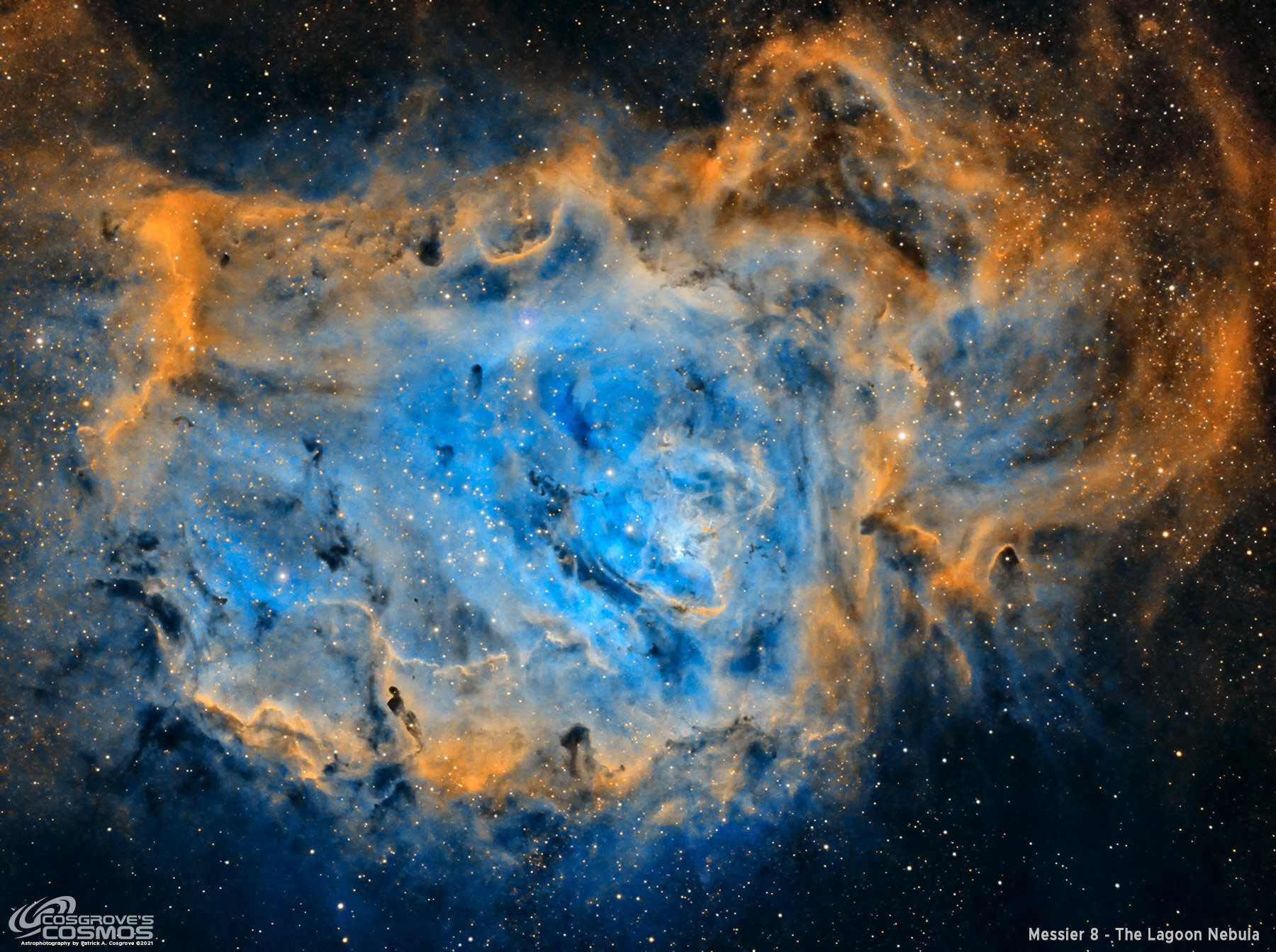
Messier 8 - The Lagoon Nebula In the Hubble Palette
Messier 8, also known as the Lagoon Nebula and NGC 6523, is a huge cloud of molecular gas and dark dust located about 4000-6000 light-years away in the constellation Sagittarius. This is a large emission nebula that is bright enough to be seen with the naked eye. Within the cloud is the open cluster NGC 6530, and a bright central feature is known as the Hour Glass.
This is my third effort on this target - a mono image in SHO - working from minimal data taken the troubling month o July 2021
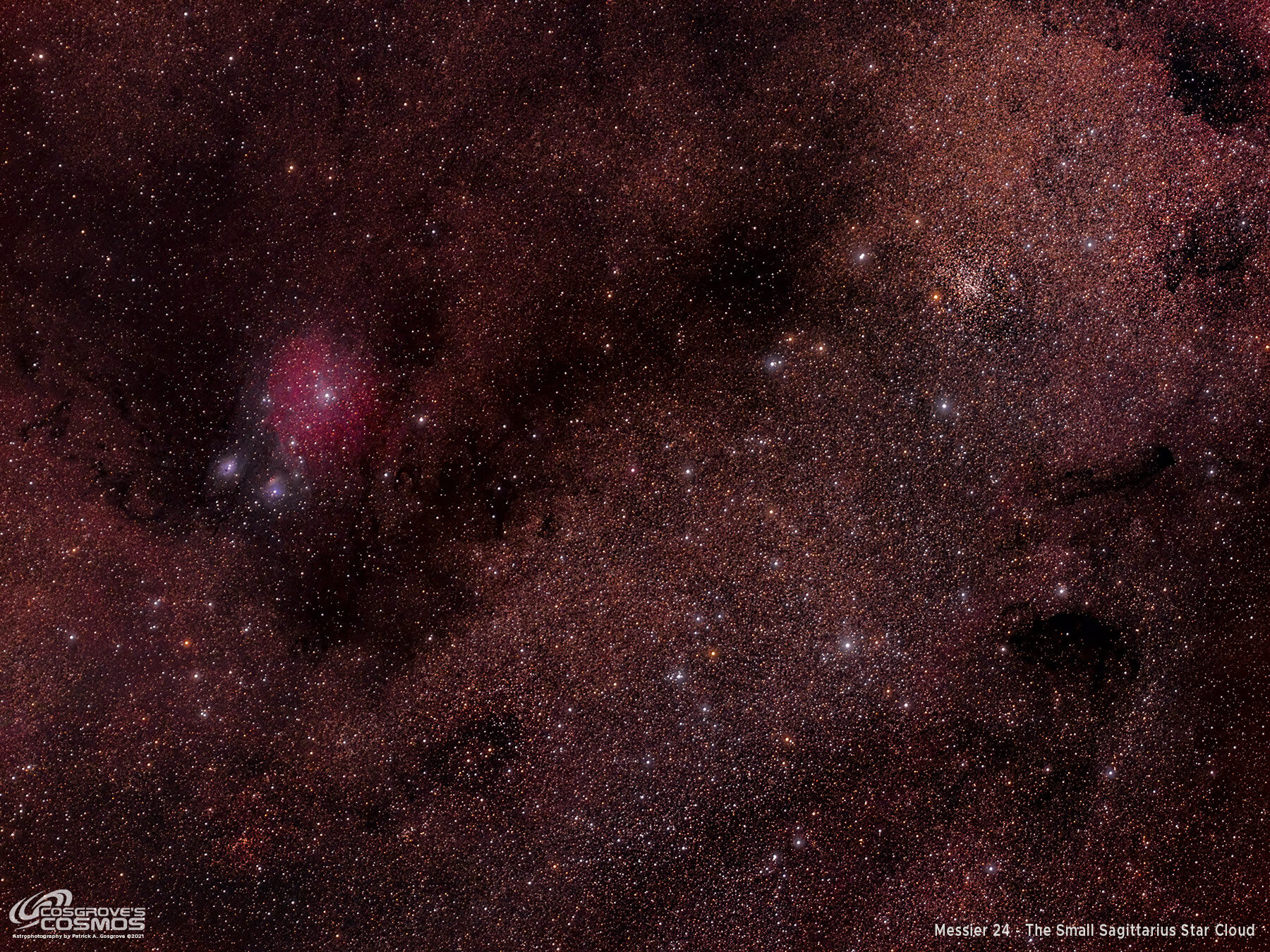
Messier 24 - The Small Sagittarius Star Cloud - in Widefield LRGB
Messier 24, also known as IC 4715 and “The Small Sagittarius Star Cloud,” is located appropriately in the constellation Sagittarius. It appears as a large and dense population of stars with a few areas of dark dust. As we look towards Sagittarius, we are looking towards the highly populated core of our own galaxy. Unfortunately, we don’t see the core as many molecular gases, and dark dust clouds obscure our view. However, in the case of Messier 24, what we are actually seeing is a hole in the obscuring gas and dust, and we get a glimpse of the dense stars of the Sagittarius-Carina arms of the Milky Way.

Messier 20 - The Trifid Nebula - Mono Camera FIrst Light!
Messier 20 is known by the common name “The Trifid Nebula” and by NGC 6514. It is a star-forming region in the constellation of Sagittarius and is located about 4100 light-years away. This was the very first image on the AP-130 platform and my very first use of a mono camera forming an LRGB image!

Messier 8 - The Lagoon Nebula
Messier 8, also known as the Lagoon Nebula, is a giant interstellar cloud located in the constellation Sagittarius and is 4000-6000 light-years away. This is a rich star-forming region - in fact, it is one of the two such regions that are bright enough to be seen with the naked eye under dark skies.
This is my second effort shooting this target.

Messier 17 - The Omega Nebula
M17 is one of those objects that has collected a lot of common names over the years. Most often known as the Omega Nebula, it has also been called the Swan, Horseshoe, and Check-Mark Nebula.
As you look towards the southern sky during summer, you are actually looking to a very bright portion of our own Milky Way Galaxy, and M17 is part of that region. The Omega Nebula is a large region of Hydrogen II Gas located in the constellation Sagittarius. It is between 5000 and 6000 light-years from earth and has a diameter of about 15 light-years.
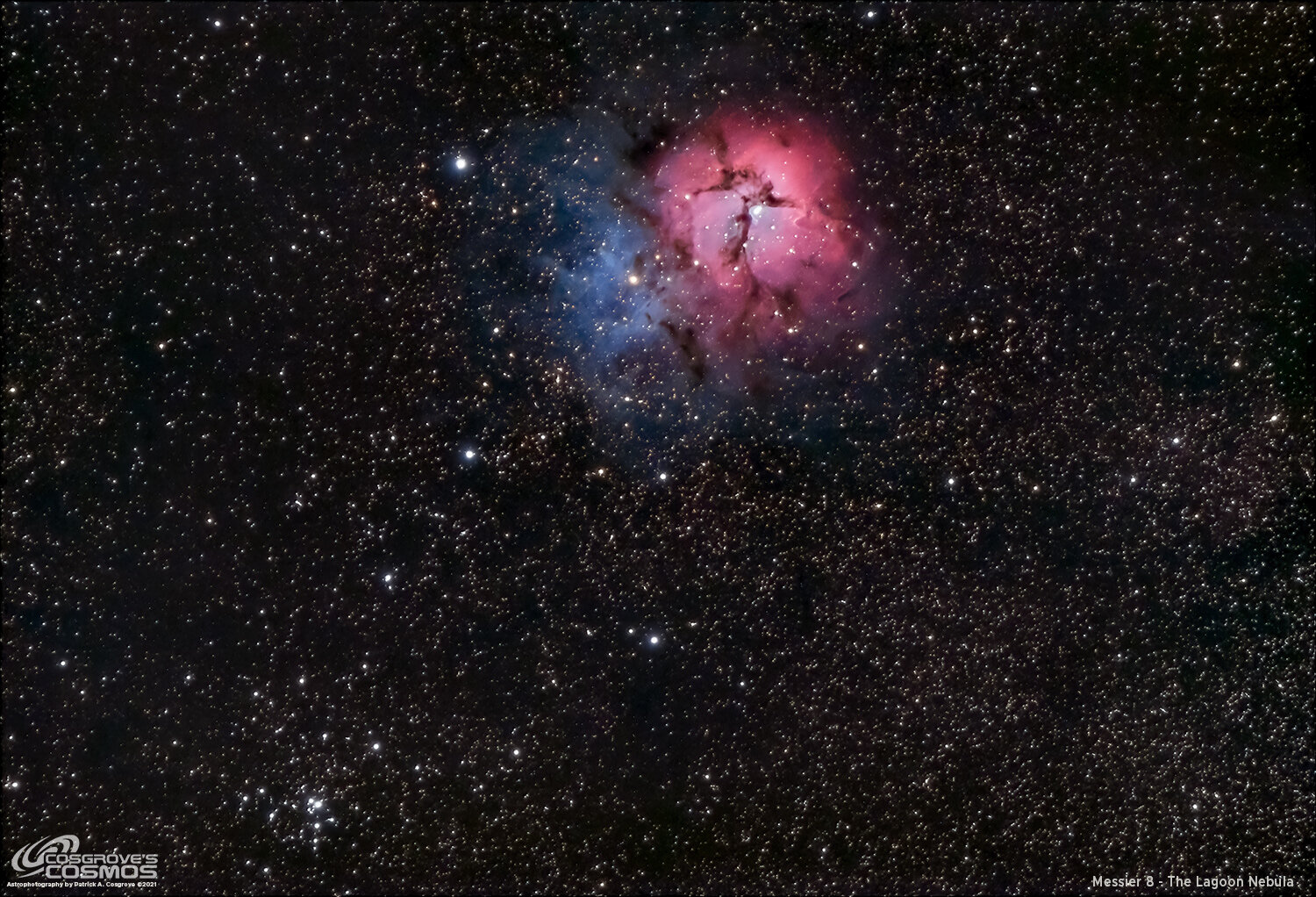
Messier 20 - The Trifid Nebula
The first imaging attempt on Messier 20, commonly known as the Trifid Nebula, is a Hydrogen II region in Sagittarius located about 5000 light-years from earth. The name "Trifid" means "divided into three lobes," This describes the impression when seen visually in a Telescope. This object combines an open cluster of stars, an emission nebula (the red portion), and a reflection nebula (the blue portion), making it a rich target for astrophotography. The dark lanes are concentrations of dust and gas that form nurseries for the formation of new stars
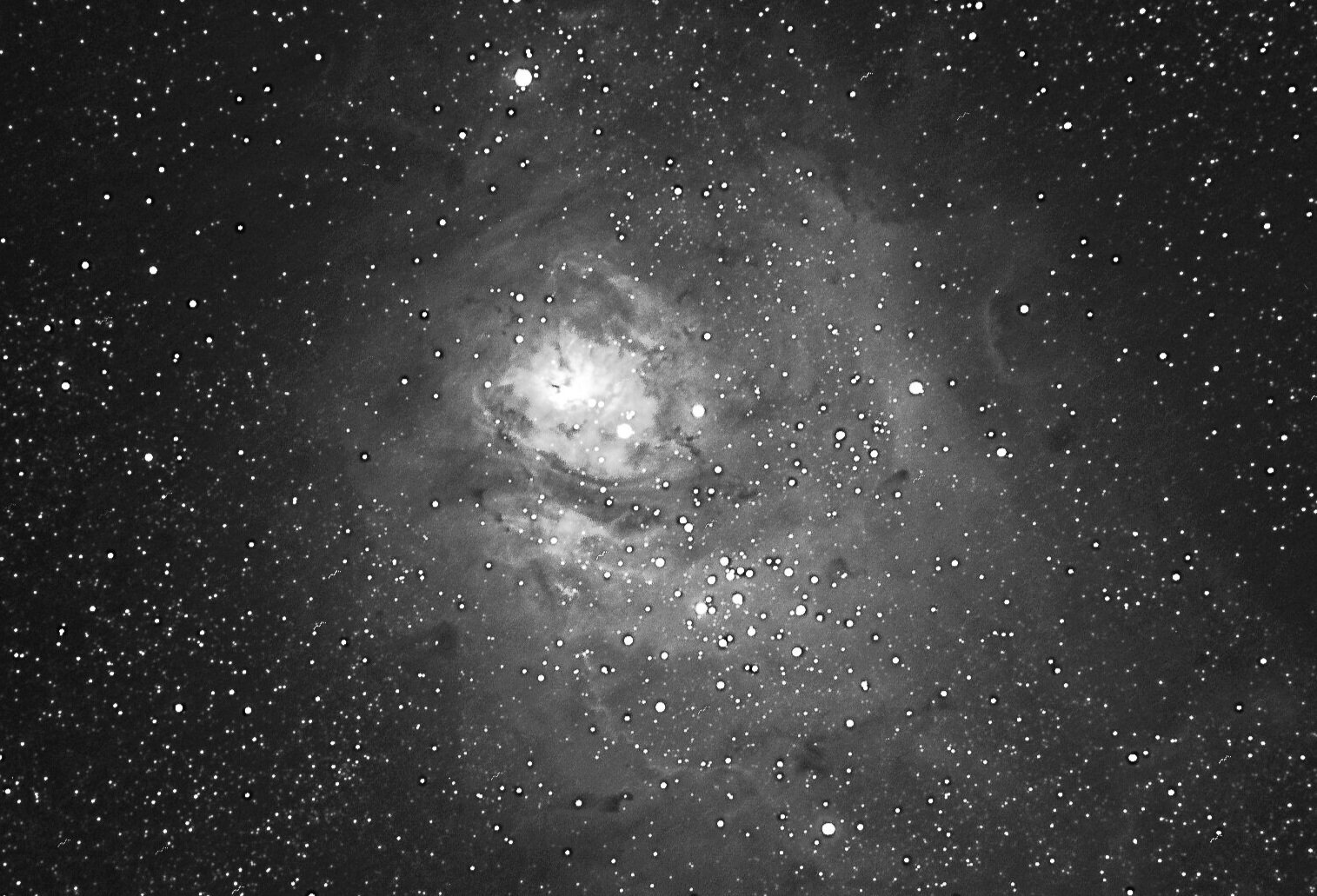
Messier 8 - The Lagoon Nebula - My First Image Ever!
My First image ever - this is the story about the very first time I setup my new telescope and mount - along with the ASI294MC_Pro camera and got things working enough to get a crude set of first subs that led this image. No color, No Guiding. No Cal frames. Bad focus. But I was thrilled anyway and hooked on this thing we call astrophotography!