Imaging Projects
In this blog, I will share the results of all of my imaging projects. The newest will be at the top and the oldest will be further down the stack. Going back in time here is interesting - some of my early stuff was pretty rough - but I did not see it that way at the time - I was thrilled to get anything back that looked like an image! Hopefully, you will see how my work has progressed with time!
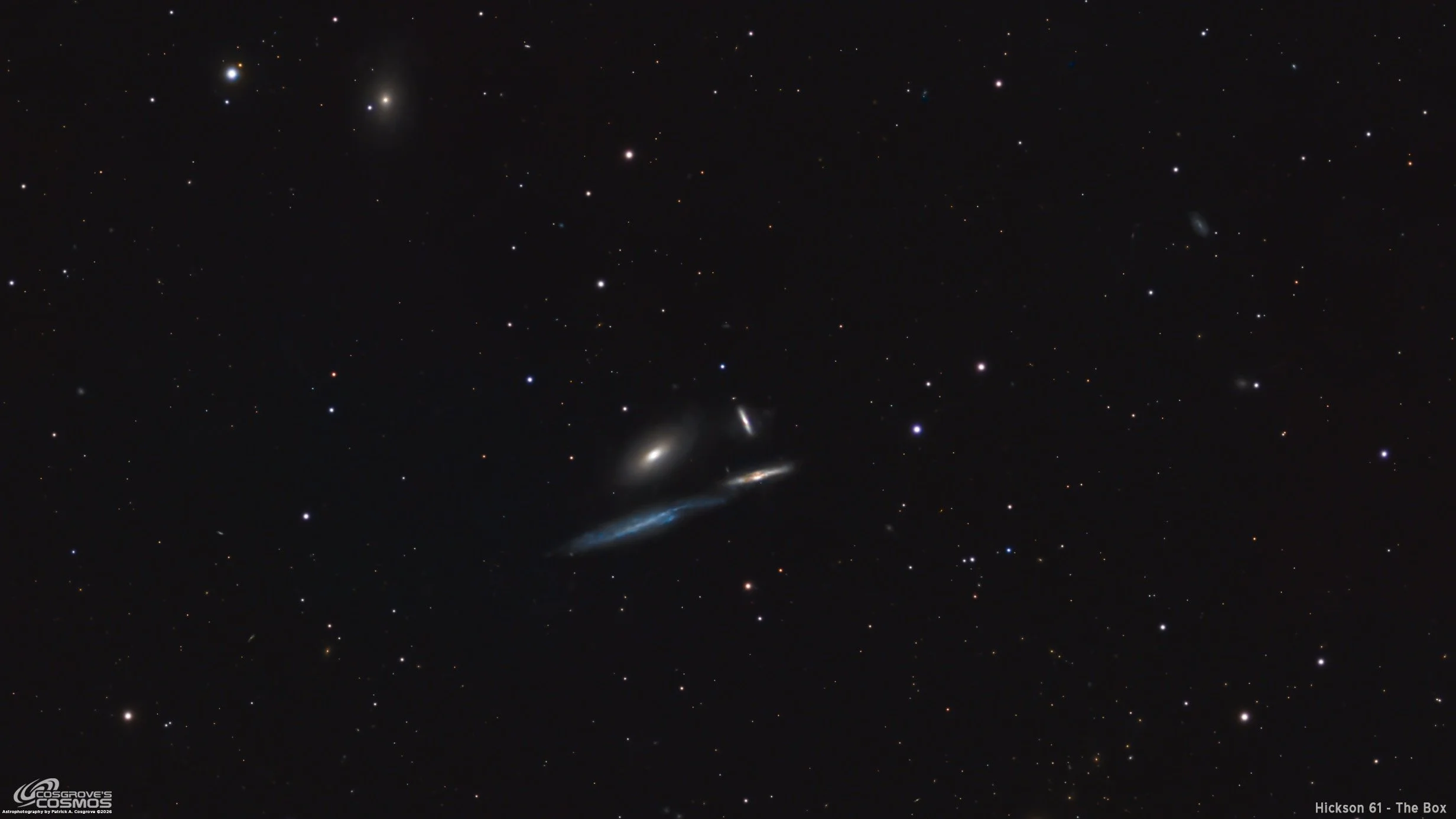
Hickson 61 — “The Box” | Tiny Galaxies, Tough Data! - 7.8h LRGB
Hickson 61, better known as “The Box,” is a tiny apparent grouping of faint galaxies in Coma Berenices. This LRGB image captures NGC 4169, NGC 4173, NGC 4174, and NGC 4175 — four small galaxies arranged in a striking box-like pattern. Most of the group lies roughly 170–200 million light-years away, while NGC 4173 is likely a closer foreground galaxy that happens to line up with the others. Captured from Whispering Skies Observatory over two April nights, this 7-hour 48-minute project highlights the challenge and reward of imaging small, distant galaxy groups where scale, faintness, and perspective all matter.
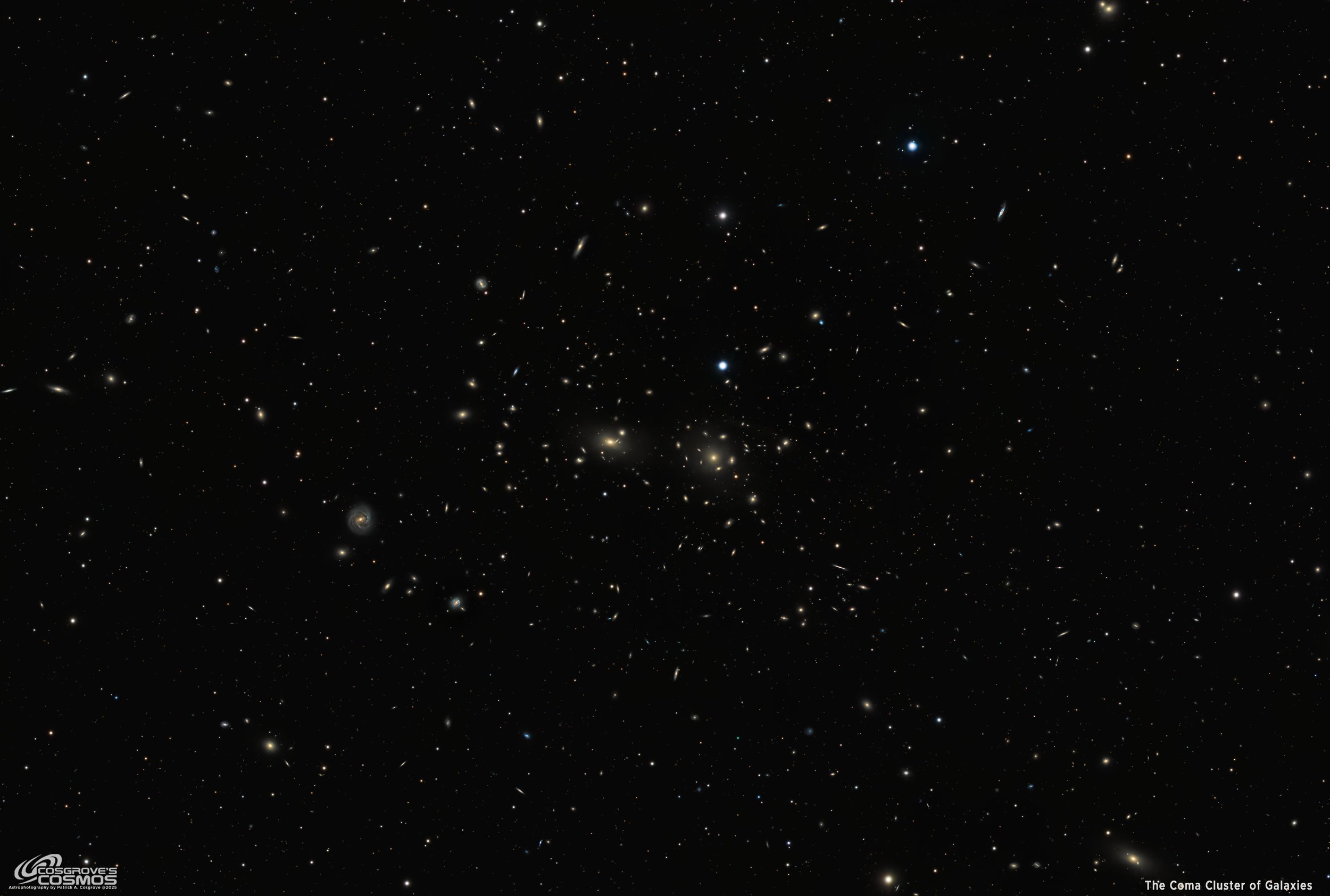
The Coma Cluster of Galaxies (Abell 1566) - Zoom In! 1000 Galaxies, 320M Light-Years Away! (~8.2 Hours of LRGB)
This is not just some star cluster! This image shows an immense cluster of over 1000 galaxies that are on average 320 million light-years away!
This image was the result of 8.2 hours of LRGB exposure taken on my William Optics platform from data collection during the first light of my Whispering Skies Observatory!
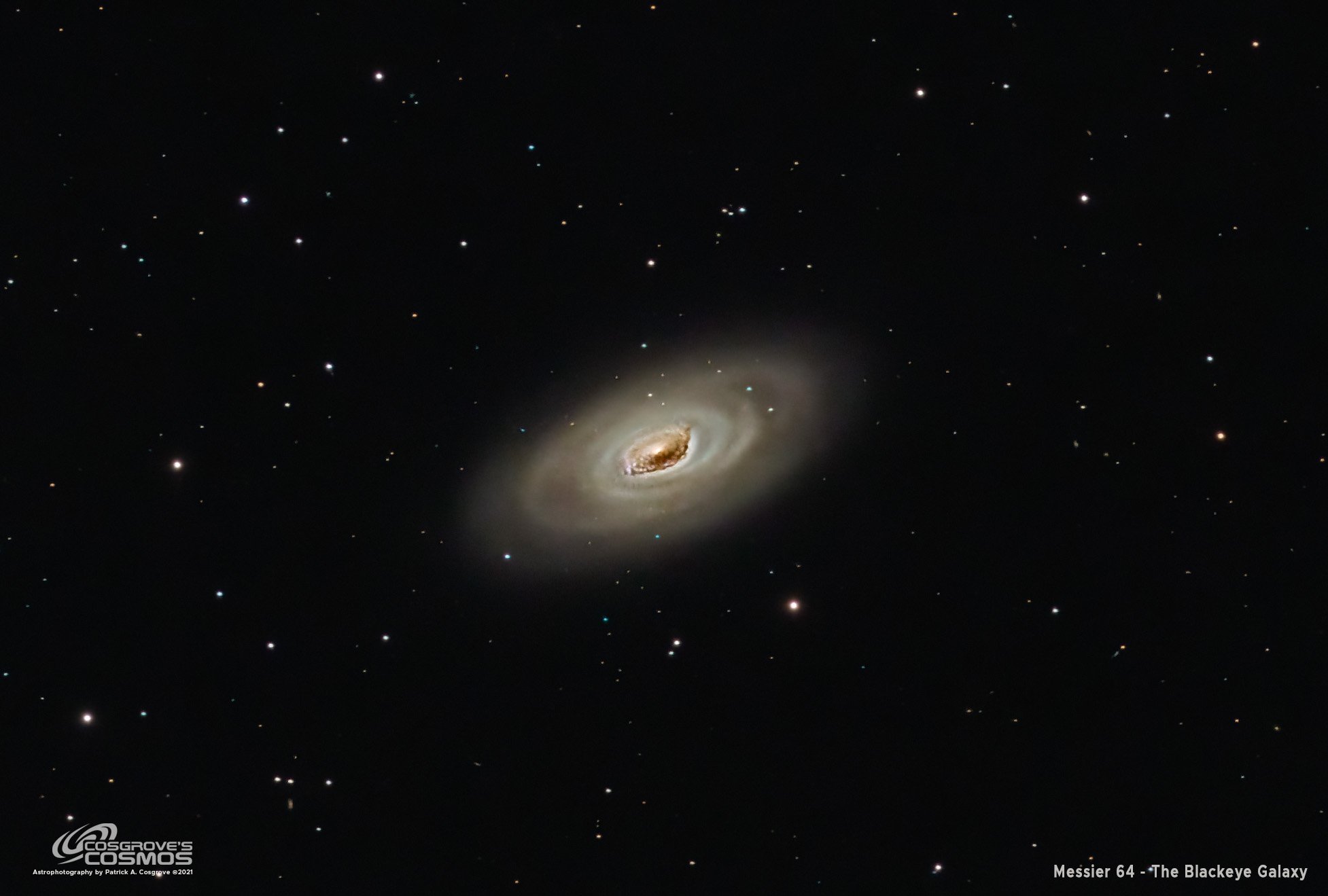
Messier 64 - The Black Eye Galaxy - 2.6 hrs in LRGB
Messier 64 - The Black Eye Galaxy is the result of 2.6 hours of LRGB data taken with my William Optics 132 mm platform and the ASI1600MM-Pro mono camera. This famous galaxy is located 17 million light-years away in the constellation of Coma Berenices. This is my second attempt with this target - the first being taken two years ago. I am pretty happy with the new results!
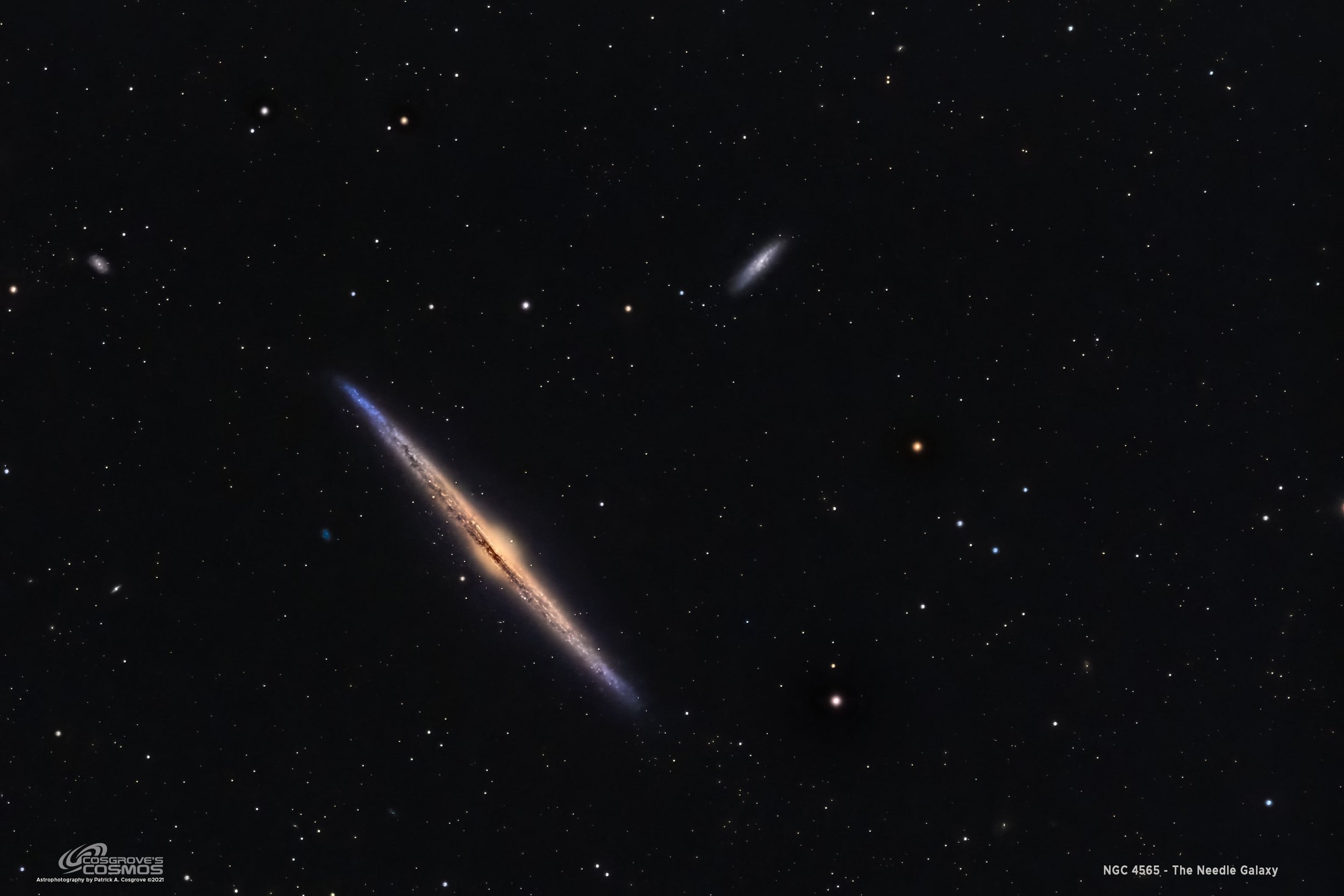
NGC 4565 - The Needle Galaxy - 11.5 hours in LRGB
NGC 4565, The “Needle Galaxy” is a classic example of an edge-on spiral galaxy. This is one of my favorite galaxies and I was very happy to finally have the chance to shoot this target! This was the result of 11.5 hours of LRGB data integration taken with the Williams Optics 132mm FLT APO scope, the CEM60 mount, and the ASI1600MM-Pro camera.
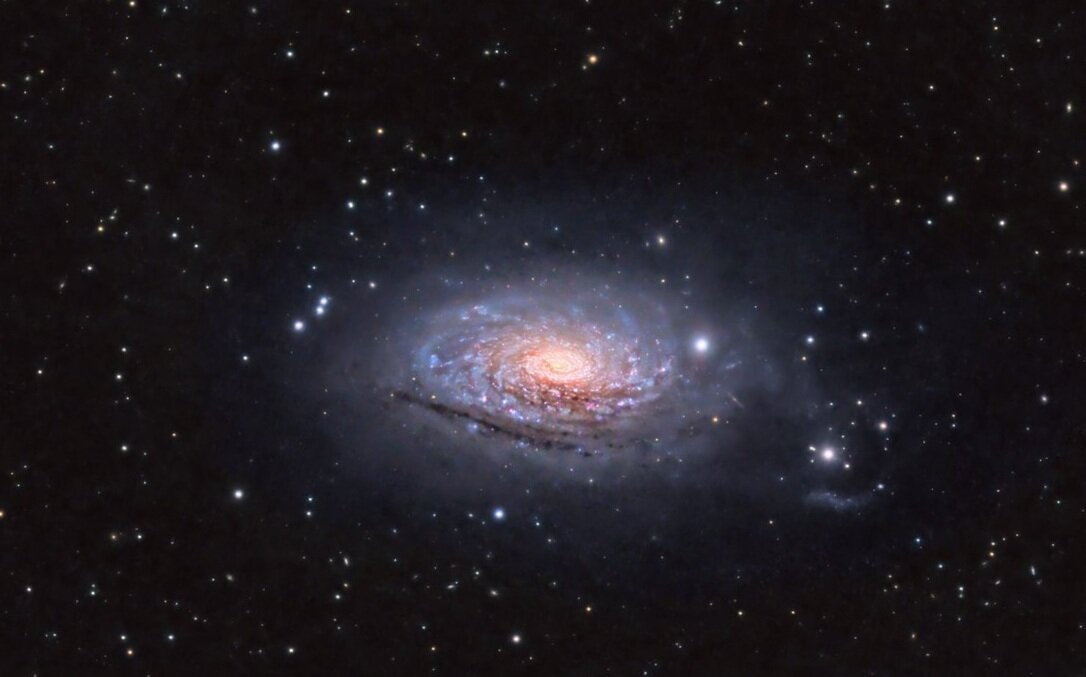
Messier 63 - The Sunflower Galaxy in HaLRGB (First Light on My New ZWO ASI2600MM-Pro Camera!)
Messier 63, The Sunflower Galaxy in LRGB. First image using the new ZWO ASI2600mm-Pro Camera!
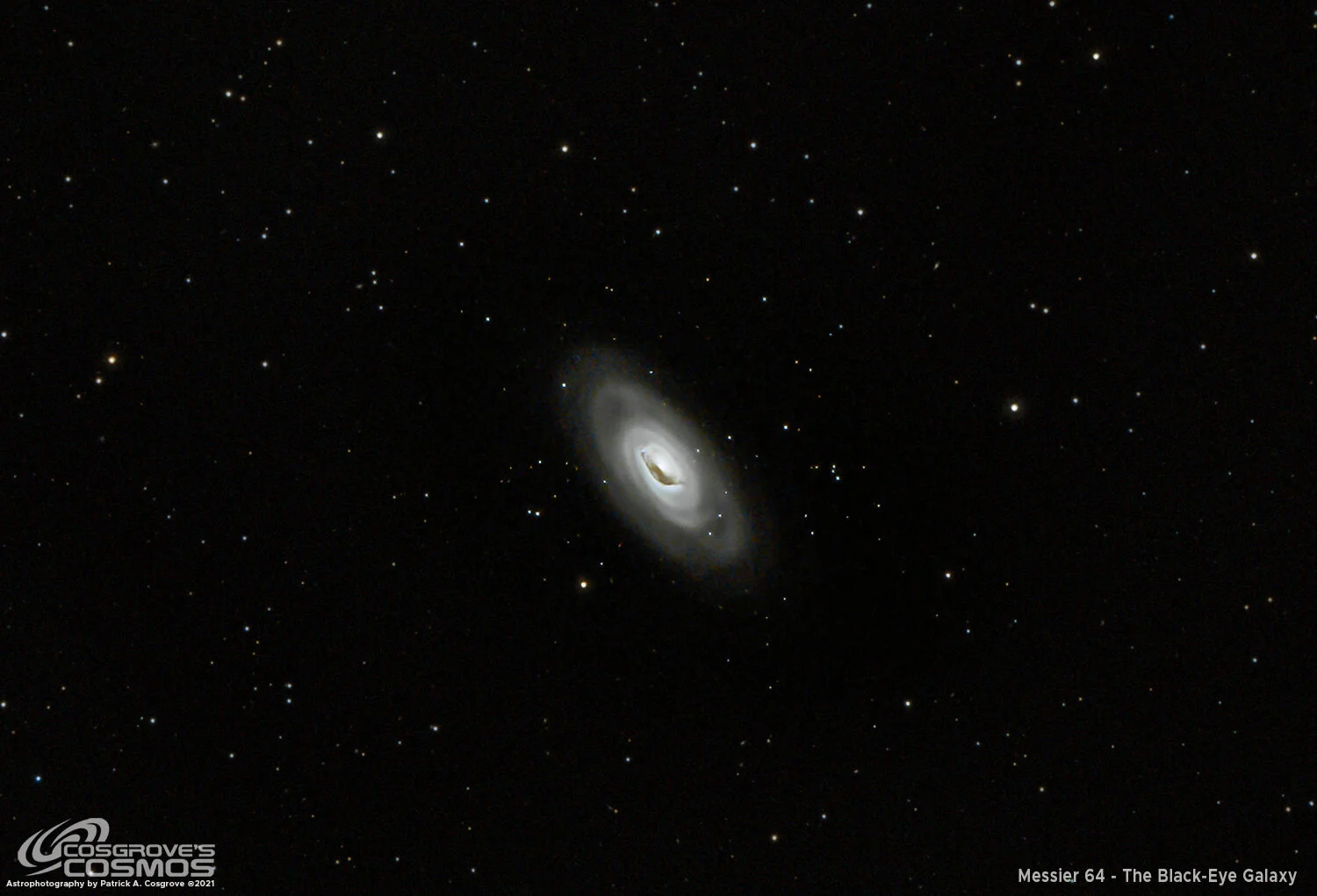
Messier 64 - The Black-Eye Galaxy
Messier 64 is also known as the Sleeping Beauty Galaxy or the Evil Eye Galaxy and is designated as M64, or NGC 4826. It is located 17 million light-years away in the northern constellation of Coma Berenices. It measures about 54,000 light-years in diameter, making it about half the size of our own Milky Way. It has a swirling central disk of dark dust, which gives it a unique look that inspires its name.
This was captured on the William Optics 132mm Platform.