Imaging Projects
In this blog, I will share the results of all of my imaging projects. The newest will be at the top and the oldest will be further down the stack. Going back in time here is interesting - some of my early stuff was pretty rough - but I did not see it that way at the time - I was thrilled to get anything back that looked like an image! Hopefully, you will see how my work has progressed with time!
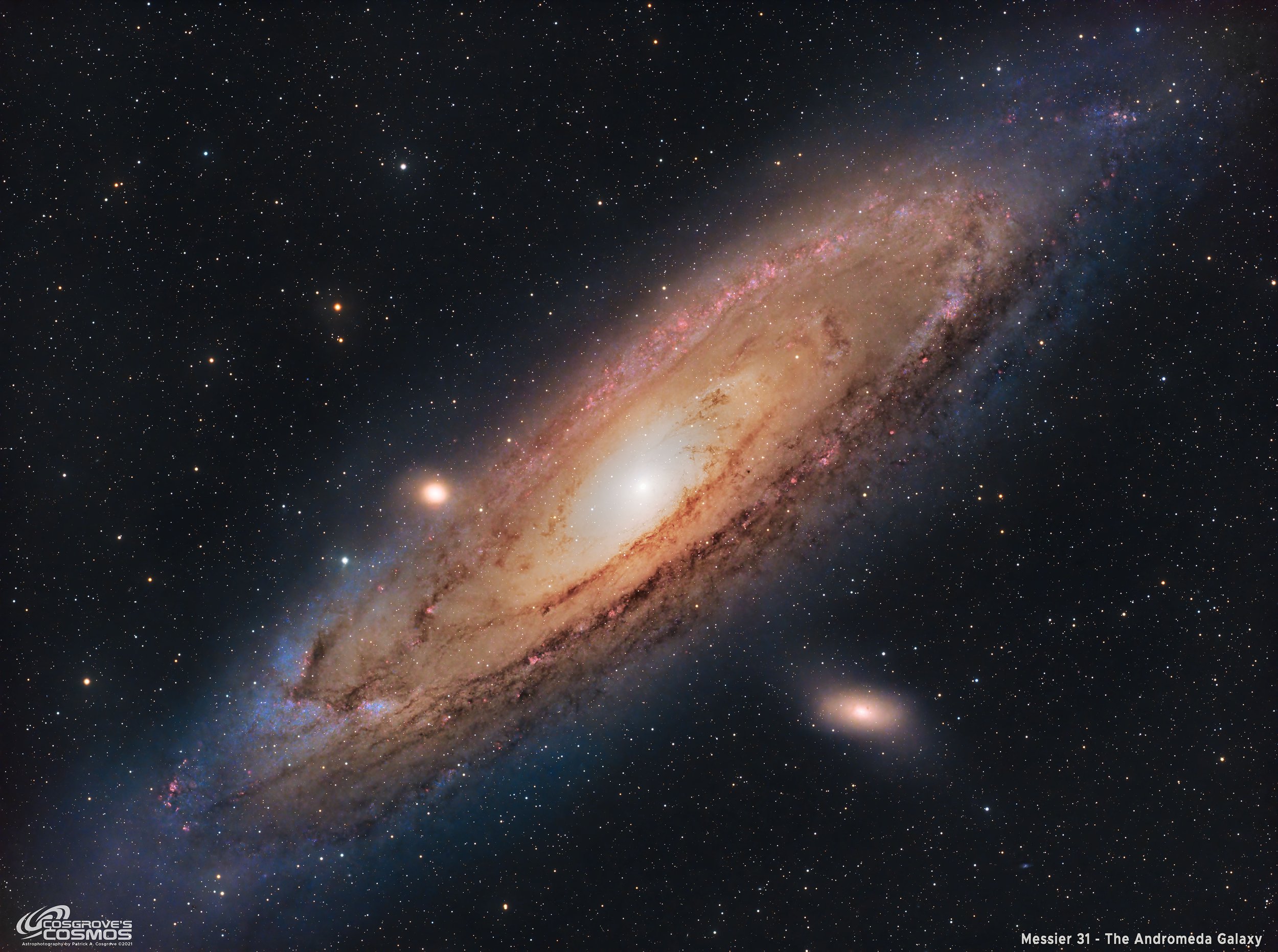
Reprocessing Project: Messier 31 - The Andromeda Galaxy (6 hours in LHaRGB)
This version of M31, taken in November 2021, is my favorite. But it has been a few years since I first captured and processed this data. I have learned a lot since then, and I also have some excellent new processing tools at my disposal, so I wanted to see where I would end up if I were to start from scratch with the data, and this is the result!
Let me know what you think of this new image!
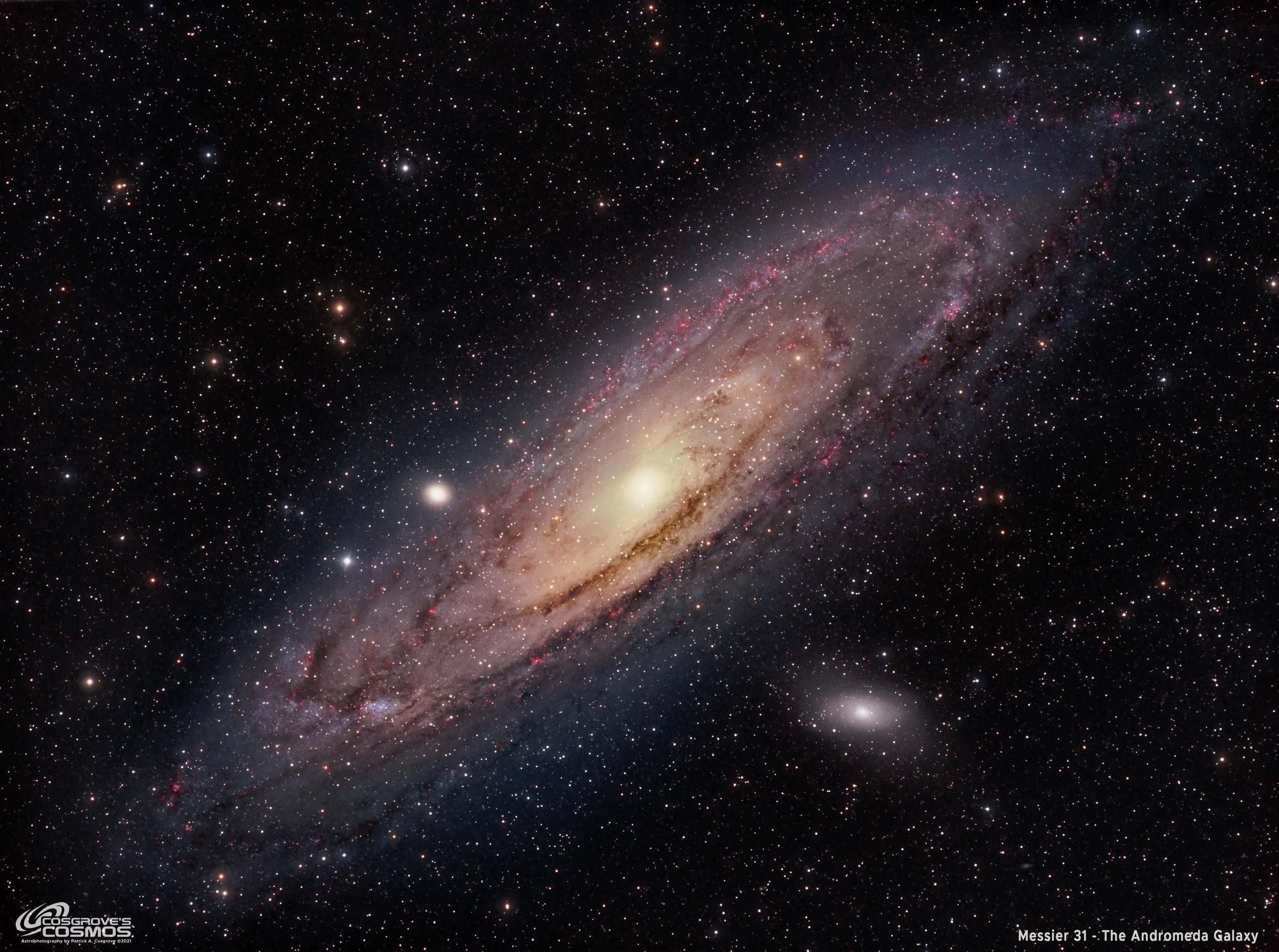
Messier 31 - The Andromeda Galaxy in LHaRGB - 6 hours
This is my third attempt at M31. This time with a widefield system that can fit the entire galaxy into the field of view., and a mono camera that allowed me to collect Ha as well as LRGB data. A total of 6 hours of data integration.
Messier 31 is also known as NGC 224 and the Andromeda Galaxy, or as the Andromeda Nebula before we knew what galaxies were. It can be seen by the naked eye in the constellation Andromeda (how appropriate!) and is our closest galactic neighbor located 2.5 Million light-years away. It is estimated that it contains about one trillion stars - twice that of our own Milky Way.
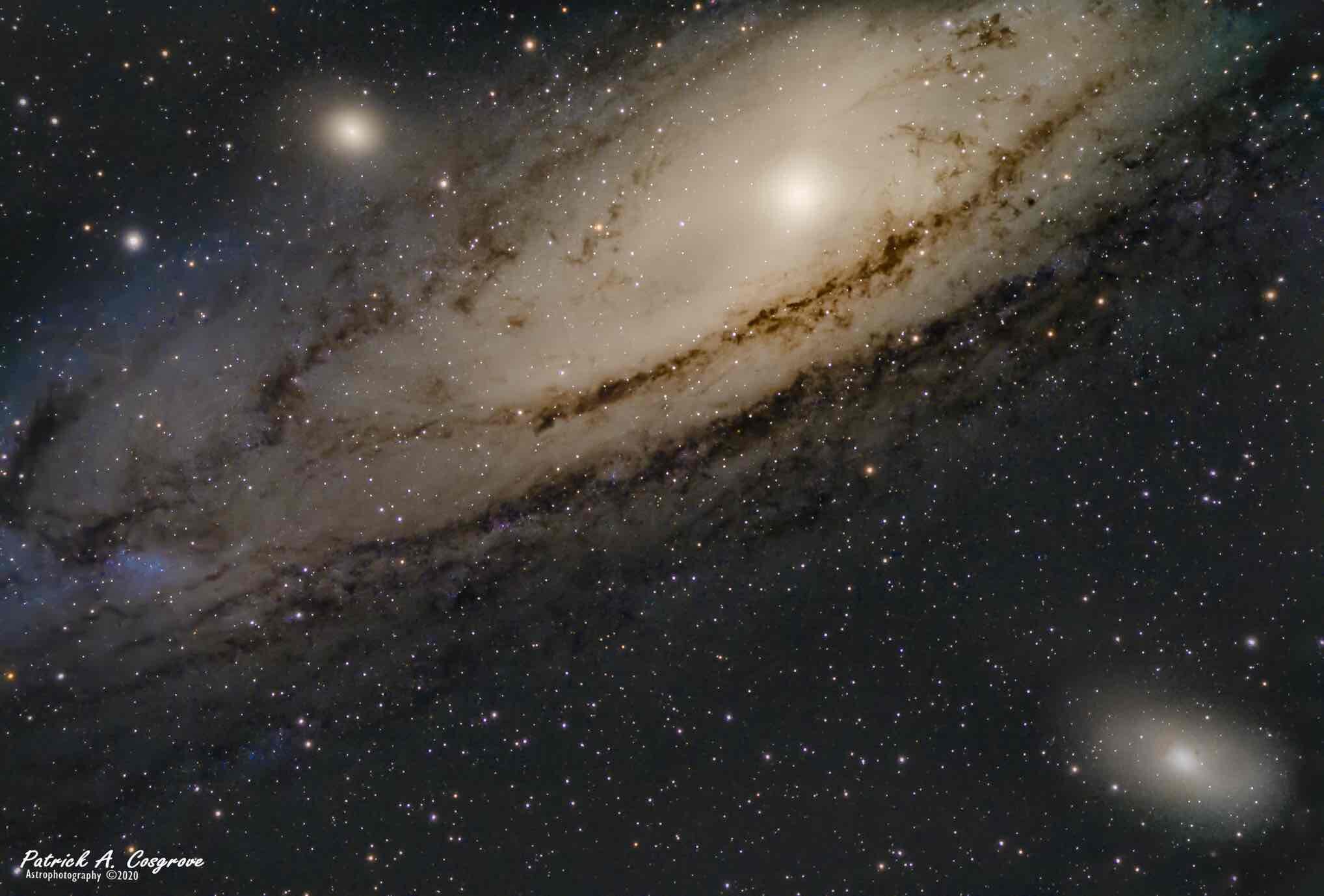
Messier 31 - The Andromeda Galaxy - with Neighbors M32 and M110
This is my second attempt at M31. With a larger focal length, I could not fit the whole galaxy in so I experimented with a framing that showed it’s two neighbors.
Messier 31 is also known as NGC 224 and the Andromeda Galaxy, or as the Andromeda Nebula before we knew what galaxies were. It can be seen by the naked eye in the constellation Andromeda (how appropriate!) and is our closest galactic neighbor located 2.5 Million light Years away. It is estimated that it contains abut one trillion stars - twice that of our own Milky Way.
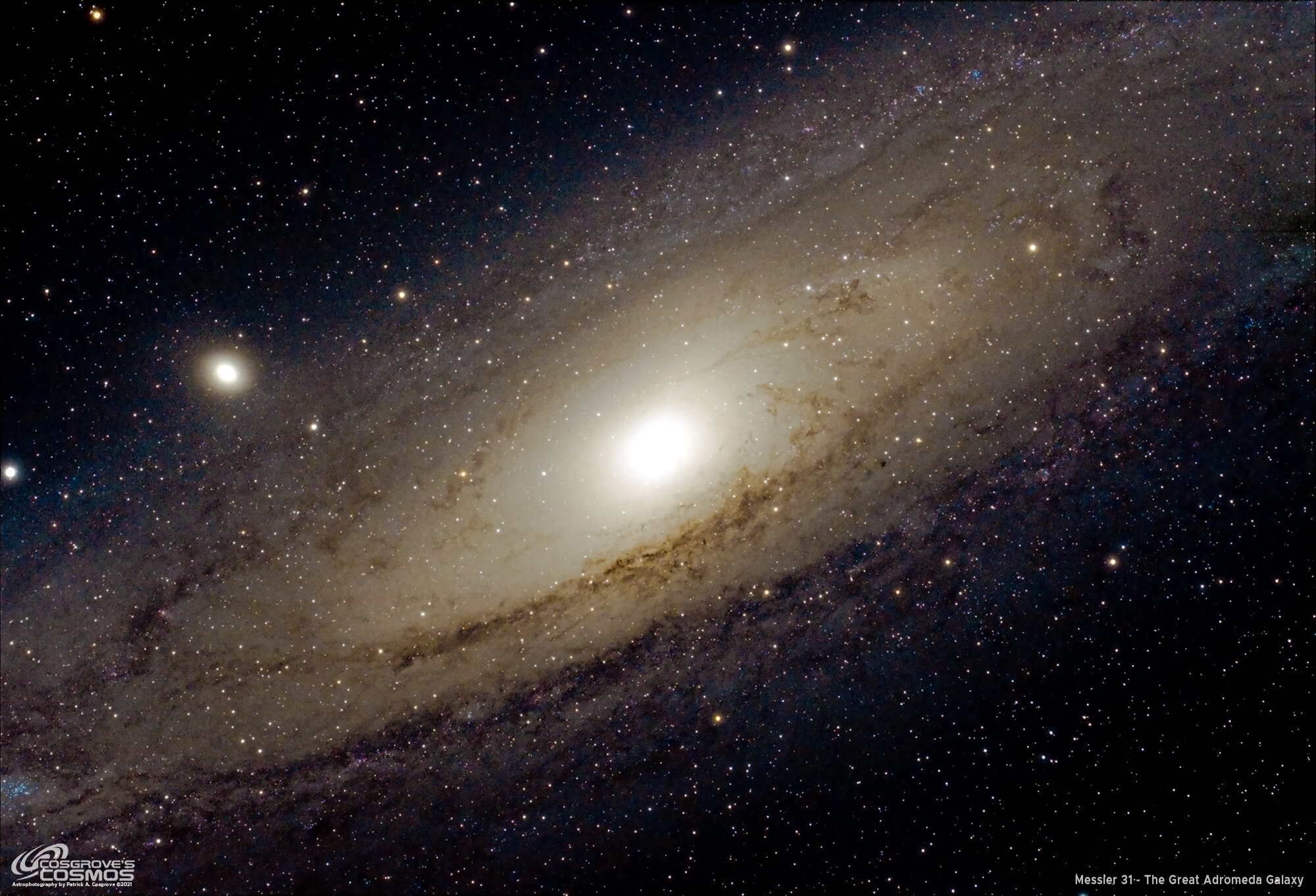
Messier 31 - The Andromeda Galaxy - 2019 Version
Messier 31 is also known as NGC 224 and the Andromeda Galaxy, or as the Andromeda Nebula, before we knew what galaxies were. It can be seen by the naked eye in the constellation Andromeda (how appropriate!) and is our closest galactic neighbor located 2.5 Million light-years away. It is estimated that it contains about one trillion stars - twice that of our own Milky Way.
M32 (at the left of M31) can be seen in the frame.
This way, my first serious attempt on M31.