First Light on the AP155 Platform - M81/82 and NGC 3077: April 2026 Image Processing Walkthrough
April 17, 2026
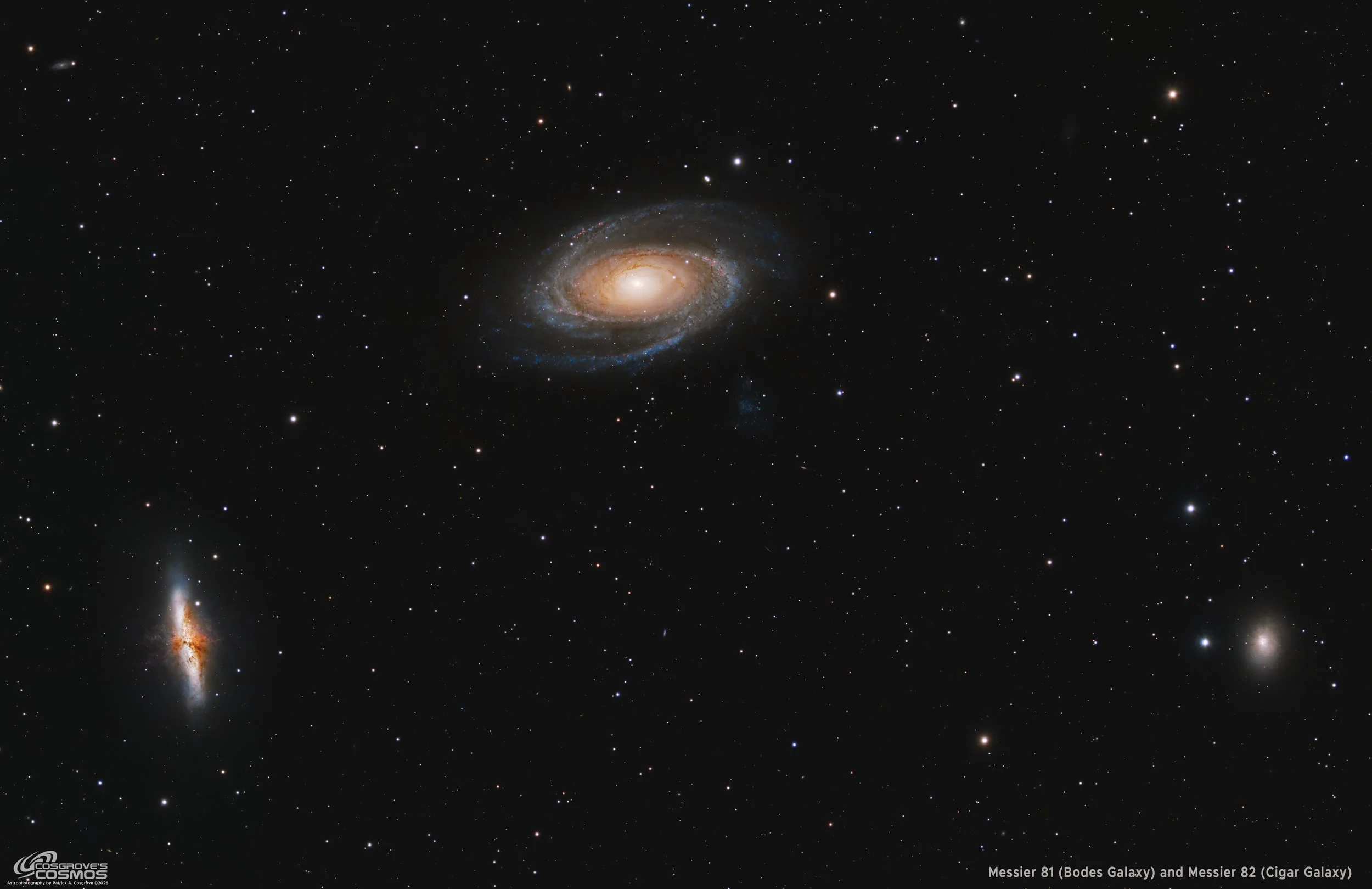
My April 2026 image of M81/82 and NGC 3077 taken with the newly configured AP155 platform.
🔭 Project Summary
Target: M81 (Bode’s Galaxy), M82 (Cigar Galaxy), and NGC 3077
Capture Date: April 11, 2026
Constellation: Ursa Major • Distance: ≈ 11.5–12.5 million light-years
Type: Spiral Galaxy (M81) + Starburst Galaxy (M82) + Disturbed Companion Galaxy (NGC 3077)
Imaging Period: April 11, 2026 • Total Integration: 4 h 36 m (LRGB + Ha)
Filters: L · R · G · B (ZWO 36mm Unmounted LRGB Gen II) + Ha (Astronomik 36mm 6 nm)
Telescope: Astro-Physics 155mm Starfire EDFS f/5.3
Camera: ZWO ASI2600MM-Pro (−15 °C; Gain 0 LRGB, Gain 100 Ha)
Mount: iOptron Tri-Pier with column extension on custom steel pier
Processing: PixInsight & Photoshop
Location: Whispering Skies Observatory · Honeoye Falls, NY (USA)
Field Includes: M81, M82, NGC 3077
Table of Contents Show (Click on lines to navigate)
Special Note
Welcome to the New Image Processing Page for this project! You got here by following a link in the main Image Project Report, and you can easily return to that by using the back button on your browser.
Abbreviations Used
BXT BlurXTerminator by RC-Astro
CC Cosmetic Correction
CT Curves Transformation Process
DBE Dynamic Background Extraction Process
ET Exponential Transformation
HDRMT HDR MultiScale Transform
HDRC HDR Composition
NXT NoiseXTerminator by RC-Astro
MLT Multiscale Linear Transform
PI PixInsight
PS Photoshop
SCNR Subtractive Chromatic Noise Reduction Process
SFS SubFrameSelector
SPCC SpectroPhotometric Color Calibration
STF Screen Transfer Function
STF->HT method – Drag the STF triangle to the base of HistogramTransformation, then apply it to the image to take it nonlinear.
SXT StarXTerminator by RC-Astro
WBPP Weighted Batch Preprocessing Script
Summary:
M81 / M82 / NGC 3077 HaLRGB Processing Flow
Sequential summary of the AP155 first-light workflow, organized around the actual dependency chain rather than parallel lanes.
Processing this Image
(All Processing is done in PixInsight, with some final touches done in Photoshop)
1. Blink
I screened all subs and cal frames with Blink.
L: 47 frames, some satellite trail, but no frames removed.
Red: 23 frames - 2 removed for tracking errors - some of the very early frames.
Green: 23 frames- 1 removed for tracking errors - one of the very early frames.
Blue: 23 frames, 0 removed
Ha: 24 frames - 3 removed for tracking issues - again, these were early frames.
Darks: All looked OK
Flats: All looked OK
Dark Flats: All looked OK
2. WBPP 2.9.1
All frames were loaded into WBPP:
Reset everything
Load all lights
Load all flats
Load all darks
Select - maximum quality
Reference Image - auto - the default
Select the output directory for the WBPP folder
Enable CC for all light frames
Pedestal value - auto
Darks - set exposure tolerance to 0
Lights - set exposure tolerance to 0
Lights - all set except for a linear defect
set for Autocrop
I chose NOT to use Drizzle processing.
WBPP run in 44:22 - no errors
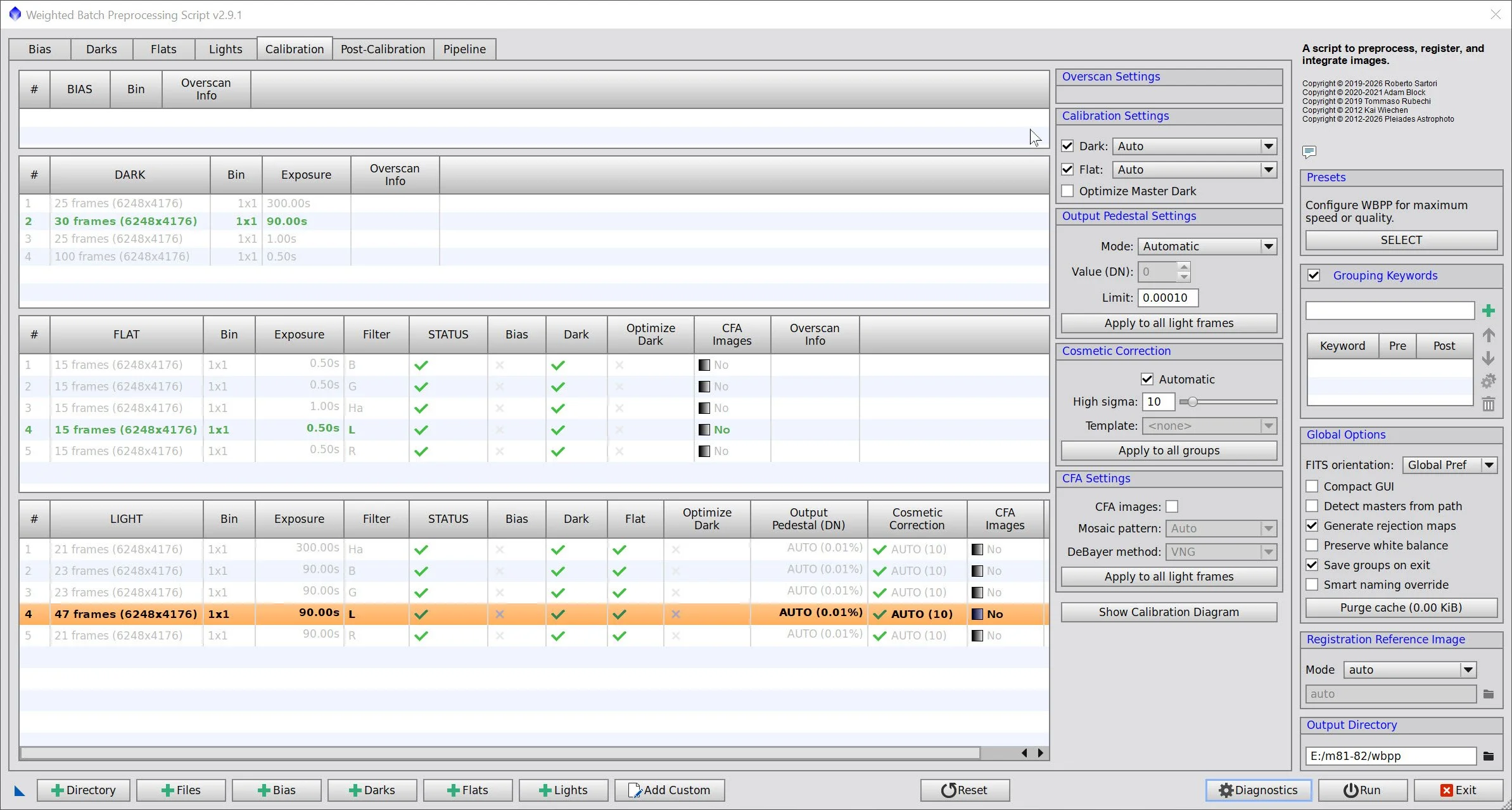
WBPP Calibration View
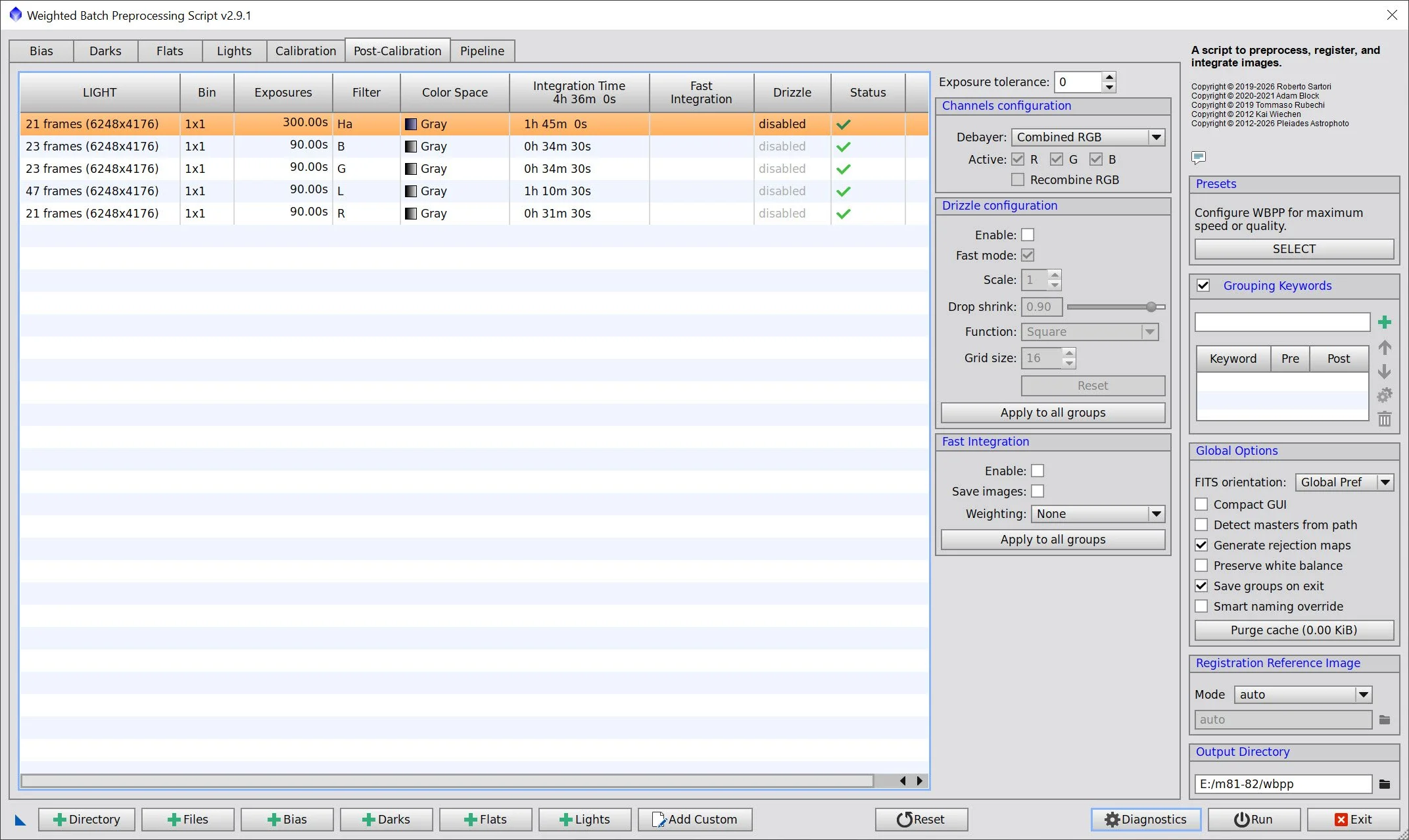
WBPP Post Calibration View
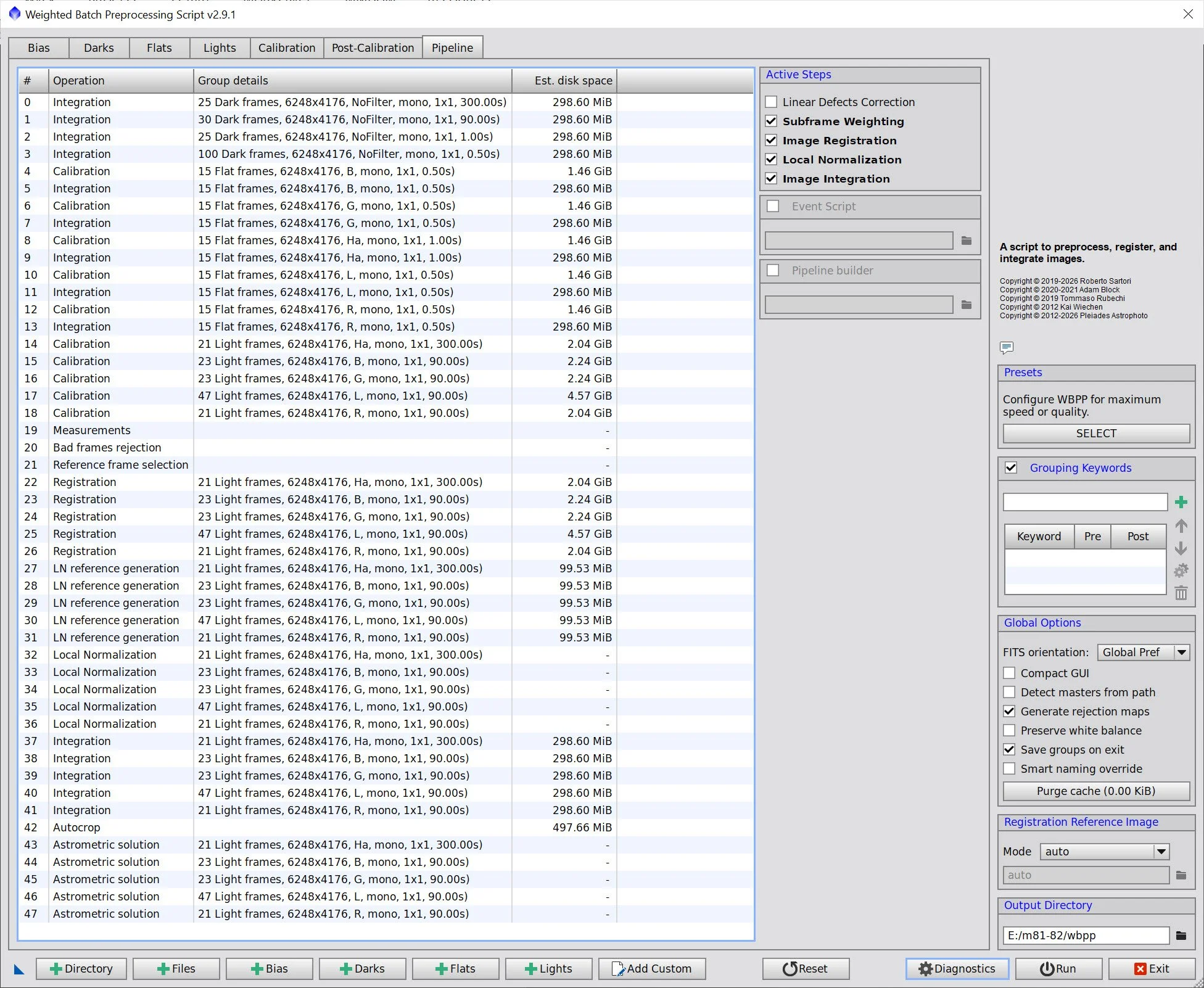
WBPP Pipeline View
3. Load Master Images and Create Color Images
Load all master images and rename them.
Master Ha -300-seconds
Master LRGB-90-seconds
Using ChannelCombination, create the Master RGB color image
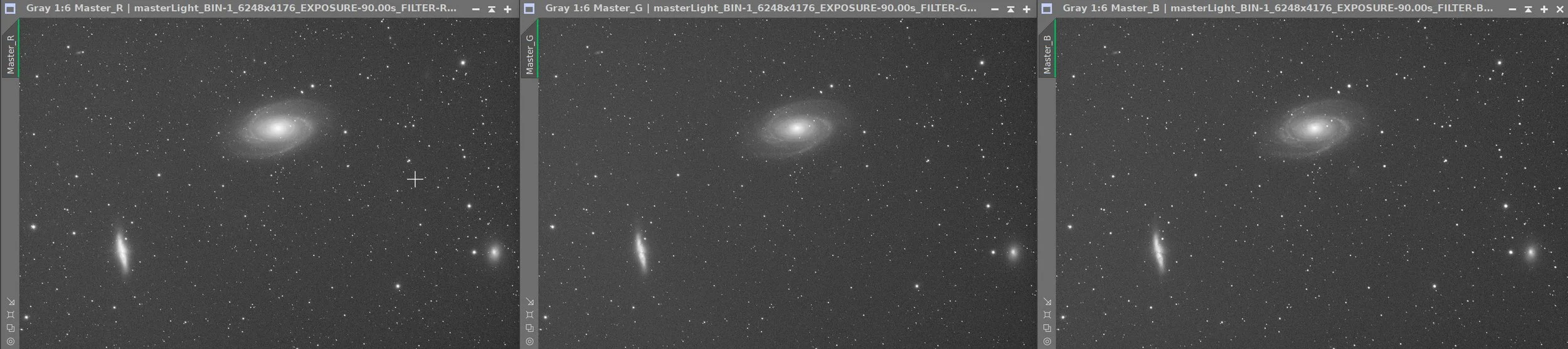
Master R,G, and B image.
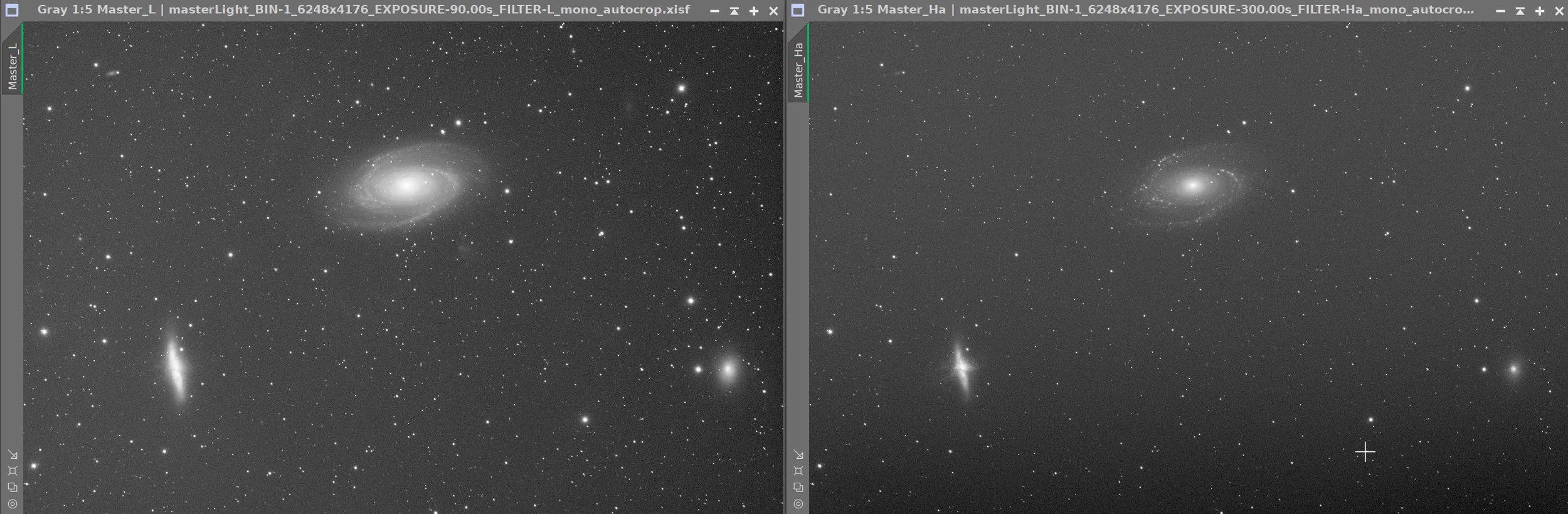
Master L, and Ha images
Master RGB 90-second image (click to enlarge)
4. Initial Processing of Linear L Data
Run DBE for the L linear image. Use subtraction for the correction method. Choose a sampling plan that avoids the main galaxies and bright stars. Enhance sampling points in areas with greater fall-off. (see below)
Run BXT - Correct only. This cleans up the stars at the corners. Not much to do in this image, as the scope is very crisp.
Run the PSFImage script to measure star sizes. X = 1.96 Y= 1.81. This will influence the values used in BXT.
Run Full BXT - I am using an enhanced set of values to shrink stars more. These are about a third more than the measured star sizes. See the BXT Panel Snapshot below.
Run NXT V3; refer to the parameters in the snapshot below.
Run SXT - no need to save the L stars, as we will not be using them.
Master L Image DBE Sampling Plan (click to enlarge)
Master L- Before DBE (click to enlarge)
Master L after DBE (click to enlarge)
Background Subtracted by DBE (click to enlarge)
Measuring Star Sizes with PSFImage Script (click to enlarge)
BXT Settings Used. (click to enlarge)
NXT Panel used. (click to enlarge)
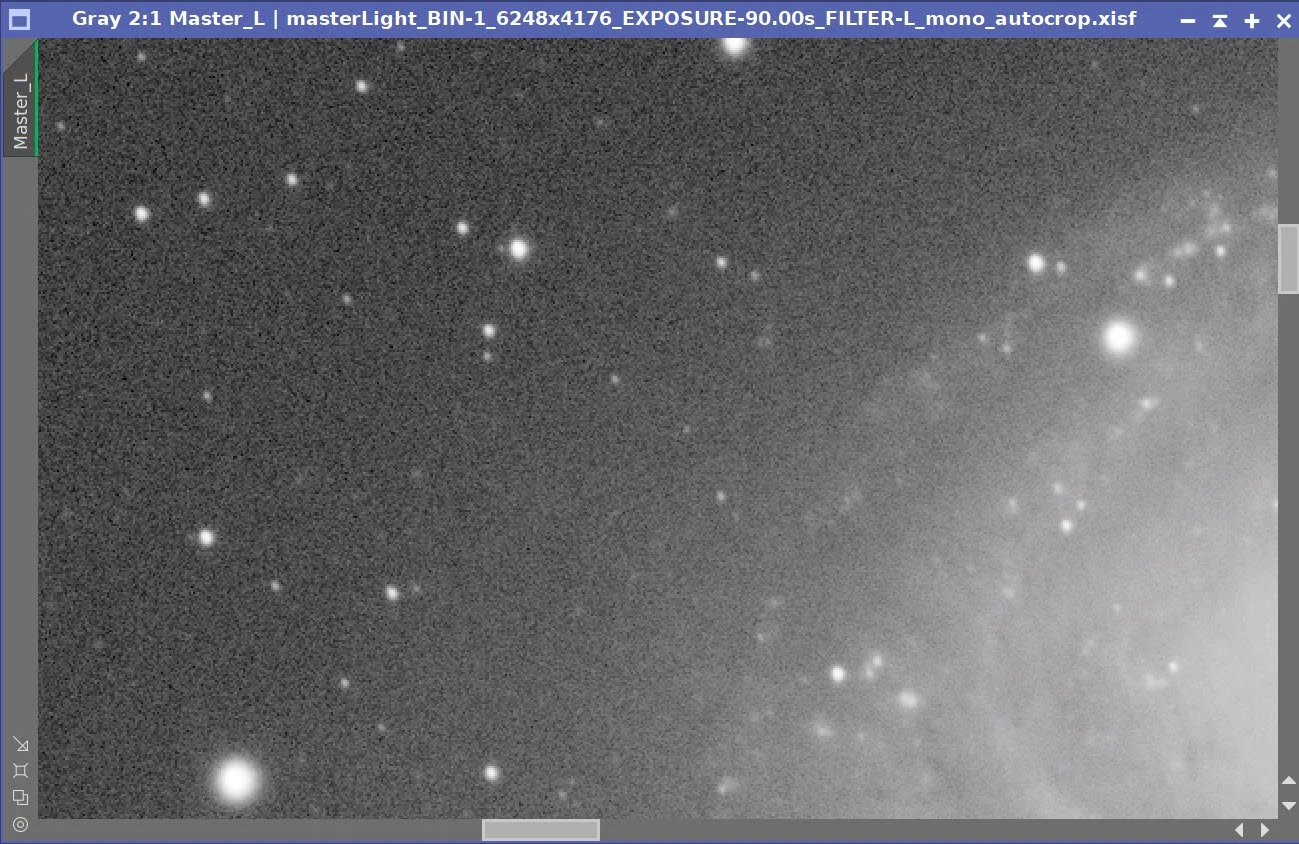
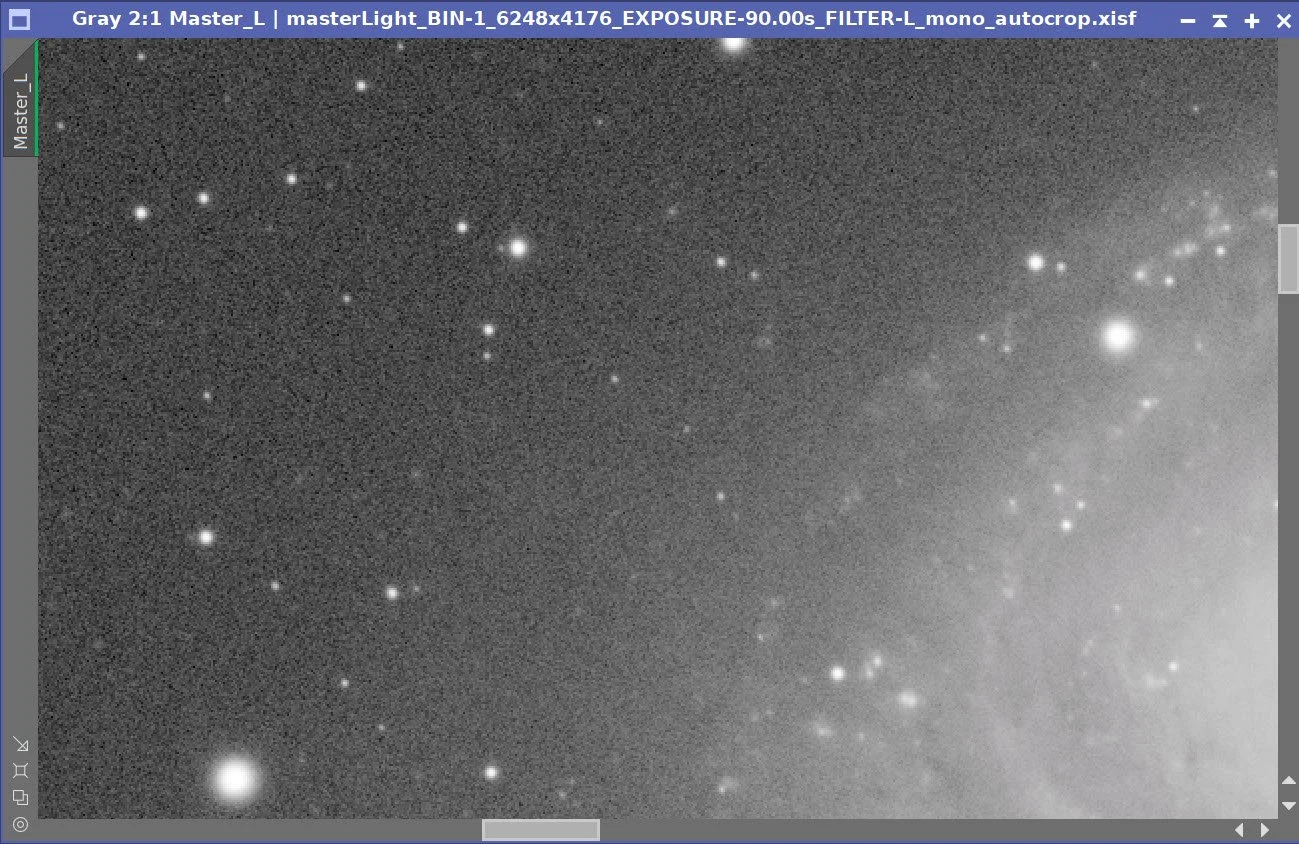
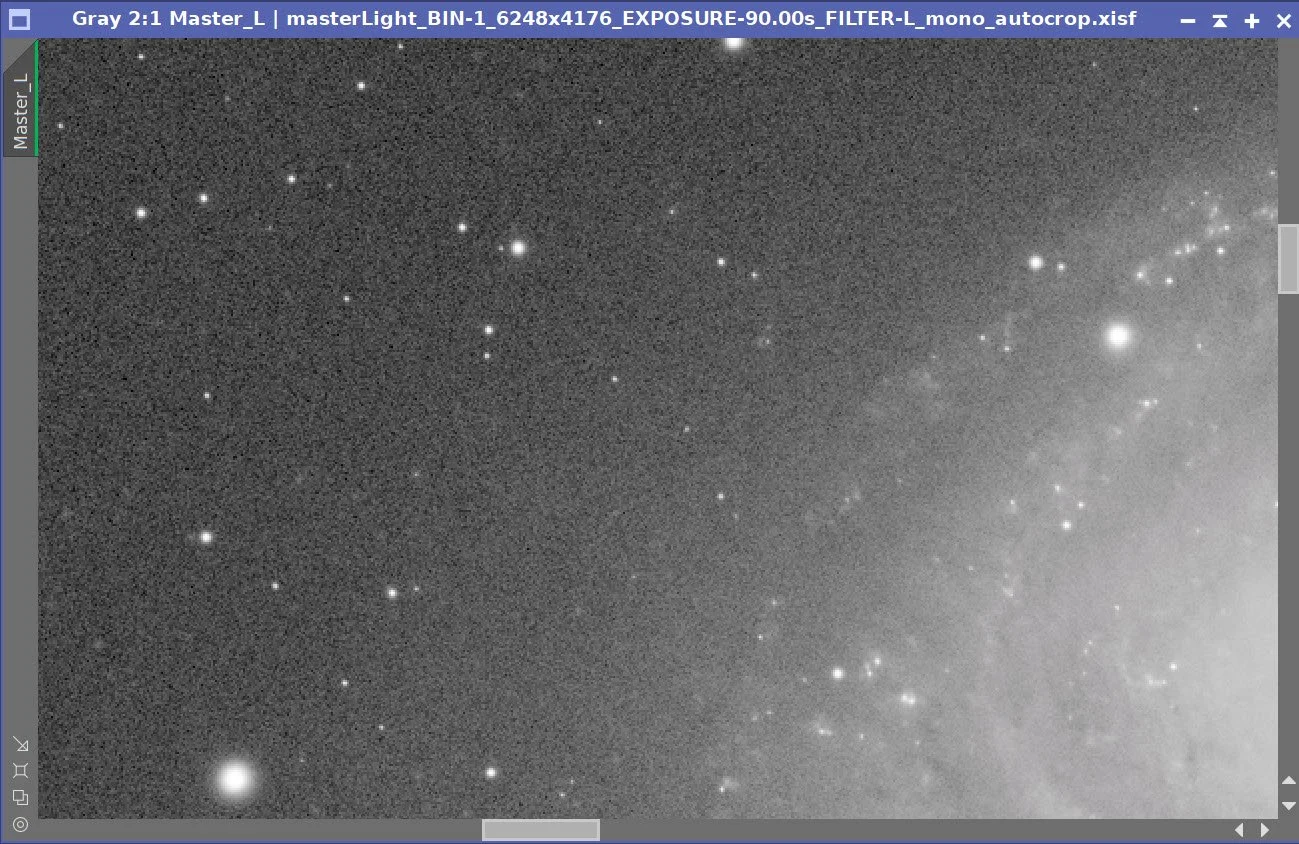
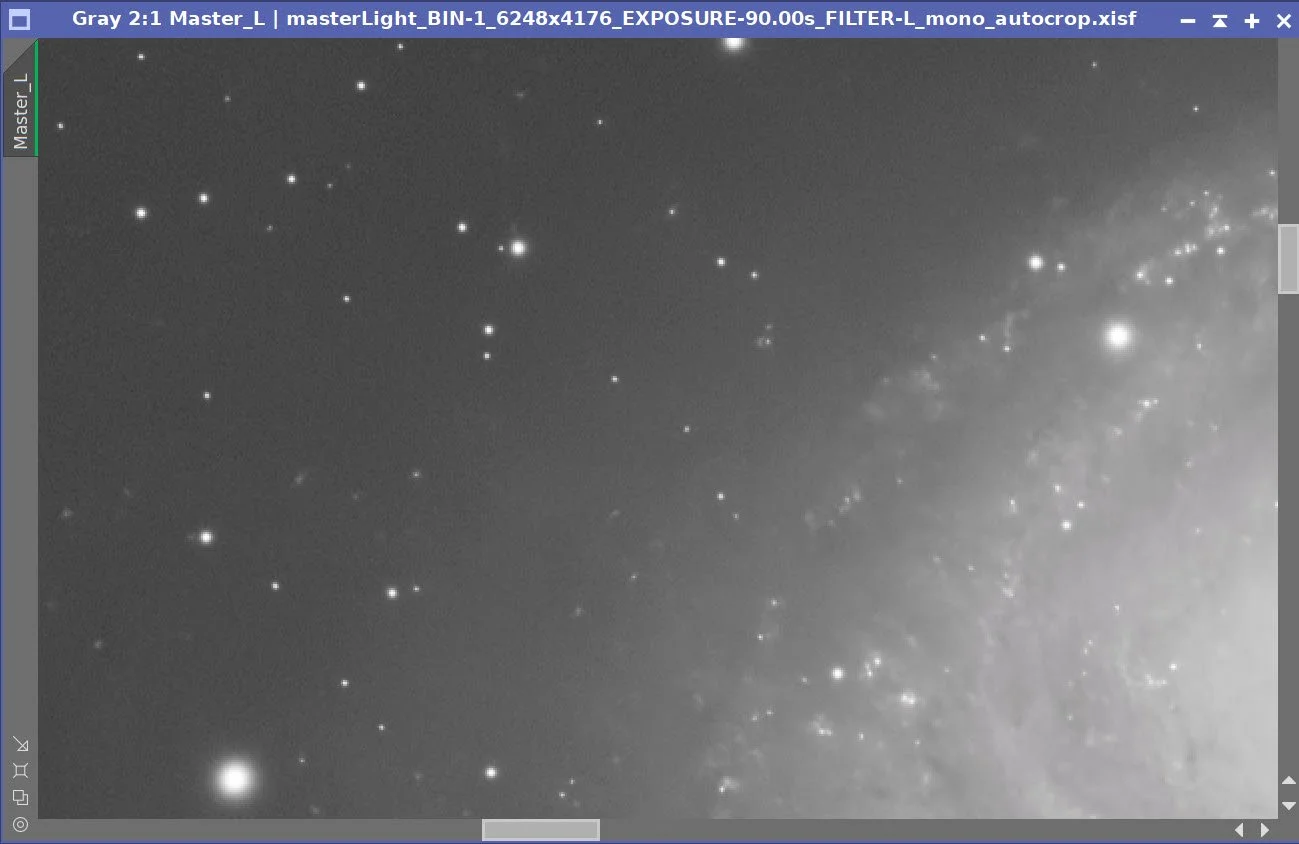
Master L Before BXT Correct Only, After BXT Correct Only, After BXT Full, After NXT
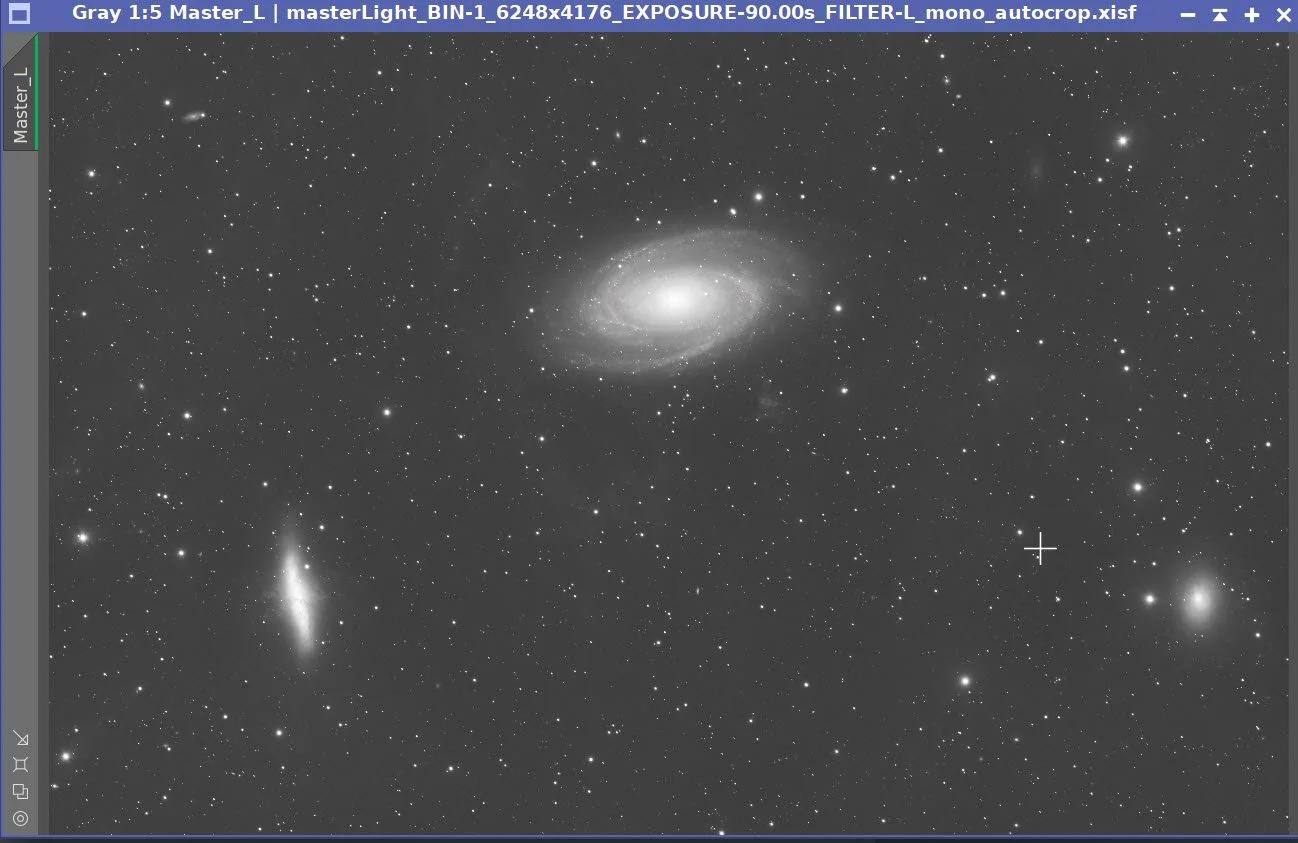
Final Master L Image
Master L Starless Image (click to enlarge)
5. Initial Processing of Linear Ha Data
Run DBE for the Ha linear image. Use subtraction for the correction method. Choose a sampling plan that avoids the main galaxies and bright stars. Enhance sampling points in areas with greater fall-off. (see below)
Run the PSFImage script to measure star sizes. X = 1.95, Y 1.83. This will influence the values used in BXT.
Run BXT Correct Only
Run Full BXT using the parameters in the screen snapshot below.
Run NXT V3; refer to the parameters in the snapshot below.
Run SXT - no need to save the Ha stars, as we will not be using them.
Master Ha Sampling Plan (click to enlarge)
Master Ha Before DBE (click to enlarge)
Master Ha after DBE (click to enlarge)
Master Ha Background (click to enlarge)
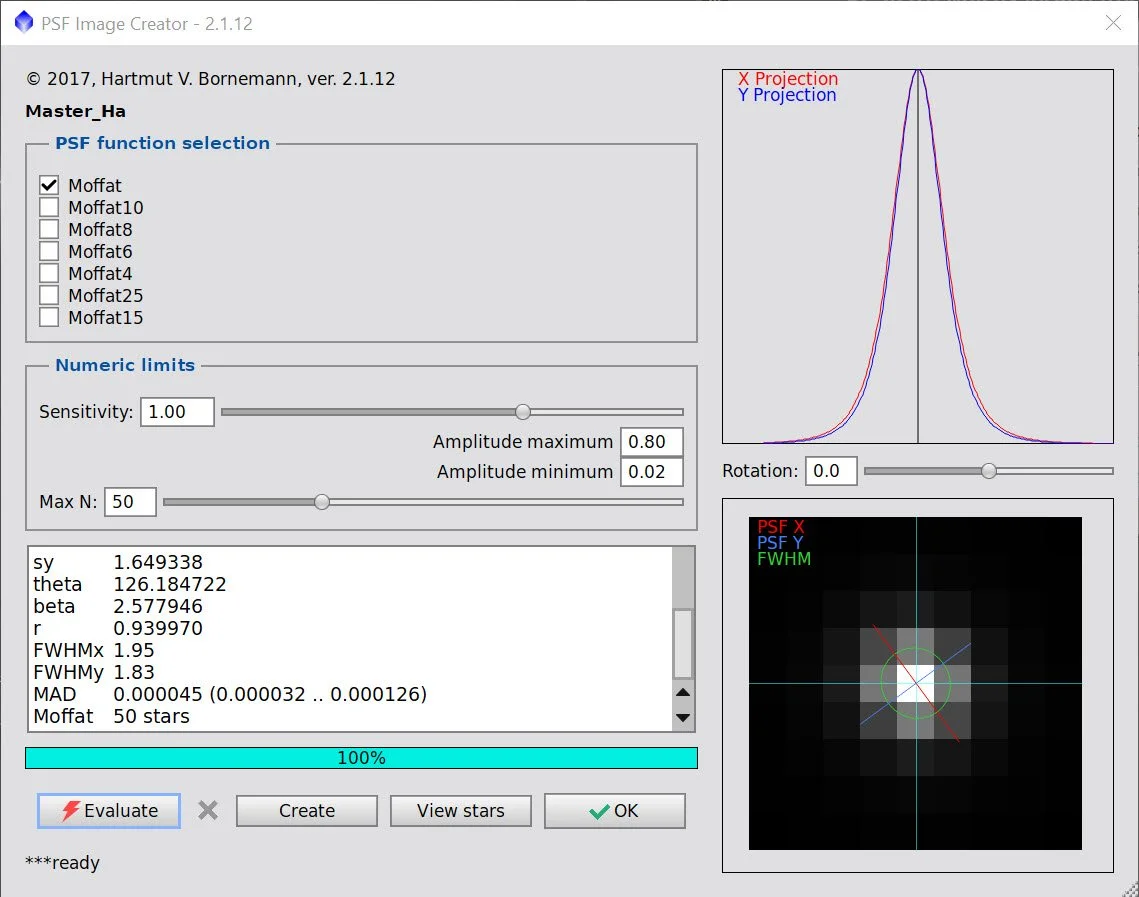
PSFImage measuring star sizes on the Ha Master
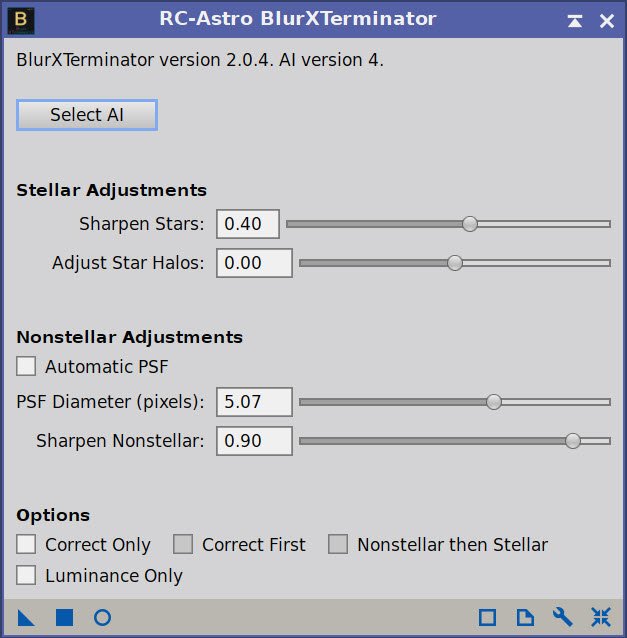
BXT Params used
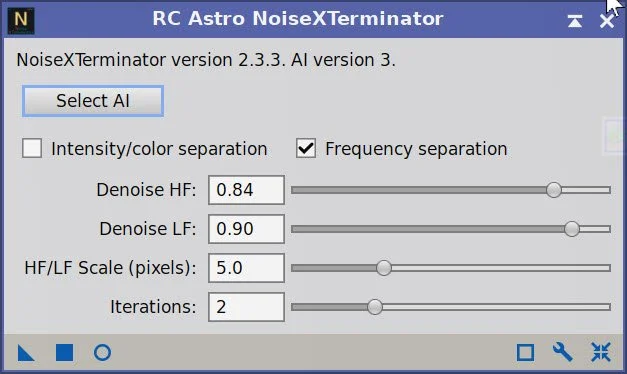
NXT Params used.
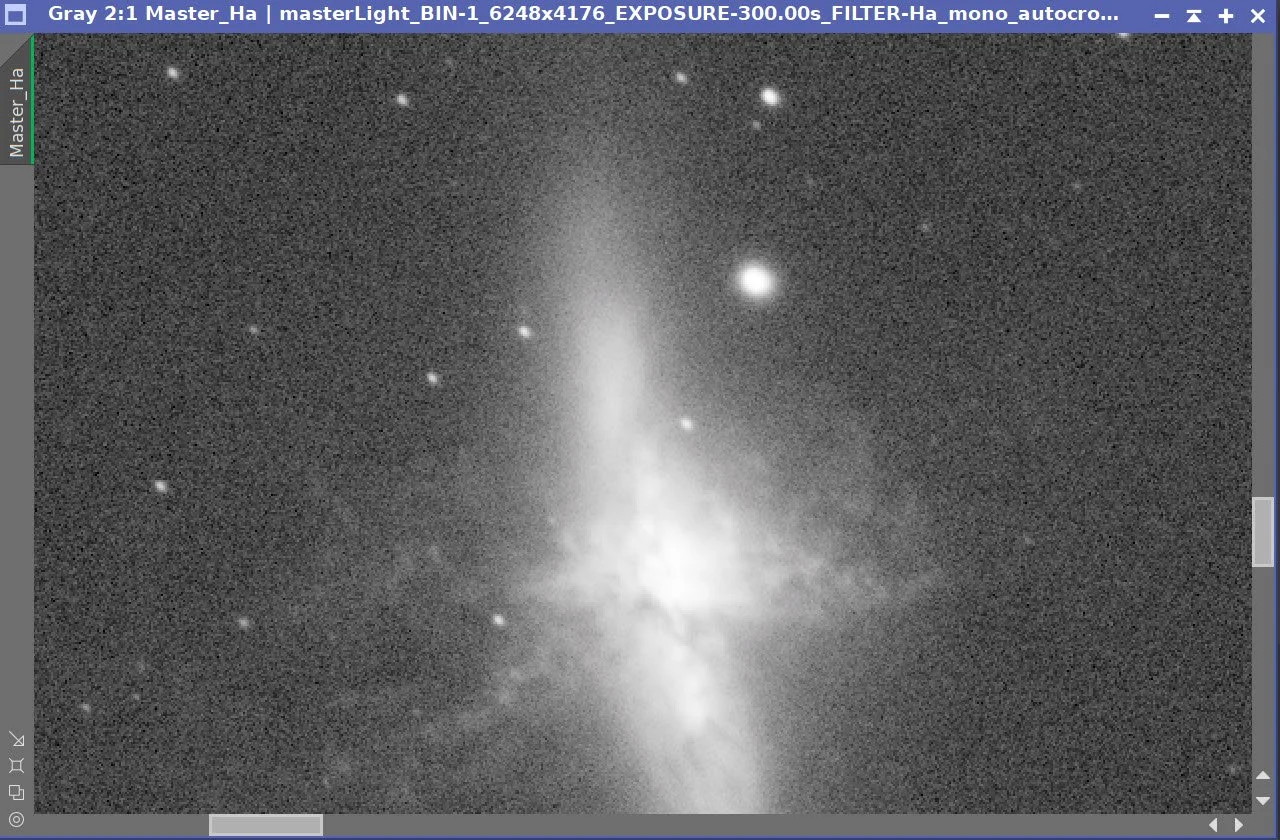
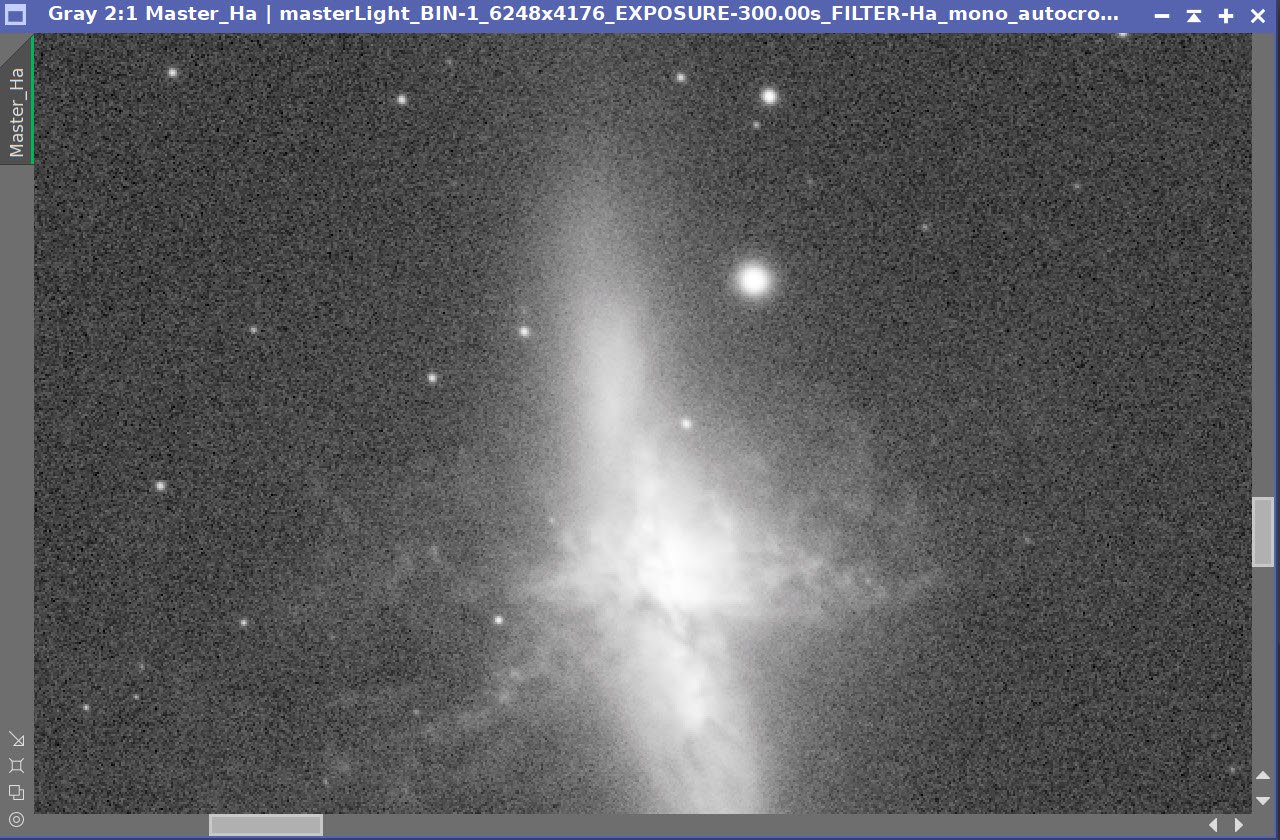
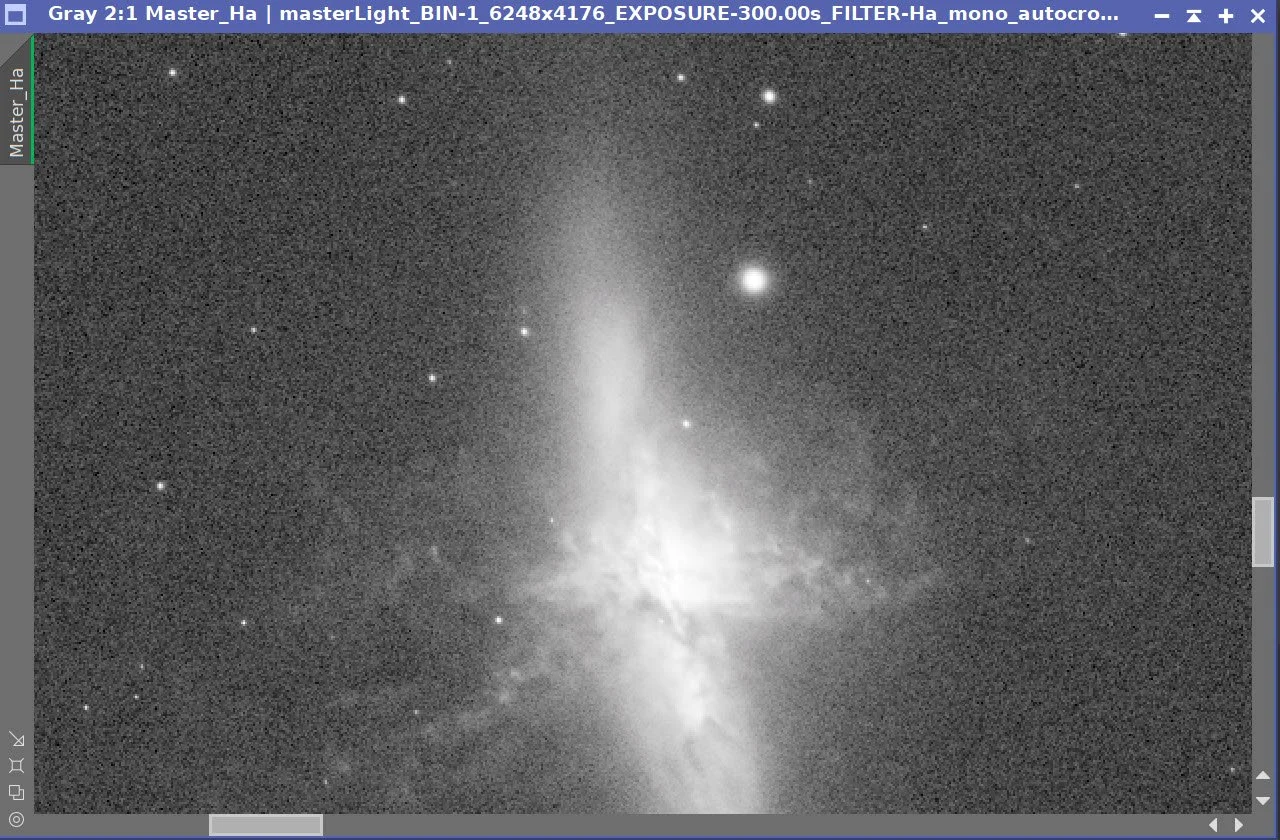
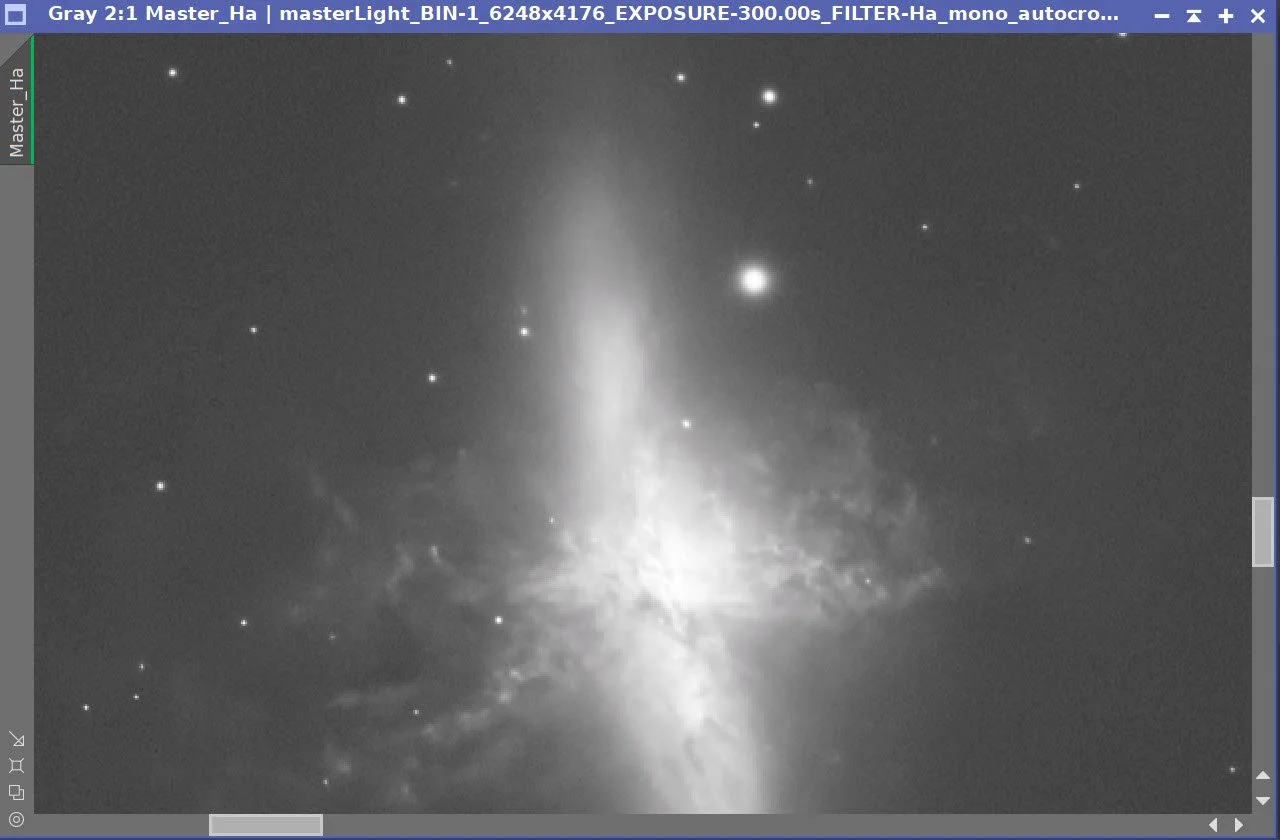
HA Before BXT, After BXT Fix Only, After BXT Full, After NXT V3
Master Ha before SXT (click to enlarge)
Master Ha Starless image (click to enlarge)
6. Process the RGB Masters
Run DBE using Subtractive correction
Select a background preview and run SPCC on the image
Run BXT - Correct only. This cleans up the stars at the corners. Not much to do in this image, as the scope is very crisp.
Run the PSFImage script to measure star sizes. X = 2.57 Y= 2.2. This will influence the values used in BXT.
Run Full BXT - I am using an enhanced set of values to shrink stars more. These are about a third more than the measured star sizes. See the BXT Panel Snapshot below.
Run NXT - see the params used in screenshot below
Run SXT and save Star images.
Master RGB 90sec Sampling Plan (click to enlarge)
Master RGB 90sec before DBE (click to enlarge)
Master RGB 90 sec after DBE (click to enlarge)
Master RGB Background removed (click to enlarge)
Master RGB 90-second before SPCC and the SPCC Panel (click to enlarge)
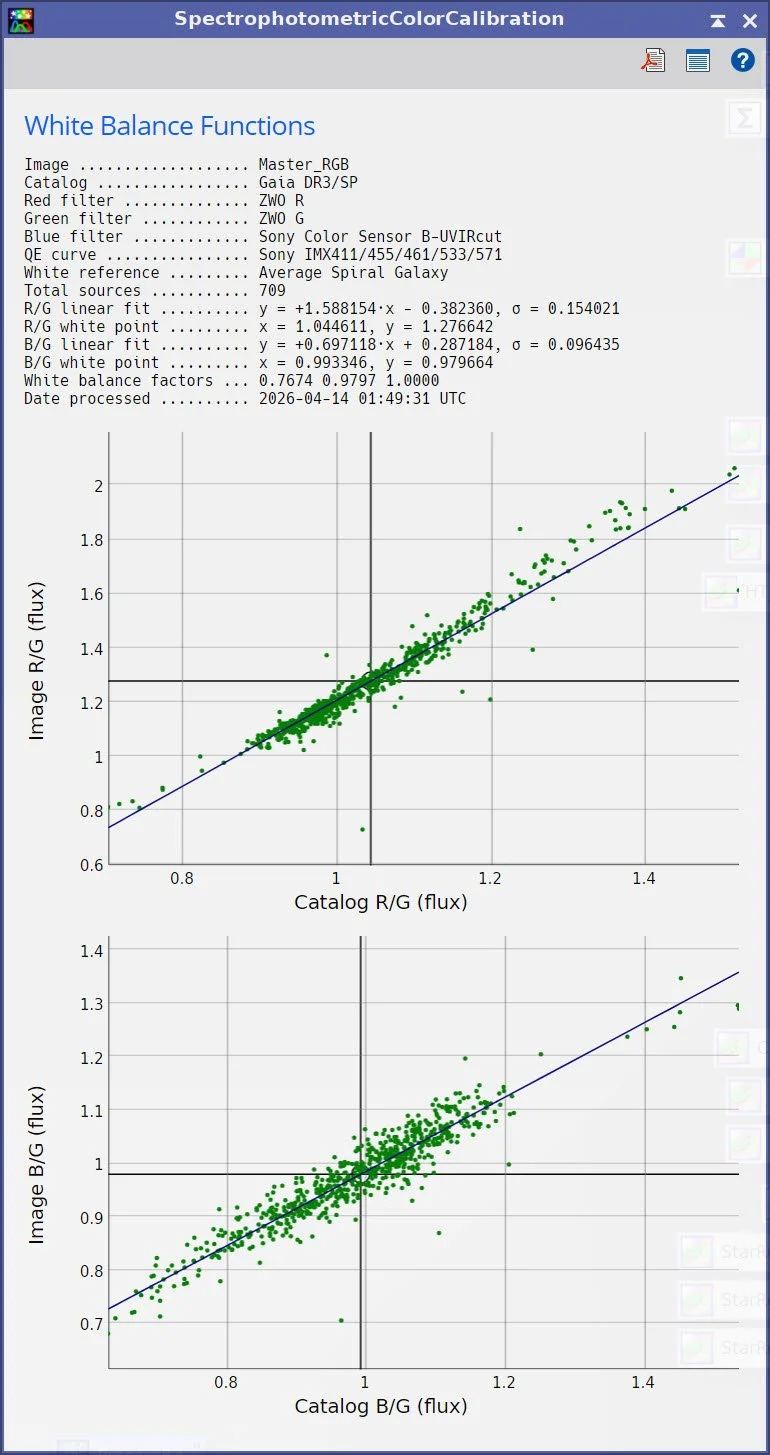
SPCC Regression results.
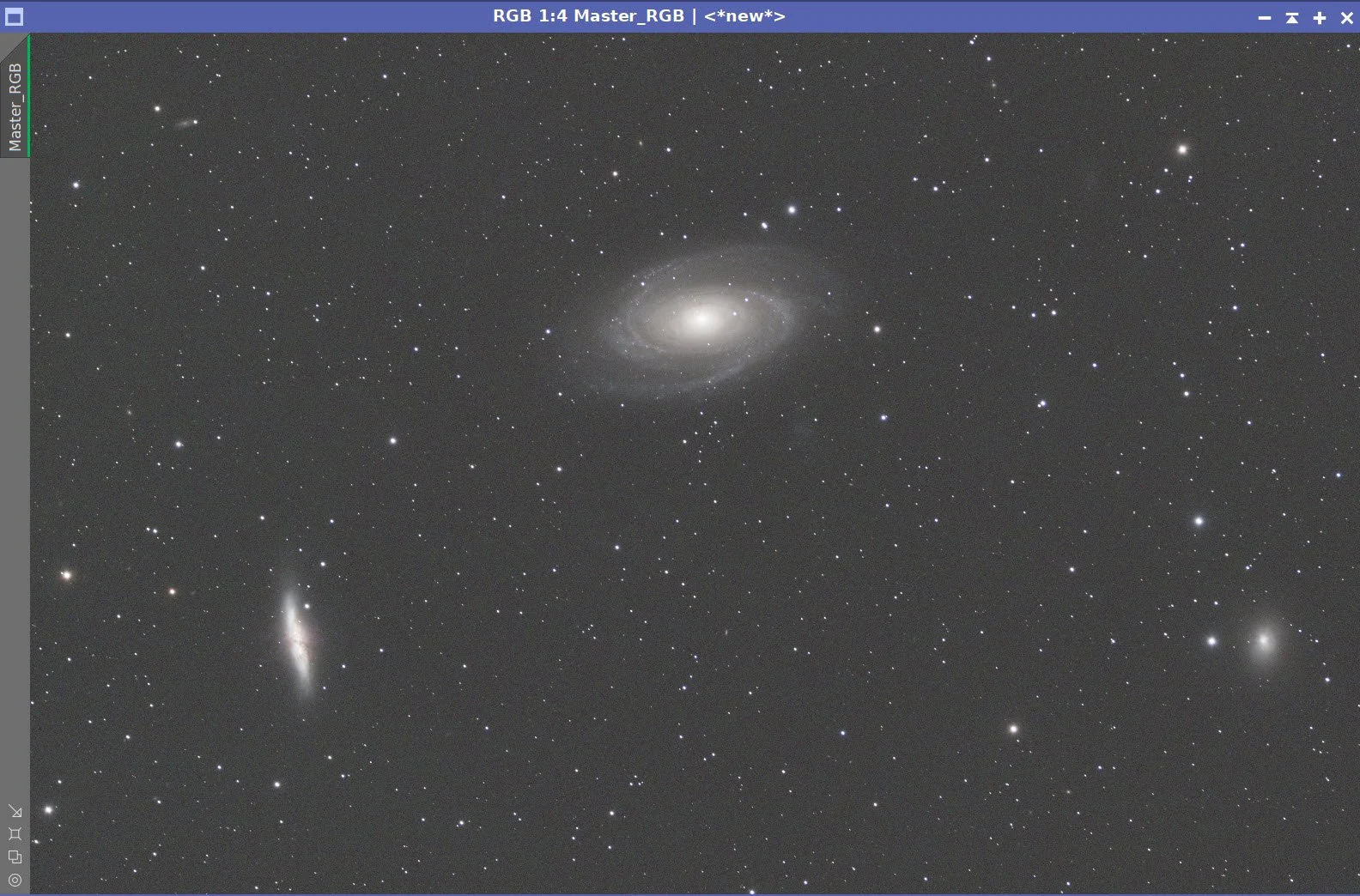
Master RGB after SPCC.
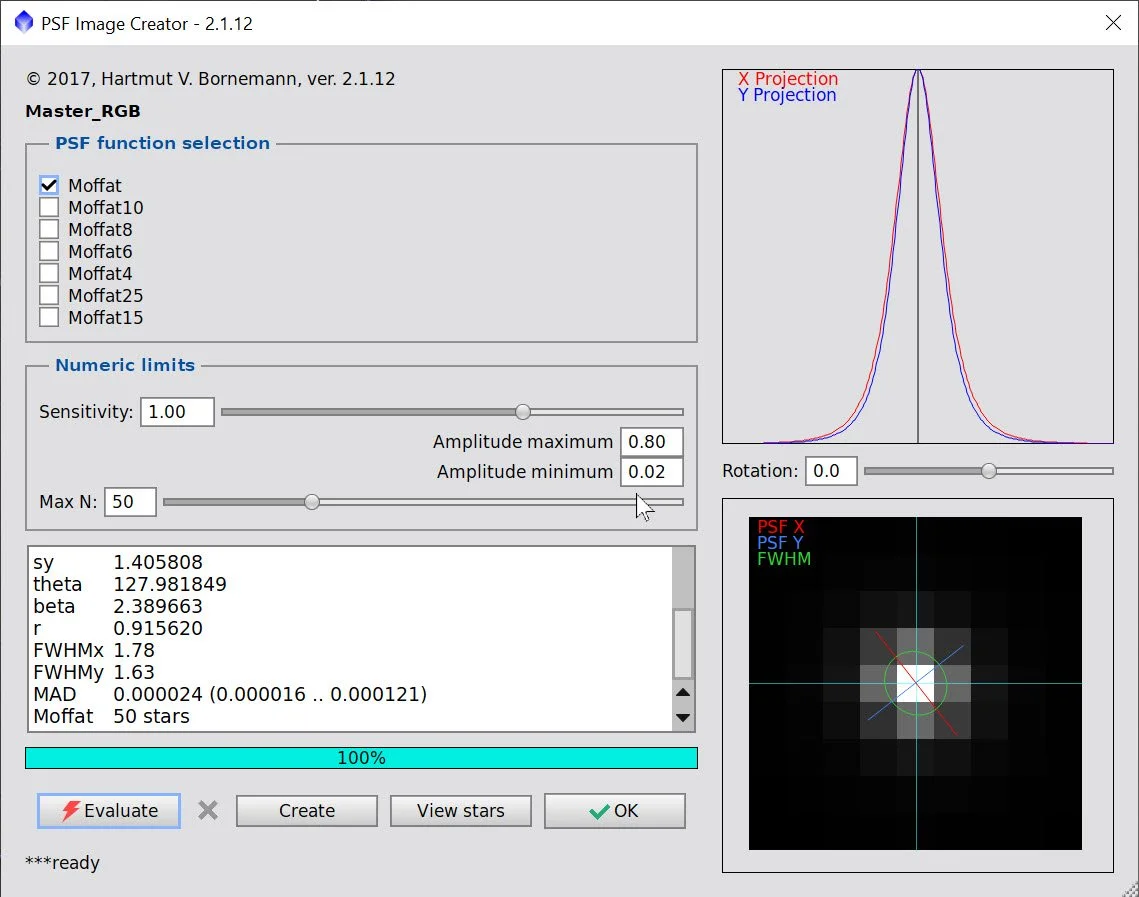
PSFImage panel showing star sizes.
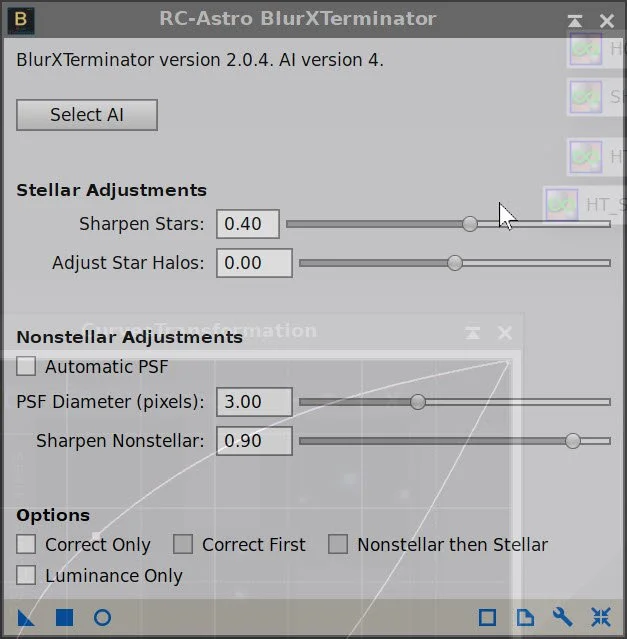
BXT Panel showing parameters used.
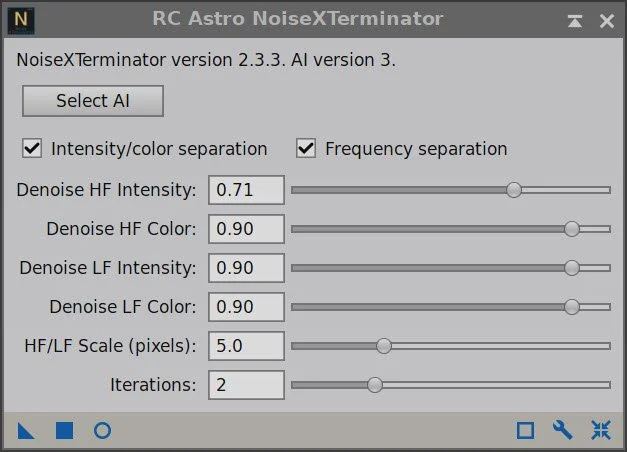
NXT Params used.
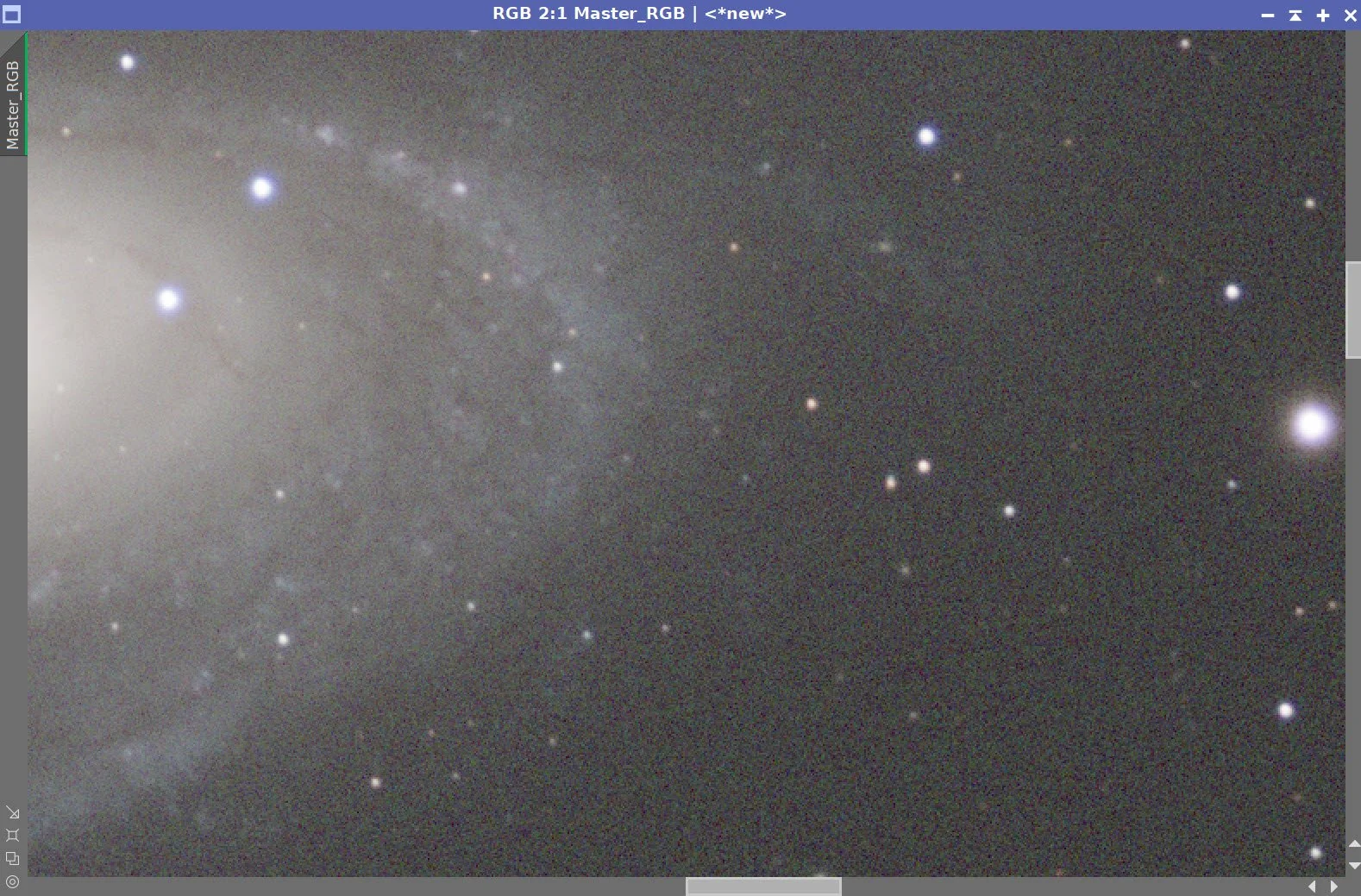
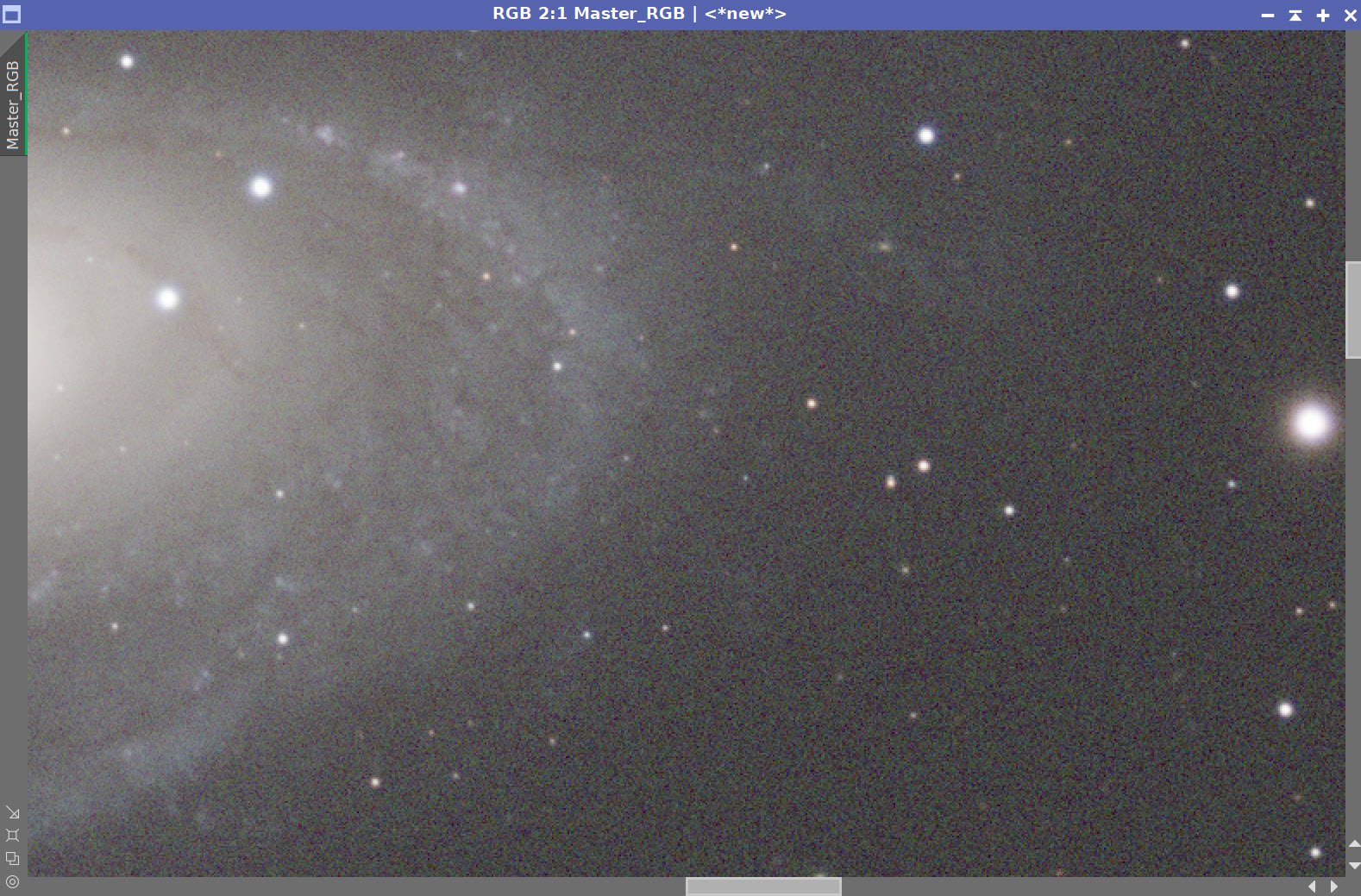
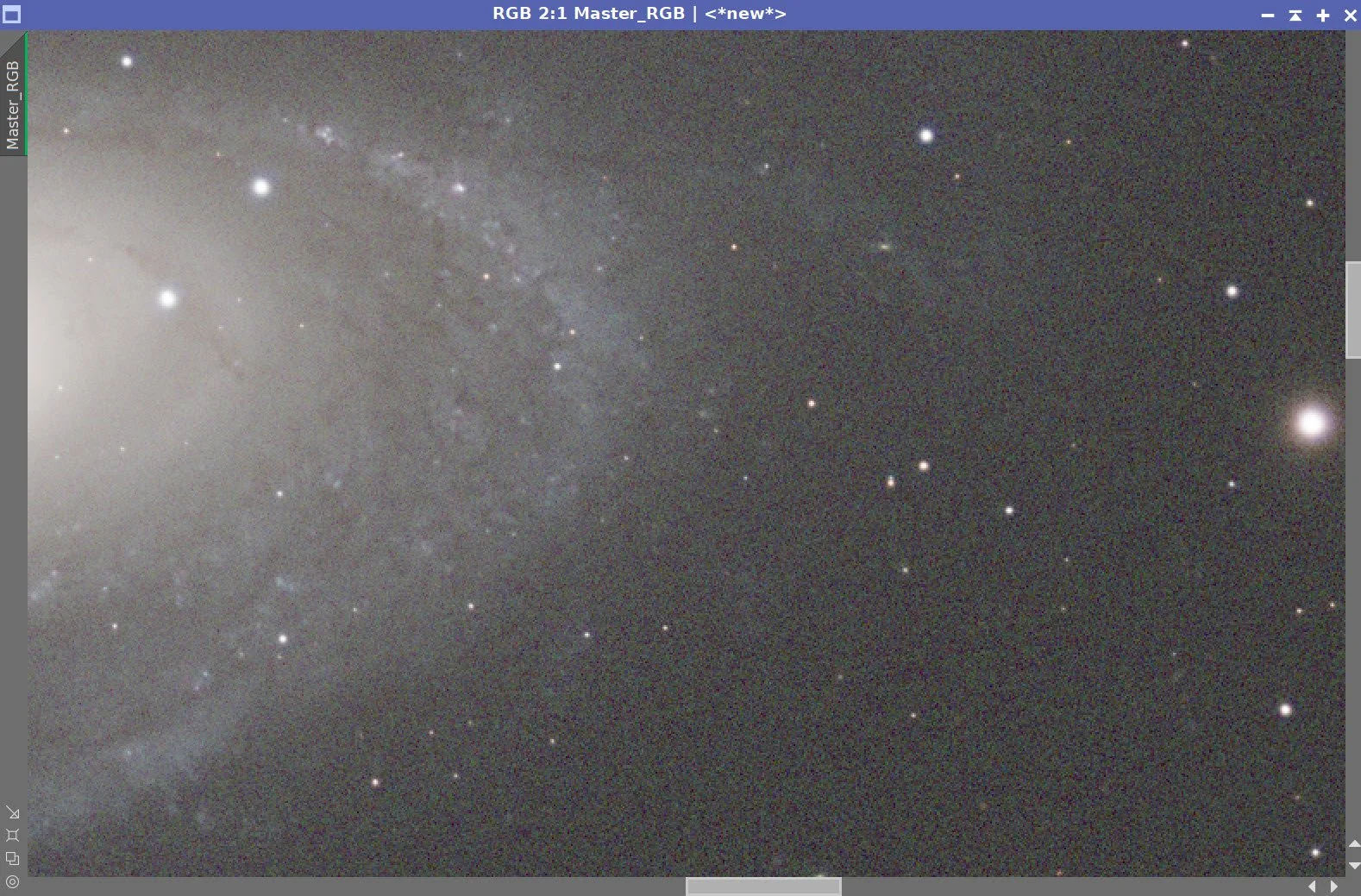
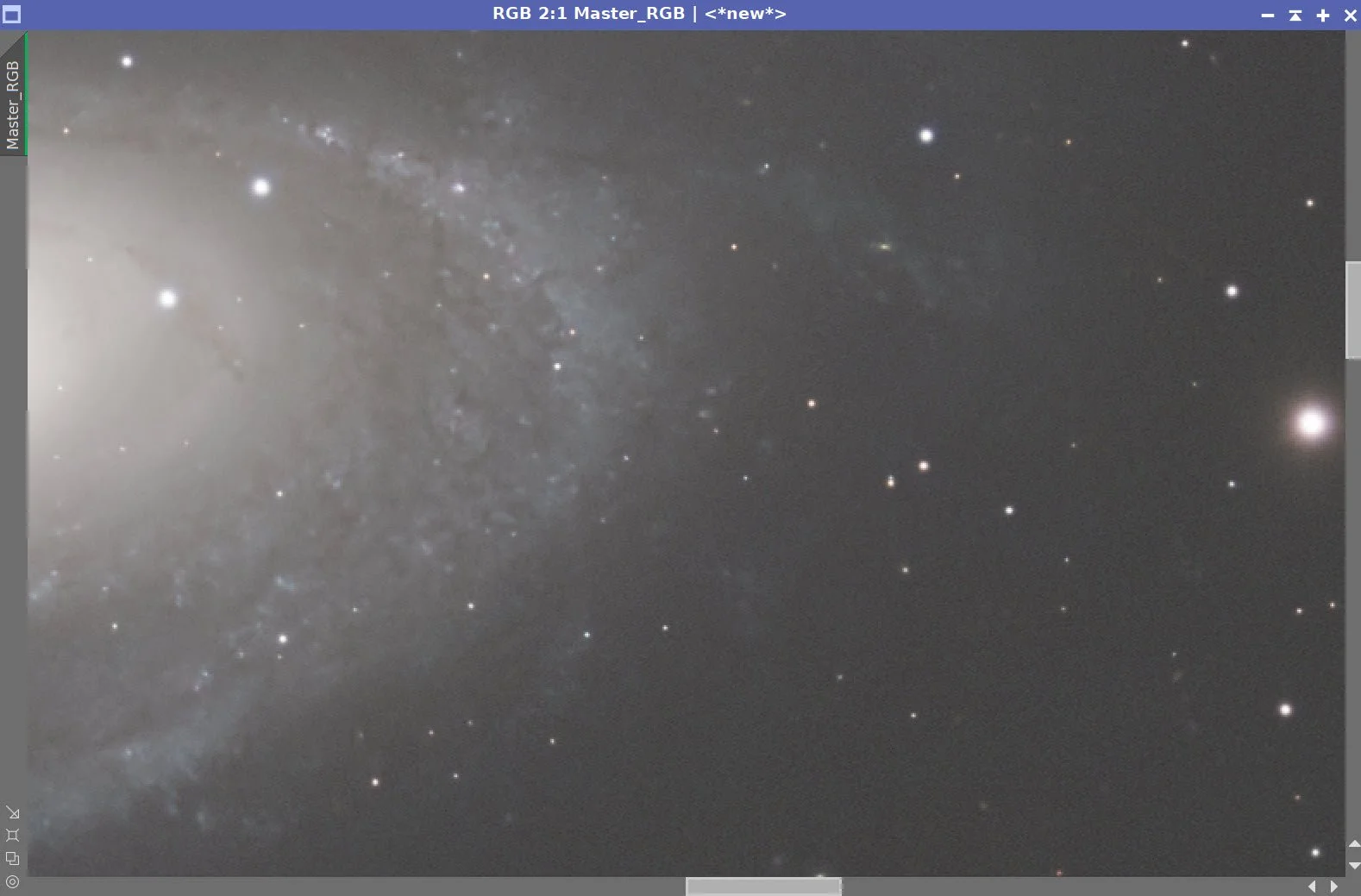
Master RGB Master Before BXT, BXT Correct Only, Full BXT, After NXT Full
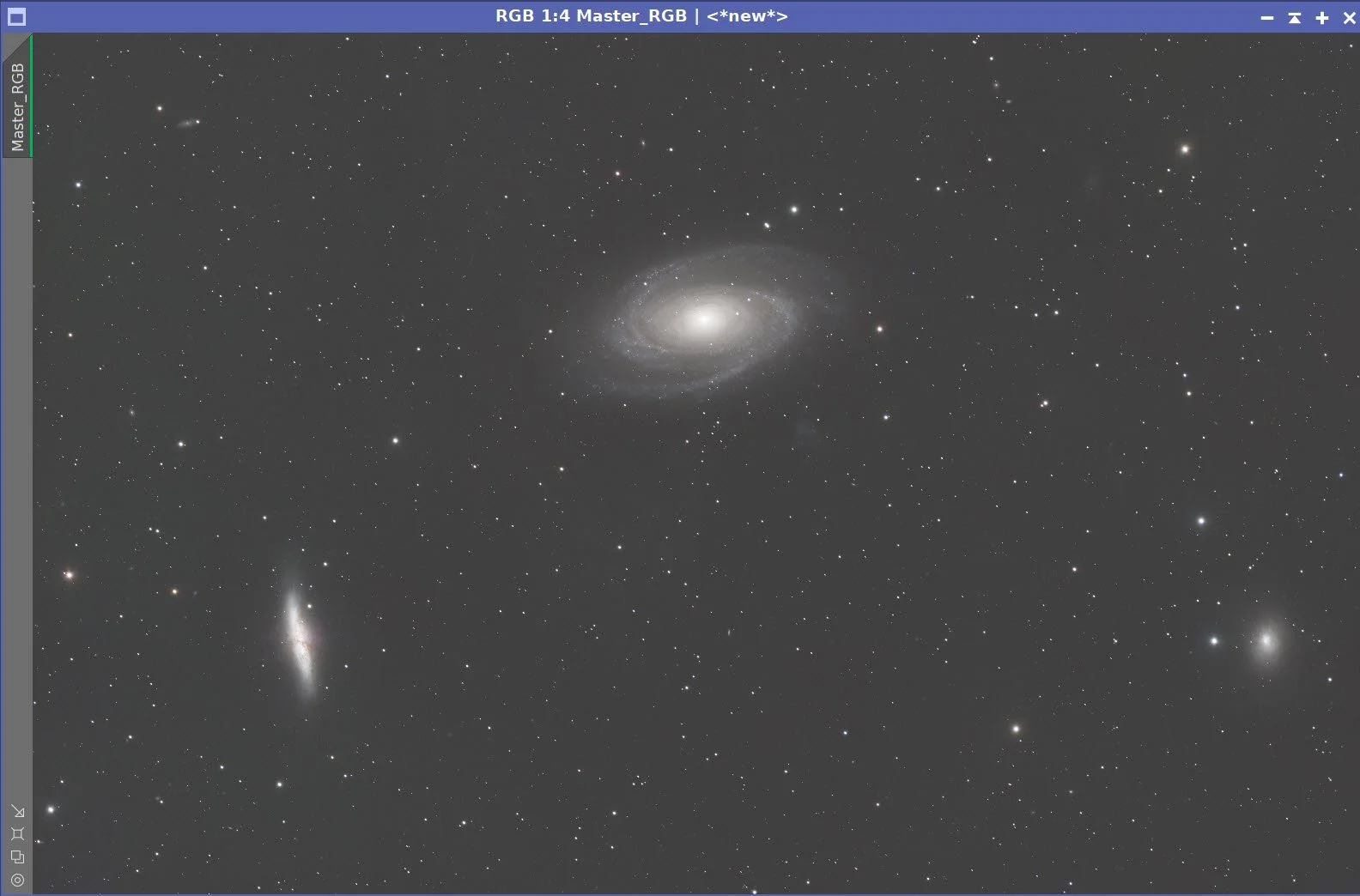
Master RGB before SXT.
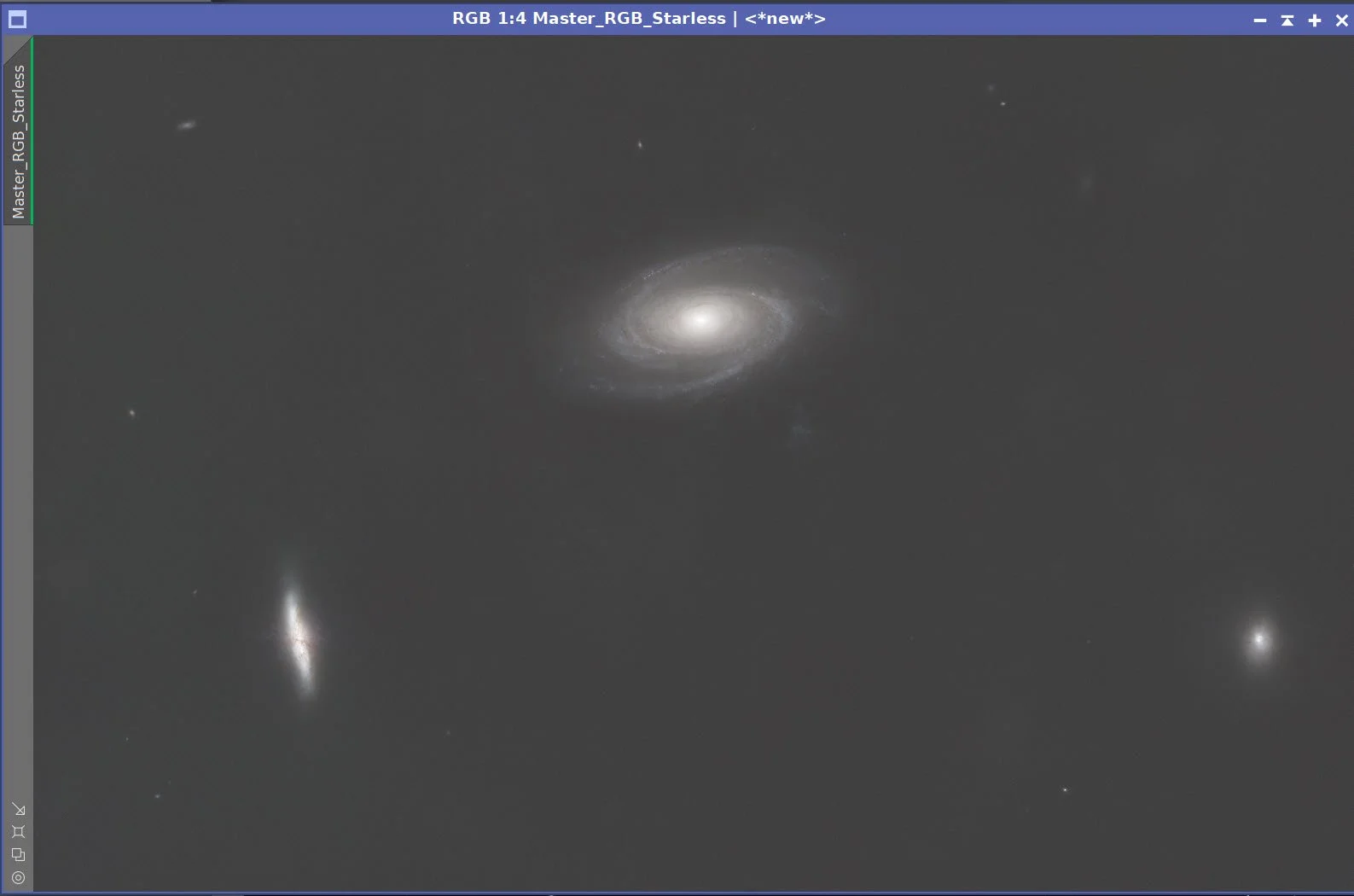
Master RGB Starles Image
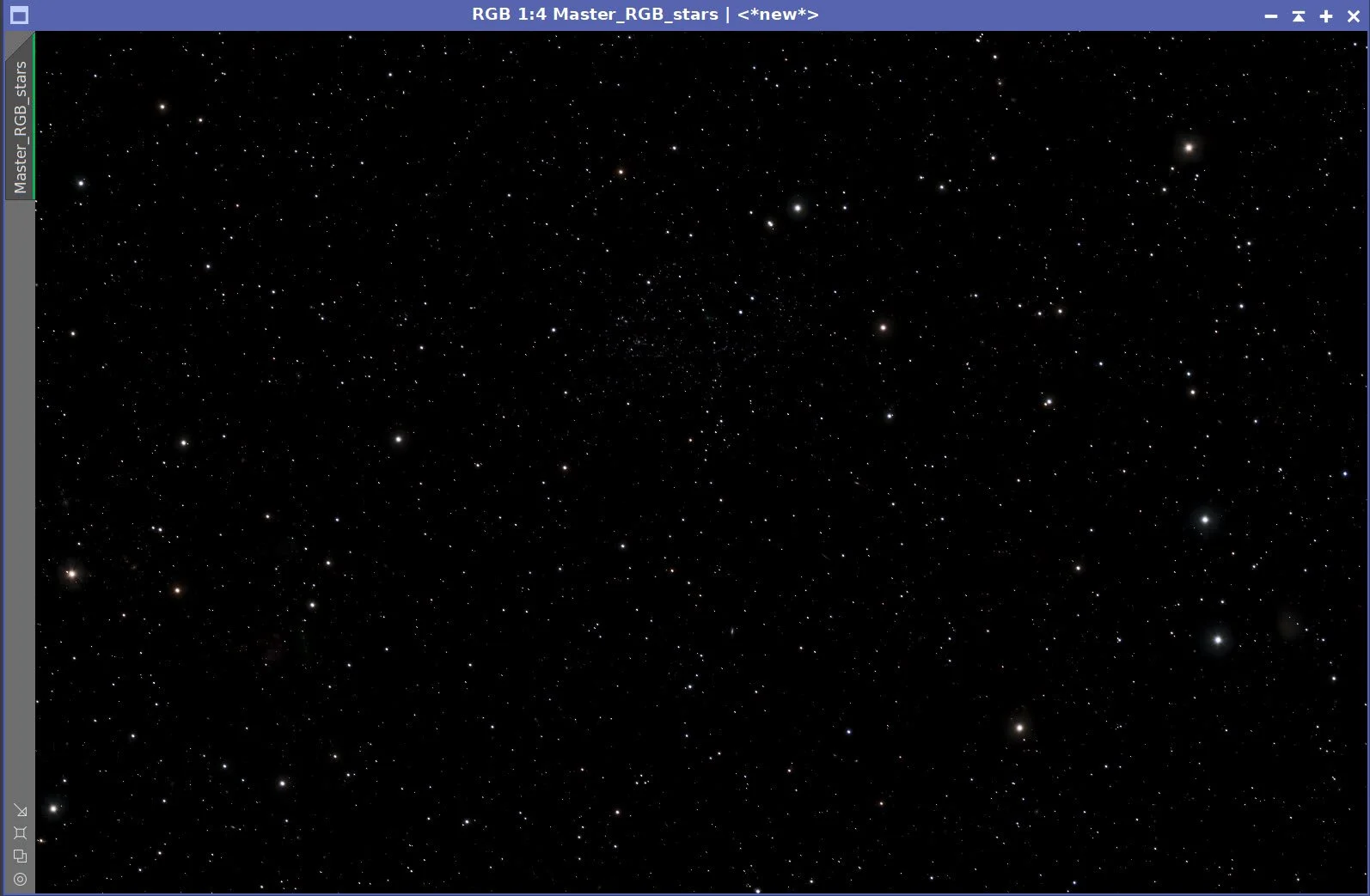
Master RGB Stars only image.
7. Go Nonlinear
Using the STF->HT Method, convert the linear L and Ha images to nonlinear. Remember that we did a LinearFit of the Ha to the L image, so use the STF when doing this.
Using the STF->HT Method, take the linear RGB image and make it nonlinear.
Using Seti Astro Star Stretch, take the RGB Star image and apply nonlinear stretching. Lately, I have been using three levels of star stretching and then deciding later which one works best in the image. Below you can see the various parameters used in three Star Stretch panels and the resulting 3-star images created. (See Panel snapshot below for parameters used).
Nonlinear Starting L Image (click to enlarge)
Nonlinear Ha image (click to enlarge)
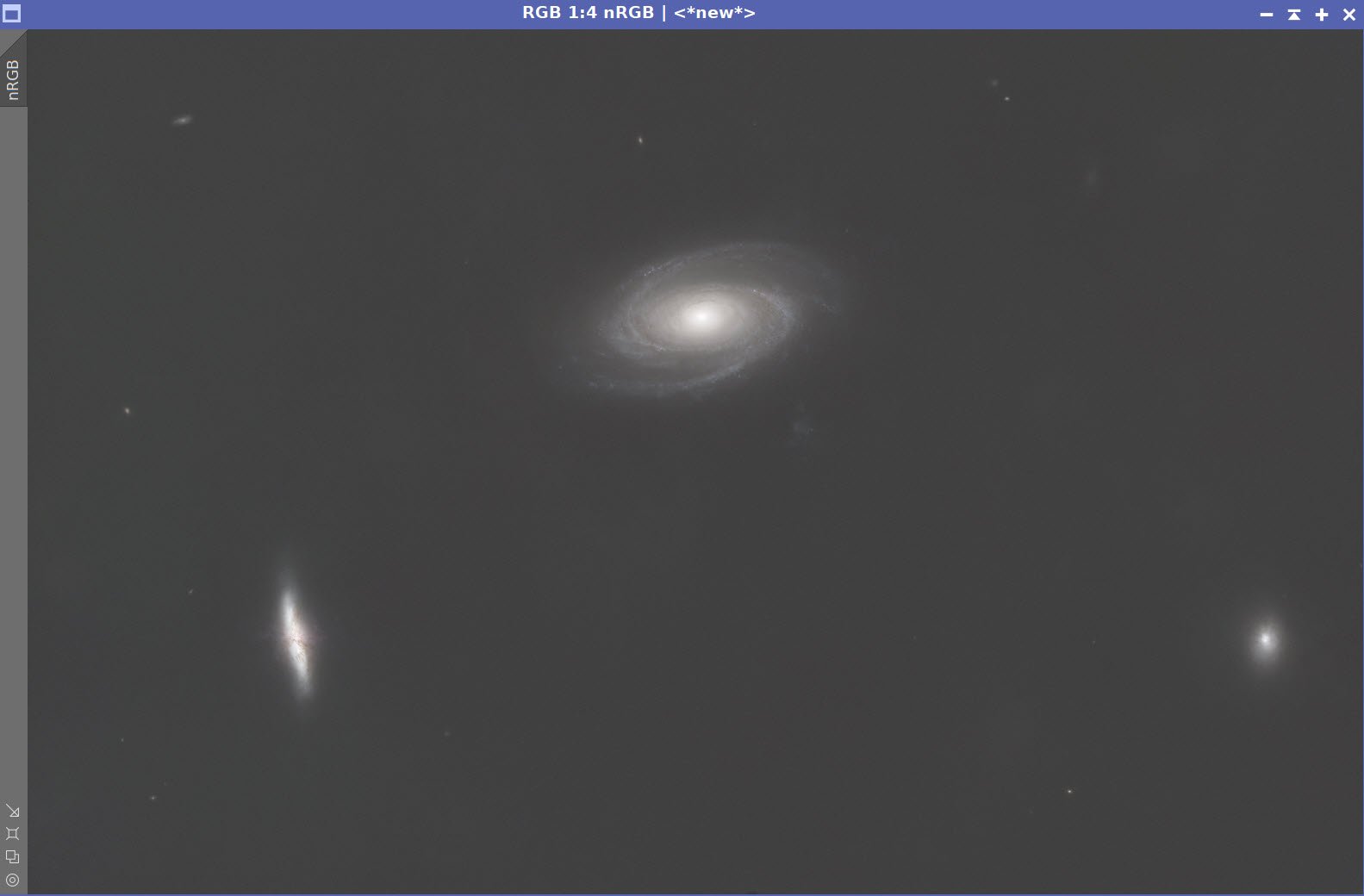
The nonlinear RGB HDR image.
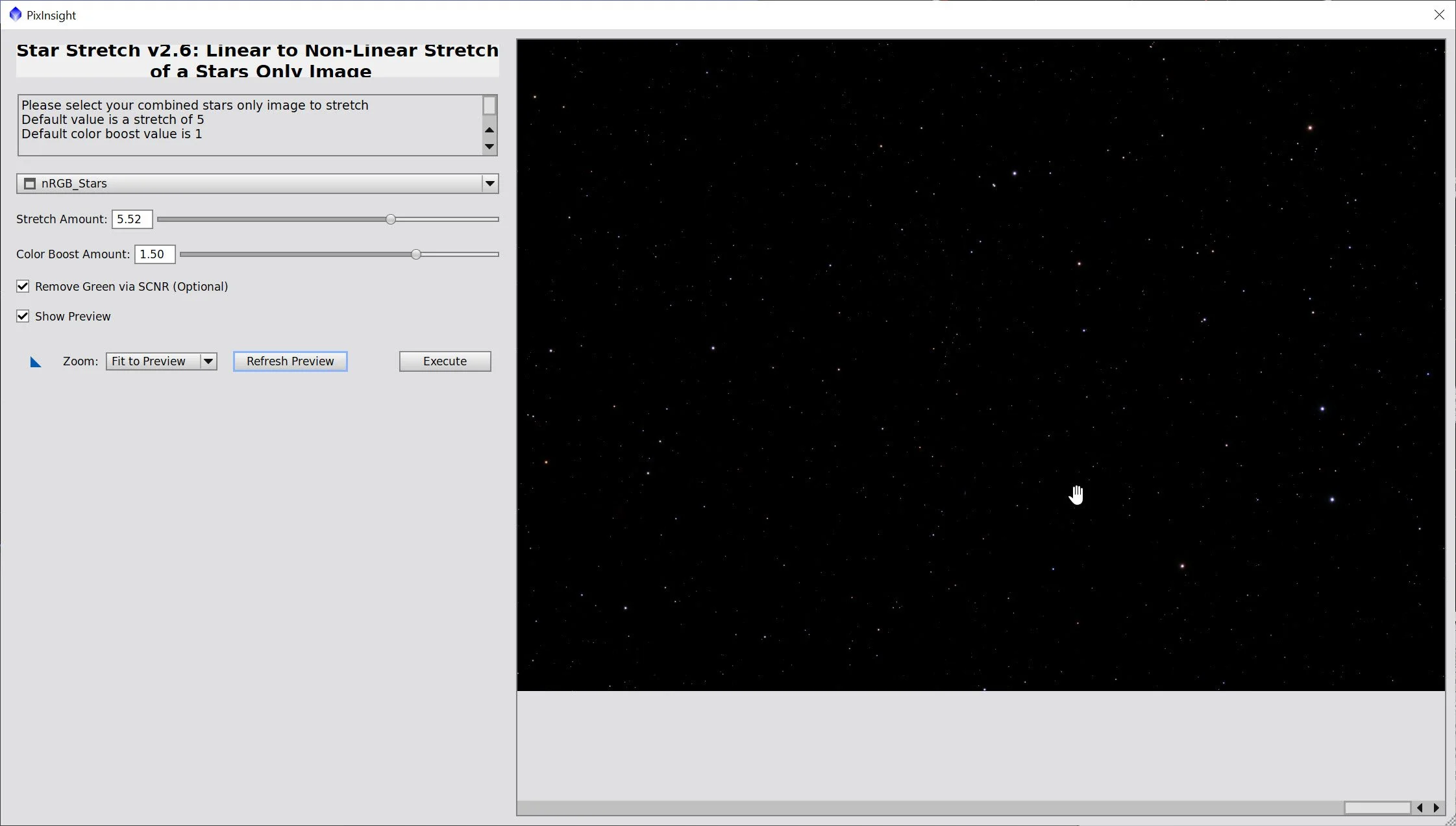
Lowest level of stretch
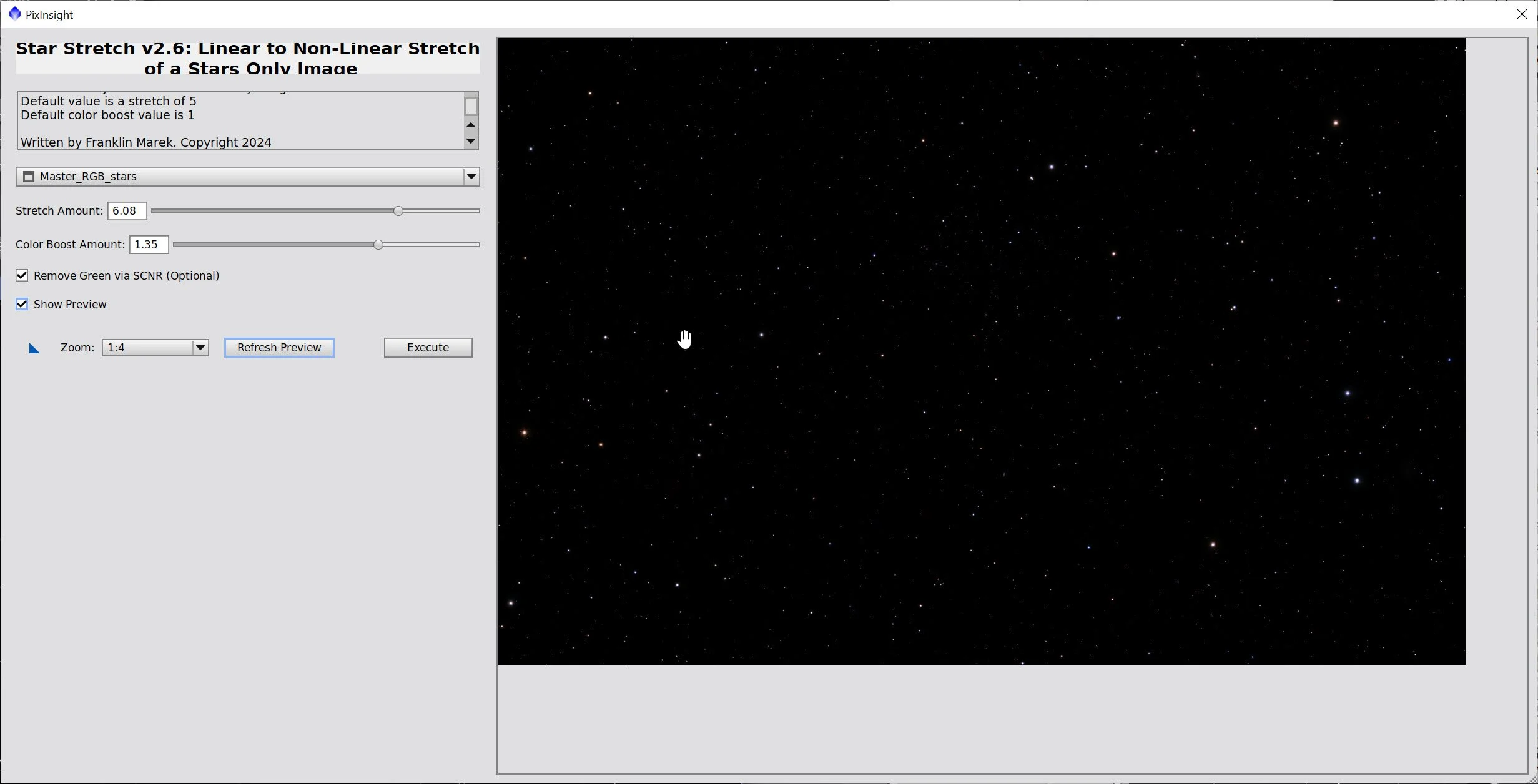
Mid level stretch
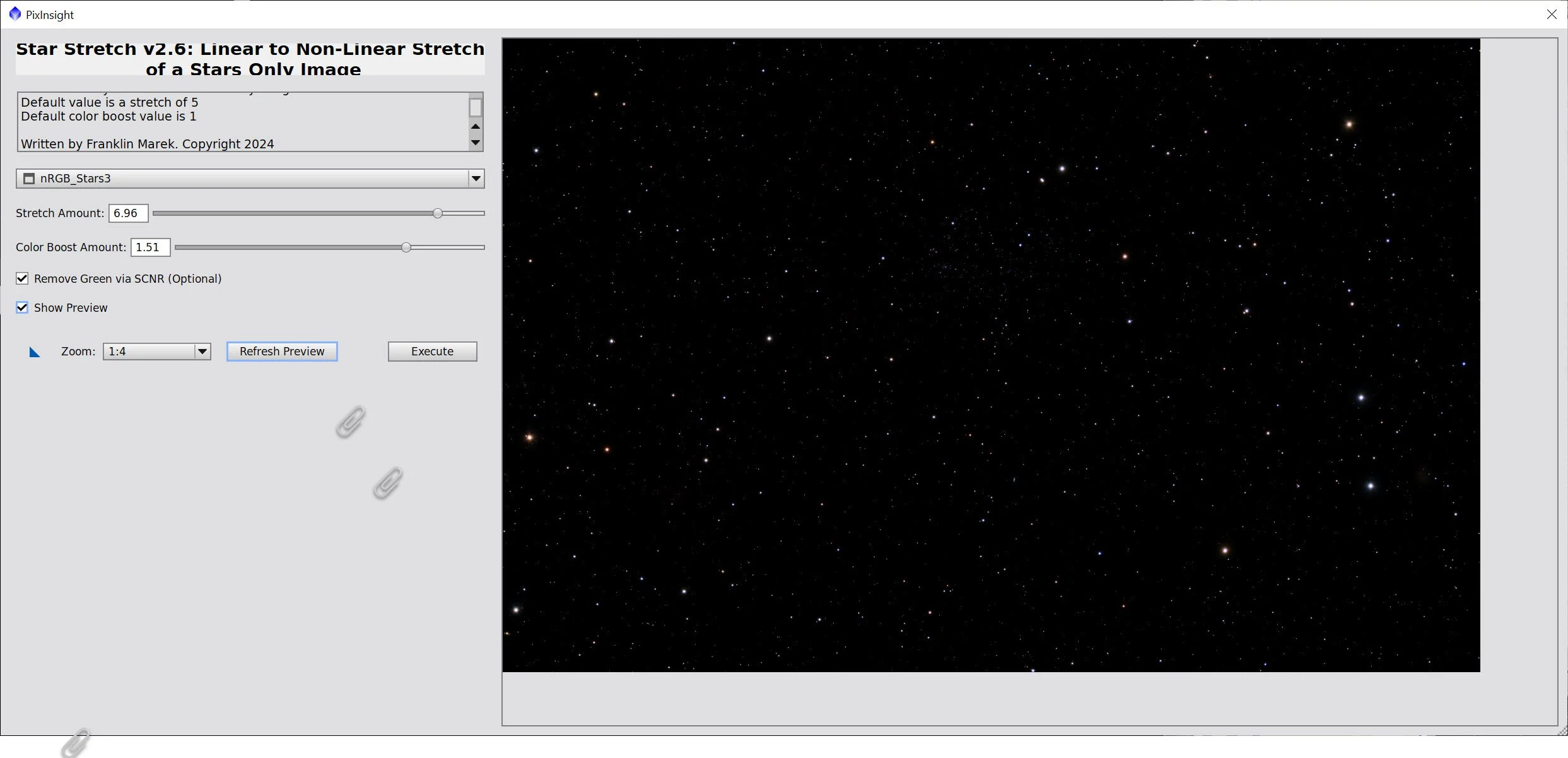
Highest level of stretch.
Low level stretch.
Mid level stretch
High level stretch
8. Process the Nonlinear L Starless Image
Use GAME to create masks for the Large and Small galaxies
Use CT to darken the background sky a bit
With the Large Galaxy Mask applied, use HDRMT with 8 layers, and check “To Lightness” and “Lightness Mask.”
With the Small Galaxy Mask applied, use HDRMT with 6 layers, and check “To Lightness” and “Lightness Mask.”
With the Small Galaxy Mask applied, run LHE with a scale of 42, a contrast limit of 2.0, an amount of 0.6, and an 8-bit histogram. This is designed to enhance small-scale structures.
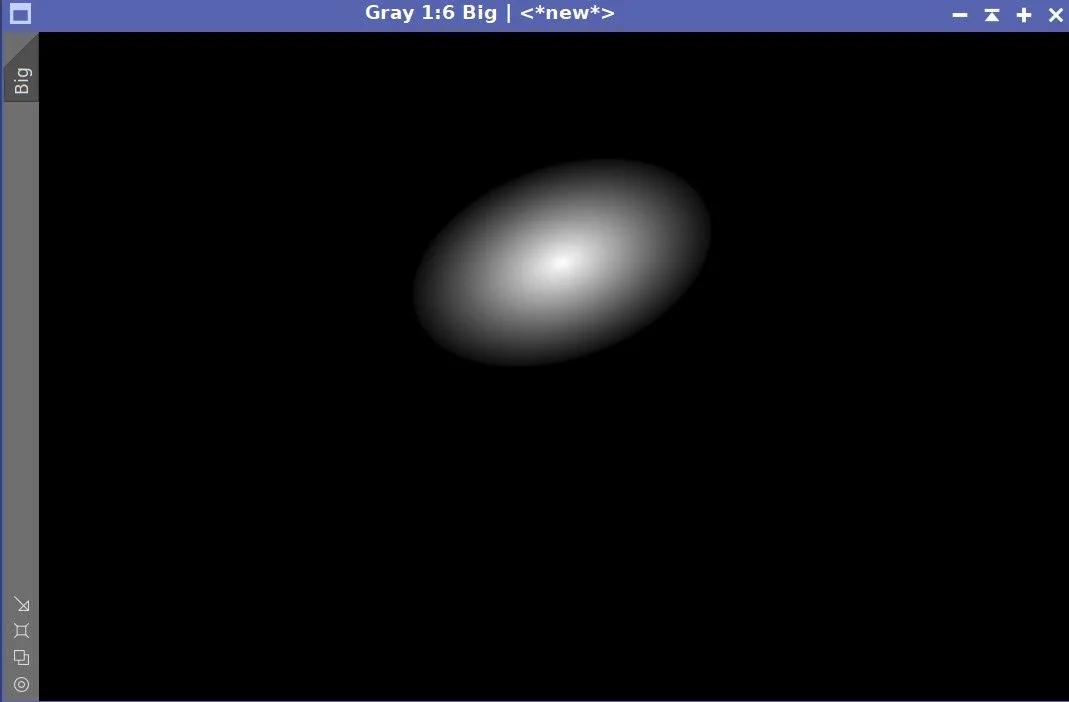
Large Galaxy Mask
The initial L image (click to enlarge).
HDRMT applied with Large Galaxy Mask (click to enlarge)
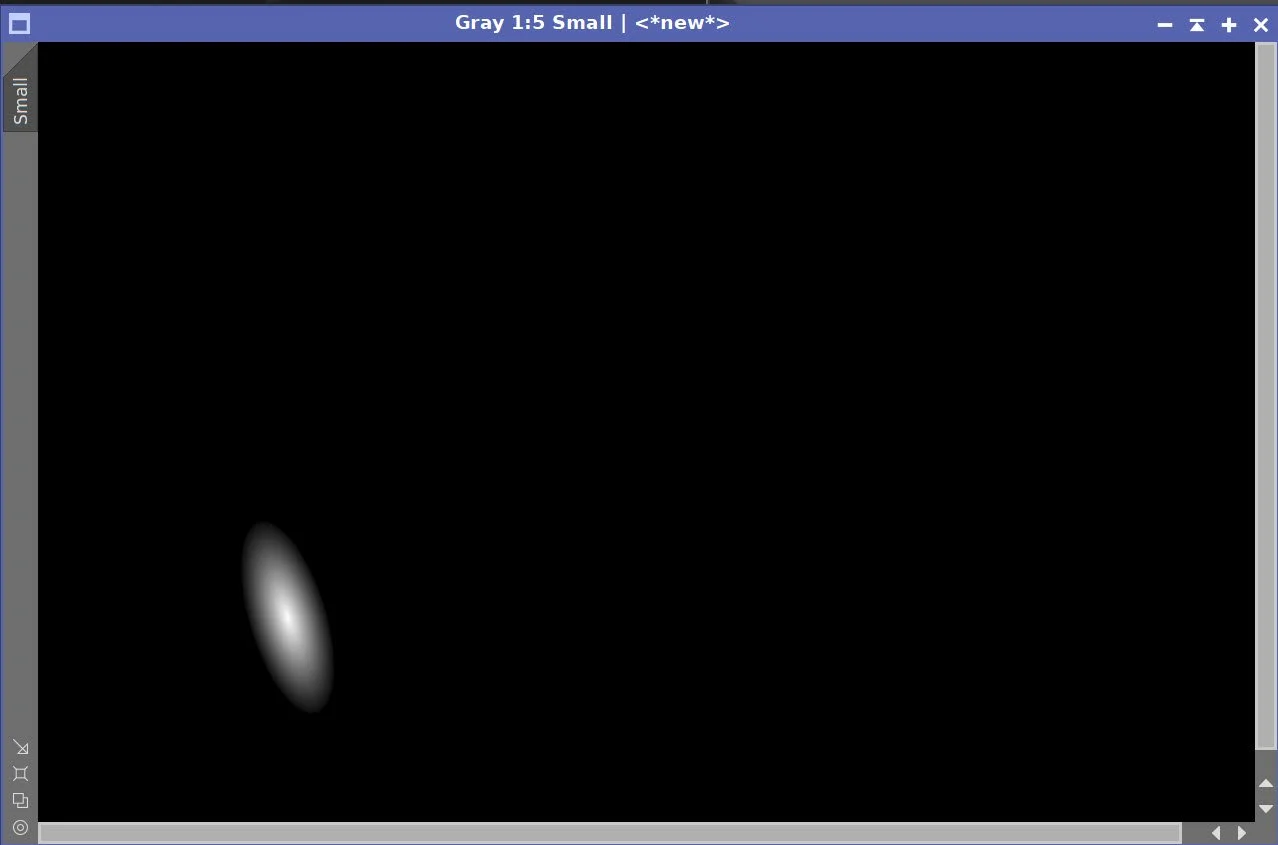
Small Galaxy Mask
After CT (click to enlarge)
HDRMT with Small Galaxy Mask (click to enlarge)
After LHE - Small Scale (click to enlarge)
9. Process the Nonlinear Ha Starless Image
Use CT to darken the outside and darken the core a bit.
Apply LHE with a scale of 64, a contrast limit of 2.0, an amount of 0.20, and an 8-bit histogram. This will enhance smaller structures.
Iniital Nonlinear Ha image(click to enlarge)
After CT (click to enlarge)
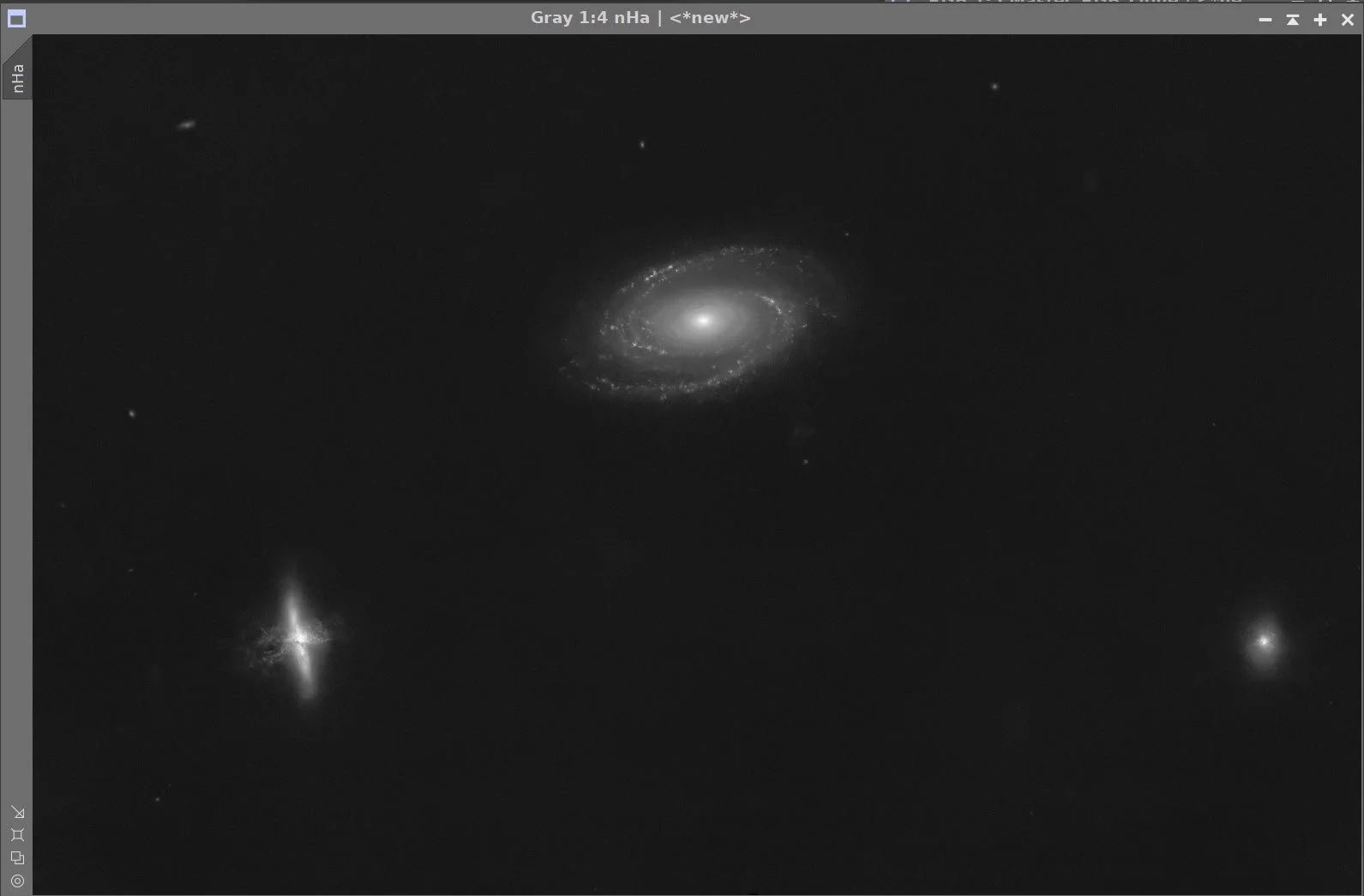
After HDRMT (click to enlarge)
10. Process the RGB Image
Let's create some masks that we will be using with this image:
Using the ColourMask process, create a WarmMask with the params in the snapshot below.
Use CT to boost it.
Use Bill Blanshan’s Blur Script to smooth it
Using Range_Selection with parameters of a Range from 0.05 to 0.52, Fuzziness of 0.12, and a smooth of 20
Use the Dynamic PaintBrush to clean up the mask.
Apply CT to adjust color and tone scale
Apply a second CT to boost color saturation even more
Using the Large Galaxy Mask, run HDRMT with levels=7 and “To Lightness” and “Lightness Mask” checked.
Using the Small Galaxy Mask, run HDRMT with levels=7 and “To Lightness” and “Lightness Mask” checked.
Apply CT with the Small Galaxy Mask
Apply CT with the Warm Mask
Using the Range Mask, apply the ColorSaturation Process to enhance blues and suppress purples.
Apply CT
Applt NXT ( see params below)
Remove subtle magenta tones
Invert the Image
Apply SCNR with green at 1.0
Invert the image.
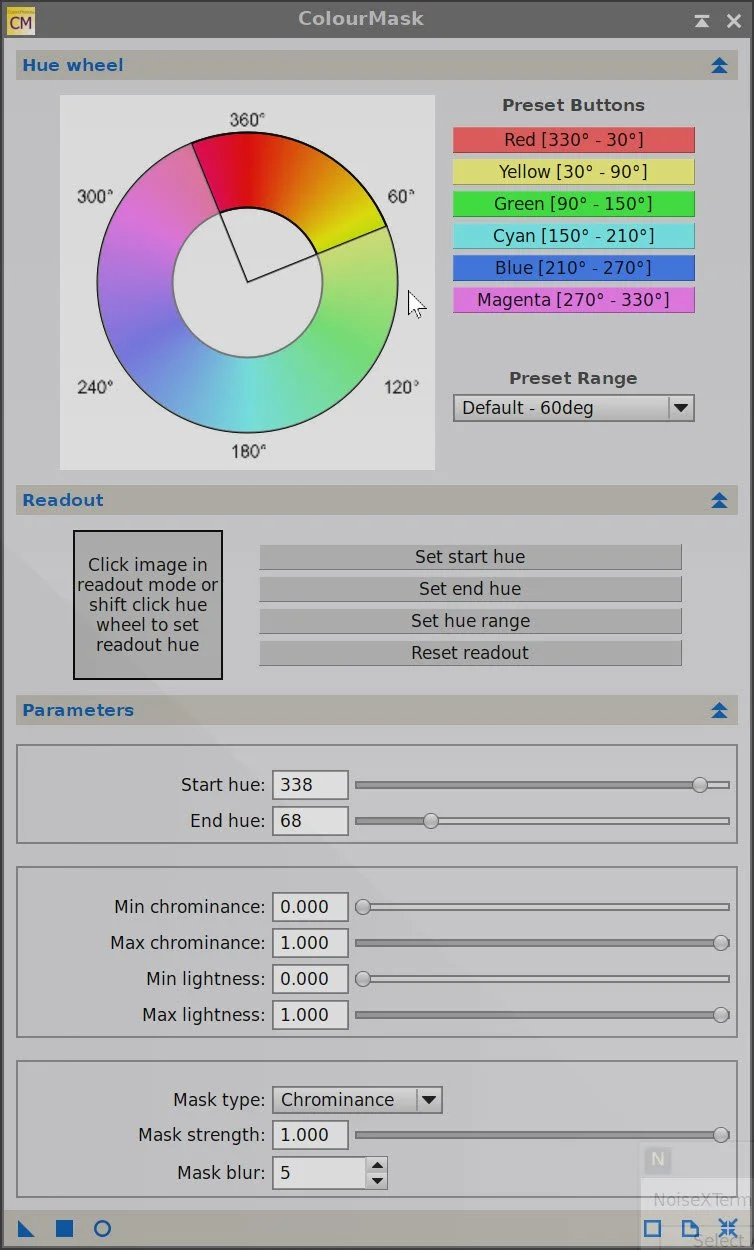
Params used to create the Red Mask (click to enlarge)
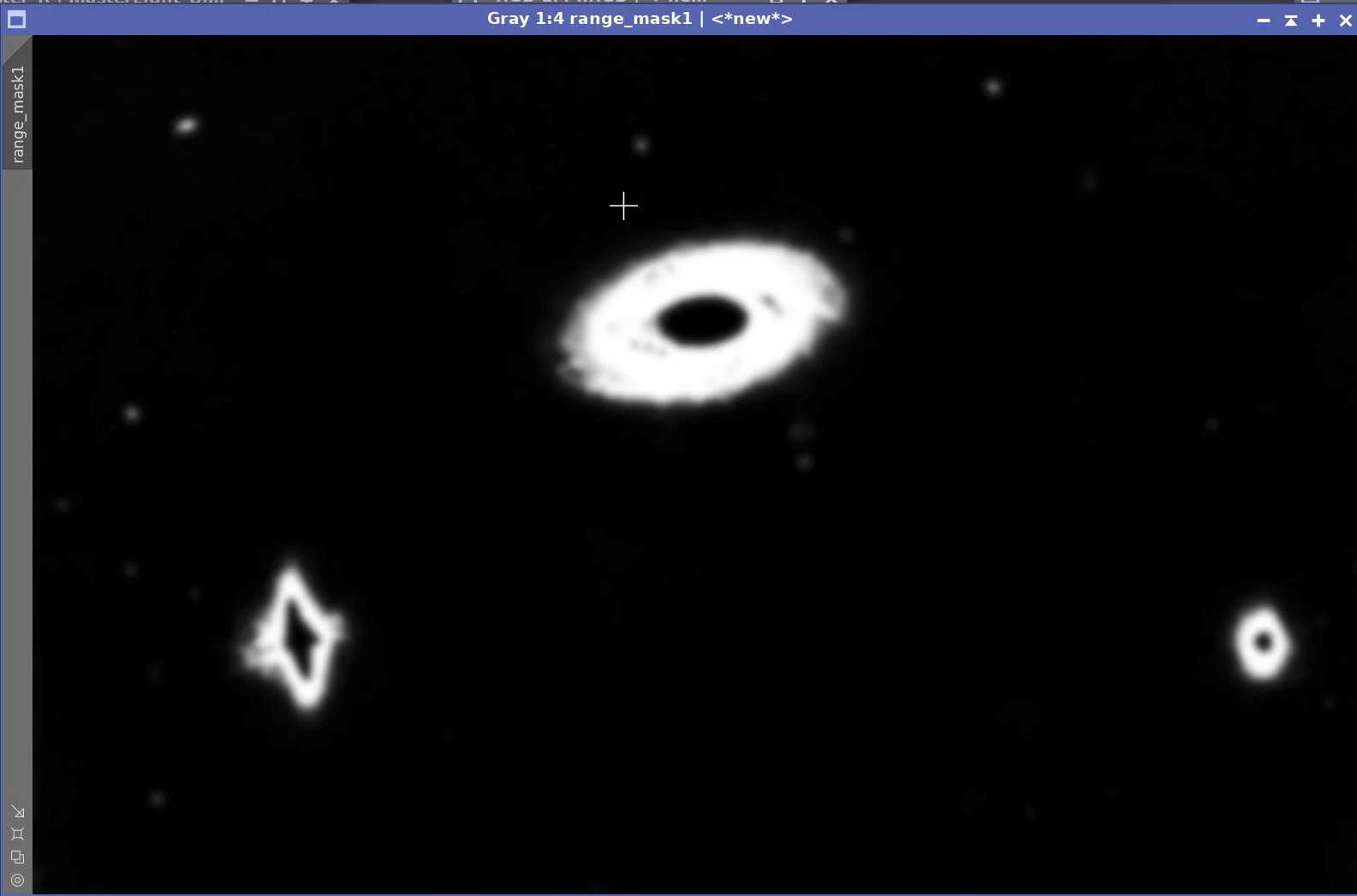
Initial Range Mask
The initial RGB image (click to enlarge)
Second CT to boost color (click to enlarge)
After HDRMT with Small Galaxy Mask (click to enlarge)
CT with the Warm Mask (click to enlarge)
Initial Warm Mask (click to enlarge)
After boosting with CT (click to enlarge)
Initial Warm Mask (click to enlarge)
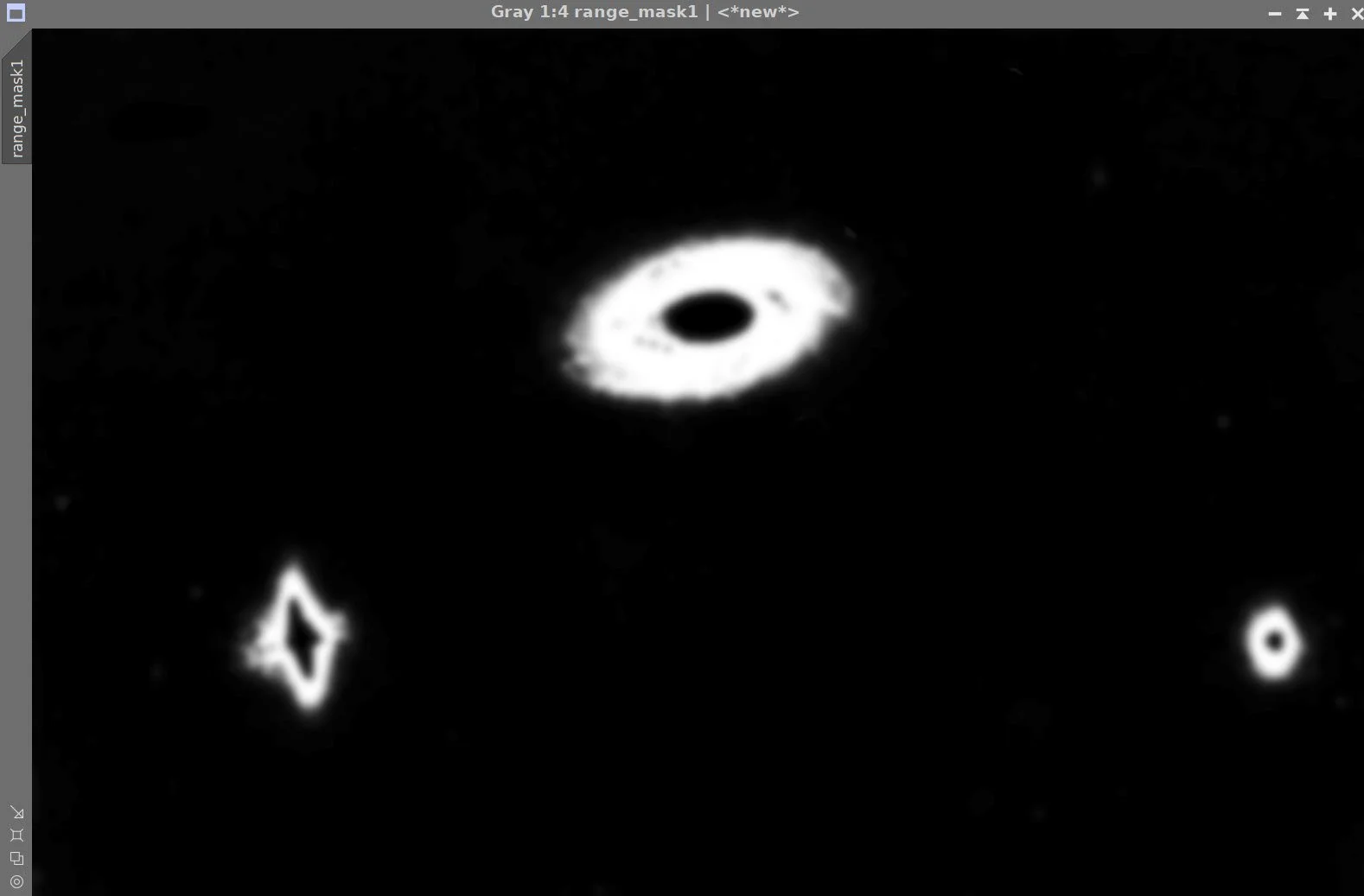
After DynamicPaintbrush cleanup.
After initial CT adjust (click to enlarge)
After HDRMT with Large Galaxy Mask (click to enlarge)
CT with Small Galaxy Mask (click to enlarge)
Color Saturation shape used. (click to enlarge)
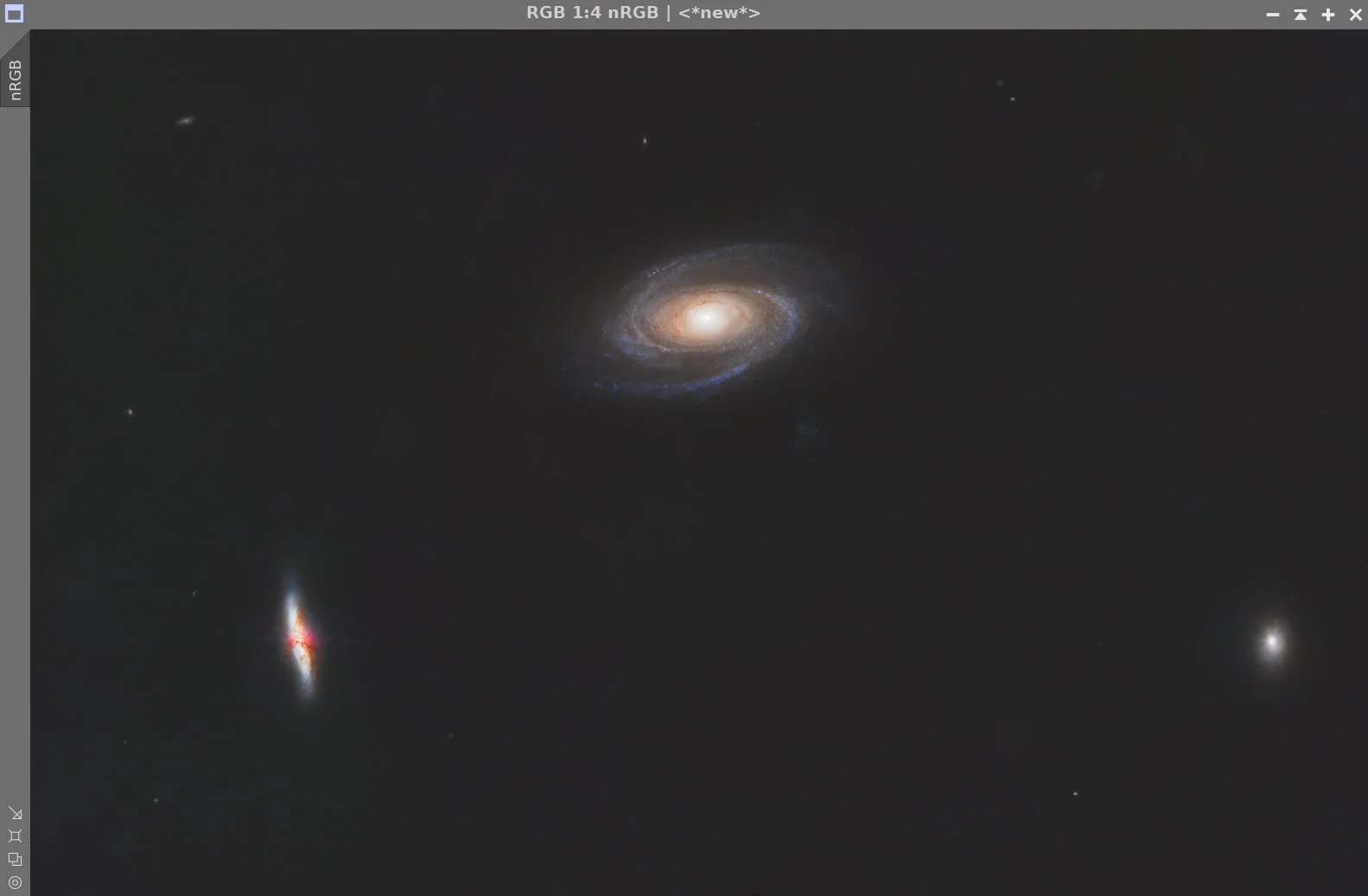
After Color Saturation Adjust with the Range Mask (click to enlarge)
NXT (click to enlarge)Params used,
Invert (click to enlarge)
After CT (click to enlarge)
After NXT (click. to enlarge)
SCNR Green (click to enlarge)
Final Invert (click to enlarge)
11. Combine the Red and Ha images, and Process
Extract the 3 layers from the nonlinear RGB image, and secure the starting red image for use.
The next step is to create a mask to apply to the Red image so that the Ha contribution only goes where we want it to.
Make a copy of the Ha image.
Use HT to drop out the background
Use the Dynamic PaintBrush to remove small areas in the background
This results in the Ha_Mask.
Apply the Mask to the extracted red image.
Set up PixelMath to blend the HA and Red image.s See the equation set up in PixelMath Below.
With the Ha_Mask applied to the Red image, I dragged the PixelMath bottom triangle onto the Red image. I tried different blend rates:
10% Ha - 90% Red
25% Ha - 75% Red
50% Ha - 50% Red
I chose the 50/50 mix as having the best look.
I then used the ChannelCombination tool to create a new RGB image from the RHa image and the previously extracted Green and Blue images.
Adjust with CT
Now it’s time to fold in the L image using the LRGBCombination tool - see the tool panel snapshot below to see the parameters used.
The image is now ready for polishing. These days, I export the starless image into Photoshop.
There, I use the Raw Camera Filter to adjust global curves and color mix
I use the lasso with a 100-pixel feater, select each galaxy, and tweak with the clarifier, texture, and Color Mix tools
The image is then imported back into PixInsight so I can add the stars.
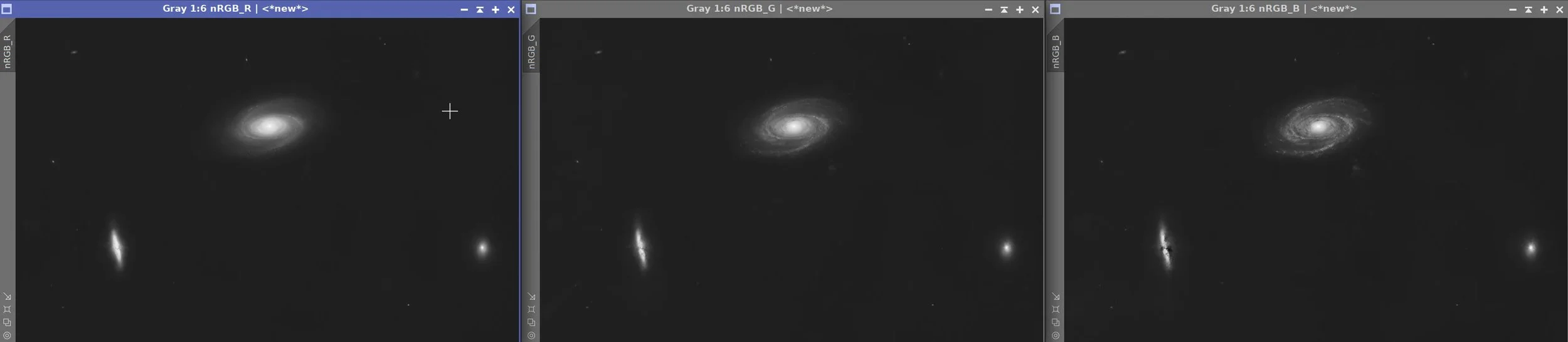
The extracted Red, Green, and Blue Images. We will work with the Red image.
The starting Ha image (click to enlarge
After HT adjustment (click to enlarge)
The final mask after DynamicPaintBrush clean up. (click to enlarge)
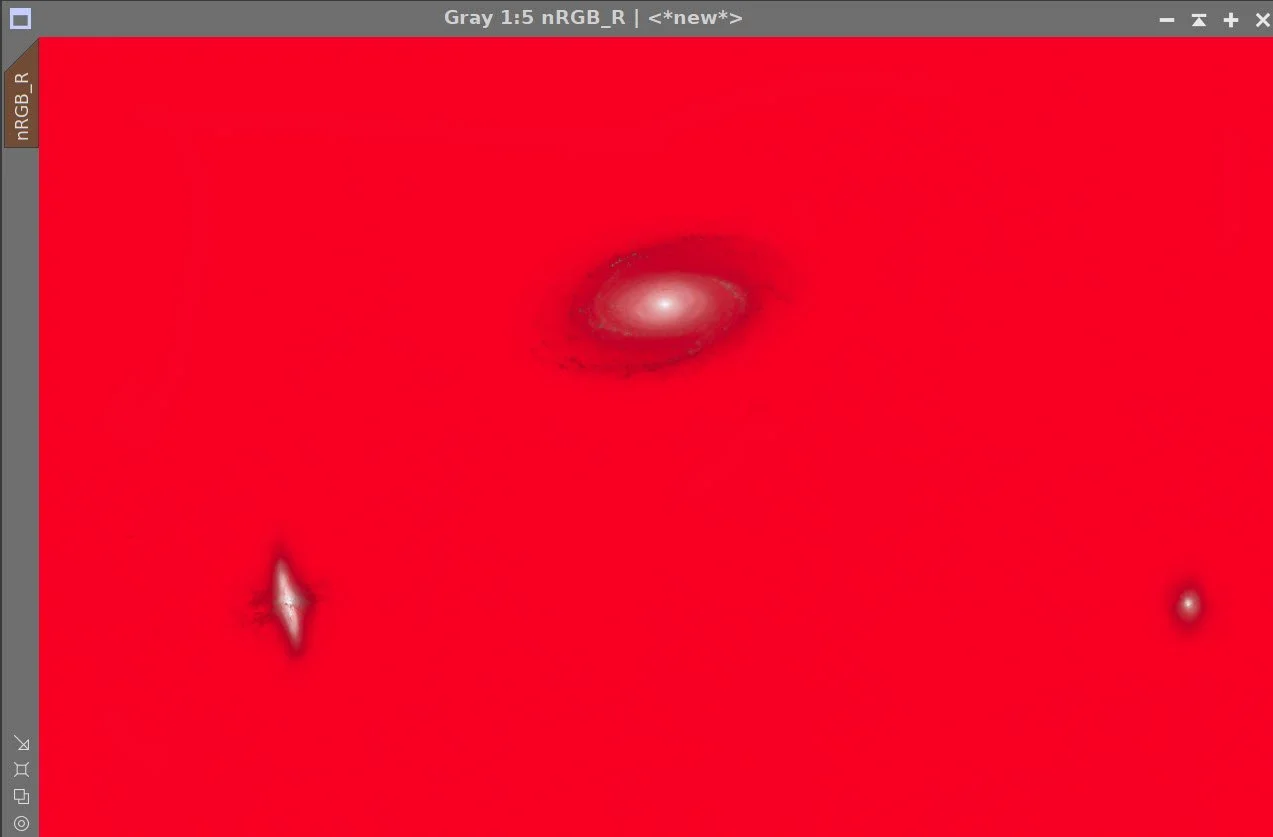
The Ha_Mask applied to the Red image. (click to enlarge)
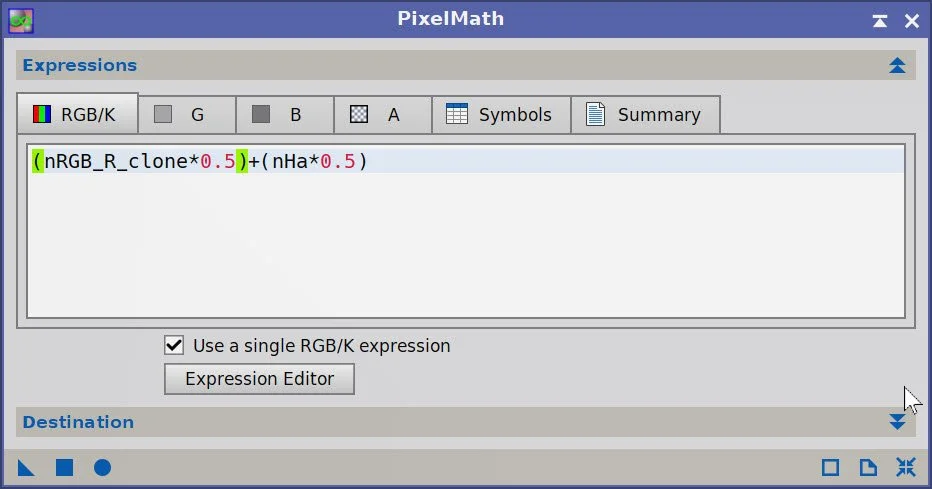
PixelMath Weiting equation.
The New HaRGB image. (click to enlarge)
The new HaRGB image. (click to enlage)
After a CT Adjustment (click to enlarge)
The L Image (click to enlarge)
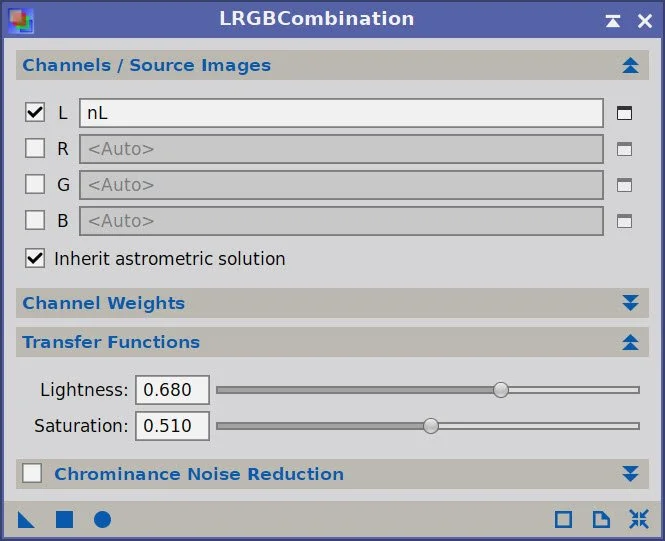
The LRGBCombination panel setup used.
LHaRGB image. This is now ready for polishing in Photoshop.
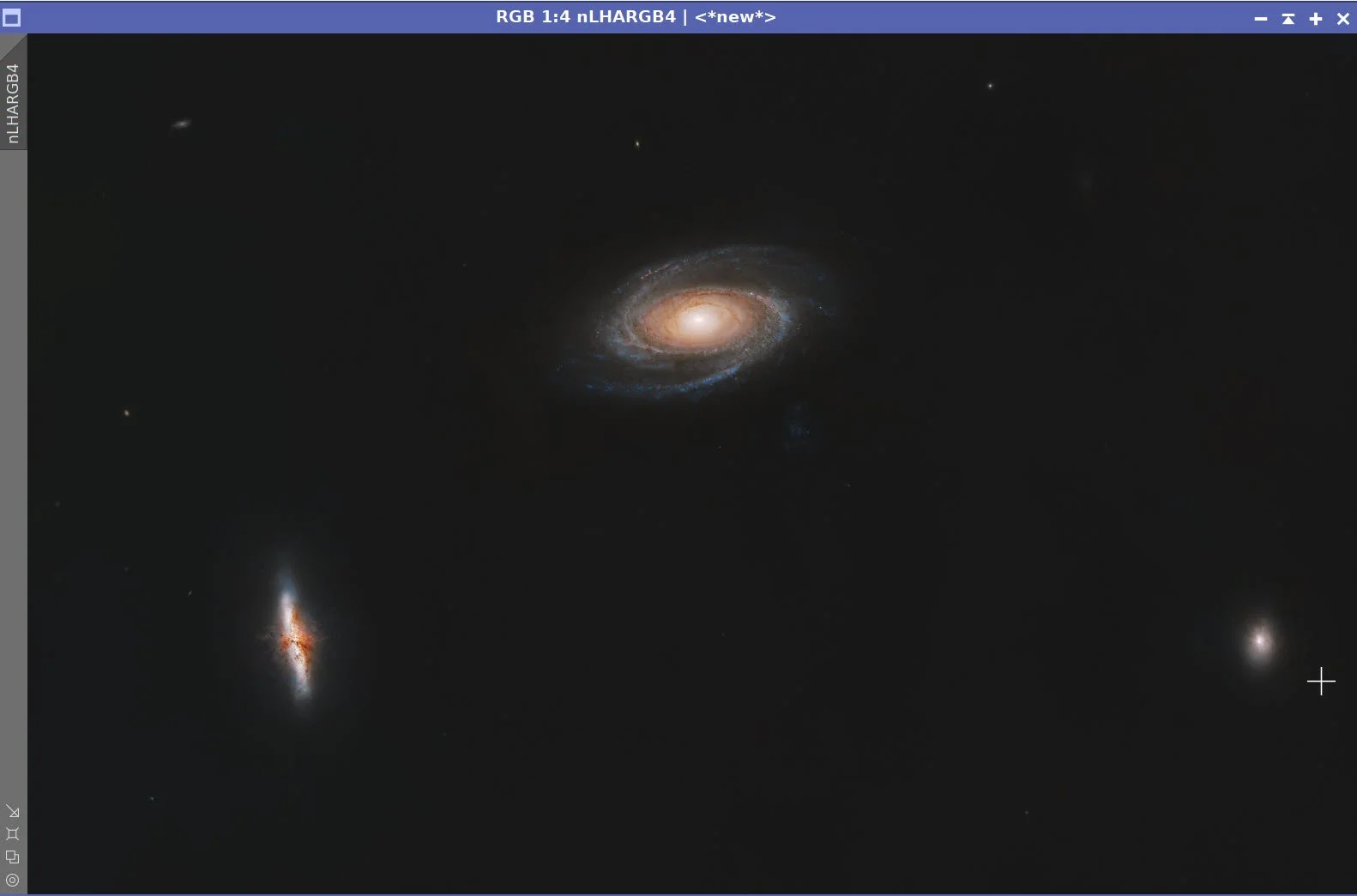
After Photoshop Polishing.
12. Process and Add the Stars Back In
I used the ScreenStars Script ot create three images with the LHaRGB image and the three star soze variation images.
Using the ScreenStars Script, add stars back into our RGB starless image.
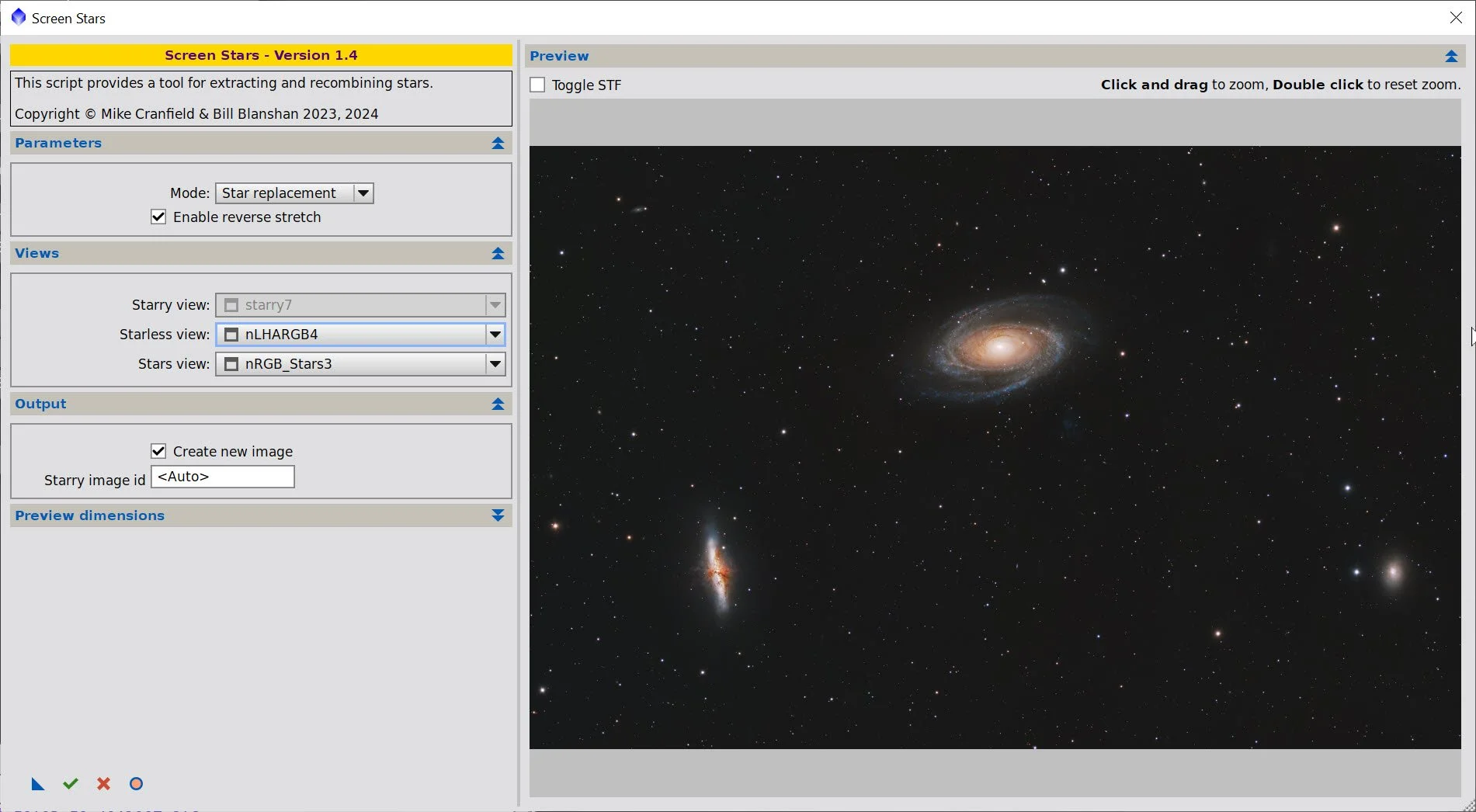
Example of the ScreenStars script used to fold the stars back in, creating the final image.
Here are the three resulting images seen side-by-side. I choose the last one with the larger stars. (Click to enlarge)
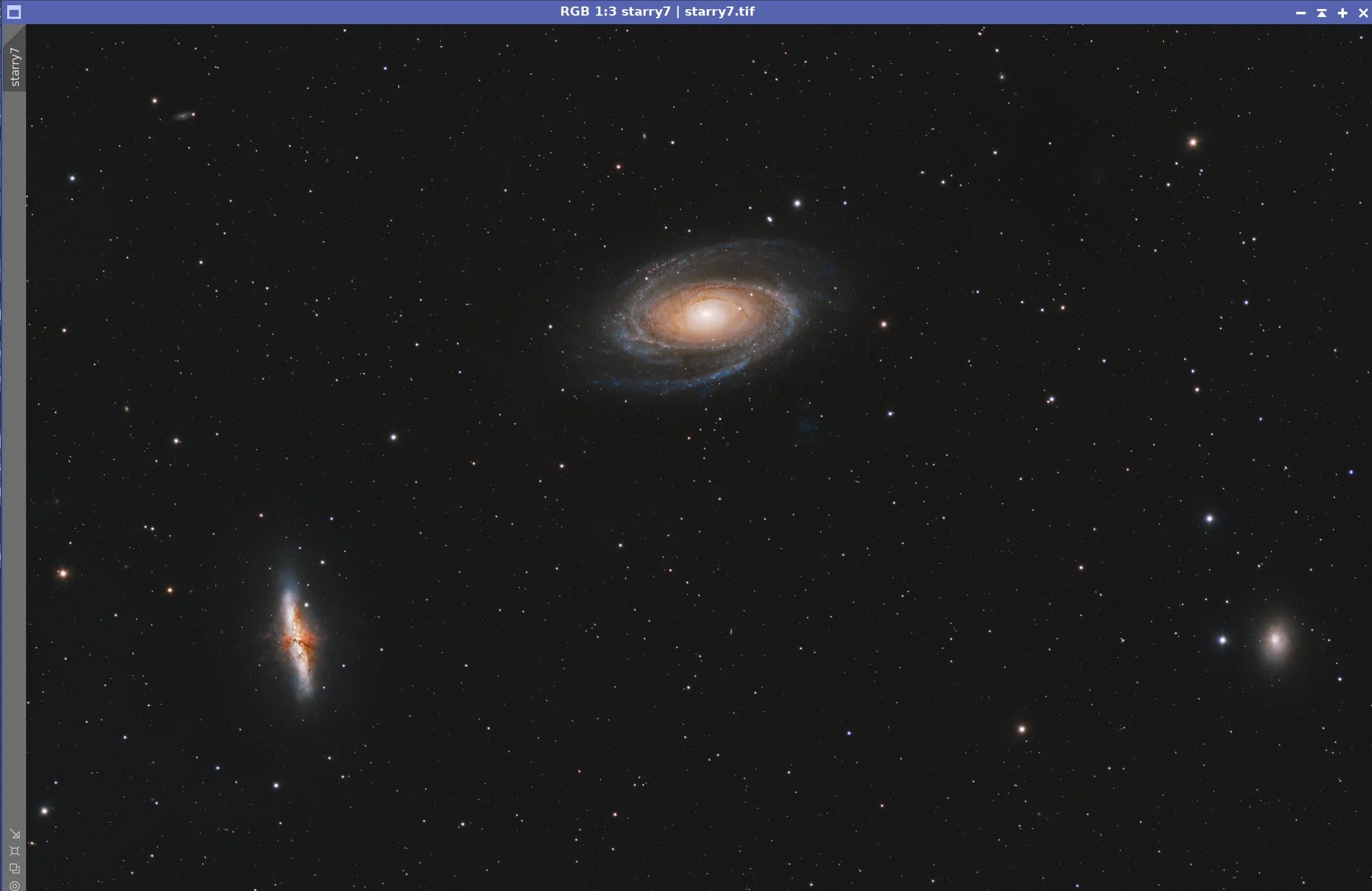
Stars now added - Image ready for Photoshop Polishing!
16. Export the Image to Photoshop for Polishing
Save the image as a TIFF 16-bit unsigned and move to Photoshop
Do a slight crop to trim some from the top and left edge.
Make final global adjustments with Clarify, Curves, and the Color Mixer - slight tweaks, really.
Added Watermarks
Export Clear, Watermarked, and Web-sized JPEGs.
The Final Image!
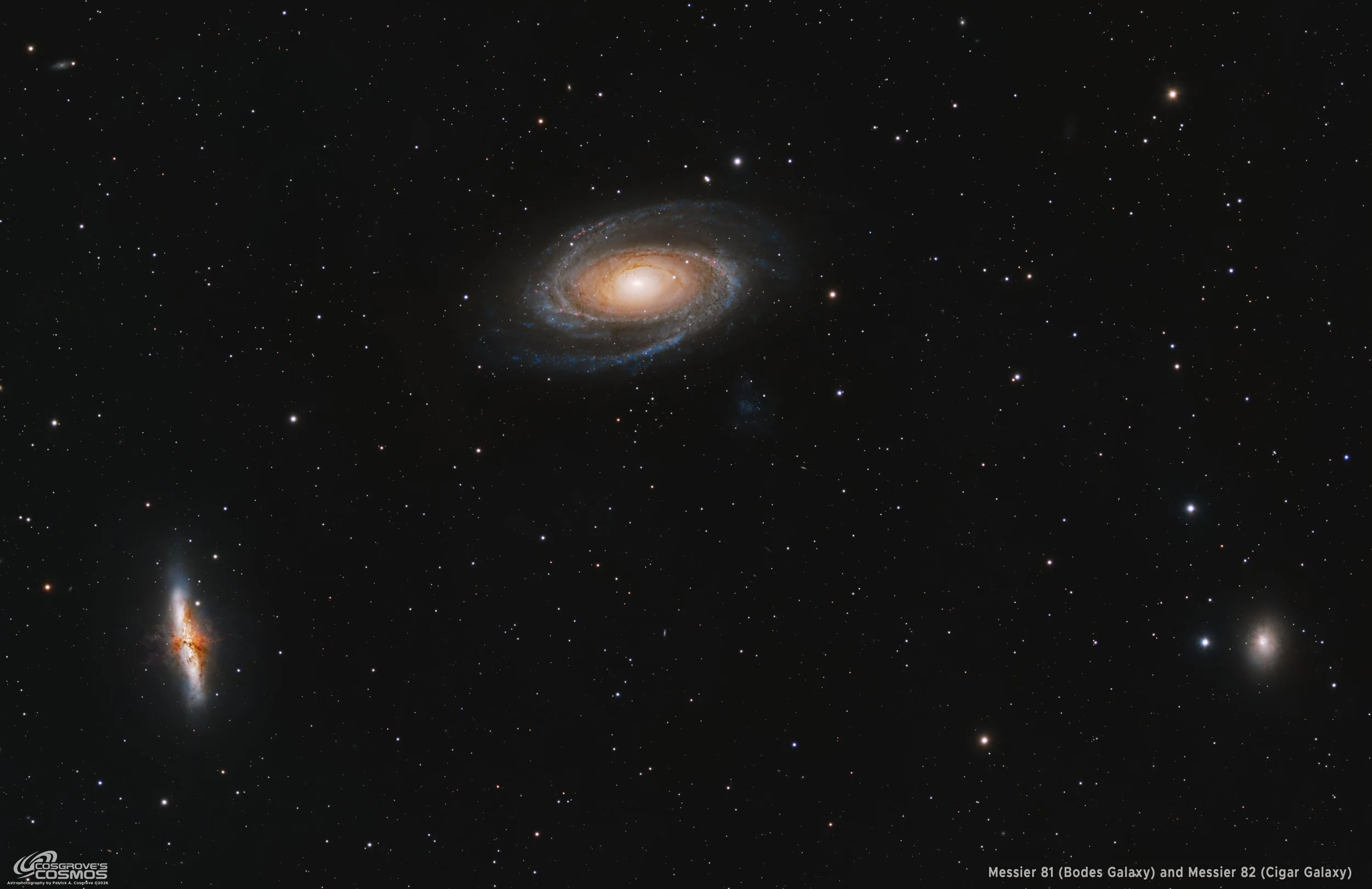
The final Image
Back to M81/82 and NGC 3077 Project Page
Alternatively, you can use the back arrow to return to the B33.NGC 2024 main page, or you can use the menu at the top of the page to continue your navigation.
Thanks,
Pat