Imaging Projects
In this blog, I will share the results of all of my imaging projects. The newest will be at the top and the oldest will be further down the stack. Going back in time here is interesting - some of my early stuff was pretty rough - but I did not see it that way at the time - I was thrilled to get anything back that looked like an image! Hopefully, you will see how my work has progressed with time!
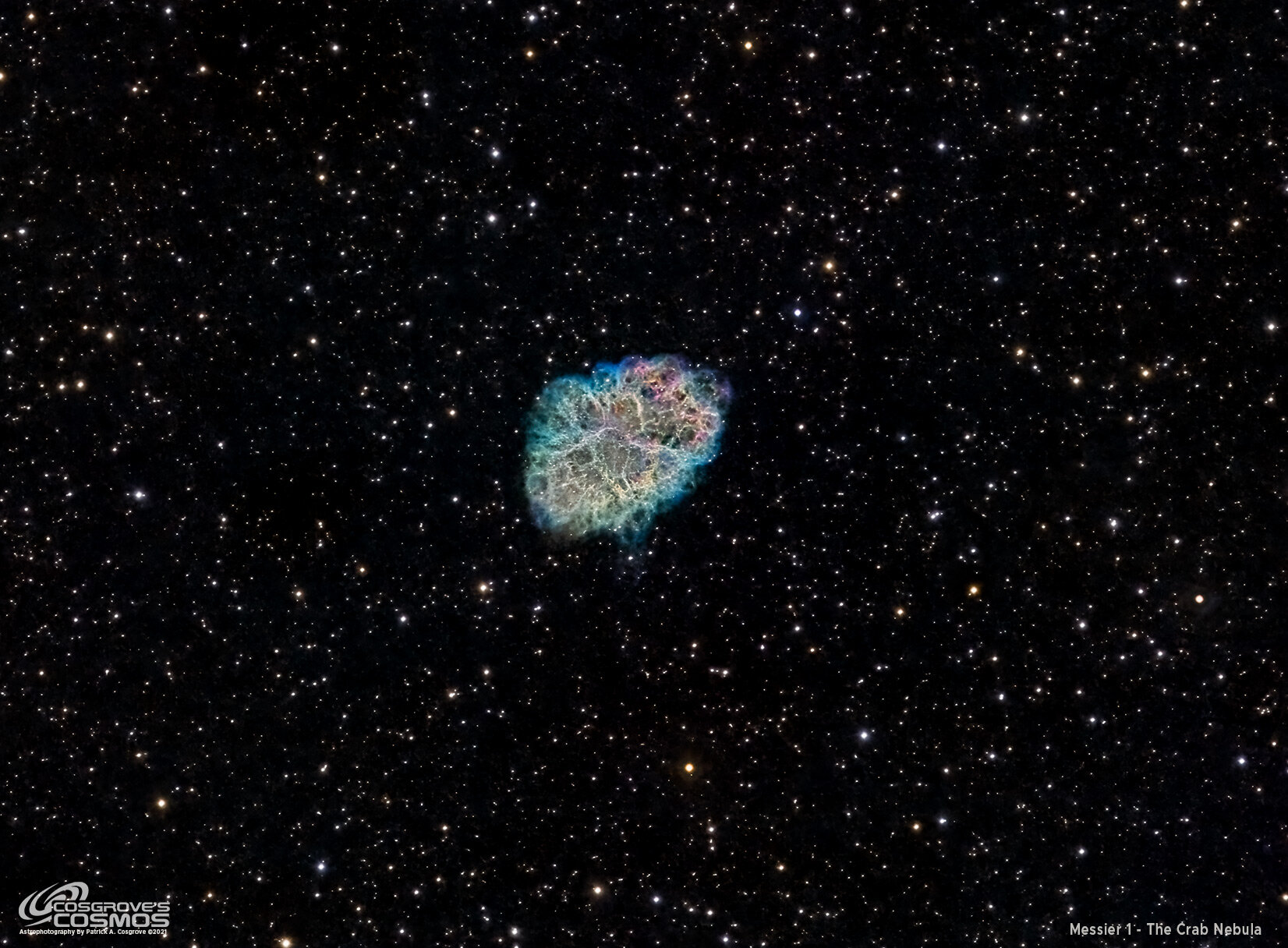
Messier 1 - The Crab Nebula with an SHO/RGB Blend
Messier 1 - The Crab Nebula. Also, known as NGC 1952 and Taurus A. Now, THIS is a pretty cool object! This is the remains of a star that went Supernova and was seen as a bright daytime star back in 1054 by Chinese Astronomers. It was discovered by English astronomer John Bevis in 1731. It was also independently discovered by Charles Messier in 1758 when he was trying to find the return of Halley's Comet.
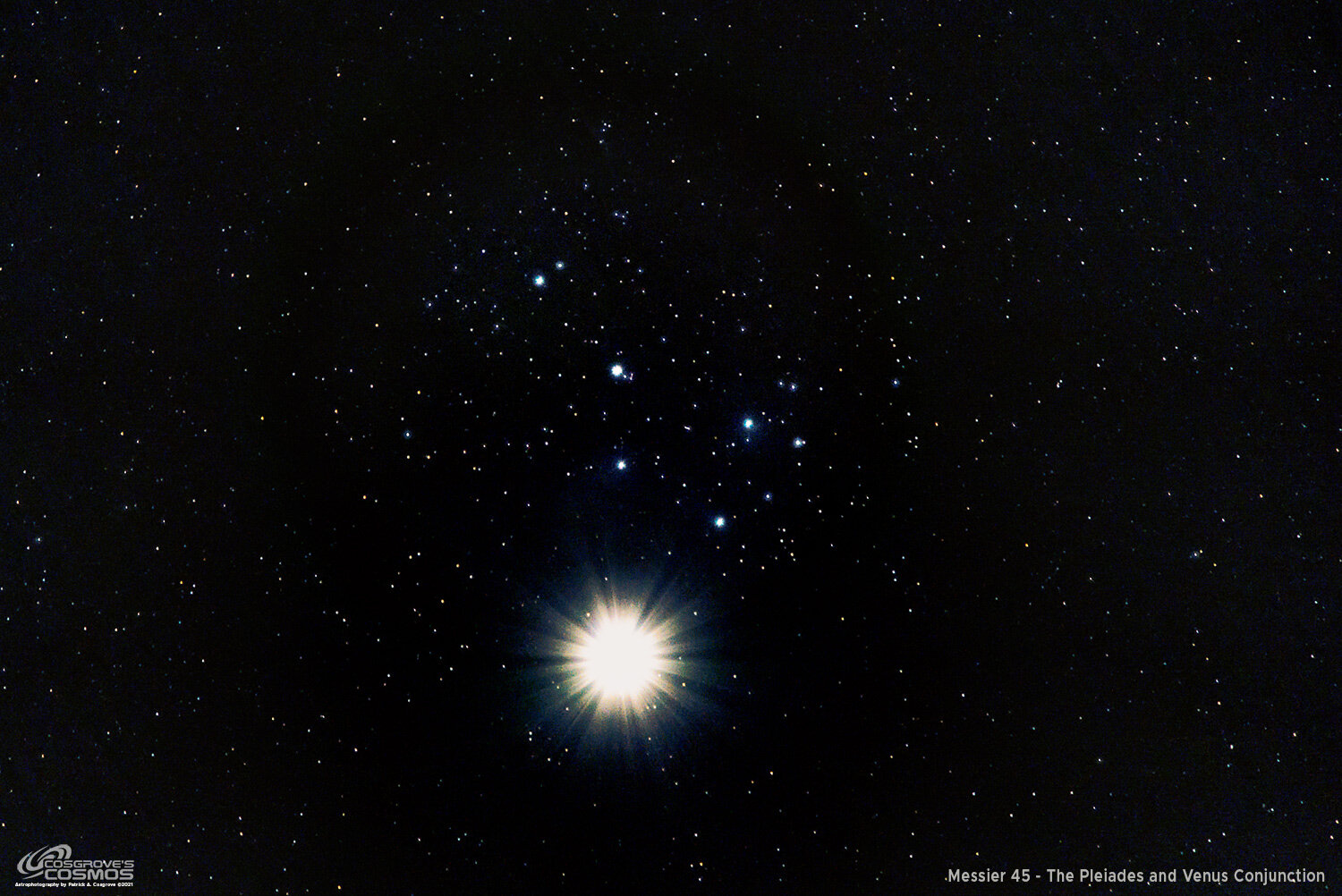
Messier 45: The Pleiades and Venus - A Conjunction
Venus approaches M45 - the Pleiades star cluster. It's not very often that you can see a planet so close to a well-known star cluster, and since it was marginally clear last night, I decided to try capturing it. This was shot with my Sony A7iii shooting with the Sony 100mm-400mm GM Zoom with the 1.4 Extender on it. The entire rig was mounted on a heavy carbon fiber tripod. This is 30 x 1-second exposure at F/8, stacked in Deepsky Stacker and processed with Pixinsight and Photoshop.
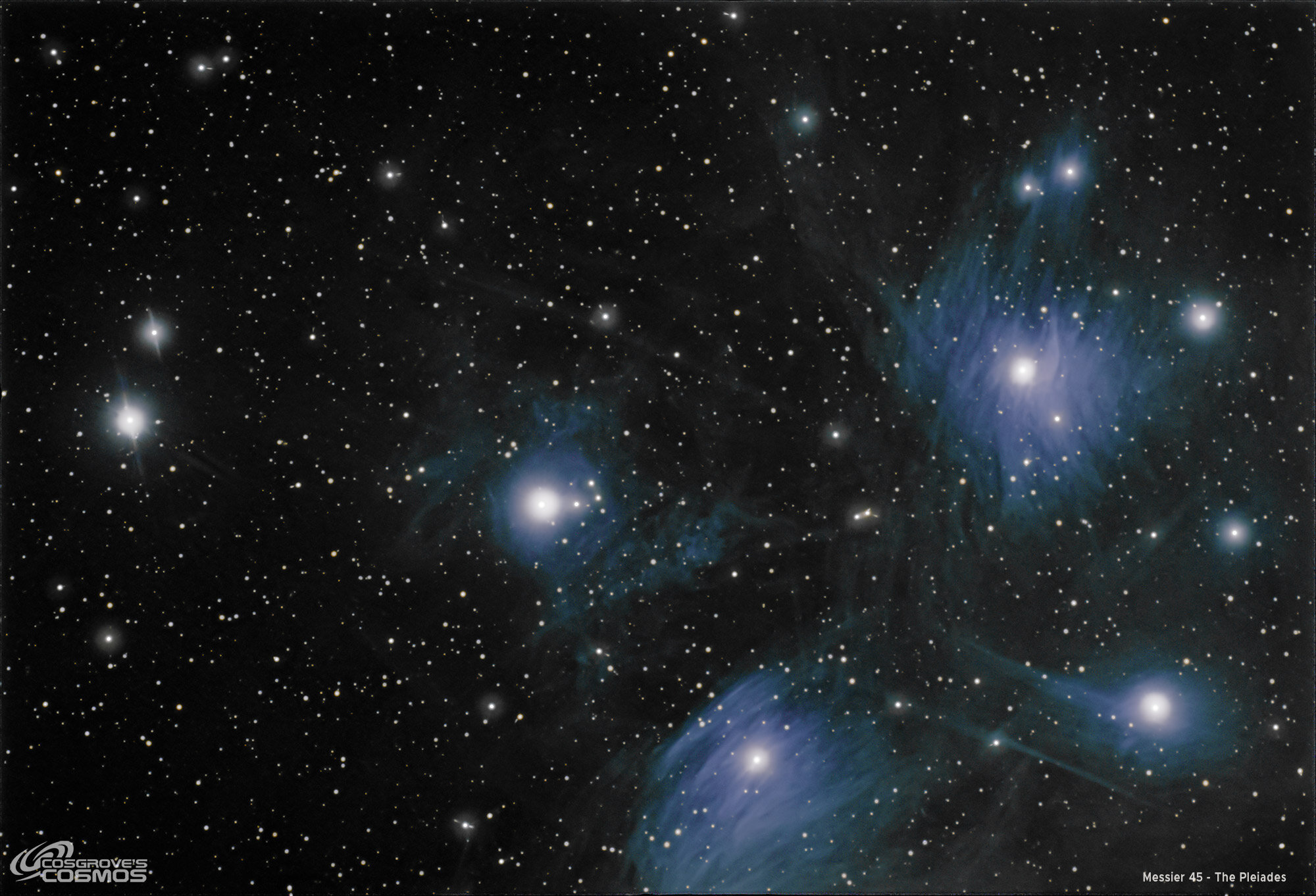
Messier 45 - The Pleiades Star Cluster
Messier 45, better known as the Pleides Star cluster or the Seven Sisters, is a large star group easily seen with the naked eye in the constellation Taurus - the Bull. Wow, Rochester weather in the late fall really sucks. It has been almost 9 weeks since I have had a clear night! Finally, we had a nice clear sky last evening, and the temperature was not too brutal - about 37 degrees F. My first shot of the night was M45, the Pleiades star cluster. Also known as the Seven Sisters, this open cluster is visible to the naked eye in the constellation Taurus. The framing is a bit tight here for my scope focal length, but I was just able to fit them into the field of view. These are a grouping of middle-aged blue stars, and on longer exposures, you can see local dust clouds illuminated by these blue stars. This was the result of 20 three-minute exposures.